

What Is a Sleep Sack and How Does It Keep Your Baby Safe
So, what exactly is a sleep sack? Put simply, it’s a wearable blanket designed just for your baby.
Think of it like a cozy little sleeping bag with armholes. It zips up the front, keeping your little one snug and warm all night without any of the risks that come with loose blankets in the crib.
What Is a Sleep Sack and Why Do Parents Trust It
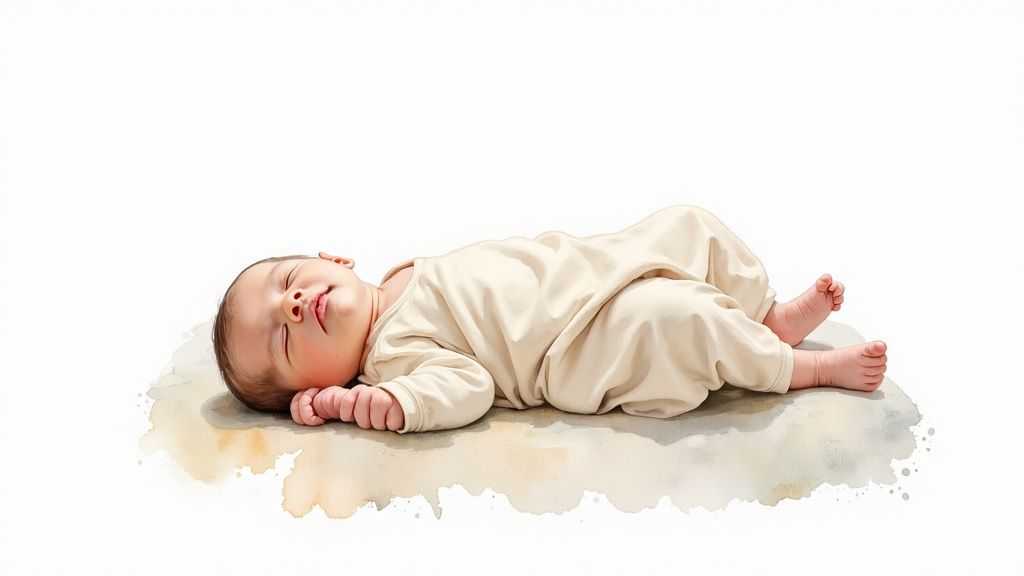
For new parents, finding that little bit of peace of mind is everything, and that’s where the sleep sack really shines. Its whole reason for being is to keep your baby comfortable without the safety hazards of old-school bedding.
The big problem with loose blankets is that they can shift around as your baby wiggles, potentially covering their face. A properly fitted sleep sack stays put, which is a huge reason why pediatricians and safe sleep experts are such big fans.
The American Academy of Pediatrics (AAP) actually recommends wearable blankets as a safer alternative to loose blankets. This simple switch helps reduce the risk of Sudden Infant Death Syndrome (SIDS).
This one piece of gear makes it easy to follow the "bare is best" rule for cribs—nothing in there but the baby. The benefits are pretty straightforward:
- Safety First: It completely removes the suffocation risk posed by loose blankets.
- Constant Coziness: No more kicking off the covers! A sleep sack keeps your baby at a consistent, comfy temperature all night.
- A Soothing Routine: Zipping up the sleep sack every night becomes a powerful signal to your baby’s brain that it's time to wind down and go to sleep.
It's really no surprise that sleep sacks have become a nursery essential for parents everywhere. They create a safe, snug space that helps everyone—parents included—get a better night’s rest. If you're curious about the trends, you can learn more in this detailed baby sleep sack market report.
Sleep Sack vs. Traditional Bedding at a Glance
To make it even clearer, let's break down the key differences between a modern sleep sack and a traditional loose blanket.
| Feature | Sleep Sack (Wearable Blanket) | Loose Blanket |
|---|---|---|
| Safety | Stays in place, keeping baby's airway clear. AAP recommended. | Can cover the face, posing a suffocation risk. |
| Comfort | Maintains a consistent temperature. Baby can't kick it off. | Easily kicked off, leading to baby getting cold overnight. |
| Ease of Use | Simple to zip on and off. Stays secure during sleep. | Needs constant readjusting and tucking. |
| Sleep Cue | Becomes part of a comforting, predictable bedtime routine. | No inherent sleep association. |
As you can see, the choice is pretty clear when it comes to creating the safest and most comfortable sleep environment for your little one. The wearable blanket design solves every major issue that comes with using loose bedding in a crib.
Time to Graduate: Moving from Swaddle to Sleep Sack
Sooner or later, every little one moves on from that super-snug swaddle. It’s a big step in their development, but figuring out the exact right time to make the switch can feel like a guessing game for parents. The good news? There's one crystal-clear sign to watch for, and it's all about safety.
The absolute moment you see your baby showing signs of rolling over, it's time to ditch the swaddle for good. A swaddled baby who manages to roll onto their tummy can get stuck, unable to use their arms to push up and clear their airway. This milestone usually happens around 3 to 4 months old, so keep a close eye out.
How to Make the Switch Without Losing Sleep
Don’t worry, this transition doesn’t have to mean sleepless nights for everyone. Most babies do best with a gradual approach that helps them get used to having a little more freedom while they sleep.
Here are a few popular methods that parents swear by:
- The One-Arm-Out Trick: For a few nights, try swaddling with just one of their arms left out. They still get that familiar, cozy feeling but start to learn what it's like to have a hand free. After a few nights of that, you can free the other arm and then move on to the sleep sack.
- Use a Transitional Sack: You can find "arms-in" sleep sacks that are basically a middle ground. They offer a more contained, secure feeling than a regular sleep sack but give your baby way more room to move than a tight swaddle.
- Just Go For It: Some babies honestly do fine going "cold turkey." You might have a night or two of adjustment, but many little ones adapt surprisingly fast to a roomy, arms-out sleep sack.
The whole point is to create a safe sleep environment that keeps up with your baby's new skills. An arms-out sleep sack is perfect because it lets them wiggle, shift, and push themselves up once they're rolling.
If you want a more detailed game plan, check out our complete guide on how to transition from a swaddle to a sleep sack. At the end of the day, you're the expert on your own baby, so trust your gut and pick the path that feels best for your family.
Understanding TOG Ratings for Your Baby's Comfort
As you start looking at sleep sacks, you'll see the term TOG rating pop up everywhere. It sounds a bit technical, but it’s actually a parent’s best friend for making sure your little one is sleeping comfortably.
Think of it like the warmth guide for your own duvet. TOG simply stands for Thermal Overall Grade, and it measures how much heat a fabric retains.
The system is pretty straightforward: a low TOG means a lighter, more breathable fabric, while a high TOG means a warmer, more insulated one. This completely takes the guesswork out of dressing your baby for bed, which is a huge relief for any parent worried about them being too hot or too cold.
Finding the Right TOG for Your Nursery
The key is matching the TOG to the temperature of your baby's room. Simple as that.
Here’s a quick guide to get you started:
- 0.5 TOG: This is your go-to for summer nights or a nursery that stays above 75°F (24°C). It's usually made from a single, breezy layer of fabric like bamboo viscose or cotton.
- 1.0 TOG: The jack-of-all-trades. This one is perfect for most of the year, especially in rooms kept at a comfortable 69-73°F (21-23°C). It offers just the right amount of coziness without being too heavy.
- 2.5 TOG: When the temperature drops, this is the one you’ll want. It’s designed for cooler rooms between 61-68°F (16-20°C) and is typically padded for extra insulation to keep your baby snug all winter.
The goal is to keep your baby comfortably warm, never sweaty. A quick check on the back of their neck or their tummy will tell you everything. They should feel warm and dry, not hot or clammy.
Want to get a bit more granular on picking the right warmth level? We have a whole guide that dives deeper into what is a TOG rating.
Of course, the material of the sleep sack also makes a massive difference in its overall feel and function. Innovations in fabrics are a big reason why the global baby sleep sack market has grown to be worth over $490 million. It's all about finding that perfect blend of safety and comfort.
This visual guide is also super helpful for figuring out that big milestone: when to move on from the swaddle.
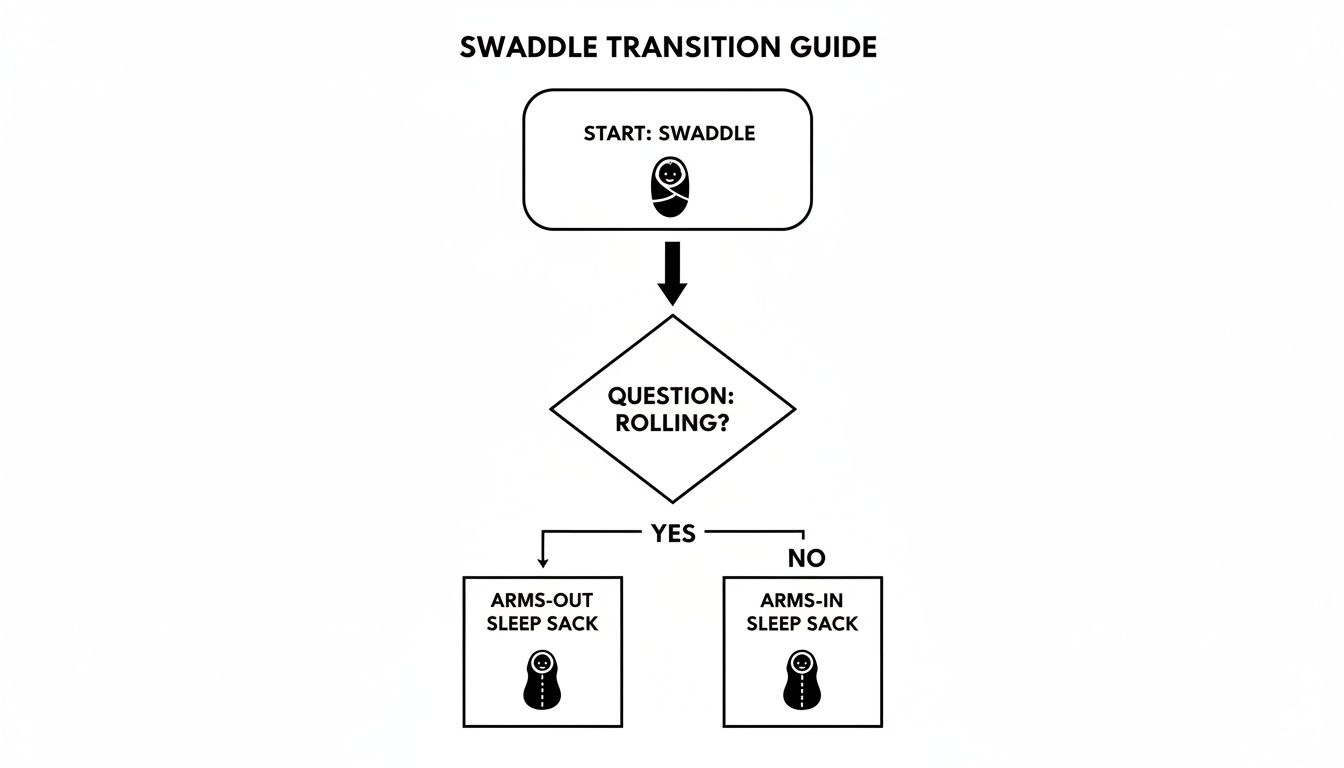
As you can see, the moment your baby shows signs of rolling, it’s time to switch to an arms-out sleep sack. This keeps their hands free and ensures they can safely reposition themselves.
Mastering Sleep Sack Safety Essentials
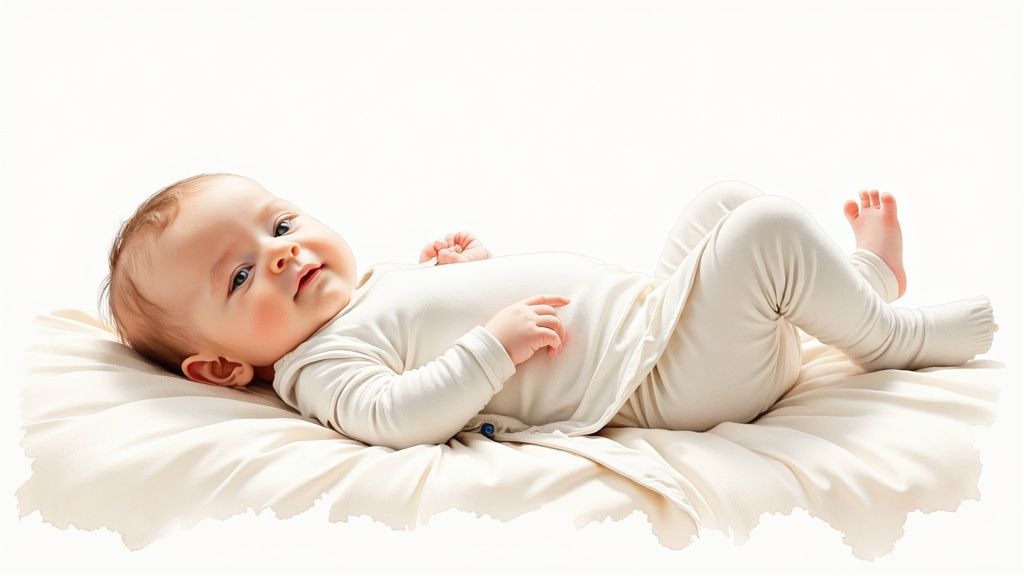
When it comes to baby sleep, safety is everything. That’s really the heart of why so many of us parents swear by sleep sacks. They aren't just a cute, cozy wearable blanket; they're a smart tool designed from the ground up to follow the safe sleep guidelines pediatricians talk about.
The golden rule, straight from the American Academy of Pediatrics, is "Back to Sleep" in a completely bare sleep space. This means putting your baby on their back in a crib or bassinet with nothing else inside—no bumpers, no pillows, and definitely no loose blankets.
That’s where the sleep sack becomes a game-changer. It keeps your little one warm and snug without any of the risks that come with traditional bedding.
Getting the Fit and Temperature Just Right
For a sleep sack to be both safe and comfy, the fit has to be perfect. The goal is snug, but not tight. You want the neckline and armholes to be secure enough that the fabric can't ride up over your baby's face, while also leaving plenty of room for their legs to kick and wiggle around.
This hip-healthy design is so important for their development. Here’s a quick checklist to run through:
- Secure Neckline: Can you comfortably fit two fingers between the sleep sack and your baby's chest? If so, you're golden.
- Ample Leg Room: There should be tons of space for your baby to bend and straighten their legs without any restriction.
- Prevent Overheating: Dress your baby in light layers underneath—a simple onesie is often enough. A quick check on the back of their neck will tell you what you need to know. They should feel comfortably warm, not hot or sweaty.
It's no surprise that sleep sacks have become so popular. Their safety benefits are a huge driver, especially in North America, which accounted for over 42% of the market revenue in 2023. That's a lot of parents putting their trust in this simple, effective solution.
Expert Takeaway: Remember that sleep sack safety is part of creating a totally secure sleep environment. This becomes even more important if you transition to a floor bed later on, so check out a comprehensive guide to Montessori floor bed safety.
Nailing these safety basics is what gives you peace of mind, knowing you’re giving your baby the safest, coziest sleep possible. To learn more, check out our full article on whether sleep sacks are safe for newborns.
Finding the Perfect Fit for Every Growth Spurt
Getting the right size sleep sack is probably the most important thing you’ll do to keep your little one safe and comfy at night. It's tempting to buy a size up so they can "grow into it," but a sleep sack that's too big is a serious safety hazard.
If the neck hole is too wide, the sack can easily ride up and cover your baby’s mouth and nose. That’s why sizing isn't really about age—it’s all about your baby’s current weight and height. This ensures you get that perfect snug (but never tight!) fit around their little chest.
Sizing Up Safely
Always, always follow the manufacturer's size chart. Each brand cuts their sleep sacks a little differently, so a medium in one might be a large in another.
Here’s what a great fit looks like:
- A Secure Neckline: You should be able to slip two fingers between the fabric and your baby’s chest. The key is that it's snug enough that you can't pull it up over their chin.
- Plenty of Legroom: The bottom of the sack needs to be roomy. Your baby’s legs and hips should have total freedom to kick, wiggle, and rest in that natural "frog-leg" position, which is super important for healthy hip development.
Parenting Tip: If your baby is right between two sizes, go with the smaller one. When it comes to wearable blankets, a snug fit is always the safer choice.
For a detailed look at measurements from the newborn stage all the way to toddlerhood, check out our complete sleep sack size chart. It makes matching your baby's stats to the right sack a breeze. Whether you need a tiny sack for a newborn or one with foot openings for your new walker, there's a size made for every single milestone.
Your Questions About Sleep Sacks Answered
Alright, so you've got the basics down, but let's be real—the practical, day-to-day questions are what really matter. Here are some of the most common things parents ask, answered so you can use your sleep sack like a pro.
What Should My Baby Wear Under a Sleep Sack?
The golden rule is to think in layers. What your baby wears underneath really comes down to two things: the temperature of the room and the TOG rating of the sleep sack.
On a warm night with a lightweight 0.5 TOG sack, a simple short-sleeve onesie is probably all you need. But if you’re in a cooler room and using a toasty 2.5 TOG sack, you’ll want to layer up with some long-sleeve pajamas.
Pro Tip: Don't trust their little hands or feet to tell you if they're warm enough—they're often naturally cooler. Instead, gently touch the back of their neck. It should feel warm and dry. If it's sweaty, they're too hot; if it's cool, they might need another layer.
Can My Baby Wear a Sleep Sack in a Car Seat?
This is a big one: no, a standard sleep sack is a definite no-go for car seats. The bulkiness of the fabric can get in the way of the harness, making it impossible to get that snug, secure fit you need for safety. A regular sleep sack is designed for stationary sleep in a crib or bassinet. Only use products specifically designed with slots for buckles if you need something for travel.
How Many Sleep Sacks Do I Really Need?
Trust me on this, you'll want at least two or three. Spit-up happens. Diaper blowouts are inevitable. Having a clean, dry backup ready to go in the middle of the night is a total lifesaver and means you won't be frantically doing laundry at 3 AM. It just makes life easier and keeps your baby's sleep routine on track.
At Little Venture Co., we design our bamboo viscose sleep sacks to give you that much-needed peace of mind. Every single sack is Oeko-Tex® certified, meaning they're totally free from harmful substances and incredibly gentle on your baby's skin. We're all about helping your little one have the sweetest, safest dreams possible. Explore our collection of cozy and safe sleep sacks.