

The Essential Sleep Sack Size Chart for Safe and Sound Sleep
Getting the right sleep sack size is a huge piece of the puzzle for your baby's safety and comfort. Let's be honest, trying to figure it out can feel overwhelming. The key thing to remember is that weight and height are what really matter—not just age.
This guide is designed to cut through the noise and give you a straightforward chart so you can find the perfect size in a snap.
Your Quick Reference Sleep Sack Guide
Think of this as your go-to starting point for making sure your little one has a safer, comfier night's sleep. We've laid everything out in a simple table because we know busy parents need clear answers, fast. This chart will give you a great foundation before we dive deeper into taking measurements, checking the fit, and understanding TOG ratings later on.
As you can see, weight and height are your best friends when it comes to picking a size that’s both snug and safe.
General Sleep Sack Size Chart By Age Weight And Height
Here's a quick look at the typical sizing you'll find across most brands. It’s a fantastic reference to get you started.
| Size | Age Range (Months) | Weight Range (lbs/kg) | Height Range (in/cm) |
|---|---|---|---|
| Newborn | 0-3 months | 6-12 lbs / 2.7-5.4 kg | 19-23 in / 48-58 cm |
| Small | 3-6 months | 12-18 lbs / 5.4-8.2 kg | 23-26 in / 58-66 cm |
| Medium | 6-12 months | 16-24 lbs / 7.3-10.9 kg | 26-30 in / 66-76 cm |
| Large | 12-18 months | 22-28 lbs / 10-12.7 kg | 30-35 in / 76-89 cm |
| X-Large | 18-24 months | 26-36 lbs / 11.8-16.3 kg | 35-40 in / 89-102 cm |
Remember, this is a general guide. While it’s a great starting point, always double-check the specific sizing for the brand you're buying. For our own products, you can find the exact measurements on the official Little Venture Co. size chart. The goal is always to find that sweet spot—a sleep sack that's secure around the chest but leaves plenty of wiggle room for those little legs and hips.
Why the Right Fit Is Critical for Safe Sleep
Figuring out the right sleep sack size is way more than just a matter of comfort—it's honestly one of the most important safety calls you'll make for your little one's nursery. I know it's tempting to buy a bigger size they can "grow into," but when it comes to sleep sacks, that can be a seriously risky move. The right fit is non-negotiable for a safe sleep space.
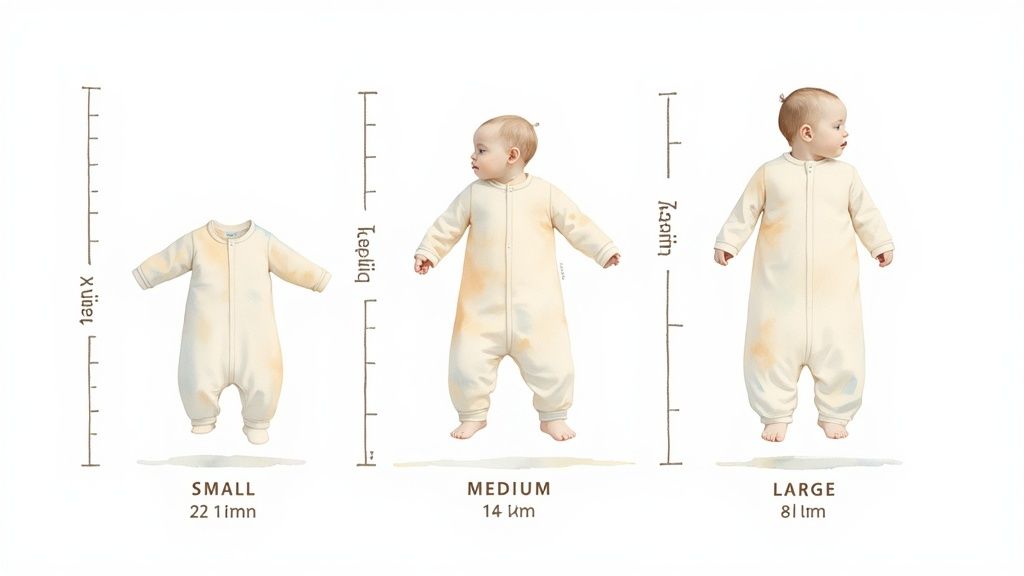
Here's the main issue: a sleep sack that's too big is a major safety problem. If the neck hole is too wide, your baby could slip down inside the sack. This could cause the fabric to cover their face and block their breathing, which is every parent's worst nightmare. That’s exactly why a snug but not tight fit around the neck and chest is absolutely essential.
The Dangers of an Ill-Fitting Sleep Sack
An improper fit—both too big and too small—comes with its own set of hazards that go well beyond your baby just being uncomfortable.
- Suffocation Hazard from a Loose Fit: Like we just talked about, a baggy neckline is the biggest risk. If it can ride up over your baby's nose and mouth, it poses a serious suffocation threat.
- Restricted Hip Development from a Tight Fit: On the flip side, a sack that's too short or tight around the legs is also a problem. Experts in pediatrics are clear that restricting a baby's natural "frog-leg" position can mess with healthy hip development and even contribute to issues like hip dysplasia.
- Overheating Risk: A sleep sack that's too small can also trap body heat and prevent air from circulating properly. This can lead to overheating, which is a known risk factor for Sudden Infant Death Syndrome (SIDS).
The American Academy of Pediatrics constantly emphasizes how critical a safe sleep environment is for lowering these risks. A well-fitted wearable blanket is a huge piece of that puzzle because it lets you ditch loose blankets in the crib for good.
Promoting Overall Sleep Safety
Nailing the right sleep sack size is a cornerstone of creating that safe space. It gives your baby all the warmth and comfort they need without any of the risks that come with loose bedding.
Beyond just the sleep sack, it's also a good idea to incorporate other safe sleep practices, such as pacifier use, to build an even safer sleep routine. At the end of the day, a sleep sack that fits just right allows for safe movement, helps regulate your baby's temperature, and gives you the peace of mind to get some rest yourself.
How to Measure Your Baby for a Perfect Fit
Using a sleep sack size chart is a great starting point, but it all comes down to getting your baby's measurements right first. While age ranges are a handy guide, they're not the full picture. Babies grow on their own unique schedule, which is why weight and height are the most reliable indicators for getting that perfectly safe and snug fit.
Trying to get these numbers from a wriggly baby can feel like a bit of a workout, I know. But a few simple tricks can help you nail it every time, ensuring the sleep sack fits just right—close and secure, but never too tight.
Step-by-Step Measuring Guide
Here’s a quick and easy way to get those measurements. All you need is a soft measuring tape and your regular bathroom scale.
-
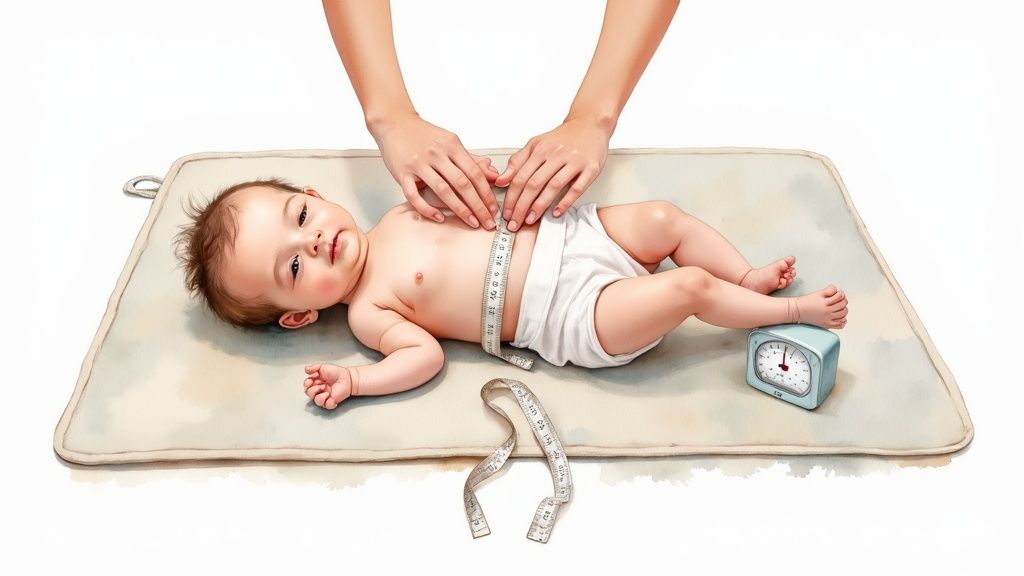
Measure Height (or Length): It's easiest to do this with your baby lying on a flat, safe surface, like their changing mat. Gently straighten one of their legs and run a soft tape measure from the very top of their head down to the bottom of their heel. If you've got a super wiggly baby on your hands, grabbing a partner to help keep them still can make this much easier!
-
Measure Weight: The simplest trick for weighing your baby at home is to use your digital bathroom scale. First, step on the scale while holding your baby and write down that number. Then, pop your baby down in a safe spot and weigh just yourself. The difference between those two weights is your baby's weight.
Once you've got those two key numbers, you can confidently check them against any sleep sack size chart and find the right one. This little two-step process takes all the guesswork out of sizing and puts your baby's safety first.
Just remember, sizing can be a little different across various baby clothes, so measuring specifically for a sleep sack is key. For more tips on general sizing, you can always take a look at our complete baby clothing size chart.
Decoding TOG Ratings for Year-Round Comfort
Okay, so you've navigated the sleep sack size chart and found the perfect fit. What's next? The secret to keeping your little one comfy all year round is understanding something called a TOG rating.
TOG stands for Thermal Overall Grade, which is just a fancy way of saying how warm a sleep sack is. It’s the same idea as the tog rating on your own duvet—the higher the number, the toastier it is. This simple system takes all the guesswork out of dressing your baby for bed, which is a huge relief. It helps you avoid them getting chilly or, even more importantly, overheating.
What Do the TOG Numbers Mean?
Each TOG number gives you a clear idea of the insulation level, so you can easily pick the right one for the season. Here’s a quick rundown of what the numbers really mean:
-
0.5 TOG: This is your lightweight champion. Think single-layer, super-breathable fabrics like bamboo or cotton muslin. It’s perfect for those hot summer nights or if you live in a consistently warm climate.
-
1.0 TOG: The all-rounder. This is probably the most versatile and common TOG you'll find. It’s ideal for those in-between temperatures and works great year-round in homes with central air or heat.
-
2.5 TOG: Time to get cozy! This is a much thicker, padded sleep sack built for cold winter nights. It offers plenty of warmth, so you don't have to worry about adding risky loose blankets to the crib.
Getting a handle on these ratings is the first step. If you want to dive a little deeper into the science of it all, we have a whole guide that explains in more detail what TOG is.
Matching TOG to Your Nursery Temperature
This is where it all comes together. The real trick is matching the TOG rating to the actual temperature of your baby's room. This ensures they’re not just comfortable, but also sleeping at a safe temperature all night long.
A great piece of advice I've always followed is to dress your baby in one more layer than what you’d be comfortable wearing in that same room. A sleep sack counts as that extra layer!
To make things super simple, here's a chart to help you pick the right TOG and figure out what your baby should wear underneath.
TOG Rating And Layering Guide By Room Temperature
This table is your cheat sheet for matching the nursery temperature with the right sleep sack and pajamas.
| Room Temperature (°F/°C) | Recommended TOG | What Baby Should Wear |
|---|---|---|
| 75-81°F / 24-27°C | 0.5 TOG | Short-sleeved onesie or just a diaper |
| 69-74°F / 21-23°C | 1.0 TOG | Long-sleeved or short-sleeved pajamas |
| 61-68°F / 16-20°C | 2.5 TOG | Long-sleeved pajamas, possibly with a onesie underneath |
| Below 61°F / Below 16°C | 3.5 TOG | Long-sleeved pajamas and a long-sleeved onesie |
Using this as a guide means you can confidently get your baby ready for bed, no matter what the weather is doing. Just a quick glance at the nursery thermometer before bedtime will give you all the peace of mind you need.
Alright, you've used the size chart and picked out a sleep sack. Now for the final, most important step: the at-home fit check. This quick once-over gives you the peace of mind that your little one is not just cozy, but totally safe.
Getting the fit right is a big deal. It stops the fabric from creeping up near your baby’s face and gives them plenty of room to wiggle, grow, and kick those little legs. Here's exactly what to look for so you can zip them up and rest easy.
The Neckline and Armhole Check
This is your number one safety checkpoint. If the fit is off around the upper body, it's a no-go. A loose neckline is the biggest risk with sleep sacks, so always check this first.
-
The Neckline: You're looking for a snug fit, but definitely not a tight one. A good test is to slide two fingers between the fabric and your baby's neck. If you can do that comfortably, you're on the right track. Now, give the fabric a gentle tug upwards from the chest – it should never pull up over their chin or mouth.
-
The Armholes: Just like the neckline, the armholes need to be secure. You want them roomy enough for a little airflow, but not so big that your baby could wiggle an arm back inside the sack while they're sleeping.
If you can tick both these boxes, you’ve nailed the most critical part of a safe fit.
A sleep sack is only truly “too loose” if there's any chance it could slip up over your baby’s face. That fit around the neck and chest is absolutely non-negotiable for safe sleep.
Checking for Healthy Leg and Hip Room
Once you've confirmed the top half is secure, it's time to look at the bottom half. This part is all about giving your baby the freedom to move and supporting healthy development, especially for their hips.
The sack needs to be nice and roomy, giving them space to move their legs freely. Babies naturally sleep in that adorable "frog-leg" position, and the sleep sack should allow them to bend their legs up and out without any restriction. As a general rule, make sure there are at least 4-6 inches of extra fabric beyond their feet. This lets them stretch out completely and is crucial for healthy hip joint development.
Knowing When to Transition to the Next Size
It feels like you blink, and suddenly your baby has outgrown everything. That sleep sack that fit perfectly last week? It can get snug almost overnight. Staying on top of those growth spurts is the secret to keeping your little one’s sleep routine safe, sound, and without any hiccups.
Instead of waiting until the sack is obviously too tight, it helps to know the early warning signs that it's time for a change.
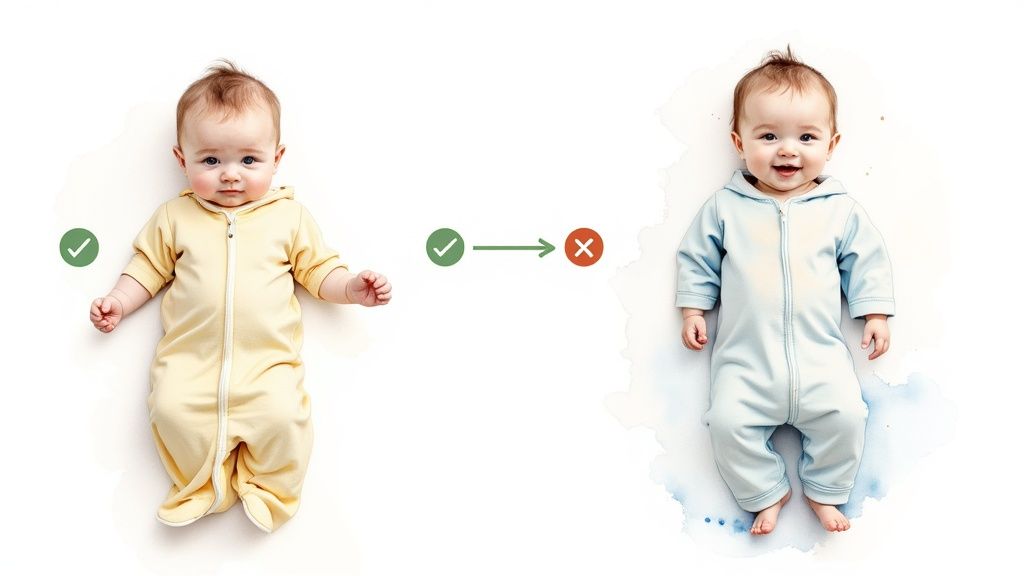
Being a little proactive here means you'll have the next size on hand before you need it, which helps you avoid those frantic, middle-of-the-night "uh-oh" moments. It's a simple way to keep things consistent and comfy for your baby.
Clear Signs It's Time to Size Up
So, how do you know for sure that it's time for a bigger sleep sack? Your baby will give you some pretty clear clues. Keep an eye out for these telltale signs when you're getting them ready for bed.
- Feet Are Pressing the Bottom: When your baby stretches out their little legs, there should be plenty of wiggle room at the bottom. If you see their toes pushing against or stretching the fabric, that sack is officially too short.
- Tightness Around the Chest or Neck: The fit around their torso should feel secure, but it should never be constricting. If you're having trouble zipping up the sack or it just looks tight around their chest and armholes, it's time.
- Restricted Leg Movement: Babies need to be able to bend their legs freely up into that natural "frog-leg" position. A sack that's too narrow or short will get in the way of this healthy hip movement.
Catching these signs early helps you get ahead of the game. This is a big deal, especially for babies who are just moving out of the swaddling phase. If you're at that stage, our guide on making the move from a swaddle to a sleep sack has some great advice.
The most straightforward sign your baby has outgrown their current sleep sack is when their legs can almost touch the bottom. This means they no longer have enough room to stretch and move comfortably, signaling it’s time for the next size up.
The fact that so many parents are choosing wearable blankets shows a huge shift in awareness around safe sleep practices. The global baby sleeping sacks market was valued at around USD 799.2 million and is expected to more than double by 2035, all thanks to parents following safe sleep guidelines. This kind of growth pushes great brands to keep improving their sleep sack size chart options for the best safety and comfort.
Your Top Sleep Sack Questions Answered
Even after you've found the perfect sleep sack, a few questions might pop up. It's totally normal. Sorting through all the baby gear advice can feel like a full-time job, but getting straight answers is the best way to feel good about your little one's sleep setup.
We've pulled together the questions we hear most often from parents just like you. Let this be your go-to spot for clearing up those last-minute worries so you can rest easy, knowing your baby is sleeping safely and soundly.
Can My Baby Wear a Sleep Sack in a Car Seat?
This is a big one for safety, and the answer is a hard no—a standard sleep sack should never be used in a car seat. The sack's material creates a bulky layer between your baby and the harness, making it impossible to get the straps snug and secure against their little body.
That gap is a huge safety hazard. In an accident, the harness could fail to hold them properly. For travel, you'll need a special car seat-compatible sleep sack with a slot for the buckle to pass through. And as always, the car seat manufacturer's instructions are the most important rules to follow.
Are Weighted Sleep Sacks Safe for Babies?
You've probably seen them around, but the experts have weighed in on this. Major safe sleep organizations, like the American Academy of Pediatrics (AAP), strongly recommend against using weighted sleep sacks or swaddles.
There's just no good evidence that they help babies sleep better. What's more concerning is the potential danger—the added weight can make it difficult for a baby to arouse themselves or shift out of a dangerous position, increasing the risk of suffocation. The safest choice is always a standard, non-weighted sleep sack.
What’s the Difference Between a Sleep Sack and a Swaddle?
It’s easy to mix these two up! They look similar but are meant for very different stages of your baby's first year.
-
A Swaddle: Think of this as a special blanket or pouch made to wrap your newborn up like a little burrito, keeping their arms secure. It’s designed to soothe their startle (Moro) reflex, which often wakes them up. Swaddling is only safe until your baby starts showing signs of trying to roll over.
-
A Sleep Sack: This is basically a wearable blanket your baby puts on over their PJs. It looks like a tiny sleeping bag but has armholes, leaving their arms totally free. Their legs have plenty of room to kick and wiggle around, too. Sleep sacks are the safe next step after swaddling and can be used right through the toddler years.
Simply put, a sleep sack gives you the warmth of a blanket without the risks of having loose bedding in the crib, which is a cornerstone of safe sleep.
How Many Sleep Sacks Do I Need?
You'll thank yourself for having a few extras. We always suggest having at least two or three sleep sacks in your baby's current size. Babies are masters of the unexpected diaper blowout or spit-up incident, and having a fresh one ready to go is a lifesaver, especially in the middle of the night.
Having a backup makes laundry day way less frantic. It's also a great idea to have sacks with different TOG ratings on hand. That way, you're prepared for anything from a chilly winter night to a warm summer nap, and you can always keep your baby comfortable.
At Little Venture Co., we obsess over getting these details right. From the fit and feel to the faith-inspired designs, our sleep sacks are made with your little one's safety and comfort as our top priority. Come explore our collection of buttery-soft bamboo sleepwear to find the perfect one for your baby's sweet dreams. Visit us at https://littleventureco.com.