

Your Guide to Transitioning from a Swaddle to Sleep Sack
That magical newborn burrito phase feels like it's over in a flash, doesn't it? One minute they're snug as a bug, the next they're busting an arm out like a tiny escape artist. The key to the swaddle to sleep sack transition is spotting when your baby is developmentally ready, which is often between 3-4 months old or, most importantly, when they first show signs of rolling.
Is Your Baby Ready to Ditch the Swaddle?
Making the leap from the cozy confines of a swaddle to the freedom of a sleep sack can feel like a huge step. It’s a definite sign your little one is growing, developing, and gaining more control over their body. But how do you know when it’s truly time?
While many parents watch for that big milestone of rolling over, there are other subtle (and not-so-subtle) cues that signal readiness. Think of this shift as a natural part of your baby’s sleep journey, not some strict deadline you have to meet. Tuning into your baby's personal timeline is what matters most.
Reading Your Baby’s Unique Cues
The most critical, non-negotiable sign it’s time to stop swaddling is when your baby shows any indication of being able to roll. A swaddled baby who manages to roll onto their tummy is at a significantly higher risk because their arms are pinned, preventing them from pushing their face away from the mattress.
Beyond this major safety milestone, other developmental hints suggest they're ready for more freedom:
- Fighting the Swaddle: If bedtime turns into a wrestling match and your baby consistently fights to free their arms, they're telling you loud and clear that they crave more movement.
- Breaking Out Consistently: Is your little Houdini breaking free every single night? The occasional escaped hand is one thing, but if it's constant, the swaddle is no longer effective and could even become a loose blanket hazard in the crib.
- Diminishing Startle Reflex: That jerky Moro reflex (or startle reflex) that swaddles help contain typically fades around 3 to 4 months. If you notice fewer startling movements waking them up, they probably don't need the swaddle’s confinement to stay asleep anymore.
Don't stress if your baby seems to be hitting these milestones earlier or later than you expected. Every single baby develops at their own pace. Responding to their individual needs is what truly matters.
For a quick cheat sheet, here’s a breakdown of the signs to watch for.
Quick Guide: Is It Time to Transition?
This table can help you quickly assess the signs and understand why they matter for your baby's safety and comfort.
| Key Sign | What It Means | Why It's a Concern | Your Next Step |
|---|---|---|---|
| Showing Signs of Rolling | Your baby is gaining core strength and mobility. | This is a major safety risk. If they roll onto their stomach while swaddled, their arms are trapped. | Stop swaddling immediately. Transition to a sleep sack tonight. |
| Fighting the Swaddle | They are communicating a desire for more freedom and movement. | A frustrated baby has a harder time settling to sleep. It's a sign the swaddle is becoming a restraint, not a comfort. | Begin a gradual transition, like the one-arm-out method. |
| Breaking Out of the Swaddle | The swaddle is no longer effective or secure. | A loose swaddle becomes a loose blanket in the crib, which is a suffocation hazard. | Switch to a transition swaddle or go straight to a sleep sack. |
| Startle Reflex is Fading | Their nervous system is maturing and they no longer need the swaddle to suppress the reflex. | Continuing to swaddle may unnecessarily restrict movement that is now important for their development. | This is a good time to start the transition process. They are likely ready. |
Seeing these signs means your little one is right on track. It’s time to embrace the next stage of safe and comfortable sleep.
The Shift Towards Safer Sleep
The modern sleep sack isn't just a clever product; it’s rooted in a larger movement toward safer infant sleep. Swaddling has been practiced for thousands of years to calm newborns, and for good reason. But as pediatric research evolved, the risks associated with improper swaddling and loose blankets became much clearer.
This led to updated recommendations from organizations like the American Academy of Pediatrics, who now advise using wearable blankets (sleep sacks) to reduce sleep-related risks once a baby can roll.
Paying close attention to these signs will help you make the swaddle to sleep sack transition smoothly and with confidence. For a deeper dive, check out our complete guide on when to stop swaddling your baby.
Choosing Your Transition Method
So, you've decided it's time to ditch the swaddle. The next big question is... how? Honestly, there’s no single, magical method that works for every baby. The best game plan really comes down to your little one’s personality, your own comfort level, and whether you're on a tight timeline (like, they started rolling yesterday).
Think of these less as rigid rules and more like a menu of options. You get to pick the one that feels right for your family.
The Gentle One-Arm-Out Approach
This is probably the most popular method, and for good reason—it’s gradual and gives your baby a chance to get used to a little more freedom. This is a fantastic choice if your baby isn't rolling yet, but you can sense it's just around the corner.
Here's how it works: you just swaddle your baby like you normally would, but leave one arm out. Some parents say to free the non-dominant arm first, but there's really no hard-and-fast rule. Stick with one arm out for a few nights, maybe even a week.
Once your baby seems to be sleeping pretty well with that one arm free, you can go ahead and free the second arm and officially graduate to the sleep sack. This slow-and-steady approach lets them get used to the feeling of having a hand free without the "whoa, where am I?" shock of being completely unrestrained. If they have a rough night, no big deal—just go back to a full swaddle and try again tomorrow. Patience is your best friend here.
The Quicker Cold Turkey Method
This is exactly what it sounds like. One night, you just stop swaddling completely and pop your baby straight into a sleep sack. This isn't just an option; it's a must-do if your baby is already showing signs of rolling. At that point, swaddling with their arms in becomes a serious safety risk.
Brace yourself for a few rocky nights. Their startle reflex will likely be in full force, and they might wake themselves up more often as they adjust. You can help them through it with extra cuddles, making sure the room is nice and dark, and using white noise to drown out any sudden sounds that might trigger a startle. It can feel a little rough at first, but most babies figure it out within three to five nights.
The number one rule in this whole transition is safety. The second your baby shows they might be able to roll, swaddling with arms in has to stop. Period.
This decision is non-negotiable, and this little visual breaks it down perfectly.
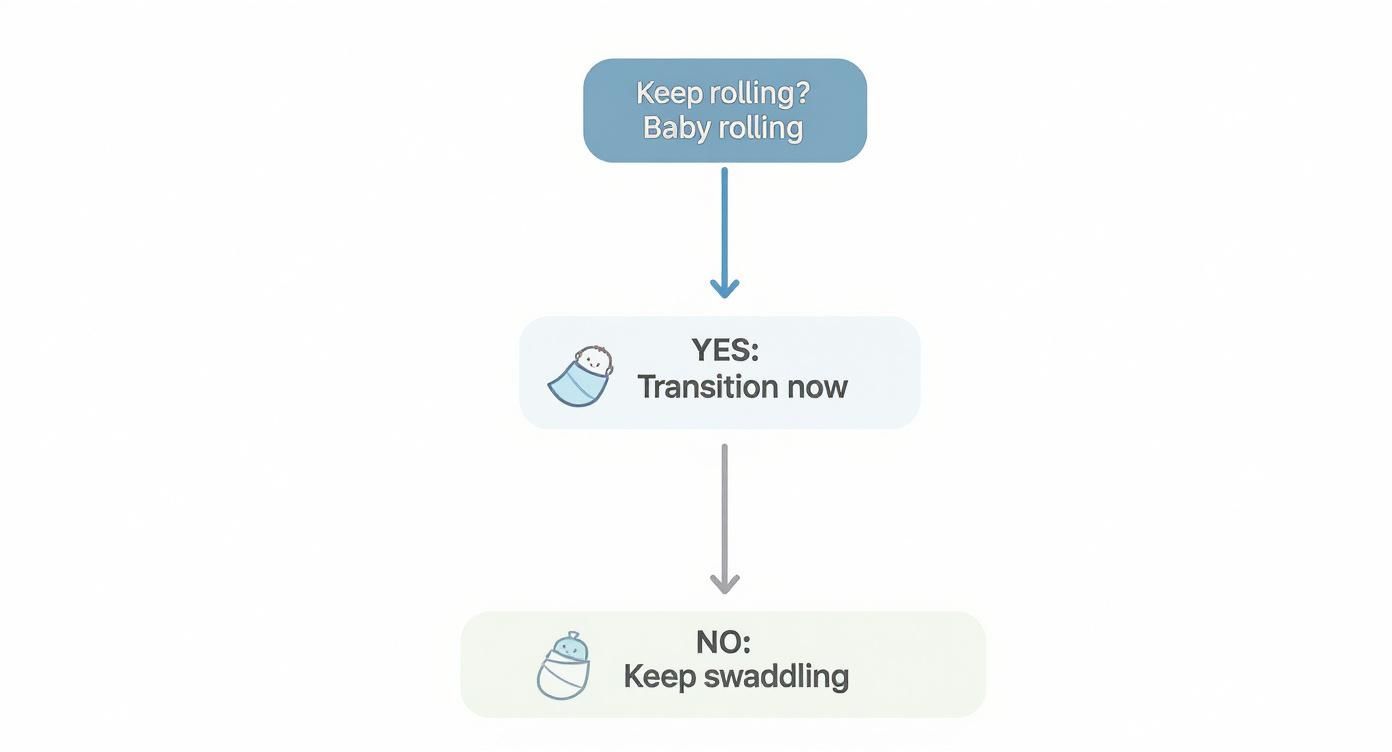
As you can see, your baby's ability to roll is the one thing that trumps all other factors.
Using Transitional Products
There's a third route: using a product specifically designed to bridge the gap between that snug swaddle and a roomy sleep sack. For some parents, these are an absolute game-changer.
- Swaddle-Up Suits: These let your baby sleep with their arms up by their face in a more natural position, but still give them that cozy, contained feeling.
- Zip-Off Wing Sacks: These are pretty clever. They start as a regular swaddle, but you can unzip and remove one "wing" at a time, making the one-arm-out method super simple.
- Transitional Sleep Suits: Think of products like the Merlin’s Magic Sleep Suit. They're puffy and thick, which helps dampen the startle reflex while keeping your baby safely on their back.
While these products can be a huge help, they aren't a magic wand. They tend to work best for babies who are fighting the traditional swaddle but aren't quite rolling yet. They offer a great middle ground, giving your baby a sense of security while safely introducing a bit more freedom.
How to Pick the Perfect Sleep Sack
Okay, so you're ready to make the leap from the swaddle. Welcome to the world of sleep sacks! Walking into this new product category can feel a little overwhelming at first. There are so many options.
Let's break down exactly what to look for so you can find the perfect wearable blanket for your little one.
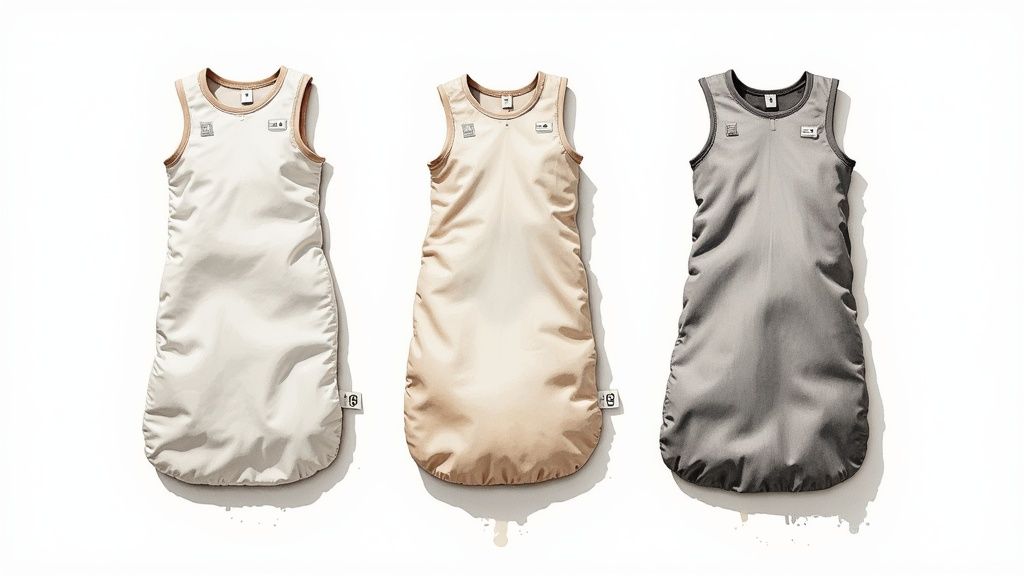
You're not alone in this search. The global market for baby sleep sacks was worth about $1.2 billion and is expected to more than double, hitting nearly $2.8 billion by 2033. It's clear that parents everywhere are looking for safer and more practical alternatives to loose blankets.
First Thing's First: What's a TOG Rating?
You'll immediately notice a "TOG" rating on just about every sleep sack label. It sounds technical, but it’s actually pretty simple. TOG stands for Thermal Overall Grade, which is just a fancy way of measuring how warm the fabric is.
Think of it like choosing a duvet for yourself. A higher TOG means a warmer, cozier sleep sack for a chilly room. A lower TOG is lighter and more breathable for warmer nights. Getting this right is the key to keeping your baby comfortable and, most importantly, safe from overheating.
Here's a quick cheat sheet:
- 0.5 TOG: Perfect for hot weather or nurseries that stay above 75°F (24°C). These are usually made from super light materials like thin cotton or bamboo.
- 1.0 TOG: This is the go-to, all-season classic for most homes. It’s ideal for rooms that hover between 69-73°F (21-23°C).
- 2.5 TOG: Your winter warrior. Grab one of these for chilly nights when the nursery temperature is between 61-68°F (16-20°C).
Nailing the right temperature is a huge part of safe sleep, so it's worth understanding TOG ratings for sleep bags in a bit more detail. If you want to dive even deeper, we have a whole guide explaining what is TOG.
Beyond TOG: Fabric and Fit Matter, Too
Once you've figured out the right warmth, it's time to consider the material and how the sleep sack fits. You want something soft on your baby's delicate skin that can also survive countless trips through the washing machine.
Common Sleep Sack Materials
| Material | Breathability | Best For | Care Notes |
|---|---|---|---|
| Cotton | High | Versatile, year-round use | Easy to wash, widely available. |
| Bamboo | Very High | Sensitive skin, warm climates | Ultra-soft, hypoallergenic, and moisture-wicking. |
| Merino Wool | Excellent | All climates (regulates temperature) | Naturally anti-bacterial but may require special care. |
| Fleece | Low | Cold winter nights only | Very warm but less breathable; use with caution. |
The fit is a non-negotiable safety check. The neck and arm openings need to be snug enough that the fabric can't ride up over your baby's face, but loose enough that it doesn't restrict them.
Finally, look for a sack that’s roomy at the bottom. Your baby needs plenty of space to kick, wiggle, and bend their legs into that "frog-leg" position. This "hip-healthy" design is crucial for their developing hip joints.
Focus on these three things—TOG, fabric, and fit—and you'll have no trouble finding a sleep sack that keeps your baby safe, comfortable, and ready for a great night's sleep.
Troubleshooting the Transition
Let’s be real for a second—the transition from that cozy, snug swaddle to a roomy sleep sack isn't always smooth sailing. Even with a perfect plan, you’re probably going to hit a few bumps in the road. A couple of rough nights can feel like a major setback, but I promise, it's completely normal and almost always temporary.
The biggest reason for those sudden wakeups? That pesky Moro (or startle) reflex. Your little one has spent their entire life so far feeling tightly contained, and now their arms are suddenly free to fly. It’s no wonder they accidentally smack themselves awake! It's a natural, healthy reflex, but man, can it wreck a good night's sleep while it's still strong.
Managing the Startle Reflex
When that reflex kicks in, your baby goes from zero to sixty in a split second. The trick is to create a sleep space that helps muffle those triggers and offers comfort in other ways. A few small tweaks to the environment can make a world of difference.
- Bring on the White Noise: A sound machine running continuously can be a lifesaver. It helps drown out those sudden household noises—the dog barking, a dish clattering—that can trigger a startle.
- Embrace the Dark Side: Blackout curtains are your best friend here. A super dark room minimizes visual surprises and helps keep your baby calm and settled.
- The Power of a Gentle Hand: As you lay your baby down, try placing a firm but gentle hand on their chest for a minute or two. That steady, reassuring pressure can be incredibly calming as they drift off.
Think of these little adjustments as a new kind of security blanket, replacing the physical hug of the swaddle while your baby gets used to their new freedom.
A few tough nights don't mean you're doing something wrong or that the transition is a failure. It’s a learning curve for your baby. Your best tool right now is consistency. Stick with it!
Handling New Night Wakings and Fussiness
It’s incredibly common to see a temporary spike in night wakings or general fussiness during this phase. Your baby is literally learning a new skill: how to sleep without being bundled up. It can be unsettling for them!
If you find yourself with a cranky little one, now's the time to lean into all your go-to calming strategies. For those extra difficult moments when nothing seems to work, our guide on how to soothe a fussy baby is packed with parent-tested tips to help you both get through it.
What About Rolling?
Seeing your baby rolling around in their crib for the first time is a huge milestone! A sleep sack is specifically designed to be safe for this. It gives them total freedom to move and find a comfy spot on their own.
If your baby rolls onto their tummy and gets a little stuck and frustrated, it’s perfectly fine to gently help them back over. But the real solution is practice during the day. Plenty of supervised tummy time builds the neck and core strength they need to master rolling both ways, which ultimately makes them much more comfortable and confident in the crib at night.
Sleep Sack Safety Essentials
Making the switch from a swaddle to a sleep sack is a fantastic step toward safer sleep, but using that new wearable blanket correctly is what really delivers peace of mind. Let’s walk through the essentials to make sure your little one is not just cozy, but as safe as possible all night long.
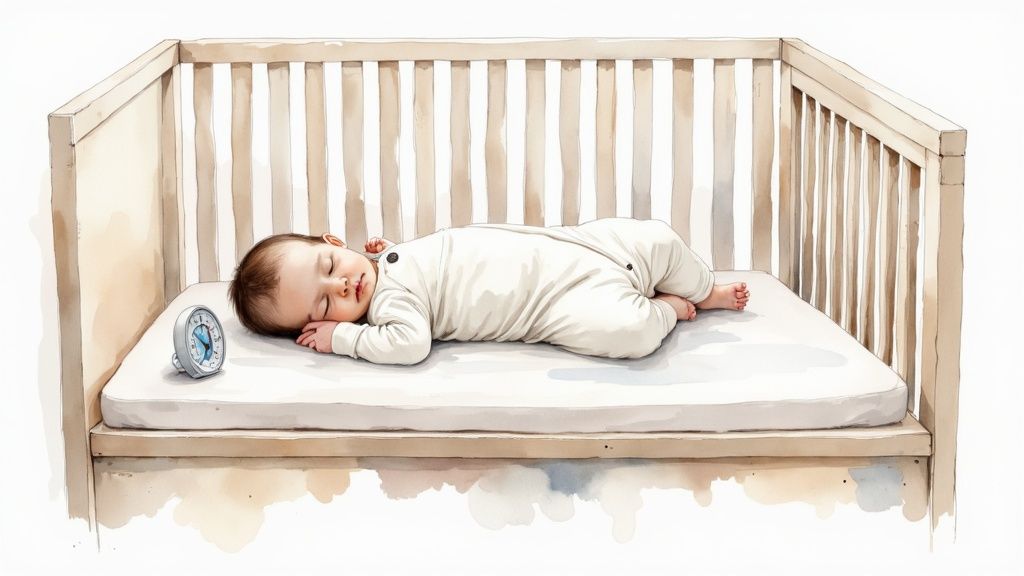
It’s no surprise that these products are everywhere now. Parents are actively looking for safer sleep solutions, and the market shows it. The closely related global baby swaddling market was valued at around $0.9 billion and is expected to soar to $2.6 billion by 2033. This boom really highlights how much parents value products designed with infant safety at their core.
The ABCs of Safe Sleep
First things first: a sleep sack doesn't change the golden rules of safe sleep. You still need to place your baby Alone, on their Back, in a bare Crib. A sleep sack is a wearable blanket, not a sleep positioner.
This means the crib should have nothing in it but a fitted sheet.
- No bumpers (not even the "breathable" mesh ones)
- No pillows or cute stuffed animals
- No loose blankets or toys
A sleep sack is the one and only blanket your baby needs. Keeping the sleep space clear is a cornerstone of the American Academy of Pediatrics' safe sleep recommendations. For a deeper dive, check out our full guide on whether sleep sacks are safe for newborns.
Think of a sleep sack as your baby's personal, wearable comforter. It’s designed to keep them warm without the dangers that come with loose bedding.
Preventing Overheating
One of the biggest anxieties for any parent is temperature. Is the baby too hot? Too cold? This is where the sleep sack's TOG rating becomes your best friend. Dressing your baby correctly underneath the sack is key to preventing overheating, a major risk factor for SIDS.
A good rule of thumb is to dress your baby in one light layer less than what you'd be comfortable wearing. To check if they're too warm, feel the nape of their neck or their tummy. It should feel warm and dry, not sweaty or hot to the touch. Don't worry about cool hands—that's totally normal and not a good indicator of their core body temperature.
Regular Wear and Tear Checks
Finally, make it a habit to give your baby's sleep sack a quick once-over every time you do laundry.
- Look for any loose threads that could get tangled around tiny fingers or toes.
- Make sure the zipper works smoothly and has its protective cover at the top to prevent poking.
- Check that the neck opening is snug enough that it won't ride up and cover your baby's mouth or nose.
Got Questions About Ditching the Swaddle? We've Got Answers
Even with the best plan in place, moving on from the swaddle can feel a little nerve-wracking. It’s a big change for your baby, and it’s totally normal to second-guess yourself. Let's tackle some of the most common questions I hear from parents going through this exact same stage.
How Long Is This Transition Really Going to Take?
Ah, the million-dollar question. The honest-to-goodness answer is... it depends. I’ve seen some super chill babies make the switch in just two or three nights. For others, it’s more of a two-steps-forward, one-step-back kind of dance that can take a week or two.
The most important thing you can do is stay consistent and be patient. Once you pick a method, try to give it a solid few nights before you throw in the towel. Your baby is literally learning a new skill—how to sleep without being bundled up like a tiny burrito—and that takes a bit of practice.
Every baby’s timeline is unique. Try not to compare your little one's progress to what you see on Instagram. Just focus on your baby's cues and celebrate every small victory.
Help! My Baby Hates Having Their Arms Out!
This is probably the most frequent SOS I get from parents. It makes sense, right? They've spent their whole lives feeling snug and contained. Suddenly having their arms free can feel strange and often triggers that pesky startle reflex. Don't panic! It doesn't mean you need to retreat back to a full swaddle, especially if your baby is on the verge of rolling.
Here are a few things you can try right now:
- Go back a step. If you tried the "cold turkey" two-arms-out approach, it might have been too much, too soon. Try going back to the one-arm-out method for a few nights before freeing the second one.
- Offer a little extra comfort. When you lay them down, rest your hand firmly but gently on their chest for a few extra minutes. That comforting pressure can work wonders to help them settle.
- Try a transitional product. This can be a game-changer. Products like the Zipadee-Zip or a Merlin's Magic Sleepsuit are designed to soften the startle reflex while still being safe for babies who can roll, acting as a perfect bridge between the swaddle and a sleep sack.
Can My Baby Use a Sleep Sack Until They're a Toddler?
Yes, absolutely! This is one of the biggest perks of making the swaddle to sleep sack transition. While swaddles have a clear expiration date for safety reasons, a sleep sack is simply a wearable blanket that can be used for a long, long time.
You’ll find that most brands offer sleep sacks in sizes that grow with your child, often right into their toddler years. Many families I know keep using them until their child transitions from a crib to a toddler bed and is ready for a real blanket, which is usually sometime between age two and three.
At Little Venture Co., our bamboo viscose sleep sacks are designed to provide that safe, cozy comfort from the first transition all the way through the toddler years. Explore our collection of gentle, faith-inspired sleepwear to find the perfect fit for your growing little one.