

What is TOG Rating? A Parent's Guide to Safe Sleepwear
Ever found yourself staring at your baby's sleep sack, wondering what on earth a TOG rating is? It's a question every new parent asks. Think of it like the warmth rating on your own duvet—it's just a simple way to measure how warm a piece of fabric will keep your little one.
A higher TOG means a thicker, cozier sleep sack for those chilly nights. A lower TOG, on the other hand, is all about lightweight, breathable comfort when it's warm.
Decoding the TOG Rating
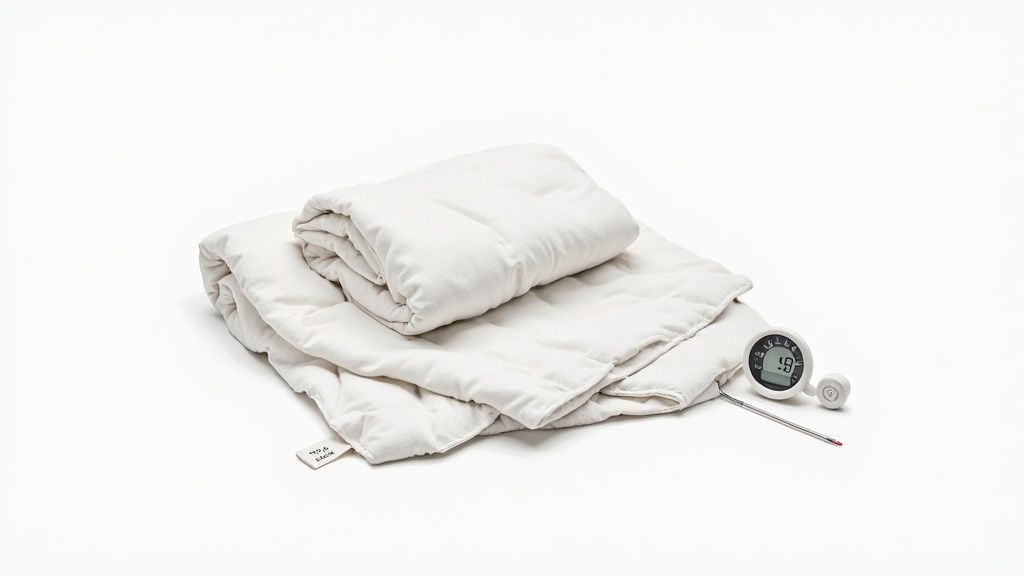
So, what does TOG actually stand for? It’s Thermal Overall Grade. This isn't just some made-up number slapped on a tag; it's a standardized, lab-tested measurement of how well a fabric insulates. It takes all the guesswork out of dressing your baby for bed, giving you a reliable way to make sure they're just right—not too hot, not too cold.
This rating system has become a global benchmark for a reason. It started in the UK, where over 90% of duvet manufacturers use it, and has since been adopted across Europe and Australia. It’s a game-changer for parents everywhere. You can learn more about how this system provides clear warmth indicators on domiamia.com.
Why It Matters
Getting your head around TOG ratings really simplifies one of the most stressful parts of early parenthood. No more middle-of-the-night panic wondering if your baby is warm enough or layering them in a million blankets (which isn't safe!). You just need to know the TOG.
- Higher TOG = More Warmth: Think 2.5 or 3.5 TOG for cold winter nights.
- Lower TOG = Less Warmth: A 0.5 or 1.0 TOG is your best friend for warm summer evenings.
The whole point of the TOG system is to help prevent overheating. Since babies can't regulate their own body temperature very well, this is a huge deal for their safety and comfort. It gives you the power to create a safe, cozy sleep space every single time.
Choosing the right TOG-rated sleep sack is the first step, but what goes underneath is just as important. Our complete guide on how to dress baby for sleep breaks down the perfect layering combos for any temperature.
To make things even easier, here’s a quick chart to help you match your nursery’s temperature with the perfect TOG rating.
Quick TOG Rating and Room Temperature Guide
Use this chart to quickly find the recommended TOG rating for your nursery's temperature.
| TOG Rating | Ideal Room Temperature (Celsius) | Ideal Room Temperature (Fahrenheit) | Best For |
|---|---|---|---|
| 0.5 | 24-27°C | 75-81°F | High summer, heatwaves |
| 1.0 | 20-24°C | 69-74°F | Summer and daytime naps |
| 2.5 | 16-20°C | 61-68°F | Year-round, standard rooms |
| 3.5 | 12-15°C | 54-59°F | Cold winter nights |
Just check your thermostat, find the corresponding TOG on the chart, and you're good to go! It’s one less thing to worry about.
Why TOG Ratings Are a Parent's Best Friend for Sleep Safety
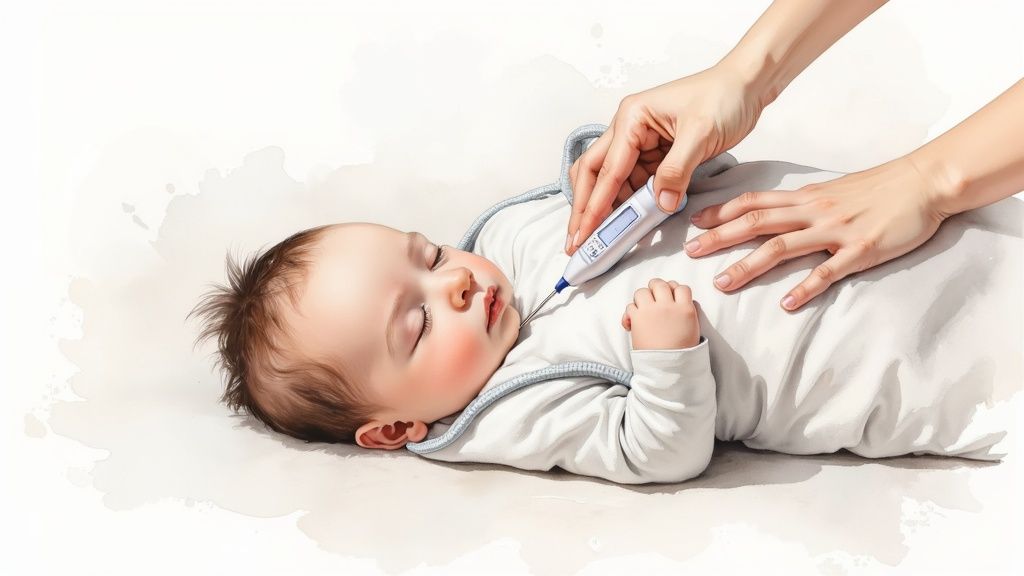
Figuring out TOG ratings isn't just about making your baby cozy—it's a massive piece of the sleep safety puzzle. Unlike us, babies and toddlers can't regulate their own body temperature very well. They can't just kick off a heavy blanket when they get too hot, which means they're counting on you to get their sleep setup just right.
This is where understanding what is tog rating becomes a game-changer for parents. The biggest worry is overheating, which is a serious risk for little ones. A TOG rating on a sleep sack or swaddle takes all the stressful guesswork out of dressing your baby for bed.
That little number gives you a clear, science-backed way to make sure you aren't layering them in fabrics that are too heavy for the temperature of their room. It's one of the simplest and most effective tools you have for a safer night's sleep.
The Link Between Overheating and SIDS
The connection between being too warm and sleep safety is something experts have known about for a long time. Solid research has shown that overheating is a significant risk factor for Sudden Infant Death Syndrome (SIDS). Some studies even point to high TOG values in baby clothing as a contributor to that risk.
This is exactly why health organizations are so firm about avoiding loose blankets and recommend sleeping bags with a TOG rating no higher than 4.0. You can dig deeper into these important SIDS risk findings.
Using the right TOG-rated sleepwear is a direct, actionable step you can take to mitigate the risk of overheating and create a safer sleep space for your child.
Besides picking the right TOG, knowing some safe newborn swaddling techniques is another crucial part of the equation. Both of these practices go hand-in-hand to reduce risks.
Ultimately, keeping the best temperature for baby sleep helps them stay comfortable and safe all night long, giving you that priceless peace of mind. Check out our guide here: https://littleventureco.com/blogs/blog/best-temperature-for-baby-sleep
Ever found yourself staring at a sleep sack label, wondering where that little number actually comes from? The TOG rating isn't just a suggestion; it's a number backed by some serious science. This ensures that a 1.0 TOG rating means the same thing, no matter which brand you choose, giving you a reliable way to gauge warmth.
So, what's the secret? It all happens in a lab. Testers take a sample of the fabric and place it between two plates. One plate is heated to match a baby's body heat, while the other is kept at a cooler room temperature.
They then measure how much heat escapes from the warm plate, through the fabric, to the cool plate. The less heat that gets through, the better the fabric is at trapping warmth, earning it a higher TOG rating. It's a super precise way of measuring how cozy a material really is.
A Standard You Can Count On
This consistent, scientific method is what makes the TOG system so incredibly helpful for parents. It’s like a universal language for warmth that lets you compare apples to apples when choosing sleepwear for your baby.
The term TOG actually stands for 'Thermal Overall Grade.' It was first developed in the U.K. way back in the 1940s to standardize how the warmth of textiles was measured. Fun fact: 'tog' was also old-fashioned slang for clothes! You can read a bit more about its history over at idfl.com.
Because of this long-standing, universal standard, you can be confident that a 0.5 TOG sleep sack from one brand will keep your baby just as cool as a 0.5 TOG from another. It’s all about taking the guesswork out of dressing your little one for sleep, so you can rest easy too.
Choosing the Right TOG Rating for Every Season
Alright, now that we’ve covered the "what" of TOG ratings, let's get into the "how." The single most important thing to remember is this: dress your baby for the temperature of their room, not the weather outside. It’s a common mistake! Your well-insulated home might be a cool oasis during a heatwave or perfectly cozy in a blizzard, so the forecast doesn't really matter.
The easiest way to get it right? A simple room thermometer. It takes all the guesswork out of the equation and gives you the confidence that you’re creating the safest, most comfortable sleep setup for your little one. Once you know the room’s temp, picking the right sleep sack is a breeze.
This infographic breaks down the difference between a science-backed system like TOG ratings and just winging it.

As you can see, relying on a tested system gives you a clear path to safety. Guesswork? Not so much. It just leaves you with uncertainty and potential risks nobody wants to take.
A TOG for Every Temperature
Think of TOG ratings as your baby's seasonal wardrobe. Each one is designed for a specific temperature range, making it super simple to keep them comfortable year-round. Here’s a quick rundown of the most common ratings you'll find.
- 0.5 TOG: This is your best friend during hot summer nights and heatwaves. It's incredibly lightweight and breathable, perfect when the nursery is 24°C (75°F) or warmer.
- 1.0 TOG: The versatile all-rounder. This one is ideal for those in-between seasons like spring and autumn when the room temperature hovers between 20-24°C (69-74°F).
- 2.5 TOG: Your standard winter-weight option. It offers plenty of warmth for cooler rooms that are typically 16-20°C (61-68°F), especially in homes without the heating on all night.
The classic parent trick is to gently feel the back of your baby's neck or their chest. If they feel warm and dry, they're just right. Don't stress about cool hands or feet—that's totally normal for babies!
Of course, the sleep sack is only half the story. What your baby wears underneath is just as crucial for getting their comfort level perfect. It’s a bit like finding the best tog for your summer duvet; you have to consider the whole layering system.
Speaking of layers, knowing what PJs to pair with each sleep sack is key. That’s why we’ve put together this handy table to make those middle-of-the-night decisions a little easier.
What Your Baby Should Wear Under Their Sleep Sack
| Room Temperature (°C / °F) | Recommended TOG Rating | Suggested Clothing |
|---|---|---|
| Over 26°C (78°F) | No sleep sack | Just a diaper |
| 24-25°C (75-77°F) | 0.5 TOG | Short-sleeved bodysuit |
| 21-23°C (70-74°F) | 1.0 TOG | Short-sleeved bodysuit |
| 18-20°C (64-69°F) | 1.0 TOG | Long-sleeved bodysuit |
| 16-17°C (61-63°F) | 2.5 TOG | Long-sleeved bodysuit + sleepsuit (no-feet PJs) |
| Under 16°C (61°F) | 2.5 TOG | Long-sleeved bodysuit + sleepsuit + socks |
Remember, this is just a guide! Every baby is different, so use it as a starting point and adjust based on your little one's comfort.
And when it comes to the pajamas themselves, the fabric makes a huge difference. Materials like bamboo are fantastic because they're naturally breathable and help regulate temperature. You can find out more about why bamboo pajamas are perfect for all seasons in our detailed guide.
Common TOG Mistakes and How to Avoid Them
https://www.youtube.com/embed/FcZufu_Ix54
Getting the hang of TOG ratings can make you feel like you've finally cracked the code to baby sleep. But even with the best intentions, a few common slip-ups can happen. Let's walk through them so you can keep your little one sleeping safely and soundly.
The biggest no-no? Adding a loose blanket on top of a sleep sack. This completely undermines the whole point of the TOG system and, more importantly, it's a major safety hazard. A sleep sack is specifically designed to be the only covering your baby needs.
Trusting Your Thermometer, Not Just Your Gut
Another common pitfall is just guessing the room temperature or assuming it's constant all night long. A room that feels perfectly cozy at 8 PM can get surprisingly chilly by 4 AM, which is often enough to wake a sleeping baby.
A simple room thermometer is an absolute must-have. It gives you an accurate, real-time reading, taking all the guesswork out of picking the right TOG and layering combo for the night.
It's so tempting to overdress a baby "just in case," but this is one time where less is more. It's always, always safer for a baby to be slightly cool rather than too warm. Stick to the layering guides for your room's temperature.
Finally, remember to be flexible and adjust for different circumstances. Life with a baby is never static, right?
- Fever: If your little one is running a temperature, they'll need fewer layers or a sleep sack with a lower TOG.
- Drafty Rooms: Is the nursery a bit drafty? You could add a pair of socks, but never, ever add extra blankets in the crib.
- Travel: Heading to Grandma's for the weekend? Her house might be warmer or cooler than yours, so pack a couple of TOG options to be prepared.
Using the TOG system confidently is all about using it correctly every single time. For more tips on creating the safest sleep environment, check out our guide on whether sleep sacks are safe for newborns.
Answering Your Top TOG Questions
Okay, so you've got the basics down, but what about those specific situations that pop up in the middle of the night? Let's walk through some of the most common questions I hear from parents, so you can feel confident you're making the right call.
"What if My Baby Still Feels Cold in the Right TOG?"
This is such a common worry! Before you rush to add another blanket (which is a big no-no), do a quick temperature check. The best way is to feel the back of their neck or their chest. Cool hands and feet are totally normal for babies and don't mean they're actually cold.
If their core does feel a bit chilly, it's perfectly fine to add a single, thin layer underneath their sleep sack, like a long-sleeved onesie. The trick is to keep any extra layers snug-fitting. Remember, never add loose blankets, pillows, or duvets to the crib.
It's always, always safer for a baby to be a little on the cool side than to risk overheating. Think "comfortably warm," not hot.
"Can't I Just Use a High TOG Sack and Fewer Clothes?"
I get the logic here—it seems simpler! But it's really best to match the sleep sack's TOG to the room temperature first, then adjust the clothing underneath. High-TOG sleep sacks are designed to hold in a lot of warmth.
Even if your baby is just in a diaper, a 2.5 TOG sleep sack in a room that's only moderately cool can easily cause them to overheat. Following the guidelines is truly the safest bet for your little one.
"Do I Need a Different TOG for Daytime Naps?"
Yep, you absolutely might! You should always dress your baby for the room they're sleeping in right now. A nursery can be much warmer during the day, especially if it gets a lot of sunlight, compared to how it feels at 3 AM.
If the room is warmer for their nap, grab a lighter, lower-TOG sleep sack. Getting into the habit of checking the room temp before every single sleep—day or night—is the key to keeping them safe and sound.
At Little Venture Co., we get it. We pour our hearts into designing ultra-soft bamboo sleepwear that puts your baby's safety and comfort first. Our TOG-rated sleep sacks are made to give you peace of mind so everyone can get a more restful night.
You can explore our faith-inspired collection right here: https://littleventureco.com.