

Onesies and Sleepers: A Parent's Guide to Baby Sleepwear
At 2am, your baby wakes for a diaper change. You're holding one tiny ankle, trying to open three snaps without fully waking either of you, and wondering whether a simple bodysuit would have been easier than the footed sleeper underneath. The choice between onesies and sleepers sounds simple until warmth, fit, fabric, closures, and safe sleepwear rules all enter the picture.
Neither garment is automatically better. The right choice depends on the room, the season, the baby's skin, and how often you expect to change a diaper overnight. Once you treat sleepwear as a system rather than a fashion decision, the late-night choice becomes much clearer. You can also find useful family-routine guidance in resources such as this overview of PTA officer responsibilities, where practical planning and dependable routines matter for children and caregivers alike.
For newborn sleep tips beyond clothing, this guide to getting sleep with a newborn can help you think about the wider nighttime routine. The clothing decision itself starts with one question: does your baby need a base layer, an outer layer, or both?
The 2am Question Every Parent Asks
Start with the sleep environment
A onesie, also called a bodysuit, usually sits close to the body and closes around the diaper. A sleeper covers more of the body, often including the arms and legs, and may include built-in feet. At night, the distinction matters because coverage changes warmth, and the closure changes how much of the baby you need to uncover during a diaper change.
If the nursery feels warm, a breathable bodysuit over the diaper may be enough. In a cooler room, a long-sleeve onesie beneath a sleeper can create a comfortable layered outfit without relying on one heavy garment. The goal isn't to make the baby feel hot. It's to provide enough coverage while keeping the sleep space comfortably cool.
Make the 2am decision simple
Use this quick order:
- Check the room. Consider the actual sleep environment, not the outdoor weather or how cold you feel.
- Look at the garment's coverage. A short-sleeve bodysuit, long-sleeve bodysuit, footless romper, and footed sleeper don't provide the same insulation.
- Choose the easiest safe closure. A two-way zipper can make a lower-half diaper change quicker, while snaps may work well during the day.
- Check the baby, not just the label. Sweating, flushed cheeks, damp hair, heat rash, or rapid breathing can signal that the baby is too warm. This practical guidance aligns with independent sleepwear advice.
The practical default: use the lightest combination that keeps your baby comfortably covered, fits properly, and allows you to change the diaper without creating a full wardrobe operation.
The best outfit is the one that matches the room and survives the routine. A sleeper may be convenient on one night, while a onesie plus a lighter outer layer works better on another. That flexibility is useful because babies' needs change with the season, the laundry cycle, and the number of overnight changes.
What a Onesie Actually Does
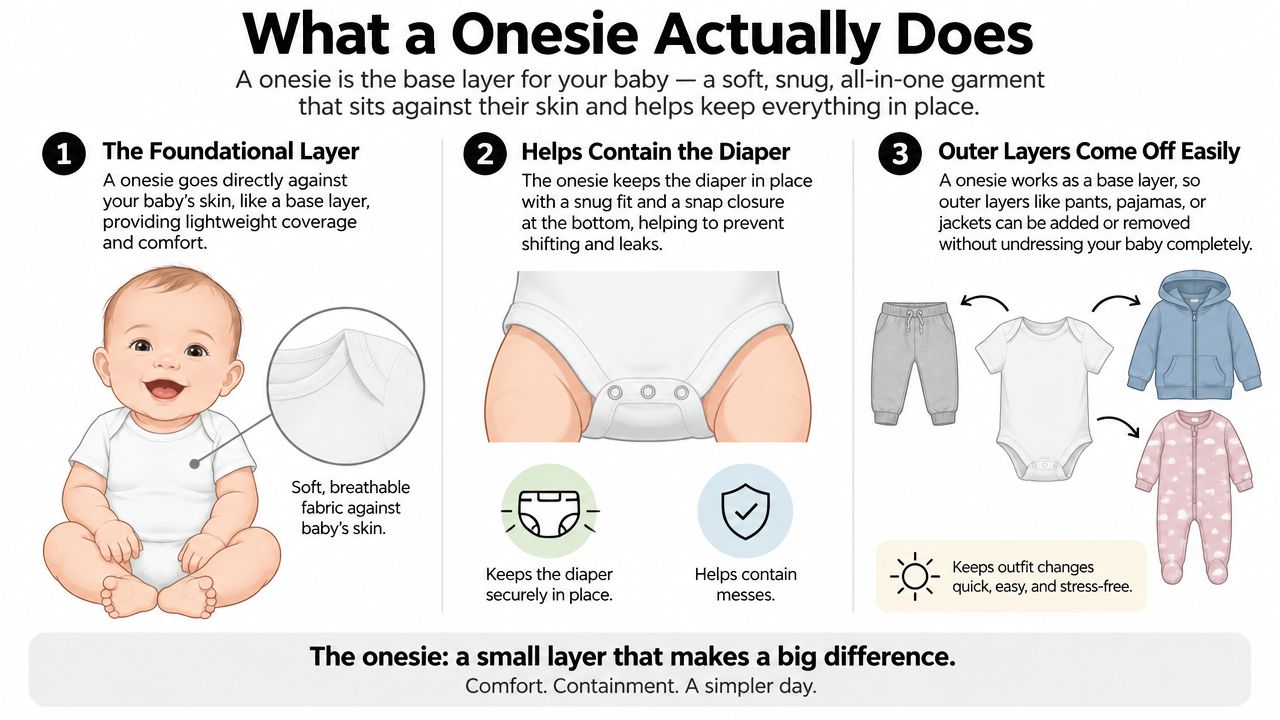
A onesie functions as the base layer of baby sleepwear. It rests against the skin, stays anchored around the diaper, and supports the rest of the outfit, whether that is a romper, swaddle, or sleeper. The snap-crotch design helps prevent the garment from riding up while keeping the diaper area accessible during changes.
Use the base layer strategically
Short-sleeve onesies suit outer garments that already cover the arms and legs. Long-sleeve versions add arm coverage in a cooler room without automatically requiring a thick sleeper. The fit should sit close to the body but leave enough space for the diaper and free movement through the shoulders and legs.
A sleeper has a broader job. It works as an outer shell, combining coverage for the torso, arms, and legs in one garment. Footed sleepers cover the feet, while footless styles leave room for socks or provide more flexibility in warmer conditions. Closures vary too. Snaps may be convenient during the day, while a front or two-way zipper can make an overnight diaper change easier.
Layer or simplify
In a cooler room, a long-sleeve onesie beneath a sleeper can provide two lighter layers instead of one bulky garment. The bodysuit keeps the diaper area and torso covered, while the sleeper covers the limbs. In a warmer room, a lightweight sleeper may work alone over a diaper when its fit and fabric suit the environment.
Use the outfit as a decision tool, not an automatic formula. Each added layer contributes warmth, so check the baby's chest or the back of the neck during a change. Cold hands and feet alone do not show whether the baby is comfortable.
For more guidance on selecting a foundation garment, see this guide to newborn baby onesies. It can help clarify whether a short-sleeve base, long-sleeve option, or stand-alone onesie fits the routine.
Why Bamboo Viscose and OEKO-TEX Matter
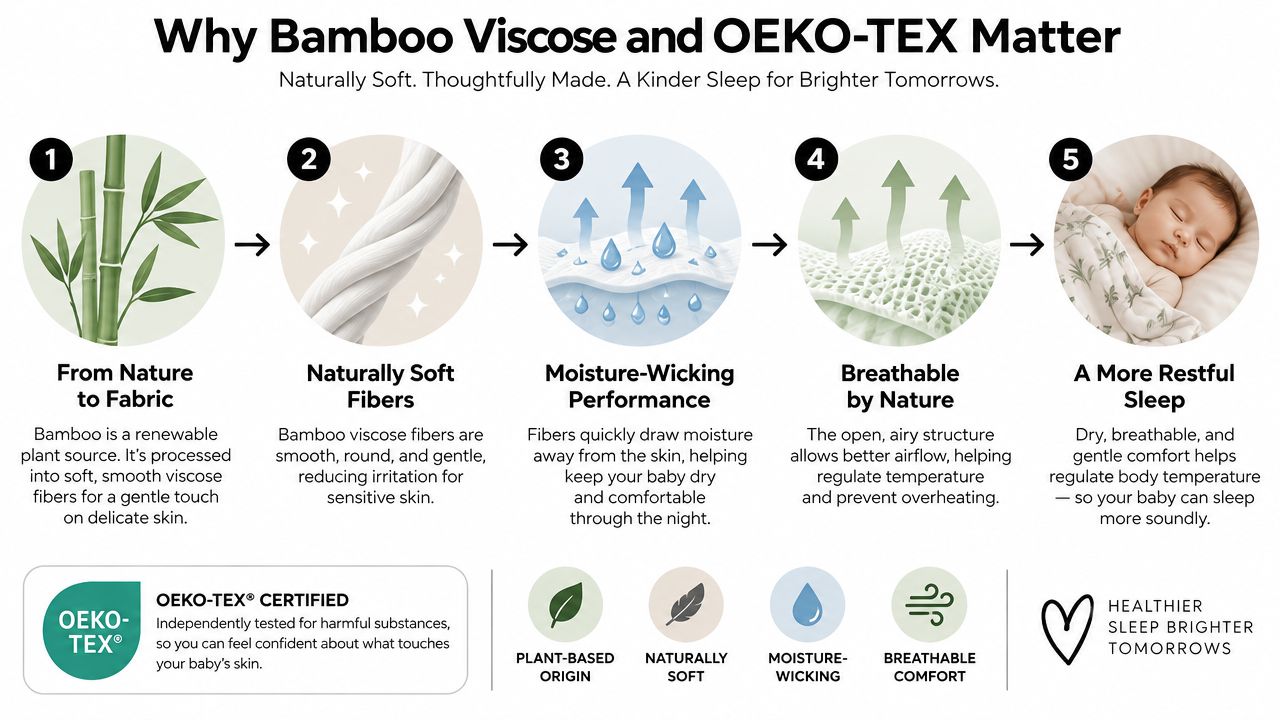
At 2 a.m., a baby's sleeper can feel comfortable while the room, fabric, and fit tell a different story. Bamboo viscose is often chosen for baby sleepwear because it feels smooth against delicate skin and can help move moisture away from the body. That may reduce a clammy feeling during a long nap or overnight stretch, especially for babies prone to skin irritation.
The fiber is only one part of the decision. A lightweight bamboo viscose onesie may work as a base layer, while a thicker sleeper made from a similar fiber provides more coverage and insulation. Breathability can support comfort, but it does not replace checking the baby for overheating. During a diaper change, assess the garment's weight and coverage alongside the room conditions.
Understand the certification
OEKO-TEX Standard 100 addresses harmful substances in the finished product. Its assessment can cover the garment's fabric, thread, dyes, and snaps. That gives the certification a different role from a marketing description of the fiber. One describes the material; the other provides testing information about the finished item.
Check the product page or hangtag for a clear certification reference. Terms such as “clean,” “natural,” or “chemical-free” do not confirm the same thing. If a certificate or product identifier appears, use the brand's verification information to see what it covers.
For sensitive skin, evaluate two things separately: how the fabric feels and what testing supports the product's safety claims.
Bamboo viscose may suit babies with easily irritated skin, but reactions vary. Wash a new garment before its first wear, avoid harsh laundry products, and stop using it if persistent redness or irritation develops. For a closer explanation of what bamboo viscose fabric is, review the linked guide.
The practical choice is straightforward: select a comfortable fabric, verify the certification, and match the garment's coverage and insulation to the room.
Sizing, TOG Ratings, and the CPSC Sleepwear Rule
Safe selection combines compliance, insulation, and fit. Treating these as separate shopping details can lead to a garment that feels soft but is too loose, warm but unsuitable for the room, or convenient but difficult to change safely.
Begin with the CPSC rule
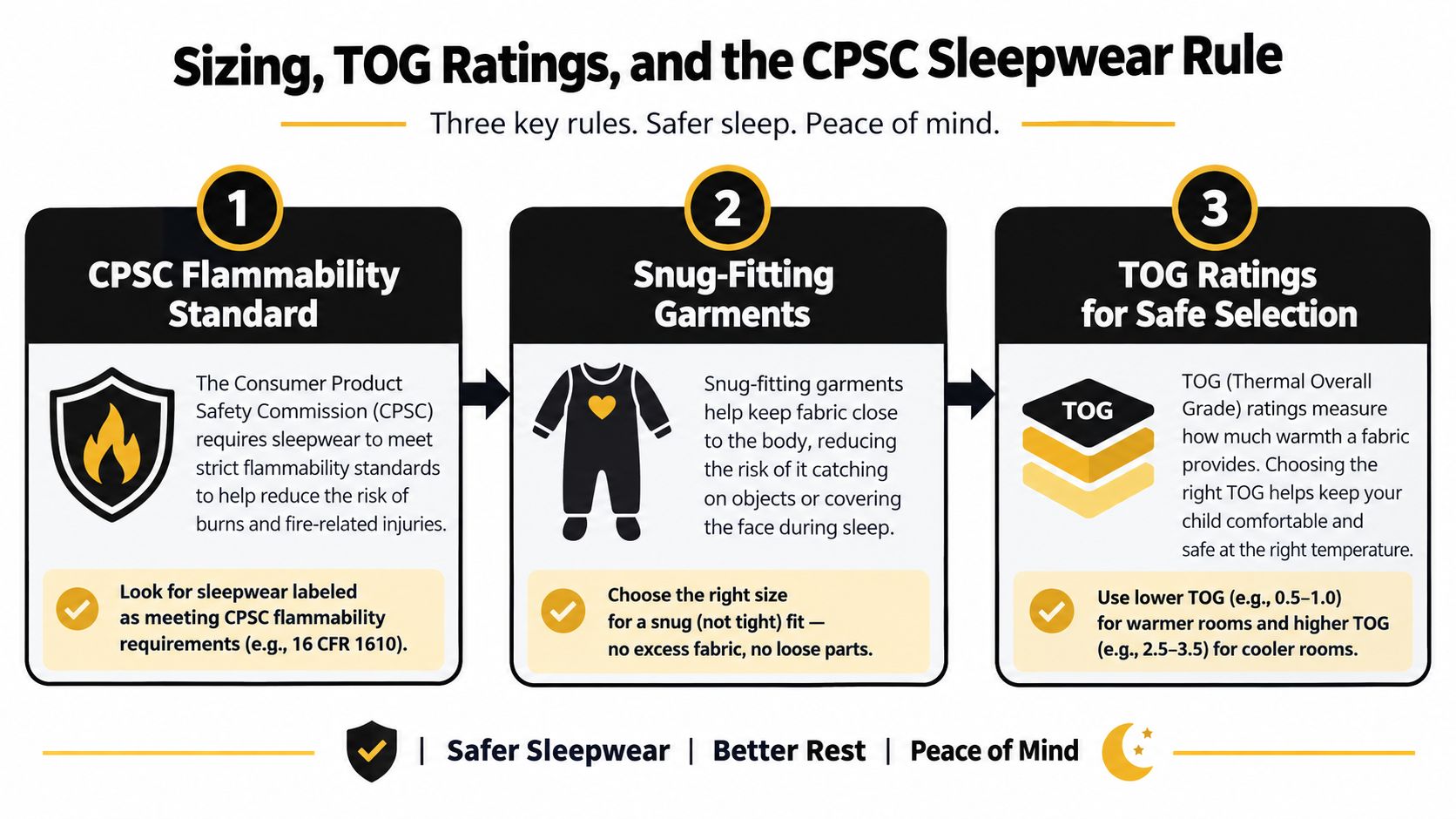
In the United States, children's sleepwear sold in sizes larger than 9 months must generally be flame-resistant or fit snugly enough to qualify for an exception. The purpose is to reduce ignition and burn risk from small open-flame sources such as candles, matches, lighters, and heaters, according to the CPSC sleepwear laboratory bulletin.
Infant-sized one-piece garments at 9 months or smaller can be exempt when they aren't longer than 25.75 inches, or 64.8 cm. Two-piece garments can qualify when no piece is longer than 15.75 inches, or 40.0 cm, and the label clearly states the intended age in months. These details affect how manufacturers design, test, and label garments.
Match insulation to the room
TOG, or Thermal Overall Grade, describes insulation. A higher TOG retains more heat, while a lower TOG allows more breathability. Guidance commonly maps:
- 0.2 to 0.5 TOG: very warm rooms above 24°C
- Around 1.0 TOG: rooms around 20 to 22°C
- Around 1.5 TOG: rooms around 18 to 20°C
- Around 2.5 TOG: cooler rooms around 16 to 20°C
These ranges come from standardized sleepwear guidance on TOG and baby clothing. Use them as a starting point, then follow the product's own instructions and observe your baby.
Finish with fit
Age labels are only an estimate. Check the manufacturer's height and weight guidance, then look at the garment itself. A sleeper shouldn't bunch around the face, restrict movement, or leave excessive extra fabric around the torso. A very tight garment can be uncomfortable, while an oversized one can change how the clothing sits and retains warmth.
The decision sequence is straightforward: confirm the sleepwear category and fit, choose the insulation for the room, then test comfort by checking the baby's chest or neck.
Daytime Outfits Versus Overnight Sleepers
The same baby may wear a onesie during a morning walk and a sleeper after the evening bath. That isn't inconsistency. Daywear prioritizes movement, quick access, and flexible layering, while overnight clothing prioritizes stable coverage and fewer disruptions.
A short-sleeve onesie under a cotton romper can work for daytime errands. Snaps make diaper changes manageable while the baby is awake, and a lighter garment allows the baby to move freely. For a nap, the outfit may need adjustment if the room is warmer or cooler than expected.
At night, a footed sleeper or zip romper often simplifies the routine. A two-way zipper can provide access to the diaper without pulling the garment over the baby's head, and built-in feet mean socks won't disappear in the crib. The correct TOG still depends on the room, not on the fact that the garment is labeled “pajamas.”
| Feature | Daytime | Overnight |
|---|---|---|
| Main priority | Movement and adaptable layers | Stable coverage and easy changes |
| Common garment | Onesie with a romper or light layer | Footed sleeper or zip romper |
| Closure choice | Snaps or front openings | Two-way zipper or accessible snaps |
| Insulation | Lighter fabric when active | Room-appropriate TOG and coverage |
| Diaper access | Frequent changes during wake windows | Lower-half access that limits disruption |
Hybrid zip rompers bridge the two uses. They can serve as a simple daytime outfit and a nighttime layer without requiring a complete change before every nap. Families managing older children's nighttime routines may also find practical context in this sleepovers with pull-ups guide, especially when planning clothing and bathroom access around sleep away from home.
Why Parents Are Moving to All-in-One Pieces
All-in-one sleepwear solves a specific problem: too many separate steps when everyone is tired. Magnetic closures, two-way zippers, and footed construction reduce the amount of handling required during a diaper change, which can help a baby settle again sooner.
A magnetic closure can be useful when you need to open the garment quickly without threading multiple snaps. A two-way zipper offers another advantage, because the lower portion can open while the upper body stays covered. That matters in a cool room, where fully undressing the baby can create a longer and more disruptive change.
Design features that earn their place
- Lower-opening zippers keep the chest covered while giving access to the diaper.
- Footed legs remove the need to search for loose socks after every wash.
- Stretchy necklines make dressing gentler when an overhead pull is unavoidable.
- Protected zipper ends help prevent the zipper from rubbing or pinching the chin.
- Reinforced seams support repeated laundering and daily use.
These features aren't just decorative upgrades. They respond to the physical reality of parenting: one hand may be holding the baby, the room may be dark, and the priority is a fast change with minimal stimulation.
At 2am, convenience is a safety feature only when it still comes with a proper fit and clear access to the diaper.
Older snap-style rompers still have a role. They work well for daytime wear, short changes, and warm rooms where a full sleeper isn't needed. But overnight, an all-in-one garment often earns its place because it keeps the outfit together, reduces exposed skin during changes, and avoids the lost-sock problem.
Search and shopping behavior also reflects this convenience shift. Trend coverage reports that onesies have outperformed sleepers in search interest, while magnetic-closure garments grew from 8% of the baby sleepwear market in 2020 to 15% in 2025. Those figures come from trend coverage of newborn baby wear, and they point to a consumer preference for easier changes and day-to-night flexibility, not proof that one closure suits every family.
Caring for Bamboo Sleepwear So It Lasts
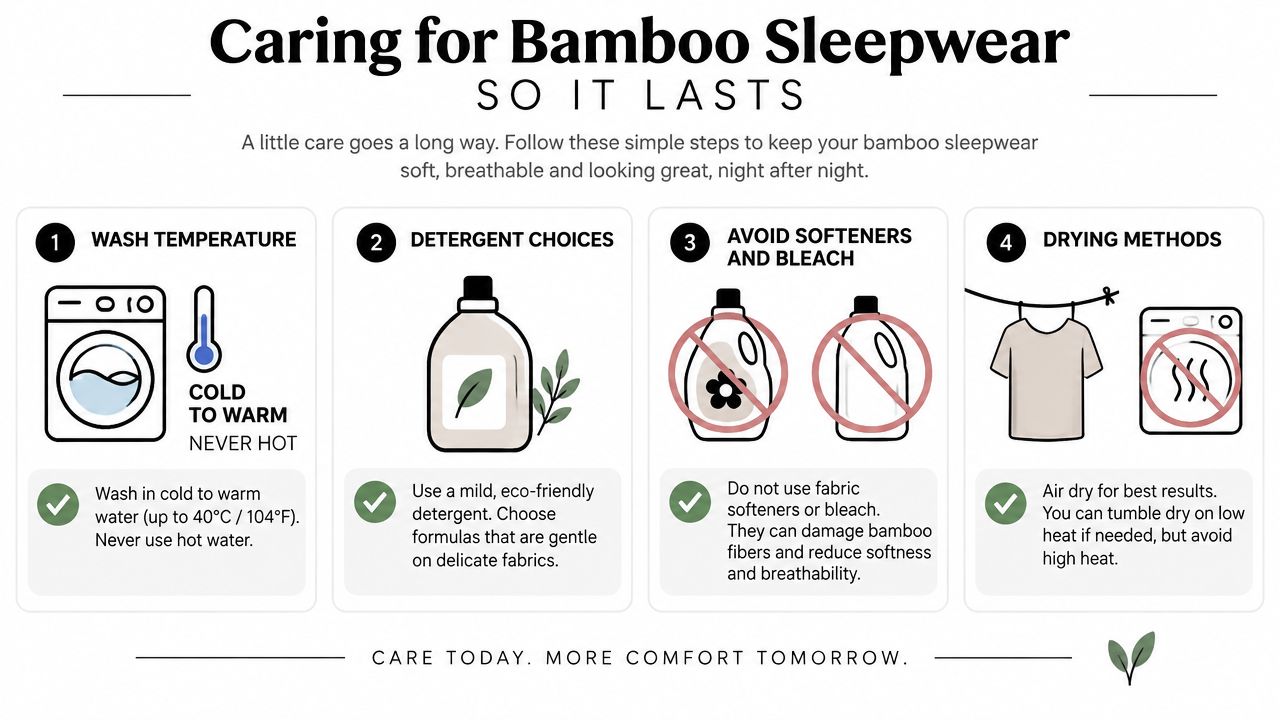
Bamboo viscose stays comfortable when the wash routine is gentler than the routine you might use for towels or heavy cotton. Start by reading the care label, then choose a cold-to-warm wash, avoiding hot water unless the manufacturer specifically permits it.
Use a gentle detergent, preferably one without a strong fragrance if your baby has sensitive skin. Skip fabric softener and chlorine bleach. Softener can coat fibers and affect absorbency, while bleach can weaken or discolor the material. Formula and spit-up stains are easier to manage when treated before washing rather than left to set.
Reduce friction and heat
Bamboo viscose fibers can tighten or pill when exposed to aggressive agitation, high heat, or rough cycles. Choose a gentle cycle, avoid overloading the machine, and turn garments inside out when practical. Tumble-dry on low, or lay the item flat to dry if you want to reduce heat and friction further.
A simple care routine looks like this:
- Pre-treat the stain. Rinse formula or spit-up promptly and use a mild stain treatment.
- Wash with similar items. Keep rough towels, hook fasteners, and abrasive garments away from delicate sleepwear.
- Dry with restraint. Use low heat or flat-dry, then remove the garment promptly.
- Inspect before use. Check snaps, zippers, and seams for damage before putting the garment on your baby.
Washing new sleepwear before first wear can remove finishing residues that may bother eczema-prone skin. Proper laundering doesn't create the OEKO-TEX certification, but it helps preserve the fabric's condition and keeps the garment performing as intended. More detailed instructions are available in this guide to caring for bamboo clothing.
Build a workable rotation
Keep enough clean garments to handle ordinary spills and diaper leaks without forcing a late-night emergency wash. Rotate pieces rather than repeatedly washing the same favorite sleeper, and retire anything with stretched openings, broken fasteners, or roughened fabric.
Bringing It All Together for Your Baby
The best choice among onesies and sleepers isn't based on a fashionable label or the thickest fabric. It comes from matching coverage, fit, insulation, and care to your baby's actual environment.
For a practical buying check, ask these questions:
- What role does it play? Choose a onesie when you need a base layer that stays in place around the diaper. Choose a sleeper when you need one garment to cover more of the body.
- Does the fabric suit the skin? Bamboo viscose can offer a smooth, breathable feel. If chemical safety matters to your family, look for a verifiable OEKO-TEX Standard 100 certification covering the finished garment and its components.
- Does the fit meet sleepwear requirements? In the United States, the CPSC rules make snug fit, flame resistance, garment length, and labeling important factors, depending on the garment's size and construction.
- Does the insulation match the room? Use TOG as a guide. Lower values suit warmer spaces, while higher values retain more heat in cooler rooms. Do not add layers just because a sleeper feels thin.
- Can you change the diaper easily? A two-way zipper or accessible snaps may be worth more at night than a decorative detail.
- Can you care for it properly? Gentle washing, mild detergent, low drying heat, and prompt stain treatment help preserve softness and garment life.
For faith-inspired families and gift shoppers, the same framework applies. Meaningful artwork or a creation-inspired design can make a garment special, but the practical foundation still comes first: breathable fabric, comfortable construction, appropriate fit, and easy care. Little Venture Co. offers bamboo viscose onesies, zip rompers, pajama sets, and daywear, with materials described as OEKO-TEX Standard 100 certified and designed for babies and toddlers.
When you're standing beside the crib at night, you don't need a complicated formula. Check the room, choose the appropriate layer, confirm the fit, and look at your baby's comfort. That approach gives you a dependable answer whether the garment is a simple bodysuit, a footed sleeper, or a flexible combination of both.
Little Venture Co. offers bamboo viscose onesies, zip rompers, pajama sets, and faith-inspired daywear for babies and toddlers, including options designed with sensitive skin and easy changes in mind. Visit Little Venture Co. to explore sleepwear and meaningful gifts that bring together comfort, certified materials, and everyday practicality.