

The Ultimate Guide to Newborn Baby Onesies
Welcome to one of the first, and surprisingly important, decisions you'll make for your new baby: picking out the perfect newborn baby onesies. It sounds simple, but this is the single piece of clothing they’ll live in. Comfort and convenience aren't just nice-to-haves; they're everything.
This guide is here to cut through the noise. We'll get straight to what matters, from the softest fabrics to solving the great zipper vs. snaps debate for those blurry-eyed 3 AM diaper changes.
Choosing Your Baby's First Wardrobe Staple
Walking into the baby section of a store can feel like a lot, right? But let’s simplify it. Just think of the onesie as the foundation of your baby's entire wardrobe. It’s the go-to outfit for sleeping, playing, and pretty much everything in between, so getting this one thing right makes life so much easier.
We’re going to walk through the details that actually make a difference in your day-to-day. No fluff, just the real-world info you need to feel good about what you're buying.
What We’ll Cover
I want you to feel totally confident stocking that tiny closet. Together, we’ll look at:
- The Best Fabrics: We'll dive into why materials like bamboo viscose are a game-changer for a baby’s delicate skin. It’s like a gentle, all-day hug.
- Smart Design Details: It's time to finally settle the great zipper vs. snaps debate. I’ve got some strong opinions on this one!
- Cracking the Sizing Code: Let's make sense of those confusing size charts so you can avoid the "wore it once" pile and always get the right fit.
- Brands with a Heart: I'll introduce you to companies like Little Venture Co. that are doing more than just making clothes—they’re building a mission.
My goal here is simple: to give you the practical knowledge to pick newborn baby onesies that aren't just cute, but are genuinely comfortable, easy to use, and maybe even reflect what you care about.
Why Does the Right Onesie Really Matter?
This is about more than just cute outfits. A baby’s skin is incredibly sensitive and can easily get irritated by scratchy fabrics or harsh dyes. A onesie that doesn't fit well can be restrictive, and one with a clumsy closure system can turn a quick diaper change into a full-blown wrestling match. We've all been there.
A well-made onesie made from a breathable, high-quality fabric also helps your baby stay at a comfortable temperature, whether it's naptime or playtime. When you invest in a few thoughtfully designed pieces, it honestly means fewer outfit changes, a happier baby, and a much smoother day for you.
Let's find the perfect ones for your little one.
Why Fabric Really Matters for Your Newborn
It's so easy to get swept up in all the adorable patterns and colors when you're shopping for newborn onesies. I get it! But believe me, the single most important choice you'll make is the fabric that will be touching your baby’s skin 24/7. A newborn's skin is brand new to the world—it’s incredibly delicate and up to 30% thinner than our own, which makes it super sensitive to irritation.
Think of the fabric as your baby's second skin. The wrong material can trap heat, rub the wrong way, and lead to nasty rashes or general discomfort. Suddenly, your peaceful little one is fussy and you don't know why. This is why looking closely at the material isn't just a detail; it's a direct investment in your baby's happiness and well-being.
The Magic of Bamboo Viscose
That brings me to a fabric I absolutely swear by for little ones: bamboo viscose. For years, cotton was the default, and it’s fine. But bamboo brings a whole new level of comfort to the table, with a unique set of qualities that are pretty much perfect for a newborn. It’s not just soft—it's what I’d call a high-performance fabric, designed by nature itself.
Imagine a onesie that acts like a personal thermostat for your baby. That’s bamboo. The fabric is full of these tiny micro-gaps that create amazing ventilation. This natural breathability helps your baby stay cool when it’s warm and warm when it's chilly, which is a huge help in preventing overheating—a major factor in safe sleep.
A fabric that can self-regulate temperature is a game-changer. It means less worrying about whether your baby is too hot or too cold, and more peace of mind for you, especially during those first few months.
Superior Comfort for Sensitive Skin
Beyond keeping the temperature just right, bamboo viscose is famous for its incredible softness and its ability to wick away moisture. It literally pulls dampness away from the skin, keeping your baby dry and comfy. This is a lifesaver for preventing irritation from the inevitable drool, spit-up, or sweat.
It’s a world away from some fabrics that just get damp and clingy. On top of that, bamboo has naturally hypoallergenic and antibacterial properties. It’s basically a soft, protective hug, even for the most sensitive or eczema-prone skin. To learn more about how different materials affect delicate skin, check out our complete guide on the best fabric for sensitive skin.
Here’s a quick rundown of why parents are falling in love with bamboo:
- Unmatched Softness: It has a silky, smooth feel that won't chafe or irritate a baby's delicate skin.
- Generous Stretch: The natural give in the fabric allows for a snug but totally unrestrictive fit. That means the onesie can grow with your baby, so you get more wear out of it.
- Durability: Even though it feels so soft, this stuff is tough. It holds up beautifully to frequent washing, keeping its shape and luxurious feel.
An Investment in Quality and Comfort
Choosing better fabrics is part of a bigger shift we're seeing. Parents are more focused on safety and quality than ever before. The global baby apparel market, currently valued at around $45.7 billion, is projected to hit $65.6 billion by 2032. That growth is fueled by parents who understand just how important high-quality, hypoallergenic materials are for their little ones.
Sure, a bamboo viscose onesie might cost a little more than a standard cotton one upfront, but the benefits truly speak for themselves. You're not just buying another piece of clothing; you're investing in your baby’s daily comfort, better sleep, and healthier skin.
Getting a handle on different materials is key to making the best choice. You can learn more about choosing the right fabric blend for baby clothes to make sure comfort and safety always come first. At the end of the day, the right fabric makes all the difference, turning a simple newborn baby onesie into a constant source of comfort.
The Great Debate: Zippers Versus Snaps
Every new parent eventually faces the age-old question: zippers or snaps? It seems like such a small thing, but when you're fumbling through a diaper change at 3 AM, the closure on your baby's onesie can feel like the most important decision in the world. This isn't just about what looks cute; it's about what makes your life easier during those beautifully chaotic newborn days.
Honestly, there’s no single right answer here. The best choice really comes down to your baby, your own dexterity under pressure, and whether you value lightning-fast speed or a more adjustable fit. Most seasoned parents will tell you they keep a mix of both in the dresser.
The Case for Zippers: Speed and Simplicity
For so many parents, the zipper is the undisputed champion of late-night changes. A single, smooth zip is all it takes to get the job done, which feels like a total miracle when you're half-asleep. No more trying to perfectly align a dozen tiny snaps while your little one wiggles and squirms.
The real game-changer in modern newborn baby onesies is the two-way zipper. This genius design lets you unzip from the bottom up, giving you easy access for a diaper swap without completely undressing your baby. Their chest and arms stay warm and cozy, which means a happier, less fussy baby.
When you're shopping, keep an eye out for these little safety details that make a huge difference:
- Zipper Guards: A little fabric flap at the neckline is a must-have. It stops the zipper pull from accidentally pinching your baby’s delicate chin.
- Fabric Backing: A protective strip of material running along the inside of the zipper keeps their skin from getting irritated.
These thoughtful features give you that perfect combo of speed and peace of mind. To dive deeper, we've put together a handy guide covering everything you need to know about baby zipper sleepers.
When Snaps Make More Sense
While zippers totally win on speed, snaps definitely have their own perks. The biggest advantage is how adjustable they are. Snaps along the inseam can give you a slightly more customized fit, which is super helpful for babies who seem to be right between sizes.
That adjustability becomes absolutely essential for infants with certain medical needs.
For babies with feeding tubes, monitors, or other medical devices, snaps offer the flexibility to route wires and tubes through the garment without having to fully open it. This makes them an essential and practical choice in many situations.
Plus, some parents just love the classic, secure feeling of snaps. They can also be a bit more durable in the long run since there’s no zipper track to break or get stuck. Just be ready for the challenge of lining them all up correctly—mismatching snaps in the dark is a rite of passage for almost every new parent!
This decision tree can help you see which fabric might be the best match for your closure preference, especially if your baby has sensitive skin.
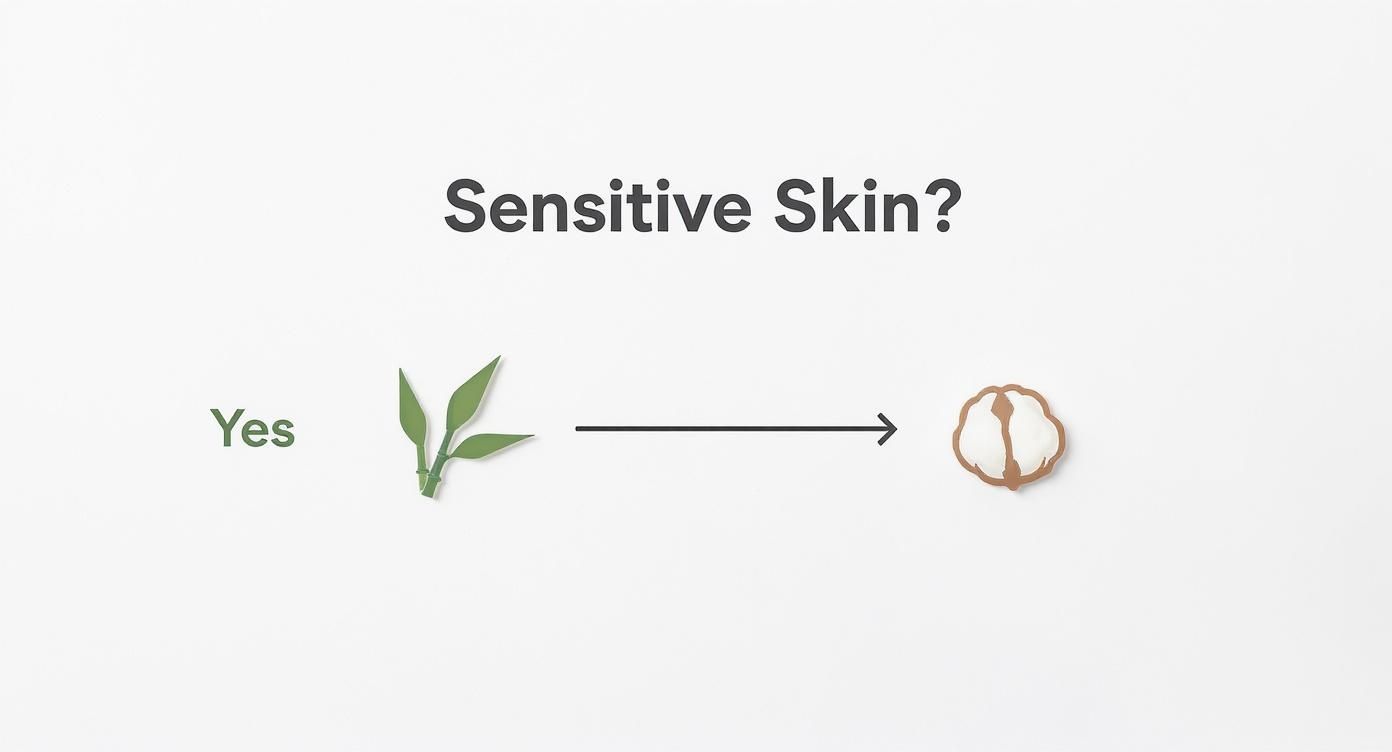
As you can see, the infographic makes it simple, guiding parents with sensitive-skinned babies toward gentle fabrics like bamboo, while others might be perfectly happy with traditional cotton.
Finding Your Perfect Match
To help you decide, here’s a quick side-by-side look at the two options.
Zipper Onesies vs. Snap Onesies: A Quick Comparison
| Feature | Zipper Onesies | Snap Onesies |
|---|---|---|
| Speed | Excellent. Quick to open and close, especially with two-way designs. | Slower. Requires lining up and fastening each individual snap. |
| Convenience | High. Ideal for sleepy, middle-of-the-night diaper changes. | Moderate. Can be tricky with a wiggly baby or in low light. |
| Adjustability | Limited. The fit is generally fixed. | Good. Offers a more customized fit, especially around the legs. |
| Medical Access | Difficult. Not ideal for routing tubes or wires. | Excellent. Provides easy access for medical devices. |
| Durability | Good, but zippers can sometimes stick or break over time. | Very durable. No mechanical parts to fail. |
So, which one is right for you? Think of it like choosing between buttons and a zipper on your own jacket. One gives you a classic, adjustable fit, while the other offers pure, one-handed convenience.
- If you value speed above all else: The two-way zipper will be your new best friend.
- If your baby has specific medical needs: Snaps provide that crucial flexibility.
- If you prefer a classic feel and long-term durability: Snaps might just be your winner.
Ultimately, having a variety of both zippered and snap newborn baby onesies in your rotation is the best way to go. You might find you love zippers for nighttime efficiency and snaps for daytime outfits. The best thing to do is experiment and see what makes those countless diaper changes just a little bit smoother.
How to Decode Newborn Onesie Sizing
Trying to figure out newborn onesie sizes can feel like you’re solving a puzzle where none of the pieces quite fit. You see tags that say "Newborn," "0-3 Months," and "3-6 Months," but here’s a little secret every seasoned parent learns: those labels are just suggestions, not gospel.
It's one of the most common frustrations for new parents. You stock up on adorable "Newborn" outfits, only to find one brand's version is tiny while another's is huge. Before you know it, you have a pile of clothes your little one has outgrown before they even had a chance to wear them. Babies, just like us, come in all shapes and sizes—some are long and lean, others are wonderfully chubby. Guessing their clothing size based on age alone just doesn't work.
Look Beyond the Age on the Tag
The real trick to getting a great fit is to ignore the age range at first and go straight for the weight and height guidelines. Seriously, these numbers are your new best friend. Any good brand will have a detailed size chart right on the tag or their website that gives you the specifics.
Think of the age label as a ballpark estimate, but the measurements as the actual address. For instance, you might have a two-month-old who’s a bit of a string bean and already needs a "3-6 Months" onesie for the length, even though they aren't technically three months old yet. Always, always trust the measurements over the age.
Pro Tip: Keep a note on your phone with your baby's current height and weight. When you're shopping for newborn baby onesies, you can pull up those numbers and compare them directly to the brand's size chart. It takes all the guesswork out of it.
The Magic of a Forgiving Fit
While getting the measurements right is half the battle, the fabric itself is just as important. This is where materials with a lot of natural stretch, like our bamboo viscose, become an absolute game-changer for new parents.
A stretchy fabric offers a wonderfully forgiving fit that molds to your baby’s unique shape and actually grows with them for a bit. It means the onesie is snug and safe without ever being restrictive, easily accommodating a sudden growth spurt or a full tummy after a good feeding. This flexibility means you get way more wear out of every single piece, which is better for your wallet and the planet.
How to Check for the Perfect Fit
So, you’ve got the onesie on your baby. How can you tell if it’s just right? It’s all about finding that sweet spot between safety and comfort.
Here are a few quick checks you can do:
- The Neckline: You should be able to slide two fingers easily between the fabric and your baby's neck. If it’s gaping, it’s too big. If you can’t get your fingers in there, it’s definitely too tight.
- Legs and Arms: The cuffs should be snug enough that they don’t ride up over their little hands and feet, but not so tight that they leave red marks on their skin.
- Torso Length: After you fasten the snaps, there should still be a little room to move. If the fabric is pulling down on the shoulders or straining at the snaps, the onesie is too short and will be uncomfortable for your baby.
If you really want to become a sizing pro, having a go-to guide is a lifesaver. For a super detailed breakdown, check out our complete baby clothing size chart. It’s a great resource to bookmark for future shopping trips.
At the end of the day, picking the right size is all about making sure your baby is safe, cozy, and happy. By focusing on weight and height, choosing stretchy fabrics, and doing these quick fit-checks, you’ll have it down in no time.
Keeping Your Baby's Onesies Soft and Safe
So, you've picked out the softest, most adorable onesies for your little one. The next big question is: how do you keep them that way? Proper care is about more than just preserving that day-one softness; it’s about making sure the fabric stays safe and gentle against your baby's brand-new skin, especially with premium materials like bamboo viscose.
Think of it like caring for your favorite cashmere sweater. A little bit of extra attention goes a really long way. The right washing and drying routine protects the fabric, prevents shrinking, and keeps every piece feeling like new. Following a few simple steps will protect your investment and keep your baby’s little wardrobe in perfect shape.
The Gentle Wash Cycle
Everything starts with the wash. A newborn's skin is incredibly sensitive, so choosing the right detergent isn't just a suggestion—it's essential. You'll want to find a gentle, fragrance-free, and hypoallergenic detergent made specifically for babies to avoid any chance of skin irritation.
Harsh chemicals in standard detergents can be way too much for a baby's skin and can also break down the delicate fibers in their clothes. It’s also a good idea to ensure your detergent is free from other hidden harmful substances. To get a better sense of what makes a product truly safe, you can learn about the OEKO-TEX Standard 100 certification, which is a guarantee that every little bit of a product has been tested and is harmless.
Here’s the ideal washing routine for your newborn baby onesies:
- Fasten Up First: Before tossing them in the wash, zip up all the zippers and close all the snaps. This tiny step is a game-changer for preventing snags, tears, or damage to the closures.
- Turn Inside Out: Give the onesie a quick flip inside out. This helps protect any cute prints or designs from fading and rubbing away in the wash.
- Go with Cold Water: Always wash your baby's onesies in cold water on a delicate or gentle cycle. Hot water is the enemy of soft fabrics like bamboo, causing them to shrink and lose that signature buttery feel over time.
- Skip the Fabric Softeners: This might sound strange, but liquid fabric softeners and dryer sheets can actually leave a residue on the fabric. This film can reduce the material’s natural breathability and moisture-wicking magic, and it could even irritate your baby’s skin.
Drying with Care
How you dry your baby's onesies is just as important as how you wash them. High heat from a dryer is probably the number one reason soft fabrics get ruined. It breaks down the fibers, making them feel rough, and can cause some serious shrinkage.
The absolute best way to keep onesies soft and fitting perfectly is to tumble dry on the lowest heat setting you have. Or, even better, line dry them or lay them flat to air dry. This is the gentlest method by far and helps maintain the fabric’s original shape and luxe feel.
If you're in a pinch and the dryer is your only option, try throwing in a few wool dryer balls. They're a great natural way to soften clothes, cut down on drying time, and reduce static without any chemicals. By following these simple steps, you can make sure every newborn baby onesie stays a safe, soft, and comforting little hug for your baby, wash after wash.
Choosing Brands That Share Your Values
When you’re picking out clothes for your baby, a simple onesie can be so much more than just a piece of fabric. It can be a quiet nod to the world you want to build for your child—a choice that shows what you truly care about.
More and more, parents are looking past the cute prints and soft textures. We're starting to ask bigger questions: Who made this? What does this company actually stand for? It’s about finding brands that just get your family’s values, whether that’s sustainability, faith, or giving back.
More Than Just a Purchase
When you choose a brand like Little Venture Co., buying newborn baby onesies feels like you're doing something more. You're not just making a transaction; you're connecting with a story and a mission that resonates with you. For so many of us, this means putting our money toward companies that are committed to doing good in the world.
This isn't just a fleeting trend. It’s a real shift in how we think about shopping. Parents want to feel good about where their money goes.
- Sustainability Matters: When a brand uses eco-friendly materials like bamboo, it shows they’re thinking about the planet our kids will one day inherit.
- Mission-Driven Focus: Knowing a portion of your purchase supports a cause you believe in makes the whole experience feel more meaningful.
- A Sense of Community: Buying from a purpose-driven brand often feels like joining a club of parents who see the world the same way you do.
When you dress your child, you're performing an act of love. Choosing a brand with heart makes that act feel even more intentional. It’s like wrapping your baby in comfort that’s also rooted in purpose.
This thoughtful way of shopping is catching on, and the baby apparel industry is taking notice. The global market for baby bodysuits recently hit about $4.7 billion and is projected to climb to $6.6 billion by 2033. A huge part of that growth comes from parents actively seeking out eco-friendly and organic options, which you can read more about in this report on the growth of the baby bodysuit market.
Weaving Hope into Every Stitch
Beyond just being green, some brands are weaving messages of hope and inspiration right into their clothes. For families of faith, finding clothing that reflects your beliefs is a beautiful way to share what's in your heart from day one.
Little Venture Co. is a perfect example. They fill their collections with faith-inspired messages and designs that pull from the beauty of creation. It’s a subtle, gentle reminder of wonder and hope that becomes part of your baby’s daily life.
This creates such a powerful connection. It’s not about flashy slogans, but about quiet, meaningful designs that speak to your family. When you zip up one of these rompers, it feels like you're wrapping your little one in a small piece of your faith.
At the end of the day, we as parents get to choose where our money goes. By picking brands that align with our values, we’re not just buying a newborn baby onesie—we’re supporting a vision for a kinder, more thoughtful world. It turns every tiny outfit into a piece of a much bigger, more beautiful story.
Answering Your Top Newborn Onesie Questions
Alright, let's get into some of the nitty-gritty questions that always come up when you're staring at a mountain of baby clothes, wondering what you actually need. Consider this your cheat sheet for making sense of it all.
So, How Many Newborn Onesies Do I Really Need?
If you're looking for a magic number, a great place to start is with 8 to 12 newborn-sized onesies. I know, that sounds like a ton! But trust me, between spit-up incidents and the dreaded diaper blowouts, you can easily burn through three or four of them in a single day.
Having a solid stash means you won't be chained to your washing machine during those precious (and exhausting) first few weeks. It's also a pro-parent move to have a few onesies in the next size up (0-3 months) on hand. Babies grow at a truly shocking rate, and you’ll thank your past self for planning ahead.
Are Bamboo Viscose Onesies Actually Worth the Hype (and the Price)?
For so many parents, the answer is a huge "yes." Bamboo viscose onesies are ridiculously soft, breathable, and just incredibly gentle on a newborn’s delicate skin. They also have a natural stretch that gives you a more forgiving, longer-lasting fit than cotton, which means you get more mileage out of every single piece.
While they might cost a little more upfront, their top-tier comfort, temperature-regulating magic, and durability make them a worthwhile investment in your baby’s day-to-day happiness.
What's the Difference Between a Onesie and a Bodysuit?
Honestly, in the real world, there’s no difference. Both terms refer to that one-piece baby shirt that snaps at the crotch. The only distinction is technical: "Onesie" is actually a brand name trademarked by Gerber.
But over the years, it’s become the go-to term for this style of clothing—kind of like how we all say "Kleenex" for any facial tissue or "Band-Aid" for any adhesive bandage. The official industry name for this wardrobe staple is simply an "infant bodysuit."
What Should My Baby Wear Under a Swaddle at Night?
A simple, lightweight onesie is almost always the perfect choice for wearing under a swaddle. The number one rule for baby sleep is to prevent them from overheating.
A breathable onesie, particularly one made from a material like bamboo viscose that helps regulate temperature, is a fantastic way to keep them comfortable and safe. A quick way to check is to feel the back of their neck—if it’s cool and dry to the touch, they’re probably feeling just right.
Ready to find that perfect mix of comfort, quality, and meaning for your new arrival? Explore the beautiful, faith-inspired bamboo collection from Little Venture Co. and wrap your baby in softness and love. Shop the collection now!