

How to Care for Bamboo Baby Clothes for Lasting Softness
That first wash can feel oddly emotional. You finally have that soft bamboo romper or set folded on the changing table, your baby has already worn it for naps, snuggles, and maybe a photo you know you'll keep forever, and now there's spit-up on the shoulder and a mystery stain near the cuff. You want it clean, but you also don't want to ruin the texture that made you buy bamboo in the first place.
Parents with sensitive-skinned babies usually notice the difference right away. Bamboo viscose feels smooth, light, and gentle against irritated cheeks, little neck folds, and eczema-prone skin. If the fabric is also OEKO-TEX Standard 100 certified, that adds real peace of mind because you know the material has been tested for harmful substances. Good care helps protect that same comfort and safety through months of wear, washing, and hand-me-downs.
The Secret to Keeping Bamboo Baby Clothes Buttery Soft
A lot of advice about how to care for bamboo is written for adult loungewear. Baby clothes are different. They face milk dribbles, diaper leaks, teething drool, stroller friction, and far more washing than most grown-up clothes ever see.
That's why the goal isn't just “clean.” The goal is to keep each piece feeling calm on your baby's skin, holding its shape, and staying sweet enough to save in a memory box later.
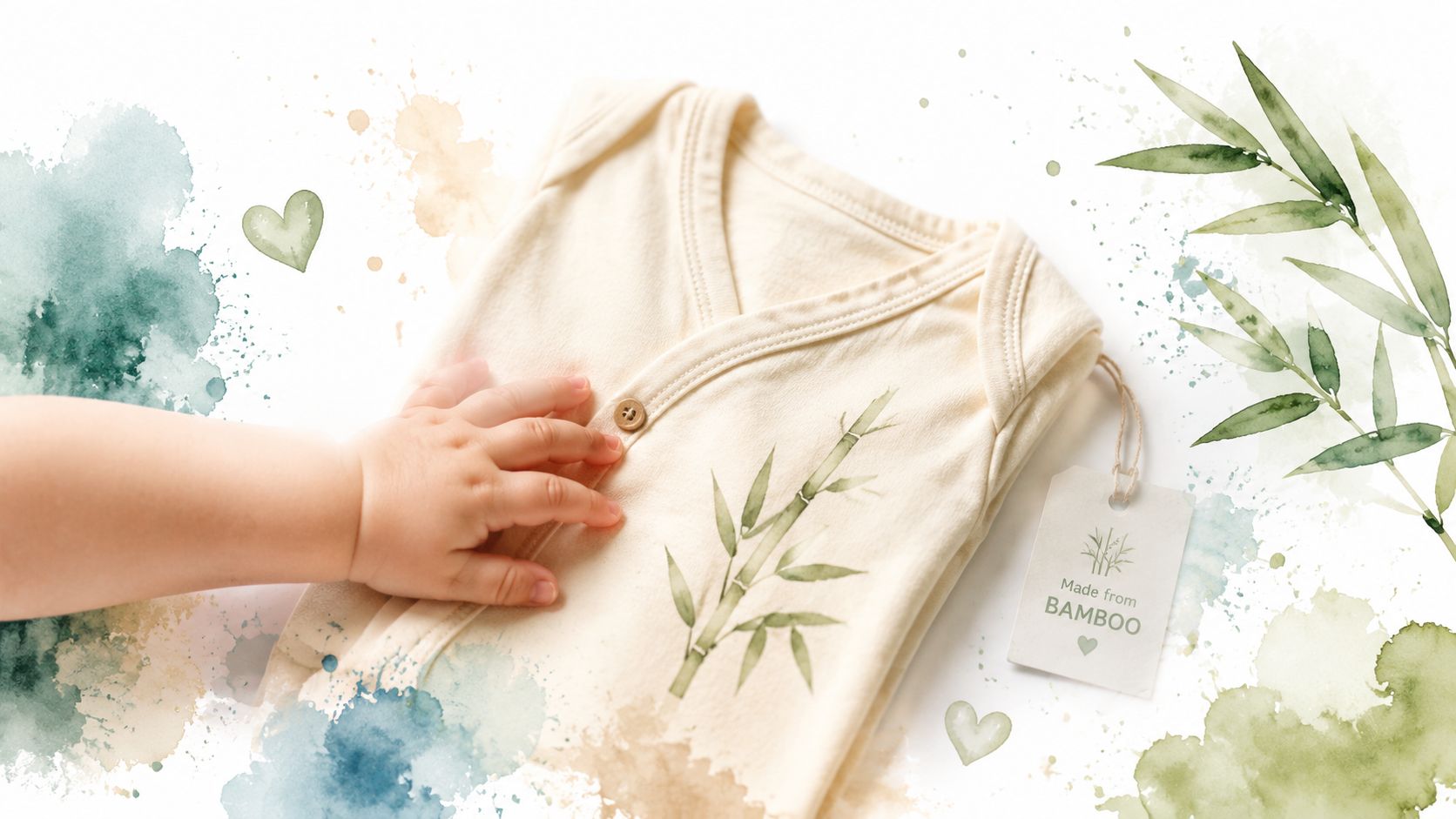
Why bamboo baby clothes need different care
Bamboo viscose has a drapey, delicate feel that parents love for sleepwear and daywear. That softness is a gift when your baby's skin reacts to rough seams or scratchy fabrics, but it also means rough laundry habits show up fast.
A few things make the biggest difference:
- Cooler washing habits: Heat is hard on delicate fibers.
- Milder products: Strong cleaners can leave the fabric feeling tired instead of silky.
- Slower drying: Fast heat often trades convenience for wear.
If you want a quick primer on what makes the fabric feel this way in the first place, Little Venture Co. has a helpful overview on what bamboo viscose fabric is.
Bamboo baby clothes stay lovely when you treat them less like everyday cotton and more like the special soft layer your baby lives in.
What works and what doesn't
What works is simple, consistent care. Wash gently. Treat stains early. Dry with patience. Store pieces where they won't snag.
What doesn't work is “just tossing it in with everything else.” Bamboo baby sleepers don't do well mixed with rough towels, zippered sweatshirts, or heavy denim. That's when you start seeing stretched necklines, fuzzy spots, and fabric that no longer feels soothing on sensitive skin.
Your Gentle Washing and Detergent Guide
You pull a bamboo sleeper out of the wash, hoping for that same buttery feel, and instead it feels a little flat. I've had that happen after one rushed load with towels, and it taught me something fast. Bamboo baby clothes usually do best with less. Less heat, less friction, less detergent, less fuss.
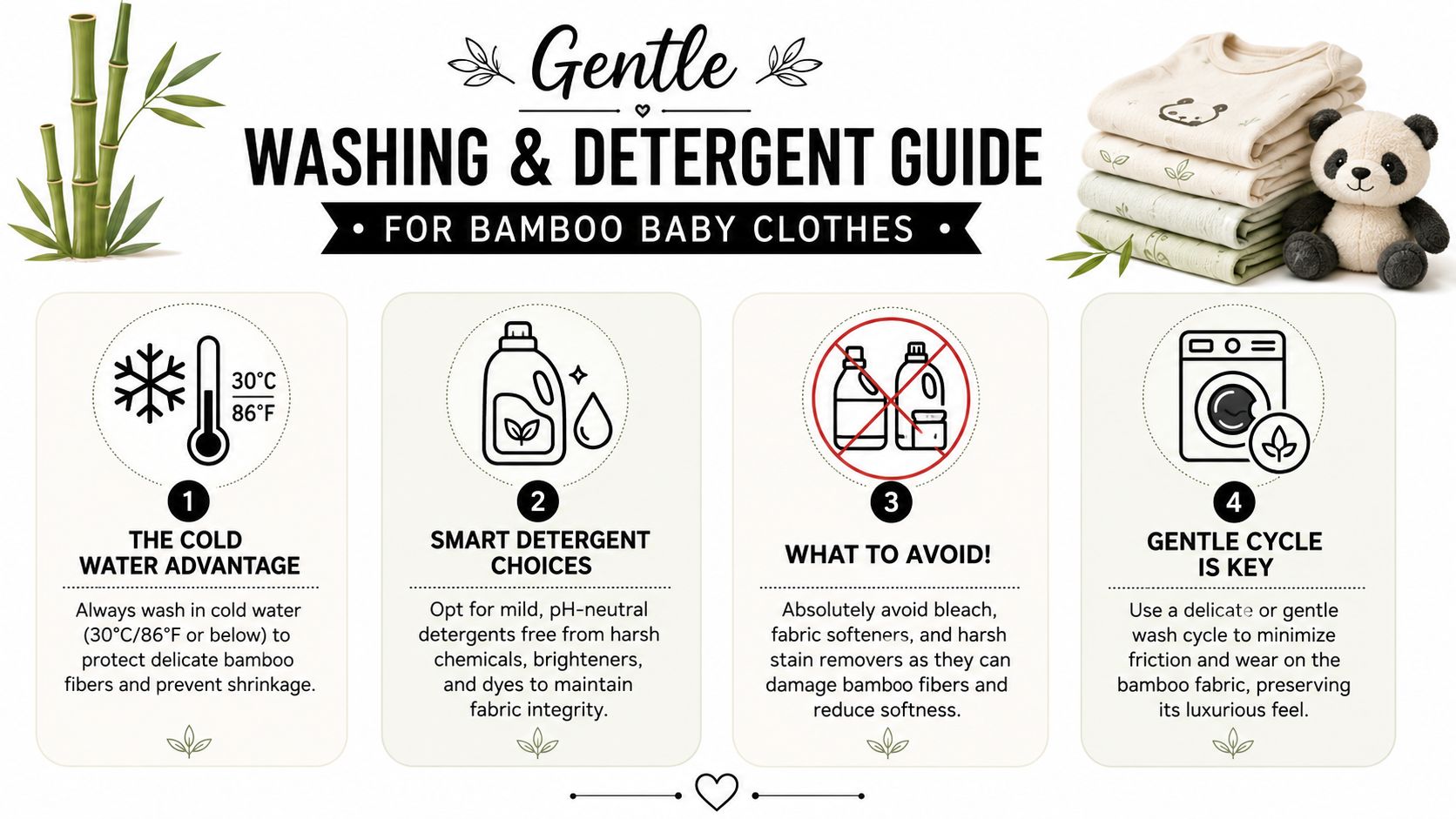
The wash routine I'd trust for baby basics
For everyday pieces like sleepers, zip rompers, bodysuits, and knotted gowns, keep the wash routine gentle and repeatable. That matters even more if your baby has sensitive skin and wears bamboo for comfort, not just for looks.
- Separate bamboo from rough laundry. Keep it away from towels, burp cloths with scratchy trim, bibs with hook-and-loop closures, and anything with exposed zippers or snaps.
- Turn each piece inside out. This cuts down on rubbing across the outer surface, where pilling usually starts.
- Use a mesh laundry bag for tiny items. Socks, mittens, and newborn pieces can stretch or snag in a mixed load.
- Wash in cold water on the delicate cycle. Hotter settings are harder on the fabric and can shorten the life of soft, stretchy baby basics.
- Use only a small amount of detergent. Extra soap is hard to rinse out fully, and leftover residue can leave bamboo feeling less smooth against your baby's skin.
If you want a brand-specific walkthrough, Little Venture Co. shares practical steps in its guide on how to wash bamboo clothing.
A simple load is often the best load.
What your detergent should and shouldn't do
Choose a detergent that cleans the milk dribbles, spit-up, and daily wear without coating the fabric or leaving behind a strong scent. For baby clothes, fragrance-free or low-fragrance formulas are usually the safer pick, especially if you're already trying to avoid anything that might bother reactive skin.
Look for detergents that are:
- Mild and low-residue
- Fragrance-free or lightly scented
- Free of bleach
- Free of fabric softener additives
- Free of heavy brighteners or harsh boosters
The trade-off is simple. A stronger detergent may tackle messes faster, but it can also leave bamboo feeling less silky over time. For baby wardrobes, I'd rather do a second gentle wash on one stubborn item than wash every piece with something too aggressive.
Fabric softener is another one to skip. Bamboo baby clothes already have that soft drape parents love, so adding softener usually creates buildup instead of improving the feel. Bleach is too harsh for regular care as well, especially on pieces you want to keep comfortable enough for sleep and calm enough for sensitive skin.
Hand washing when an outfit matters to you
Some pieces deserve slower care. A coming-home outfit, a special holiday romper, or the sleeper you want to tuck away with the memory box can be hand washed in cool water with a tiny amount of mild detergent.
Press the fabric through the water gently, rinse well, and roll it in a towel to remove moisture. Don't wring or twist. That's one of the quickest ways to stretch a neckline or leave the fabric looking tired before its time.
If you own bamboo pieces from Little Venture Co., those same habits are a good match for their OEKO-TEX certified baby clothing. That certification matters to many parents because softness is only part of the story. You're also protecting the comfort, safety, and keepsake quality that made you save the outfit in the first place.
Tackling Inevitable Baby Stains with Grace
You dress your baby in a soft bamboo sleeper, they fall asleep on your shoulder, and ten minutes later there's a spit-up mark right across the chest. Then comes the outfit change, the laundry pile, and that small worry in the back of your mind. Will this still feel gentle enough for sensitive skin after I clean it?
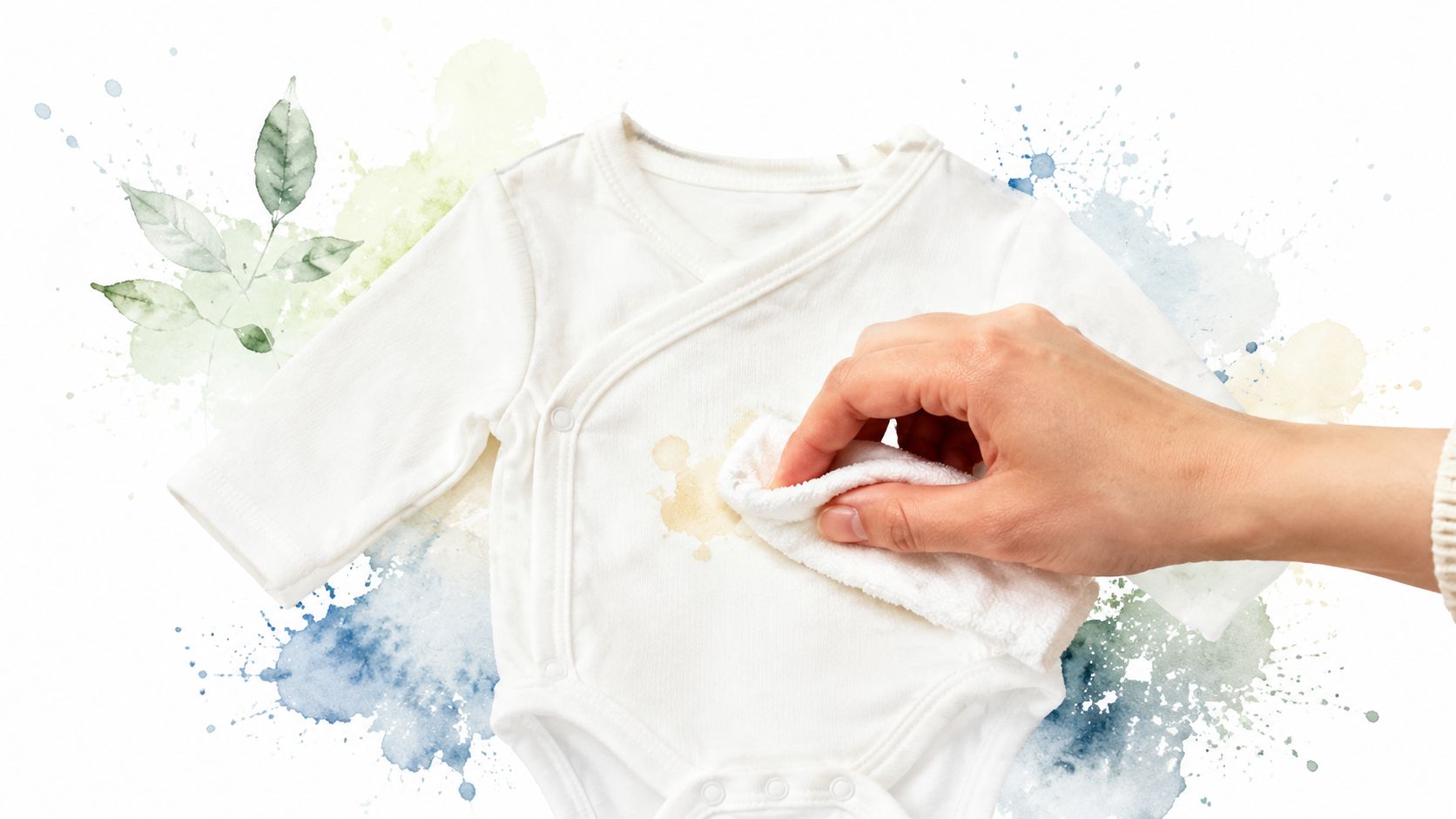
With bamboo baby clothes, quick care matters more than aggressive products. I've had better luck treating stains early with cold water and patience than reaching for anything harsh. That approach helps preserve the soft hand-feel parents love, especially on OEKO-TEX certified pieces chosen for a baby with easily irritated skin.
For spit-up, milk, and formula
These stains are usually easier than they look if you catch them early. Rinse from the back of the fabric with cold water so the residue moves out of the fibers instead of settling deeper in.
Then choose one gentle treatment:
- A small dab of mild detergent: Work it in with clean fingertips and let it sit for a few minutes.
- A baking soda paste: Mix with a little water, apply lightly, then rinse well before washing.
- A baby-safe enzyme stain remover: Helpful for milk and formula stains if the formula is free of bleach and heavy additives.
Scrubbing is what gets parents into trouble here. It can rough up the fabric surface and make one stained patch look older than the rest of the garment.
For diaper blowouts and stubborn organic stains
Blowouts call for a steady routine, not panic. Lift away any residue first. Don't drag it across the fabric. Rinse thoroughly in cold water, pretreat the discolored area, then wash it on your usual delicate cycle.
I always tell parents to stop before the drying step and inspect the piece in good light. A faint yellow shadow may look harmless when the fabric is wet, but heat can set it and make the next round much harder.
If color remains after washing, natural sunlight can help lift leftover discoloration on light-colored bamboo pieces. Keep it brief and check the item as it dries. You want help with the stain, not prolonged exposure that can fade a favorite print or keepsake outfit you hoped to save.
Skip chlorine bleach. It can strip color, weaken bamboo fibers, and leave a garment less comfortable against delicate skin.
For more stain-specific help with common baby messes, Little Venture Co. shares a useful guide on how to remove stains from baby clothes.
One habit that saves outfits
Check every stained item before heat touches it. If you still see the mark, rinse, pretreat, and wash again gently.
That extra pause has saved more sleepers, bodysuits, and memory-box outfits in my house than any fancy stain product ever did.
The Art of Drying for Lasting Softness
Drying is where many bamboo baby clothes lose that fresh-from-the-package feel. If washing protects the fibers, drying decides how long that softness sticks around. Air drying is the method I'd choose most often for baby sleepers, footies, and lightweight sets.
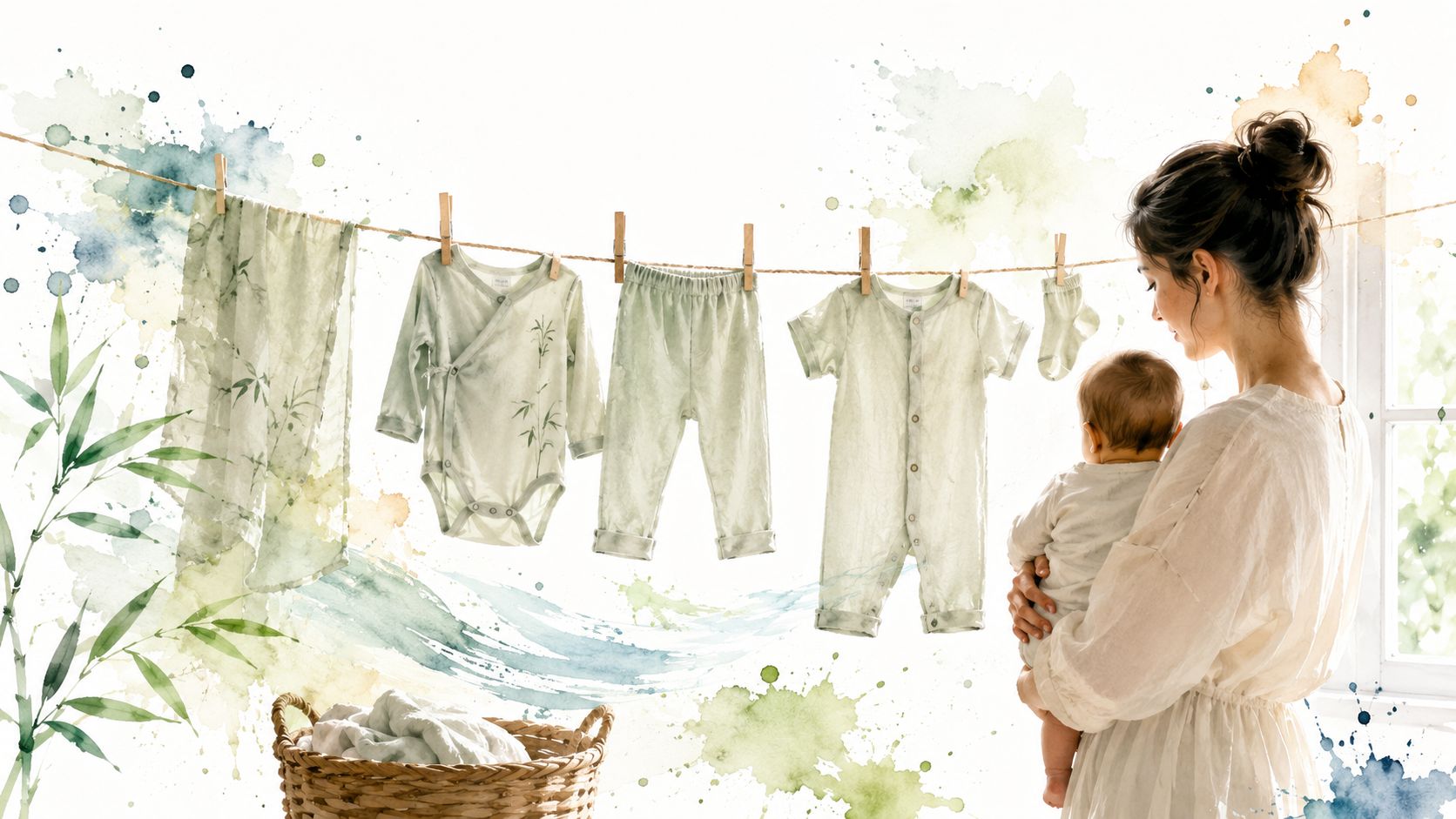
Why air drying wins
Air drying asks for a little patience, but it gives back a lot. It's gentler on stretch, gentler on seams, and better for preserving that smooth hand-feel parents want next to a baby's skin.
My favorite methods are the least dramatic ones:
- Lay flat on a clean towel for pieces that might stretch
- Use a drying rack with good airflow
- Hang lightweight items carefully if they won't distort
Keep pieces out of harsh direct sun for extended periods if you're worried about fading. Bright, indirect airflow usually does the job well.
If you need the dryer
Sometimes the laundry pile is real, the baby needs clean pajamas by bedtime, and air drying just isn't practical. If you use the dryer, think of it as backup, not the default.
The concern isn't only shrinkage. For parents of children with sensitive skin, even a low-heat dryer setting can cause cumulative micro-fractures in bamboo viscose fibers, leading to faster roughness and diminished skin-gentleness after 20 to 30 wash cycles, according to Body Peace Bamboo's fabric care guide.
A safer compromise looks like this:
| Drying situation | Better choice |
|---|---|
| You have time | Air dry fully |
| You need it sooner | Use the lowest heat briefly, then finish air drying |
| It's a keepsake piece | Skip machine drying |
Low heat sounds harmless, but repeated dryer time is one of the quickest ways to make bamboo baby clothes feel older than they are.
Getting rid of stiffness without damaging the fabric
Sometimes air-dried bamboo feels slightly less silky at first touch. Usually that softens again once the garment is worn. You can also smooth it gently by hand as you fold it.
If wrinkles bother you, use a steamer or very low iron heat on the inside of the garment. Keep the touch light and brief.
Smart Storage and Simple Repairs
The laundry is done, the clothes are clean, and many parents then accidentally undo their hard work. Bamboo baby clothing stores best when it's protected from friction and sharp edges, not packed tightly with everything else.
Everyday storage that prevents wear
Fold sleepers, rompers, and two-piece sets neatly and keep them away from rougher items. Zippers, hook-and-loop bibs, and textured accessories can catch delicate bamboo knits without much effort.
A few habits help:
- Separate bamboo from rough gear: Don't wedge it beside bulky outerwear or scratchy socks.
- Keep closures contained: Zip garments fully before storing nearby.
- Avoid overstuffing drawers: Packed drawers create friction every time you pull something out.
If you're organizing a nursery or rotating sizes, Little Venture Co. has ideas for baby clothing storage.
Saving special pieces for later
For outfits you want to keep, skip sealed plastic if moisture could get trapped. A breathable cotton bag is a better home for a baptism outfit, holiday sleeper, or first Christmas set you want to revisit one day.
Fixing a small snag before it grows
A tiny snag doesn't mean the outfit is done. Use a needle to gently pull the loose thread to the inside of the garment instead of trimming it flat from the front. Then leave it alone unless a seam is opening.
That one quiet little repair can keep a beloved piece in rotation much longer.
Your Bamboo Care Questions Answered
Is pilling normal for bamboo fabric?
A little surface fuzz can happen, especially in spots that rub often, like cuffs or the seat. It doesn't always mean poor quality. Wash similar fabrics together, reduce friction, and use a fabric comb very gently if needed.
Are wool dryer balls safe?
They can be useful if you're briefly using a dryer on a very low setting, but they're still part of a dryer routine. If preserving softness is your top priority, air drying remains the safer habit.
My bamboo pajamas feel a bit stiff after air drying. What should I do?
Usually they'll relax once they're worn. You can also smooth them by hand while folding or give them a short fluff without heat only if needed.
If you're choosing baby clothing with softness, sensitive skin, and meaning in mind, Little Venture Co. offers faith-inspired bamboo sleepwear and daywear made with OEKO-TEX Standard 100 certified materials. Thoughtful care helps those pieces stay gentle enough for everyday cuddles and special enough to keep.