

What Is Bamboo Viscose Fabric and Is It Sustainable
You've probably seen "bamboo viscose" on clothing tags everywhere lately, especially for baby clothes. It’s known for being incredibly soft and silky, but the story of how it’s made is a bit more complicated than you might think.
It all starts with the bamboo plant, which is great. But to get from a tough, woody stalk to a buttery-soft fabric, it has to go through a pretty intense chemical process. This makes it a semi-synthetic material—a hybrid that starts with something natural but needs a lot of human intervention to become the textile we love. It’s basically in the same family as rayon, which explains its signature smooth feel and elegant drape.
So, What Exactly Is Bamboo Viscose?
Let's break it down. Imagine you have a giant stalk of bamboo. The goal is to get to its core ingredient: cellulose. To do that, the bamboo is crushed and mashed into a pulp, which is then dissolved with chemicals into a thick, syrupy liquid. Think of it like a honey-like goo.
This goo—a viscous solution, which is where the name "viscose" comes from—is then pushed through tiny holes to form fine, delicate threads. These threads are solidified, spun into yarn, and finally woven into that luxuriously soft fabric everyone is raving about.
So, bamboo viscose isn't a purely natural fiber like cotton, where you just spin the plant's fluff. And it's not fully synthetic like polyester, which is basically made from plastic. It’s what we call a regenerated cellulose fiber, landing it squarely in a unique middle ground.
The True Nature of the Fabric
At its core, bamboo viscose is full of contrasts. It delivers that high-end, skin-friendly feel we all want, but its manufacturing story isn't as simple as its "eco-friendly" label might suggest.
To help you get a better picture, here’s a quick rundown of what makes this fabric stand out.
Bamboo Viscose Fabric At A Glance
Here's a simple table to sum up the key properties of bamboo viscose.
| Feature | Description |
|---|---|
| Texture | Famously soft and silky, often compared to cashmere. |
| Breathability | The fabric's micro-gaps allow air to flow, keeping you cool. |
| Moisture Control | Excellent at wicking moisture away from the skin. |
| Drape | Hangs beautifully, creating a fluid and flattering look. |
| Source | Made from the cellulose of the fast-growing bamboo plant. |
These features come together to create a fabric that feels incredible to wear.
Why It's So Popular
The real magic of bamboo viscose lies in its unique combination of features that make it perfect for so many things, especially for little ones.
- Unbelievable Softness: Its biggest claim to fame is a silky, smooth texture that feels amazing. This is a huge reason why it’s considered one of the best fabrics for sensitive skin.
- Keeps You Cool (and Warm): The fabric is incredibly breathable, letting air circulate freely to keep you from overheating. It's also great at thermal regulation, helping you stay comfortable in different temperatures.
- Wicks Away Sweat: It pulls moisture away from the body, which is fantastic for everything from pajamas to activewear.
- Flows Beautifully: Viscose fabric has a wonderful drape. It hangs elegantly instead of clinging, giving clothes a graceful, flattering shape.
Interestingly, this whole process is almost identical to how rayon has been made from wood pulp for over a hundred years. The only real difference is the plant source. And it has taken the textile world by storm—bamboo rayon now accounts for over 54.8% of the global bamboo fiber market. If you're curious, you can dig deeper into the numbers in a comprehensive market report.
At the end of the day, you have this fantastic, comfortable fabric on one hand, and a complicated environmental story on the other. Understanding both sides helps you make a more informed choice.
Ultimately, bamboo viscose is a textile born from clever innovation. It offers a level of comfort that’s hard to beat, and its journey from a hardy plant to a delicate piece of clothing is what makes it so fascinating.
The Journey From Bamboo Stalk To Silky Fabric
Have you ever held a piece of buttery-soft bamboo clothing and wondered how it could possibly come from a hard, woody plant? It’s a pretty amazing transformation, a fascinating blend of nature and science that turns a rigid stalk into a fabric famous for its luxurious feel. The process is less like shearing a sheep and more like making a complex recipe—it takes a few key steps to get it just right.
It all starts, of course, with bamboo. Once mature stalks are harvested, they’re mechanically crushed and mashed into a rough pulp. Think of it like making wood chips, but the goal is to break down the plant’s structure to get to the good stuff inside: the cellulose.
Here’s a simple visual to help picture the journey from plant to product.
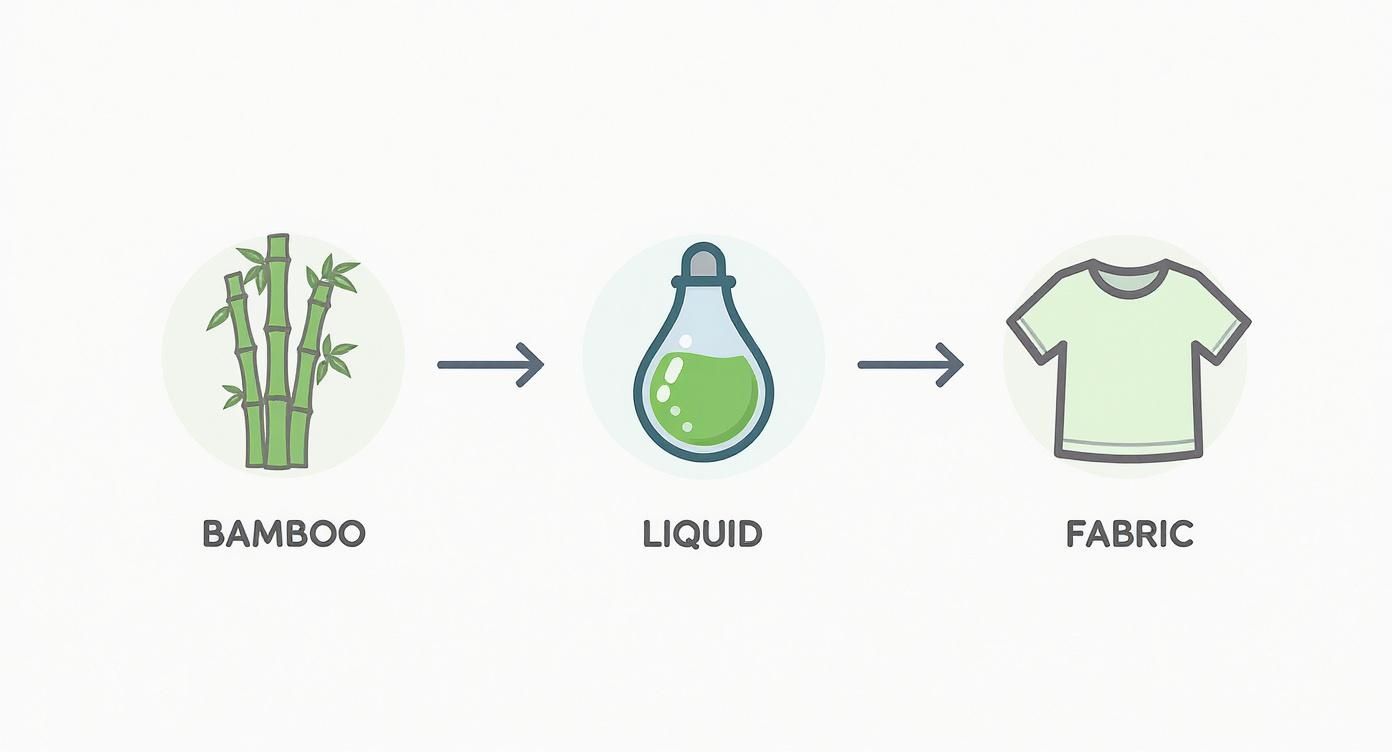
As you can see, the real change happens in that middle stage, where the solid pulp is converted into a liquid solution.
From Raw Pulp To A Viscous Solution
This is where the chemistry comes in. To dissolve the tough cellulose fibers, the raw pulp is steeped in a solution of sodium hydroxide (you might know it as caustic soda). This chemical bath breaks down the bamboo pulp until it becomes a soft, pliable mass.
Next, this treated pulp gets washed, bleached, and aged. After that, it's mixed with another chemical, carbon disulfide, which transforms the cellulose into something totally new: sodium cellulose xanthate. This is the step that turns the fluffy pulp into a thick, yellowish liquid with the consistency of honey.
This thick, syrupy texture is exactly where the name viscose comes from. The solution is officially a "viscous" liquid, and the name stuck for the entire manufacturing process.
This gooey liquid is the raw material for the fabric, but it’s not quite thread yet.
Creating The Silky Threads
To spin this liquid into delicate fibers, it gets filtered to remove any impurities and then forced through a device called a spinneret. The best way to picture a spinneret is to think of a tiny showerhead with microscopic holes. As the viscose solution is pushed through, it emerges as fine, continuous strands.
These newly formed strands are then submerged in a chemical bath, usually sulfuric acid, which hardens them back into solid cellulose fibers. It's a process of regeneration—the cellulose was dissolved and is now being rebuilt, or regenerated, into a solid fiber. This is what officially classifies bamboo viscose as a "regenerated cellulose fiber."
Of course, the process involves some pretty potent chemicals, which is an important thing for parents to be aware of. If you're looking for ways to reduce chemical exposure in your home, exploring a range of chemical-free baby products can offer some great alternatives.
Spinning Yarn And Weaving Fabric
We're almost there! These long, silky filaments are washed one last time to get rid of any leftover chemicals. Once they’re dried, they can be spun into yarn.
This is the yarn that gets woven or knitted into the bamboo viscose fabric we all know and love, ready to be turned into everything from cozy baby pajamas to luxurious bed sheets. The journey is complete: a tough, woody plant has been deconstructed, chemically transformed, and rebuilt into one of the softest textiles you can find.
So, What's All the Fuss About Bamboo Viscose?
It’s one thing to know how bamboo viscose is made, but it's another to understand why everyone seems to be obsessed with it. Trust me, the hype isn’t just good marketing; it’s all about a handful of real-deal benefits that make this fabric feel like pure luxury against your skin. From high-end sheets to the softest baby PJs, it delivers a comfort experience that genuinely keeps people coming back for more.
The moment you touch bamboo viscose, you just get it. Its claim to fame is an almost unbelievable softness. People often compare it to fancy materials like silk or cashmere, but here's the kicker: it’s way more durable and affordable for everyday things. That buttery-smooth feel isn't just a nice touch; it glides over your skin without any friction, which is a total game-changer for anyone with sensitivities.
This gentle quality makes it the perfect pick for anything that spends a lot of time touching your skin—think pajamas, bed sheets, and especially clothes for babies.
Next-Level Comfort And Breathability
But it's not just soft. Bamboo viscose is a true performance powerhouse when it comes to keeping you comfortable. The fibers themselves are full of microscopic holes, which create tiny air pockets throughout the fabric. This unique structure lets air flow freely, making the material incredibly breathable.
This built-in ventilation system is brilliant for regulating your body temperature. It keeps you cool and comfortable when it's hot out, but it’s not just for summer. Those same properties that let heat escape also help trap a thin layer of warmth when it gets chilly, making it a fantastic all-season fabric. It's why you'll find it in everything from lightweight summer t-shirts to cozy winter pajamas.
The Bottom Line: The fiber structure of bamboo viscose is like a smart thermostat for your body. It adapts to keep you comfortable year-round. It’s not just soft—it’s clever.
This ability to adapt is one of the standout features that really sets it apart from other fabrics. While cotton can feel heavy and wool can feel stifling, bamboo viscose just works with you.
It's A Moisture-Wicking Machine
Here's another big reason for its popularity: the fabric is amazing at wicking away moisture. In fact, textile studies show that bamboo viscose can absorb up to 40% more moisture than good old cotton. Instead of just soaking up sweat and sticking to you, it pulls moisture away from your skin and spreads it out across the fabric's surface so it can evaporate in a flash.
This has some seriously practical perks:
- You Stay Dry: Whether you're dealing with night sweats or just running around, the fabric helps you stay dry and comfortable.
- Less Odor: By managing moisture so well, it stops odor-causing bacteria from having a party, which keeps the fabric smelling fresher for longer.
- Great for Sensitive Skin: Keeping skin dry is a huge part of preventing irritation, making it a top choice for anyone with eczema or other skin conditions.
This wicking ability is precisely why bamboo viscose is a go-to for bedding and base layers. It works hard all night long to help you get a more restful, sweat-free sleep.
A Gentle Giant For Sensitive Skin
When you put its silky-smooth fibers together with its moisture-wicking talent, you get a fabric that is naturally hypoallergenic. The surface of the fibers is sleek and round, so there are no rough, scratchy edges to irritate the skin like you can get with wool or even some lower-grade cottons.
Because it keeps skin dry, it creates an environment where allergens and bacteria just can't thrive. This makes it a perfect material for anyone prone to skin flare-ups, but it’s a real hero for babies, whose skin is so delicate. When you add in the softness and breathability, it’s easy to see why so many parents are choosing it for their little one's clothes and sleepwear. If you want to go deeper on this, you can explore more about the benefits of bamboo fabric for babies and see why it’s become such a trusted choice.
To really get a feel for what makes bamboo viscose special, it helps to see how it stacks up against other textiles. For anyone curious about different options, checking out a comprehensive guide to other blanket materials like fleece, sherpa, and woven fabrics can put things into perspective. It really highlights how uniquely suited bamboo viscose is for anything where softness and skin health are the top priorities. At the end of the day, the love for this material comes down to a simple truth: it just feels incredible to wear.
The Uncomfortable Truth About Its Sustainability
When you first touch bamboo viscose clothing, its incredible softness makes you think it must be a pure gift from nature—a truly “green” fabric. And why wouldn't you? The marketing often conjures up images of serene bamboo forests being magically spun into a baby's onesie.
But the real story is a lot more complicated. It’s a genuine mix of eco-friendly highs and some pretty significant environmental lows. To really get the full picture, you have to separate the amazing plant from the industrial process used to transform it.
The Good: The Bamboo Plant Itself
Let’s start with the source, because the bamboo plant is an absolute environmental superstar. It's one of the fastest-growing plants on the planet, with some species shooting up an unbelievable three feet in a single day. That alone makes it an incredibly renewable resource.
Here’s why the plant itself gets a big green checkmark:
- It Grows Without Help: Bamboo needs no pesticides or fertilizers to thrive. It has its own natural pest repellent, which means fewer chemicals are needed right from the start.
- It’s Water-Sipping: Compared to notoriously thirsty crops like cotton, bamboo barely needs any water and often gets by on natural rainfall alone.
- It Improves The Soil: The plant's sprawling root system is great for preventing soil erosion. When it’s harvested, farmers just cut the stalk, leaving the roots to regenerate for the next crop.
- It’s A Carbon Sink: Bamboo forests are amazing at absorbing carbon dioxide. In fact, they produce about 35% more oxygen than the same-sized area of trees.
From a purely agricultural standpoint, bamboo is a dream. If the story ended here, it would be the most sustainable fabric in the world, hands down. But it doesn't.
The Bad: The Chemical-Heavy Manufacturing Process
The problem isn't the bamboo; it's the "viscose" part of the name. As we covered earlier, turning a tough, woody stalk into that silky-soft fabric requires a pretty intense chemical process to dissolve the plant's cellulose. This is where the sustainability story takes a sharp turn.
The traditional viscose method—which is still the most common—uses a cocktail of nasty chemicals like carbon disulfide and sodium hydroxide. These are not only dangerous for the factory workers exposed to them but can cause massive environmental damage if they aren't handled with extreme care.
This is where you hear about "open-loop" versus "closed-loop" systems, and the difference is huge.
An open-loop system is the dirty secret behind cheap viscose production. In this process, chemical waste is often just dumped directly into the air and nearby waterways, causing serious pollution that poisons local ecosystems and communities.
This kind of irresponsible manufacturing is what gives bamboo viscose a bad name. It takes a wonderfully sustainable plant and puts it through a process that can be anything but green.
To make this clearer, let's break down the pros and cons in a simple scorecard.
Sustainability Scorecard For Bamboo Viscose
Here’s a look at the good and the bad when it comes to the environmental impact of producing bamboo viscose.
| Sustainability Aspect | The Good (Pros) | The Bad (Cons) |
|---|---|---|
| Raw Material Source | Bamboo is highly renewable, fast-growing, and requires no pesticides or fertilizers. | Sourcing can be opaque; risk of harvesting from non-sustainably managed forests. |
| Water Usage | The bamboo plant itself needs very little water, often just rainwater. | The viscose process can be water-intensive if not managed responsibly. |
| Chemicals & Solvents | Modern, closed-loop systems can recycle almost all chemicals used. | Traditional open-loop systems release toxic chemicals like carbon disulfide into the environment. |
| Energy Consumption | Less energy is needed to grow bamboo compared to other crops like cotton. | The conversion process from pulp to fiber is energy-intensive. |
| Biodegradability | The final fabric is 100% biodegradable and will break down naturally over time. | The environmental pollution from open-loop production can cause long-term harm. |
As you can see, the final environmental footprint really comes down to how the fabric is made, not what it's made from.
Open-Loop vs. Closed-Loop Systems: A Critical Difference
The good news is that there’s a much better way to do things. A closed-loop system is the modern, responsible approach to making viscose. In this method, up to 99.5% of the chemicals used to dissolve the bamboo pulp are captured, recycled, and used again and again.
This system drastically cuts down on pollution and minimizes the fabric's environmental impact. You'll often see fabrics made this way marketed under different names, like Lyocell (TENCEL™ is the most famous brand), which uses a non-toxic solvent in a closed-loop process. While not all bamboo viscose is made this way yet, responsible brands are actively seeking out manufacturers who use these cleaner methods.
The demand from shoppers for sustainable options is really pushing the industry forward. The global bamboo fabric market was estimated at USD 1.97 billion and is projected to hit USD 3.63 billion by 2032. As this market grows, the pressure on producers to clean up their act and switch to closed-loop systems gets stronger every year. You can dive deeper into these trends by checking out the latest bamboo fabric industry research.
How To Be An Informed Shopper
So, what does this all mean for you when you're browsing for baby clothes? It means that not all bamboo viscose is created equal. The actual sustainability of those adorable PJs depends almost entirely on how they were made.
To make a more conscious choice, look for third-party certifications. The most reliable one to look for is the OEKO-TEX® STANDARD 100 label. This certification doesn't audit the entire manufacturing process, but it does guarantee one very important thing: the final product has been tested for a long list of harmful substances and is perfectly safe for human skin. For parents, that’s a crucial seal of approval.
If you'd like to learn more about what goes into this certification, you can check out our detailed guide on what is OEKO-TEX STANDARD 100.
Ultimately, bamboo viscose exists in a gray area. It starts with a green heart from a super-sustainable plant, but its final environmental footprint is completely dependent on the integrity of its manufacturing journey.
How To Properly Care For Your Bamboo Viscose Items
https://www.youtube.com/embed/E28KhDJyUXg
So you've brought home some unbelievably soft bamboo viscose clothes for your baby. That's the easy part! Now, how do you keep them feeling just as dreamy after a dozen washes? Thankfully, it’s not as complicated as it sounds. The secret is to simply be gentle.
Bamboo viscose is a tough little fabric, but its silky fibers aren't big fans of harsh chemicals or high heat. A little bit of love goes a long way in preserving that signature softness and stopping things like pilling or shrinking. Get it right, and these pieces will last for years.
The Best Way To Wash Bamboo Viscose
When it comes to washing bamboo viscose, think of it like you would a delicate sweater, not a pair of rugged old jeans. High temperatures and rough-and-tumble wash cycles are the quickest way to damage the fibers, leaving them weak and robbing them of that buttery feel.
For the best results, just follow these simple steps:
- Sort Your Laundry: Keep your bamboo items with other delicates. Definitely don't throw them in with heavy stuff like towels, denim, or anything with zippers that can snag and cause friction.
- Go Cold: Always, always use a cold wash setting. That means 30°C (86°F) or cooler. Hot water is the number one enemy of viscose—it’s a surefire way to make the fabric shrink and lose its shape.
- Pick a Gentle Cycle: Use the "delicate," "gentle," or "hand wash" setting on your machine. This puts the least amount of stress on the fabric, helping it stay soft and strong.
- Use a Mild Detergent: A gentle, pH-neutral liquid detergent is your best friend here. Stay far away from anything with bleach, which will literally eat away at the cellulose fibers and ruin the fabric.
Since bamboo viscose is on the delicate side, knowing a bit more about its care can be a game-changer. For a deeper dive, you can learn how to wash viscose fabric properly to protect your investment and keep your little one's clothes feeling brand new.
Drying Without The Damage
Okay, washing is done. But how you dry your bamboo viscose is just as crucial. The high, direct heat from a standard tumble dryer can be brutal on those fine fibers, causing them to shrink for good and feel rough to the touch.
The golden rule for drying? Avoid high heat at all costs. Think low and slow. Honestly, if you have the time, air-drying is the absolute best way to go.
Here are your best bets for drying:
- Air-Dry Flat or on a Line: The perfect method is to lay the garment flat on a clean towel or hang it on a line out of direct sunlight. This is a zero-heat, zero-damage approach that keeps the fabric in pristine condition.
- Tumble Dry on Low: If you're in a pinch and need to use the dryer, choose the lowest heat setting you have—or better yet, the "air fluff" (no heat) option. Pull the items out the second they're dry to prevent wrinkles from setting in.
Dealing With Stains And Wrinkles
With kids, stains are just a fact of life. When one happens, try to act fast. Gently blot the spot (don't rub it in!) and hit it with a mild stain remover before you toss it in the wash. For really tough spots, a good soak in cool water with a touch of detergent can work wonders without harming the fabric.
And what about wrinkles? Bamboo viscose can get a little wrinkly after washing. A steamer is the kindest way to smooth them out. If you have to use an iron, set it to the lowest heat setting (usually the one for silk) and iron the item on the reverse side or while it's still a little damp. This little trick protects the fabric's natural shine and softness, keeping it looking perfect.
Got Questions About Bamboo Viscose? We've Got Answers.
Even after walking through its journey from a stalk in the ground to a super-soft pajama set, you might still be wondering about a few things. Bamboo viscose is a pretty unique material, so it's totally normal to have questions.
Let's run through some of the most common ones we hear. Think of this as the final puzzle piece to help you shop with total confidence.
Is Bamboo Viscose the Same as Bamboo Rayon?
Yep, you can pretty much think of them as the same thing. It’s a classic case of confusing labels.
Here’s the simple breakdown: Rayon is the broad category for any fabric made by regenerating plant cellulose (like wood pulp or, in this case, bamboo). Viscose is the specific method used to make that rayon.
So, when you see a tag that says bamboo viscose, it just means it's a type of rayon made from bamboo using the viscose process. The terms get swapped around all the time, but they both point to that buttery-soft fabric you’re looking for.
Does Bamboo Viscose Wrinkle Easily?
It can be a little prone to wrinkling, especially right out of a crowded washing machine. That signature fluid, drapey quality we love means it doesn't hold a stiff shape, so it can pick up a few soft creases along the way.
But here’s the good news: the wrinkles aren't stubborn. Most of the time, the warmth of your body will help them fall out as you wear the item. For a quick fix, a steamer is your best friend, but a cool iron on the reverse side works wonders too. A pro tip? Tumble dry on low and pull your garments out as soon as the cycle is done.
Is Bamboo Viscose Naturally Stretchy?
On its own, pure bamboo viscose has a lovely natural give and a liquidy drape, but it isn't "stretchy" like a rubber band. It flows and moves beautifully, but it doesn't have that snap-back recovery you find in activewear.
That's why you'll almost always find it blended with a little bit of spandex (or elastane). Just a touch of this stuff completely changes the game, giving the fabric that comfy, four-way stretch that’s perfect for clothes that need to move with a wriggly baby or a growing toddler.
A classic, tried-and-true blend is 95% bamboo viscose and 5% spandex. This is the magic ratio that gives you the best of both worlds: all the heavenly softness and breathability of bamboo, plus just the right amount of stretch for a perfect, comfy fit.
Why Is Bamboo Viscose More Expensive Than Cotton?
The price difference really comes down to two things: a more complex manufacturing process and the simple fact that people love it and are willing to pay for its premium feel.
Turning a tough, woody bamboo stalk into a delicate, silky thread is a much bigger production than spinning fluffy cotton bolls. It’s a multi-step chemical process that requires special equipment and expertise, which drives up the cost.
Plus, as more people discover its incredible softness, hypoallergenic nature, and breathability, it’s earned its spot as a more high-end textile. It’s generally more affordable than true luxury fabrics like silk, but it definitely commands a higher price than your standard cotton.
At Little Venture Co., we believe in wrapping your little ones in the best. Our faith-inspired children's wear is crafted from the softest, safest bamboo viscose, ensuring every piece is gentle on sensitive skin and kind to your peace of mind. Discover our collection of cozy sleepwear and daywear today at https://littleventureco.com.