

Best way to swaddle newborn: Safe, peaceful sleep for baby
The secret to a great swaddle is making it snug and secure, just like the womb. A good wrap calms that jumpy startle reflex but keeps their hips nice and loose for healthy growth. Whether you're a fan of the classic blanket fold or a modern zip-up sleep sack, getting a firm fit around the arms and chest with plenty of legroom is the goal. It's often the very first tool in your toolbox for creating a peaceful sleep environment from day one.
Why Swaddling Is a Game-Changer for Newborn Sleep
Bringing your little one home is one of life’s most beautiful moments, but figuring out newborn sleep? That can feel like a total mystery. This is where swaddling comes in—a gentle, centuries-old practice that will quickly become your best friend in those precious early weeks.
It’s about so much more than just wrapping your baby in a cute blanket. You’re actually recreating the snug, secure feeling they had in the womb.
That feeling of being held tight is incredibly calming for a newborn's developing nervous system. It specifically helps with the Moro reflex, or the startle reflex. You know the one—when their little arms suddenly flail out, jerking them awake right after you finally got them to sleep. A proper swaddle keeps their arms comfortably contained, preventing those sudden movements and helping them stay asleep for longer, more restorative stretches.
The Science Behind the Snuggle
Modern research backs up what parents have known for generations: swaddling really works. The American Academy of Pediatrics (AAP) even endorses it as an effective technique for calming babies and improving sleep, as long as it’s done correctly.
Studies show that the Moro reflex can wake a baby up to 10-15 times in a single sleep cycle! A good swaddle gently suppresses this reflex, leading to much deeper rest. The most important part is safety. A major review of studies confirmed that for babies under one month old who are placed on their backs to sleep, there was no increased risk of SIDS, making it a sound choice for those early days.
A secure swaddle doesn’t just help your baby sleep; it helps you sleep. Knowing your little one is calm, comfortable, and safe allows you to rest and recharge, making those first few months a more joyful journey.
Ultimately, swaddling is one of several amazing tools for building a peaceful foundation for your baby. While it’s a huge help for sleep, it’s also part of the bigger picture of soothing your little one. Sometimes, fussiness needs a bit more than a good wrap, which is why learning how to soothe a fussy baby is just as important.
And as you look ahead, you can start to establish healthy newborn sleep patterns by creating simple routines. Combining these techniques will empower you to navigate newborn sleep with faith and confidence.
How to Master the Classic Diamond Swaddle
Ready to learn the swaddling method that parents have trusted for generations? The Diamond Swaddle is that timeless technique you’ve probably seen nurses perform so effortlessly in the hospital. It works with almost any large, square blanket and is the perfect starting point for any parent learning the ropes.
This isn’t just about wrapping your baby; it's about creating a secure, comforting little cocoon that calms their startles and eases them into peaceful sleep. I promise, with a little practice, you'll be folding, tucking, and securing your baby like you've been doing it for years.
The whole process beautifully mirrors the journey from the secure womb to a calm, restful sleep, helping to manage that jerky newborn startle reflex.
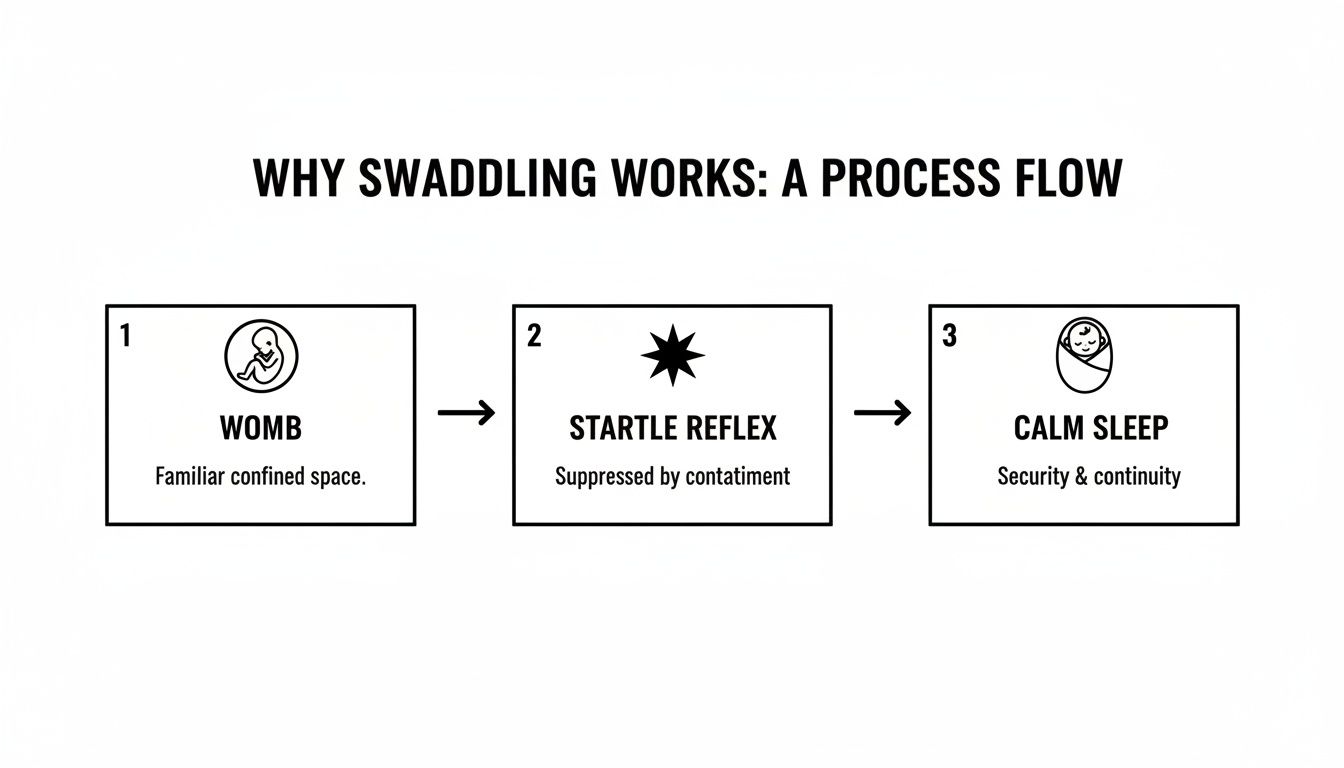
This simple flow shows how a snug swaddle mimics the womb's environment, which in turn helps suppress the Moro reflex, leading to longer, more consolidated sleep for your little one (and you!).
Setting Up Your Swaddle Station
Before you even bring your baby over, get your space ready. Choose a flat, safe surface like the floor or the middle of a bed. A changing table works great too, but always, always keep one hand on your baby for safety.
Grab a lightweight, breathable swaddle blanket—something around 47x47 inches is perfect. Lay it out in a diamond shape, so one corner is pointing up toward you. Now, fold that top corner down about 6-8 inches. This creates a straight edge where your baby's shoulders will go and is a game-changer for getting a snug fit.
Placing Your Baby and the First Fold
Gently lay your baby on their back right in the center of the blanket. Their shoulders should line up perfectly with that straight edge you just created, with their sweet head resting just above the fold. Getting this positioning right is key to making sure the fabric doesn't ride up over their face.
Now for the first move. Gently straighten your baby’s left arm and place it alongside their body. If they resist, don’t force it; a slightly bent arm is perfectly fine. Take the left side of the blanket and pull it snugly across their chest and arm, tucking it firmly underneath their back on the right side. That snugness is what stops those little Houdini hands from breaking free later.
Pro Tip: When you pull the fabric across, imagine you're making a tidy bedsheet corner. A firm, flat wrap across the chest is your goal. It should be snug enough that you can fit just two or three fingers between the blanket and their chest.
Securing the Feet and Hips
Next up, let's get the bottom of the swaddle sorted. Take the bottom corner of the blanket and pull it straight up over your baby's feet. You can either tuck this flap into the top of the wrap across their chest or just fold it over their right shoulder.
This is where hip safety becomes so important. The blanket should never restrict their legs. Your baby's legs need to be able to bend up and out at the hips, kind of like a little frog. Make sure there’s plenty of room in the bottom of the swaddle for them to wiggle their feet and bend their knees freely. We talk a lot more about why this matters in our guide to hip-healthy swaddling practices.
The Final Secure Tuck
You’re almost there! For the last step, gently hold your baby's right arm down along their side. Take the remaining corner of the blanket on the right and pull it firmly across your baby’s body. Wrap it all the way around their back, tucking any leftover fabric into the fold you created in the front.
This final tuck is what locks everything in place. The entire swaddle should feel secure but not uncomfortably tight. Their arms will be contained, preventing that startle reflex from waking them, while their legs have ample room to move. Don't worry if your first few attempts aren't perfect. Like any new skill, practice makes all the difference, and soon it will become second nature in your bedtime routine.
Picking the Perfect Swaddle for Your Baby
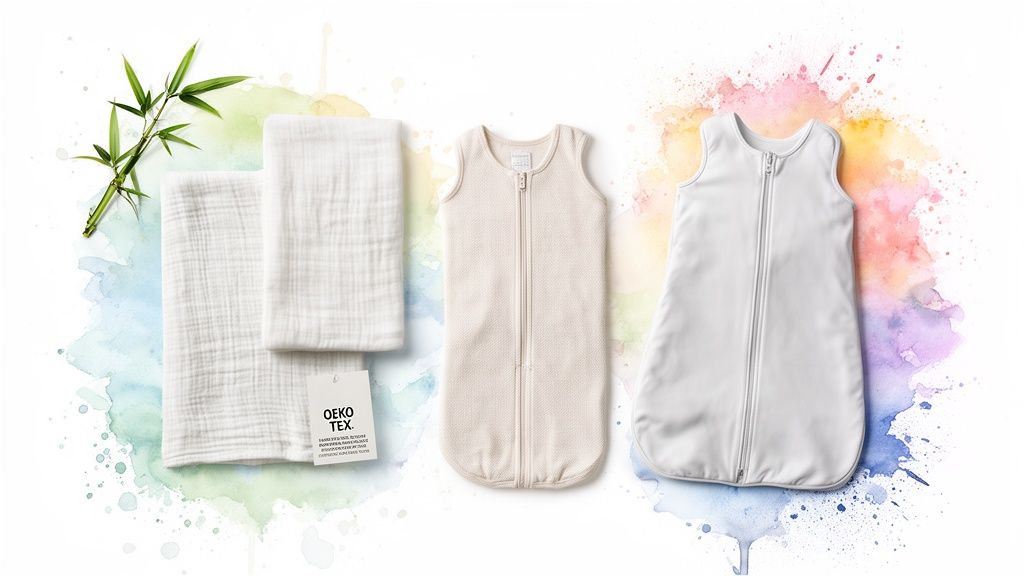
The swaddle you pick is so much more than a piece of cloth. It’s the little cocoon your baby will spend hours in, feeling safe and sound while they sleep and grow. Newborn skin is unbelievably delicate, which puts the fabric of their swaddle right at the top of the priority list.
Finding the best way to swaddle your newborn really begins with finding the best materials. This is why so many parents, myself included, have fallen in love with fabrics like bamboo viscose. It’s just incredibly soft, lets their skin breathe, and even has natural hypoallergenic properties—everything you want for that sensitive baby skin.
Why the Fabric Truly Matters
When you’re wrapping your little one up like a tiny burrito, you want them to be perfectly comfortable—not too hot, and definitely not too cold. This is where breathable fabrics become your best friend, helping to regulate their body temperature and seriously lower the risk of overheating.
Materials like bamboo and muslin are amazing because they let air flow freely. It's a huge difference from those heavy, synthetic fabrics that can trap heat and leave you with a sweaty, fussy baby.
You might also spot a label that says Oeko-Tex® Standard 100 on high-quality baby gear. This isn't just fancy marketing speak; it's a real promise. This certification means every single part of the product has been tested for harmful stuff and is completely safe for your baby.
For your family, this means peace of mind. Choosing an Oeko-Tex® certified swaddle ensures that the fabric touching your baby’s skin is free from chemicals that could cause irritation or harm.
This commitment to safety is a huge part of our mission here at Little Venture Co. Our eco-friendly bamboo viscose swaddles are Oeko-Tex® certified, giving you a soft, safe, and nurturing wrap for your baby. While these are fantastic options, it's also important to know what to avoid. For instance, the AAP advises against weighted swaddles because of the pressure they can put on a baby's chest. You can learn more about these crucial safety distinctions from the experts at Michigan Medicine.
Traditional Blankets vs. Modern Swaddles
Beyond the fabric, you'll find a few different styles of swaddles to choose from. Each has its own perks, and honestly, the "best" one often just comes down to what your baby likes and what you find easiest to use.
Swaddle Blankets (The Classic Choice)
- Pros: They are super versatile. You can use them for swaddling, as a nursing cover, or a light blanket for the stroller. They also let you get that snug fit just right for your baby.
- Cons: Let’s be real—there’s a learning curve. It takes a bit of practice to master the classic swaddle fold, and a really determined baby might just Houdini their way out of it.
Zip-Up Swaddles and Sleep Sacks
- Pros: These are a game-changer for tired parents. Zippers or velcro mean you get a secure wrap in seconds, which is a lifesaver during those 3 a.m. wake-up calls. They’re great at keeping even the wiggliest babies contained.
- Cons: You can’t really adjust the tightness like you can with a blanket. You’ll also need to buy new sizes as your little one grows.
Ultimately, you might find that having both on hand is the perfect solution. A classic blanket can be great for daytime naps when you're nearby, while a zip-up swaddle offers that extra security for a longer stretch of sleep at night. As your baby gets bigger, these zip-up styles often transition into wearable blankets, which are a safe alternative once you stop swaddling. If you're wondering what comes next, our guide explores if sleep sacks are safe for newborns and how to use them.
Essential Rules for Safe Swaddling Every Parent Should Know
There’s nothing quite like the feeling of mastering that perfect, snug swaddle. But beyond the cozy wrap, making sure your baby is safe is what truly matters. A secure, properly wrapped baby is a safe baby, and following a few non-negotiable guidelines will give you the peace of mind you need to rest, too.
These aren't just suggestions; they're expert-backed rules from organizations like the American Academy of Pediatrics (AAP). Think of them as your go-to checklist for creating a truly safe and serene sleep space for the newest member of your family.
Back to Sleep, Always
This is the golden rule of safe sleep, and it’s the most important one to remember: always place your baby on their back to sleep. This goes for every single sleep, whether they’re swaddled or not. This one simple habit has been proven to dramatically reduce the risk of Sudden Infant Death Syndrome (SIDS).
Once your little one is snugly wrapped, gently lay them down in their crib or bassinet flat on their back. Never, ever place a swaddled baby on their stomach or side. When their arms are contained, they can't push themselves up or reposition their head, which becomes incredibly dangerous if they roll onto their face.
To learn more about creating a totally secure sleep space, you can read through a comprehensive guide to a safe sleep environment for infants.
Keep Hips Happy and Healthy
While the goal is a snug wrap around their chest and arms, the bottom half of the swaddle needs a completely different approach. It is absolutely vital that the blanket is loose around your baby’s hips and legs.
Their little legs need to be able to bend up and out into a natural "frog-like" position. Tightly wrapping or straightening their legs can seriously interfere with healthy hip development and can lead to a condition called hip dysplasia.
A good rule of thumb is to make sure you can easily fit your whole hand between the blanket and your baby’s legs. They need plenty of room to wiggle, kick, and bend their knees freely.
Remember the swaddle’s purpose: snug on top, loose on the bottom. This combo gives them the security they crave without getting in the way of their healthy physical development.
The Two-Finger Check for Breathing Room
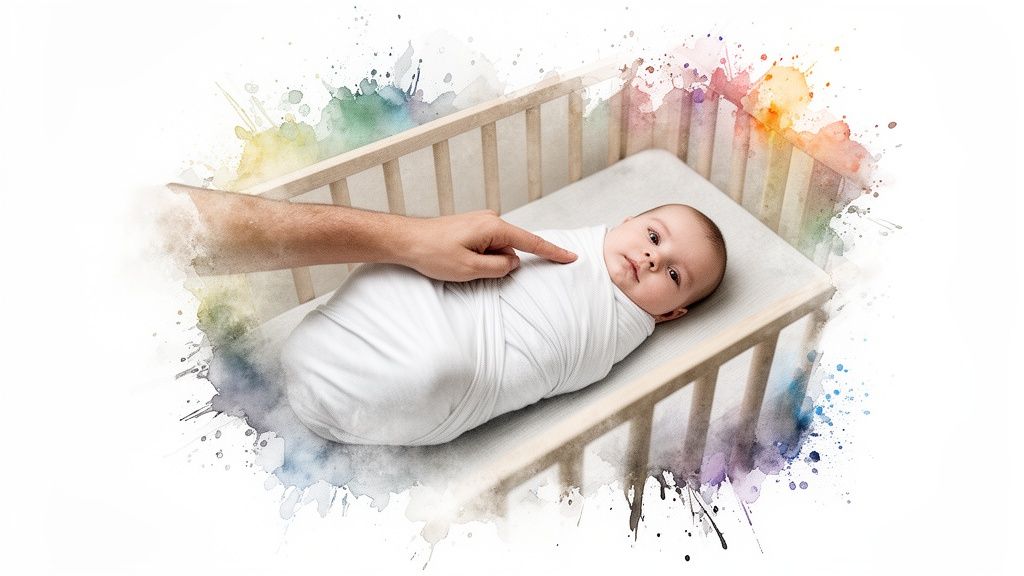
A swaddle should feel like a firm hug, but it should never be constricting. An easy way to check if the wrap is too tight around the chest is to use the "two-finger check."
Once you’ve finished swaddling, you should be able to slide two or three fingers between the blanket and your baby’s chest. This guarantees they have enough room to breathe deeply and comfortably. If you can’t fit your fingers in, the swaddle is too tight and you need to unwrap and try again.
For new parents trying to get the hang of swaddling, a quick reference can be a lifesaver. This little table breaks down the most important do's and don'ts.
Safe Swaddling Quick-Check Guide
| Do | Don't |
|---|---|
| Always place your baby on their back to sleep. | Never place a swaddled baby on their stomach or side. |
| Keep the swaddle loose around the hips and legs. | Don't straighten or tightly wrap your baby's legs. |
| Use the "two-finger check" for breathing room. | Don't wrap the swaddle too tightly around the chest. |
| Dress baby lightly underneath the swaddle. | Don't overdress your baby, which can cause overheating. |
| Stop swaddling when baby shows signs of rolling. | Don't continue swaddling once they can roll over. |
Keep these points in mind every time you wrap your baby, and you’ll be building a safe sleep routine right from the start.
Watch for Signs of Overheating
Babies aren't great at regulating their own body temperature, and a swaddle is essentially an extra layer of clothing. Overheating is a serious risk, so you always need to be on the lookout for the signs.
Here’s what to check for:
- Sweating or Damp Hair: Gently feel the back of your baby’s neck. If it’s damp or sweaty, they’re too warm.
- Flushed Cheeks: Rosy cheeks can be a sign they're getting a little too toasty.
- Rapid Breathing: Pay attention to their breathing. If it seems faster than usual, check their temperature.
- Heat Rash: Keep an eye out for little red bumps, especially around their neck or chest.
To avoid overheating, dress your baby lightly underneath the swaddle—a simple short-sleeved onesie is often all they need. The fabric of the swaddle also makes a huge difference. Lightweight, breathable materials like bamboo viscose are fantastic for allowing air to circulate. For a deeper dive, check out our guide on the https://littleventureco.com/blogs/blog/best-temperature-for-baby-sleep to create the perfect sleep environment.
Know When It's Time to Stop
Swaddling is a wonderful tool, but it's meant for the newborn phase only. The AAP is very clear: you must stop swaddling as soon as your baby shows signs of trying to roll over. This usually happens around 3-4 months, but it can be as early as 2 months for some babies.
Signs that the swaddling days are ending include:
- Pushing up on their hands during tummy time.
- Rocking from side to side on the changing table or floor.
- Lifting a shoulder and hip off the mattress as if trying to roll.
The moment you see these early attempts, it's time to transition out of the swaddle. A wearable blanket or a sleep sack is the perfect next step. It keeps them warm and cozy but leaves their arms free, so if they do roll over, they can use their arms to push up and move their head.
Solving Common Swaddling Problems
Even after you’ve folded and tucked like a pro, swaddling doesn't always go as planned. What do you do when your perfectly wrapped burrito suddenly turns into a tiny escape artist? Or when they start fussing the moment the blanket even comes near them?
Don't worry, you're not alone. These are some of the most common hurdles parents face, and thankfully, they usually have simple fixes. Think of this as your go-to guide for turning those swaddling struggles into sleepy-time success.
Taming the Tiny Houdini
Does your baby break free from their swaddle no matter how snugly you wrap them? This is a classic "Houdini baby" move, and it's incredibly common as they get bigger and stronger. A loose swaddle can become a safety hazard, so it’s something you’ll want to sort out right away.
First, take another look at your technique. The key to a secure wrap is making sure that first fold across their chest is pulled taut and tucked firmly under their back. If you're using a traditional blanket, sometimes a bigger one (like 47x47 inches) gives you that extra fabric you need for a secure final tuck.
If a blanket just isn't cutting it anymore, it might be the perfect time to explore other options.
- Velcro Swaddles: These are a game-changer for a quick, secure fit that’s much harder for a baby to wiggle out of.
- Zip-Up Swaddles: These are pretty much foolproof. They keep your baby snug and contained with zero folding required.
Sometimes, breaking out of the swaddle is a sign that they're getting ready to roll. If your baby is nearing the 3-4 month mark and is also busting free, it’s probably time to start thinking about transitioning out of the swaddle.
A baby breaking free doesn't automatically mean they hate being swaddled. More often, it’s a signal that they need a more secure type of wrap or that their strength is increasing—a wonderful sign of their development!
When Your Baby Fights the Swaddle
It can feel a little discouraging when your baby fusses and cries the second you start wrapping them. But most of the time, this isn't a protest against the swaddle itself—it’s a sign that they're already overtired. An overtired baby will fight just about anything, including the very thing that will help them sleep.
The solution here is often about timing and creating a soothing ritual. Try to start the swaddling process before they hit that overtired, fussy stage. Look for their sleepy cues—a little yawn, rubbing their eyes, or a far-off gaze—and begin your bedtime routine then.
Try to weave the swaddle into a calming sequence of events. For example:
- A warm bath
- A gentle baby massage
- A fresh diaper and a clean onesie
- Swaddling them snugly
- A quiet feeding or gentle rocking with soft shushing sounds
By making the swaddle part of a predictable, peaceful routine, your baby will start to associate it with comfort and the feeling of drifting off to sleep. It becomes a powerful signal that rest is on its way.
Is My Baby Too Warm or Uncomfortable?
Another reason a baby might fuss in their swaddle is simple discomfort. Overheating is a big one, so it’s crucial to make sure they aren’t too hot. You can easily check by feeling the back of their neck or their chest. If it feels sweaty or hot, they’re too warm.
To prevent overheating, always dress your baby lightly underneath. In a comfortable room (around 68-72°F), a simple short-sleeved onesie is usually all they need under a lightweight bamboo or muslin swaddle.
Also, make sure the wrap isn't too tight. Use the "two-finger check"—you should be able to comfortably slide two fingers between the swaddle and their chest.
If you’ve checked their temperature and the snugness and they still seem unhappy, they might just prefer a different position. Some babies love having their hands up near their face to self-soothe. If this sounds like your little one, you could try an "arms-up" style swaddle or just start swaddling with one or both arms out. The best way to swaddle your newborn is always the one that is both safe and keeps your baby happy and comfortable.
Your Top Swaddling Questions, Answered
Even with a perfect "burrito wrap" technique, you're bound to have questions, especially during those late-night, 2 a.m. wake-up calls. We get it. Here are some of the most common things new parents ask, with answers to give you that little boost of confidence you need.
When Do I Stop Swaddling My Baby?
This is one of the most critical safety questions, so let's get right to it. You need to stop swaddling the moment your baby shows any signs of trying to roll over. For most babies, this happens around 3-4 months old, but it can be as early as 2 months for some little movers.
The American Academy of Pediatrics (AAP) is firm on this for a very important reason. If a swaddled baby manages to flip onto their tummy, their arms are trapped. They can't push up to clear their airway, which dramatically increases the risk of SIDS.
Be on the lookout for these early rolling signs:
- Pushing up on their arms or lifting their chest during tummy time.
- Rocking side-to-side on their back.
- Twisting their little hips like they're getting ready to make a move.
Once you spot these, it’s time to graduate to a wearable blanket or a sleep sack.
Is It Okay to Swaddle With Their Arms Out?
Absolutely! In fact, it’s a great technique. Some babies are just happier with their hands free right from the start. They love being able to self-soothe by bringing their hands to their mouth.
If your baby is constantly fighting to get their arms out or just seems more content that way, this is a perfectly safe way to swaddle. They still get that snug, comforting feeling around their torso but with the freedom they want.
This "arms-out" method is also the perfect first step for transitioning away from the swaddle. You can start by leaving just one arm out for a few nights to help them adjust, then move to both arms out before ditching the swaddle completely for a sleep sack.
The best way to swaddle is whatever is safest and most comfortable for your baby. Don’t ever feel like you have to stick to one method if it isn't working for you.
How Can I Tell if My Baby Is Too Hot in the Swaddle?
This is a worry every parent has. The best way to check your baby's temperature is to feel the back of their neck or their chest. Don't go by their hands or feet—they're often naturally a bit cooler and aren't a good indicator.
If their neck or torso feels sweaty or hot, they're too warm. Other clues to watch for are flushed cheeks, rapid breathing, or a heat rash.
To keep them comfortable, always dress them lightly underneath the swaddle. A simple short-sleeved onesie is usually all you need. Keep the room at a comfortable temperature, ideally between 68-72°F (20-22°C). Choosing a breathable fabric like bamboo viscose makes a huge difference, as it helps regulate their temperature and keeps air flowing.
What if My Baby Fights Being Swaddled?
It can feel a little defeating when your baby fusses while you're trying to wrap them up, but it rarely means they actually hate it. More often than not, they're just overtired. An overtired baby will fight almost anything—even the one thing that will help them finally relax.
Try to catch those early sleepy cues—a yawn, an eye rub, that faraway stare—and start the swaddling process before they get too fussy.
Making the swaddle part of a soothing, predictable bedtime routine also works wonders. Try pairing it with gentle rocking, a soft lullaby, or some shushing sounds. Also, make sure the wrap is snug and secure. A loose, floppy swaddle can be more irritating than comforting. If they consistently fight it, you could always experiment with a different style, like a zip-up sleep sack, which some babies prefer.
At Little Venture Co., we believe in wrapping your little one in comfort, quality, and faith. Our ultra-soft bamboo viscose swaddles are Oeko-Tex® certified, so you know they’re gentle and safe for your baby’s delicate skin while providing that perfect, breathable snuggle. Explore our collection of faith-inspired sleepwear and find the perfect piece to bless your family’s journey at https://littleventureco.com.