

Hip Healthy Swaddling: Safe, Comforting Techniques for Your Newborn
Hip-healthy swaddling is all about getting the best of both worlds. You're securing your baby's arms to give them that cozy, womb-like feeling they love, but you're also leaving plenty of room for their legs to bend up and out naturally. Think of it like a little frog—that's the position we're going for.
It's a simple idea: a snug fit up top where it counts for calming the startle reflex, and a loose, spacious pouch on the bottom to let those little hips do their thing.
Why Hip-Healthy Swaddling is a Non-Negotiable
Welcome to the wild ride of parenthood! You’ve probably heard a million times that swaddling is magic for calming a fussy baby and getting a few more precious minutes of sleep. And it's true! But how you swaddle matters just as much as if you swaddle.
We've moved way past the old-school, tight "baby burrito" method. Modern pediatric advice is all about protecting your little one's developing body, especially their hips.
Think about how your newborn naturally holds their legs: bent up and turned out, almost in an "M" shape. This is the sweet spot for healthy hip development. A baby's hip joint is a ball-and-socket structure, but in these early months, the socket is still super soft, shallow, and mostly cartilage. It needs space to develop correctly.
When you force a baby's legs straight down and press them together, it puts a ton of stress on those delicate joints. That pressure can cause the "ball" part of the joint to push against the socket, leading to misalignment or even dislocation. This is the root cause of a condition called developmental dysplasia of the hip (DDH).
The Real-World Impact of Getting it Wrong
This isn't just a "better safe than sorry" theory; the link between tight swaddling and hip problems is incredibly well-documented.
A powerful real-world example comes from Japan. Before a national education campaign kicked off in the 1970s, the rate of infantile hip dislocation was a startling 3.5%. After they started teaching parents about hip-healthy swaddling techniques, that rate plummeted to below 0.2%. You can learn more about these findings on infant hip health.
That’s a massive drop, and it shows just how much impact a small change in your swaddling routine can have on your child's long-term health.
Choosing a hip-healthy swaddling method is one of the easiest and most effective things you can do as a parent. It gives your baby all the calming benefits of a good swaddle without risking their skeletal development.
Hip-Healthy vs Traditional Swaddling At a Glance
Sometimes a quick visual breakdown makes all the difference. This table cuts through the noise and shows you exactly what to look for. It’s all about giving those little legs freedom to move.
| Feature | Hip-Healthy Swaddling | Traditional (Tight) Swaddling |
|---|---|---|
| Leg Position | Legs are free to bend up and out in a natural "frog" or "M" position. | Legs are straightened and held tightly together. |
| Hip Movement | Allows for a full range of motion at the hips and knees. | Restricts or completely prevents hip and knee flexion and abduction. |
| Lower Body Fit | The fabric around the legs is loose and sack-like. | The blanket is wrapped tightly around the legs and feet. |
| Primary Goal | To calm the startle reflex while promoting healthy joint development. | To immobilize the baby completely for perceived comfort and security. |
By making sure you're using a method that respects your baby's natural posture, you're setting them up for a future of healthy movement.
Thankfully, many modern sleep sacks and swaddles are now designed with this in mind, giving you a secure fit for the arms and that crucial roomy pouch for the legs. If you're exploring different sleepwear, our guide on whether sleep sacks are safe for newborns can help you sort through the options.
At the end of the day, hip-healthy swaddling is a simple adjustment that offers huge benefits, giving you peace of mind while your baby sleeps soundly and safely.
Your Visual Guide to the Diamond Swaddle
Ready to master a swaddling technique that’s both cozy for your baby and safe for their hips? The "Diamond Swaddle" is a classic for a reason. It uses a simple square blanket to create that snug, secure feeling around the arms while leaving plenty of room for those little legs to wiggle and bend into their natural "M" shape.
Let’s walk through it together. Forget confusing diagrams; this is a straightforward, hands-on guide to help you get it right every time.
Setting Up Your Swaddle Station
Before you even scoop up your baby, get your space ready. You’ll want a large, lightweight, and breathable blanket—something around 47x47 inches is the sweet spot. A muslin or bamboo viscose blanket works perfectly, as it has a bit of stretch but won't cause overheating.
Lay the blanket on a flat, safe surface, like a changing table or the floor. Turn it so it looks like a diamond, with one corner pointing up toward you.
Now, fold that top corner down about 6-8 inches. How much you fold really depends on your baby's size. The goal is simple: their shoulders should rest just above that folded edge when you lay them down. This little fold creates a nice straight edge for a clean, secure wrap around their upper body.
Positioning Your Baby Correctly
Gently place your baby on their back in the center of the blanket. Their head and neck should be completely above the folded edge, with their shoulders resting right on it.
This next part is the key to hip healthy swaddling. Take a peek at their legs. Are they naturally bent up and out? Perfect. Don't ever try to straighten them or press them together. Just let them fall into that comfortable, frog-like position they love.
This picture says it all—it shows the crucial difference between forcing their legs straight and giving them the space they need to bend.
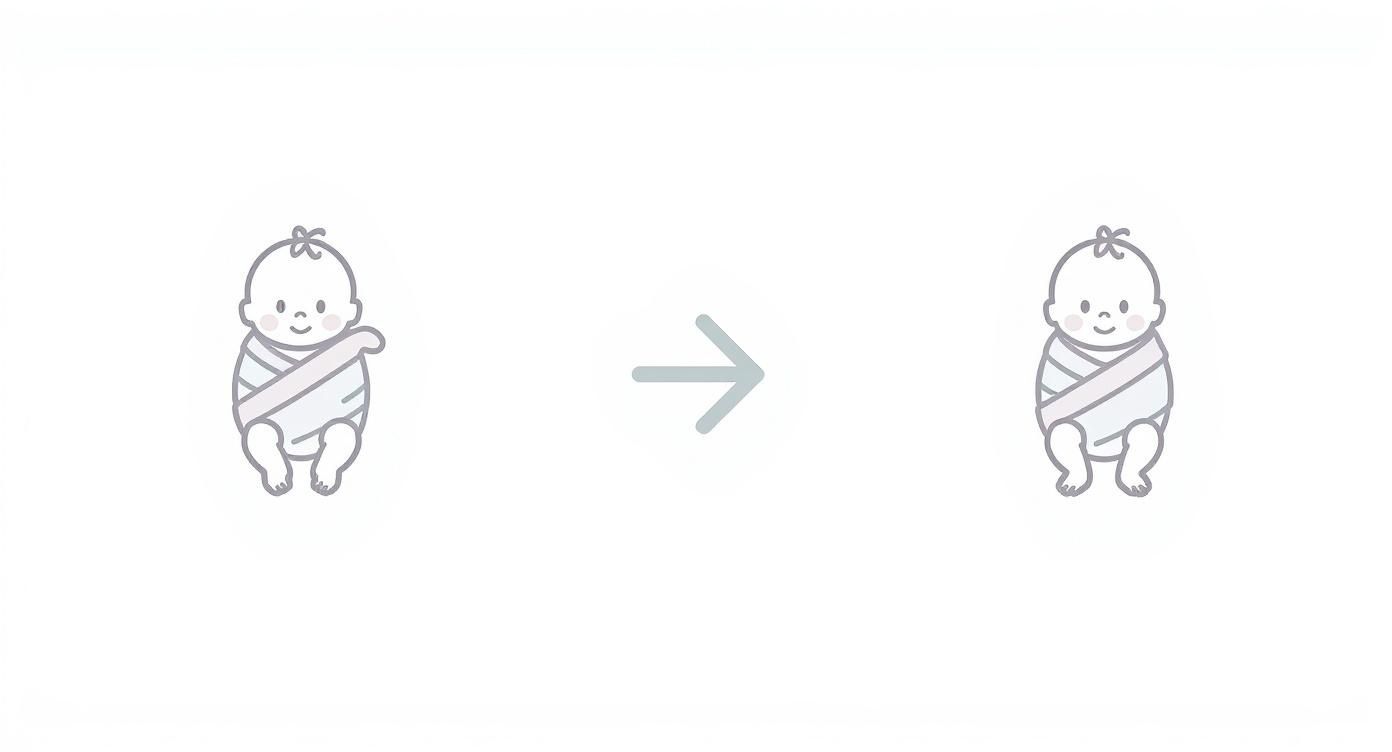
You can see how the incorrect method is restrictive, while the correct technique gives those developing hip joints plenty of room to move.
Creating the Snug Arm Wrap
Alright, let's get wrapping. Gently hold your baby’s right arm straight down along their side. Take the left corner of the blanket and pull it snugly across their chest and arm, tucking it firmly underneath their back on the other side. That snug feeling is what helps calm their startle reflex, so don't be afraid to make it firm.
Next up is the other arm. Hold their left arm down and bring the bottom corner of the blanket up over their left shoulder. Tuck any extra fabric behind their shoulder to keep everything nice and secure.
Pro Tip: Make sure the wrap across their chest is snug, but not tight. You should be able to slide two or three fingers between the swaddle and your baby's chest. This gives them plenty of room to breathe comfortably.
Finally, take that last remaining corner on the right. Pull it across your baby's front and wrap it all the way around to their back, tucking the end into the front fold to lock it all in. This last step holds the whole burrito together.
The All-Important Hip Check
This final step is non-negotiable for a truly hip healthy swaddling experience. Once you’ve secured the blanket, take a good look at the bottom half.
Is there enough room for your baby to move their legs freely?
- Can they bend their knees up toward their tummy?
- Can they move their hips apart from each other?
- Does the blanket form a loose, roomy pouch around their legs and feet?
If you answered yes to all three, you nailed it! The fabric around their lower body should never be tight or restrictive. It’s all about a snug wrap for the arms and a spacious pocket for the legs. For more tips on keeping your baby comfortable, check out our guide on how to dress a baby for sleep, which has some great info on layering.
Troubleshooting Common Swaddle Struggles
So what happens if you’ve got a little escape artist on your hands? It’s a classic parent problem: you get them perfectly wrapped, only to find an arm wiggling free minutes later.
If that’s happening, try these little adjustments:
- Ensure a Snug Start: That very first wrap across the arm and chest is your anchor. Make sure it’s pulled taut and tucked securely under your baby’s back before you do anything else.
- Check the Fabric: A blanket with a little bit of natural stretch, like bamboo viscose, can help create a more secure hold that moves with them.
- Fold Down Less: If you have a smaller baby, try folding that top corner down a little less. This gives you more fabric to work with, which can help you get a tighter wrap around their arms.
Honestly, practice makes perfect. It might feel a bit clumsy at first, but after a few tries, the Diamond Swaddle will become second nature. It'll be a quick and easy part of your routine, giving you peace of mind that your baby is comfortable, safe, and soundly asleep.
Choosing the Right Swaddles and Sleep Sacks
Walking into the baby aisle can feel overwhelming. There's a sea of products all promising a magic ticket to more sleep, but when it comes to swaddles, there's one thing that matters more than anything else: your baby's hip health.
You don't need the most expensive or complicated gadget out there. What you do need is to know what to look for to keep those tiny, developing hip joints safe and sound.
From Blankets to Modern Sleep Sacks
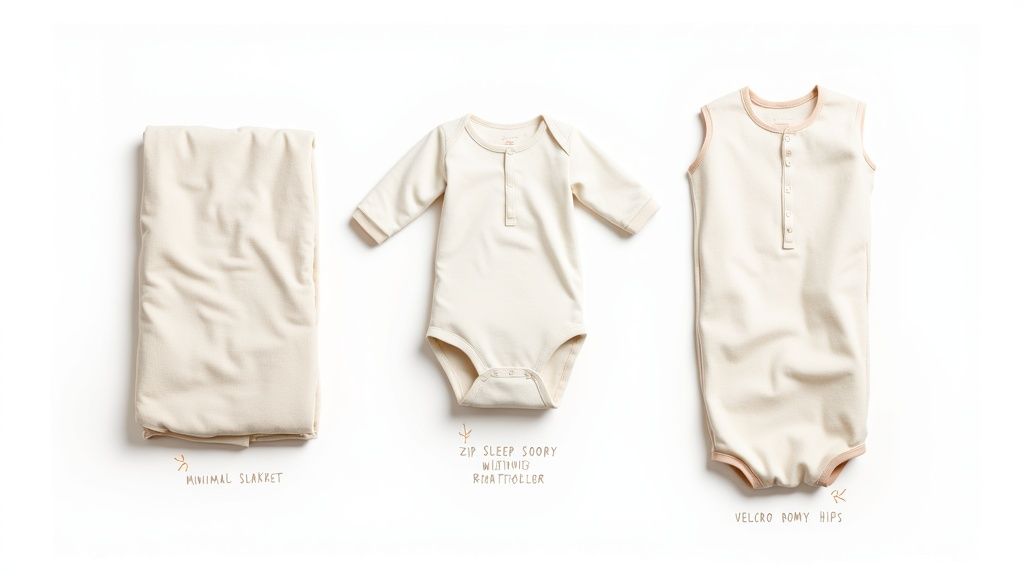
A simple, large muslin blanket can absolutely get the job done, just like we showed with the Diamond Swaddle technique. But let's be real—many of us find modern swaddles and sleep sacks to be lifesavers, especially during those blurry-eyed 3 AM diaper changes.
These newer designs often use zippers, Velcro, or snaps to get that snug, secure fit around your baby's arms, which works wonders for taming their startle reflex. The real genius, though, is in how the bottom half is designed.
The Number One Feature to Look For
Here it is, the most important thing: a wide, bell-shaped bottom. This is completely non-negotiable for healthy hip development. The swaddle needs to be roomy enough for your baby to bend their legs up and out into that natural "M" or "frog leg" position they love.
If a product forces their legs to be straight and held together, put it back on the shelf. It’s just not safe. Always look for a spacious sack that gives their hips and legs total freedom to move.
A great shortcut is to look for the "Hip-Healthy" seal of approval from the International Hip Dysplasia Institute (IHDI). When you see that seal, you know the product has been vetted to meet the criteria for promoting proper joint development.
Material Matters: Breathability and Comfort
A baby's skin is so delicate, and they aren't great at regulating their own body temperature yet. This makes your fabric choice super important for both their comfort and safety.
Try to find materials that are:
- Breathable: Think bamboo viscose, cotton muslin, or merino wool. These fabrics let air circulate, which is key to preventing overheating.
- Soft and Stretchy: A little give in the fabric helps you achieve a snug fit up top while still allowing for plenty of movement down below.
- Temperature Appropriate: A fabric's weight is often rated by its TOG (Thermal Overall Grade). This helps you pick the right sleepwear for the temperature of the nursery. We break it all down in our guide explaining what is TOG.
Parents are catching on. The global market for swaddles with hip-friendly designs has ballooned to over USD 1.13 billion. This massive growth shows a clear shift toward products that are not only cozy but also medically sound. It’s a trend driven by parents who want the best for their babies’ long-term health.
Comparing Hip-Healthy Swaddling Products
With so many options, it can be tough to know where to start. This little comparison chart breaks down the most common types of hip-healthy products to help you find the perfect fit for your family.
| Product Type | Best For | Key Hip-Safe Feature | Ease of Use |
|---|---|---|---|
| Traditional Blanket | Parents comfortable with manual wrapping techniques. | You control the looseness around the legs completely. | Requires practice to master. |
| Swaddle Sack with Velcro | Quick and secure wrapping, especially for wiggly babies. | A wide, sack-like bottom that allows for leg movement. | Very easy; great for beginners. |
| Zippered Swaddle Pod | Newborns who like a very snug, womb-like feel. | Stretchy fabric accommodates the natural "frog leg" posture. | Extremely easy; zip and go. |
| Transitional Sleep Sack | Babies starting to show signs of rolling over. | Arms-out option with a spacious sack for the legs. | Easy to use for the swaddle transition. |
No matter which style you end up with, always do a quick "hip check" after you've got your baby settled in. You should be able to feel that their legs are bent and they have plenty of room to wiggle around inside. It’s a simple final step that makes sure every nap is a safe one.
Your Essential Swaddling Safety Checks
Okay, so you’ve mastered the hip-healthy swaddle technique—that’s a huge win! But getting the wrap right is only half the battle. To truly get that peace of mind, you need a quick mental checklist to run through before every single nap and bedtime.
Think of these as your non-negotiable safety rules. They take just a few seconds but make all the difference, turning that swaddle into a reliable tool for comfort instead of a source of worry.
Back to Sleep, Always
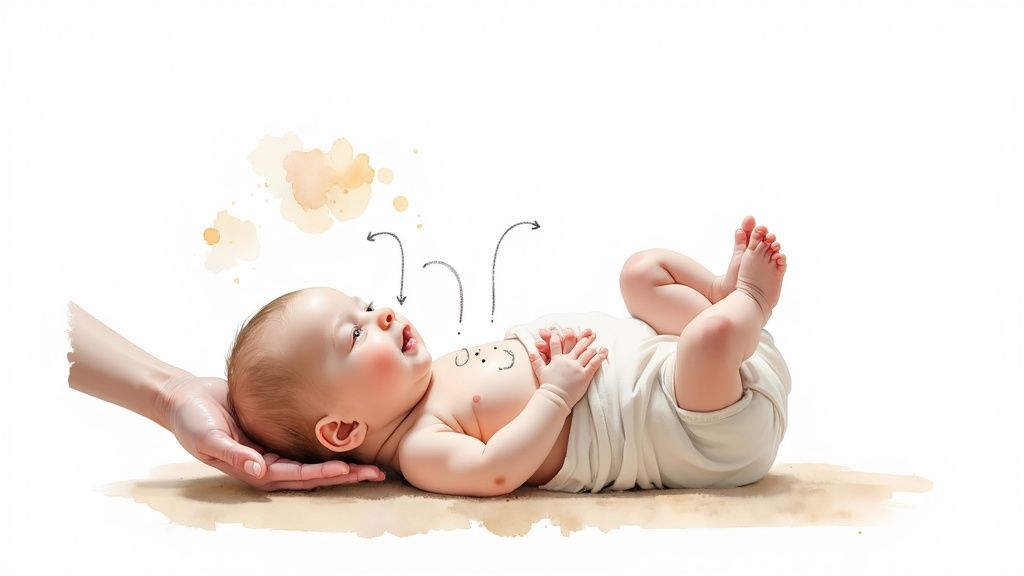
This is the golden rule of infant sleep, and it becomes even more critical when a baby is swaddled. Always, always place a swaddled baby on their back to sleep. Every nap. Every night. No exceptions.
A baby who is swaddled and placed on their stomach or side is at a much higher risk of accidental suffocation. Their arms are tucked in, which means they can't use them to push up and reposition their head. Sticking to back-sleeping is an absolute must.
Aim for a Snug, Not Tight, Fit
The perfect swaddle feels like a gentle, secure hug. It should be snug enough to calm that startle reflex but never so tight that it restricts their chest or breathing.
Here’s an easy way to check: the two-finger test. You should be able to slide two or three fingers comfortably between the swaddle and your baby's chest. If you can't get your fingers in, it's too tight. If there's a ton of extra room, it's too loose and could unravel, which is a serious suffocation hazard.
A swaddle that’s too loose can be just as dangerous as one that's too tight. You’re going for a secure wrap that stays put without putting any pressure on their little chest.
Watch for Signs of Overheating
Little babies aren't great at regulating their own body temperature, and a swaddle is basically an extra layer of clothing. Overheating is a real risk, so keeping them cool and comfortable is key.
Keep an eye out for these tell-tale signs of being too warm:
- Damp hair or a sweaty back of the neck
- Flushed, red cheeks
- Breathing that seems faster than usual
- A heat rash appearing on their chest or back
To avoid this, dress your baby lightly underneath the swaddle. Most of the time, just a diaper or a short-sleeve onesie is plenty. Keep the room at a temperature that would be comfortable for a lightly clothed adult, usually somewhere between 68-72°F (20-22°C).
Choosing the right fabric is a huge part of preventing overheating. It’s worth understanding why breathable fabrics improve sleep quality so you can make a smart choice.
Materials like bamboo viscose are fantastic because they naturally help regulate temperature and are incredibly soft. If you're a parent who really cares about what's touching your baby's skin, it's also helpful to know what certifications to look for. We break down what is Oeko-Tex Standard 100 in another guide.
Keep the Crib Environment Clear
The safest place for a baby to sleep is in a space that is completely empty. That means your swaddled baby should be in a crib, bassinet, or play yard with nothing else in it.
Seriously, nothing. No blankets, no pillows, no bumpers, and no soft toys. The swaddle is their blanket. Adding anything else into the mix just introduces unnecessary risks. All your baby needs is a firm mattress with a tightly fitted sheet. That’s it
Time to Say Goodbye to the Swaddle? When and How to Transition
Just when you’ve finally perfected your swaddling technique—that perfect, snug little baby burrito—your little one starts showing signs they’re ready to break free. It's a bittersweet moment! Knowing when and how to stop swaddling is just as crucial for your baby's safety as learning how to do it in the first place.
The good news is you don’t have to guess. Your baby will give you some pretty clear signals that it’s time for a change. And this transition doesn't have to be a dramatic, cold-turkey affair that ruins everyone's sleep. With a gentle, step-by-step approach, you can help them adjust to sleeping with a little more freedom.
This next phase is all about making room for their new skills and moving on to the next stage of safe sleep, which usually means introducing a sleep sack.
The #1 Sign It's Time to Stop
There is one major developmental milestone that means you need to stop swaddling immediately: when your baby shows any sign of trying to roll over. This is the big one, the non-negotiable cue that the swaddle has to go.
Think about it: a swaddled baby who manages to roll onto their tummy is in a really dangerous spot. Their arms are trapped, so they can't push themselves up to clear their face and breathe. Because this risk is so serious, you have to be vigilant and watch for the earliest signs of rolling.
Those first signs can be subtle, but they often include:
- Pushing up on their hands or arms during tummy time.
- Arching their back while lifting their head and shoulders.
- Rocking from side to side or even scooting around in the crib.
The American Academy of Pediatrics suggests stopping swaddling around 2 to 3 months of age, or as soon as you spot these signs. Some babies are early movers, so it's more important to watch your baby's development than to just follow the calendar.
The moment you see your baby attempting to roll, the swaddle needs to be retired—that very night. It's their way of telling you their motor skills are firing up and their sleep setup needs to change to keep them safe.
Gentle Ways to Make the Transition Smoother
Suddenly going from a tight, cozy swaddle to total freedom can be a jolt to a baby’s system. They're used to that snug feeling, and having their arms free can reawaken the startle reflex that you worked so hard to calm. Hello, middle-of-the-night wakeups.
A gradual approach almost always works better. Here are a couple of parent-tested methods for easing your little one through the change.
Try the One-Arm-Out Method
This is probably the most popular and effective way to wean from the swaddle. It’s simple, intuitive, and lets your baby adjust slowly.
Start by swaddling your baby like you normally would, but just leave one arm out of the wrap. Let them sleep like that for a few nights. This gives them a chance to get used to the feeling of having one arm free while still getting that familiar, secure feeling from the rest of the swaddle.
Once they seem to be handling that well, you can move on to swaddling with both arms out for a few more nights. Before you know it, you can drop the swaddle entirely and move on to a sleep sack.
What's Next? Wearable Blankets
Once you've officially retired the swaddle, the perfect next step is a wearable blanket, often called a sleep sack. They are a fantastic, safe way to keep your baby warm without the danger of loose blankets in the crib.
Best of all, a good sleep sack continues to follow hip-healthy principles. It gives their legs total freedom to kick, bend, and move into that frog-like position, ensuring their developing hip joints are never restricted. They get all the coziness of a blanket with none of the safety risks—a total win-win for babies who have graduated from the swaddle.
Answering Your Top Hip-Healthy Swaddling Questions
It's totally normal to have a ton of questions about swaddling. You're trying to get this tiny human to sleep safely and comfortably, and it can feel like there are a million rules. Let's tackle some of the most common questions I hear from new parents, so you can feel confident you're getting it right.
Is It Okay if My Baby’s Legs Aren’t in a Perfect “Frog” Position?
Yes, absolutely! The whole point isn't to force their legs into one specific shape. It’s all about giving them the freedom to find their own comfy spot. You'll probably notice that most babies naturally pull their legs up into that little frog-like "M" shape when they're lying on their back anyway.
Your only job is to make sure the swaddle or sleep sack is loose enough around their hips and legs to allow for that wiggle room. As long as they can bend their knees and flop their hips open, you're golden. The one thing you should never do is try to straighten their little legs to make them fit into a tight swaddle.
My Baby is in a Pavlik Harness. Can I Still Swaddle?
This is such an important question, and it comes up a lot for families navigating hip dysplasia. The quick answer is yes, you can, but you have to change your game plan. A traditional blanket swaddle that wraps around their entire body is a no-go, as it will get in the way of the harness.
The solution is to look for an arms-only swaddle or a wearable blanket specifically designed to accommodate a Pavlik harness or brace. These smart designs focus on snugging up their arms to calm the startle reflex while leaving their entire lower body—harness and all—completely free. Of course, always run it by your pediatric orthopedist first to get their official recommendation.
A big misconception is that a hip dysplasia diagnosis means no more swaddling at all. The reality is much simpler: you just need to focus on calming their arms while making sure the harness can work its magic without any interference.
What if My Baby Absolutely Hates Having Their Arms Swaddled?
You're not alone! Some babies fight having their arms pinned down like it's their full-time job. If your little one is constantly wrestling their hands free or seems more fussy in the swaddle than out of it, it's time to listen to their cues.
Don't worry, you've got some great alternatives:
- Try an Arms-Up Swaddle: Many swaddle products are now designed to let babies sleep with their arms up by their face, which feels much more natural and soothing for them.
- Go One Arm Out: Sometimes, swaddling with just one arm tucked in is the perfect compromise. It gives them a sense of security while also offering a little freedom.
- Move Straight to a Sleep Sack: If they truly despise any arm restriction, you can just skip straight to a wearable blanket. While it won't help with the startle reflex, it's a perfectly safe and cozy option for sleep.
Why Isn’t This Information More Common Knowledge?
It’s shocking, isn't it? You’d think something this important would be standard advice. A 2020 study from an Indian medical institution found that only 6.6% of pediatricians and a staggering 4% of caregivers had ever even heard the term 'hip-safe swaddling'. That shows a huge disconnect between medical best practices and the information parents are actually getting. You can discover more insights about hip-healthy swaddling awareness directly from the International Hip Dysplasia Institute.
This is exactly why spreading the word is so critical. Getting good information into parents' hands empowers them to make the safest choices for their children’s long-term health.
At Little Venture Co., we design all our bamboo viscose sleepwear with your baby's health and comfort as our top priority. Our swaddles and sleep sacks feature a spacious, hip-healthy design to give your little one plenty of room to grow and move naturally. Explore our collection of safe, soft, and faith-inspired sleep solutions at https://littleventureco.com.