

The Best Temperature for Baby Sleep for Safe Nights
As a parent, you're constantly trying to get everything "just right" for your new baby, and the temperature of their nursery is a big one. So, let's cut right to the chase.
The sweet spot, the temperature range recommended by just about every pediatrician, is between 68°F and 72°F (that’s 20°C to 22°C).
Think of it as the "Goldilocks zone" for sleep. It’s not too hot, not too cold... it's just right to help your little one sleep safely and comfortably through the night (fingers crossed!).
Finding the Perfect Nursery Temperature
It can feel like a lot of pressure to create the perfect sleep environment, but knowing why this specific temperature range is so important makes it all much clearer.
Unlike us, babies are pretty terrible at regulating their own body temperature. Their internal thermostat is still a work in progress, which means they're much more sensitive to how hot or cold a room is.
A cool, stable environment is one of the key recommendations for safe sleep. It helps prevent a baby from overheating, which has been identified as a major risk factor for SIDS (Sudden Infant Death Syndrome). Keeping the room in that 68-72°F range is a simple, effective way to reduce that risk.
Quick Guide to Ideal Baby Sleep Temperature
For a quick reference you can mentally check off each night, here’s a simple table breaking down the essentials.
| Metric | Recommendation | Why It Matters |
|---|---|---|
| Ideal Temperature | 68-72°F (20-22°C) | Reduces overheating risk and promotes deeper, safer sleep. |
| Air Circulation | Use a fan (not aimed at baby) | Helps circulate air and maintain a consistent temperature. |
| Clothing | Dress in light, breathable layers | Prevents overheating and allows for easy adjustments. |
Think of dressing your baby for bed like you'd dress yourself for a cool spring day—it’s all about the layers. A simple onesie paired with a sleep sack is often the perfect combo. The idea isn't to bundle them up like they're heading into a blizzard, but to dress them for the indoor temperature. A great way to master this is by understanding the TOG rating system, which takes the guesswork out of choosing the right sleepwear.
Maintaining a consistent and safe sleep environment is one of the most impactful things you can do to support your baby’s well-being and give yourself peace of mind.
And here's a little bonus: setting your thermostat to this baby-friendly range is often great for the whole house. It aligns pretty well with the optimal thermostat settings for comfort and energy efficiency, meaning everyone can stay comfortable without you getting a shock when the energy bill arrives.
Why That Number on the Thermostat Is a Big Deal
Ever feel like you’re obsessing over the thermostat? You’re not alone, and for good reason. Getting the nursery temperature right isn't just about making your baby cozy—it's one of the cornerstones of safe sleep. The reason is surprisingly simple: babies are pretty terrible at managing their own body temperature.
Think of it this way: our adult bodies are like a sophisticated smart-home system, constantly fine-tuning the internal thermostat to stay perfectly balanced. A baby’s system, especially a newborn's, is more like a brand-new engine that hasn't been broken in yet. It can overheat or get cold in a flash.
This means they are completely at the mercy of their environment—the temperature of the room and what they're wearing—to keep them in that sweet spot. A room that's too warm can be dangerous, while one that's too cold can wreck their sleep.
The Real Risk of Overheating
The number one reason we talk so much about room temperature is to avoid overheating. This isn't just about comfort; study after study has linked an infant getting too hot during sleep to a higher risk of Sudden Infant Death Syndrome (SIDS). While we still don't know the exact cause of SIDS, overheating is a major, and preventable, risk factor.
When a baby gets too warm, they can fall into such a deep sleep that it becomes harder for them to wake up if they're having trouble breathing.
A stable, cool environment helps your baby maintain a safe core temperature, reducing a key environmental risk associated with SIDS and promoting safer, more restorative sleep.
This is why you'll always see experts recommend a cooler temperature range for a baby's room. We're not aiming for chilly, just a setting that takes the danger of excess heat out of the equation. It's one of the most powerful things you can do to create a safer space for your little one.
Why Too Cold Isn't Great, Either
While overheating is the biggest safety worry, a nursery that's too cold can cause its own set of problems. If a baby is chilly, their little body has to burn precious calories just to stay warm—energy that should be fueling their growth and development.
A cold baby is usually a fussy, restless baby. They might struggle to settle down or wake up constantly through the night, which means fragmented sleep for both of you. You'll know they might be too cold if you notice:
- A cool chest or back of the neck: Their core will feel cool to the touch.
- More fussiness than usual: Discomfort from being cold often comes out as crying.
- Waking up a lot: It's a natural survival response for their body to wake them if they get too cold.
Finding that "just right" Goldilocks temperature means their body isn't working overtime, letting them conserve energy and sleep much more peacefully.
How to Check If Your Baby Is Comfortable
While a room thermometer gives you a great starting point, nothing beats your own touch for figuring out if your baby is truly comfortable. They can't use words to tell you they're too hot or cold, but their little bodies give off plenty of signals. Learning to read those cues will give you more peace of mind than any gadget ever could.
It's a classic rookie mistake to feel a baby's hands or feet to gauge their temperature. Don't worry, we've all done it! It’s actually totally normal for their tiny hands and feet to feel cool because their circulatory system is still a work in progress. Blood flow gets to their extremities last, so they're not a reliable indicator of your baby's core warmth.
The Best Way to Check
Instead of going for the hands and feet, gently place your hand on the back of your baby's neck or on their chest. This gives you a much truer sense of their core body temperature.
What you're looking for is a neck that feels warm and dry. If it’s sweaty or clammy, your baby is probably too hot. If it feels a bit cool, they might need another light layer. This simple touch-test is the most accurate way to know if they're sleeping soundly in that sweet spot.
Signs Your Baby Is Too Hot
Overheating is a bigger safety concern than being a little chilly, so it’s crucial to know what to look for. A baby who is too warm will have a tough time sleeping and could be at risk.
Keep an eye out for these tell-tale signs:
- Damp Hair or a Sweaty Neck: A little moisture around their hairline or on their neck is a dead giveaway they’re too warm.
- Flushed Cheeks: Bright red or rosy cheeks can mean they're feeling a bit too toasty.
- Rapid Breathing: If their breathing seems faster than usual, it can be a sign of heat-related stress.
- Restlessness: Is your baby fussing, tossing, and turning? Discomfort from being too hot is often the culprit.
If you spot these signs, it's time to act. Remove a layer of clothing or their sleep sack. Choosing sleepwear made from naturally breathable materials can be a game-changer for preventing overheating. You can learn more about the incredible temperature-regulating properties of bamboo fabric in our detailed guide.
Signs Your Baby Is Too Cold
A cold baby is usually a fussy, wakeful baby. Their body has to work overtime and burn extra calories just to stay warm, which can easily interrupt their sleep.
The best way to know for sure is to do the touch test again. If their chest or back feels cool to your hand, it's time to add a light layer. Think about a simple onesie under their pajamas or swapping out their sleep sack for one with a slightly higher TOG rating. Just remember: never add loose blankets or quilts to the crib.
Dressing Your Baby for Sleep in Any Season
Getting the thermostat right is only half the battle. To really nail the perfect sleep setup, you need to think about what your baby is wearing. The right layers are what keep your little one comfortable all night long, and thankfully, there’s a simple system to take the guesswork out of it: the TOG rating.
Think of TOG as a "coziness score" for baby sleep sacks and swaddles. It’s not about how thick the fabric feels, but how well it holds in warmth. A low TOG rating (like 0.5) is breezy and perfect for hot summer nights, while a high TOG rating (like 2.5) is like a snuggly duvet for those chilly winter evenings.
Matching Layers to the Nursery Temperature
So, how do you put this into practice? The golden rule is to dress your baby for the temperature inside the room, not the weather outside. A good starting point is to dress them in one more layer than you’d be comfortable in yourself. But if you want to be precise, that’s where the TOG system really shines.
To make things even easier, we've put together a quick guide that matches room temperatures with the right TOG rating and clothing. This table takes the mental load off your plate so you can be confident your baby is dressed just right.
TOG and Clothing Guide for Baby Sleep
| Room Temperature (°F / °C) | TOG Rating | Suggested Clothing Layers |
|---|---|---|
| Above 75°F (24°C) | 0.5 TOG | Just a diaper or a short-sleeve onesie under the sleep sack. |
| 72-75°F (22-24°C) | 0.5 TOG | A long-sleeve onesie under the sleep sack. |
| 68-72°F (20-22°C) | 1.0 TOG | A long-sleeve pajama set (top and bottom). |
| 64-68°F (18-20°C) | 2.5 TOG | A long-sleeve pajama set under the sleep sack. |
| Below 64°F (18°C) | 2.5 TOG | A long-sleeve onesie plus a pajama set under the sleep sack. |
Remember, this is just a guide! Every baby is a little different. For a deeper dive into layering options, you can check out our complete guide on how to dress your baby for sleep.
The visual guide below is also a great tool for a quick check-in, especially during those middle-of-the-night wake-ups.
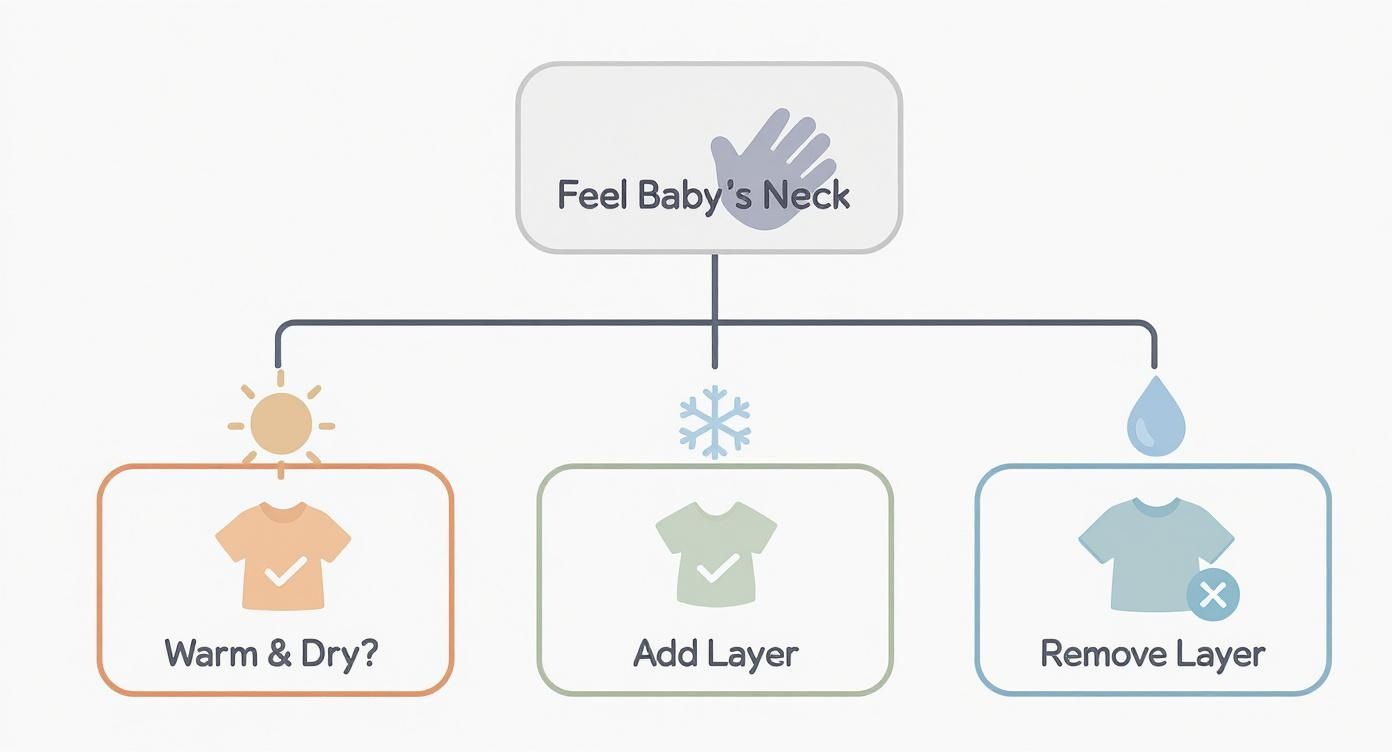
It all comes back to that simple touch test. A quick feel of the nape of their neck will tell you everything you need to know about whether to add or remove a layer.
The Importance of Breathable Fabrics
The number of layers is important, but the type of fabric is a game-changer. Materials like cotton and bamboo viscose are the MVPs of baby sleepwear because they’re incredibly breathable.
These fabrics are fantastic at wicking moisture away from your baby’s skin. This prevents them from getting clammy and helps their little bodies do a much better job of regulating their own temperature. If you have a baby who tends to run hot, exploring options like bamboo cooling sheets can make a world of difference.
It turns out, parents are naturally good at this. A UK study observed that when a room's temperature dropped overnight from an average of 18.4°C (about 65°F), parents instinctively added more or heavier layers to keep their babies warm. It just goes to show that being thoughtful about clothing is a proven way to keep your baby's temperature stable.
Key Takeaway: Don't get too hung up on the number on the thermostat. The real secret is dressing your baby in the right breathable layers for the room's actual temperature. If the back of their neck feels warm and dry, you've nailed it.
Keeping the Nursery Comfortable Year-Round
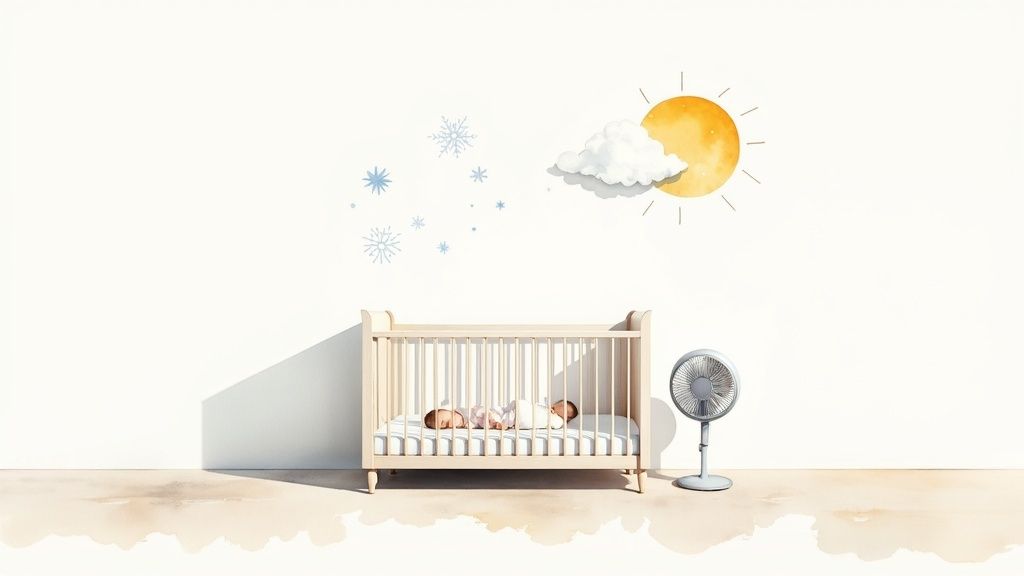
Trying to keep your baby's room in that sweet spot of 68-72°F (20-22°C) can feel like a constant battle against the seasons. One day you're fighting off the summer heat, the next you're trying to keep things cozy and warm. But don’t worry, you’ve got this.
With a few simple tricks up your sleeve, you can create a comfortable little sleep sanctuary that stays consistent, no matter what the weather’s doing outside.
Taming the Summer Heat
When a heatwave hits, a nursery can quickly feel more like a stuffy greenhouse. The key is to keep things cool without turning the room into an arctic tundra.
Here’s what I’ve found works best:
- Embrace the Dark Side: Blackout curtains are a game-changer. Seriously. They block out the sun's rays during the hottest part of the day, which stops the room from heating up in the first place.
- Get the Air Moving: A good fan makes a huge difference. It keeps the air from getting hot and stagnant. Just make sure it’s not blowing directly on your baby—you want gentle circulation, not a wind tunnel.
- Dress Light: On those really sticky nights, less is definitely more. A diaper and a lightweight, breathable sleep sack might be all your baby needs to stay comfortable.
Handling Winter Chills
When the temperature drops, our first instinct is often to crank the thermostat. But a better, safer approach is to keep the room warm without making it overly hot or stuffy.
The number one rule? Keep the crib away from drafts and direct heat. That means no spots right next to a chilly window, a radiator, or a heating vent, which can create dangerous hot or cold patches.
Instead, focus on dressing your baby in smart layers. For some great tips on how to do this, check out our guide on why bamboo pajamas are perfect for all seasons.
The real goal here is consistency. Big temperature swings are what really mess with a baby's sleep and comfort.
A Plan for Extreme Weather
Let’s face it, heatwaves are becoming the new normal, and they can be incredibly stressful for parents. Being proactive is the best way to protect your baby's sleep when the mercury really starts to climb.
And there's science to back this up. A 2023 study from the UK showed that while babies handled temperatures up to 29°C (84°F) fairly well, anything higher really disrupted their rest. During one major heatwave, babies slept about 20 minutes less each night and woke up more often.
On those dangerously hot days, don't be afraid to get creative. If you have a cooler spot in the house—like a basement or a shady room on the ground floor—consider temporarily moving your baby's sleep space there. A little flexibility can go a long way.
Got Questions About Your Baby's Sleep Temperature? We've Got Answers.
It's completely normal to have a million little questions pop into your head, especially in the middle of the night when everything feels more urgent. Let's tackle some of the most common worries parents have about keeping their baby at the perfect sleep temperature.
Should My Baby Wear a Hat to Sleep?
This is an easy one: a firm no. You should never put your baby to sleep indoors with a hat on. Babies regulate their temperature by releasing a lot of heat through their heads, and that's a good, natural thing.
Covering their head traps that heat, which can quickly lead to overheating—a major risk factor for SIDS. Hats are great for a brisk walk outside, but the moment you're back indoors, the hat comes off. And it definitely stays off for naps and nighttime sleep.
Is It Okay to Use a Space Heater in the Nursery?
Proceed with extreme caution here. While you want the room to be cozy, space heaters introduce some serious risks. If you feel you absolutely must use one, make sure you're using a modern one with all the essential safety features.
Look for a model that has:
- Automatic Shut-Off: It will turn itself off if it gets tipped over.
- Overheat Protection: The unit will power down if it starts getting too hot.
- A Cool-Touch Exterior: This is crucial for preventing burns if you or your little one accidentally touch it.
Even with these features, never, ever place a heater near the crib, bedding, curtains, or anything else that could catch fire. Cords should be tucked well out of the way to avoid a tripping hazard. Honestly, a much safer bet is to skip the heater and simply dress your baby in a warmer sleep sack with a higher TOG rating.
How Does a Swaddle Affect Their Temperature?
Think of a swaddle as a wearable blanket. It's an extra layer, so you absolutely have to account for the warmth it adds when dressing your baby for sleep.
The trick is to adjust what they wear underneath based on the room's temperature.
- On a warmer night, say around 72°F (22°C), a swaddle over a simple short-sleeve bodysuit might be all they need.
- If the room is a bit cooler, you might layer it over a long-sleeve onesie or a pair of lightweight footie pajamas.
Always go for swaddles made from breathable materials like cotton, muslin, or bamboo to help with airflow. And don't forget the most important swaddling rule: the moment your baby shows signs of trying to roll, it's time to stop swaddling for good.
Can I Trust the Temperature Sensor on My Smart Monitor?
Smart monitors are fantastic for giving you a ballpark idea of the room's climate, but don't treat that number as gospel. Their accuracy can be a bit wonky depending on where you place the monitor.
A sensor sitting near a sunny window, right over a heating vent, or next to other electronics is going to give you a reading that could be several degrees different from the actual temperature in the crib.
Use the monitor's reading as a starting point, but back it up with a basic room thermometer placed closer to where your baby sleeps (but still safely out of reach). And remember, the most reliable tool you have is your own touch. Nothing beats the simple check of feeling the back of your baby's neck to know if they're too hot, too cold, or just right. Trust your instincts over any gadget.
At Little Venture Co., we believe in wrapping your little one in comfort and faith. Our ultra-soft bamboo sleepwear is designed to be breathable and gentle on sensitive skin, helping your baby stay comfortable all night long. Discover our collection of zip rompers and pajama sets that make bedtime cozier and safer. Explore our faith-inspired children's wear at Little Venture Co.