

How to Soothe A Fussy Baby in 3 Steps
When your baby is wailing, it can feel like you're just guessing what they need. We’ve all been there. But there's a tried-and-true method that gets to the heart of what babies crave: recreating the familiar comfort of the womb.
This is where the "Five S's" come in: Swaddling, Side/Stomach Position, Shushing, Swinging, and Sucking. Think of this as your immediate action plan for those tough moments when your little one is feeling overwhelmed.
Your Go-To Moves for Calming a Crying Baby
When the crying starts, it’s easy to feel a jolt of panic. What now? Instead of running through a random list of things to try, the "Five S's" give you a clear, step-by-step sequence. These moves are designed to tap into your baby’s innate calming reflex by mimicking the sensations they knew so well before birth.
Let's break down how to make this work for you.
Swaddling: The Foundation of Calm
The first S is all about security. A snug swaddle isn't just a cozy blanket; it’s a tool that provides containment and prevents a baby’s own startle reflex from making them even more upset. It's like giving them a constant, gentle hug that reminds them they're safe.
Of course, swaddling doesn't last forever. As your baby grows and starts trying to roll, you'll need to transition away from it for safety. For more on that, check out our detailed guide on when to stop swaddling.
Side or Stomach Position
Here’s a key distinction: babies must always sleep on their backs. But when you’re actively soothing them, holding them on their side or stomach can be a game-changer.
This position helps quiet that Moro (startle) reflex and just feels more secure for them. You can hold your baby firmly in your arms, turned onto their side, or drape them over your shoulder. It’s a simple shift that makes a world of difference.
Shushing and Swinging
You might be surprised to learn that the womb is actually a pretty loud place! A strong, rhythmic "shush" sound made close to your baby’s ear cuts through the noise of their own cries and mimics the whooshing sounds they constantly heard.
Pair this with gentle, rhythmic motion. We're not talking wild swinging, but small, repetitive movements like rocking or jiggling. It’s exactly the kind of motion they were used to for nine months.
This infographic can help you run through a quick mental checklist when you're in the thick of it.
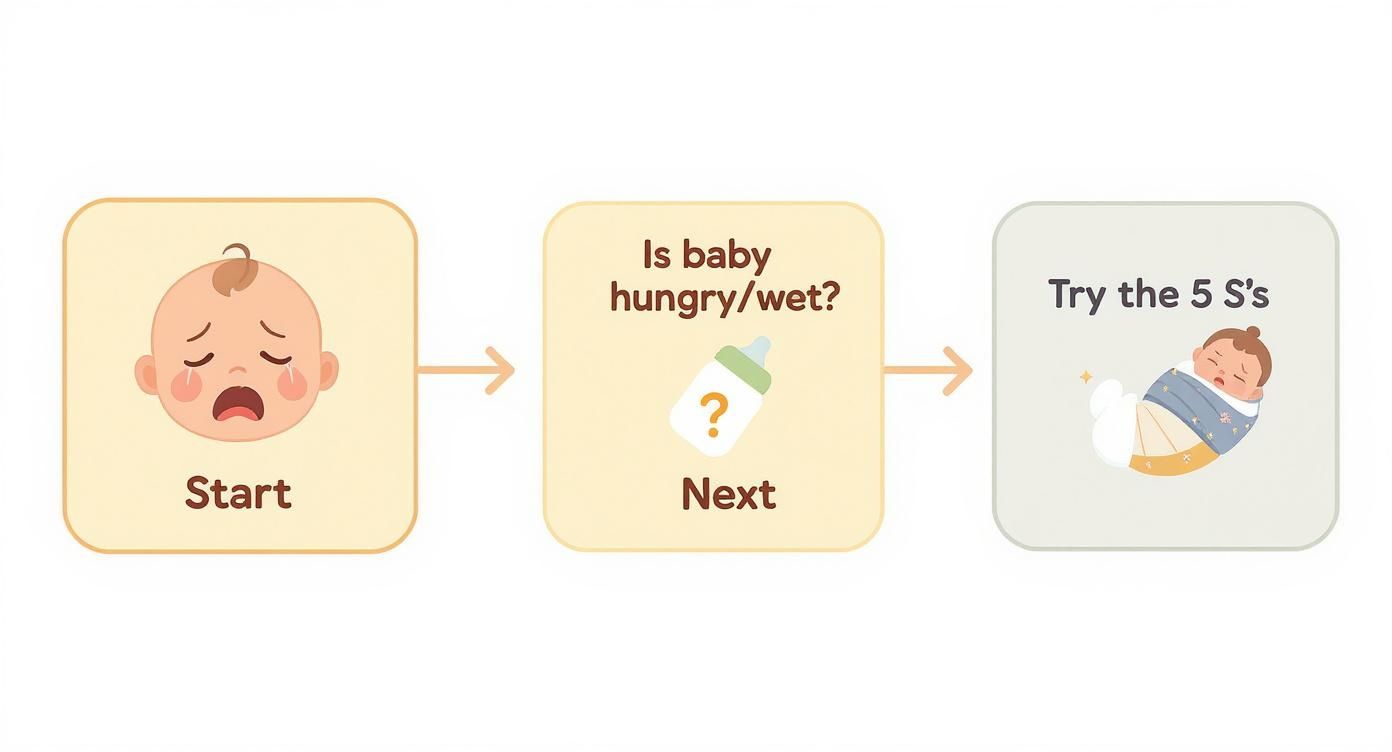
It’s a great reminder to check the basics (like a wet diaper or hunger) first, and then move on to these proven soothing techniques.
Sucking: A Powerful Soother
The final S is a big one. Sucking has an intensely calming and organizing effect on a baby’s nervous system. It’s an instinct that brings immediate comfort.
This can be a pacifier, a clean finger, or nursing for comfort rather than hunger. This non-nutritive sucking is a powerful trigger for their calming reflex. In fact, research shows that by just one month old, over half of babies are already using a sleep aid like a pacifier to help them settle down.
To help you remember these in the moment, here’s a quick-reference checklist.
The Five S's Soothing Checklist
| Technique | What It Is | Why It Works |
|---|---|---|
| Swaddling | Snugly wrapping your baby in a light, breathable blanket. | Recreates the snug feeling of the womb and prevents the startle reflex. |
| Side/Stomach Position | Holding your baby on their side or tummy while they are awake and supervised. | Helps deactivate the Moro reflex and feels more secure. |
| Shushing | Making a loud, rhythmic "shhh" sound near your baby's ear. | Mimics the loud, constant sounds of blood flow and movement in the womb. |
| Swinging | Gentle, rhythmic rocking or jiggling. | Replicates the motion your baby felt while you moved during pregnancy. |
| Sucking | Offering a pacifier, clean finger, or the breast for non-nutritive comfort. | Triggers the calming reflex and helps organize their nervous system. |
Mastering these five techniques gives you a reliable toolkit to turn to whenever fussiness strikes, helping both you and your baby find your way back to calm.
Time to Play Detective: Finding the Real Reason for the Tears
Once you’ve run through the first-response soothing techniques, it’s time to dig a little deeper. Think of yourself as your baby's personal detective. Every cry, every whimper, is a clue. Learning to read your baby’s specific signals is probably the biggest game-changer you'll experience as a new parent.
This goes way beyond just checking for a wet diaper or an empty tummy. You're looking for the subtle hints that point to the real source of their discomfort. Is the overhead light too bright? Is the dog barking just a little too loud? Sometimes, the very environment we find comforting can be a sensory overload for a brand-new nervous system.
Decoding Your Baby’s Cues
Take a step back and think about what’s been happening in your baby's world. A classic culprit for that dreaded evening "witching hour" is simply being overstimulated. The noise of older kids getting home from school, the clatter of dinner being made, the TV in the background—it can all be way too much for a little one.
But here’s the flip side: sometimes, they're just bored! A quick change of scenery can work miracles. A short walk outside or even just moving from the living room to the bedroom can be enough to reset their mood (and yours!).
A quick reminder: a fussy baby doesn't mean you're doing anything wrong. It's just a sign of a brand-new human learning to cope with a big, overwhelming world. I promise, this phase doesn't last forever.
Often, the problem is a physical discomfort that isn't immediately obvious. Gas, for instance, is a huge one. Their tiny digestive systems are still figuring things out, and it can be a painful process.
Common (and Hidden) Reasons for Fussiness
Let's break down some of the most common culprits behind all that crying. Nailing down the "why" helps you figure out the "how" so much faster.
- Gas Pains: Is your baby scrunching up, pulling their legs toward their chest, or arching their back? Classic signs of a gassy tummy. Gently bicycling their legs or a warm bath can really help get things moving.
- Reflux Discomfort: Notice a lot of spitting up or extra fussiness when you lay your baby down flat after a feed? That could be reflux. Try keeping them upright for 20-30 minutes after they eat—it makes a world of difference.
- Hidden Irritants: Sometimes the fix is surprisingly simple. A scratchy clothing tag, a stray hair wrapped around a tiny toe, or a seam pressing in just the wrong spot can cause a total meltdown. This is where the right fabrics really matter.
- Diaper Area Issues: Even if the diaper is clean, the skin can still be irritated. Always do a quick check for any redness or the start of a rash. The best defense is a good offense, so you can learn more about how to prevent diaper rash to stay ahead of it.
This is why we're so passionate about soft, breathable fabrics like bamboo. When you eliminate potential skin irritants, you're taking one more possible cause of fussiness off the table. Pay close attention to how your baby acts right after a feeding or when you change their clothes—these moments are full of clues. Your observations are the key to cracking the code.
Mastering Your Soothing Toolkit

Alright, you're getting the hang of reading your baby's signals. Now comes the fun part: building out your toolkit of calming tricks. This is where we go beyond the basic checks (diaper, hunger) and get hands-on with some of the tried-and-true techniques that can turn a screaming match into a sweet cuddle.
Think of it like this: you wouldn't use a hammer for every job, right? Same goes for soothing a baby. Having a few different approaches in your back pocket is a game-changer, especially since what worked yesterday might not work today.
The Magic of Motion and Sound
For nine months, your baby's world was one of constant motion and muffled sound. It's no wonder that recreating that environment can be so incredibly calming for them.
Movement is one of the most powerful soothers out there. If you suspect gas is the culprit, try the "colic hold." It sounds complicated, but it's simple: just lay your baby tummy-down along your forearm, with their head resting in the crook of your elbow. The gentle pressure on their belly can work wonders for trapped gas, and the swaying motion is a nice bonus.
Sound is your other secret weapon. A white noise machine isn't just for bedtime—it can be a lifesaver during a midday meltdown. It helps drown out the sharp, jarring noises of the outside world and replaces them with a steady, womb-like hum that tells your baby they're safe.
The Reset Button: Touch and Water
Never, ever underestimate the power of your touch. Skin-to-skin contact is pure magic. It helps regulate your baby's breathing, heart rate, and even their temperature. When things get intense, try taking off both your shirts and just holding your baby against your chest.
Feeling your steady heartbeat and warmth can bring them back from the brink faster than almost anything else.
Another great way to hit the reset button is with a warm bath. It's a total sensory shift. The warm water and your gentle hands can wash away the stress of the moment (for both of you!), often breaking that frantic crying cycle.
A quick reminder: Responding to your baby’s cries with comfort isn’t spoiling them—it's building trust. You are their safe space.
For some parents, a pacifier can feel like a magic wand, tapping into that powerful, instinctual sucking reflex that calms babies down. If you're thinking about trying one, it helps to know about the right time to introduce a pacifier.
Safe Swaddling and Wearable Blankets
A good swaddle can make a baby feel incredibly secure, but it's all about doing it safely. You want it to be snug, not tight. A good rule of thumb is that you should always be able to fit two to three fingers between the blanket and your baby's chest.
Just as important, make sure the swaddle is loose around their hips. They need to be able to bend their legs up and out to support healthy hip development.
As they get bigger and start rolling, you'll graduate from swaddles to sleep sacks. If you have questions about making that switch, we've got a guide that digs into whether https://littleventureco.com/blogs/blog/are-sleep-sacks-safe-for-newborns and how to use them correctly.
Ultimately, all these techniques are about being a responsive caregiver. When you consistently meet your baby's cries with comfort, you're doing more than just stopping the noise. You're teaching them that the world is a safe place and that you'll always be there for them. That's how strong, secure bonds are built.
Creating a Calm and Predictable Routine

Here's a secret every parent learns: babies are tiny creatures of habit. They can’t read a schedule, but man, do they have a powerful internal clock. Building a gentle, predictable rhythm into their day is one of the best ways to help them feel safe and secure, which is a total game-changer for fussiness.
This isn't about some rigid, minute-by-minute spreadsheet that just adds more stress to your plate. Far from it. Think of it more like a flexible flow of events—a simple rhythm that tells your little one what’s coming next. A simple "eat, play, sleep" pattern can work wonders. It helps them anticipate naptime before they get overtired and hit that point of no return.
When they know what to expect, you can meet their needs before they escalate into a full-blown meltdown.
Designing a Peaceful Sleep Environment
The room where your baby sleeps has a huge impact on how well they settle. The idea is to create a space that consistently signals, "Hey, it's time to rest now." And you don't need a huge nursery makeover to do it; small, consistent tweaks are all it takes.
Start by thinking about their senses. A dark room is a must. Light messes with the production of melatonin, the sleepy hormone, so blackout curtains are a fantastic investment for both naps and nighttime. Seriously, you won't regret it.
Next up is temperature. A cool but cozy room, somewhere between 68-72°F (20-22°C), is pretty much the sweet spot for sleep. Dressing your baby right for the room temp is a huge piece of the comfort puzzle. This is where choosing the right sleepwear really makes a difference in building those positive sleep vibes.
The Role of Comfortable Sleepwear
What your baby wears to bed is so much more than just an outfit—it's a powerful sleep cue. The simple act of changing them into their special sleep clothes can become a really sweet, calming part of your wind-down ritual.
Keep an eye out for fabrics that are incredibly soft, breathable, and easy on that delicate baby skin. Bamboo viscose is a fantastic choice because it’s amazing at helping to regulate body temperature, keeping your baby from getting too hot or too chilly. When they're physically comfortable, they're so much more likely to settle down and stay asleep.
If you want a deeper dive, our guide on how to dress baby for sleep has you covered with practical tips for any weather. A soft sleep sack or cozy PJs can become that final, comforting signal that sleep is on its way, just like a warm bath or a familiar lullaby.
Gentle Sleep Shaping Versus Rigid Training
When you're running on fumes, you’ll probably hear a lot about "sleep training." It’s so important to know that there are many different philosophies out there. Gentle "sleep shaping" is all about building positive habits and responding to your baby’s cues, which is a world away from rigid "cry-it-out" methods.
The goal is to teach your baby that sleep is a safe and peaceful state to enter, not something they are forced into. This builds a foundation of trust and security.
Recent findings suggest the benefits of letting a baby cry it out might be overblown. While one study showed babies fell asleep about 15 minutes faster with this method, a year later, all the babies were getting the same amount of sleep anyway, no matter the approach. It shows that natural development is the real MVP, and forcing it can cause a lot of unnecessary stress for both of you.
Instead, focus on creating a calming bedtime routine you can actually stick with. It might look something like this:
- A warm, relaxing bath to wash the day away.
- A gentle baby massage with a bit of lotion.
- Changing into those soft, comfy pajamas.
- A final feed in a dimly lit, quiet room.
- A few minutes of quiet cuddles, swaying, or singing.
This predictable sequence helps your baby’s body and mind power down, making it that much easier for them to drift off peacefully.
Trusting Your Gut: When to Call the Doctor
Your parent-dar is a powerful thing. You're with your baby day in and day out, and you know their little quirks better than anyone. While most fussiness is just a normal, albeit exhausting, part of babyhood, there are times when it might be a sign of something more.
Listen to that little voice in your head. If your baby's cry suddenly sounds different—maybe it's sharper, weaker, or has a high-pitched sound you haven't heard before—pay attention. The key is trusting your gut when something just feels off. You're not overreacting; you're being a great parent.
Red Flags to Watch For
It helps to have a mental checklist of specific signs that definitely mean it's time to call the pediatrician. Don't ever feel like you're bothering them; this is exactly what they're there for.
You should get medical advice right away if your baby’s fussiness is happening alongside any of these symptoms:
- Fever: For a baby under three months old, a rectal temperature of 100.4°F (38°C) or higher is an emergency. Don't wait.
- Feeding Issues: If they suddenly start refusing to eat, are vomiting forcefully (think projectile), or you notice a big drop in the number of wet diapers.
- Trouble Breathing: Look for any wheezing, grunting, very rapid breathing, or their nostrils flaring with each breath.
- Lethargy: This is a big one. If your baby is way sleepier than usual, incredibly difficult to wake up, or seems floppy and unresponsive.
It's always better to make a call you didn't need to than to hesitate when your baby really needs help. Your doctor wants you to call if you're worried.
It can be tough to tell the difference between a rough day and a real problem. Here’s a quick guide to help you sort through the signals.
Fussiness vs. Medical Concern: When to Call the Doctor
| Symptom | What's Likely Normal Fussiness | What Could Be a Red Flag |
|---|---|---|
| Crying | Can be soothed eventually, even if it takes a while. Has a "typical" sound for your baby. | Inconsolable for hours. Sounds pained, weak, or high-pitched. Starts and stops abruptly. |
| Feeding | Might be a bit picky or cluster feed but is still eating well overall. Spits up normally. | Refusing multiple feedings in a row. Forceful, projectile vomiting. |
| Diapers | Consistent number of wet and dirty diapers for their age. | A significant decrease in wet diapers (less than 4-6 in 24 hours). |
| Energy | Alert and engaged when awake, even if they're cranky. Normal sleepiness. | Unusually sleepy, difficult to wake, limp or "floppy" when held. |
| Temperature | Normal body temperature. | Any fever (100.4°F or higher) in a baby under 3 months. High fever in an older baby. |
This table is just a guide. If you are ever unsure, the safest and best choice is always to check in with your pediatrician.
When Fussiness Is a Symptom
Sometimes, fussiness that just won't quit can point to an underlying issue that needs a doctor's help to solve.
For instance, conditions like severe reflux can be really painful, causing acid to irritate your baby's throat. Food sensitivities, like a cow's milk protein allergy, can also cause major digestive upset and near-constant crying.
If you feel like you've tried every soothing trick on the planet and your baby is still in distress, it's time to bring in the pros. Try to jot down notes about when they cry, what their feeding is like, and any sleep patterns you notice. This info can be like a treasure map for your doctor, helping them figure out what’s going on and get your little one feeling better.
Answering Your Top Questions About Calming a Fussy Baby
When you're in the thick of it with a fussy baby, your mind starts racing with questions. Am I doing this right? Is this normal? Trust me, every parent has been there. Let's tackle some of the most common worries I hear from parents just like you.
One of the biggest anxieties is, "Can I spoil my newborn by holding them too much?" Let's put this one to bed right now: it is absolutely impossible to spoil a newborn. In those early months, crying is their only way of telling you they need something—food, a clean diaper, or just the security of your arms. Picking them up isn't creating a bad habit; it's building a foundation of trust and showing them they are safe and loved.
When you consistently meet your baby's need for comfort, you're not spoiling them. You're teaching them one of the most important lessons in life: that they can count on you.
Another question that comes up all the time is about that brutal stretch of fussiness that hits right around dinnertime. You know the one—the infamous "witching hour."
What's the Deal With the "Witching Hour"?
So, how long does this evening chaos last? It feels like forever when you're in it, but I promise it's temporary. This tough phase usually kicks in around 2-3 weeks of age, really ramps up around 6 weeks, and then, thankfully, starts to fade by the time your baby is 3-4 months old. It’s a very real developmental stage that’s tied to their brand-new, still-maturing nervous system.
Parents also wonder if there's a real difference between everyday fussiness and something more serious, like colic. The terms get thrown around a lot, but here’s a quick guide:
- The Witching Hour: This is that predictable, almost clockwork fussiness that happens around the same time every day, usually in the late afternoon or evening.
- Colic: This is a whole other level of intensity. The classic definition is the "rule of threes"—crying for more than three hours a day, for more than three days a week, for over three weeks straight.
- PURPLE Crying: This is an acronym that helps describe a normal, though frustrating, developmental stage. It stands for Peak of crying, Unpredictable, Resistant to soothing, Pain-like face, Long-lasting, and Evening crying.
At the end of the day, whether you call it the witching hour, colic, or just a really, really long evening, your game plan for how to soothe your fussy baby is the same. Stick with the calming tricks that work for your little one, whether it’s a tight swaddle or a walk around the block, and remember to be kind to yourself. You're doing a great job, and this phase will pass.
At Little Venture Co., we know that a comfortable baby is a calmer baby. Our incredibly soft bamboo sleepwear is made to be extra gentle on delicate skin, helping you rule out one more thing that could be making your baby fussy. See how we can help you both get more rest by exploring our collection at https://littleventureco.com.