

8 Sustainable Shopping Tips for Thoughtful Parents
You're probably standing in the middle of a store aisle, or scrolling late at night with a baby monitor glowing in the background, trying to decide whether this outfit, toy, or gift is worth bringing home. You want something gentle for sensitive skin, thoughtful for your family, and easier on the planet, but you also don't want to overthink every single purchase. That's where practical sustainable shopping tips help, because the goal isn't perfection, it's making choices that fit your values and your real life.
For parents and gift-givers, especially those shopping with faith and purpose in mind, sustainable shopping can feel a lot more meaningful than a label on a package. It can mean choosing pieces that last, supporting brands with a mission, and buying with enough intention that the item gets worn, loved, and passed on. If you're also looking for a simple way to think about stewardship in everyday purchases, the understanding sustainable play options perspective is a helpful companion to this mindset.
The best part is that this doesn't require a full lifestyle overhaul. A few steady habits, like checking fabric quality, buying secondhand first, and planning for growth, can make your shopping feel calmer and more aligned. If you're buying for your own child, a niece or nephew, or a nursery gift, these ideas can help you choose with confidence instead of guilt.
1. Choose Natural, Certified Fabrics Like Bamboo Viscose
Softness matters when you're dressing babies and toddlers, because the clothes that touch their skin all day need to feel good and hold up well. Bamboo viscose is a practical choice for many families because it's gentle, breathable, and works well for sleepwear and daywear. For a deeper look at how this fabric is made and why it's used in children's wear, Little Venture Co. explains it clearly in what bamboo viscose fabric means.
A fabric choice becomes much more useful when it's paired with a real safety standard. That's why labels like Oeko-Tex® Standard 100 matter, especially for baby clothes and bedding. If you're shopping for a newborn gift or building a small wardrobe for your own child, the best move is to check both the fiber content and the certification, not just the brand's wording on the hangtag.
Practical rule: Don't stop at “bamboo” on the label. Look at the full fiber content, the certification, and how the garment is meant to be used.
A few habits make this easier at checkout:
- Check the label carefully: Aim for a clear fiber listing so you know what you're buying.
- Look for safety certification: Oeko-Tex® Standard 100 is a strong sign that the garment was tested for harmful substances.
- Choose pieces you can use often: Sleepwear, rompers, and two-piece sets tend to get repeated wear.
- Wash with care: Cold water and air drying can help preserve softness and shape.
- Buy a little room to grow: Slightly larger sizes can extend the life of each piece.
For parents shopping at Little Venture Co., bamboo sleepwear and daywear fit this approach well because the brand pairs comfort with a purpose-driven design philosophy. That makes the purchase feel less like another impulse buy and more like a thoughtful part of your child's routine.
2. Buy Quality Over Quantity for Long-Term Value
A small closet full of clothes that wear out fast is usually more expensive, more wasteful, and more frustrating than it looks at first glance. Quality pieces last through more washes, keep their shape better, and can be handed down to siblings or cousins when your child outgrows them. That's a quiet win for both your budget and your values.
The easiest way to think about this is not “How cheap is it?” but “How long will it serve us?” A well-made romper that stays comfortable after repeated washing often gives more value than three cheaper items that shrink, twist, or lose softness quickly. Families feel this most clearly with basics that get worn constantly, like sleepwear, layering pieces, and everyday sets.
For parents building a wardrobe with intention, quality also lowers decision fatigue. Neutral, durable clothing makes it easier to dress a child quickly, pack for travel, and pass items along in good condition later. That's part of why heirloom-minded brands and durable basics are so useful in family life, especially when multiple children may share the same clothing over time.
Buying fewer, better pieces usually works better than constantly replacing inexpensive items that don't hold up.
If you're comparing options, use a simple shopper's lens:
- Read reviews for wear and wash performance: Look for comments about softness, stretching, and fading.
- Choose timeless colors: Neutral pieces are easier to reuse and hand down.
- Prioritize versatile basics: Items that mix with several outfits stretch your wardrobe further.
- Think about seasonal planning: Buying ahead can reduce rushed, repetitive purchases.
- Favor construction over trend: Strong seams and thoughtful fit matter more than a temporary pattern.
If you want a practical comparison point, the advice in quality checks for cheap clothing is useful because it reminds shoppers to look beyond the price tag and into the garment's actual finish. That mindset is especially helpful for children's wear, where durability matters every single week.
3. Support Faith-Inspired and Purpose-Driven Brands
Shopping can be more than a transaction when the brand behind the product reflects your values. For Christian parents and gift-givers, that often means looking for companies that care about comfort, integrity, and giving back in tangible ways. A purchase can feel more meaningful when it supports a mission that serves families, children, or vulnerable mothers.
Little Venture Co. is a strong example of this approach because it blends faith-inspired design with a charitable commitment. The brand shares more about that kind of mission in mission-driven companies, which gives shoppers a better sense of how purpose and product can work together. For baby showers, baptisms, church nursery gifts, or holiday presents, that extra layer of meaning often matters just as much as the item itself.
The key is to verify the mission instead of assuming every “purpose” claim is substantial. A company can talk about values in polished language without showing where its giving goes or how its products are made. A little homework helps you separate marketing from genuine stewardship.
A thoughtful approach looks like this:
- Read the brand's mission statement: See whether it names a real cause or just uses vague language.
- Check where giving goes: Look for a specific partner, program, or charitable commitment.
- Choose gifts with a story: A meaningful purchase can become part of the gift itself.
- Match the item to the occasion: Baptism gifts, nursery essentials, and baby shower presents can each reflect different values.
- Support brands that serve families well: Good design and good purpose should work together.
Purpose-driven shopping works best when it feels natural, not performative. If a brand's mission aligns with your faith and your family's priorities, then buying from them can feel like a quiet act of support rather than a flashy statement. That's especially true when the product itself is something practical and well made, not just decorative or trendy.
4. Shop Secondhand and Resale Platforms First
Children outgrow clothes fast, which makes secondhand shopping one of the most practical sustainable habits available. Many baby and toddler items are worn for a short stretch and still have plenty of life left, so buying them used keeps good clothing in circulation and reduces needless waste. It also gives families a way to save money without lowering their standards.
Secondhand works especially well for everyday basics, outer layers, and clothing that doesn't need to be brand new. Think local consignment shops, neighborhood swap groups, hand-me-down circles, and resale platforms like Poshmark or Mercari. For special occasions, you can still choose a new piece that feels intentional and keeps its value for future use.
The best part is how flexible this strategy can be. A family might buy shoes, sleepwear, or a holiday outfit new, then fill in the rest of the wardrobe from secondhand sources. That balance lets you make room in the budget for higher-quality purchases where it matters most.
Secondhand shopping is strongest when you treat it like a first stop, not an afterthought.
A few practical habits make secondhand shopping cleaner and easier:
- Start with local exchanges: Buy Nothing groups and church swaps often have the most affordable finds.
- Inspect every item closely: Check for stains, stretched elastic, and missing snaps or buttons.
- Wash before first wear: Even gently used items should be cleaned before they go on your child.
- Mix used basics with new keepsakes: This keeps the wardrobe affordable and special.
- Choose new items with resale in mind: Well-made pieces often hold value better for the next family.
For church nurseries and gift-givers, secondhand can also be a humble form of stewardship. A well-tended hand-me-down says, “This was cared for, and it will be cared for again.” That spirit fits beautifully with family-centered, faith-shaped shopping.
5. Check for Certifications and Transparency Standards
A label that says “eco-friendly” doesn't tell you much on its own. Certifications do more work because they come from outside the brand and usually point to a clearer standard for safety, chemistry, sourcing, or labor practices. For baby and toddler clothing, that verification matters, because parents need to know what's touching sensitive skin and how the garment was made.
That's why it helps to look for recognizable standards like Oeko-Tex® Standard 100, GOTS, Fair Trade, B Corporation, and Bluesign®. Each one means something different, so the goal isn't to collect logos, it's to understand what a label covers. Little Venture Co.’s guide to what GOTS certified means is a good example of how brands can make that easier for shoppers.
The bigger lesson is that not every sustainability claim deserves equal trust. The best shoppers ask what was tested, who verified it, and whether the brand can explain its supply chain in plain language. If a company is clear and specific, that's usually a better sign than glossy language with no proof behind it.
A few ways to shop more confidently:
- Learn one certification at a time: Start with the standards that matter most for children's clothing.
- Verify claims outside the product page: Brand websites and certification bodies should match.
- Ask about supply chain transparency: Good brands can explain more than just the final garment.
- Look for layered standards: Multiple certifications can signal stronger oversight.
- Don't confuse clean marketing with real proof: If a claim feels vague, keep digging.
This is one of the most useful sustainable shopping tips because it turns you from a passive buyer into a more informed one. You don't need to become an expert overnight, but learning to spot the difference between a meaningful standard and a decorative badge can protect both your values and your wallet.
6. Build a Versatile Capsule Wardrobe with Mix-and-Match Basics
A smaller, coordinated closet often works better for daily life, church, naps, outings, and family photos. Pieces that mix easily reduce outfit decisions and make mornings calmer for busy parents. A capsule approach also keeps clutter down, so the clothing you own gets worn more often.
Neutral basics do a lot of the heavy lifting. Cream, soft gray, sage, and other calm tones pair easily, which lets a few well-chosen pieces create many outfits. For families shopping with a faith-inspired sense of simplicity, that restrained palette can feel especially fitting because it keeps the focus on comfort, function, and sweetness rather than excess. If you want more ideas for building a soft, coordinated look, Little Venture Co. shares helpful inspiration in its guide to neutral baby clothes.
For Little Venture Co. shoppers, coordinated two-piece sets and rompers fit this model naturally. The same goes for simple baby basics that layer well and hold up to frequent wear. You can keep the wardrobe small and still have enough variety for everyday life.
A capsule wardrobe works best when every piece can do at least two jobs.
Here's a simple way to build one:
- Start with core basics: Choose a handful of tops, bottoms, rompers, or sleepers that work together.
- Stick to a limited color family: Two or three base colors are usually enough.
- Add a couple of accent pieces: One or two patterned items keep the wardrobe from feeling too uniform.
- Choose multi-season pieces: Layering matters more than having separate outfits for every weather shift.
- Keep church and daily wear in mind: Versatile pieces save time when plans change.
If you need a visual reminder while planning, the flatlay in the image below shows how a small set of essentials can work together beautifully.
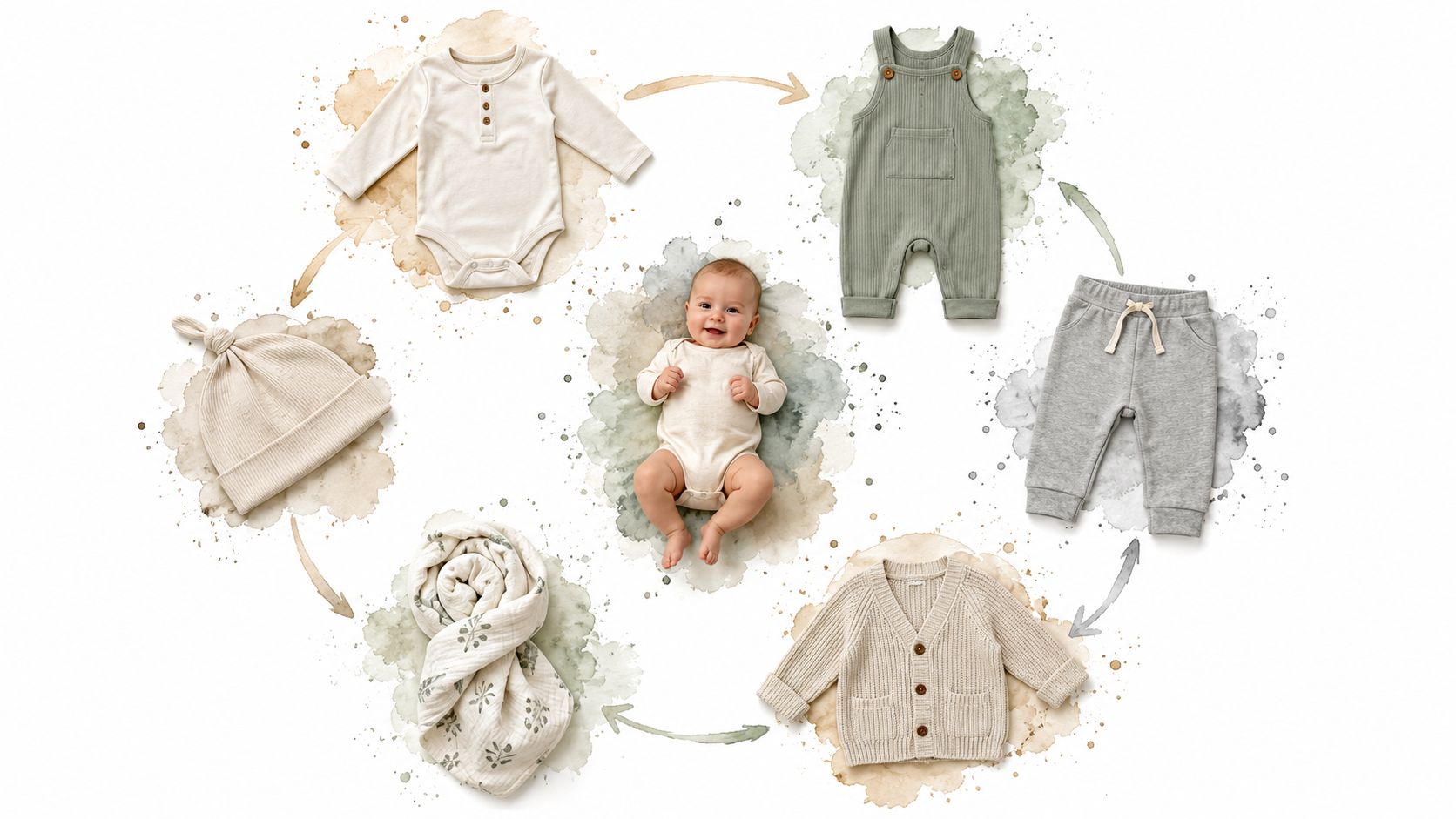
When a closet stays coordinated, you usually buy less by default. That often means less stress, less laundry confusion, and fewer items that get worn once and forgotten.
7. Plan for Growth and Longevity with Adjustable Features
Children grow fast enough without your clothes fighting against them. Adjustable features, like roll-up sleeves, elastic waistbands, convertible fits, and room-to-grow designs, help a garment stay useful longer and reduce the need to replace it as soon. That's a very practical form of sustainability because it keeps one item in rotation through more stages of growth.
This matters most with everyday wear. A romper that still fits comfortably after a growth spurt is a much better purchase than a fixed-size piece that becomes too short in a matter of months. Parents feel the benefit in the laundry room, in the budget, and in how long a favorite item stays in use.
The right sizing strategy is usually a mix of planning and flexibility. Buying slightly up when the brand's fit allows it can extend wear, but that works best when the garment has structure and adjustability rather than just extra fabric hanging loose. If you're buying gifts, that flexibility also reduces the risk of giving something that gets outgrown before the season is over.
A smart approach looks like this:
- Choose adjustable waistbands: These make a big difference as toddlers grow.
- Look for sleeves that can roll or convert: That gives you more mileage across seasons.
- Prefer fabrics with natural stretch: Comfort and recovery both matter.
- Check detailed sizing charts: Measure before you buy when possible.
- Ask brands how they plan for growth: Good fit philosophy is part of good design.
The most useful growth-friendly clothing feels intentional, not oversized. It should still look neat, move well, and layer easily while giving your child room to keep wearing it. That balance is what makes a piece worth choosing in the first place.
8. Participate in Clothing Swaps and Community Exchange Programs
Clothing swaps bring sustainable shopping down to a very human level. Families pass along what no longer fits, and someone else gets exactly what they need without buying new. In churches, neighborhood groups, and faith-based communities, that kind of exchange lines up naturally with stewardship, generosity, and practical care.
Swaps are especially useful for baby and toddler clothing because the sizes change so quickly. A well-organized exchange can refresh a child's wardrobe in one afternoon, and it often creates a stronger sense of connection than a standard shopping trip. Parents meet one another, children benefit from shared resources, and perfectly usable clothes stay in circulation.
You don't need a large event to start. A small seasonal exchange through a church nursery, homeschool group, or neighborhood network can work beautifully. The key is to keep the rules clear, the items clean, and the tone welcoming.
Community exchange turns clothing from a private purchase into a shared act of care.
A few ideas help it run smoothly:
- Set clear condition standards: Bring only items you'd happily give to a friend.
- Sort by size and season: That saves time and keeps the tables manageable.
- Invite families from your faith community: Church groups often already have the trust needed for a good swap.
- Take photos of available items: This helps people plan before they arrive.
- Donate leftovers quickly: Anything unclaimed can still help local charities.
If you want a simple model, think of the swap as part practicality, part fellowship. It's a chance to reduce waste without turning family life into a constant exercise in restraint. Paired with a few high-quality new items, swaps can create a wardrobe that feels generous, affordable, and rooted in community care.
8-Point Sustainable Shopping Comparison
| Strategy | 🔄 Implementation Complexity | ⚡ Resource Requirements | 📊 Expected Outcomes | Ideal Use Cases | ⭐ Key Advantages / 💡 Tips |
|---|---|---|---|---|---|
| Choose Natural, Certified Fabrics Like Bamboo Viscose | Moderate, verify certifications and supplier claims | Higher upfront cost; certified sourcing; care for longevity | Reduced water/pesticide impact; hypoallergenic; biodegradable | Everyday wear for sensitive skin; long-lasting basics | High comfort & safety ⭐, Tip: look for Oeko‑Tex/GOTS and 100% fiber, wash cold |
| Buy Quality Over Quantity for Long-Term Value | Low–Moderate, research durability and reviews | Higher initial investment; fewer replacements over time | Lower cost-per-wear; reduced waste; better resale/hand-me-down potential | Investment pieces, heirloom or staple items | Cost-effective long term ⭐, Tip: calculate cost‑per‑wear and choose timeless neutrals |
| Support Faith‑Inspired and Purpose‑Driven Brands | Low, evaluate mission transparency and partnerships | Slightly higher price; time to verify charitable claims | Social impact multiplier; customer loyalty; moderate consumption reduction | Gifts, church purchases, value-aligned shopping | Purposeful impact ⭐, Tip: confirm donation channels and impact metrics |
| Shop Secondhand and Resale Platforms First | Moderate, sourcing and condition checks required | Low monetary cost; time-intensive searching; possible shipping fees | Lowest environmental footprint; extends garment life; big cost savings | Everyday basics, fast‑growing children, budget families | Best environmental return ⭐, Tip: inspect items, wash before use |
| Check for Certifications and Transparency Standards | Moderate, learn standards and verify documents | May increase cost; research/time to verify labels | Verifiable safety and ethics; reduces greenwashing | Sensitive-skin purchases; ethical procurement decisions | High assurance & accountability ⭐, Tip: use certification databases (Oeko‑Tex, GOTS) |
| Build a Versatile Capsule Wardrobe with Mix‑and‑Match Basics | Moderate, planning and intentional selection | Moderate upfront spend; fewer total items needed | Cuts consumption ~40–50%; easier outfitting; longer use per item | Minimalist families, travel, parents seeking simplicity | Streamlines wardrobe & use-rate ⭐, Tip: start with 5–10 neutral core pieces |
| Plan for Growth and Longevity with Adjustable Features | Low, choose garments with built‑in adjustability | Moderate cost for adjustable designs; minor maintenance | Extends lifespan 2–3×; fewer replacements; better cost-per-wear | Rapidly growing children; mixed-age households | Maximizes wearable lifespan ⭐, Tip: buy one size up and use adjustable features |
| Participate in Clothing Swaps and Community Exchange Programs | Moderate, organize or join local swaps | Very low monetary cost; time/coordination required | Keeps many garments in circulation; prevents new production | Church/community groups; seasonal wardrobe refresh | Community-led zero‑waste impact ⭐, Tip: set clear condition and size guidelines |
Your Sustainable Journey Starts with One Small Step
Embracing sustainable shopping isn't about getting everything right at once. It's about choosing a few habits that make sense for your family, your budget, and your values, then repeating them until they become second nature. When you shop with more intention, you usually end up with less clutter, better quality, and a stronger sense that your purchases reflect what matters to you.
For Christian parents and gift-givers, that kind of mindfulness can feel like stewardship in everyday form. A thoughtful purchase for a baby shower, a nursery, or a child's daily wardrobe can carry care well beyond the moment of checkout. The goal is not to buy less just to feel disciplined, it's to buy better so the things you bring home are more likely to be used, loved, and passed on.
Start with one step that feels realistic. Maybe it's checking certifications before buying baby clothes, maybe it's choosing secondhand first, or maybe it's building a smaller wardrobe of pieces that mix and match well. A single better choice can shift how you shop next time, and those small choices add up over the years.
Little Venture Co. makes it easier to shop with that same sense of purpose, offering faith-inspired bamboo sleepwear and daywear that's soft, certified, and designed for little ones who need comfort every day. If you're looking for meaningful baby and toddler clothing that reflects care, quality, and a deeper mission, visit Little Venture Co. and explore pieces that fit your family's values as beautifully as they fit your child.