

Mission Driven Companies: A Parent's Guide to Shopping
You're shopping for a baby shower, a baptism gift, or maybe a fresh round of pajamas for your own little one. You want something soft, safe, and sweet. But you also want the purchase to mean something. If you're going to spend money, you'd love to support a company that cares about people, families, and the wider world too.
That's where mission driven companies come in.
For parents, this idea makes immediate sense. Most of us already make family decisions through a values lens. We think about what we bring into our homes, what messages our children see, and which businesses we'd feel good about supporting. The tricky part isn't wanting to shop with purpose. It's figuring out which brands live their mission and which ones just know how to write a nice About page.
Finding More Than Just a Product
A lot of meaningful shopping starts with a tiny moment.
You're scrolling through baby clothes late at night, half looking for a practical outfit, half hoping to find something that feels a little deeper. Maybe your friend has waited a long time for this baby. Maybe a new mom in your church could use encouragement. Maybe you want a gift that says, “I see this child as a blessing,” not just, “I checked something off the list.”
That's a different kind of purchase.
Parents and gift-givers often aren't looking for more stuff. They're looking for a product with a story behind it. They want to know who made it, what the company stands for, and whether their order supports something good beyond the checkout page. A brand's About Us story can help you start there, especially when it explains both the heart behind the company and the choices it makes in practice.
A meaningful purchase often starts with a simple question. “What am I really supporting when I buy this?”
That question matters because products don't exist in a vacuum. A sleeper, a swaddle, or a toddler set comes wrapped in business decisions. Those decisions include materials, safety standards, giving commitments, labor choices, and the causes a company highlights.
When shopping becomes values in action
Think about the difference between two baby gifts that cost about the same. One is cute, arrives quickly, and ends there. The other is also cute, but the company explains its purpose clearly, backs it up with real practices, and treats the purchase like part of a larger mission.
That second option often feels more personal.
For families shaped by faith, community, and stewardship, this kind of shopping can become a quiet form of participation. You're not only buying a product for a child. You're helping direct resources toward the kind of world you want children to grow up in.
Why this matters to parents
Parents already weigh more than price. We ask practical questions all the time:
- Is it safe for sensitive skin
- Will it hold up after washing
- Does this fit our values
- Would I feel good recommending this brand to another family
Mission driven companies try to answer that last question with more than mood and messaging. At their best, they make it easier for ordinary shoppers to buy with a clear conscience.
What Are Mission Driven Companies Really
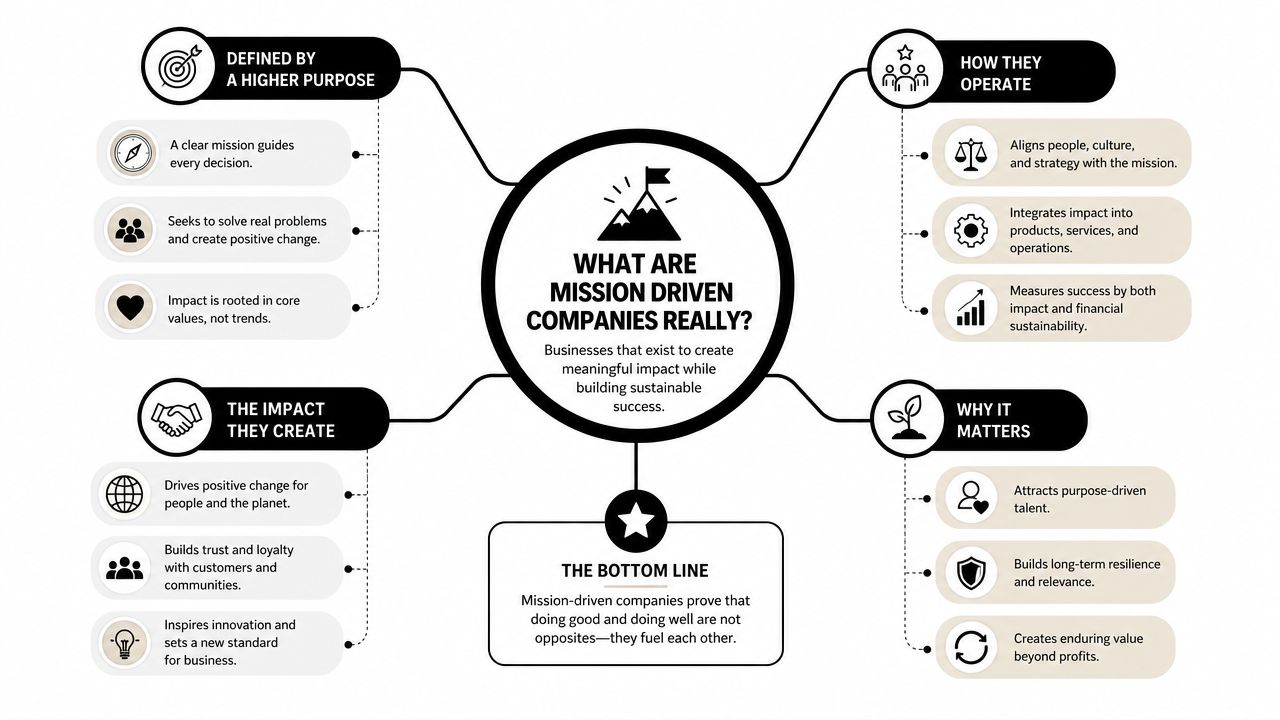
A mission driven company is a business with a purpose that goes beyond making money. Profit still matters, because a business has to stay healthy to keep serving people. But profit isn't the whole point. The mission shapes what the company sells, how it operates, who it serves, and what it measures as success.
A simple way to picture it is this. Your family probably has values that guide choices, even if you've never framed them on the wall. Maybe you care about generosity, honesty, hospitality, or protecting little ones. Those values affect how you spend, how you schedule your time, and how you raise your kids.
Mission driven companies work in a similar way. Their purpose is supposed to guide business decisions, not just decorate the packaging.
More than a donation button
People often misunderstand this concept. A company is not automatically mission driven just because it gives to charity once in a while. Plenty of businesses donate occasionally. That can be generous, but it's not the same thing as building a company around a mission.
A mission driven business usually connects its purpose to daily operations. That could mean:
- Product decisions that reflect a social, faith-based, or environmental goal
- Sourcing choices that show care for workers, families, or the planet
- Safety standards that protect customers in a visible way
- Giving models that are tied to sales, not left vague
- Impact tracking that shows whether the mission is producing real results
Why the term matters more now
This idea moved further into the mainstream in August 2019, when 181 CEOs signed a Business Roundtable statement redefining corporate purpose around creating value for customers, employees, suppliers, communities, and shareholders, not only shareholders. The same source notes that 70% of Americans say it is somewhat or very important for companies to make the world a better place, which helps explain why this model resonates with so many shoppers and workers alike (Givinga on mission-driven companies).
That shift matters because it gave public legitimacy to something many families already believed. A company can aim for healthy profits and still be responsible to people around it.
Big idea: Mission driven companies don't reject business discipline. They use business discipline in service of a larger purpose.
Stakeholders in plain language
“Stakeholder value” sounds like business-school language, but the meaning is simple. It asks a company to think about everyone touched by its decisions.
Here's a short way to frame it:
| Group | What a mission driven company considers |
|---|---|
| Customers | Safety, quality, honesty, usefulness |
| Employees | Meaningful work, fair treatment, clarity of purpose |
| Suppliers | Respectful, responsible relationships |
| Community | Real contribution, not just image |
| Owners | Sustainable profits that keep the work going |
That's why mission driven companies can feel so different from brands built only around trend and margin. The mission becomes a filter.
The Different Ways Companies Give Back
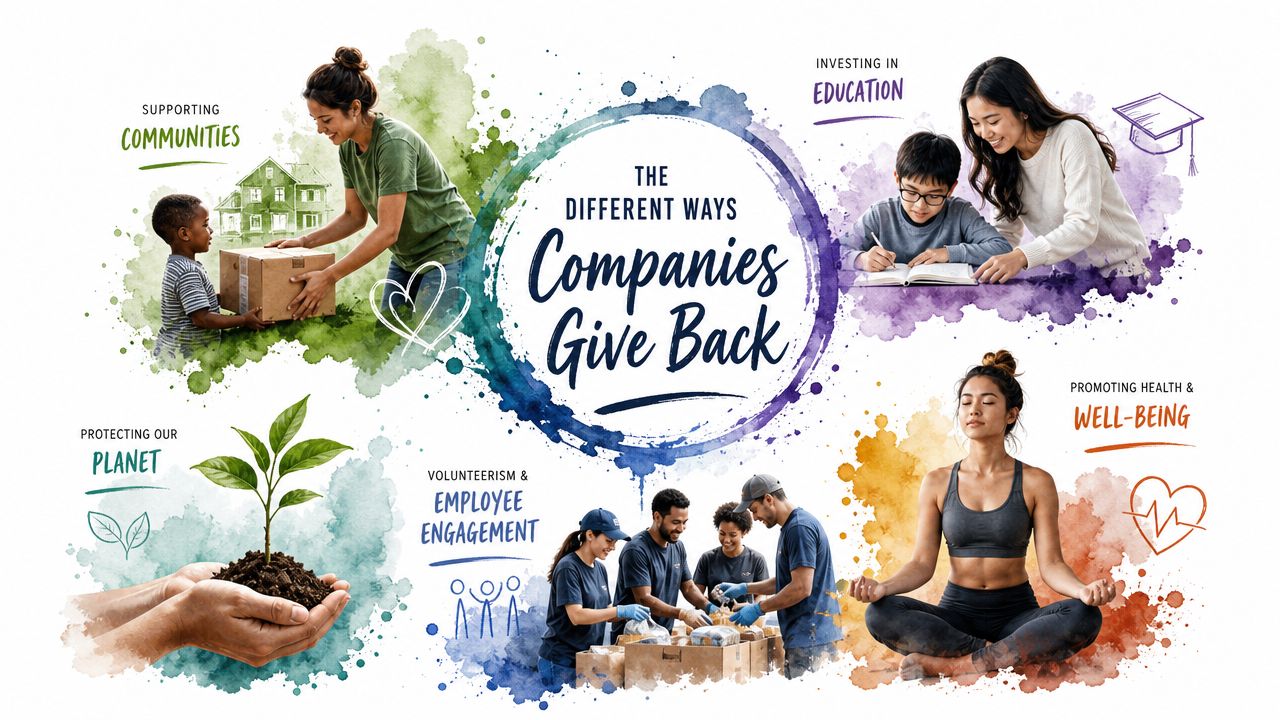
Mission driven companies don't all look the same. One brand may support a nonprofit partner. Another may build its mission into sourcing. Another may center its whole identity around safer materials for families. The key isn't that every company gives back in the same way. It's that the method is specific enough for you to understand.
Giving through each purchase
One common model ties giving directly to revenue. That could be a company pledging a portion of sales, supporting a named nonprofit, or building a standing donation practice into every order.
This works well for shoppers because it's easy to grasp. If the company explains the flow clearly, you can see how your purchase connects to impact.
Another version is a product-linked giving model. A certain collection, item, or campaign may support a specific cause. That can be useful, but it works best when the brand explains what happens after the sale.
Giving through the product itself
Some businesses serve their mission by making the product in a more responsible way. In family categories, that often means safer fabrics, more thoughtful materials, or standards that reduce unnecessary risk for little ones.
That's one reason some parents spend time learning about fabrics before they buy. If you've ever wanted a simple breakdown, this guide to bamboo viscose fabric is the kind of resource that helps connect comfort, function, and material choice in practical terms.
Giving through operations
Other companies make their mission visible in how they run the business. They might prioritize ethical sourcing, long-lasting design, employee volunteer programs, or direct community support.
This kind of giving can be less flashy than a big campaign, but it may be more durable. It shows up in repeatable habits.
Here are a few patterns parents often see:
- Named nonprofit support that stays consistent over time
- Ethical production practices that match the brand's stated values
- Environmental commitments tied to materials or manufacturing
- Family-centered safety choices that matter in everyday use
Why clarity matters
A company can support a wonderful cause and still leave shoppers confused. “We care.” “We believe.” “We're making a difference.” Those phrases aren't wrong. They're just incomplete.
Mission becomes easier to trust when the business answers basic questions without making you dig.
If a company can explain its giving model in one or two clear sentences, that's a good sign. If you have to piece it together from vague slogans, keep your guard up.
There's also a practical side to this. Organizations that use data well are better able to trace decisions back to actual information, improve resource allocation, and refine program strategy instead of collecting data without purpose, as described in Mission Met's discussion of data-driven nonprofit decision-making. In plain language, a real mission should lead to trackable choices.
That's why the strongest giving models aren't only heartwarming. They're understandable.
How to Verify a Company's Mission
Here, careful shoppers separate a touching story from a trustworthy one.
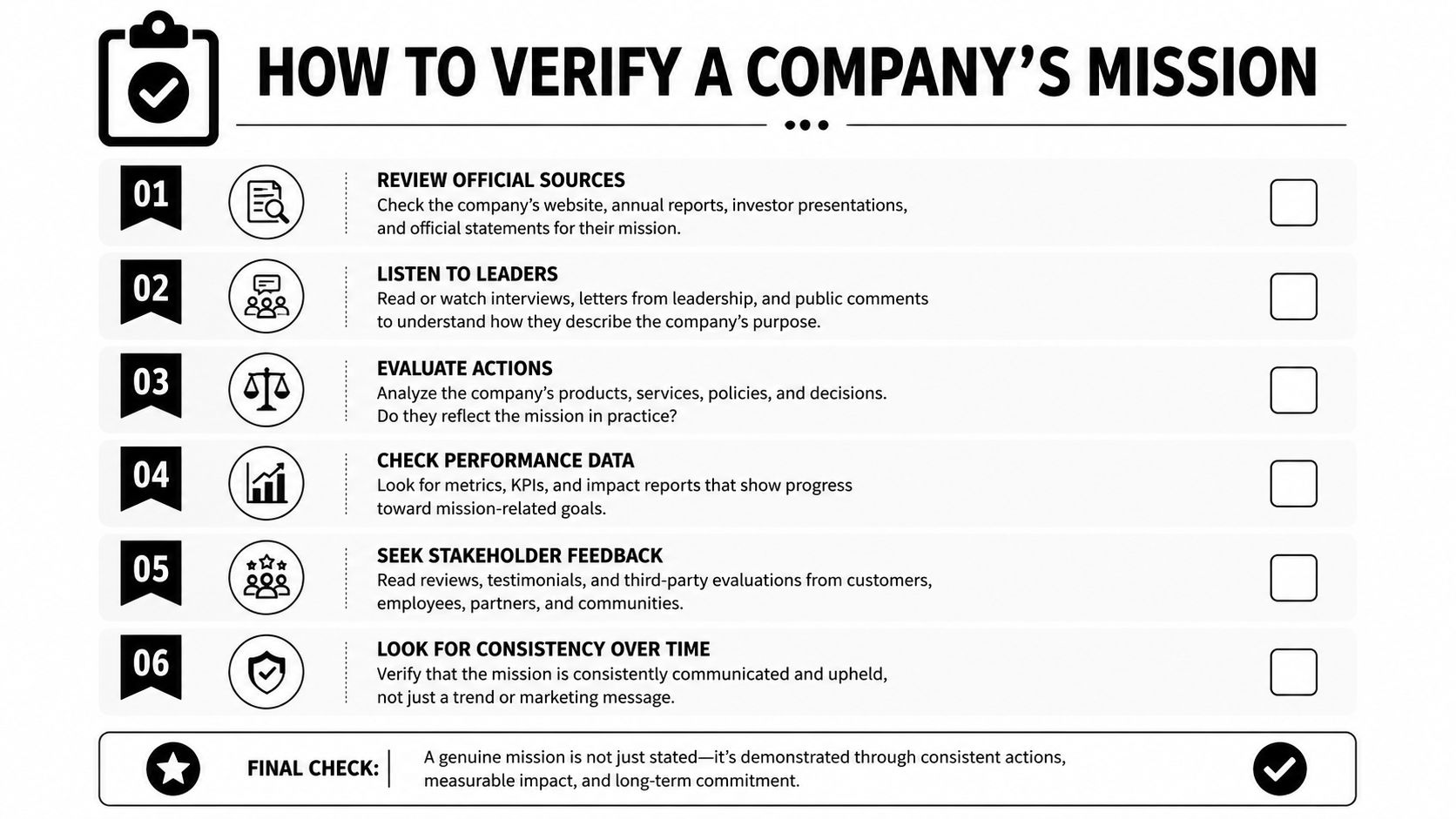
A mission statement can be sincere. It can also be fluff. The only way to tell the difference is to look for proof that the mission affects real business behavior. Parents do this naturally in other areas. We don't buy a car seat because the brand says it cares. We look for standards, testing, and specifics. The same common sense works here.
Start with what they actually show
The first checkpoint is simple. Can you find the mission quickly, and is it concrete?
A useful mission page usually answers questions like these:
- Who do they serve
- What cause or purpose do they support
- How does that purpose show up in products or operations
- Who benefits
- How do they know the mission is being carried out
If the language stays abstract the whole time, that's a warning sign. A real mission can usually survive plain English.
Look for outside accountability
Third-party standards matter because they ask the company to submit to something beyond its own marketing team. That doesn't make a brand perfect, but it does add friction against empty claims.
For family products, safety and material certifications can be especially helpful. If you want an example of what one of these standards means, this overview of OEKO-TEX Standard 100 explains why parents often look for it in baby and children's clothing.
B Lab, the nonprofit behind B Corp certification, emphasizes that purpose-driven enterprises should track whether they are achieving their intended social impact. That moves accountability away from pure storytelling and toward measurable proof (B Lab on impact business models).
Practical rule: If a brand says its mission matters, ask what outside standard, partner, or reporting practice helps verify that claim.
Check whether the giving model is traceable
This step trips up a lot of brands.
Good signs include a named nonprofit partner, a plain explanation of how giving works, and language that tells you whether the support is ongoing or occasional. You don't need a financial audit on the homepage. But you should be able to understand the structure.
Here's a simple comparison:
| What you read | What it suggests |
|---|---|
| “We love giving back” | Warm sentiment, low proof |
| “A portion of every sale supports a named partner” | Clearer model |
| Impact page with partner details and updates | Stronger transparency |
| No details beyond emotional wording | Possible mission-washing |
Watch for consistency across the site
A genuine mission tends to repeat in grounded ways. The cause mentioned on the About page should match the language on product pages, FAQs, partnerships, and policies.
Inconsistent signals are worth noticing. If a company talks like a ministry in one place, a luxury fashion label in another, and a generic cause brand somewhere else, you may be looking at messaging built for conversion rather than conviction.
Notice whether they measure anything
Not every small company will publish a glossy annual impact report. That's fine. But mission-driven organizations usually develop some form of measurement over time, because they need to know whether the work is doing what they hoped.
That could include:
- Tracking donations or partner support
- Reporting on product safety standards
- Sharing progress on sourcing or manufacturing goals
- Using operational data to improve programs and reduce risk
Some organizations also use analytics more directly in decision-making. Examples described by BoardEffect's overview of using data to drive nonprofit success include predictive models and compliance tools that help teams respond to real-world needs with more precision. You don't need technical language as a shopper. You just want signs that the company treats impact like something to monitor, not merely advertise.
Use a parent's standard, not a marketer's standard
The simplest test is this. Would you be comfortable explaining this company's mission to a friend in two sentences?
If yes, and you can point to certifications, named partners, product standards, or transparent policies, you're probably looking at a brand that has put some substance behind its message.
If not, trust that hesitation.
Inspiring Examples of Mission Driven Brands
Mission driven companies become easier to understand when you see how they show up in real life. The details vary, but the strongest examples tie purpose to operating choices, not just language.
Patagonia
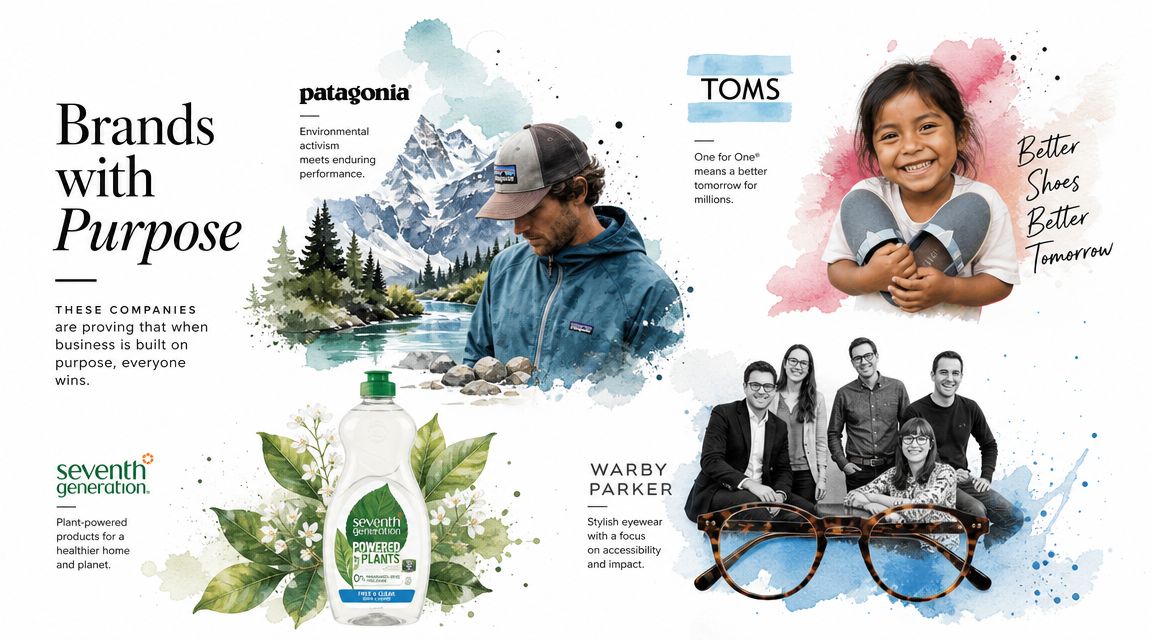
Patagonia is one of the clearest examples because it has embedded its environmental commitment into a visible business practice. The company publicly pledges 1% of sales to environmental preservation, which shows how mission can be built into the operating model rather than treated as occasional charity. That kind of purpose also connects with workers. One source reports that 83% of employees prioritize finding meaning in daily work (BBSI on mission and employee meaning).
What parents can learn from Patagonia is straightforward. A mission gets easier to believe when you can point to a recurring commitment, not just a memorable slogan.
A faith-centered family example
In the children's apparel space, some brands connect mission to both product standards and charitable support. Little Venture Co. offers faith-inspired baby and toddler wear, uses OEKO-TEX Standard 100 certified materials, and states that a portion of every sale supports Heartbeat International. That gives families several concrete places to evaluate the mission: the designs, the safety standard, and the giving model.
That mix matters for parents because it brings together values and practicality. You don't have to choose between a product that feels meaningful and one that addresses everyday concerns like softness and material safety.
Looking beyond one category
Mission shows up in many forms, not only in faith-based or environmental brands. If you want to explore how another apparel model approaches responsible materials, you might enjoy discover Teemill's organic cotton clothing. It's a helpful example of how shoppers can learn to look at fabric choices, production values, and brand purpose together instead of separately.
The best examples don't all support the same cause. They make their cause visible in repeatable business choices.
That's the pattern to remember. Some companies express mission through giving. Others do it through materials, community support, or public commitments. The important question isn't whether every brand looks alike. It's whether the mission leaves fingerprints on the way the company operates.
Your Simple Guide to Shopping With Purpose
When you're ready to buy, you don't need a deep corporate analysis. You just need a few smart questions.
Keep this short checklist in mind when you're comparing brands, gifts, or everyday essentials:
Questions worth asking before you click buy
-
Can I tell what the company stands for
If the mission is real, you should be able to explain it clearly. -
Do they show proof, not just personality
Look for certifications, named partners, clear policies, or concrete operating practices. -
Is the giving model understandable
You shouldn't need detective work to figure out who benefits and how. -
Do the products match the message
A family-centered mission should show up in safety, comfort, and thoughtful design, not just in pretty words. -
Is the story consistent across the site
The About page, product pages, and FAQs should sound like the same company. -
Would I feel good recommending this brand to another parent
That question often brings clarity fast.
A calm, confident way to shop
Purpose-driven shopping doesn't mean every purchase has to be perfect. It means paying attention. It means choosing businesses that make it easier to support what you believe in, whether that's faith, family care, safer products, community support, or wise stewardship.
If you're also comparing materials and everyday wear, this guide to organic baby clothes can help you think through comfort, safety, and values together.
Small purchases can still reflect big convictions. And when enough families shop that way, businesses notice.
If you're looking for faith-inspired baby and toddler clothing that connects soft everyday essentials with a clear giving mission, take a look at Little Venture Co.. It's a practical example of how a family brand can combine meaningful design, tested materials, and support for mothers in need.