

What Is GOTS Certified: Your 2026 Guide
You're standing in the baby aisle with a swaddle in one hand and your phone in the other. One tag says “organic.” Another says “natural.” A third says “eco-friendly bamboo.” They all sound good, and somehow that makes it harder, not easier.
When you're buying for a baby, you're not shopping for marketing words. You're trying to answer simple parent questions. Will this be gentle on my baby's skin? Was it made in a way I can feel okay about? Is this one of those labels that means something?
That's where GOTS comes in.
If you've been wondering what is GOTS certified, the short answer is this: it's one of the clearest labels in the textile world because it checks far more than a soft fabric claim on a product page. It gives parents a practical way to separate “sounds nice” from “was verified.”
Decoding the Labels on Your Baby's Clothes
A lot of us start in the same place. We just want a simple footie pajama, a crib sheet, or a swaddle that feels safe and soft. Then the labels start piling up. Organic cotton. Clean dyes. Earth-friendly. Non-toxic. Sustainable. Before long, every brand sounds responsible, and you're left guessing.
That guessing game gets old fast when your baby has sensitive skin, eczema flare-ups, or just that brand-new baby skin that seems to react to everything.
GOTS is helpful because it cuts through some of that fog. Instead of asking you to trust a vague phrase, it gives you a standard with rules behind it. When a product is GOTS-certified, the claim isn't just about the final feel of the fabric. It's tied to how the fibers were grown, processed, and turned into the item you bring home.
Practical rule: If a label uses soft words like “natural” or “eco” but gives you no certification details, treat it as a marketing claim, not proof.
That matters when you're building a baby wardrobe or registry. A bodysuit that looks sweet in a product photo may still leave you wondering what touched the fabric before it touched your child. Parents who are already thinking carefully about chemical-free baby products usually want that same clarity in clothing, blankets, bibs, and sheets.
The reassuring part is that you don't have to become a textile expert to shop smarter. You just need to know what this one label is trying to guarantee, and what it isn't.
What GOTS Certification Really Means
You pick up two baby sleepers. Both say “organic.” One has a GOTS logo and one does not. For a tired parent trying to choose the safer, kinder option, that little logo is the difference between a broad promise and a standard with rules.
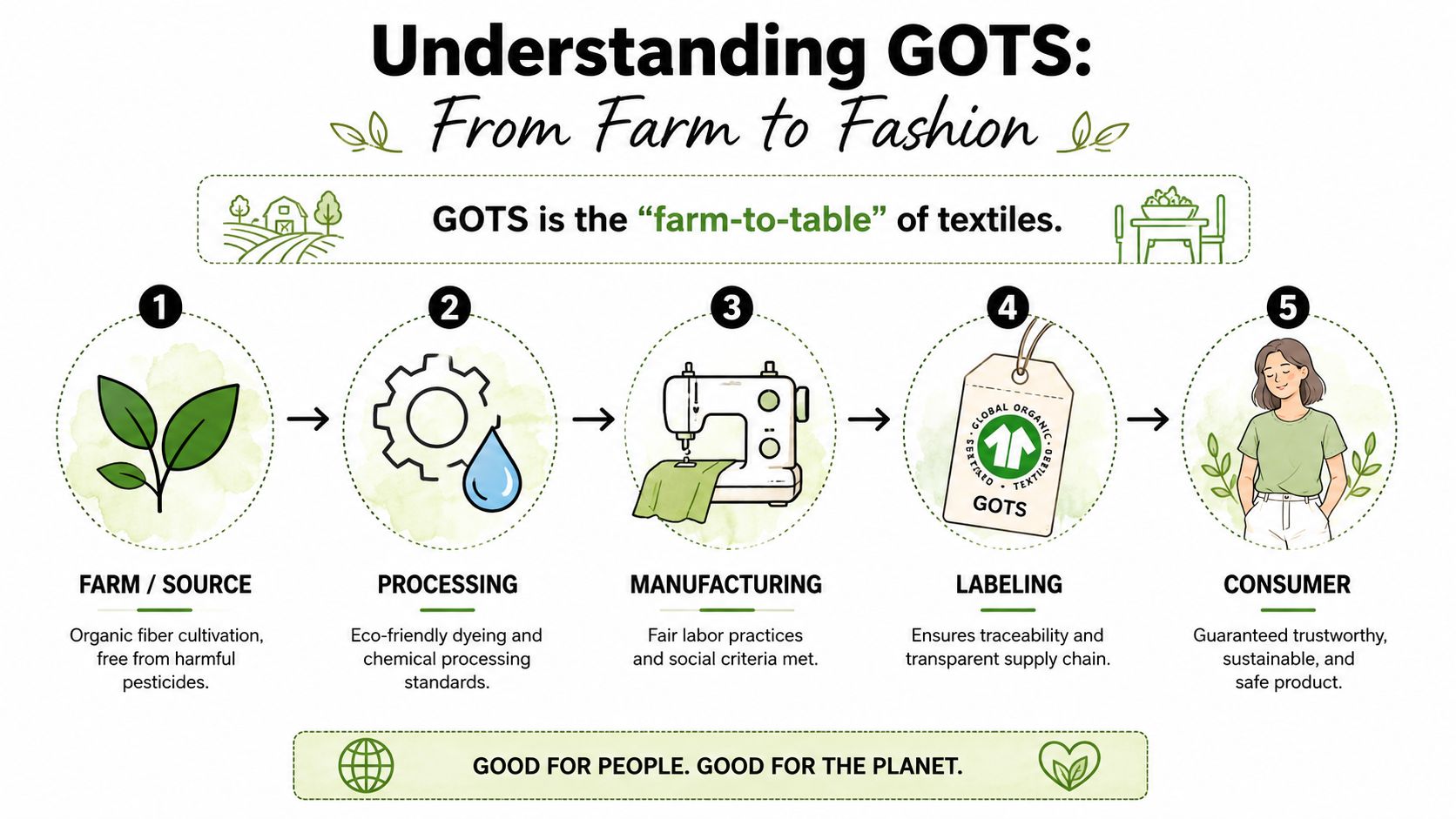
GOTS stands for Global Organic Textile Standard. It works like a report card for the whole life of a textile, not just the finished outfit in your hand. For parents, the practical meaning is simple. It aims to give you more confidence that the fabric touching your baby's skin started with organic fibers and was processed under stricter environmental and social requirements than a generic “organic” claim.
Why that matters in real life
A baby does not wear a label. A baby wears the fabric.
So the key question is not whether a brand sounds wholesome. It is whether the material in that swaddle, bodysuit, crib sheet, or bib has been checked in a meaningful way. GOTS follows the textile from raw fiber through processing and final labeling, and it includes environmental and social requirements along that path. The standard is also used widely around the world, as noted earlier in the GOTS annual report.
That “whole journey” approach matters because baby products live close to skin and get used hard. They are slept in, chewed on, washed often, and passed down to younger siblings. Parents usually want more than softness. They want fewer question marks.
If you sew, buy fabric by the yard, or want to understand fibers before you shop for finished items, this sustainable fabric guide for sewists can help connect certification language to real fabric choices.
The two GOTS label grades, in plain English
This part can be confusing at first because both labels sound similar.
- GOTS organic means the product contains at least 95% certified organic fibers.
- Made with organic means the product contains at least 70% certified organic fibers.
Both labels mean something. They just do not mean the same thing.
A simple comparison helps. If you were buying applesauce for your baby, you would want to know whether the jar is almost entirely organic ingredients or whether it includes a smaller organic share mixed with more non-organic material. Clothing works the same way. The label grade helps you compare two items that may look equally “clean” on the shelf.
For parents, the “so what?” is straightforward. If your baby has sensitive skin, if you are shopping for everyday basics like pajamas and sheets, or if you are trying to build a registry with fewer vague claims, the higher organic fiber threshold can be a useful detail. It does not mean one product is automatically perfect. It does mean you have a clearer standard for comparing options.
That is especially helpful in categories where the marketing gets fuzzy, like “bamboo” baby clothes. Some bamboo items feel silky and gentle, but the soft feel alone does not tell you how the fabric was processed or what the organic claim covers. GOTS gives parents a firmer place to stand.
If you want to see how this looks in actual shopping decisions, guides on the best organic baby clothes can help turn label language into a shortlist of baby basics that make sense for daily use.
The Strict Rules Behind the GOTS Logo
The GOTS logo only matters if the rules behind it are strict. They are. For parents, the easiest way to understand those rules is to group them into three buckets: environmental standards, social standards, and chemical and quality controls.
Environmental rules that affect more than the farm
GOTS starts with organic fibers. That means the organic fibers must be grown without synthetic pesticides, synthetic fertilizers, or genetically modified organisms. That alone matters to many families who want fewer conventional chemical inputs tied to the products they buy.
But GOTS doesn't stop at the field. It also reaches into the processing stages that usually get ignored in casual “organic” conversations. The standard requires responsible chemical management and wastewater treatment through production.
That matters because fabric doesn't become a baby sleeper by magic. It goes through wet processing, bleaching, dyeing, washing, and finishing. If those stages aren't controlled, pollutants can end up in water systems and surrounding communities.
Chemical restrictions parents care about
This part is especially relevant for baby basics that stay against skin for hours at a time.
GOTS explicitly bans toxic heavy metals such as mercury and lead, formaldehyde, aromatic solvents, and chlorine bleaching, while requiring oxygen-based bleaches and pre-treated wastewater discharge, according to Simple Ecology's GOTS certification summary. That gives the logo real practical meaning. It's not just saying “organic cotton in, done.” It's saying the processing itself has rules.
For parents, the “so what” is simple. A stricter chemical rulebook means fewer reasons to wonder what residues or harsh processing choices were involved before that fabric reached your baby.
GOTS also sets product quality benchmarks for things like colorfastness, shrinkage resistance, and durability. That doesn't mean every certified item will feel the same, but it does mean the standard expects a product to function well, not just sound virtuous on a tag.
Social rules that many labels skip
This is one of the biggest differences between GOTS and labels that focus only on finished-fabric testing.
GOTS includes mandatory social compliance based on internationally recognized human rights norms. That includes the prohibition of child labor, forced labor, and discrimination, along with safe and hygienic working conditions and reasonable working hours, as described on the GOTS standard page.
For parents, this can feel less immediate than softness or washability, but it is essential. Baby clothing is intimate. It wraps our children. Many families want that purchase to reflect care not only for their own child, but also for the people who cut, dye, sew, and pack the garment.
Here's a practical way to think about those three buckets together:
- For your baby's skin: stricter limits on harsh substances in processing can reduce the worry around what touched the fabric.
- For the environment: wastewater and chemical controls address pollution where textiles are made.
- For workers: social criteria make “ethical production” something that has to be verified, not just printed on a homepage.
That combination is why GOTS carries so much weight. It isn't one promise. It's several promises tied together.
GOTS vs OEKO-TEX What Parents Need to Know
A frequent source of shopping confusion arises. You see GOTS on one product and OEKO-TEX Standard 100 on another, and it sounds like you're supposed to pick a winner.
You usually don't need to think about it that way.
A good shorthand is this: OEKO-TEX Standard 100 is a finished product safety check. GOTS is a full supply chain check. One asks, “Is the final item tested for harmful substances?” The other asks, “How was this textile grown and made from start to finish?”
The simplest way to remember it
If you're buying a baby sleeper, OEKO-TEX helps answer a final-product question. GOTS answers a process question.
That distinction matters because a product can feel equally soft in your hand while representing very different production standards behind the scenes. A parent deciding between the two isn't necessarily choosing “good” versus “bad.” You're usually choosing which kind of assurance matters most for that item.
As covered earlier, GOTS certifies how the product was grown and manufactured across the supply chain, while OEKO-TEX Standard 100 focuses on finished product safety. If you want a deeper parent-friendly explanation of the second label, this guide on what OEKO-TEX Standard 100 means is a helpful companion.
GOTS vs. OEKO-TEX Standard 100 at a Glance
| Feature | GOTS (Global Organic Textile Standard) | OEKO-TEX Standard 100 |
|---|---|---|
| Main focus | Organic textile production from raw fiber through manufacturing | Safety testing of the finished product |
| Organic fiber requirement | Requires minimum organic fiber content for certification eligibility | Does not certify organic farming or organic content |
| Supply chain coverage | Covers the whole production chain | Focuses on the final item |
| Social criteria | Includes social and human rights requirements | Not the same type of full supply chain social certification |
| Chemical processing rules | Restricts many inputs and processing methods across production | Tests the finished product for harmful substances |
| Best question it answers | “How was this made?” | “What has this final product been tested for?” |
Which one matters more for parents
That depends on what you're buying.
For items like organic cotton bodysuits, crib sheets, or baby blankets, some parents prioritize GOTS because they want confidence in the whole journey of the fabric. For products where the material itself may not fit GOTS organic rules, a finished-product safety certification can still be very meaningful.
Buying shortcut: GOTS tells you more about the story behind the fabric. OEKO-TEX tells you more about the final safety testing of the item in your hands.
The two labels can complement each other. They just aren't interchangeable.
How to Verify a GOTS Certificate Yourself
One of the best things about GOTS is that you don't have to take a brand's word for it. The system gives shoppers a way to check.
What to look for on the tag
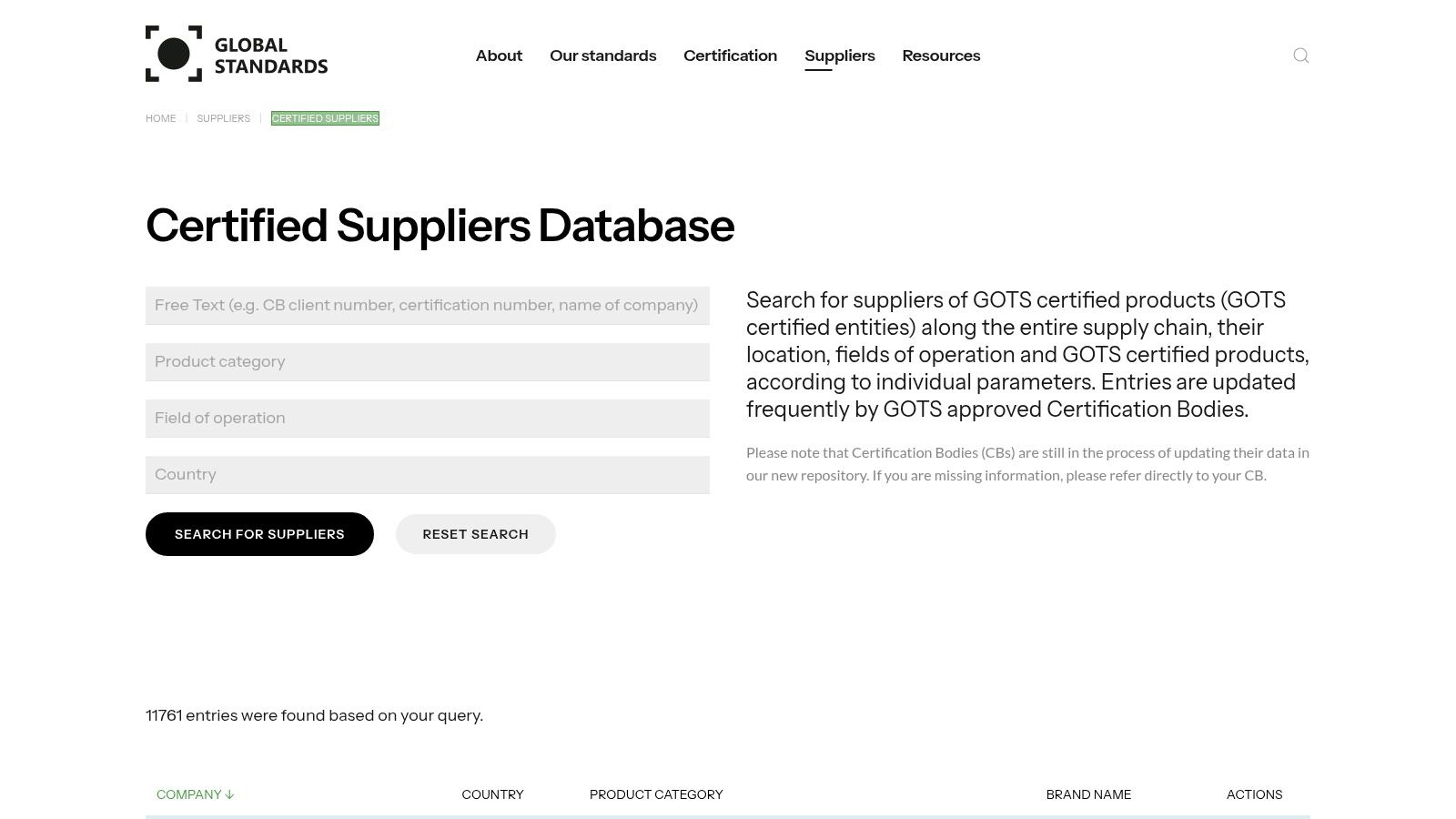
Every GOTS-certified entity has a unique license number printed on labels or listed on its website, and that number can be checked in the GOTS Public Database, as explained by Oregon Tilth's GOTS certification eligibility guide.
That license number is the key detail. Not just the green logo. Not just the word “organic.” The number.
When you're on a product page or holding an item in a store, look for:
- The GOTS logo: A real certification claim should be clearly presented.
- The label grade: It may say organic or made with organic.
- The license number: This is what lets you verify the claim.
- Brand transparency: Many responsible brands place certification details on the product page or in FAQs.
A simple parent-level check
You do not need to understand textile auditing to do this.
- Find the number on the product label, packaging, or brand website.
- Go to the GOTS Public Database through the official GOTS site.
- Enter the license number and review the result.
- Check that the company appears and that the certificate is current.
- Look at the covered product categories so you know the certification matches what's being sold.
This quick habit is useful when a product sounds certified but the details are fuzzy. It also helps you catch the difference between a company that sells some certified items and a company where a specific product is part of that certified scope.
Here's a walk-through if seeing the process helps more than reading about it:
Why this matters
Parents are used to checking ingredients on food. This is the textile version of that instinct.
If a brand is genuinely certified, verification shouldn't feel hidden or awkward. The whole point of the license system is transparency.
That transparency makes shopping calmer. You're not relying on hope. You're checking.
GOTS for Baby Clothes and Bamboo Fabric
For baby clothes, GOTS makes immediate sense. Babies have delicate skin, they spend long stretches in the same fabric, and they chew on sleeves, blankets, bib corners, and zippers when they can reach them. Parents naturally pay close attention to what touches that skin all day and night.
Why parents like GOTS for baby basics
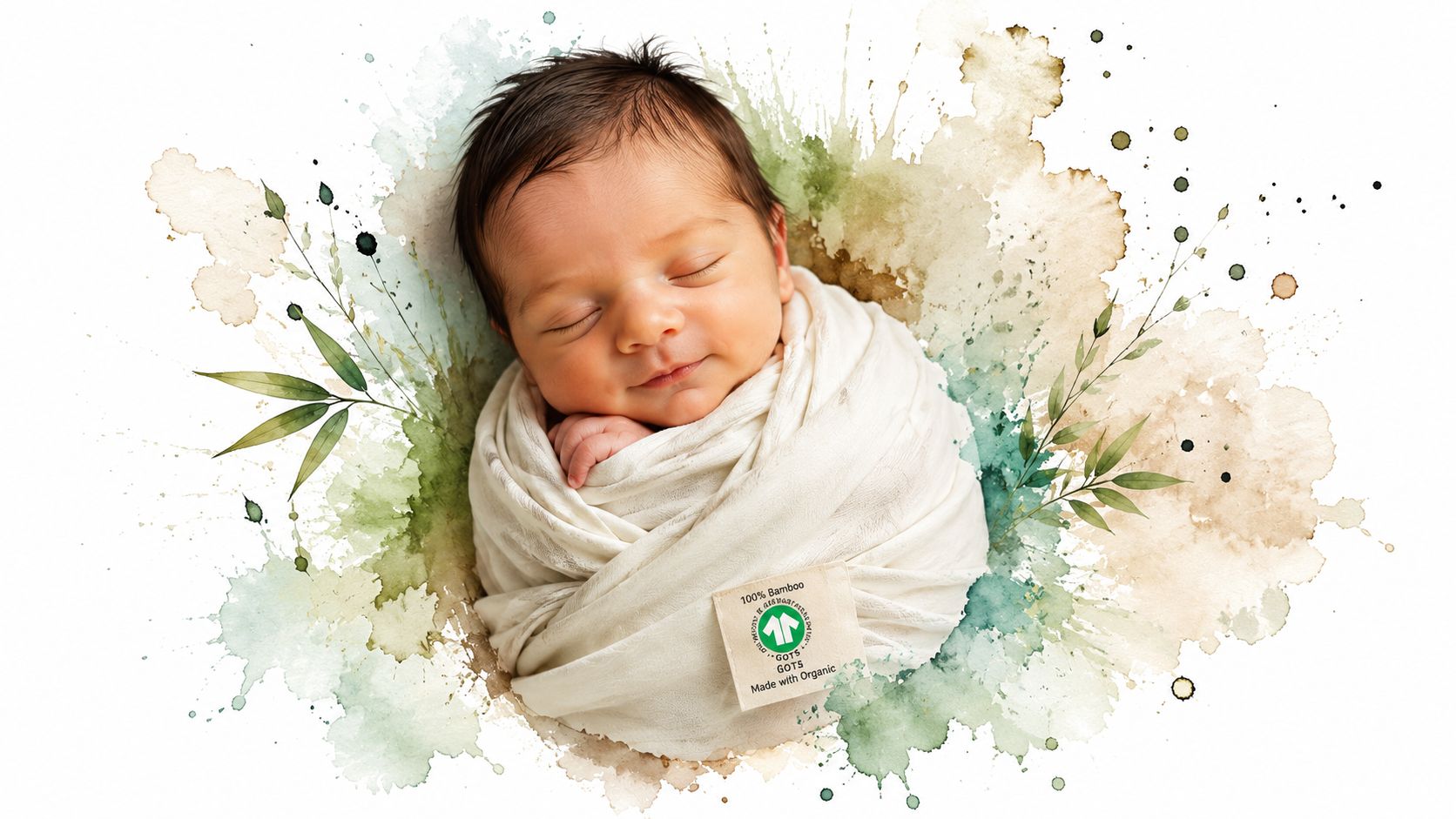
For items such as bodysuits, sleepers, swaddles, burp cloths, and crib sheets, GOTS can feel reassuring because it combines organic fiber standards with strict processing rules. If you're trying to build a more thoughtful baby wardrobe, that combination is often more helpful than a generic “natural fabric” claim.
Parents often gravitate toward GOTS-certified baby clothing when they want:
- Closer scrutiny of processing: not just a soft feel, but stricter rules around how the textile was treated
- A clearer standard: something stronger than unverified words like “green” or “pure”
- Social criteria too: because many families care about who made the garment, not only how it feels after washing
The bamboo question parents ask all the time
Bamboo is where things get confusing.
Many parents hear “bamboo” and assume it automatically means organic in the same way organic cotton can be certified. But soft bamboo fabric is often made by turning bamboo into viscose or rayon through chemical processing. That means the fabric story is more complicated than the plant story.
So can bamboo be gentle and appealing as a baby fabric? Yes, many parents love how it feels. But “bamboo” by itself is not the same thing as “GOTS-certified organic textile.” Those are different claims.
That's why it helps to read bamboo product descriptions carefully and understand what the actual certification covers. If you're sorting through those choices, this parent-friendly guide to bamboo fabric benefits can help you weigh softness, breathability, and practical use without confusing them with organic certification.
A calm, realistic takeaway
The point isn't that bamboo is bad or that only one fabric type is acceptable for babies. The point is clarity.
If you want a certification that speaks to organic textile production across the chain, GOTS is the label to look for. If you're considering bamboo viscose products, you'll want to pay attention to the exact safety or testing claims being made instead of assuming “bamboo” means the same thing as certified organic.
That kind of label-reading might sound picky, but it's really just wise parenting. You're matching the promise on the tag to the question you are interested in.
Your Confident GOTS Shopping Checklist
Once you know what GOTS does, shopping gets simpler. Not perfect. Just simpler in the best way. You stop trying to decode every soft-sounding phrase and start looking for a few concrete signs.
Here's a checklist you can use in the store, while scrolling a product page, or when building a registry.
The quick scan
- Look for the full GOTS claim: Don't stop at words like organic, natural, or eco-friendly.
- Check the label grade: “Organic” and “made with organic” are not the same thing.
- Find the license number: This is what lets you verify the certification.
- Read the fabric details closely: Especially with mixed fibers or bamboo-based textiles.
- Match the label to your goal: If you want organic supply chain standards, GOTS is answering that question.
The smarter follow-up
When a product matters a lot to you, like pajamas, swaddles, crib sheets, or a baby shower gift, take one extra minute.
- Verify the number in the public database: That turns a claim into something checkable.
- Be cautious with vague wording: “Inspired by organic” or “made from nature” doesn't mean certified.
- Remember the bigger picture: GOTS connects baby comfort, environmental care, and labor standards in one label.
You don't need to memorize textile law. You just need to know which details count and which ones are decoration.
That's really the heart of understanding what is GOTS certified. It's not about becoming suspicious of every tag. It's about becoming steady. You know what to look for, what the logo means, and when a product is giving you real proof instead of pretty wording.
If you want baby and toddler clothing that pairs softness with thoughtful safety standards, Little Venture Co. offers faith-inspired bamboo sleepwear and daywear made for sensitive skin, with OEKO-TEX Standard 100 certified materials and a mission-minded heart behind every purchase.