

Baby Clothing Storage Ideas to End the Chaos
Welcome to the club—where tiny clothes seem to multiply overnight. If you're currently digging through a mountain of onesies just to find a matching sock, you've come to the right place. This guide is packed with real-world baby clothing storage ideas designed to save you time and sanity, especially during those blurry-eyed, late-night changes.
Conquering the Mountain of Tiny Clothes
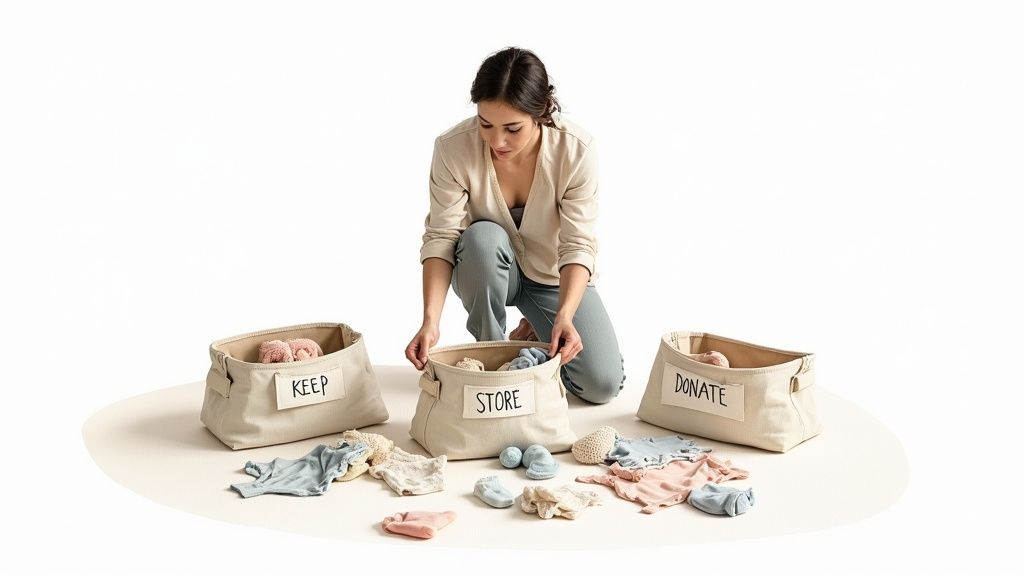
Let's be real for a second. Managing baby clothes is less about those picture-perfect nurseries you see online and more about surviving the laundry tornado. Between the constant cycle of outgrown outfits and the frantic search for that one specific sleeper when you're already late, the struggle is universal.
This isn't about creating an Instagram-worthy closet. It's about building a calm, functional system that actually makes your day-to-day life easier. Think of this as your practical roadmap to transforming that nursery chaos into organized bliss. We'll skip the overwhelming advice and focus on what truly works for busy parents like us.
Why a System Matters More Than You Think
Having a solid organization plan does more than just tidy up a room. It gives you back precious minutes and mental energy, which, as any new parent knows, are worth their weight in gold. When you're tackling the endless piles of baby clothes, knowing the best ways to store clothes can help you maintain some semblance of order and seriously cut down on stress. The goal is a setup so intuitive you don't even have to think about it.
It turns out we're not alone in this quest for order. The U.S. kids' storage furniture market was valued at a whopping USD 1.90 billion in 2023 and is only expected to grow. This boom is driven by parents who want storage that's not just functional but also safe, adaptable, and looks good.
The best storage system is the one you can actually stick with. Simplicity is your best friend—if it’s too complicated, you'll ditch it after a week. Focus on easy access and clear labels to make life easier on yourself.
Building Your Foundation
Before you run out and buy a single bin or drawer divider, you need to know what you’re working with. It all starts with understanding what clothes you really need for those first few months. A clear list helps you avoid overbuying and sets you up for a more manageable wardrobe right from the start.
You can build a great foundation by checking out a comprehensive https://littleventureco.com/blogs/blog/newborn-clothing-essentials-list to make sure you have the necessities without drowning your space in stuff you'll never use.
Any successful system, big or small, comes down to a few core ideas:
- Visibility: You need to see what you have at a glance. No more digging.
- Accessibility: The stuff you use every day should be right at your fingertips.
- Scalability: The system has to grow with your baby as they move through sizes.
By keeping these elements in mind, you can build a sustainable organization method that evolves with your family. Before you know it, that mountain of tiny clothes will feel more like a manageable molehill.
2. The Great Sort-Out: A Practical Decluttering Method
Before you can even think about the perfect storage solution, you have to conquer the pile. And let's be honest, it's probably more of a mountain. Staring at a massive heap of tiny garments can feel completely paralyzing, but having a simple, structured plan makes all the difference.
This isn’t about a massive, one-time purge. It’s about creating a system that can keep up with how ridiculously fast babies grow.
The trick is to sort every single item into one of four categories. Grab four boxes, laundry baskets, or even just piles on the floor and give them a job: Keep, Store, Donate, and Mend/Decide. This approach takes the guesswork out of the equation and helps you make quick, confident decisions without getting stuck on every sentimental onesie.
The Four-Box System Explained
This method breaks a huge task into manageable little chunks. To get started, I’ve put together a simple table that shows how this system works in practice.
The Four-Box Decluttering Method
This simple system helps you efficiently sort through baby clothes and make clear, quick decisions.
| Box Label | What Goes Inside | Action to Take |
|---|---|---|
| Keep | Clothes that fit right now and are right for the current season. | These go back into the dresser or closet immediately. |
| Store | Items you're saving for a future baby or sentimental pieces. | Pack these away in clearly labeled bins for long-term storage. |
| Donate | Good-condition clothes your baby has outgrown or gifts that weren't your style. | Put them in a bag and schedule a drop-off or pickup. Don't let them linger! |
| Mend/Decide | Items with a small stain, a missing button, or things you're unsure about. | Set this box aside with a one-week deadline. If you haven't fixed it or decided by then, it's time to let it go. |
By giving every piece of clothing a destination, you stop the cycle of just moving piles around the room. You’re making real, actionable decisions that clear the clutter for good.
As you sort, group everything by size from the very beginning. Whether it's going in the 'Keep' or 'Store' box, put all the 0-3 Month items together, the 3-6 Month items together, and so on. Trust me, this will make your life infinitely easier later.
Sorting by Size and Season
As you work through your piles, you'll quickly notice that sizing is all over the place. One brand's 3-6 months fits exactly like another's 6-9 months. It’s maddening, but getting a feel for it now will help you plan for the future.
For a little extra help, referencing a comprehensive baby clothing size chart can be a real game-changer. It helps you organize your 'Keep' and 'Store' piles much more accurately.
This initial sort sets the stage for everything that follows. Once you have your categories, you’ll have a clear picture of what you own, what you might need, and what you can bless another family with. You’ve cleared the chaos—now you're ready to build a system that actually works.
Alright, you've sorted through that mountain of adorable tiny clothes. Now for the fun part—setting up a system so you can actually find that one specific onesie when you're half-asleep for a 3 a.m. feeding.
Getting the nursery closet and dresser in order isn’t about creating a picture-perfect, untouchable space. It’s about making your life as a busy parent a little bit easier.
The first big question is always: hang it or fold it? I've found a simple rule of thumb works best: hang anything special or bulky, and fold everything else. This means those cute little dresses, jackets, and special occasion outfits get a hanger. Everyday workhorses like onesies, PJs, and pants can be neatly folded and tucked away in the dresser.
Getting the Most Out of Dresser Drawers
Dresser drawers are notorious for turning into a jumbled mess of tiny clothes. The secret weapon here is creating compartments. Seriously, simple drawer dividers or a few small, open-top baskets are complete game-changers. They give everything a "home," so you’re not frantically digging for a matching sock while a wiggly baby waits on the changing table.
When it comes to folding, you have to try the file folding technique. Instead of stacking clothes, you fold them into little rectangles and line them up vertically, like files in a cabinet. This way, you can see every single item at a glance. No more destroying a perfectly neat pile just to find the shirt at the bottom.
It might sound like a small thing, but getting your drawers organized can make a real difference. A recent survey showed that parents using drawer dividers felt 30% less stress during their morning routine. That’s a small change with a huge daily payoff.
As you sort, it helps to have a clear plan for every item you pick up.
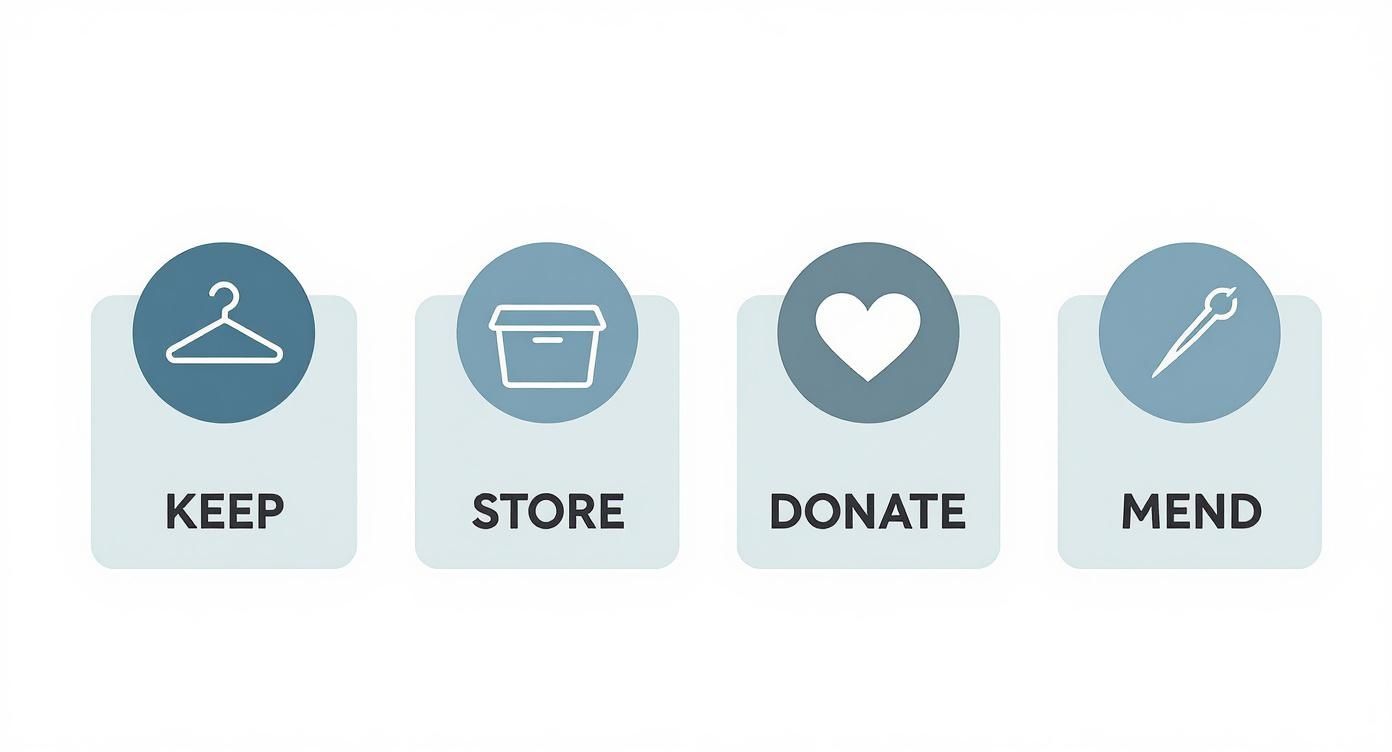
Having these four simple categories in mind—keep, store, donate, or mend—stops you from getting stuck and keeps the decluttering process moving right along.
Making the Closet Work Harder
Even the tiniest nursery closet has untapped potential. One of my favorite, super-easy tricks is adding a second tension rod. Just pop one up high and another one lower down, and you’ve instantly doubled your hanging space. It’s perfect for all those little outfits. If you're really looking to plan out the space, checking out an ultimate guide to closet organization systems can give you some amazing ideas.
Closet size dividers are another absolute must-have. These little tags hang right on the rod and let you separate clothes by size (Newborn, 0-3M, 3-6M, etc.). You can grab what fits in a second and easily see when you’re running low on the next size up.
And don't forget about the back of the door! An over-the-door organizer with clear pockets is a fantastic spot for shoes, bows, hats, or even small toys. It makes use of vertical space that would otherwise be wasted. You can find more ideas for using organizers and baskets in our guide to creating beautiful and practical baskets for new moms.
Smart Storage Solutions for Outgrown Clothes
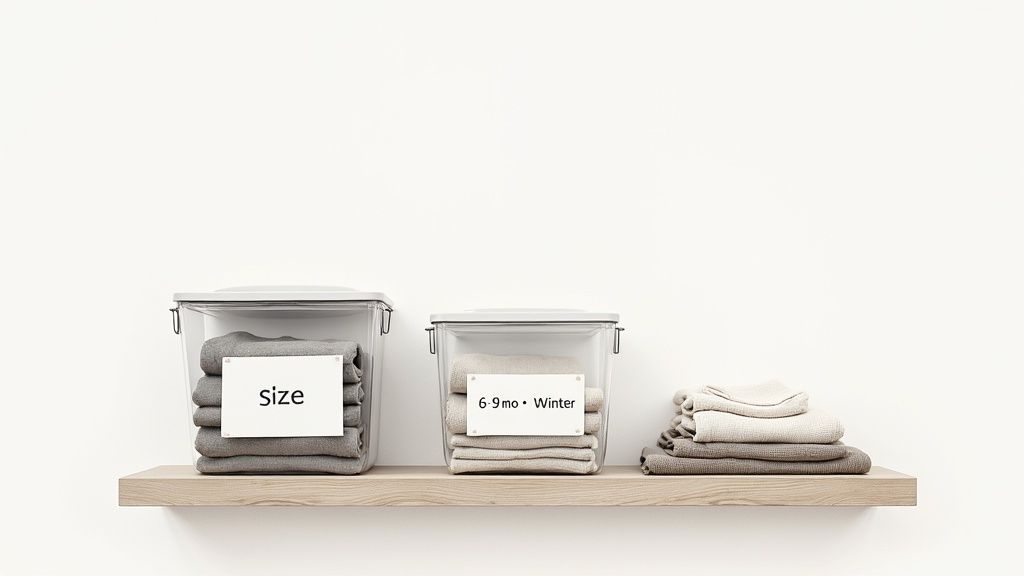
It feels like you blink, and suddenly your baby has outgrown another pile of adorable outfits. These barely-worn clothes can quickly turn into clutter, but with a good system, you can keep them pristine for a future sibling, a friend, or just for the memories. Think of it as creating a library of past sizes that you can dip into whenever you need it.
The first step is picking the right container. It's tempting to grab free cardboard boxes, but they’re a magnet for pests and offer zero protection from moisture. A much better bet is clear plastic bins with secure, locking lids. You can see what’s inside without having to open a single one, and the tight seal keeps out dust, dampness, and unwanted critters.
If you’re short on space, vacuum-sealed bags can be a lifesaver. They work wonders on bulky items like puffy snowsuits and winter coats, shrinking them down to a surprisingly manageable size. Just keep in mind that the intense compression can cause serious wrinkles, so I’d save this method for sturdy clothes rather than delicate keepsakes.
Creating a Foolproof Labeling System
Trust me on this one: your future self will be eternally grateful for a detailed labeling system. Scrawling "Baby Clothes" on a bin just won't cut it when you're frantically searching for a specific size a year or two down the road.
A truly helpful label needs three key pieces of information:
- Size Range: Be specific, like "3-6 Months" or "12-18 Months."
- Season/Type: Give yourself context. Think "Winter," "Summer," or "Sleepers & Onesies."
- Gender (Optional): If you might have children of different genders, adding "Boy," "Girl," or "Neutral" is a huge help.
A perfect label would look something like this: "Boy 6-9 Months Winter (Coats, Sweaters, Pants)." That level of detail means you can grab exactly what you need in seconds, no digging required.
Pro Tip: A simple label maker or some consistent cardstock labels taped to the outside of each bin makes everything look neat and uniform. Plus, they’re easy to read from across the room.
The "Next Size Up" Bin Strategy
Here’s one of the best baby clothing storage ideas I ever implemented: plan for the very near future. I always kept an empty, clearly labeled bin right in the nursery closet for clothes that were just a bit too big. This is your "on-deck" station for the next growth spurt.
Whenever I received a gift or bought something cute in the next size, I’d wash it and toss it straight into that bin—say, the "9-12 Months" bin. The moment the current clothes started looking a little snug, I wasn't caught off guard. I just pulled out the "next size up" bin, and a whole new wardrobe was ready to go.
This little trick transforms the chaotic scramble of a growth spurt into a smooth, stress-free transition.
Sustainable and Eco-Friendly Storage Options
Building a nursery that’s beautifully organized and kind to the planet is more doable than you might think. Choosing sustainable storage for all those tiny clothes isn't just about following a trend; it's about making a mindful choice for your baby's first environment.
A great place to start is by looking for storage made from natural, renewable materials. Think dressers crafted from FSC-certified wood, which means the trees were harvested responsibly. Woven baskets are also a fantastic option. I love using ones made from seagrass, water hyacinth, or organic cotton for corralling blankets, toys, and rolled-up sleepers. They add a warm, natural touch and are completely biodegradable.
Choosing Safe and Natural Materials
When you're picking out furniture, it's not just the wood or wicker that matters—it's also the finish. A lot of standard furniture is coated with paints and sealants that can off-gas nasty chemicals called VOCs (volatile organic compounds).
Keep an eye out for pieces that use non-toxic, water-based finishes or are specifically labeled "zero-VOC." This simple choice helps keep the air in your nursery cleaner and healthier.
This whole movement toward eco-conscious baby gear is really taking off. Sales of eco-friendly baby storage in North America actually jumped by 28% between 2020 and 2023. You can see it on the shelves, too, with over 40% of new storage products now being made with sustainable materials.
This is especially key if you're storing delicate fabrics. For example, if you've invested in those buttery-soft bamboo sleepers, keeping them in a breathable, chemical-free container helps maintain their amazing softness and natural qualities. We dive deeper into this in our guide on everything you need to know about bamboo baby clothes.
The Art of Upcycling and Repurposing
Being sustainable doesn't always mean buying new eco-friendly products. Honestly, the greenest option is often something you already have. Before you head to the store, have a look around your own home.
You'd be surprised what you can upcycle.
- An old bookshelf: A quick coat of non-toxic paint can turn it into the perfect spot for folded clothes, books, and cute storage bins.
- Wicker laundry baskets: Do you have any smaller ones you're not using? They're perfect for holding tiny socks, hats, or all your diaper-changing essentials.
- A vintage dresser: That family heirloom sitting in the garage could be sanded and refinished to become a stunning and practical changing table and dresser in one.
Giving an old piece of furniture a new life not only saves you money but also reduces waste. It adds a unique, personal touch to the nursery that you just can't buy in a store.
Finally, a huge part of sustainability is thinking about the clothes themselves. Once your little one has outgrown that adorable wardrobe, what’s next? Passing them on to friends, selling them at a local consignment shop, or donating to a charity are all wonderful ways to extend their life. It’s a circular approach that keeps perfectly good clothing out of landfills and helps another family who needs it.
Your Most Common Questions Answered
Even with the perfect system, you're bound to run into a few tricky situations. Let's be real, organizing baby clothes can feel like a never-ending cycle. From what on earth to do with those sentimental pieces to battling the sock monster, let's tackle the questions that pop up for almost every parent.
Here are some quick, real-world answers to help you get over those little hurdles.
How Should I Store Clothes My Baby Outgrew but I Want to Keep?
When it's time to pack away those tiny outfits that pull at your heartstrings, doing it right is everything. First, make sure every single piece is clean and bone-dry. Trust me, even a hint of moisture or a faint stain can become a permanent, sad surprise when you open that bin years later.
Once they're clean, fold everything neatly and stash them in an airtight container. Your best bets are clear plastic bins with locking lids or those handy vacuum-sealed bags. Both do an amazing job of keeping out moisture, dust, and critters. Whatever you do, steer clear of cardboard boxes—they're basically a welcome mat for bugs and can get musty.
A killer labeling system is your best friend here. Be super specific! Mark each bin with the size and season, like "Boy 3-6 Months Winter." Find a cool, dark, and dry spot to store them, like the back of a closet or under a bed. I'd avoid attics and basements, as those crazy temperature swings can be really tough on delicate fabrics.
What's the Best Way to Organize Tiny Baby Socks and Accessories?
The secret to taming the tiny-item chaos? Containment. It’s that simple. Every little hat, mitten, and sock needs its own designated spot, otherwise, you’ll have a jumbled mess before you know it.
Inside a dresser, small drawer dividers or honeycomb organizers are game-changers. They create perfect little cubbies for keeping sock pairs together and stop headbands from getting tangled and crushed. This one little tweak can turn a junk drawer into a beautifully organized accessory hub.
Another one of my go-to tricks is to use vertical space.
- Hanging Shoe Organizers: Grab one with clear pockets and hang it on the back of the closet door. It gives you a fantastic, at-a-glance view of all your small accessories. No more digging!
- Mesh Laundry Bags: Keep a small mesh bag right in the hamper. When you take off your baby’s socks, toss them straight in. You can throw the whole bag in the wash, which pretty much guarantees you’ll never lose a sock again.
Do I Really Need to Wash New Baby Clothes Before Storing Them?
Yes, absolutely. I know it's tempting to rip the tags off a cute new outfit and stick it right in the drawer, but this is a step you really shouldn't skip.
Think about it: new clothes are often treated with chemicals during manufacturing to keep them looking fresh in the store. They also pick up dust and germs just from being on the rack. Washing them in a gentle, baby-safe detergent gets rid of any potential irritants, making the fabric softer and much safer for your baby’s sensitive skin.
How Often Should I Declutter My Baby's Clothes?
Babies grow so fast that doing a massive purge every few months can feel like a monumental task. A much saner approach is what I call the "continuous declutter."
Just keep a designated basket or bin tucked away in the nursery closet. As you're dressing your little one, if you notice a onesie is getting a bit snug, toss it right into that bin. Once the bin is full, you can sort through it—deciding what to store as a keepsake and what to donate. This tiny, consistent habit keeps the pile-up at bay and ensures your baby's wardrobe is always perfectly current.
At Little Venture Co., we design faith-inspired bamboo sleepwear that’s as soft and gentle as it is beautiful. Explore our collection of cozy daywear and sleepwear crafted to bring comfort and inspiration to your little one’s wardrobe. Shop Little Venture Co.