

How to Remove Stains from Baby Clothes: A Guide for New Parents
The secret to getting stains out of baby clothes? You have to act fast. Start with cold water to tackle the proteins in most baby messes, and whatever you do, never let a stained outfit see the inside of a hot dryer until you're 100% sure the stain is gone. Think of this as your first line of defense—it's what stops those everyday spills from becoming permanent decorations on your favorite onesies.
Why Are Baby Stains So Uniquely Stubborn?
Welcome to the club. If you feel like your laundry pile has turned into a never-ending science experiment, you are definitely not alone. Baby messes are in a league of their own, from protein-packed spit-up and formula to those shockingly bright sweet potato purées and, of course, the dreaded diaper blowout.
The real culprit is the science behind the stains. So many of them are protein-based (milk, poop, formula) or loaded with intense natural pigments (looking at you, blueberries and carrots). These compounds are powerful by nature and have a knack for grabbing onto fabric fibers and holding on for dear life.
The Fabric Factor Makes It Trickier
What makes this even harder is the very fabric we love for our babies. Those super-soft, natural materials are incredibly absorbent, which is great for keeping your little one comfy but terrible when a spill happens.
- Delicate Fibers: Materials like cotton and bamboo viscose are like tiny sponges, soaking up stains deep into their fibers almost instantly.
- Sensitive Skin: You can’t just grab any heavy-duty stain remover off the shelf. Baby skin needs gentle, safe cleaning agents. If you want to dive deeper, our guide on the https://littleventureco.com/blogs/blog/best-fabric-for-sensitive-skin explains why this is so critical.
- Heat Sensitivity: High heat is often a go-to for stain removal, but it can shrink or ruin these delicate fabrics, taking it off the table as a last resort.
It's this perfect storm of aggressive stains and delicate fabrics that causes all the laundry headaches. It’s exactly why a tiny milk dribble, if not handled correctly, can reappear as a stubborn yellow blotch after just one trip through the washer and dryer.
Key Takeaway: The golden rule of baby stains is to treat them immediately. The longer a stain sits, the deeper it bonds with the fabric, and the harder it will be to get out.
To help you react in the moment, here's a quick guide for what to do as soon as a mess happens.
Baby Stain First Response Guide
This little chart is your go-to for that critical first step. Before you even think about pre-treating or washing, doing the right thing immediately can make all the difference.
| Stain Type | Primary Component | Immediate First Action (Before Pre-Treating) |
|---|---|---|
| Milk, Formula, Spit-up | Protein & Fat | Scrape off solids, rinse with cold running water from the back of the stain. |
| Poop (Breastfed or Formula) | Protein & Pigment | Scrape off all excess, then flush with cold running water from the back. |
| Fruit & Veggie Purees | Pigment & Sugar | Scrape off solids, rinse with cold running water from the back of the stain. |
| Urine | Uric Acid | Blot with a cloth, then rinse thoroughly with cold water. |
| Diaper Cream (Zinc Oxide) | Oil & Minerals | Gently scrape off as much as possible with a dull knife. Do not add water yet. |
Think of these steps as stain triage. They won't remove the stain completely, but they stop it from setting, giving you a fighting chance when you have time for a proper pre-treatment.
The Scale of the Problem
Trust me, you're not imagining things. This constant battle with stains is something parents deal with everywhere. In fact, insights from experts in carpet cleaning for families with small children show just how universal the need for safe, effective cleaning is when you have little ones.
The numbers don't lie. The market for stain remover products hit a staggering $23.33 billion in 2024. And with an estimated 75% of all stains on baby clothes being food-related, it’s no wonder we’re all searching for methods that actually work. You can see how the demand for better products is growing at globenewswire.com.
Building Your Stain-Fighting Toolkit
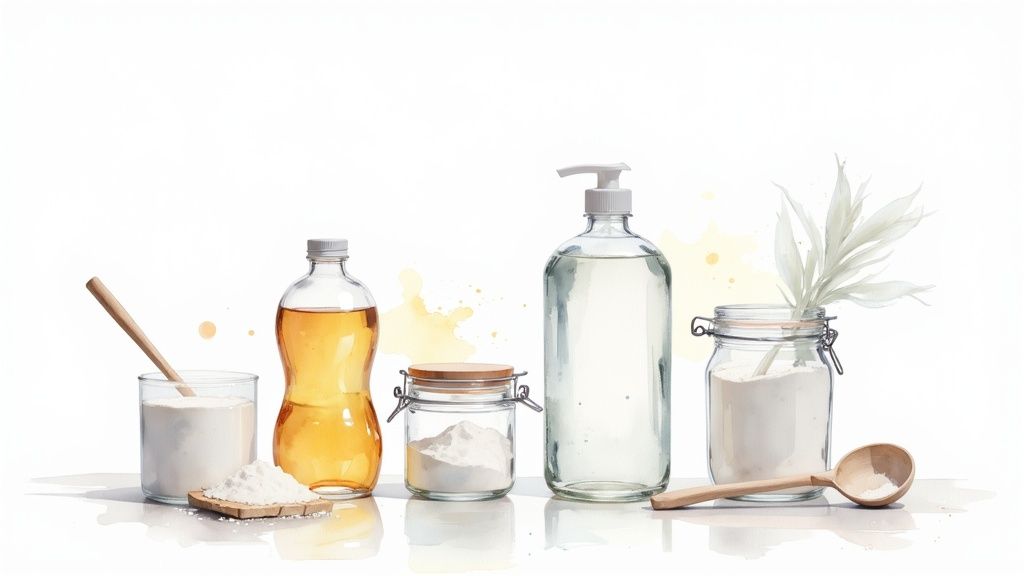
Before that next inevitable mess strikes, having the right supplies ready to go can turn a full-blown laundry crisis into a minor blip on the radar. Trust me, you don’t need a cabinet overflowing with harsh chemicals to get the job done. A small, carefully chosen collection of gentle but powerful products will prepare you for just about anything your little one can throw at—or on—their clothes.
The whole point is to build an arsenal that’s tough on stains but incredibly gentle on your baby’s delicate skin. A spotless onesie isn't much good if it causes a rash, right? This is a huge reason why parents are getting so much more intentional about the products they use.
It's a big deal. The market for baby clothing cleaning agents hit $1.42 billion globally in 2024 and is expected to soar to $2.4 billion by 2032. This isn't just a trend; it’s driven by parents who know what to look for—in fact, 72% of new parents are actively seeking out hypoallergenic options. You can dive deeper into these numbers by checking out the full market analysis on wiseguyreports.com.
The Commercial Essentials
When you’re at the store, there are a few key items that are absolutely worth their weight in gold. Think of these as the reliable workhorses of your laundry room.
-
Enzyme-Based Stain Remover: These are miracle workers on protein-based messes like milk, spit-up, and poop. The enzymes literally break down and digest the organic matter in the stain, lifting it out before you even start the wash. Just look for a formula made specifically for babies that’s free of fragrances and dyes.
-
Gentle, Hypoallergenic Detergent: This one is non-negotiable. A "free and clear" liquid detergent is your safest bet. Powdered versions can sometimes leave behind a residue that might irritate your baby's skin.
-
Oxygen Bleach Powder: Forget harsh chlorine bleach. Oxygen bleach is color-safe and works by releasing tiny oxygen bubbles to lift stains and brighten fabrics. It's a fantastic, non-toxic booster to toss into the wash when you need a little extra muscle for stubborn marks.
The Power Players in Your Pantry
You'd be shocked at how many effective stain-fighters are probably already sitting in your kitchen cabinets. These everyday staples are easy on the wallet, totally safe, and surprisingly powerful.
Pro Tip: Always, always do a quick spot test before you go all-in on a stain. Just dab a little of your cleaning solution on an inside seam or a hidden spot to make sure it doesn't affect the fabric's color. This is especially key for delicate materials or bright clothes.
Here are the pantry must-haves:
-
Distilled White Vinegar: This is a fantastic multi-tasker. Vinegar helps break down acidic stains like urine and even works as a natural fabric softener. Tossing a half-cup into the rinse cycle can also help wash away any lingering detergent residue.
-
Baking Soda: More than just a baking ingredient, it's a gentle abrasive and a natural deodorizer. You can mix it with a little water to form a pre-treating paste or just add a scoop to the wash cycle to brighten whites and soften clothes.
-
Basic Dish Soap (The Blue Kind): A simple blue or clear dish soap—the kind without any added lotions or bleach—is your secret weapon against greasy, oily stains from things like diaper cream. A tiny dab is all you need to start breaking down the oil before you rinse and wash.
Having these items on hand means you can act fast. And when it comes to saving those adorable newborn baby onesies from a permanent stain, speed is everything.
If you take away just one thing from this guide, let it be this: the real secret to stain-free baby clothes isn’t the washing machine. It's what you do in those first few moments before the clothes even get near the laundry basket.
Pre-treating is your best friend in the fight against stubborn baby stains. Seriously. Think of a fresh stain as a guest that’s trying to move in and permanently bond with the fabric fibers. Tossing it straight into the wash without any prep work is like handing them the keys. Pre-treatment is your eviction notice—it breaks up the stain’s grip so your detergent can easily wash it away for good.
Your Go-To DIY Pre-Treatment Paste
You don't need a shelf full of fancy stain removers. One of the best and safest options is probably already in your kitchen cabinet: a simple paste made from baking soda and water. It’s my go-to for so many common baby messes.
Here’s the super simple recipe and how to use it:
- Mix It Up: Grab a small bowl and mix about two tablespoons of baking soda with one tablespoon of water. You're looking for a thick, spreadable paste, kind of like the consistency of toothpaste.
- Apply to the Stain: Use a spoon (or just your finger) to cover the entire stain with the paste. Don't be shy—slather it on there.
- Let It Sit: Now, just let it do its thing for at least 15-20 minutes. For really gnarly, set-in stains, you can even leave it for up to an hour. The baking soda works by gently lifting the stain particles right out of the fabric.
Once time's up, you can gently scrape off any extra paste and give the spot a quick rinse with cool water. Then, just toss it in the wash like you normally would. This little trick is a lifesaver for everything from spit-up to that vibrant sweet potato puree.
Looking for more gentle, DIY solutions? We’ve got a whole list in our guide to chemical-free baby products.
Pre-Treatment Best Practices
Knowing how to apply your pre-treatment is just as important as what you’re using. Get this part right, and you'll save yourself a lot of frustration (and a lot of onesies).
- Dab, Don't Rub: I know the instinct is to scrub that stain into oblivion. Don't do it! Rubbing just pushes the stain deeper into the fabric and can make it spread. Instead, use a clean cloth or an old, soft toothbrush to gently dab or tap the stain remover onto the spot.
- Work from the Outside In: When you’re dabbing, start at the outer edge of the stain and work your way toward the middle. This little trick contains the mess and helps you avoid creating a bigger, fainter stain ring.
- Patience is a Virtue: Give the pre-treatment time to work its magic. Rushing this step is a classic mistake. Most solutions need a good 10-15 minutes to really break down the stain before washing.
A Note on Delicate Fabrics: When you're dealing with those buttery-soft fabrics like bamboo viscose, be extra gentle. Forget scrubbing. A light dabbing motion with a soft cloth and a simple baking soda paste is all you need to lift stains without harming those delicate fibers.
When to Grab a Commercial Stain Stick
While a DIY paste is my go-to at home, sometimes a store-bought stain stick is just more practical. They're convenient, powerful, and parents clearly love them—the global market for baby stain remover sticks hit $520 million in 2024.
Plus, they work. Consumer tests show that applying a stain stick 5-10 minutes before a cold wash can loosen up to 95% of protein-based stains. You can dig into the data in the full report on marketintelo.com.
So, which one should you use? Here’s my quick cheat sheet:
| Situation | Best Choice | Why It Works |
|---|---|---|
| On-the-Go Stains | Commercial Stain Stick | They’re portable and mess-free. Perfect for tossing in the diaper bag to tackle spills before they set. |
| Oily or Greasy Stains | Commercial Stain Stick | They often contain ingredients specifically designed to break down oils from things like diaper cream or baby lotion. |
| General Food & Spit-Up | DIY Baking Soda Paste | It's incredibly gentle, safe, and works wonders on the most common messes you'll see at home. |
| Sensitive Skin Concerns | DIY Baking Soda Paste | You know exactly what’s in it, so there are no surprise ingredients to irritate your baby's delicate skin. |
Your Battle Plan for 7 Common Baby Stains
Not all baby stains are created equal. A little milk dribble is a completely different beast than a diaper blowout or a smear of avocado. Knowing what you're up against is half the battle, so this is your go-to guide for tackling the most common messes one by one.
Think of it this way: protein stains need a different approach than oil-based stains. Using the wrong technique—like hitting a milk stain with hot water—can actually "cook" the proteins right into the fabric, setting them for good. This is where a little stain-specific knowledge becomes your secret weapon.
This simple decision tree can help you figure out where to start when a fresh stain strikes.
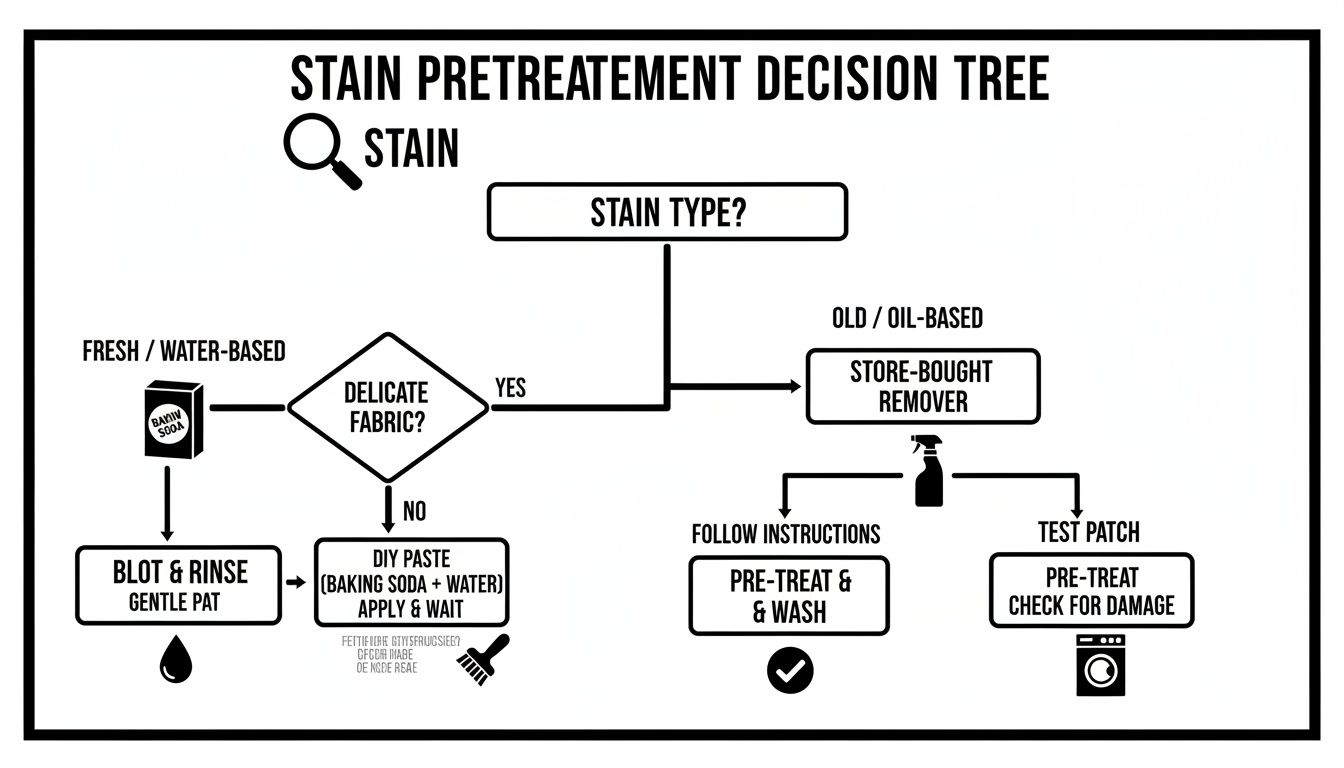
It’s a quick visual that helps you decide if a DIY solution or a store-bought product is your best first move.
Tackling Protein Stains: Milk, Spit-Up, and Formula
Protein stains are pretty much guaranteed in a baby's first year. Breast milk, formula, and spit-up all fall into this category, and they share a common weakness: cold water.
Always, always start by rinsing these stains from the back of the fabric with cold water. This pushes the proteins out of the fibers instead of deeper in. After a good rinse, an enzyme-based cleaner is your best friend. Enzymes are designed to literally break down and "digest" proteins, making them easy to wash away.
If you’d rather go the DIY route, a soak in cool water with a little bit of your regular baby-safe detergent also works wonders. Just let the garment sit for at least 30 minutes before tossing it in the wash.
The Infamous Poop Stain
Ah, the diaper blowout. It’s a messy rite of passage for every parent. Whether from a breastfed or formula-fed baby, these stains are a gnarly combination of protein and intense pigment, which makes them incredibly stubborn.
Your first move is crucial. Get as much of the solid stuff off as you can. Then, turn the clothing inside out and flush the stained area with cold, running water. Just like with milk, this forces the particles out, not in.
Sunlight is Your Secret Weapon: After you’ve pre-treated and washed the item, you might see a faint yellow shadow. This is especially common on white or light-colored clothes. Just lay the damp garment in direct sunlight. The UV rays act as a natural bleach and are shockingly effective at erasing the last traces of the stain.
For the pre-treatment step, nothing beats an oxygen bleach soak. Mix a scoop of oxygen bleach powder with cool water in a basin and let the item soak for at least an hour—or even overnight for a real disaster—before washing.
Conquering Colorful Food Purées
Once your baby starts solids, get ready for a whole new rainbow of stains. Sweet potatoes, carrots, peas, and berries are all packed with natural pigments that are practically designed to dye fabric.
Again, scrape off any excess food first. Then, rinse with cold water from the back. For these types of stains, a simple solution of equal parts distilled white vinegar and water can work magic.
- Let it soak: Let the stained area sit in the vinegar-water solution for about 15-30 minutes.
- Treat the spot: If the stain is still there, add a dab of clear, gentle dish soap directly to the spot and gently work it in with your fingers.
- Wash it out: Launder in the warmest water the fabric care label allows to help remove any lingering sugary residue.
Fighting Oily and Greasy Stains
Oily messes from things like baby oil, lotion, or that ridiculously stubborn zinc-oxide diaper cream need a totally different strategy. Water and oil don’t mix, so rinsing with water first will just spread the grease around.
Start by scraping off as much of the product as you can. Then, sprinkle a generous amount of cornstarch or baking soda right onto the greasy spot.
Let it sit for 15-20 minutes. The powder will literally pull the oil out of the fabric. After you brush the powder off, put a small drop of blue dish soap on the stain and gently rub it in. Dish soap is made to cut through grease, making it the perfect tool for this job. Finally, rinse with warm water before you wash it.
Stain-Specific Removal Recipes
When you're dealing with a mess in the moment, it helps to have a quick-reference guide. This little table breaks down exactly what to do for the most common baby stains.
| Stain Type | Best Pre-Treatment Solution | Key Technique |
|---|---|---|
| Milk & Formula | Enzyme-based spray or cold water soak with detergent | Always use cold water first to break down proteins. |
| Poop Stains | Oxygen bleach powder soak | Flush from the back with cold water, then use sunlight to remove faint stains. |
| Food Purées | Distilled white vinegar and water solution | Soak to break down pigments before washing in warm water. |
| Diaper Cream | Cornstarch or baking soda, followed by dish soap | Absorb the oil with powder before adding any water. |
By tailoring your attack to the specific type of mess, you can confidently get those adorable outfits looking fresh and clean again, wash after wash.
Washing and Drying Without Setting Stains
You’ve pre-treated the stain, and it looks like it’s gone. Victory is so close! But don't let your guard down just yet—the washer and dryer are your last, crucial line of defense. One wrong move here can undo all that hard work and bake that stain into the fabric forever.
Proper washing isn't just about tossing clothes in and hoping for the best. It’s a strategic move, especially when you're up against stubborn baby stains and delicate fabrics.
Choosing the Right Water Temperature
After rinsing out your pre-treatment with cool water, it’s time for the main event: the wash cycle. While cold water is your best friend for initially breaking down protein stains, switching to warm water for the actual wash is often a smarter move. Why? Warm water is simply better at dissolving detergents and carrying away any oily or pigmented gunk left behind.
Crucial Rule: Always check the garment’s care label. Use the warmest water temperature the fabric can safely handle to get the most out of your detergent and ensure every last bit of the stain gets washed away. For special materials like those in bamboo baby clothes, following the label is non-negotiable if you want to keep them soft and in shape.
A good, baby-safe detergent is your best ally here. When you pair it with the right water temperature, you’re making sure those loosened stain particles are completely flushed out of the fabric fibers for good.
Supercharge Your Wash Cycle
Let's be real, sometimes a standard wash just doesn't cut it. You're left with a faint, shadowy stain staring back at you, especially on those light-colored onesies. This is where a simple, safe booster can make all the difference.
For an extra punch of cleaning and brightening power, try adding a scoop of oxygen bleach powder directly into the drum with your laundry. Unlike harsh chlorine bleach, oxygen bleach is color-safe. It works by releasing tiny oxygen bubbles that gently lift away discoloration without destroying delicate fabrics.
It’s a lifesaver for organic stains—think food and poop—and it’s great for brightening whites and colors that have started looking a little sad and dingy over time.
The Most Important Rule of Drying Baby Clothes
If you take only one piece of advice from this entire guide, let it be this: never, ever put a stained piece of clothing in the dryer. I can't stress this enough. The intense heat from a machine dryer will essentially cook the stain right into the fabric, setting it permanently.
Once the wash cycle is done, give the garment a thorough inspection while it’s still wet. Hold it up to a light and look closely at the spot where the stain was. Can you see even a faint shadow of the original mark? If so, the stain is still there. Do not dry it. Instead, go back and repeat the pre-treatment and washing steps.
Pro Tip: Air-drying is always the safest bet for freshly treated clothes. It buys you a second chance to fight the stain if it didn’t surrender on the first try.
Hanging clothes on a drying rack inside works just fine. But if you're dealing with a stubborn organic stain on a white or light-colored item, the sun is your secret weapon.
- Natural Bleaching Power: The UV rays from direct sunlight are a fantastic natural bleach. They break down the pigments in stains from things like carrots, berries, or that dreaded diaper blowout.
- Disinfecting Benefits: Sunlight also has natural disinfecting properties, which is always a nice bonus for baby clothes.
Just lay the damp clothing flat in a sunny spot for a few hours. You’ll be amazed at how it can magically erase those last lingering yellow or orange shadows, leaving the fabric bright, clean, and fresh.
Answering Your Top Stain Questions
Every parent has been there—staring down a mystery spot on a favorite outfit, wondering, "Now what?" When you're dealing with baby clothes, a few tricky situations always seem to pop up. Let's get right into it and tackle those common questions.
What Do I Do About Old Set-In Stains?
You pull out a beloved onesie that's been in storage, only to find a faint, yellowed stain you completely missed. Don't toss it just yet! While fresh stains are always easier, an old one isn't a lost cause. You just have to bring out the big guns.
Start by giving the garment a nice long soak. An overnight bath in a solution of warm water and a scoop of oxygen bleach powder works wonders. This gives the oxygen bubbles plenty of time to get in there and break down the dried, stubborn particles that have latched onto the fabric.
The next day, mix up a thick paste of distilled white vinegar and baking soda. Slather it right onto the stain and let it sit for at least 30 minutes. Before you wash it, grab an old, soft toothbrush and give the area a gentle scrub to lift everything that's been loosened. You might need a second round, but this one-two punch is surprisingly great at reviving clothes you thought were goners.
Are Store-Bought Stain Removers Safe for My Baby?
This is such an important question, and a concern every parent should have. Many of the standard stain removers you see on shelves are packed with harsh chemicals, fragrances, and dyes—things you definitely don't want near your baby's sensitive skin. The trick is to become a label detective.
When you're shopping, look for products made specifically for babies or for sensitive skin. These will usually be:
- Hypoallergenic: To lower the risk of skin irritation.
- Plant-based: Made from more natural ingredients.
- Free of irritants: No dyes, phosphates, or strong perfumes.
A Quick Tip for Peace of Mind: No matter what stain remover you use—store-bought or homemade—always run an extra rinse cycle when you wash baby clothes. It’s a simple step that ensures any leftover residue gets washed away completely before the fabric touches your baby's skin.
If you feel like you've tried everything and are still seeing spots, you might be asking why your washing machine isn't getting rid of stains. Sometimes the problem lies with the machine itself, and this guide can help you troubleshoot.
How Can I Prevent Stains in the First Place?
Look, you can't completely stain-proof a baby—and that's okay! Messes are part of the fun. But you can absolutely cut down on the number of laundry emergencies with a little planning.
A good defense is truly the best offense. Here are a few game-changing tips:
- The Bib is Your Best Friend: Don't just use any bib; invest in the full-coverage silicone ones. The kind with the little food-catching pocket at the bottom are absolute lifesavers during mealtime.
- Have Designated "Play Clothes": Keep a few outfits aside that you don't mind getting messy. When it's time for finger painting or trying spaghetti for the first time, switch them into their "play clothes" so you can relax and let them explore.
- Go "Diaper Only" for Super Messy Meals: First time trying beets or blackberries? A "diaper only" mealtime can be your secret weapon. It keeps those powerful pigments off clothes entirely.
- Act Fast: The single best way to prevent a stain from setting is speed. Keep a stain stick or a small spray bottle of pre-treater in your diaper bag. Hitting a spot within minutes, before it even has a chance to dry, makes getting it out a thousand times easier.
At Little Venture Co., we design our bamboo sleepwear and daywear to be as durable as it is soft, ready for all of life's little messes. Wrap your little one in comfort and inspiration by exploring our faith-inspired collections at https://littleventureco.com.