

Christian Baby Onesies: The Complete Buying and Care Guide
The popular advice is to choose the Christian baby onesie with the sweetest scripture or funniest faith slogan. That's backwards. A message can be meaningful, but it won't matter if the fabric scratches, the print cracks, the snaps fight every diaper change, or the fit makes the baby uncomfortable.
The best Christian baby onesies combine faith, skin-friendly materials, safe construction, and practical design. A garment that gets worn repeatedly becomes part of family life. It appears in ordinary mornings, church visits, photographs, naps, and the frantic middle-of-the-night changes that reveal whether a baby outfit was designed by someone who understands babies.
Why Fabric Matters More Than the Slogan
A beautiful slogan doesn't rescue a poorly made garment. The fabric is the part touching the baby's neck, back, arms, and stomach for hours, often against skin that's easily irritated. That makes softness, breathability, stretch, and wash performance more important than the wording printed across the chest.
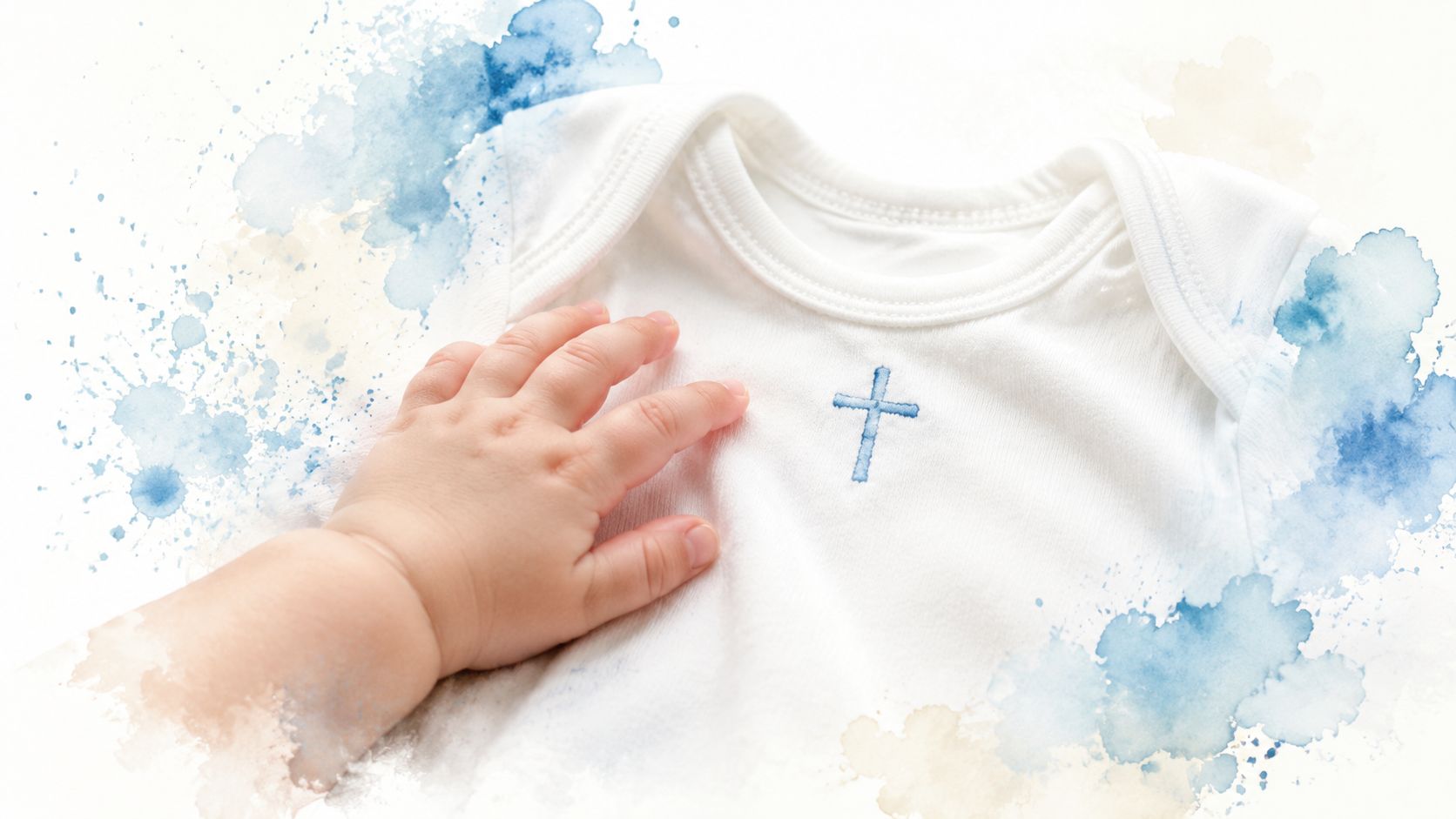
A cotton onesie with a charming cross or blessing may look perfect in a product photograph, yet sit untouched in a drawer if the knit feels stiff or the seams rub. A softer bamboo viscose style can become the piece parents reach for after every wash because it moves easily, feels smooth against sensitive skin, and layers without bulk. For a useful comparison of the two common fabric choices, see this guide to organic cotton versus bamboo.
What I'd check first
Start with the inside of the garment, not the artwork. Run your hand over the fabric and inspect the neck binding, shoulder area, leg openings, and bottom seam. These spots create the most friction during wearing and changing.
- Softness: The fabric should feel smooth without scratchy fibers or rough printed areas.
- Breathability: Babies need a knit that lets heat and moisture move away from the skin.
- Stretch recovery: Pull the fabric gently. It should stretch around the head and diaper, then return to shape.
- Print placement: A large, heavy graphic can feel stiff, especially across the chest or stomach.
- Trim security: Embroidery, labels, appliqués, and snaps should be firmly attached.
Practical rule: If you wouldn't want the fabric against your own bare skin for a full day, don't put it on a baby.
Bamboo viscose has a smooth hand feel that many families prefer for sensitive skin, but softness alone isn't proof of quality. Examine the complete garment, including its dyes, elastics, snaps, thread, and printed design. A gentle fabric paired with rough seams still creates an uncomfortable onesie.
The message should support the purchase, not drive it. Choose the design after you've confirmed that the baby can wear it comfortably, wash it easily, and move freely inside it.
The Market Behind Faith-Inspired Baby Clothing
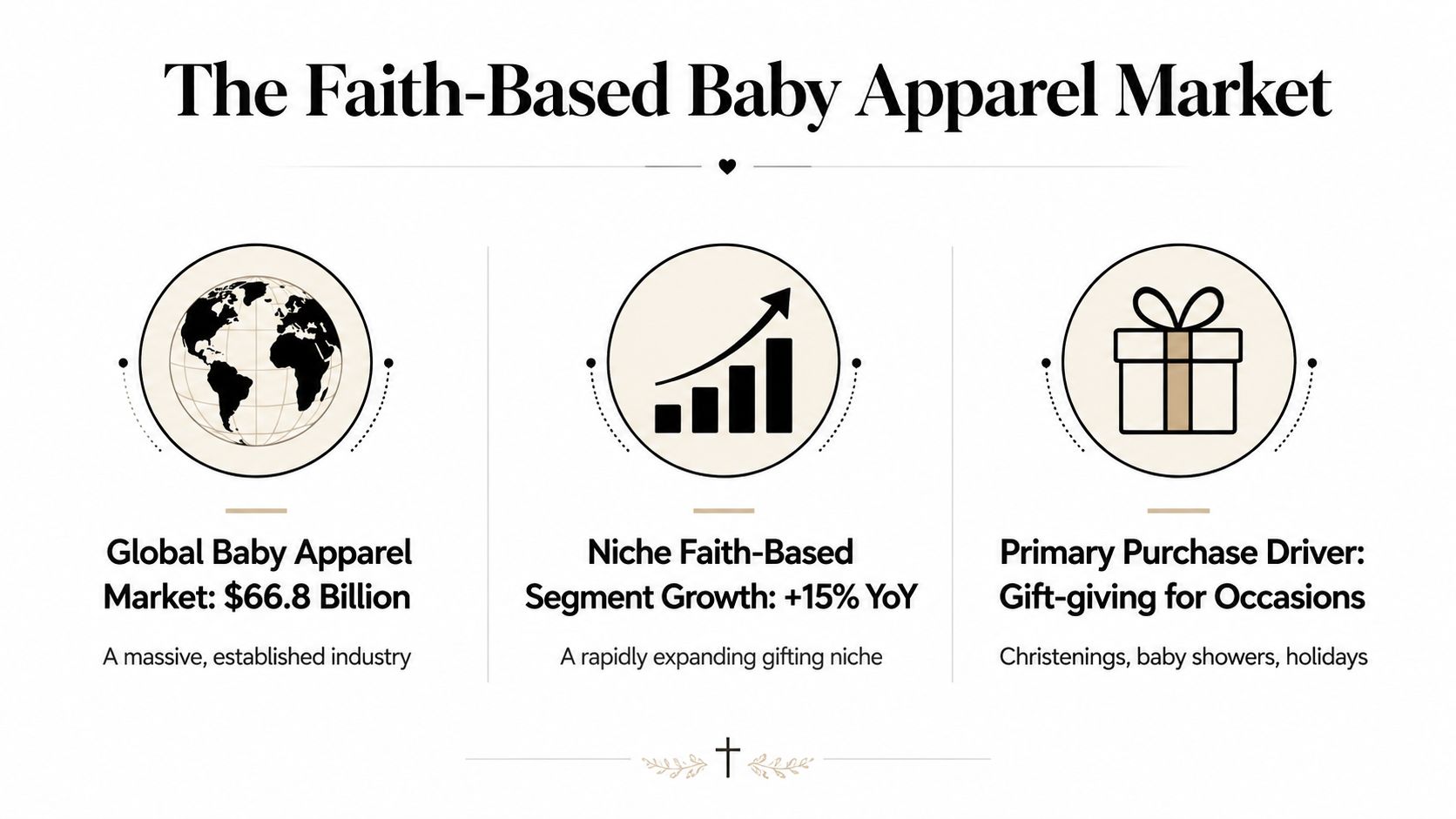
A Christian message may attract the gift-giver, but the garment's daily performance determines whether parents keep using it. Christian baby onesies occupy two established markets: everyday infant apparel and faith-based occasion gifting. That overlap explains the range, from subtle embroidered crosses to scripture-inspired bodysuits, baptism outfits, and gift-ready sets.
The global baby christening outfits market was valued at $1.2 billion in 2024 and is forecast to reach $1.95 billion by 2033, with a projected 5.7% CAGR, according to MarketIntelo's baby christening outfits analysis. The category covers baptisms, christenings, dedications, and baby-shower gifts, occasions that often prompt shoppers to consider Christian onesies.
Why the broader apparel market matters
The wider baby apparel market gives faith-inspired designs a familiar product base. One industry report values global baby apparel at $208.32 billion in 2025, projecting $271.84 billion by 2030 and a 5.5% CAGR, as reported by The Business Research Company. Another projection places the market at $70.86 billion in 2025, rising to $122.43 billion by 2034, with a 6.36% CAGR. The differing estimates reflect variations in methodology and market definition.
The practical conclusion is simple: a Christian onesie belongs to a familiar infant clothing format, not a niche garment with limited use. Bodysuits and top-wear styles are identified as important segments. One forecast gives top-wear a 51.91% share in 2026, while the same research reports North America at $12.97 billion, or 18.30% of the global market, in 2025. Faith-based wording works best when printed on a breathable, washable silhouette parents already know how to use.
Faith apparel is tied to real occasions
Christening and dedication gifts carry more ceremony than ordinary daywear. Buyers want a meaningful, photographable piece, while parents still need simple diaper access, washable construction, and room for movement. The strongest designs handle both roles, appropriate for a church milestone and comfortable during an ordinary afternoon at home.
A private upload gallery can also help families collect photos from a baby shower or dedication without chasing images across separate messages. Guests can contribute memories through a Best baby shower photo sharing tool, leaving parents with one organized collection.
The category also connects with mission-driven purchasing. Families may assess a brand's materials, production choices, and charitable commitments alongside its appearance. This discussion of mission-driven companies explains that broader buying approach. A Christian onesie can express faith, but its lasting value comes from dependable fabric, comfortable wear, and a company whose practices give shoppers a sound reason to trust the purchase.
Navigating Safety Certifications and Sleepwear Rules
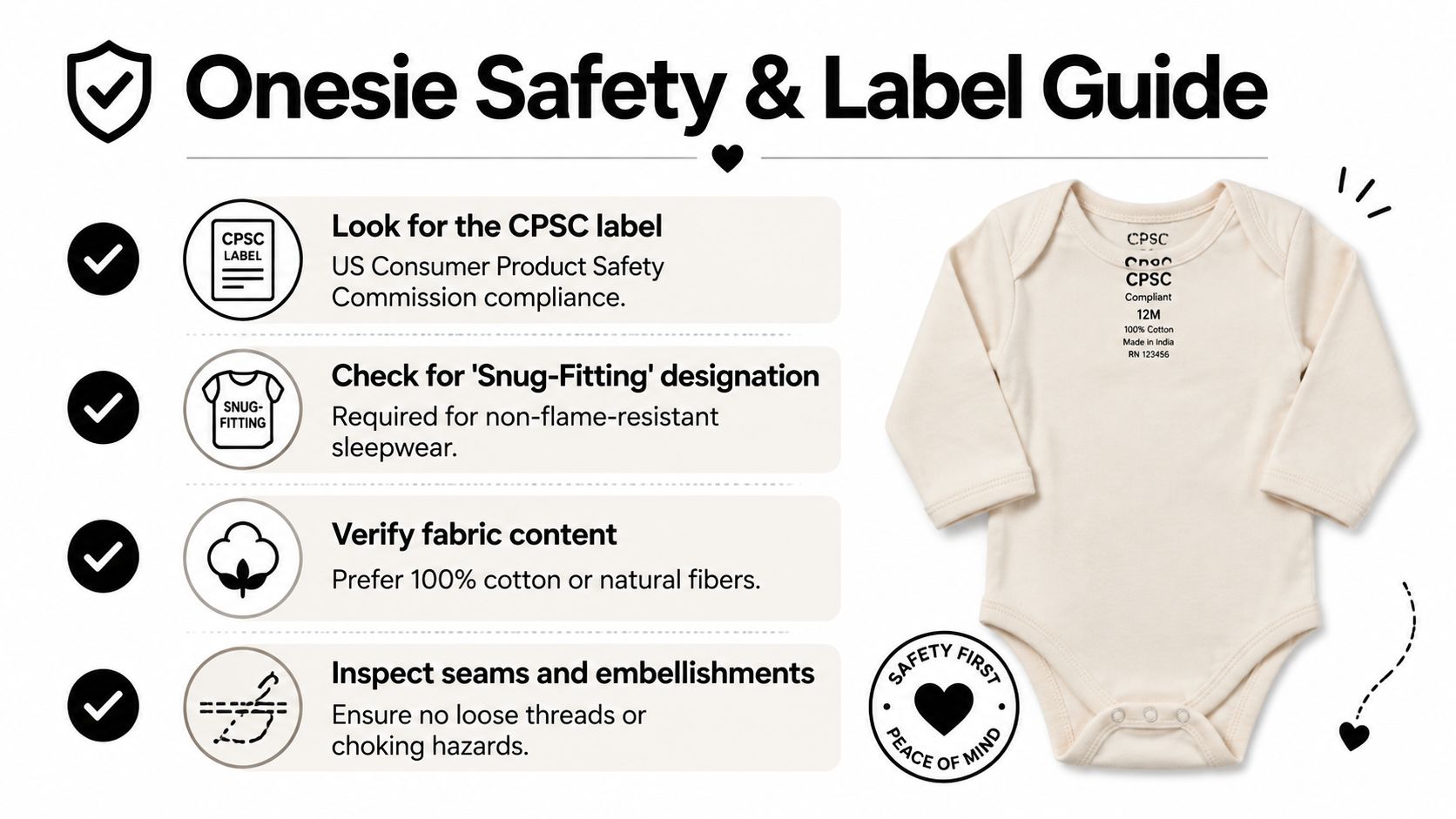
“Baby-safe” is marketing language unless the seller explains what it means. For a Christian baby onesie, I want clear fabric information, credible certification details, secure construction, and accurate guidance about whether the garment is intended for daywear or sleep.
Read the certification instead of trusting the adjective
OEKO-TEX STANDARD 100 Product Class I is the label I'd look for when shopping for infant clothing. Its Product Class I applies to babies and toddlers up to age three, including underwear and rompers, and uses a baby-specific chemical profile. The OEKO-TEX STANDARD 100 FAQ explains the product-class framework behind that certification.
The certification matters because a onesie isn't only fabric. The complete component stack touches the baby or sits close to the skin.
Check these details before buying:
- Fabric content: Look for a clear fiber composition rather than a vague “natural” or “eco” description.
- Dyes and prints: Ask whether the certification applies to the finished product and its printed components.
- Elastic and snaps: Inspect whether the brand includes trims and fasteners in its testing approach.
- Labels and seams: Confirm that interior labels won't scratch and that seams lie flat.
- Care instructions: A garment that requires complicated handling may not survive regular family life.
“Hypoallergenic” also deserves caution. It can describe a product intention, but it doesn't guarantee that every baby will tolerate it. Babies with eczema or recurring irritation may need advice from a pediatrician or dermatologist, especially when symptoms persist.
Understand the sleepwear distinction
U.S. flammability rules become especially important when a onesie is sold or used as sleepwear. For children older than nine months through size 14, sleepwear must either pass mandated flammability tests or be tight-fitting. Garments sized nine months or smaller can be exempt from the sleepwear standard when they stay within specified length limits, while still needing to meet general clothing-textile flammability rules. The U.S. Consumer Product Safety Commission guidance on children's sleepwear explains the distinction.
Fit and intended use can change the regulatory category. A slightly longer one-piece may no longer be treated like an exempt infant garment, so don't assume that every bodysuit is automatically suitable for bedtime.
Safety check: Buy sleepwear from a seller that clearly identifies the garment's intended use, sizing, fit, and compliance information.
For more context on how construction and fit affect flame-resistant clothing, consult this guide to flame-resistant sleepwear.
Don't let an appealing verse distract from basic safety. Secure snaps, smooth seams, leg openings that don't pinch, and honest labeling are part of the garment's message because they determine whether the clothing serves the child rather than merely advertising the design.
Choosing the Right Message and Design Style
The right Christian baby onesie depends on the family, the occasion, and how much theological specificity feels welcome. A baptism gift for close friends can support a more personal message. A present for a mixed-faith family should usually be broader, gentler, and easier to receive.
Compare the main design approaches
| Design style | Works well for | Watch out for |
|---|---|---|
| Minimalist blessing | Baby showers, everyday wear, family photographs | The wording may feel too subtle for shoppers wanting a strong statement |
| Universal Christian phrase | Mixed denominational families and church gifts | Common phrases can feel less personal |
| Bold scripture reference | Close family members who know the parents' preferences | A verse choice may carry theological or cultural associations |
| Humorous faith slogan | Casual gifts among relatives and close friends | Humor can age quickly or feel awkward in formal settings |
| Embroidered symbol | Baptisms, dedications, and understated wardrobes | Embroidery must be smooth and securely finished |
Phrases such as “Child of God” or “Favored” tend to be easier to give across denominations than a niche doctrinal reference. They communicate faith without requiring the recipient to share a particular interpretation of scripture. A small cross, dove, lamb, or simple blessing can achieve the same balance.
Choose for the family's actual wardrobe
Unisex colors, restrained graphics, and soft neutrals have practical advantages. They work for hand-me-downs, pair with ordinary trousers or leggings, and don't force the baby's outfit to become a costume. Marketplace listings increasingly feature minimalist and unisex faith designs, alongside claims about soft cotton and baby-safe materials, so buyers have more subtle choices than the novelty-heavy catalog suggests.
For a less traditional silhouette, House of Saint's Marlowe Baby Tee offers a reference point for shoppers considering faith-inspired baby clothing beyond the standard printed bodysuit. It's useful to compare the overall styling, neckline, and layering potential before deciding whether a classic onesie or a tee-shaped piece suits the family.
Ask yourself three questions:
- Would the parents choose this message themselves?
- Can the baby wear it outside the specific ceremony?
- Does the design feel respectful in a mixed-faith or multigenerational setting?
The most dependable gift is rarely the loudest one. It's the garment that expresses Christian hope clearly enough to feel intentional, while remaining comfortable and socially easy to wear.
Sizing Strategies for Rapid Infant Growth
A newborn size may look precious, yet it often makes a poor gift. Some babies outgrow it before the family uses it, while others never fit it at all. Parents may also receive more newborn clothing than they can reasonably wear.
Choose the 3–12 month range when the occasion allows. This age range often gives parents more time to use the garment and a better opportunity to judge their preferred fit. Babies are still in baby-specific clothing, but daily routines have made practical details, such as torso length and diaper access, easier to assess.
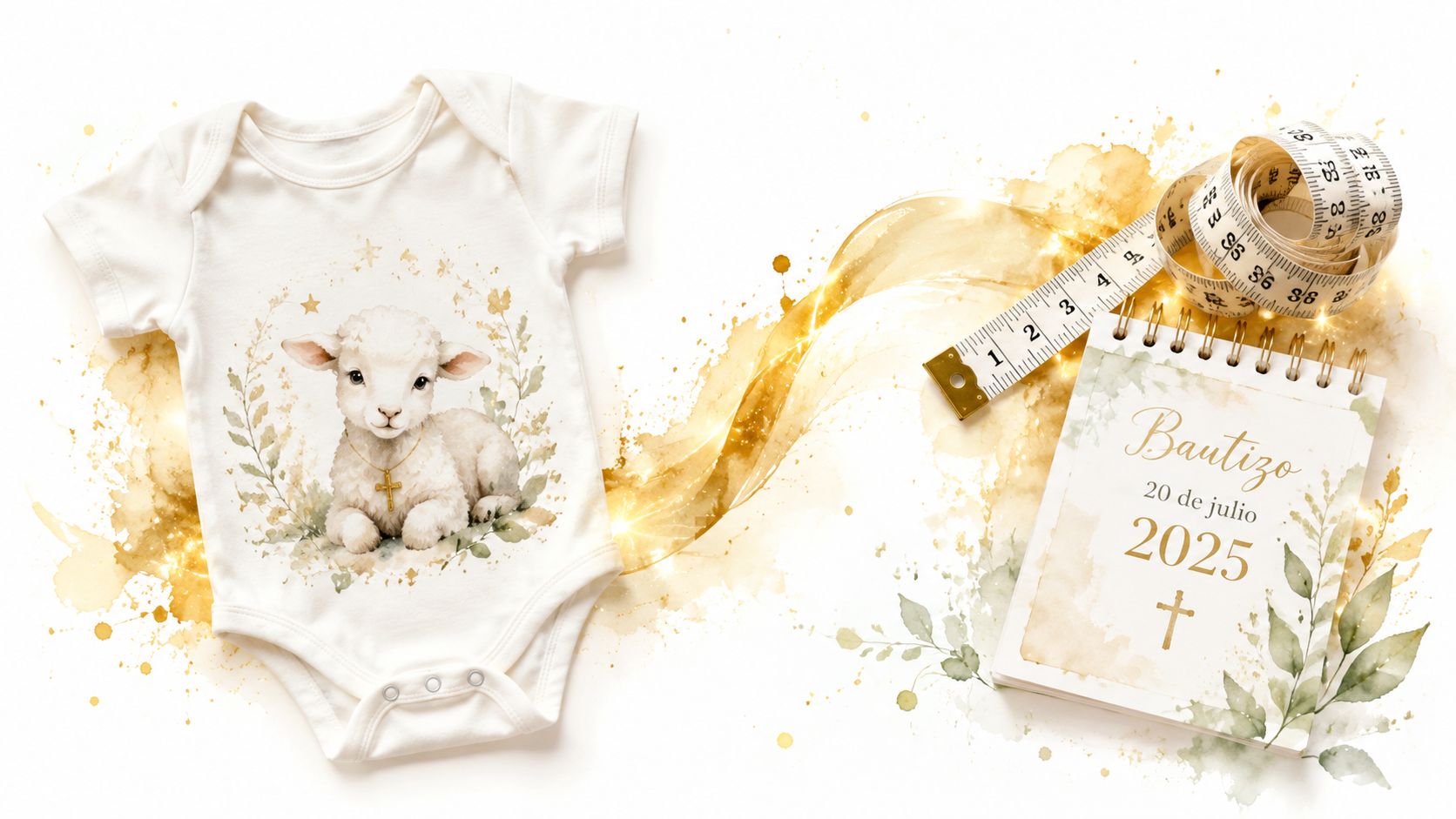
Match the size to the event
A baptism scheduled several weeks after a baby shower can expose the weakness of age-based sizing. A newborn onesie might fit at the shower and be too small by the ceremony. A narrow cut can create the same problem even when the label matches the baby's age.
Use the seller's measurement chart. Compare garment length, chest, inseam, and suggested weight where those details are available. Age labels vary between brands, so they cannot replace actual measurements.
Ask the parents privately about the baby's current size if the gift is for a ceremony. For a surprise, choose the next slightly larger size and include a gift receipt. Stretch can extend wear, but sizing up too far creates poor fit around the neck, shoulders, and leg openings.
Design features that extend usefulness
The most meaningful Christian onesie is one a baby can wear comfortably through ordinary diaper changes. Look for these practical details:
- Three-snap bottoms: They are familiar, reliable, and easy to use during quick changes.
- Stretchy leg openings: They should fit around the diaper without pressing harshly into the skin.
- Envelope shoulders: They make dressing easier after a messy change.
- Two-way zippers: Zippered styles should allow access from the bottom while keeping the upper body covered.
- Longer torso proportions: Extra length helps prevent the snaps from pulling as the baby grows.
Bamboo viscose can feel comfortable because its knit often offers useful stretch, but no fabric can correct an incorrect size. Choose the next stage the family will use, not a distant size that hangs unworn in the drawer.
A thoughtful gift plan pairs one special design for the ceremony with another everyday piece in a larger size. The first preserves the occasion. The second remains useful after the photographs are finished, when comfort, safe fabric, and fast diaper access matter most.
Supporting Mission-Driven Brands with Your Purchase
A Christian message does not make a baby garment responsible or wearable. Before paying for a faith-inspired design, check the fabric, testing information, construction, and the brand's stated giving. The purchase should reflect faith through useful clothing and accountable business practices.
You do not need to investigate every stage of production. Look for specific answers instead. Does the company name the fiber? Does it explain its certifications? Does it describe testing for prints and trims? Does it identify the charitable recipient and explain where contributions go?
Look for evidence of the mission
Mission-driven claims deserve clear evidence. Useful signals include:
- Named organizations: The company identifies its charitable partner instead of saying only that it “gives back.”
- Clear product information: Fabric composition, care instructions, and certification claims appear on the product page.
- Consistent values: Materials and packaging choices support the priorities the company describes.
- Practical quality: The clothing suits diaper changes, sensitive skin, washing, and repeated wear, rather than serving only as a photo prop.
Little Venture Co. offers faith-inspired baby and toddler clothing, including the Fruit of the Spirit Onesie, along with bamboo sleepwear and daywear. The company states that its materials are OEKO-TEX STANDARD 100 certified and that a portion of every sale supports Heartbeat International, an organization that aids pregnant women in need globally.
Let the purchase do more than decorate
Charitable giving does not excuse poor construction. A donation cannot make scratchy fabric comfortable, and a cross cannot compensate for loose trims or unclear safety information. Check the garment itself: it should be easy to put on, comfortable against the skin, simple to clean, and useful after the original occasion.
The strongest purchase brings those standards together. The buyer gives a thoughtful present, parents receive clothing they can use regularly, and the brand connects the sale with support for vulnerable families. A wearable garment expresses faith more convincingly than a religious slogan printed on disposable clothing.
Church groups and relatives ordering several pieces should contact the brand before buying. Ask about available sizes, care requirements, certification, and the garment's intended use. Consistent, comfortable clothing serves a nursery ministry better than a novelty item families avoid dressing the baby in. A mission deserves support, and the product should earn its place in the drawer through safe materials, sound construction, and everyday comfort.
Caring for Bamboo Viscose and Printed Fabrics
Bamboo viscose rewards gentle care. Treating it like a heavy cotton sweatshirt can lead to unnecessary shrinking, surface wear, and a faded message. The wash routine doesn't need to be complicated, but it should be consistent.
Wash the garment with less stress
Begin by reading the care label. If the label allows machine washing, turn the onesie inside out and use a gentle cycle with cool or lukewarm water. Hot water and aggressive agitation place more strain on soft knits and printed surfaces.
Use a mild detergent without harsh bleaching agents or strong fragrances. Extra detergent doesn't make baby clothing cleaner. It can leave residue against the skin and may dull the print over time.
A reliable routine looks like this:
- Close the snaps or zipper: This reduces snagging during the wash.
- Turn the garment inside out: The printed message faces inward and experiences less abrasion.
- Wash with similar soft items: Keep it away from rough towels, denim, and garments with hooks.
- Skip chlorine bleach: It can weaken fibers and alter printed colors.
- Remove promptly: Don't leave damp clothing compressed in the washer.
For a more detailed routine, follow this guide on caring for bamboo clothing.
Dry gently and treat stains early
Air drying is the safest choice for preserving shape and print clarity. Lay the onesie flat or hang it from a supported point, depending on the care label. Direct, intense sunlight can fade printed artwork, so dry it in a bright but protected area.
If you use a dryer, choose a low-heat setting only when the label permits it. High heat can shrink bamboo viscose and make a previously comfortable garment feel short through the torso.
Treat milk, food, and diaper stains as soon as you can. Rinse from the back of the fabric so the stain moves out rather than deeper into the knit. Apply a small amount of mild detergent, let it work briefly, then wash according to the label. Avoid scrubbing directly over a printed cross, verse, or illustration.
Wash-day rule: Protect the printed side, reduce heat, and don't wait for stains to become permanent.
Store the onesie clean and completely dry. Fold it rather than leaving it stretched on a hanger, and keep snaps closed so they don't catch on softer fabrics. Good care won't make a baby wear the same size forever, but it can keep the garment comfortable and presentable for every day it still fits.
Little Venture Co. offers faith-inspired bamboo onesies, zip rompers, two-piece sets, and accessories designed for babies and toddlers, with OEKO-TEX certified materials and a charitable contribution connected to each sale. Visit Little Venture Co. to choose a Christian baby outfit that puts soft fabric, safe construction, and everyday wearability ahead of a slogan alone.