

Your Ultimate Guide to the 6 Month Old Sleep Schedule
Welcome to the six-month sleep shift! This is the magical age where a real, predictable rhythm often starts to take shape, finally bringing a bit of routine to your days.
A solid sleep schedule for a 6-month-old usually includes 12 to 15 hours of total sleep. This typically breaks down into 10-12 hours overnight and 2-3 naps during the day. The sweet spot for wake windows is now between 2 to 3 hours, which is just enough time to build up sleep pressure for a good nap without tipping into overtired territory.
What A 6 Month Old Sleep Schedule Actually Looks Like
Forget about rigid, minute-by-minute schedules. Instead, think of this as creating a flexible framework that honors your baby's unique cues while gently guiding them toward more consolidated sleep.
At this stage, your baby’s internal clock is getting much more organized. Their sleep patterns are maturing, which means they’re more capable of sleeping for longer stretches at night and taking predictable naps. The key is to understand the fundamental building blocks of their sleep needs.
Core Sleep Concepts At Six Months
Knowing a few key numbers will help you build a routine that truly works for your little one. Think of these as helpful guidelines, not strict rules.
-
Total Sleep: Most babies this age need a lot of rest to fuel all that growth. Experts at Pregnancy Birth and Baby note that 6-month-olds typically need 12 to 15 hours of total sleep in a 24-hour period.
-
Wake Windows: The amount of time your baby can happily stay awake between sleeps is a crucial piece of the puzzle. For a six-month-old, this window is usually 2 to 3 hours long. The first wake window of the day is often the shortest, with the last one before bed being the longest.
-
Daytime Naps: Aim for 2-3 naps per day. The third nap is often a short "catnap" meant to bridge the gap to bedtime and prevent them from getting overtired. This little nap is usually the first one to go as they get older.
A consistent yet flexible routine does more than just organize your day; it provides your baby with a powerful sense of security. Predictable sequences, like a calming pre-nap cuddle, signal to their brain that it's time to wind down, making it much easier for them to relax into sleep.
To make this even simpler, here's a quick cheat sheet summarizing what you can expect.
Quick Guide to a 6 Month Old's Sleep
| Sleep Metric | Average Duration / Timing |
|---|---|
| Total Daily Sleep | 12-15 hours |
| Nighttime Sleep | 10-12 hours |
| Daytime Naps | 2-3 naps totaling 3-4 hours |
| Wake Windows | 2-3 hours |
| Ideal Bedtime | 7:00 PM - 8:00 PM |
By focusing on these core ideas rather than strictly watching the clock, you can tune into your baby’s natural rhythm. Recognizing their sleepy cues—like yawning, rubbing their eyes, or getting fussy—is just as important. For a deeper dive, our guide on wake windows by age can help you master this concept. This approach helps you create a peaceful sleep environment where everyone can thrive.
Building a Flexible Nap Routine That Works
Let's be honest, good naps are the holy grail of parenting. Get daytime sleep right, and you're setting yourself up for a much smoother night. A solid nap routine stops your baby from becoming an overtired, cranky mess by 7 PM, but it shouldn't make you feel like a prisoner in your own home. The whole point is to find a predictable rhythm, not to live and die by the clock.
At six months old, most babies are happily on a 3-nap schedule. You might see some early signs of dropping a nap, but for now, that third one is usually a quick catnap to bridge the gap until bedtime. It's often the hardest one to get and the first to go when they're a little older.
Navigating the 3-to-2 Nap Transition
So, how do you know if your little one is ready to drop that last nap? It's more than just fighting it for a day or two. This big shift usually happens between 7 and 9 months, but every baby is different.
Keep an eye out for these signs happening consistently for a week or more:
- The Third Nap Becomes a Battle: They consistently refuse that late afternoon nap, or they skip it and don't seem to turn into a pumpkin before bedtime.
- Bedtime Gets Weird: On the days they do take that third nap, you find yourself with a wide-awake baby at bedtime, pushing the whole schedule later.
- Naps 1 & 2 Get Longer: Their first two naps start stretching out, which naturally means they just don't need that final short snooze.
This timeline gives you a great visual for how a typical day might flow for a 6-month-old, from their first morning coos to their final bedtime feed.
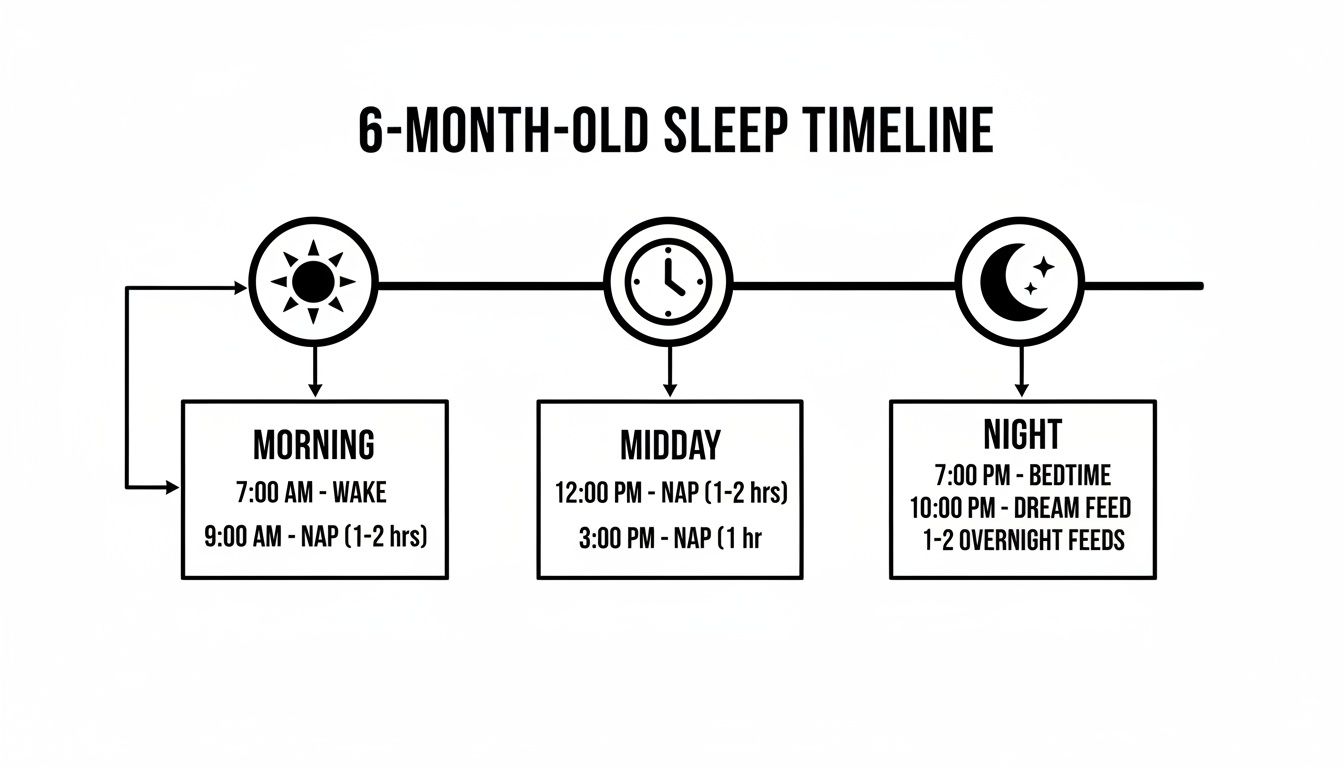
As you can see, the day is really just a series of predictable cycles. This rhythm is what helps set their internal body clock, making sleep feel much more natural for them.
Sample 6 Month Old Sleep Schedules
No two babies are the same—you might have an early bird who's ready to party at dawn or a little one who loves a lazy morning. The key is to adapt. Here are a couple of real-world examples you can use as a starting point.
Sample Schedule 1: The Early Riser (6:00 AM Wake-Up)
| Time | Activity |
|---|---|
| 6:00 AM | Wake up and feed |
| 8:15 AM - 9:45 AM | Nap 1 (Wake window 2.25 hours) |
| 12:15 PM - 1:45 PM | Nap 2 (Wake window 2.5 hours) |
| 4:15 PM - 4:45 PM | Nap 3 (Wake window 2.5 hours) |
| 7:15 PM | Start bedtime routine |
| 7:45 PM | Bedtime (Wake window 3 hours) |
Sample Schedule 2: The Sleep-In Baby (7:30 AM Wake-Up)
| Time | Activity |
|---|---|
| 7:30 AM | Wake up and feed |
| 9:45 AM - 11:15 AM | Nap 1 (Wake window 2.25 hours) |
| 1:45 PM - 3:15 PM | Nap 2 (Wake window 2.5 hours) |
| 5:30 PM - 6:00 PM | Nap 3 (Wake window 2.25 hours) |
| 8:15 PM | Start bedtime routine |
| 8:45 PM | Bedtime (Wake window 2.75 hours) |
A quick reminder: these are just templates! The most important thing is to watch your baby for their tired cues. A schedule that respects their natural wake windows will always beat one that's tied strictly to the clock.
This age is a huge milestone for sleep. Research has found that around the 5-6 month mark, nighttime sleep really starts to come together, with babies averaging about 10.5 hours overnight. This is usually paired with two solid naps of around 1.5 hours each.
Creating a Calm Nap Space
A pre-nap wind-down is just as critical as your big bedtime routine. It doesn't have to be complicated—just a few simple, consistent steps that tell your baby's brain, "Okay, it's time to sleep now."
- Make it Dark: Blackout curtains are your best friend. A dark, cave-like room helps trigger melatonin, the sleepy hormone we all need.
- Bring on the Noise: A white noise machine is a game-changer. It blocks out the doorbell, the dog, and your other kids, creating a soothing sound that helps them fall asleep and stay asleep between cycles.
- Get Comfy: Popping them into a cozy sleep sack is a fantastic sleep cue. It signals that rest is coming and keeps them safely and comfortably dressed. We have a whole guide on how to dress baby for sleep if you're not sure about the right layers.
As you start putting these routines together, it can also be helpful to think about the general principles of improving sleep quality, as many of the same ideas apply. A calm, predictable environment is everything when you're trying to build a 6 month old sleep schedule that actually works for your family.
Creating a Bedtime Routine You Both Love
A good bedtime routine is so much more than just a list of things to do before bed. It's your special time to connect and signal to your baby that the busy day is over and it's time to wind down. This predictable sequence becomes a powerful cue, telling their little body and brain it’s time for a long, restorative sleep.

The real secret isn't some magic formula—it's consistency. Doing the same calming things, in the same order, every single night builds a huge sense of security. Your baby learns exactly what to expect, which helps them relax and drift off to sleep much more easily.
Moving Beyond "Bath, Book, Bed"
The classic "bath, book, bed" routine is a fantastic starting point, but don't feel boxed in by it. The best routine is the one that genuinely calms your baby and fits your family’s rhythm. Think about what your little one really responds to and build your own special tradition from there.
Need a little inspiration? Try adding one of these:
- Gentle Baby Massage: A few minutes of quiet massage with a baby-safe lotion is incredibly soothing. It's a beautiful way to connect through touch before they drift off.
- Singing a Lullaby: You don't have to have a perfect voice! The familiar sound of you singing the same one or two songs each night is a comforting and powerful sleep signal.
- Quiet Cuddle Time: Sometimes, the best thing is just sitting in a dimly lit room and cuddling. Turn off the bright lights and screens, and simply enjoy a few peaceful moments together.
- Recapping the Day: In a soft, gentle voice, tell your baby about their day. Talk about the toys they played with, the new food they tried, or the people they saw. It’s a sweet bonding moment.
The goal here is to create a peaceful bridge from the buzz of awake time to the quiet of sleep. Aim for a routine that's around 15-30 minutes long. That’s usually enough to be effective without it turning into a marathon.
The Ideal Bedtime Environment
Where you do the routine is just as important as what you do. Creating a calm, sleep-friendly space makes the whole process go so much more smoothly.
- Dim the Lights: About 30 minutes before you even start the routine, lower the lights in the room. This simple change helps trigger the production of melatonin, the natural sleep hormone.
- Keep it Quiet: Minimize loud noises and distractions. A white noise machine can be a game-changer for blocking out household sounds and creating a consistent, soothing backdrop for sleep.
- Ensure Comfort: A comfy baby is a sleepy baby. Check that the room temperature is right and dress them in cozy PJs. In fact, good sleepwear choices play a bigger role than you might think. Breathable fabrics, like our OEKO-TEX® certified bamboo, are fantastic for preventing overheating and keeping them comfortable all night.
If you’ve got a solid routine down but your baby is still fussy, they might just be a little overtired. You can explore different ways to soothe a fussy baby for extra tools on those tricky nights.
Remember, this routine is for both of you. Find a rhythm that feels loving and peaceful, and it will become a cherished part of your day—and the foundation for a successful 6 month old sleep schedule.
How to Handle Night Wakings and Feedings
That 2 AM stir from the monitor is a sound every parent knows. At six months old, waking up at night is still totally normal, but how you handle it can start laying the groundwork for better sleep for the whole family. The million-dollar question is always the same: is my baby actually hungry, or just looking for a quick cuddle to drift back off?
Figuring out the difference is half the battle. A true hunger cry is usually pretty insistent—your baby won't really settle down until they get that milk. A comfort waking, on the other hand, might just be some fussing between sleep cycles. You might find they drift back off on their own, or with just a gentle pat on the back.
Hunger vs. Habit: How to Tell the Difference
As your little one starts chowing down on solids and taking bigger bottles or nursing sessions during the day, they genuinely need fewer calories overnight. By the six-month mark, most babies are physically capable of sleeping for longer stretches without a middle-of-the-night snack.
One of the biggest clues that a feed is becoming more habit than hunger? When they nurse or take a bottle for just a minute or two before dozing off again.
If you think a waking is more about comfort, try a few things before immediately offering a feed.
- Give it a minute: I know it’s hard, but try waiting just a few minutes before you go in. Babies can be noisy sleepers and often stir as they transition between sleep cycles. They might just surprise you and settle back down on their own.
- Try a different kind of comfort: See if a gentle back rub, a quiet "shhh," or popping their pacifier back in does the trick. If they calm down without eating, it’s a good sign they were just looking for a little reassurance.
Remember, the goal isn't to leave a hungry baby crying. It's about becoming a bit of a sleep detective to figure out what your baby is really asking for. This helps you both in the long run.
Before you make any big changes to your nighttime routine, it's super important to get the all-clear from your pediatrician. They’ll make sure your baby is gaining weight well and is ready to start consolidating those calories during the daytime.
Gently Weaning Night Feeds
Once your doctor gives you the green light, you can start to phase out those nighttime meals. Going slow and steady is usually the kindest way to do it and often leads to fewer tears.
For Bottle-Fed Babies:
- Start by reducing the amount in the bottle by one ounce every two or three nights.
- Keep trimming it down until you're only offering an ounce or two. At that point, most babies decide it's not even worth waking up for such a tiny snack.
For Breastfeeding Moms:
- Try cutting the nursing time down by one minute every couple of nights.
- Focus on nursing until your baby is sleepy but not completely out. Gently unlatch them and put them down drowsy, which helps break that feed-to-sleep habit.
This gradual process gives your baby's body time to adjust and naturally encourages them to eat more during the day to make up for the missed calories. It creates a great cycle that leads to longer stretches of sleep at night.
Of course, sleep is never a straight line. If you suddenly hit a rough patch, you might be dealing with one of the classic baby sleep regression stages, which often pop up around big developmental milestones. Knowing what to expect can make those bumps in the road a lot less stressful.
Troubleshooting Common 6-Month Sleep Problems
Even with what feels like the perfect 6-month-old sleep schedule, you're going to hit some bumps in the road. It's almost a parenting law of physics. Just when you think you've figured it all out, a new challenge pops up. Trust me, it’s completely normal!
So, let's walk through some of the most common sleep hurdles at this age and figure out how to get things back on track.

Think of yourself as a sleep detective. The key is to investigate the "why" behind the problem and have a whole lot of patience. Often, a tiny tweak to your routine is all you need.
The Dreaded 5 AM Wake-Up
Ugh, the pre-dawn wake-up call. It's one of the most frustrating sleep issues out there. Your baby is wide awake and ready to start the day, but you know they haven't gotten enough rest. This is almost always caused by one of two things: overtiredness or undertiredness.
-
Could they be overtired? This is a classic. Their bedtime might be a little too late, or that final wake window before bed is just stretching them too thin. Try pulling bedtime earlier by 15-20 minutes for a few nights and see if that helps them connect those sleep cycles into the morning.
-
Or are they undertired? On the flip side, they might be getting too much sleep during the day. Or, their first nap might be happening too early, which just solidifies that early wake-up time. Make sure total daytime sleep isn't creeping over 4 hours and really try to push that first nap until at least two hours after your desired wake-up time, not when they actually woke up.
It’s so important to treat a 5 AM wake-up just like you would a 2 AM one. Keep the lights off, keep interactions boring and minimal, and don't officially start the day until a more reasonable hour. This consistency is what teaches them it’s still nighttime.
Suddenly Fighting Naps
Is your once-great napper suddenly putting up a fight? This is incredibly common right around six months as their sleep needs begin to change. Nine times out of ten, the culprit is a wake window that’s just not quite right anymore.
Usually, the wake window before the nap they're fighting is too short. They simply aren't tired enough to settle down. Try extending that specific window by about 15 minutes for a couple of days. For instance, if it’s always that second nap that’s a battle, stretch the awake time between nap one and nap two.
Quick tip: Don't mistake nap resistance for a sign to drop a nap! Most six-month-olds absolutely still need three naps. Trying to transition to two naps this early almost always backfires, leading to a chronically overtired baby and, you guessed it, more night wakings.
Getting Through Teething and Milestones
Six months is a massive time for developmental leaps. We're talking sitting up, rolling all over the place, and babbling up a storm. It’s way more fun to practice these new skills in the crib than it is to sleep. On top of that, the discomfort from a new tooth can easily throw a wrench in things.
Here's how to survive these phases:
- Give them lots of practice time. During their wake windows, offer plenty of floor time to work on all those cool new skills. The less they feel the need to practice in the crib, the better.
- Offer comfort for teething pain. If you're pretty sure a tooth is to blame, check with your pediatrician about safe pain relief options. Sometimes, just chewing on a cold washcloth or a teething toy before bed can provide enough comfort to help them settle.
- Stay as consistent as you can. It is so tempting to create new habits (like rocking or feeding back to sleep) when your baby is struggling. I get it. But try to stick to your established routine as much as possible to avoid creating new sleep associations that you'll have to undo later.
Remember, these are just phases. They feel like they last forever, but they are temporary. Your consistent, calm response is what will help your baby get back to their solid sleep habits once the milestone is mastered or that pesky tooth finally pops through.
And the research backs this up. A 2021 study found that infants with consistent routines simply slept longer at night. Your dedication to the schedule, even on the really tough nights, truly does pay off. For more information, you can always discover more insights about safe sleep practices from the WHO.
Your Top 6-Month-Old Sleep Questions, Answered
When you're navigating your baby's sleep, the questions never seem to stop. Just when you feel like you've finally hit a groove, everything changes. So, I’ve pulled together the most common questions I hear from parents about the 6-month-old sleep schedule to give you some clear, straightforward answers.
Think of this as your go-to cheat sheet for those middle-of-the-night (or middle-of-the-day) moments when you just need a quick answer without having to read another book.
How Long Should a 6-Month-Old Be Awake Between Naps?
For a 6-month-old, you're generally looking at wake windows between 2 and 3 hours. This isn't a hard-and-fast rule, though. The first wake window of the day is usually the shortest, hovering around 2 hours, while the stretch right before bed can push closer to 3 hours.
Honestly, the clock is less important than your baby's own personal signals. Get good at spotting their sleepy cues—yawning, rubbing their eyes, or getting fussy for no reason. Catching that perfect moment before they tip over into being overtired is the real secret to getting them to settle down for a nap without a fight.
Can I Sleep Train My 6-Month-Old?
Absolutely. Six months is a really popular age to start sleep training if it feels like the right move for your family. Developmentally, most babies are more than ready to start learning how to self-soothe.
Plus, many no longer need middle-of-the-night feeds for nutritional reasons (though it's always smart to run this by your pediatrician first). There are so many gentle methods out there that don’t just mean leaving your baby to cry it out. The best approach is always the one you feel comfortable with and can stick to consistently.
The decision to sleep train is so personal. I find that success really boils down to picking a method you believe in and can commit to. That consistency is what helps your baby feel secure and learn the new skill of falling asleep on their own.
Why Is My 6-Month-Old Suddenly Waking Up at Night Again?
If your once-solid sleeper is suddenly throwing parties at 2 a.m., you're not alone! This is often what people call a "sleep regression," but it's really a sign of a progression in their development.
First, think about developmental leaps. Is your little one learning to sit up on their own? Getting ready to crawl? Babbling up a storm? It's incredibly common for them to practice these exciting new skills in the crib when they should be sleeping.
A few other usual suspects include:
- Teething Pain: This is a big one. It's tough for anyone to sleep well when their gums are aching from a new tooth pushing through.
- A Schedule That Needs a Tweak: It might be as simple as their schedule being a little off. If wake windows are too short or too long, it can easily lead to a choppy night of sleep. Take a look at their daytime routine and see if a small adjustment helps.
- Separation Anxiety: Around this age, some babies start to realize they're separate from you, which can be scary! They might wake up between sleep cycles and cry out simply because they need your reassurance.
How Do I Know When to Drop the Third Nap?
That tricky transition from three naps down to two usually happens somewhere between 6 and 9 months. My advice? Don't rush it. Instead, watch for consistent signs that your baby is truly ready.
You’ll know it’s time when you see these things happening for a week or more:
- Nap Strikes: Your baby consistently fights or completely skips that late afternoon catnap.
- Bedtime Battles: On days they do take that third nap, bedtime becomes a huge struggle, and they just aren't tired until much later than usual.
- Longer Early Naps: You might notice their first two naps are naturally getting longer, which means they just don't need that final short nap to make it to bedtime.
When you're ready to make the switch, start by slowly stretching the first two wake windows of the day. And a pro tip: be prepared for a much earlier bedtime on those first few two-nap days to keep your little one from getting overtired.
At Little Venture Co., we believe comfort is a key ingredient for peaceful sleep. Our OEKO-TEX® certified bamboo sleepwear is designed to be incredibly soft and breathable, keeping your baby comfortable through every nap and nighttime stretch. Wrap your little one in the gentle touch of our faith-inspired collection. Explore our bamboo sleepwear today.