

A Parent's Guide to Baby Sleep Regression Stages
Just when you think you’ve cracked the code on your baby’s sleep, everything falls apart. Sound familiar? If your once-stellar sleeper is suddenly fighting naps and waking up all night long, you've likely hit a sleep regression.
These phases are temporary bumps in the road, usually lasting anywhere from 2 to 6 weeks, where a baby’s sleep patterns go haywire. It’s not you, and it’s not them being difficult. These disruptions are almost always linked to incredible developmental leaps, like the big shift in sleep cycles around 4 months or learning to crawl and pull up around 8-10 months.
Think of them less as a "regression" and more as a "progression." It’s a sign their brain is hard at work.
What Are Baby Sleep Regressions Anyway?
One minute you’re bragging about your baby sleeping through the night, and the next, you’re up every hour with a tiny, wide-eyed protestor. It's a jarring shift that can leave you feeling exhausted and questioning everything you thought you knew. But here’s the good news: you haven’t done anything wrong.
A sleep regression is basically your baby's brain getting a massive "system upgrade." Their mind is so busy mastering new skills—rolling over, sitting up, understanding that you still exist even when you leave the room—that their sleep gets temporarily sidelined. It's a positive, healthy sign of development, even if it feels anything but positive at 3 AM.
To really get what’s going on in their little bodies and minds, it helps to understand the science behind sleep cycles and how they evolve from newborn to baby.
This timeline gives you a great visual of when to expect these phases and what’s causing them.
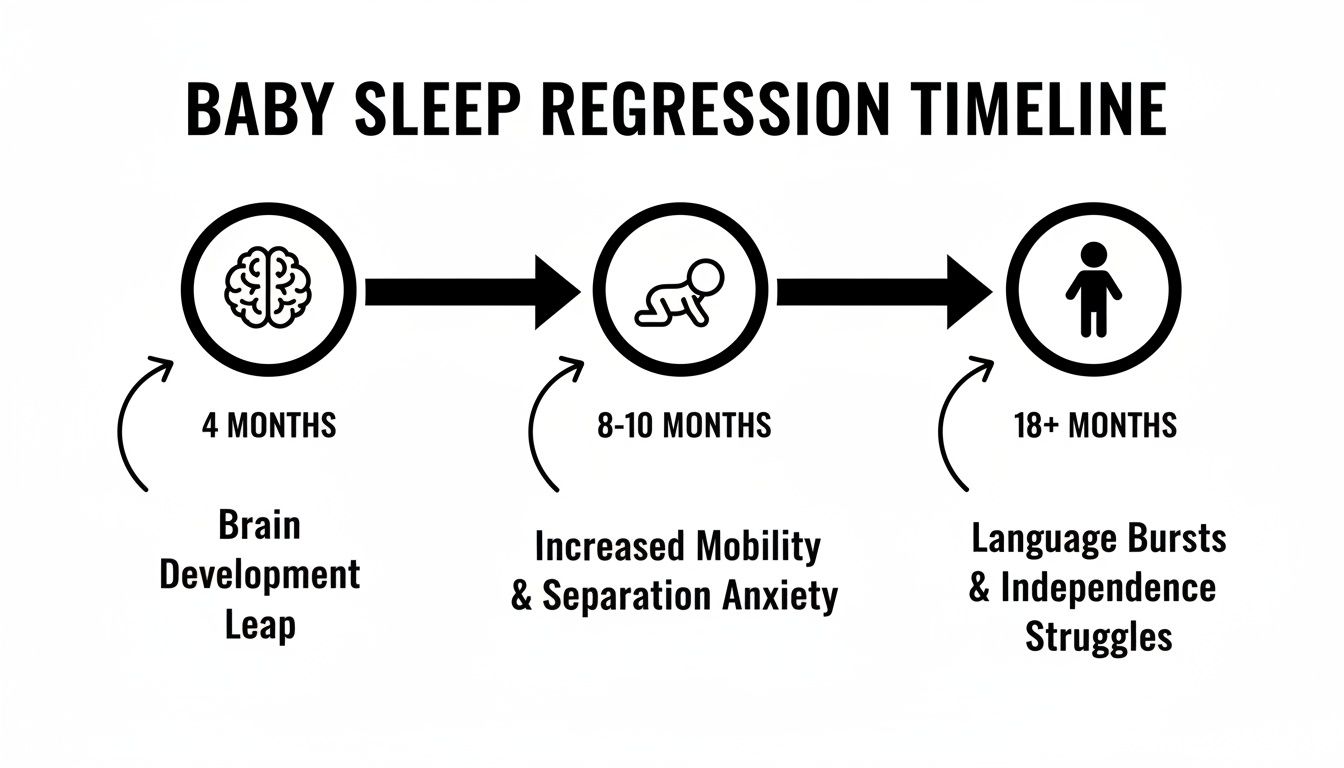
See how the sleep disruptions line up perfectly with major cognitive and physical milestones? It's all connected.
Why Progress Looks Like A Problem
It feels completely backward, right? Your baby is learning amazing new things, so why is sleep suddenly a disaster? The simplest way to look at it is that their brain is prioritizing the new, exciting skill over sleep. Shifting your mindset from "my baby forgot how to sleep" to "my baby is busy learning" can be a lifesaver for your sanity.
Common triggers for sleep regressions include:
- Cognitive Leaps: Around the 4-month mark, a baby’s entire sleep architecture changes forever. They shift from simple newborn sleep to more adult-like sleep cycles, which means more opportunities to wake up between them.
- Physical Milestones: At 8-10 months, babies are often mastering crawling, pulling to a stand, and cruising. Their bodies are so revved up, they just can't "power down" at bedtime. They'd rather practice their new moves!
- Emotional Growth: Separation anxiety often hits hard around 9 months. Suddenly, they realize you can leave, and they protest loudly to make sure you stay close.
The most important thing to remember is that a sleep regression isn't your fault. It’s not a bad habit you created. It's a temporary, normal, and even positive part of your baby’s development.
It’s also totally normal for your baby to be extra fussy during these phases. If you need a few more ideas for calming them down, our guide on how to soothe a fussy baby has some great tips.
To help you feel more prepared, here’s a quick-glance table summarizing the major sleep regressions.
Quick Guide to Baby Sleep Regression Stages
| Regression Stage (Age) | Key Developmental Milestones | Common Signs | Typical Duration |
|---|---|---|---|
| 4 Months | Sleep cycles mature; rolling over | Frequent night wakings (every 1-2 hours), short naps, increased fussiness | 2–4 weeks |
| 8–10 Months | Crawling, pulling to stand, separation anxiety, teething | Resisting naps, crying when you leave, practicing skills in the crib | 3–6 weeks |
| 12 Months | Learning to walk, talking, dropping to one nap transition | Nap refusal, bedtime battles, standing in crib | 1–3 weeks |
| 18 Months | Separation anxiety peaks, testing boundaries, teething (molars) | Saying "no," throwing things from crib, night terrors, nap strikes | 2–6 weeks |
| 2 Years | Potty training, moving to a toddler bed, vivid imagination | Stall tactics at bedtime, getting out of bed, new fears (the dark) | 2–4 weeks |
We'll dive into each of these baby sleep regression stages in more detail, giving you the "why" behind the chaos and the "how" to get through it. You've got this, and you’re not alone. There are real, practical strategies to help your whole family get back to sleep.
The 4-Month Sleep Regression: The Great Awakening
So, you’ve hit the big one. This is, without a doubt, the most famous (or infamous) of all the sleep regressions. If your once-decent little sleeper has suddenly started fighting naps and waking up all night long, you're in the right place. Let me reassure you: you're not imagining things, and you didn't do anything wrong.
This isn't just a temporary hiccup. The 4-month sleep regression is a permanent, biological shift in how your baby sleeps.
Think of your newborn’s sleep like a simple on/off switch. They only had two sleep stages, so they were either asleep or awake. But right around four months, their brain completely rewires that system into something much closer to adult sleep. It's no longer a switch; it's a sophisticated system with multiple stages.
Because of this huge developmental leap, your baby now cycles through lighter and deeper sleep all night. As they come to the end of one sleep cycle—which lasts about 45 minutes—they briefly surface into a very light stage of sleep. A baby who hasn't learned how to connect those cycles on their own will wake up completely and, of course, cry out for you. This is precisely why your little one might be up every hour or two, like clockwork.
What This Sleep Regression Looks Like
The 4-month regression is a doozy because it's a non-negotiable brain development thing. Every single baby goes through it, though some handle it better than others. Knowing the signs can help you feel less like you're going crazy and more like you understand what's happening.
You'll probably start noticing:
- Frequent Night Wakings: A baby who used to give you a solid five or six-hour stretch might now be up every 45-90 minutes. This isn't random—it lines up perfectly with the length of their new sleep cycles.
- Short Naps: The term "catnapping" was practically invented for this stage. Naps that used to be long and restorative are now abruptly cut short to just 20-45 minutes. They wake up, unable to transition into that next cycle.
- A Generally Fussier Baby: Let's be honest, we're all grumpy when we're tired. A baby getting fragmented sleep is going to be more irritable and clingy. Their whole world just changed, and they need a lot of extra comfort.
- Bedtime Battles: Getting them to sleep in the first place can suddenly feel like a wrestling match. That easy, breezy bedtime routine might be met with a whole lot of protest.
This particular regression is a true turning point. Sleep specialists often call it the most significant one because it marks a permanent change from newborn sleep patterns to more structured, adult-like cycles. This is why it often feels so disruptive.
This isn't a step backward. It's The Great Awakening. Your baby is becoming so much more aware of the world, their surroundings, and you. Their brain is processing a ton of new information, and simply powering down just got a lot more complicated.
Navigating The Great Awakening
Getting through this is all about consistency and setting up a great sleep foundation. Since these new sleep patterns are here for good, now is the perfect time to build healthy habits that will help your baby (and you!) for months to come.
One of the biggest physical milestones around this time is rolling. It’s so exciting to see, but it's also a major safety alert for their sleep space. If you are still swaddling, it’s officially time to stop. For a clear, step-by-step plan, check out our guide on when to stop swaddling.
Actionable Strategies for Better Sleep
Instead of thinking of this as something you need to "fix," shift your mindset. Your job is to guide your baby through this new phase and help them learn the skill of connecting sleep cycles on their own.
Here are a few gentle strategies that can make a huge difference:
- Optimize the Sleep Environment: Turn their room into a little sleep cave. Blackout curtains are your best friend—make it so dark you can't see your hand in front of your face. A white noise machine is also a must-have to muffle household noises. And of course, keep the room at a cool, comfortable temperature.
- Establish a Consistent Bedtime Routine: A predictable routine is like a series of sleep cues for your baby's brain. It doesn't have to be complicated! A simple sequence like a bath, cozy pajamas, a feed, a quick book, and a cuddle works beautifully. The key is to keep it short, sweet, and do it in the same order every single night.
- Practice Drowsy But Awake: This is the absolute cornerstone of teaching independent sleep. Try your best to put your baby down in their crib when they are calm and drowsy, but not completely passed out. This gives them a chance to practice the skill of falling asleep on their own, which is what they'll need to do when they wake between cycles overnight.
- Offer Reassurance (Without Creating a Habit): It's completely okay to respond when they wake up! Before you jump to feeding or rocking, try offering comfort with a gentle hand on their chest or a few soothing words. This teaches them they're safe and that you're there, while still giving them space to try and fall back asleep.
Most importantly, be patient with your baby and with yourself. This is a massive adjustment for everyone. It can take a few weeks for things to settle, but by focusing on routine and a calm, safe environment, you can absolutely guide your little one through this incredible leap forward.
The 8 to 10-Month Regression: When Your Little Explorer Gets Clingy

Just when you thought you’d conquered the 4-month regression, another one pops up. The phase between 8 and 10 months can feel like a perfect storm of exciting new skills clashing with big, new emotions.
Your baby's world is expanding at a dizzying pace. They might be learning to crawl, pull themselves up, or even cruise along the furniture. It’s an amazing leap forward, but their little brain is so busy processing these physical feats that it refuses to power down at bedtime.
Instead of drifting off to sleep, they treat their crib like a personal gym for late-night practice sessions. On top of that, their mind is making a huge cognitive jump, and this is where separation anxiety really kicks in.
Why Your Baby Suddenly Hates Bedtime
The main culprit behind this new clinginess is something called object permanence. For the first time, your baby truly understands that you still exist even when you’ve left the room.
While this is a brilliant milestone, the immediate side effect is that they know you can come back—and they’ll protest loudly to make it happen. This explains why a baby who was previously happy to be put down might suddenly start crying the moment you head for the door. It’s a confusing time for them, and their only way to communicate that anxiety is to call for you.
Add in the fact that teething is often in full swing around now, and you've got a recipe for some seriously disrupted nights. It’s no wonder this is one of the toughest baby sleep regression stages for parents to navigate.
Suddenly, the 11-12 hours of solid sleep you were getting used to might be a distant memory, replaced by bedtime battles and middle-of-the-night wake-up calls.
This regression is less about sleep biology and more about psychology and physicality. Your baby's body is itching to move, and their heart just wants you close. Your job is to be their secure anchor while they figure it all out.
How to Handle Your Newly Mobile—and Anxious—Baby
Getting through this stage is all about balance. You need to give them space to burn off all that physical energy while also providing extra comfort for their emotional needs. For a more detailed routine, check out our guide to building a 10-month-old sleep schedule.
Here are a few strategies that can make a real difference:
-
Practice, Practice, Practice (During the Day!): Give them tons of floor time to crawl, pull up, and explore. The more they master these skills when they're supposed to be awake, the less they'll feel the need to practice them at 2 AM.
-
Teach Them How to Get Down: Babies are often pros at pulling themselves up in the crib but have no idea how to sit back down. Help them practice during the day. Gently guide them from a standing to a sitting position, saying something like, "and down we go!"
-
Keep Goodbyes Short and Sweet: A long, drawn-out departure at bedtime can actually make their anxiety worse. A quick, loving, and consistent phrase like, "I love you, time for sleep, see you in the morning," becomes a comforting signal that it's time to rest.
-
Play Lots of Peek-a-Boo: This classic game is more than just fun; it’s a brilliant way to reinforce object permanence. Playing it throughout the day helps your baby learn that when you "disappear," you always come back. This can work wonders for easing their nighttime separation anxiety.
This phase is tough, but it’s a beautiful sign that your baby’s mind and body are growing. With plenty of reassurance and a consistent routine, you can guide them through this bump in the road and get back to peaceful nights.
Navigating the Toddler Sleep Regressions

Just when you thought you’d cracked the code on baby sleep, toddlerhood arrives and flips the script. Suddenly, the sleep hiccups have less to do with their biology and everything to do with their booming personality and how they see the world.
This next phase basically bundles a few key baby sleep regression stages together, spanning from 12 months all the way to two years. Each bump in the road is tied to the incredible developmental leaps your little one is making. It’s an exciting time, but let’s be real—it can also be exhausting.
The 12-Month Regression: Walking and Wobbly Naps
Right around their first birthday, many toddlers hit a brief but powerful sleep speed bump. It's usually a perfect storm of two big events: mastering the monumental skill of walking and navigating the tricky transition from two naps down to one.
Learning to walk is a massive deal for their brain and body. Just like when they were learning to crawl, their mind is so preoccupied with practicing this new skill that they'd much rather be cruising around the crib than sleeping.
At the same time, their sleep needs are changing. Dropping that second nap is a process, and it can take weeks. This often leaves them stuck in a frustrating limbo of being either overtired or undertired at bedtime—both of which are a recipe for a rough night.
The 18-Month Regression: The Peak of Independence
Hang in there, because many parents find this to be one of the toughest regressions of all. Your 18-month-old is a whirlwind of newfound independence, a budding vocabulary, and a very strong desire to be in charge. Their favorite word is often "no!" and they use it for everything, especially bedtime.
This stage is usually marked by:
- Testing Boundaries: They're figuring out cause and effect. What happens if I launch my pacifier out of the crib for the tenth time? Let's find out!
- Separation Anxiety: This often rears its head again around this age, making them extra clingy and upset when you try to leave the room.
- Teething Molars: Those big back teeth can be a real pain—literally. The discomfort can easily throw a wrench in an otherwise solid sleep schedule.
It’s important to remember your toddler isn’t trying to make your life difficult. They’re just trying to assert their growing sense of self in one of the few ways they know how.
This regression is all about your toddler's budding personality and their need for control. The key is to offer them simple, acceptable choices throughout the day to fill their "control cup" so they feel less need to battle you at bedtime.
For instance, you could ask, "Do you want to wear the blue pajamas or the green ones?" or "Should we read this book or that one?" These small choices help them feel powerful and heard, which can make a world of difference when it’s time to sleep.
The 2-Year Regression: Big Feelings and Big Imaginations
By two years old, your toddler's inner world is becoming incredibly rich and complex. While this is amazing for their development, it can bring on a whole new set of sleep challenges. Their imagination is now powerful enough to conjure up some very real-feeling fears, like monsters under the bed or being afraid of the dark.
This regression is often tangled up with other big life changes that happen around this age:
- Potty Training: Learning this new skill, especially one that involves being aware of their body at night, can easily mess with sleep.
- Moving to a Toddler Bed: That newfound freedom to hop out of bed whenever they please can be way too exciting for many two-year-olds to handle.
- Vivid Dreams and Nightmares: As their imagination blossoms, so does the intensity of their dreams, which can lead to some scary wake-ups in the middle of the night.
Strategies For Toddler Sleep Success
Handling toddler sleep regressions means switching up your game plan. You need to be a calm, confident leader while still respecting their need for independence and comfort. For a deeper dive, our complete guide to toddler sleep training methods has tons of extra support.
A solid, calming bedtime routine is your best friend here. It gives them the predictability they crave when their world feels a little too big and overwhelming. If you're looking for inspiration, there's great advice available for things like creating a gentle Islamic bedtime routine that can be adapted to fit any family’s values.
When you're in the thick of it, it can be hard to pinpoint what's really going on. Here's a quick troubleshooting checklist to help you figure things out.
Toddler Sleep Regression Troubleshooting Checklist
This table is a handy, at-a-glance reference to help you connect the dots between your toddler's behavior and what might be causing it, so you can respond effectively.
| Symptom | Possible Cause | Actionable Tip |
|---|---|---|
| Stalling and endless requests at bedtime | Testing boundaries; separation anxiety | Offer two simple choices (e.g., "Two books or three?"). State the routine clearly and stick to it firmly but lovingly. |
| Getting out of their new toddler bed | Excitement over new freedom | Use a toddler clock that signals when it's okay to get up. Calmly and silently return them to bed each time. |
| Crying when you leave the room | Separation anxiety | Keep goodbyes short and reassuring. Say, "I love you, time for sleep," and leave confidently. Don't draw it out. |
| Waking up scared at night | Vivid imagination; new fears | Offer comfort and reassurance. Check the room for "monsters" with a flashlight. Avoid turning on all the lights. |
Remember, this phase is temporary! With consistency and a lot of love, you and your little one will get through it.
Your Sleep Survival Kit For Every Stage
When you're in the thick of a baby sleep regression, it can feel like you need a brand-new game plan for every single stage. But here's a little secret: you don't. The best way to navigate these bumps in the road is to build a solid foundation of healthy sleep habits that will carry you through any storm, from the wild 4-month awakening to the stubborn toddler bedtime battles.
Think of it less like learning a new playbook and more like packing a universal survival kit. These core strategies work time and time again because they get to the root of what's really disrupting your baby's sleep—discomfort, a lack of predictability, and just being plain overtired. By focusing on these fundamentals, you create a comforting, secure world for your baby, making it easier for them to sleep even when their little brain is working overtime on a new skill.
Crafting The Perfect Sleep Sanctuary
First things first, let's look at the room. Your baby's nursery should send one clear message: this is a calm place for sleep. This has nothing to do with fancy decor and everything to do with controlling light and sound to support their natural sleep-wake cycles.
Your mission, should you choose to accept it, is to make the room as dark and boring as humanly possible. Seriously. Even a tiny sliver of light from under the door or through the blinds can be enough to jolt a baby awake between sleep cycles.
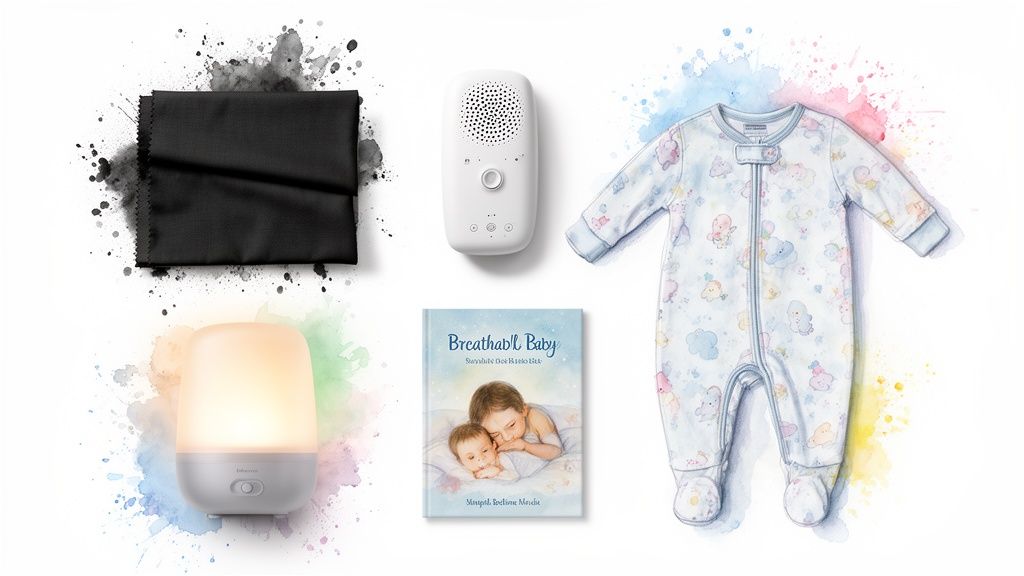
- Embrace the Darkness: Get yourself some real-deal blackout curtains. We're talking "can't see your hand in front of your face" dark. This is huge for promoting melatonin, the sleepy hormone that tells their body it's time for rest.
- Bring on the White Noise: A white noise machine running continuously can be a total game-changer. It creates a low, rumbly sound that's surprisingly similar to the womb, and it does an amazing job of drowning out all those sudden household noises—the doorbell, the dog barking, the older sibling dropping a mountain of LEGOs.
- Keep It Cool: A baby's room should ideally be between 68 and 72 degrees Fahrenheit (20-22 degrees Celsius). A room that’s too warm isn't just uncomfortable; it can disrupt sleep and pose a safety risk.
The Magic of a Consistent Bedtime Routine
If you take away only one thing, let it be this: a consistent bedtime routine is your superpower. It’s so much more than just a checklist of things to do. It’s a powerful sequence of calming, predictable steps that signal to your baby’s body and mind, "Okay, sleep is coming next."
That predictability is a huge comfort to them, especially during a regression when everything else feels a bit chaotic. Your routine doesn't need to be long or complicated—consistency is what matters, not complexity.
A great routine is a buffer against the chaos of developmental leaps. It’s the one part of the day your baby can always count on, which helps them relax and feel secure enough to let go of the day and drift off to sleep.
A simple, effective wind-down could look something like this:
- Warm Bath: A nice, soothing bath helps relax those little muscles.
- PJs & Sleep Sack: Time to get cozy in their sleepwear.
- Final Feed: Offer a top-off feed in a dimly lit, quiet space.
- Story & Cuddle: A quick book or a soft lullaby is the perfect ending.
- Into the Crib: Lay them down drowsy but still awake, share a loving "goodnight," and slip out.
Dressing For Dreamland With Breathable Comfort
The final piece of your perfect sleep puzzle is what your little one is actually wearing. Comfort is king. A baby who is too hot, too cold, or bugged by scratchy fabric is a baby who is not going to sleep well. It's as simple as that.
This is where the right fabric can make all the difference. Bamboo viscose is a fantastic choice for sleepwear because it's a natural thermoregulator. This means the fabric is smart—it helps keep your baby's body at a stable, comfortable temperature by wicking moisture away and letting their skin breathe. No more waking up a sweaty, overheated mess or getting chilly in the middle of the night.
And for babies with sensitive or eczema-prone skin, the buttery-soft, hypoallergenic feel of bamboo is a dream. It’s incredibly gentle and non-irritating. When you choose Oeko-Tex® certified sleepwear, like the cozy PJs and sleep bags from Little Venture Co., you get that extra peace of mind knowing the fabric touching their skin is totally free of harmful stuff. By wrapping them in something so breathable, safe, and soothing, you’re setting the stage for deeper, more restorative sleep.
A Few More Questions On Your Mind?
When you’re up for the third time before midnight, your mind tends to race. It's totally normal to have a million questions swirling around. What's happening? Is this normal? Am I doing this right?
You're not alone. Let’s tackle some of the most common questions we hear from parents who are right there in the thick of it.
Will My Baby Hit Every Single Regression?
Nope, not necessarily. Think of these regressions less as mandatory stops and more like common landmarks on the developmental map. While the 4-month regression is pretty universal—it’s tied to a permanent shift in how babies sleep—the others can be a total wild card.
Some babies are just more sensitive to big changes. One little one might start crawling and barely miss a beat with their sleep, while another might decide to practice their new skill all night long for weeks. It really comes down to your baby’s unique personality.
How Can I Tell if It’s a Regression or Sickness?
This is a big one, and it’s where your parental gut instincts are your best friend. A sleep regression is almost always tied to your baby mastering a new skill. They’ll likely be wide-eyed and ready to party in the crib, but seem perfectly happy and healthy during the day.
Sickness, on the other hand, usually brings along some physical clues.
Be on the lookout for:
- Fever
- A cough or stuffy nose
- Not wanting to eat as much as usual
- Being extra sleepy, fussy, or just not interested in playing
- Vomiting or diarrhea
If you see these kinds of physical symptoms popping up with the sleep struggles, it’s a good idea to give your pediatrician a call. When in doubt, always check it out.
Can I Sleep Train During a Regression?
Honestly, most sleep experts would tell you to hold off. Starting a formal sleep training plan right when your baby is already dealing with a major developmental leap can be just too much for everyone involved.
But that doesn't mean you should throw your hands up and abandon all hope! In fact, this is the time to lean hard into your existing routines.
Instead of starting a whole new training method, focus on being as consistent as you can. Stick to your calming bedtime routine, make the room a perfect little sleep haven, and offer lots of gentle comfort. You’re reinforcing good habits without adding more stress to the mix.
Once the storm has passed (usually in a few weeks), you can take a breath and decide if a more structured sleep plan is the right next step for your family.
When Should I Call a Doctor About Sleep Issues?
While the baby sleep regression stages are a totally normal part of growing up, there are definitely times when calling in a professional is the right move. Your peace of mind is so important.
Give your doctor's office a ring if:
- The sleep problems come with signs of illness, like a fever that won't go away, trouble feeding, or if your baby seems to be in pain.
- The regression drags on for more than six weeks with no end in sight.
- You're worried about their development in other areas or notice they've lost a skill.
- The lack of sleep is taking a serious toll on your own mental or physical health. You can't be the best parent you can be when you're running on empty.
Trust yourself. You know your baby better than anyone. A quick call can give you the answers and reassurance you need to get through this.
Getting through each new phase is a marathon, not a sprint, and keeping your little one comfortable is step one. Wrapping them in the soft, breathable comfort of Little Venture Co.'s bamboo sleepwear helps create a cozy sleep space by keeping their temperature just right all night long. Give your baby (and yourself!) the gift of better sleep by visiting Little Venture Co. today.