

Potty Training Essentials: A Grace-Filled Guide for Parents
Somewhere in your house right now, there's probably a tiny person who suddenly wants privacy in the bathroom, announces when they've peed after the fact, or follows you in and studies the toilet like it holds ancient secrets. And you're wondering, Is this it? Is it time?
That moment can feel oddly tender. You're proud. You're nervous. You're already imagining accidents on the rug, extra laundry, and the possibility that you'll say the wrong thing and make the whole process harder than it needs to be.
If that's where you are, take a breath. Potty training doesn't have to become a tense family project. It can be a gentle milestone, one more little venture in your child's growing-up story. It won't be perfectly neat, and it probably won't be linear, but it can still be peaceful.
What helps most isn't buying every gadget on the shelf. It's learning what your child needs, choosing a few safe and practical tools, and responding with patience when the first days get messy. For many Christian parents, it also helps to remember that growth rarely happens on a forced schedule. Children mature in God's timing, and our role is to guide, not rush.
A New Little Venture Begins
You notice it in small ways first. Your toddler hides behind the chair before a bowel movement. They tug at a wet diaper and want it changed right away. They point to the bathroom when you go in. Maybe they even sit on a little potty once, fully clothed, looking very serious about the whole thing.
That's often how potty training begins. Not with a grand plan, but with little signs that your child is waking up to their own body and routines.
I remember how easy it was to turn those signs into pressure. If a child shows interest, surely you should begin immediately. If another child their age is already trained, maybe you're behind. Those thoughts come fast, especially when family members ask whether your little one is “done with diapers yet.”
But children aren't machines. They aren't checking off milestones to keep adults comfortable. Potty learning asks for body awareness, communication, motor skills, and emotional readiness all at once. That's a lot for a toddler.
Potty training goes better when a child feels safe, not scrutinized.
A grace-filled approach starts there. You're not trying to win a race. You're helping your child learn a new life skill with dignity.
What parents often feel in this season
A lot of us carry two emotions at the same time:
- Hope: You can see your child growing and becoming more independent.
- Worry: You don't want to start too soon or create a struggle.
- Fatigue: Diapers are expensive and exhausting, and you may be very ready to move on.
- Tenderness: This is one of those bittersweet milestones that reminds you your baby isn't quite a baby anymore.
All of that is normal. You don't need to talk yourself out of your feelings to be a calm parent. You just need a simple path forward, a little wisdom, and enough room for mistakes.
Preparing Your Heart and Home for Success
Before you buy gear, it helps to settle one important question. Is your child ready, and are you?
This matters more than many parents realize. Data shared by ParentData's potty training advice found that parents who begin training between ages 3 and 3.5 see the process completed in as little as nine days, whereas those who start before 18 months typically require approximately 12 weeks. That doesn't mean later is always better for every child. It does mean readiness changes the experience.
Readiness is more than age
A child can be curious about the potty and still not be ready to use it consistently. Look for a cluster of signs instead of one exciting moment.
Helpful signs often include:
- Body awareness: Your child seems to notice when they're wet or about to go.
- Motor skills: They can walk well, sit down steadily, and start helping with pants.
- Communication: They can tell you something simple like “pee,” “poop,” or “potty.”
- Emotional openness: They don't melt down every time the topic comes up.
- Routine predictability: Their bathroom patterns are becoming easier to observe.
The parent side matters too. If your week is full of travel, illness, a move, a new baby, or constant schedule changes, waiting can be wise. Potty learning asks for attention and calm repetition.
Prepare your heart first
Some of the best potty training essentials aren't things you order online.
- Patience: Accidents aren't betrayal. They're information.
- Consistency: Children learn faster when your response stays steady.
- Calm language: Matter-of-fact words help more than lectures.
- Prayer: Ask God for gentleness, endurance, and the ability to see your child clearly.
On hard days, a short quiet moment can reset your whole tone. If you need that kind of encouragement in motherhood, this devotional for new moms is a sweet reminder that God meets us in ordinary, tiring work too.
Practical rule: Don't treat potty training like a deadline. Treat it like a conversation between your child's development and your family's capacity.
Get the environment ready
A prepared home lowers stress quickly.
Try these simple setup steps:
- Pick one bathroom first. Familiarity helps.
- Place the potty or stool where your child can reach it easily.
- Keep spare clothes nearby. You don't want to hunt during cleanup.
- Protect a few surfaces if needed. This helps you stay relaxed.
- Talk about the process before you begin. Short, cheerful explanations are enough.
When your heart is steady and your home is simple, the first days feel much less chaotic.
Your Core Potty Training Essentials Toolkit
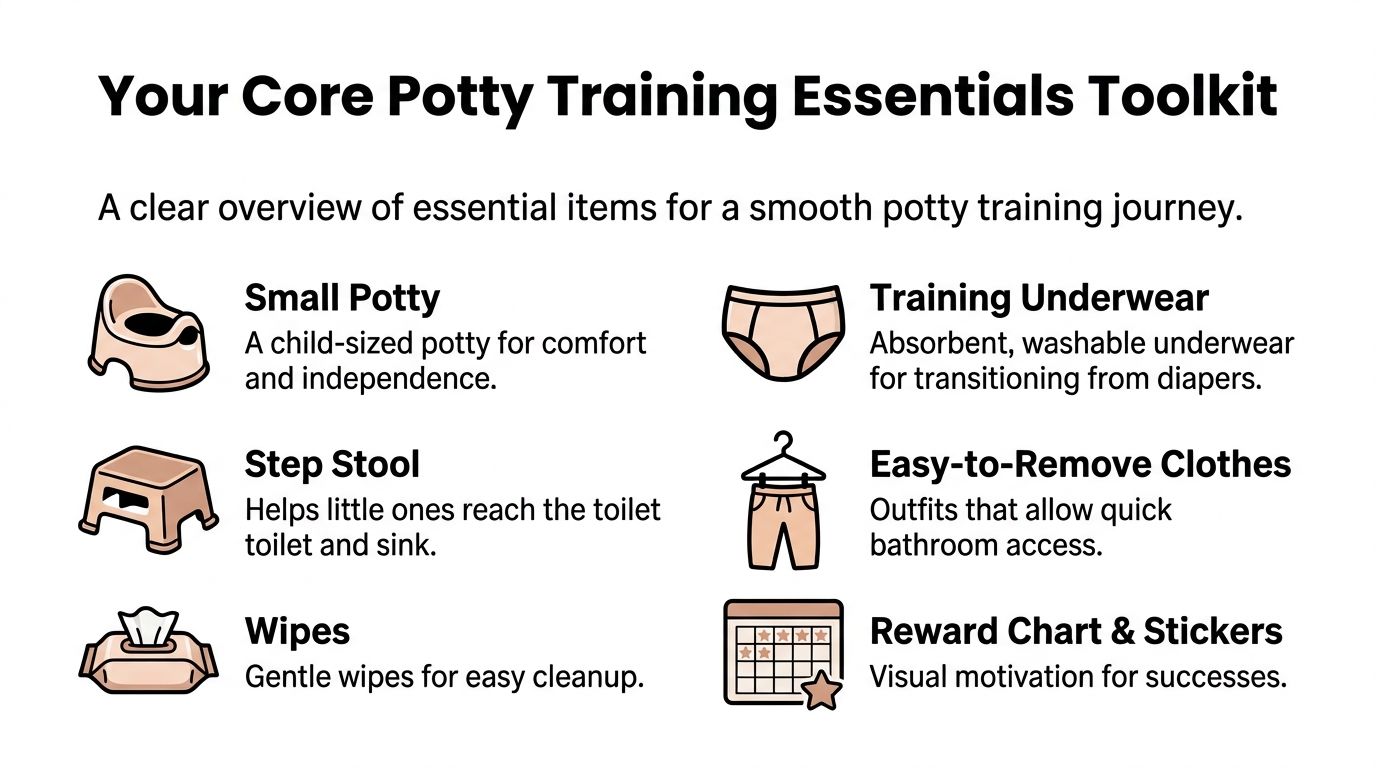
You don't need a mountain of supplies. Most families do best with a small set of tools that support independence, comfort, and easy cleanup.
The main event
Start with the actual potty setup. This is the center of your potty training essentials list.
- A child-sized potty chair: Helpful for toddlers who want quick access and a smaller seat.
- A toilet seat reducer: Good if you want your child using the regular toilet from the start.
- A stable step stool: This helps with both toilet access and handwashing.
- A potty with supportive design: Parenting Science recommends using a toilet seat adapter, foot stool, or potty chair with a high back for ergonomic stability, and suggests limiting time on the potty chair to five minutes to avoid frustration in its potty training techniques guide.
A lot of confusion comes from thinking you have to choose the perfect system. You don't. You need one setup your child can use safely and consistently.
The wardrobe shift
Clothing can subtly make potty training easier or much harder.
Look for:
- Easy-on, easy-off pants: Elastic waists are your friend.
- Simple daytime outfits: Avoid overalls, tricky snaps, and complicated layers.
- Training underwear: Keep several pairs ready for practice days.
- Extra socks and bottoms: Small misses often affect more than one item.
If you want another parent-friendly checklist, you can discover potty training essentials in a way that helps you compare the basics without getting lost in unnecessary extras.
A visual routine can help too, especially for toddlers who love predictability.
Cleanup and hygiene crew
This category matters because cleanup affects your mood. If cleanup is simple, you're more likely to stay calm.
Keep these nearby:
- Gentle wipes: Useful for hands, potty seats, and quick cleanup.
- A small basket of cleaning cloths: Easy to grab without leaving your child alone.
- Waterproof pads or mats: Handy for couches, beds, or car seats.
- A wet bag or washable laundry bag: Especially useful for soiled clothes.
On-the-go gear
Leaving the house can feel intimidating at first. A few practical items make outings possible.
Consider packing:
- A change of clothes: Top, bottom, underwear, and socks.
- A compact wet bag: For storing accidents discreetly.
- Travel wipes and hand sanitizer: Helpful in public restrooms.
- A portable potty option or familiar reducer seat: Some children do better with consistency away from home.
You're building a toolkit, not a shrine to potty training. If an item makes daily life easier, keep it. If it adds clutter and stress, skip it.
How to Choose Safe and Gentle Gear
A potty seat can be cute and still be the wrong choice for your family. Consequently, parents often get overwhelmed. The better question isn't “What's popular?” It's “What is safe, easy to clean, and comfortable for my child to use again tomorrow?”
Materials matter
Children touch these items with bare skin, often multiple times a day. That's one reason material quality deserves more attention in potty training essentials conversations.
If you're shopping for training underwear, wipes-friendly cloths, seat covers, or bathroom textiles, look for options that feel soft, wash well, and are clearly made with child safety in mind. Many families prefer OEKO-TEX Standard 100 certified fabrics because that certification signals the material has been tested for harmful substances.
That same mindset can guide other choices too:
- Choose smooth surfaces: They're easier to sanitize.
- Skip rough seams or scratchy fabrics: Sensitive children notice quickly.
- Check grip and stability: Slipping creates fear fast.
- Favor durable construction: Wobbly gear can undo confidence.
If sensitive skin is already part of your daily life, this guide on the best fabric for sensitive skin offers helpful principles you can apply to potty training clothing and soft goods too.
Safe gear should lower friction, not create new problems.
Standalone potty vs seat reducer
Both can work well. The right choice depends on your child's size, confidence, and your bathroom layout.
| Feature | Standalone Potty Chair | Toilet Seat Reducer |
|---|---|---|
| Height | Low to the ground and easy for toddlers to access | Requires climbing or help unless paired with a stool |
| Portability | Can move from room to room if needed | Usually stays in the bathroom |
| Cleanup | Needs emptying and washing after use | Less direct cleanup in the bowl, but seat still needs wiping |
| Familiarity | Feels child-sized and less intimidating | Builds comfort with the regular toilet |
| Space | Takes up floor space | Smaller footprint overall |
Some children like the control of a small potty. Others prefer copying parents on the big toilet. Neither choice is morally superior. You're just matching tools to temperament.
A note for cloth diaper families
This part gets skipped in many guides, but it shouldn't. A Bladder & Bowel UK resource highlights an underserved issue, noting that a 2024 study found 38% of parents using cloth diapers are confused about when to switch to training pants and how to handle accidents without ruining the fabric.
If that's you, keep it simple:
- Use a few designated training pairs first: Don't convert your whole stash at once.
- Add waterproof layers where needed: Especially for naps, car rides, or upholstered furniture.
- Expect more laundry for a while: That doesn't mean you're doing it wrong.
- Watch your child's response to wetness: Some cloth diapered children notice the sensation quickly and benefit from that feedback.
Grace-filled parenting includes wise stewardship. Safe, washable, thoughtfully made gear can support both your values and your child's comfort.
Grace in Action Navigating the First Days
Monday morning arrives. Your toddler wakes up cheerful, sits on the potty for ten seconds, then has an accident on the kitchen floor five minutes later. By lunch, you may wonder whether you started too soon or whether you are doing every part of this wrong.
You probably are not.
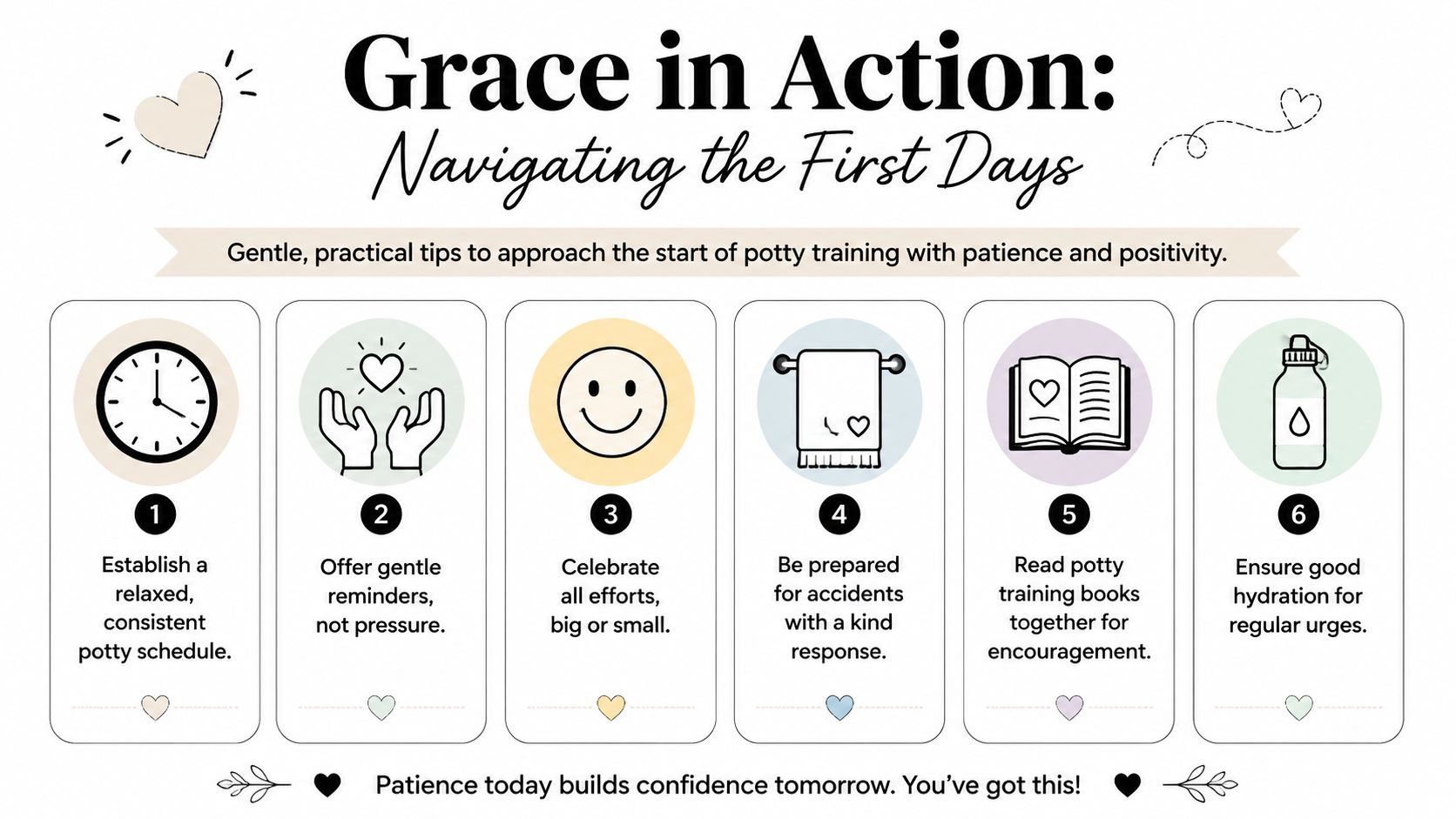
The first days often feel uneven because your child is learning several skills at once. They are noticing body signals, stopping play, getting to the potty, pulling clothes down, and releasing at the right time. That is a lot for a small person. A calm routine helps because it breaks one big task into smaller, learnable pieces.
A simple way to begin
Offer potty time at natural pauses in the day, such as after waking, before getting in the car, or before bath. Keep the invitation light and predictable. A potty sit should feel like practice, not a test.
These early habits help:
- Keep potty sits short. A minute or two is usually enough.
- Use clear words for what is happening. “Your body is telling you it may need to pee.”
- Praise communication. If your child says, “I need to go,” that is progress, even if they do not make it in time.
- Stay matter-of-fact about accidents. Clean up, remind, and continue with the day.
That steady response teaches safety. Your child learns, “I can tell the truth here. I can keep learning here.”
For Christian families, this is one small place to practice grace in plain clothes. We correct, but we do not shame. We guide, and we remember that patient growth is part of how God often works in children and in parents too.
When to switch to underwear
Big-kid underwear feels exciting because it marks a new stage. Still, underwear usually works best after your child has shown repeated success getting pee into the potty with less help. If you switch too early, underwear can feel a lot like a diaper to some toddlers, and the message gets muddy.
A helpful question is not, “Do they look cute in underwear?” It is, “Are they starting to connect the feeling, the words, and the trip to the potty?”
Wait for a pattern of success. One strong afternoon can be encouraging, but several successful tries over time give you a sturdier starting point.
How to respond when things go sideways
Accidents are information. They may tell you your child waited too long, got distracted, needed easier clothing, or had an off day.
Try language like this:
- “Pee goes in the potty.” Short and clear.
- “Your body is still learning.” Reassuring and honest.
- “Let's get dry clothes.” Calm and practical.
- “Next time, tell me sooner if you can.” Gentle coaching.
Children often borrow our tone before they can follow our instructions. If we sound rattled, they feel the pressure. If we stay steady, they can focus on learning instead of fearing failure.
And yes, the laundry pile may grow for a little while. If you need help with cleanup, this guide on how to remove stains from baby clothes can make accident days feel more manageable.
Pack a potty training go-bag
The first outings are easier when you prepare for small messes ahead of time. It works like keeping a first-aid kit in the car. You hope you will not need it, but everyone relaxes when it is there.
Keep a small bag with:
- A full outfit change. Include socks and underwear.
- A wet bag. Useful for damp or soiled clothes.
- Wipes and tissues. Helpful for quick cleanup.
- A familiar seat option if your child needs it. Public bathrooms can feel loud and overwhelming.
- A small hand towel. Handy for drips, wet seats, or hand drying.
One more gentle reminder matters here. If your child is spending longer stretches in training underwear, choose breathable, soft fabrics that are kind to irritated skin, and wash them with simple products your child tolerates well. Families who care about safer materials often look for OEKO-TEX certified textiles in the layers closest to the body. That choice will not potty train a child for you, but it can remove one source of discomfort during an already demanding week.
Slow progress still counts. A peaceful first week is not one with no accidents. It is one where your child stays safe, your expectations stay clear, and your home keeps making room for grace.
Celebrating Milestones with Faith and Joy
Potty training is about more than toileting. It's one of those small, holy pictures of growth. Your child is learning to notice their body, ask for help, practice self-control, and recover from mistakes. Those are life skills, not just bathroom skills.
That's why celebration doesn't have to center on sugar or prizes alone. Joy can look quieter and deeper.
Meaningful ways to celebrate
- Offer words that build identity: “You're learning,” “You listened to your body,” or “You kept trying.”
- Mark the moment with connection: A happy dance, a phone call to a grandparent, or a special bedtime prayer.
- Choose simple rewards: Extra story time, a park visit, or picking the family worship song in the car.
- Honor the child, not just the outcome: Celebrate courage, communication, and perseverance.
For families shaped by faith, this milestone can become a gentle reminder that growth often comes little by little. God is patient with us. We can be patient with our children.
You don't need to force every moment into a lesson. But you can thank the Lord for helping your child mature, and for carrying you through the messier days too. Sometimes the sweetest victories are the ordinary ones. A dry pair of underwear, a child who runs to the potty in time, a parent who stayed calm when they wanted to cry.
Those moments count.
Your Potty Training Questions Answered
What if my child regresses after doing well
Regression can happen after stress, travel, illness, schedule changes, or because learning isn't always straight. Go back to a calmer, simpler version of what was working before. Reduce pressure, rebuild routine, and keep your language steady.
If your child starts resisting, that doesn't automatically mean you failed. It may just mean they need more support and less urgency.
What if my child is afraid of the potty or toilet
Fear is common. The sound of flushing, the height of the toilet, the feeling of sitting still, or even the bathroom itself can feel big to a toddler. Let your child explore the potty without pressure first. Sit them on it clothed, read books nearby, or let them watch you model calm bathroom habits.
A stool for stable feet and a snug seat can make the whole setup feel safer.
How can I support a child with sensory sensitivities or developmental delays
Children with different developmental needs often need more individualized support, not more pressure. HealthyChildren.org recommends step-by-step training with visual aids and sensory-friendly essentials like weighted potty seats or non-slip stools with handles for children with special needs or intellectual disabilities in its guidance for toilet training children with special needs.
That may look like:
- Using picture cards: Show each step in order.
- Keeping the routine very consistent: Same bathroom, same words, same sequence.
- Reducing sensory stress: Softer lighting, less noise, more physical stability.
- Watching skin comfort closely: Irritation can make potty learning harder, especially if accidents increase. If that's a concern in your home, this guide on how to prevent diaper rash may help with skin care during the transition.
How do I know if we should pause
If every potty invitation ends in panic, screaming, or a power struggle, a short pause may be wise. Pausing isn't quitting. It's choosing peace over pressure. Return later with the same confidence that your child can learn when their body and heart are more ready.
If you're walking through toddler milestones and want clothing that's soft, thoughtfully made, and gentle on sensitive skin, take a look at Little Venture Co.. Their faith-inspired children's wear is crafted with comfort and safety in mind, including Oeko-Tex® Standard 100 certified materials that support little ones through all the growing, learning, and everyday messes of family life.