

Pajamas with Snaps Made Simple for New Parents
At 3 a.m., a diaper change can feel like a tiny engineering project. Your baby is half asleep, you're working with one hand, and the pajamas that seemed adorable at bedtime suddenly have a row of stubborn fasteners between you and a clean diaper.
That's where pajamas with snaps can earn their place. They're not automatically better than zippers, and they aren't completely trouble-free. Their value depends on where the snaps sit, how securely they're attached, how they feel against skin, and how the garment holds up after washing.

This guide keeps the decision practical. You'll learn what snap pajamas are, why families still choose them, when zippers may be easier, and how to perform simple checks at home before trusting a garment for sleep. You'll also find a closer look at sensitive skin, since a closure that saves time can still cause rubbing if it's poorly placed.
For broader ideas about making changes simpler, browse this guide to quick-change baby clothing. And if you're shopping for comfortable loungewear for yourself during those long nights, SwagglyLife Home & Fashion loungewear offers a useful adult-focused option.
A Quick Look at Pajamas With Snaps for Busy Parents
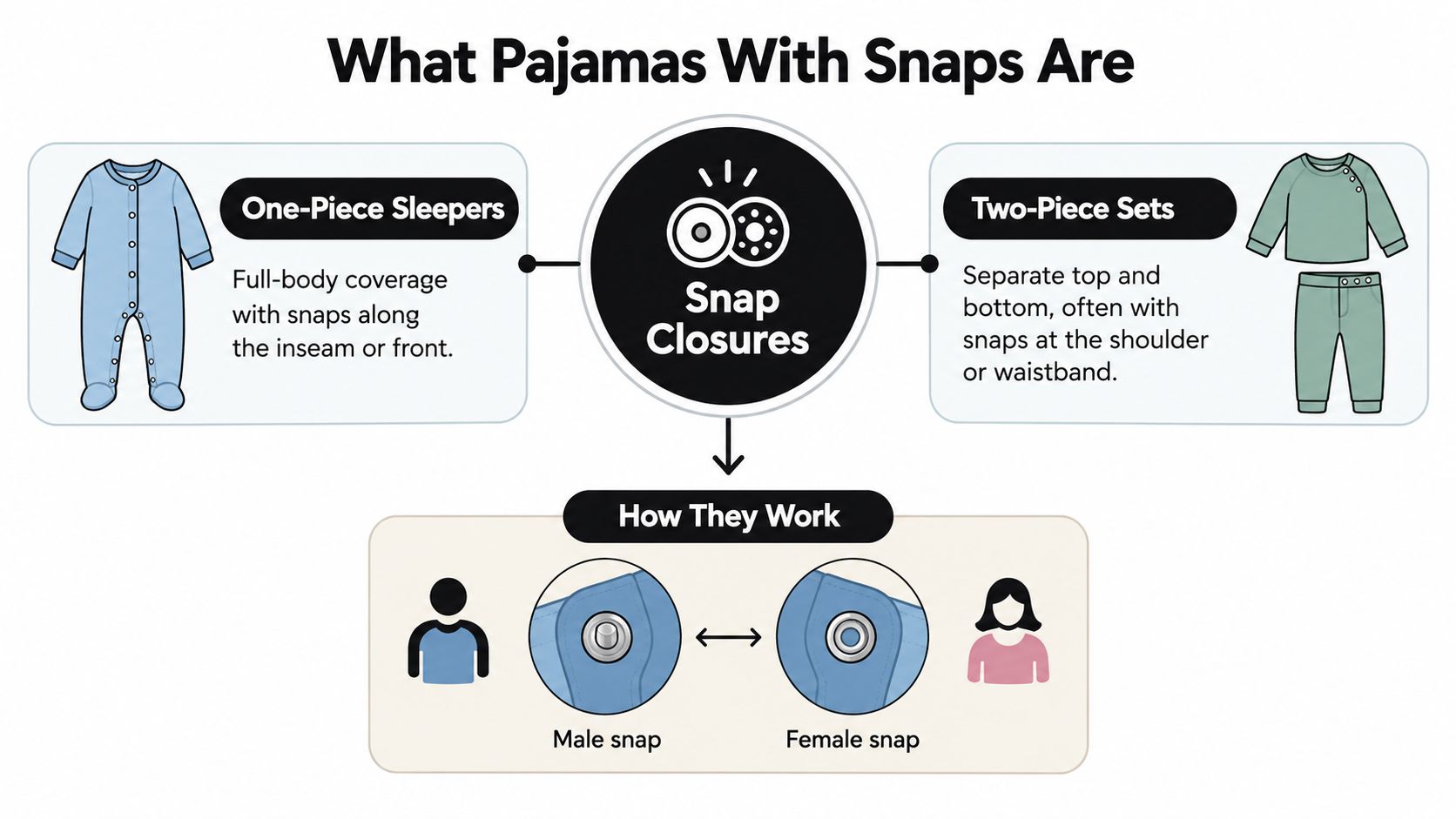
Pajamas with snaps are baby sleepwear pieces that use small press-fasteners instead of, or alongside, a zipper. You'll commonly find them on one-piece sleepers, bodysuit-style pajamas, and some two-piece designs. The snaps may run along the inseam, across the front, or near a shoulder, depending on how the garment is meant to open.
The appeal is easy to understand during a nighttime change. You can open only the lower part of a sleeper, keep the baby's upper body covered, and reach the diaper without pulling the entire garment over the head. That partial opening can be especially helpful when the room is cool or your baby wakes easily.
But convenience shouldn't be the only test. A snap can pop open when the fabric is stretched, press against the skin if it's positioned badly, or loosen after repeated laundering. Canadian public-health guidance tells parents to check sleepwear regularly for loose buttons, snaps, zipper pulls, and other small parts that could become choking hazards, and to repair loose snaps promptly. Read the Canadian safe-sleep clothing guidance for the complete advice.
The simple rule: choose the closure that makes changes calmer, then inspect the garment as carefully as you would any other baby product.
Snap pajamas can suit a newborn who needs frequent diaper changes, a caregiver who prefers targeted access, or a family that values flexible opening options. A zipper may suit a wiggly older baby who turns every dressing session into a wrestling match. The right choice isn't about winning a snap-versus-zipper argument. It's about matching the garment's construction to your baby's movement, skin, and bedtime routine.
What Pajamas With Snaps Are and How They Work
Think of snaps as a small toolkit built into the garment. Each fastener has two matching sides. One side contains the socket, the other contains the stud, and pressing them together closes the opening. Pulling them apart releases the fabric without requiring a long, continuous motion.
On a one-piece sleeper, snaps may travel from the front down one leg, across both legs, or along the inseam. A front opening gives broad access, while an inseam layout can let you change a diaper without exposing as much of the baby's chest. Some garments also use snaps at the shoulder to make it easier to widen the neck opening.
Two-piece pajamas work differently. The top and bottom separate, so snaps may appear at a shoulder, along a short placket, or in a bodysuit layer beneath the top. The placement tells you what the designer prioritized: full access, a wider neck, or a quick lower-body opening.
The modern infant sleeper grew from earlier nightwear designs. A historical account of the blanket sleeper describes the early 1950s as a foundational period when features such as synthetic fabrics, slip-resistant soles, toe caps, rib-knit cuffs, and zipper closures paired with snap tabs became common in the recognizable one-piece format used in major markets. That history helps explain why snaps became functional architecture, not merely decoration. They supported access for changing and helped secure a garment designed for active infants. See the historical overview of the blanket sleeper for that development.
When you compare snap pajamas with baby zipper sleepers, look at the opening pattern rather than the fastener name alone. A well-designed snap sleeper can be quick to open in sections. A well-designed zipper sleeper can offer a smooth, continuous opening. Both depend on a comfortable fit and hardware that stays away from the baby's face, neck, and moving limbs.
Why Parents Love and Sometimes Skip Snap Pajamas
A snap closure can feel brilliant during one change and frustrating during the next. The difference usually comes down to the baby's age, the caregiver's coordination, and the quality of the garment.
The moments when snaps help
Snaps offer targeted access. You can undo the lower fasteners, change the diaper, and leave the rest of the sleeper in place. That can preserve warmth and reduce the amount of fabric moving around a sleepy baby.
They also give caregivers control over the opening. If a baby dislikes having clothing pulled over the head, shoulder or front snaps can make dressing less startling. A two-piece outfit with a snap-access top may also be convenient when you want to adjust one layer without removing everything.
A well-placed row can feel secure once closed. Unlike hook-and-loop fasteners, snaps don't rely on a strip that may collect lint or catch on other fabrics. Still, the benefit comes from sound construction, not from the word “snap” on the label.
The moments when zippers win
Tiny snaps require alignment. With cold hands, dim lighting, or a baby who kicks constantly, matching each socket and stud can take patience. One missed fastener may leave the fabric twisted, while a misaligned snap can create a pressure point.
Zippers can be faster for a full change because one pull opens a longer section. They can also be simpler for toddlers who won't stay still. Their drawbacks are different, though. A zipper may rub if the guard is poorly designed, and caregivers need to check that skin or fabric hasn't caught in the track.
| Nighttime priority | Snap pajamas may fit | A zipper may fit |
|---|---|---|
| Frequent diaper access | You want to open only the lower section | You prefer one continuous opening |
| A baby who dislikes head dressing | Shoulder or front snaps widen the opening | A full-length design may still work |
| A very active child | Individual snaps may take longer to align | One pull may make dressing simpler |
| Adjustable layering | Partial opening gives you more control | Full opening is convenient for removal |
The practical answer may be to keep both styles available. Use snaps when partial access and warmth matter, and reach for a zipper when speed matters more than selective opening. Neither closure should be accepted without checking fit, seam quality, and hardware security.
Safety and Durability Checks Every Parent Should Know
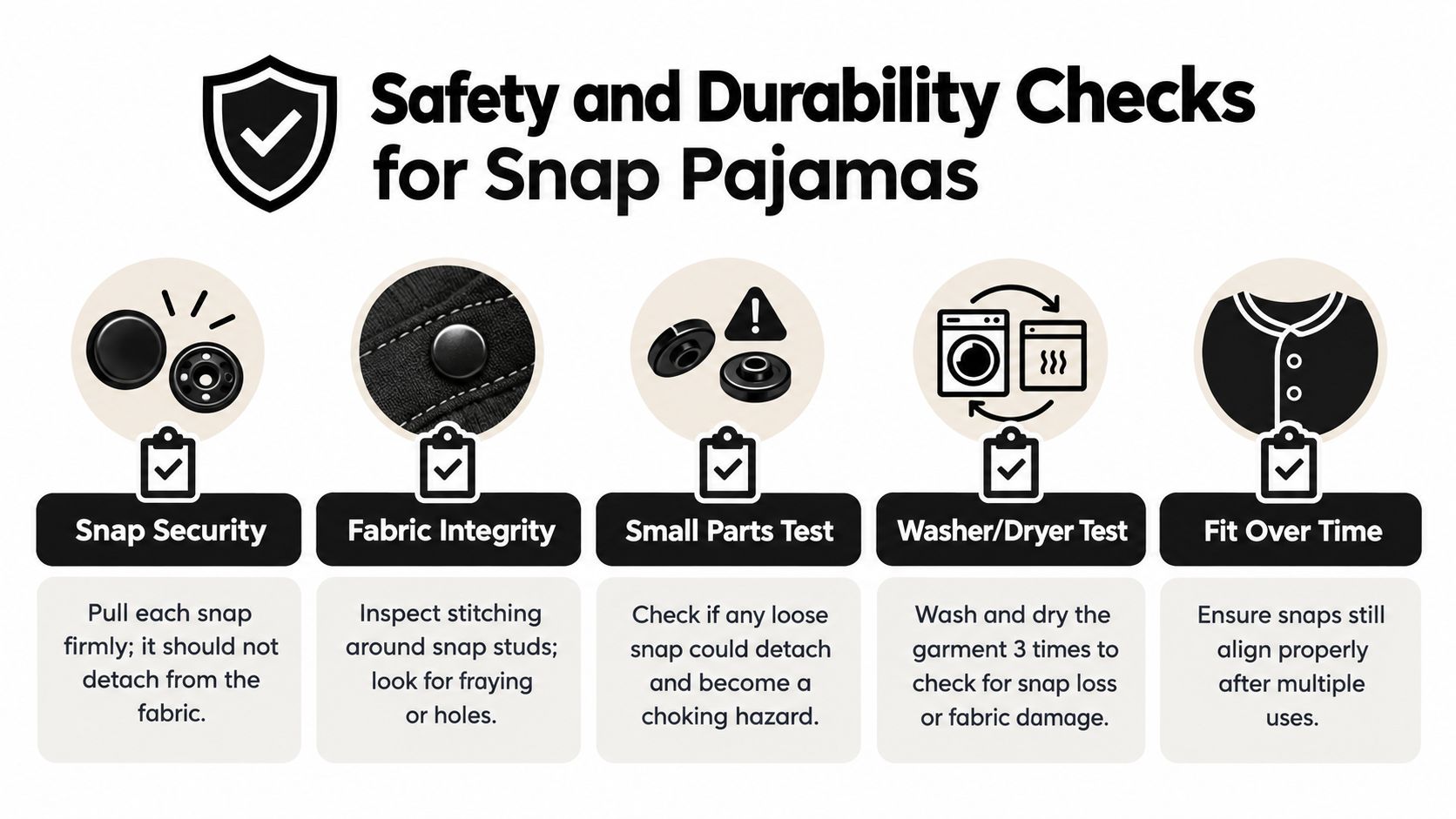
A loose snap is not a minor annoyance. It can detach from the garment and become a small part that a young child could place in their mouth. Canadian health guidance specifically tells parents to inspect sleepwear for loose snaps and repair them immediately, while its broader sleepwear guidance emphasizes secure attachment, smooth hardware, and stitching that doesn't unravel.
The U.S. Consumer Product Safety Commission also treats fasteners as part of the garment's functional design. For infant tight-fitting garments, fasteners and plackets should stay integral to the construction and avoid protrusions or sharp edges. The CPSC's guidance allows snap-closed pockets when the opening remains bound close to the body, and describes a maximum extension of 1/4 inch from the attachment point for certain fasteners and plackets. Review the CPSC guidance for infant tight-fitting garments when evaluating product construction.
A gentle home inspection
Before the first wear, and after washing, run your fingers over every closure.
- Tug each snap gently. Hold the fabric near the fastener and apply firm, controlled pressure. The snap shouldn't detach, pull the fabric into a hole, or feel as if it's hanging by a few threads.
- Check the edges. Hardware should feel smooth. Don't use a garment with a sharp point, rough edge, or exposed piece that could scratch or press into skin.
- Study the stitching. Look for fraying, loose threads, stretched holes, or fabric separating around the snap. Canadian guidance warns that loose threads can wrap around fingers, limbs, or the neck.
- Close and reopen the row. The snaps should align naturally without forcing the fabric sideways. If one closure consistently resists, the garment may be poorly sized or warped.
- Inspect after laundry. Repeated washing can reveal weak attachment that wasn't obvious on the rack. Follow the care label and examine the garment once it's dry.
A durable snap should feel firmly attached, smooth against the hand, and easy to align without pulling the fabric out of shape.
If you prefer to avoid certain finishes or want to understand alternatives to treated sleepwear, explore this guide to flame-retardant-free pajamas. Whatever fabric or finish you choose, hardware inspection still matters.
How to Choose the Right Snap Pajamas for Your Baby
Start with the baby, not the closure. A soft snap sleeper won't be comfortable if the seams scratch, the label itches, or the fit leaves hardware pressing into the belly.
Sensitive skin needs a closer look because snaps create more contact points than covered zippers. Guidance from the Sleep Foundation on dressing children for sleep highlights the importance of comfortable sleepwear, while sensitive-skin considerations favor flat seams, tagless labels, and covered closures over style alone. A baby with eczema or frequent redness may respond better to a smooth fabric and protected hardware than to a particular closure category.
Bamboo viscose can be one option for families looking for a soft, lightweight fabric. This guide to bamboo pajamas for sensitive skin discusses why parents often consider that material, but you should still assess the finished garment, especially its seams, labels, and snap placement.
Look at the whole contact map
Lay the sleeper flat and identify every place that may touch your baby:
- neckline and shoulder
- snap placket
- inseam
- cuffs
- waistband
- foot area, if the sleeper has enclosed feet
A snap near the chin deserves extra caution. So does a closure that sits directly over a prominent belly fold or rubs at the diaper line. Covered hardware and a smooth placket reduce direct contact, while flat seams help prevent a small pressure point from becoming an all-night irritation.
Choose a snug but comfortable fit. Sleepwear shouldn't bunch around the face or leave enough extra fabric for the baby to slip into a loose opening. It also shouldn't strain across the snaps when your baby bends, kicks, or rolls. If the fasteners pull apart during ordinary movement, size or design is wrong even if the garment technically closes.
| Baby need | What to look for | Why it helps |
|---|---|---|
| Sensitive or easily irritated skin | Soft fabric, flat seams, tagless finish, covered snaps | Reduces rubbing and direct hardware contact |
| Frequent nighttime changes | Lower-body snap access and clear alignment | Lets you open the needed area without removing every layer |
| Warm sleeping space | Lightweight, breathable fabric and fewer layers | Helps avoid bulky clothing and trapped heat |
| Cooler conditions | Sleeper with appropriate coverage and comfortable cuffs | Keeps the garment in place without harsh pressure |
| Growing, active baby | Stretchy fabric and snaps that close without strain | Supports movement while preserving fit |
For metal versus plastic snaps, don't rely on the material name by itself. Touch the inside surface, check whether the hardware is covered, and watch your baby's skin after wearing the garment. A smooth plastic snap can still irritate if it presses, while a properly covered metal closure may remain comfortable. The placement and finish matter as much as the material.
Making Snap Pajamas Work Night After Night
A good nighttime routine turns snap pajamas from fiddly clothing into familiar equipment. Before dressing your baby, lay the sleeper flat with the inside facing up and the snaps already aligned in order. That small preparation keeps you from searching for matching pieces while a tired baby is kicking.
For a diaper change, open only the snaps you need. Keep one hand near your baby's hips, support the legs gently, and close each fastener without pulling the fabric sideways. In low light, a dim bedside lamp is safer and calmer than trying to work entirely by touch.
Wash according to the care label, avoid forcing a closure that has become stiff, and inspect the snaps once the garment is dry. Independent buying guidance also points to a practical concern parents often miss: snaps can pop open, misalign, or become a choking hazard when reinforcement is poor, so durability deserves attention alongside convenience. See the footed sleeper buying guide for that broader buying perspective.
Use this quick check before sleep:
- Fit: The fabric lies smoothly without strain or excess looseness.
- Placement: No snap presses against the chin, neck, or a sensitive fold.
- Security: Each fastener stays attached during a gentle tug.
- Comfort: Seams, labels, cuffs, and hardware leave no red marks.
- Routine: You can open and close the garment without twisting it.
If your baby becomes more active, a zipper may become easier for full changes. If partial access keeps your baby warmer and calmer, snaps may remain the better match. Little Venture Co. offers bamboo sleepwear, including two-piece pajamas and other baby and toddler clothing, with materials described as OEKO-TEX Standard 100 certified. Visit Little Venture Co. to explore soft sleepwear options and compare the closure, fabric, and fit details before your next purchase.