

How to Tell If Baby Is Too Hot: Signs, Causes, and Quick Actions
Figuring out if your baby is too hot can feel like a constant guessing game, especially in the middle of the night. But there's a simple trick that seasoned parents swear by: skip the hands and feet and go straight for the back of their neck or their tummy.
These spots give you a much more accurate sense of your baby's core body temperature. If their skin feels hot, sweaty, or clammy, they're probably too warm and it's time to help them cool down.
The Quickest Way to Check If Your Baby Is Too Hot
As a parent, keeping your little one comfortable and safe is priority number one. And since babies can't regulate their own body temperature very well yet, they're counting on us to get it just right. An overheated baby isn't just a fussy baby; it's a real safety concern.
So, how do you know for sure? The biggest mistake most new parents make is feeling their baby's hands or feet. A baby's circulatory system is still a work in progress, which means their little hands and feet often feel cool to the touch, even when the rest of their body is perfectly warm. This can give you a false sense of security.
Key Physical and Behavioral Signs
Instead of their hands and feet, get in the habit of doing a quick "neck check." Gently place the back of your hand on the nape of their neck, their back, or their chest. If they feel comfortably warm and dry, you're golden. If they feel hot and are starting to get sweaty or clammy, it's a sign they're overheating.
Beyond the neck check, keep an eye out for other clues:
- Flushed Skin: Are their cheeks looking extra rosy? A flushed face or chest can be a sign they're too warm.
- Rapid Breathing: Notice if their breathing seems faster or shallower than usual.
- Fussiness: Overheating can make a baby irritable, restless, and unable to settle down to sleep.
- Lethargy: This is a serious one. An unusually sleepy, floppy baby who is difficult to wake needs immediate attention.
This handy flowchart is perfect for those blurry-eyed, middle-of-the-night checks when you're second-guessing everything.
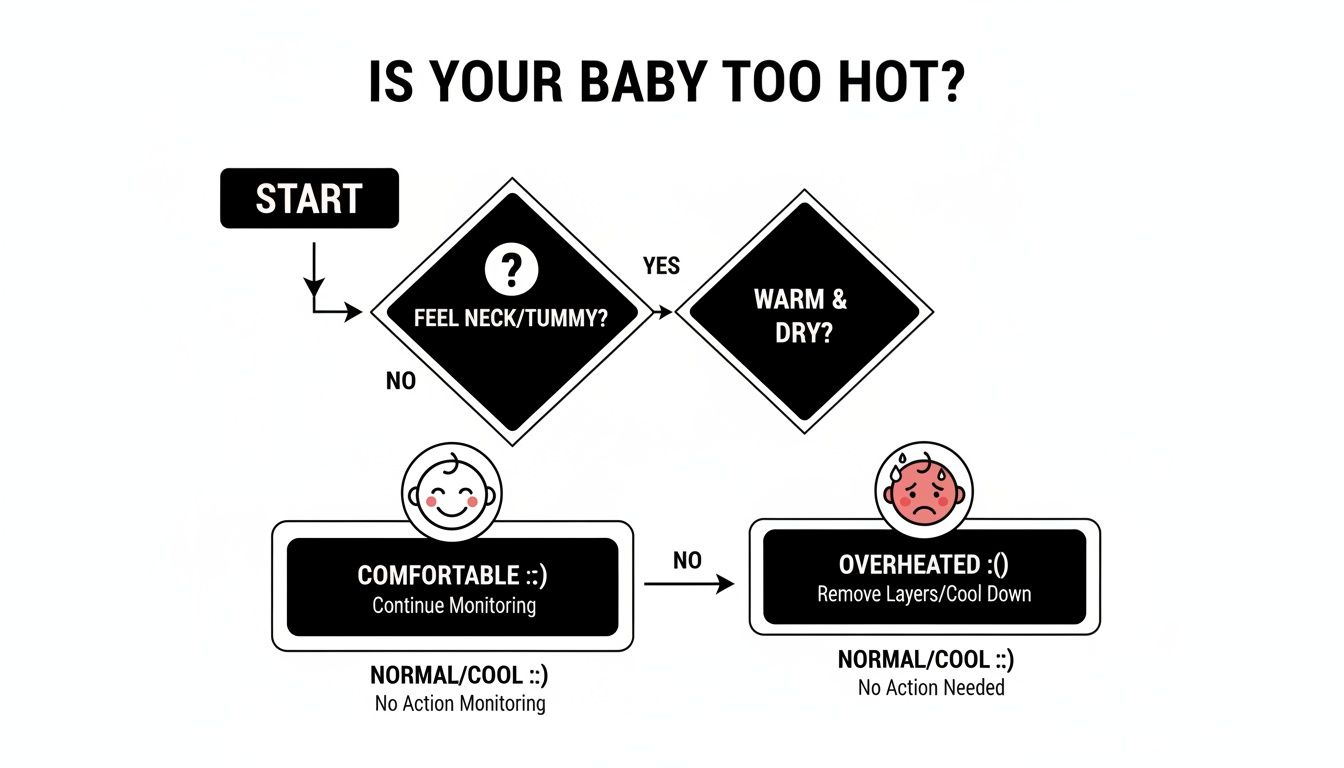
As the chart shows, it's pretty simple: a warm, dry neck means a happy baby. A hot, sweaty neck means it's time to cool things down.
For a quick at-a-glance comparison, this table breaks down what to look for.
Quick Check Signs Your Baby Is Too Hot
| Indicator | Comfortably Warm Baby | Overheating Baby |
|---|---|---|
| Skin Touch | Neck/tummy feels warm and dry | Neck/tummy feels hot, sweaty, or clammy |
| Skin Look | Normal skin tone | Flushed, red cheeks or chest |
| Breathing | Normal, steady rhythm | Faster or more shallow breathing |
| Behavior | Content, sleeping peacefully | Fussy, irritable, restless, or lethargic |
Remembering these key differences can help you quickly assess the situation and make adjustments.
Overdressing: A Common Culprit
More often than not, the cause of an overheating baby is simply too many layers. We all worry about our babies being cold, so we bundle them up, but it's easy to overdo it. A good rule of thumb from pediatricians is the "one extra layer" rule: dress your baby in one more layer than you would need to feel comfortable in the same room.
Parenting Tip: Trust your gut. If you feel a bit warm, your baby, who is likely wearing an extra layer, is probably feeling even warmer. It is always, always safer for a baby to be a little on the cool side than to be too hot.
The best way to prevent overheating in the first place is to create a safe sleep environment. That starts with getting the room temperature right. For a deep dive into the perfect nursery climate, check out our guide on the best temperature for baby sleep.
Creating a Safe and Comfortable Sleep Environment
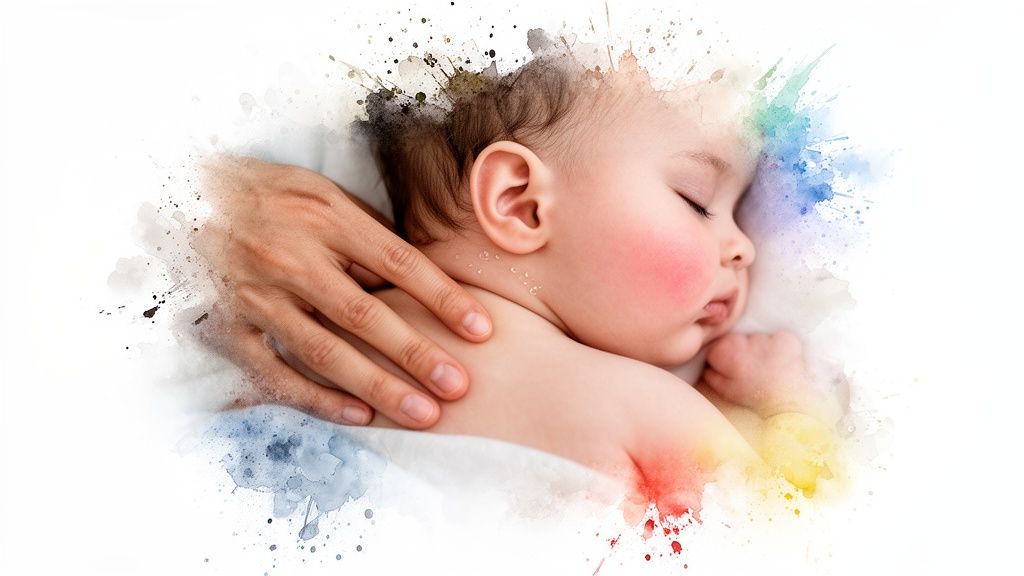
Getting the sleep space right is your first line of defense against your baby getting too hot. It’s all about creating a little haven where they can rest soundly without the risk of overheating.
While every baby is different, pediatric experts agree on a golden rule for nursery temperature: keep it between 68-72°F (20-22°C). This isn't just a random number; it's the sweet spot that helps support safe, restorative sleep.
The reason this is so critical is sobering. Research has consistently shown a link between overheating and an increased risk of SIDS, especially when the weather warms up. A Canadian study, for example, found that when outdoor temperatures hit 84°F (29°C), the risk of sudden infant death was 2.78 times higher compared to a mild 68°F (20°C) day.
Fine-Tuning Your Baby's Nursery
Beyond just setting the thermostat, a few simple tweaks to the nursery can make a world of difference. Your goal is a room that feels cool, calm, and has good airflow.
Start by looking at where the crib is. Does a patch of afternoon sun bake the mattress every day? That "warm spot" can make it tough for your baby to stay comfortable.
It’s always best to place the crib away from any direct heat sources. Be mindful of:
- Sunny windows, especially those that get intense morning or afternoon light.
- Radiators or heating vents that can blast warm air right at the crib.
- Portable space heaters—these should never be used in a baby’s room.
Parenting Tip: Blackout curtains are a game-changer. They don't just help with naps; they're fantastic at blocking solar heat and can keep the room several degrees cooler on a hot day.
If you don't have central air, keeping a room cool can be a challenge. You can find some practical tips for cooling a room without AC that might help.
Promoting Good Air Circulation
A stuffy room just feels hotter. Gentle air circulation helps regulate the temperature and creates a more breathable environment, which is another factor linked to safer sleep.
A ceiling fan on its lowest setting or an oscillating fan placed well away from the crib can work wonders. The key is to never point a fan directly at your baby, as that can make them too chilly. You want a gentle, indirect movement of air around the room, not a direct breeze.
Once you’ve set the stage with a cool, comfortable room, it's time to think about what your baby wears to bed. The right layers and fabrics are just as important as the number on the thermostat. You can dive deeper into this by checking out our guide on https://littleventureco.com/blogs/blog/what-is-a-sleep-sack.
Getting Your Baby's Sleepwear Just Right
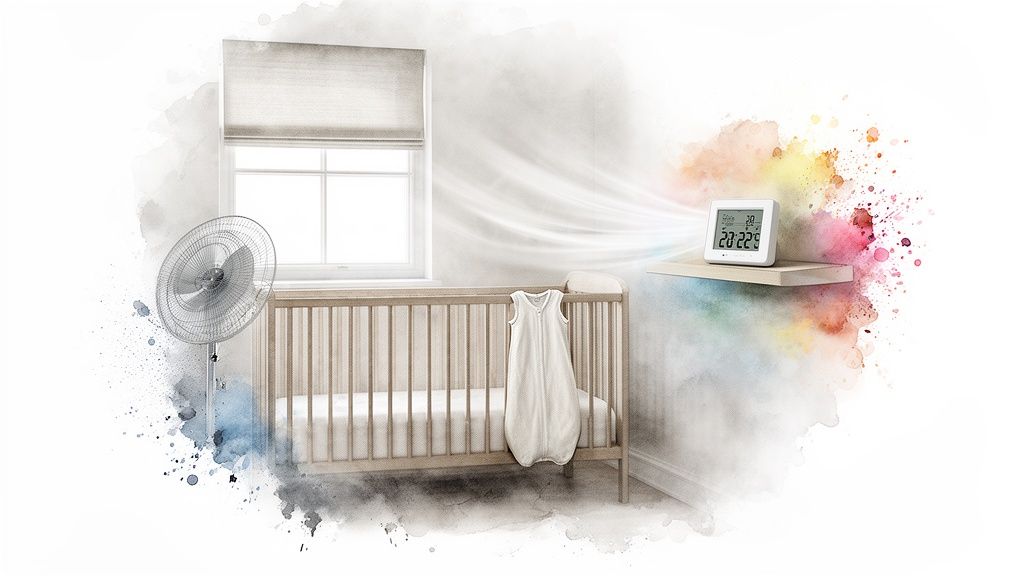
Figuring out what your baby should wear to sleep can feel like a nightly puzzle. You've dialed in the perfect room temperature, but the wrong outfit can completely undo all your hard work. The key is to think in layers and get familiar with a little concept called TOG.
TOG, or Thermal Overall Grade, sounds technical, but it’s just a simple way of measuring how warm a piece of fabric is. A lower TOG means the fabric is lighter and more breathable, while a higher TOG means it’s cozier and more insulated. Honestly, understanding this is a game-changer for taking the guesswork out of layering.
Understanding TOG Ratings and Layering
Think of TOG as your cheat sheet for matching pajamas to the temperature of your nursery. It helps you sidestep the super common mistake of overdressing your baby, which is one of the main reasons they get too hot.
Here’s a practical breakdown you can actually use:
- 0.5 TOG: This is your best friend for warm rooms, usually anywhere above 75°F (24°C). A 0.5 TOG sleep sack is often a single, feather-light layer—perfect over just a diaper or a short-sleeve bodysuit.
- 1.0 TOG: This is the sweet spot for most nurseries that hover in that ideal 68-72°F (20-22°C) range. A 1.0 TOG sleep sack with a long-sleeved bodysuit or light pajamas underneath is a pretty foolproof combo.
- 2.5 TOG: Save this one for colder rooms, especially when the temp dips below 68°F (20°C). It's a much thicker, quilted sleep sack that provides serious warmth, so a simple bodysuit underneath is often all you need.
Let’s say your nursery is a comfortable 71°F. A great setup would be a 1.0 TOG sleep sack over a lightweight, short-sleeve bodysuit. It’s just enough warmth to keep them cozy without trapping all that heat.
This system really does empower you to make confident calls based on your home's actual temperature, not just what the calendar says. If you're a visual person, our detailed article has a fantastic chart that shows you exactly how to dress baby for sleep.
Why the Fabric of Their Pajamas Matters
While TOG ratings are incredibly helpful, the material touching your baby's skin is just as important. A baby’s skin is so delicate, and they’re still figuring out how to regulate their own body temperature. This is why the right fabric can make all the difference.
Synthetic fabrics, like polyester fleece, can feel soft to the touch, but they often trap heat and moisture right against the skin. That's a recipe for an overheated, sweaty baby and can even lead to an uncomfortable heat rash. They just don't breathe.
This is where natural fibers truly shine. Materials like bamboo viscose are absolute superstars for baby sleepwear. Here’s why:
- Incredibly Breathable: Bamboo lets air flow freely, which helps excess body heat escape and keeps your baby's skin comfortable.
- Moisture-Wicking: It actively pulls sweat away from their body, preventing that sticky, clammy feeling that can cause irritation or even make them feel chilled later.
- Thermo-regulating: This is the magic part. Bamboo fabric naturally adapts to your baby’s body temperature, helping keep them cool when the room is warm and cozy when it gets a little chilly.
Choosing sleepwear made from a material like bamboo is a huge, proactive step in keeping your baby comfortable and safe from the get-go.
The Importance of Safety-Certified Materials
Beyond just breathability, it’s really important to think about what chemicals might be in the fabrics your baby is wearing for hours every single night. So many textiles are treated with dyes and finishes that can be harsh on that new, sensitive skin.
That’s why you should always look for an OEKO-TEX® STANDARD 100 certification. This label is your guarantee that every single part of the garment—from the thread to the zipper—has been tested for harmful substances and is completely safe.
When you choose OEKO-TEX® certified bamboo sleepwear, you’re not just picking out a soft and breathable outfit. You're giving yourself peace of mind, knowing you’re wrapping your little one in something pure, safe, and designed with their well-being as the absolute top priority. It's one less thing to worry about in the middle of the night.
Your Action Plan for Cooling Down an Overheated Baby
That moment of panic when you realize your baby feels way too warm is something every parent dreads. But take a deep breath. For simple overheating, a few calm and quick actions can set things right. Your first job is to get rid of whatever is trapping the heat, which is usually their clothing.
Gently start by taking off one layer. If they’re bundled in pajamas and a sleep sack, the sleep sack is the first thing to go. You’d be surprised how often this single step is all it takes for their little body to start regulating its temperature again.
After that, move them to the coolest spot in the house. This could be a room with better air circulation, the downstairs level that stays naturally cooler, or even just a shady corner away from a sunny window. A simple change of environment can bring a lot of relief, fast.
Gentle and Effective Cooling Methods
Once you’ve peeled off a layer and found a cooler space, you can help the cooling process along. The key here is to be gentle. You want to bring their temperature down gradually, not shock their system.
A lukewarm, damp washcloth is your best friend in this situation. Softly sponge their forehead, the back of their neck, and their little arms and legs. As the water evaporates from their skin, it creates a natural cooling sensation.
Important Safety Note: Never, ever use cold water, ice, or alcohol rubs to cool down a baby. A sudden, drastic temperature drop is dangerous and can cause them to shiver. Shivering is the body's way of generating heat, so it can actually make their core temperature go up.
Think of it like the feeling you get stepping out of a warm shower—the air on your wet skin does all the work. Slow and steady is the safest way to go. For babies who tend to get sweaty at night, finding the best pajamas for hot sleepers can make a huge difference in preventing this from happening again.
Focus on Rehydration
An overheated baby sweats more and can get dehydrated quickly, so offering fluids is a really important step.
Offer breast milk or formula a little more often than usual. These are perfectly designed to give your baby the hydration and nutrients they need. Don't stress if they only take a little bit at a time—every sip counts.
- If you're breastfeeding: Offer the breast frequently. They might want shorter, more frequent "snack" sessions just to stay hydrated.
- If you're formula-feeding: Stick with their usual formula. It’s important not to give plain water to babies under six months old unless your pediatrician has specifically told you to.
Overheating Versus Fever
It’s crucial to understand the difference between being too hot and having a fever. Overheating is external—it’s caused by things like too many blankets or a stuffy room. A fever, on the other hand, is the body’s internal response to fighting off an illness or infection.
The only way to know for sure is to take their temperature with a good thermometer. If you cool your baby down and their temperature drops back to normal, it was likely just overheating. If their temperature stays high even after you’ve cooled them, it’s probably a fever, and that’s a signal to call the doctor.
For a baby under three months old, a rectal temperature of 100.4°F (38°C) or higher is considered a medical emergency, and you should seek help right away.
When You Should Call Your Pediatrician

Most of the time, cooling down a warm baby is straightforward and something you can handle right at home. But it's just as crucial to know when a situation has tipped over into needing a doctor's help.
Honestly, one of your best tools is your own gut feeling. If something just feels wrong or your baby isn’t bouncing back after you’ve tried to cool them off, that’s your cue. Don't hesitate to call your pediatrician—they're your partner in this, and they'd rather you call than worry.
Red Flags That Mean It's Time to Call
Some signs are more than just simple overheating. They can point to something more serious like a high fever, dehydration, or even heat exhaustion. If you spot any of the following, especially if they persist after you've tried cooling your little one down, it's time to get on the phone.
Here are the specific signs that definitely warrant a call for medical advice:
- Extra Drowsy or "Floppy" Your baby is unusually lethargic, feels limp when you pick them up, or is really hard to wake.
- Not Interested in Eating They’re refusing the breast or bottle for several feeds in a row, which is not their norm.
- Signs of Dehydration Look for a dry mouth, crying with few or no tears, or that soft spot on their head (fontanelle) appearing sunken. A big one is a drop in wet diapers—fewer than six in a 24-hour period is a concern.
- A Stubbornly High Temp For any baby under three months old, a rectal temperature of 100.4°F (38°C) is an automatic call to the doctor. For older babies, any high temperature that doesn't improve with cooling measures needs a professional opinion.
- Vomiting or Diarrhea These can quickly lead to dehydration, which is especially risky for infants.
Trust yourself. You know your baby best. If their behavior is way off their normal baseline and you have that nagging feeling in your stomach, that’s more than enough reason to call the doctor.
When to Seek Immediate Medical Help
While the list above means you should call your pediatrician's office, some situations are more urgent.
You need to seek emergency care (head to the ER or call 911) if your baby is showing any of those signs and is also struggling to breathe, seems confused or disoriented, or has a seizure. These are serious, though rare, symptoms that require a doctor's immediate attention.
Knowing these clear-cut signals helps take the guesswork out of a stressful situation. It lets you feel confident handling minor overheating at home while also knowing exactly when it's time to bring in the pros.
Still Have Questions? Let's Talk Through Them.
Even with all the right info, it’s only natural to have a few of those "what if" questions pop into your head, especially in the middle of the night. Let’s walk through some of the most common worries parents have. I've been there, and I get it.
A big one is cold hands and feet. You touch those tiny fingers and toes and they feel like little ice cubes, so you panic and add another layer, right? It's a super common reaction, but you can relax. A baby's circulation is still a work in progress, which means their hands and feet are often the last to get good, warming blood flow. They can feel chilly even when your baby's core is perfectly toasty. Always go by the feel of their neck or tummy, not their hands or feet.
On-the-Go Scenarios and Other Common Worries
So, what about when you aren't at home? Dressing a baby for a nap in the car seat or stroller is a whole different ballgame. These smaller, enclosed spaces can heat up surprisingly fast.
- Car Seat Conundrums: Think of a car seat as a well-insulated little pod. It holds a lot of body heat. That’s why you should skip the puffy snowsuits (which are a car seat safety no-no anyway) and stick to one light layer. If they need more warmth, tuck a thin blanket over the harness straps, which you can easily pull off once the car warms up.
- Stroller Situation: Using a stroller cover or a bassinet attachment is great for shielding your baby from the elements, but you have to be mindful of airflow. Always make sure air can circulate freely. On a sunny day, it can get steamy in there, so check on your little one often to make sure they aren't getting flushed or sweaty.
What about a sweaty baby during feeding? This one gets a lot of parents worried, but it's usually totally fine. Cuddling up close to your warm body while working hard to eat is a workout for a baby! A little sweat is normal and not a sign of dangerous overheating unless you see other signs.
Final Thoughts for Your Peace of Mind
At the end of the day, learning how to tell if your baby is too hot is all about being a good detective and trusting your gut. You know your baby best.
Just remember the golden rules: a hot, sweaty neck or back is your most reliable clue, and it's always safer for a baby to be a little on the cool side than even a little too warm.
One of the easiest ways to set yourself up for success is by choosing the right sleepwear. This is where fabrics like bamboo viscose really shine. They're naturally breathable and wick away moisture, acting like a personal climate control system to keep your baby comfortable all night. It’s a simple choice that can make a huge difference.
Here at Little Venture Co., we pour our hearts into designing faith-inspired children's wear with your baby's safety and comfort as our top priority. Our OEKO-TEX® certified bamboo sleepwear is buttery soft, incredibly breathable, and designed to help your little one stay at just the right temperature.
Wrap your baby in comfort and peace of mind by exploring our collection today.