

Your Complete Clothing Checklist for Newborn Babies
Bringing a new baby home is one of life’s most incredible blessings. As you prepare your nest, figuring out what clothes they’ll actually need can feel like a huge task. But it doesn’t have to be.
Let's break down the absolute essentials for your baby's first wardrobe. Think of it as a way to wrap your little one in love and comfort, with pieces that feel special and reflect your family's heart.
Your Quick Guide to Newborn Clothing Essentials
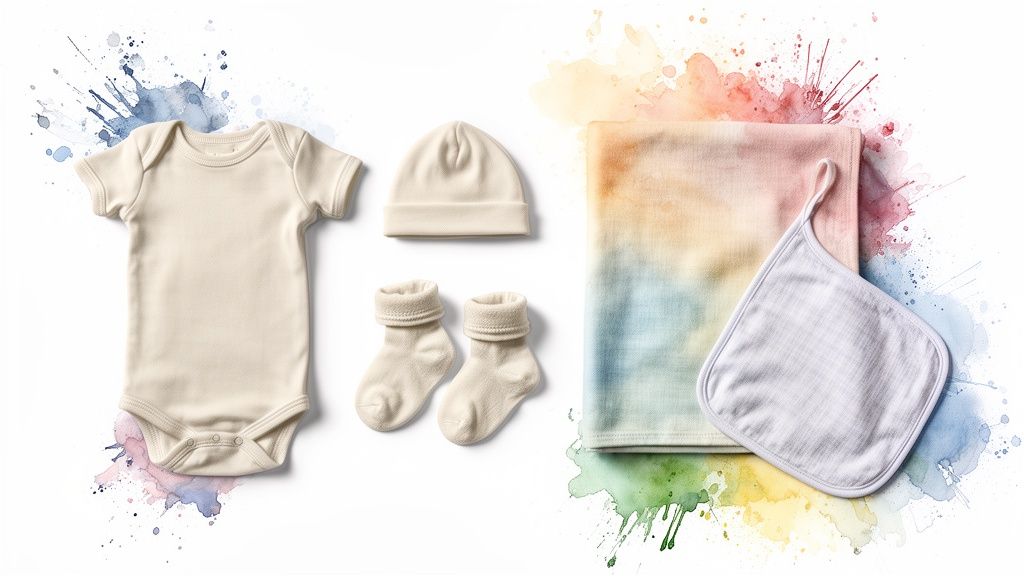
As you get ready for your newborn's arrival, the list of "must-have" baby gear can feel a mile long. But building their first little wardrobe is one of the most tangible and exciting parts of the journey—it makes everything feel so real!
This guide is here to walk you through a simple, no-fuss clothing checklist for your newborn. We're cutting through the clutter to focus on what you truly need for those first precious months. This isn't just about shopping; it's about choosing pieces that will keep your baby snug, safe, and cozy.
Why a Checklist Matters
Let's be honest, it's easy to get carried away with adorable baby outfits. A good checklist keeps you grounded, making sure you have all the practical essentials without a closet full of clothes they’ll outgrow in a flash. It’s a roadmap for handling everything from lazy days at home to their very first outing.
Having the right number of items on hand also saves your sanity. It means you won’t be stuck doing laundry around the clock during those early, sleep-deprived weeks.
And you're not alone in this search! The global baby apparel market was valued at a massive USD 227 billion in 2024 and is only expected to grow. It just shows how many parents are out there, just like you, looking for the very best for their little ones.
A great wardrobe starts with the basics. Focusing on versatile, high-quality essentials will serve you better than having dozens of outfits that are rarely worn.
Of course, clothing is just one piece of the puzzle. If you want a bird's-eye view of everything you might need, this comprehensive first-time mum essentials guide is an incredible resource. It covers all the bases for your baby's arrival.
To make things even easier, here's a quick rundown of the must-have clothing items to get you started.
Quick-View Newborn Clothing Checklist
| Clothing Item | Recommended Quantity (0-3 Months) | Key Feature |
|---|---|---|
| Bodysuits/Onesies | 5-8 | The everyday workhorse. Look for soft fabrics and snap closures. |
| Zip Rompers/Sleepers | 4-6 | Perfect for sleep and play. Zippers make late-night changes a breeze. |
| Soft Pants | 3-5 pairs | Easy to pull on and off over bodysuits for an extra layer of warmth. |
| Socks or Booties | 5-7 pairs | Keeps tiny toes warm. You'll lose a few, so it's good to have extras! |
| Hats/Beanies | 2-3 | Essential for regulating body temperature, especially for newborns. |
| Swaddles | 3-4 | Helps baby feel secure and sleep better. |
Having these core items on hand means you’ll be well-prepared for just about any situation in those first few weeks with your new little blessing.
Building Your Newborn's First Wardrobe Item by Item
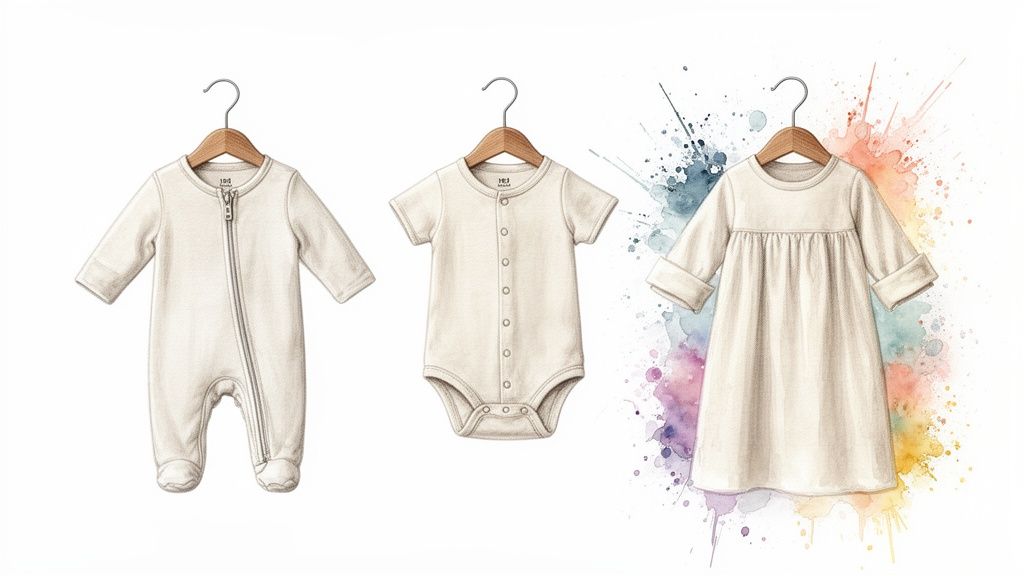
Alright, let's start filling up that tiny dresser! It can feel overwhelming at first, but think of it like putting together a puzzle. Each piece has its own special purpose, and they all come together to keep your little one cozy, cute, and comfortable. Let’s break down the absolute must-haves.
First on the list are bodysuits (you'll probably hear everyone call them onesies). These are the true MVPs of any baby's closet. They’re basically little t-shirts with snaps at the crotch, which is brilliant because it means they won't ride up and leave a chilly tummy exposed. They're perfect as a base layer or can be worn all on their own when it's warm. If you want to get into the nitty-gritty of picking the best ones, check out our guide to newborn baby onesies.
Next up, we have sleepers—also known as zip rompers or sleepsuits. These are your all-in-one outfits for naps, bedtime, and just lounging around. They cover your baby from neck to toe, keeping them snug as a bug. Pro tip: look for the ones with a two-way zipper. Trust me, it’s a total game-changer during those blurry 3 a.m. diaper changes.
Comfort From Head to Toe
Beyond the main outfits, it’s all about the little extras that keep your baby perfectly comfortable. Newborns have a tricky time regulating their body temperature, even when it’s warm out, so these accessories are non-negotiable.
-
Socks and Booties: It’s a universal truth that baby socks love to disappear. Stock up on 5-7 pairs so you’re not always hunting for a match to keep those tiny toes warm.
-
Mittens: Those tiny fingernails are surprisingly sharp! A pair of no-scratch mittens saves your baby's delicate face from accidental scratches. Many sleepers even have fold-over cuffs built right in, which is incredibly handy.
-
Hats: A soft, snug beanie is a must, especially for the trip home from the hospital and on cooler days. It's a good idea to have 2-3 ready to go.
The Unsung Heroes of the Wardrobe
Some of the items you'll use the most aren't even "clothes" in the traditional sense. These are the workhorses that handle all the messy, unpredictable, and beautiful moments of life with a newborn.
Swaddles are just large, lightweight blankets perfect for wrapping your baby up tightly, which helps them feel safe and secure like they were in the womb. This little trick can work wonders for helping them sleep. Bamboo or muslin fabrics are fantastic choices because they’re breathable and get softer with every wash.
Think of swaddles and burp cloths as your go-to tools for almost everything. A clean swaddle can double as a nursing cover, a play mat, or a sunshade for the car seat in a pinch.
And finally, you can truly never have too many burp cloths. These absorbent little cloths will be your best friend, saving your clothes (and your couch) from the inevitable spit-up. I always recommend keeping a stack in every room where you might feed the baby—you’ll thank yourself later.
Once you’ve got all your gear, figuring out where to put it is the next step. For some great tips, check out this practical guide on organizing kids' clothes.
Choosing the Right Fabric for Your Baby's Delicate Skin
When you're working on that clothing checklist for your newborn, it’s easy to focus on cute styles and tiny sizes. But the actual feel of the fabric is just as crucial, if not more so. A newborn's skin is brand new to the world—it’s thinner, more delicate, and way more sensitive than ours. Think of it like a fragile flower petal; it needs the softest, gentlest touch imaginable.
That’s why the material their clothes are made from matters so much. Picking fabrics that are soft, breathable, and free from harsh chemicals isn't just a nice extra; it’s a huge part of keeping your baby comfy, happy, and rash-free. The right fabric helps regulate their little body's temperature and prevents all that itchy, cranky-making irritation.
Why Bamboo Is a Parent Favorite
For years, organic cotton was the gold standard, and it's still a fantastic choice. But another natural fiber is quickly becoming a parent favorite for its unbelievable qualities: bamboo viscose. Seriously, imagine wrapping your baby in something that feels like a silky-soft cloud. That’s the magic of bamboo.
Here’s why so many of us are falling in love with it:
- Naturally Hypoallergenic: Bamboo is a dream for sensitive skin. If you're worried about eczema or allergies, this is a wonderfully gentle option.
- Thermal-Regulating: It’s basically a smart fabric. It breathes to keep your baby cool when it’s warm and holds in just enough heat to keep them cozy when it’s chilly. Perfect for comfortable sleep.
- Unbelievably Soft: The fibers in bamboo are naturally smooth and round, so there are no poky bits to irritate their skin. It just glides on and feels incredible.
This shift toward safe, premium materials is something we're seeing everywhere. Parents are more focused than ever on finding clothes free from hazardous chemicals. While organic cotton still makes up over 60% of the market for its skin-friendly reputation, bamboo-based fabrics are catching up fast, growing at a rate of 8.2% a year as families look for sustainable, gentle options. You can discover more insights about these baby apparel trends on GlobeNewswire.
Your Peace of Mind Guarantee
Reading clothing labels can feel a bit overwhelming, but there’s one certification that cuts through the noise and gives you a simple guarantee of safety: OEKO-TEX® Standard 100.
When you spot this label on a piece of clothing, you can breathe a sigh of relief. It means every single part of that item—from the fabric and thread down to the zipper and buttons—has been rigorously tested and proven to be free from a long list of harmful substances.
Think of the OEKO-TEX® label as a safety seal. It’s your confirmation that the clothing is as pure and clean as possible, giving you total peace of mind when dressing your precious little one.
Choosing certified fabrics takes all the guesswork out of the equation. If you want to dive deeper into materials that are kind to sensitive skin, learn more about the best fabric for sensitive skin in our detailed guide.
Navigating Baby Clothes Sizes and Seasonal Needs
Figuring out baby clothes sizes can feel like trying to solve a puzzle where the pieces keep changing shape. It's one of the biggest questions new parents have: what size should I actually buy? The simple truth is, baby sizing is more of a suggestion than a strict rule.
Every baby grows at their own unique pace. Some little ones will fit snugly into the "Newborn" (NB) size for weeks, while others might arrive weighing over eight pounds and jump straight into 0-3 month clothing.
Since you can't predict your baby's size, the smartest strategy is to have a mix of both on hand. Get the absolute essentials in the Newborn size—a handful of bodysuits and zip rompers should do it. Then, you can stock up more generously on 0-3 month sizes, since they'll get way more mileage out of those. This way, you’re prepared for anything without wasting money on clothes they’ll outgrow in a flash.
Sizing Up Your Options
It helps to think of baby sizes as loose guidelines. One brand's 0-3 months might fit more like another's Newborn size. Your best bet is to always check the height and weight recommendations on the tag, as this is a much more reliable indicator than the age range.
For a deeper dive, you can learn more about how sizing works in our baby clothing size chart.
Pro Tip: Don’t pop all the tags at once! Keep the tags on most of your 0-3 month outfits until you’re positive your baby has outgrown the Newborn size. This makes it super easy to return or exchange anything that goes unused.
Dressing Your Baby For The Season
Just as important as size is dressing your baby for the weather. A baby’s clothing needs are completely different if they're born during a summer heatwave versus a winter chill. Layering is always the name of the game, but the types of layers change with the seasons.
Here’s a quick breakdown to help you plan.
Seasonal Clothing Guide For Newborns
| Item | Summer Baby Essentials | Winter Baby Essentials |
|---|---|---|
| Bodysuits | Short-sleeved, lightweight cotton or bamboo. | Long-sleeved, soft cotton or thermal fabric. |
| Sleepers | Footless, single-layer rompers or gowns. | Footed, fleece or thicker cotton sleepers. |
| Layers | A light muslin swaddle for naps. | Soft cardigans, hoodies, or fleece jackets. |
| Outerwear | Sun hat with a wide brim. | Warm beanie, mittens, and a pram suit or snowsuit. |
| Sleep Sacks | Lightweight cotton or muslin (0.5 TOG). | Fleece or quilted sleep sack (2.5 TOG). |
Ultimately, the goal is to keep your baby comfortable—not too hot, not too cold. A good rule of thumb is to dress them in one more layer than you're wearing yourself.
This diagram shows you how to think about fabric choices, starting with your baby's delicate skin and working up to certified safe materials.
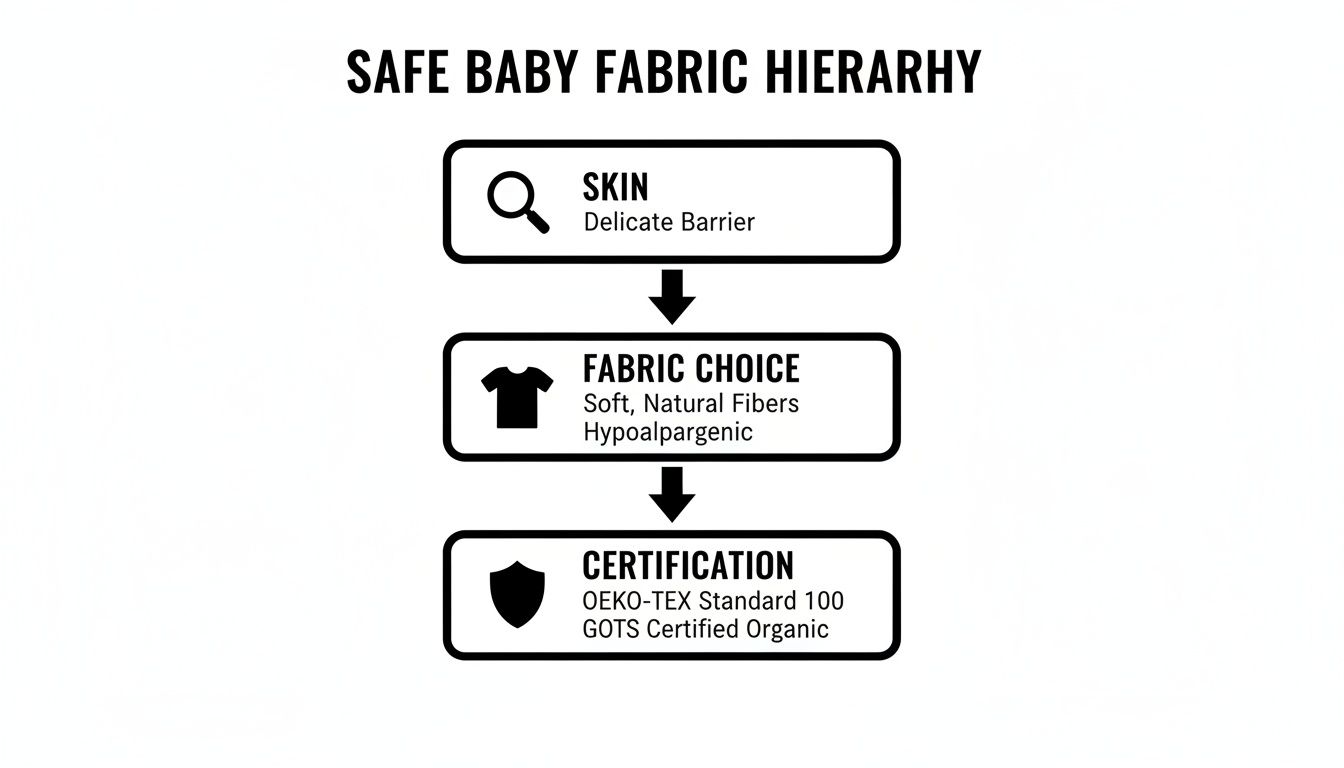
As you can see, keeping your baby's sensitive skin in mind naturally leads you to select gentle fabrics and look for important safety certifications like OEKO-TEX®.
Laundry Tips for Keeping Baby Clothes Soft and Safe
Let’s be honest, the mountain of baby laundry can be a bit of a shock at first. But trust me, creating a simple, gentle washing routine is one of the most loving things you can do. It’s all about protecting your baby’s super-sensitive skin while keeping those tiny, adorable outfits feeling soft and new.
First things first: before your little one even makes their debut, make it a rule to wash everything. This is a non-negotiable. Washing all those new clothes, blankets, and swaddles gets rid of any dust or irritants they might have picked up on their journey from the factory to your home.
Choosing the Right Detergent
When you're staring at that long aisle of laundry detergents, just keep it simple. Look for one that's clearly labeled hypoallergenic, fragrance-free, and dye-free. Newborn skin is incredibly delicate, and standard detergents are often packed with harsh chemicals and strong perfumes that can lead to rashes and discomfort.
Your baby’s laundry detergent should be as gentle as the clothes themselves. A simple, clean formula is always the best choice to prevent skin reactions and keep fabrics like soft bamboo in pristine condition.
This is especially true for those buttery-soft bamboo viscose pieces. A little extra care here really pays off. Always wash them in cold water on your machine’s delicate or gentle cycle. This simple step helps keep that amazing texture intact and prevents the fabric from shrinking or stretching out of shape.
Tackling Stains and Drying with Care
Spit-up, diaper blowouts, and mystery smudges... welcome to parenthood! They're just part of the deal. The secret to winning the stain battle is speed. As soon as a mess happens, rinse the spot with cold water. This alone can stop a lot of stains from ever setting.
For those tougher, more stubborn spots, we've got you covered. You can find all our best tips in this guide on how to remove stains from baby clothes.
Finally, when it's time to dry, remember that high heat is the enemy of soft baby clothes. It can break down those delicate fibers, making them feel rough and wear out way too fast. I always recommend air-drying when you can—just lay items flat or hang them up. If you're in a pinch and need to use the dryer, always, always use the lowest heat or air-dry setting.
Giving Gifts That Support a Greater Cause
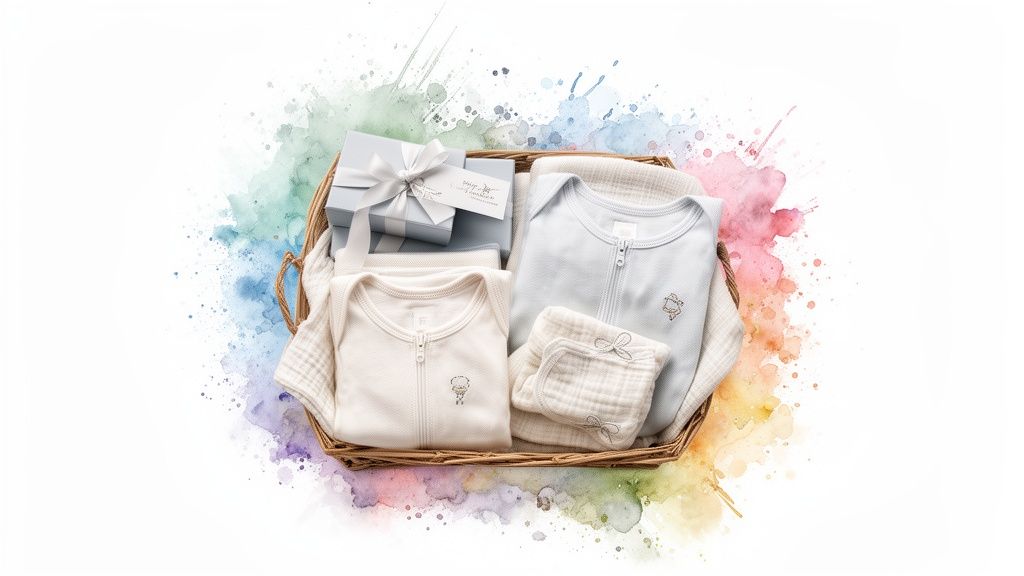
When a new baby is on the way, it feels like the whole community—friends, family, and church members—gets swept up in the excitement. Giving a gift is one of the most natural ways we show our love and support for the growing family. It's a chance to do more than just check an item off a list; it's an opportunity to give something truly meaningful.
Instead of just one cute outfit, think about putting together a "starter wardrobe" gift basket. You could fill it with essentials like those buttery-soft bamboo zip rompers, a few coordinating bodysuits, and a matching swaddle. It’s a beautiful, practical, and complete package that new parents will be incredibly grateful for.
Gifting With Intention and Purpose
Giving a gift is about more than the thing itself; it's a reflection of shared values. We're seeing more and more parents lean towards brands that offer high-quality, safe, and sustainable products. This isn't just about luxury; it’s a desire for items that are better for their baby and better for the world. You can actually learn more about baby clothing market trends on Technavio.
For faith-inspired brands, this move toward purpose-driven buying is a perfect fit. Families are actively looking for products that line up with what they believe in.
This is where your gift can really stand out. When you pick out clothing with faith-inspired designs or from a brand with a mission you believe in, giving baby clothes becomes something much deeper. It connects your gift to a bigger story of hope and love.
By selecting a gift from a mission-driven company, you're not just giving an outfit; you're contributing to a cause. It transforms a practical item into a powerful statement of faith and generosity.
Take a brand like Little Venture Co., for example. A gift from them does double duty. You’re wrapping a precious newborn in certified safe, unbelievably soft bamboo, and you’re supporting Heartbeat International's amazing work with pregnant women in need. Your gift becomes an act of service, blessing the family you love and others you may never even meet.
Answering Your Lingering Questions About Baby Clothes
Alright, you've worked through the checklist, but maybe a few little questions are still nagging at you. That's totally normal! Let's clear up those final details so you can feel completely ready for your baby's grand entrance.
Think of this as the final polish on your newborn wardrobe plan.
How Many Outfits Does a Newborn Really Need a Day?
This is the big one, and the honest answer is... more than you probably think! Newborns are tiny mess-making machines, dealing with everything from spit-up to surprise diaper blowouts. A safe bet is to plan for at least 2-3 outfit changes every single day.
Some days will be surprisingly clean, and others will have you wondering how such a tiny person can create so much laundry. Having 5-7 full outfits (think zip rompers or a bodysuit-and-pants set) on hand will give you a nice cushion between wash days and keep the panic at bay.
Should I Bother Buying Preemie Clothes?
For most parents heading toward a full-term delivery, you can probably skip buying a bunch of "Preemie" sized clothes. The average newborn lands around 7.5 pounds, which usually puts them squarely in the "Newborn" size range. Some bigger babies even jump right into 0-3 month outfits from the get-go.
Unless your doctor has specifically mentioned that you might have an early or smaller-than-average baby, your money is better spent on Newborn and 0-3 month sizes. If it turns out you do need a few preemie pieces, a friend or family member can always make a quick store run for you after the baby arrives.
What’s the Best Way to Organize All This Tiny Stuff?
Keeping those tiny clothes organized is a true sanity-saver. When you're fumbling for a clean onesie at 3 AM, you want to be able to find it fast. The goal is to make everything easy to see and even easier to grab.
Here are a few tried-and-true tricks:
- Drawer Dividers Are Your Best Friend: Seriously, these are a game-changer. They stop those little socks, hats, and bodysuits from turning into one giant, jumbled pile.
- Sort Everything by Size: Keep Newborn items in one spot and 0-3 month items in another. As soon as your baby outgrows a size, pack it away to clear out the clutter.
- Fold Vertically, Don't Stack: Instead of stacking clothes on top of each other, fold them and "file" them in the drawer from front to back. This way, you can see every single outfit at a glance without digging through a pile.
A little organization upfront makes those daily changes so much smoother.
At Little Venture Co., we create faith-inspired, buttery-soft bamboo apparel that makes these precious early days even sweeter. Wrap your little one in comfort and love with pieces designed to be gentle on their skin and beautiful in your home. Explore our collection today.