

Best Pajamas for Eczema: A Parent's 2026 Guide
You're probably here because bedtime has stopped feeling simple.
Maybe you've done the bath, the cream, the lullaby, the dim lights, and then a little later you hear it. Scratch, scratch, scratch. Your baby rubs their ankles against the sheet. Your toddler wakes crying and tugging at their pajamas. You start wondering whether the fabric itself is part of the problem.
That question makes sense. For a child with eczema, pajamas aren't just pajamas. They sit against irritated skin for hours, in the warmest part of the day's clothing routine, during the stretch of time when itching often feels worst. The best pajamas for eczema can't cure a flare, but they can reduce some of the triggers that keep skin angry through the night.
Parents often get told to buy “soft” sleepwear. That advice isn't wrong. It's just incomplete. Some fabrics feel soft in your hand and still trap sweat. Some look harmless but have rough seams, itchy tags, or irritating finishes. The details matter more than most labels let on.
That Heartbreaking Sound of Nighttime Scratching
If you've ever laid awake listening for the next scratch, you know how helpless it can feel.
A lot of parents describe the same scene. Their child falls asleep peacefully enough, then starts stirring an hour later. One hand goes to the belly, the knees, the wrists, or behind the legs. Soon the rubbing turns into scratching. By midnight, everyone is tired, discouraged, and trying not to make the skin worse while still helping the child settle.
That kind of night wears on you. You second-guess everything. Was the room too warm? Did the lotion sting? Were the pajamas too snug, too fuzzy, too heavy, too rough?
Sometimes a fussy night is just a fussy night, and there are other reasons babies struggle to settle. If that's what you're sorting through, this guide on how to soothe a fussy baby can help you separate skin discomfort from the many other bedtime bumps little ones have.
Practical rule: If your child gets noticeably itchier after getting dressed for bed, treat sleepwear like part of the eczema care plan, not an afterthought.
The encouraging part is that this isn't guesswork forever. Certain pajama choices can reduce heat, friction, and chemical exposure against tender skin. When parents understand why those details matter, shopping gets easier. You stop chasing marketing words like “cozy” and start looking for features that support calmer skin.
Understanding the Eczema Itch-Scratch Cycle
Eczema at night often follows a loop. Once you see the loop, the clothing advice starts to make much more sense.
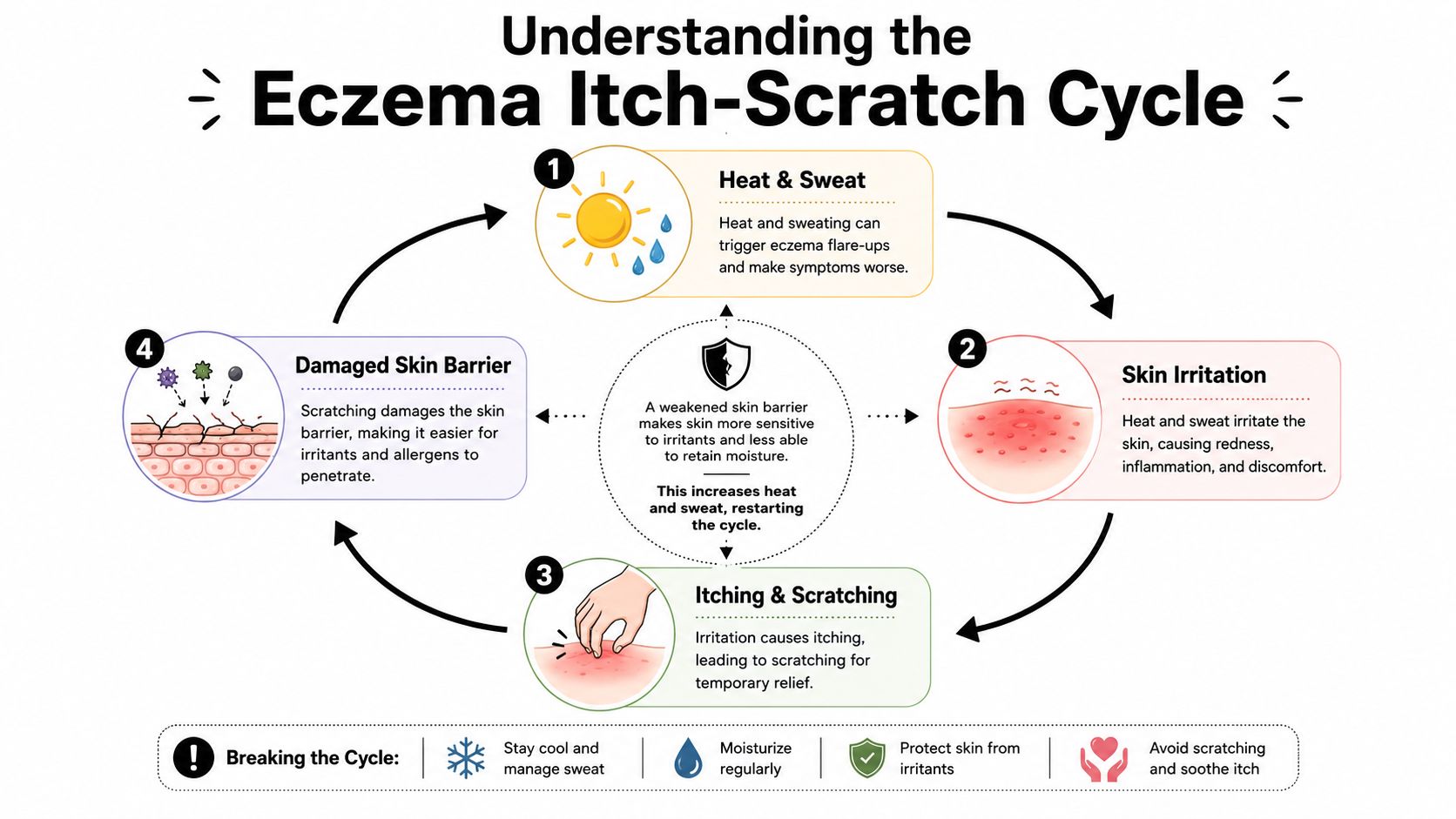
What the cycle looks like
Think of the itch-scratch cycle like a song stuck on repeat.
Your child gets warm. Skin sweats a little. The sweat and heat irritate already sensitive skin. That irritation causes itching. Scratching follows. Then the skin barrier gets more damaged, which makes the skin even easier to irritate the next time heat, sweat, or rubbing show up.
That's why bedtime can be so tricky. A child lies still under blankets, body heat builds, and the skin stays in contact with the same fabric for hours. Even a pajama that seemed fine at bedtime can become a problem later if it traps warmth or rubs in the same spot all night.
Why pajamas matter so much after dark
At night, pajamas create the skin's immediate environment. Parents sometimes hear terms like microclimate and assume it's overly technical, but it really just means the little pocket of heat and moisture between your child's skin and the fabric.
When that pocket gets too warm or damp, itching often ramps up. When the fabric stays smoother, drier, and more breathable, the skin gets fewer reasons to react.
Three triggers usually work together:
- Heat buildup causes skin to feel prickly and reactive.
- Sweat sitting on the skin adds irritation and encourages more rubbing.
- Friction from seams, folds, or bunching can bother skin that's already inflamed.
A pajama doesn't have to feel scratchy to be irritating. It only has to hold heat, stay damp, or rub the same patch of skin all night.
What breaks the loop
Parents often look for one miracle fix. Most of the time, relief comes from reducing several small triggers at once.
A calmer overnight setup usually includes:
- Breathable fabric that doesn't hold onto heat.
- Moisture handling so sweat doesn't stay trapped next to the skin.
- Gentle construction with fewer rubbing points.
- A cool sleeping environment so the body doesn't overheat.
Once you think of pajamas as part of itch control, the shopping process becomes much clearer. You're not only choosing something cute or soft. You're choosing what will sit on vulnerable skin for the longest stretch of the day.
The Best Pajama Fabrics for Eczema Relief
The fabric label is where most parents should start. Not because fabric is the only thing that matters, but because it affects heat, moisture, and friction all at once.
A helpful visual can make the comparison easier.
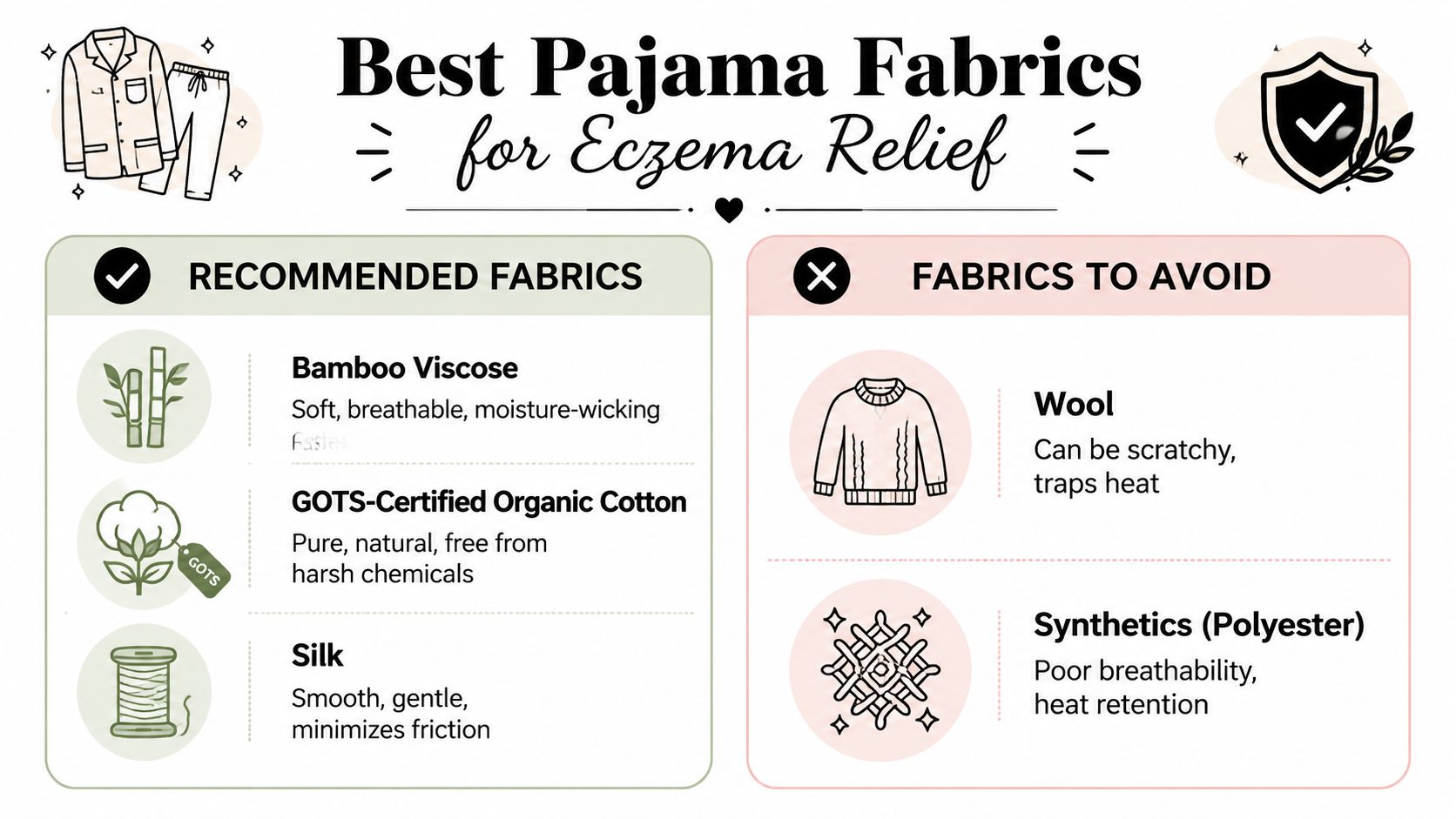
Bamboo viscose and organic cotton
For many families, bamboo viscose and organic cotton rise to the top because they're widely recommended for eczema-prone children due to their moisture-wicking and thermoregulating properties, which help reduce the sweat-itch-scratch cycle. One verified data point is especially useful here. Bamboo viscose fibers absorb approximately three times more moisture than conventional cotton, which can lower skin surface humidity and reduce irritation, according to this parent guide on choosing baby sleepers for babies with eczema.
That doesn't mean cotton is “bad.” It means the child who gets hot and sweaty overnight may do better in a fabric that moves moisture away from the skin more efficiently.
Organic cotton can still be a strong choice, especially for children who don't overheat much and need a simple, breathable, familiar fabric. Many parents prefer it for its straightforward feel and easy care. The key is choosing soft, untreated, well-made cotton rather than stiff blends.
If you want a deeper look at the logic behind this material choice, this article on why bamboo pajamas are a smart choice for babies with sensitive skin explains the fabric properties in plain language.
Silk and what it taught dermatology
Silk deserves a spot in this conversation because it helped establish the idea that sleepwear can be a real part of eczema management.
An early clinical trial on specialized silk garments followed 60 children with moderate to severe atopic dermatitis over eight weeks, and 83% showed clear clinical improvement when wearing the garments as part of daily routine, including at night, as described in this overview of how to choose sleepwear for children with eczema. That finding helped support the broader principle that the right nighttime fabric can be a meaningful non-pharmacological intervention.
Silk's main advantage is its smoothness. It minimizes rubbing, which can matter a lot when skin is raw or repeatedly irritated in the same spots.
What to avoid when skin is already inflamed
Some fabrics make hard nights harder.
Here's a quick side-by-side view:
| Fabric | Why it may help or hurt |
|---|---|
| Bamboo viscose | Smooth, breathable, moisture-managing |
| Organic cotton | Gentle, breathable, simple choice for many children |
| Silk | Very smooth, helpful for reducing friction |
| Polyester | Often traps heat and can feel less breathable |
| Fleece | Cozy feeling, but often too warm for eczema-prone skin |
| Wool | Can feel scratchy or irritating on inflamed skin |
Many parents get tripped up by anything marketed as plush, brushed, or extra cozy. For eczema, “cozy” can sometimes mean too warm, and too warm can mean more itching.
The short version is this: if your child's flares get worse with sweat, choose fabrics that stay light, breathable, and smooth against the skin.
This video gives a useful overview of what parents often weigh when comparing sleep fabrics.
Pajama Construction Details That Matter
Fabric gets most of the attention, but construction is where many “soft” pajamas subtly fail.
A child can wear a lovely fabric and still wake up itchy because a seam hit the back of the knee all night, a tag scratched the neck, or a zipper edge rubbed the chest. On eczema-prone skin, those small design choices don't stay small for long.
Seams and tags can act like sandpaper
Dermatology guidance recommends flat, outward-facing seams and tagless designs because friction from rough seams can disrupt the compromised skin barrier in children with atopic dermatitis and trigger flare-ups, as outlined in this guidance on the best fabric for eczema.
That sounds clinical, but its practical translation is simple. Raised seams and scratchy tags can keep poking one irritated area over and over. On healthy skin, that may be annoying. On eczema skin, it can be the difference between sleeping and scratching.
Look closely at these details:
- Flat seams reduce rubbing at the shoulders, underarms, wrists, and legs.
- Outward-facing seams move the rougher edge away from skin contact.
- Tagless necks help children who always scratch at the back collar.
- Covered zippers can prevent a hard edge from pressing into the chin or chest.
Fit matters more than most people expect
Parents often assume looser is always better. Sometimes it is. But extra baggy pajamas can bunch up under the knees, twist around the torso, or create folds that rub.
The best fit is usually body-skimming without being tight. You want enough room to move, but not so much fabric that it wrinkles and drags across sensitive patches.
When you inspect eczema pajamas, run your hand inside the garment. If you feel ridges, scratchy labels, or bulky joins, your child's skin will feel them too.
A few practical things to check before buying:
- Turn the pajamas inside out and inspect every seam.
- Stretch the waistband lightly. If it feels stiff or harsh, it may bother the belly or back.
- Check cuffs and ankles for tight elastic.
- Choose simple designs over ruffles, appliqués, or decorative trims.
Good eczema sleepwear often looks almost plain. That's usually a good sign. Less hardware, less trim, and fewer bulky features usually means fewer opportunities for irritation.
How to Decode Safety and Chemical Certifications
A lot of parents feel overwhelmed by textile labels, and that's understandable. Brands throw around words like “natural,” “non-toxic,” and “hypoallergenic,” but those words don't always tell you what was tested.
Certifications help because they give you something more concrete than marketing language.

What OEKO-TEX and GOTS usually mean for parents
For eczema-prone skin, OEKO-TEX® Standard 100 is one of the easiest labels to look for. In plain English, it means the finished textile has been tested for substances that could be harmful to human health. That matters because broken or inflamed skin doesn't have the same protective strength as calm skin.
This is one reason certified bamboo viscose gets so much attention. The verified data notes that choosing OEKO-TEX®-certified bamboo viscose helps ensure the fabric is free from residual sensitizing chemicals that could otherwise aggravate inflammation.
GOTS-certified organic cotton is another useful label. Parents often use it as a shortcut for cotton that has been produced and processed with stricter standards than ordinary cotton. If your child does well in cotton, this can be a reassuring box to check.
If you want a simple explanation of the first certification many parents see on baby clothing, this guide on what OEKO-TEX Standard 100 is and why it matters breaks it down clearly.
What certifications can and can't do
Certifications don't guarantee that a child will never react. Skin is too individual for that. What they do is reduce one category of risk by helping parents avoid fabrics with unwanted residues.
A useful way to think about certifications is this:
| Label | Why parents like it for eczema shopping |
|---|---|
| OEKO-TEX® Standard 100 | Signals testing for harmful substances in the finished textile |
| GOTS | Helps identify organic cotton processed to a higher standard |
Certifications don't replace common sense. A certified pajama can still be too hot, too tight, or too rough in construction.
A note on sleepwear safety
Parents also wonder whether softer, untreated pajamas are safe from a sleepwear standpoint. In general, many families prefer snug-fitting pajamas in gentle fabrics rather than heavily treated sleepwear, especially when skin reacts easily. The key is to follow the product's intended fit and care instructions rather than sizing up dramatically just for comfort.
When you're shopping for the best pajamas for eczema, certifications are one filter, not the whole answer. They work best alongside good fabric choice and gentle construction.
The Complete Eczema Bedtime Routine
Pajamas work best when they're part of a calmer whole routine. If the skin is dry, overheated, or covered in detergent residue, even a good fabric has to fight uphill.
The most helpful routines are usually the simplest and most repeatable.
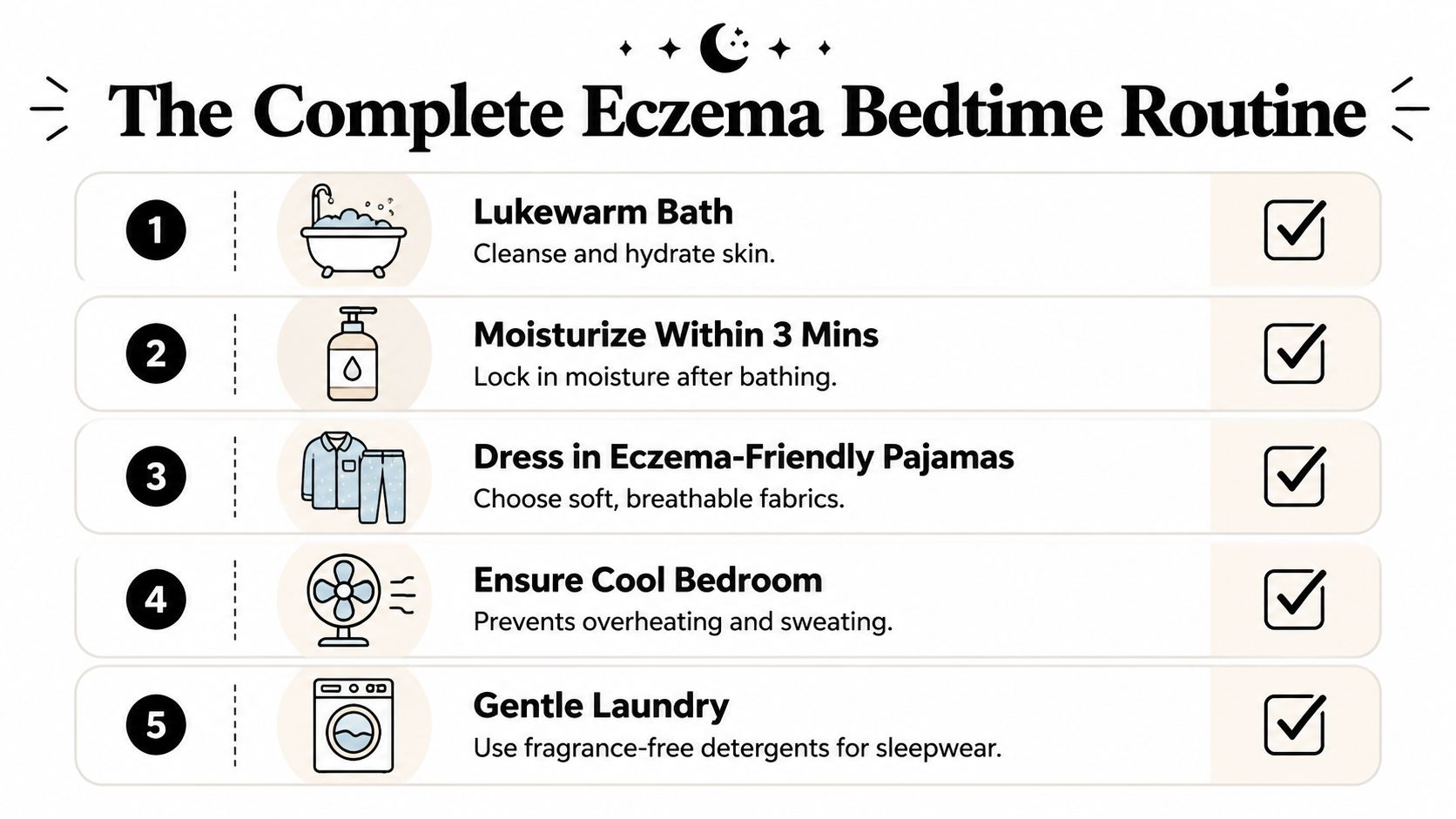
A calm order that many parents use
A gentle evening routine often looks like this:
- Use a lukewarm bath or wash. Hot water can leave skin feeling more irritated afterward.
- Moisturize soon after drying off. Many parents think of this as “soak and seal.” Pat skin dry, then apply the moisturizer while skin is still slightly damp.
- Dress in clean, breathable pajamas. This helps protect moisturized skin without trapping unnecessary heat.
- Keep the bedroom cool and well ventilated. A cool room supports the same goal as breathable sleepwear.
- Trim nails and reduce scratch triggers. This doesn't stop itching, but it can reduce skin damage overnight.
If you're building a full care routine and want more ideas that pair with bedtime clothing choices, this guide on how to treat baby eczema is a helpful companion.
Laundry can change how the fabric performs
Washing matters more than many families realize. The verified guidance notes that the effectiveness of hypoallergenic fabrics can diminish if washed incorrectly. Irritants in common detergents or chlorine bleach can erode the moisture-wicking and temperature-regulating properties of fibers like bamboo after 20 to 30 wash cycles, which may increase nighttime irritation.
That means a good pajama can gradually become less helpful if it's cleaned with harsh products.
A practical laundry routine usually means:
- Choose fragrance-free detergent when possible.
- Skip fabric softener if your child reacts easily.
- Avoid chlorine bleach on eczema sleepwear.
- Use lower heat when drying delicate, moisture-managing fabrics.
- Wash new pajamas before first wear to remove residues from packaging and handling.
Clothes for eczema aren't only bought well. They have to be washed well, too.
When pajamas and skincare work together
Pajamas aren't a replacement for treatment. They're more like a support layer.
When parents moisturize first and then dress the child in smooth, breathable sleepwear, the pajamas can help protect that freshly treated skin from friction during the night. In some cases, children with moderate to severe eczema may also need more specific layering approaches during flare periods or after clinician-guided therapies. If that's your child, it's worth asking your pediatrician or dermatologist how they want bedtime clothing handled during active treatment.
Your Pajama Checklist and Frequently Asked Questions
It is 2 a.m., your child is half-asleep, and one hand keeps drifting back to the same itchy spot behind the knees. In that moment, you do not need marketing words. You need a quick way to tell whether a pair of pajamas will help calm the skin or keep the irritation going.
A good checklist helps you shop with a clear head. It turns “these feel soft” into “these reduce friction, heat, and rubbing,” which is what eczema-prone skin needs at night.
Your eczema pajama checklist
Use this as a quick filter when you compare sleepwear:
- Choose a fabric that helps the skin stay calmer, such as bamboo viscose, organic cotton, or silk if it suits your child well.
- Check how the fabric handles heat and sweat. Skin that gets warm and damp often gets itchier.
- Turn the pajamas inside out and inspect the seams. Flat seams or outward-facing seams usually create less rubbing.
- Pick tag-free designs so there is one less scratchy point at the neck or side.
- Avoid bulky decorations like stiff patches, rough lace, sequins, or thick appliqués.
- Look for a gentle, close-enough fit that does not squeeze but also does not bunch up during sleep.
- Check for safety certifications such as OEKO-TEX® or GOTS.
- Wash with skin-friendly care so the fabric keeps doing its job.
If you only remember three things, remember this. Less friction, less heat, less trapped moisture.
Common questions parents still have
Are silk pajamas really worth considering
For some children, yes.
As noted earlier, research on therapeutic clothing helped show that sleepwear can be a meaningful part of eczema care, especially when the fabric is smooth and less irritating against inflamed skin. Silk is one option, not the only option. The bigger lesson is the science behind it. A fabric that glides across the skin, instead of dragging on it, can lower one more trigger in the itch-scratch cycle.
What about wet wrap therapy or severe flares
During a bad flare, pajamas may need to do a different job.
Instead of focusing only on softness and breathability, you may need sleepwear that works with creams, wet wraps, or specific layering instructions from your child's clinician. In those situations, ask exactly what fit and fabric they want over treated skin. The right answer can change during different stages of a flare.
Should I size up for comfort
Usually, no.
Oversized pajamas sound cozy, but extra fabric can twist, bunch, and rub like a wrinkled bedsheet under sensitive skin. A better goal is gentle room to move. The pajamas should stretch comfortably, stay in place, and not leave pressure marks.
What moisturizer pairs well with eczema pajamas
Many parents apply a thick moisturizer or balm first, then put pajamas on while the skin is still well coated. That routine gives the fabric a better surface to slide over and helps reduce water loss overnight. If you want an option to ask your child's clinician about, Avene Xeracalm AD balm is one product families often consider for dry, eczema-prone skin.
When should I call the doctor
Call your pediatrician or dermatologist if the skin looks infected, your child is losing sleep often, the rash is spreading, or home care is not bringing things back under control.
Pajamas can lower friction and overheating. They cannot treat infection, severe inflammation, or pain on their own.
You do not need perfect pajamas. You need pajamas that are built to be kind to irritated skin.
If you're looking for soft, faith-inspired sleepwear made with sensitive skin in mind, Little Venture Co. offers bamboo baby and toddler pajamas designed for comfort, simplicity, and everyday peace of mind.