

How to Treat Baby Eczema: Gentle Steps for Calmer Skin
When you see that angry, red rash pop up on your baby’s skin, your heart just sinks. It’s tough to watch them be so uncomfortable, but the good news is you can bring them relief, and you can do it quickly.
The absolute best first-line defense for an eczema flare-up is a technique dermatologists swear by: 'Soak and Seal.' It sounds simple, and it is—a quick, lukewarm bath followed immediately by slathering a thick, fragrance-free ointment onto their still-damp skin. This simple act locks in precious moisture and can calm things down in a hurry.
Your First Steps for Soothing Baby Eczema Fast
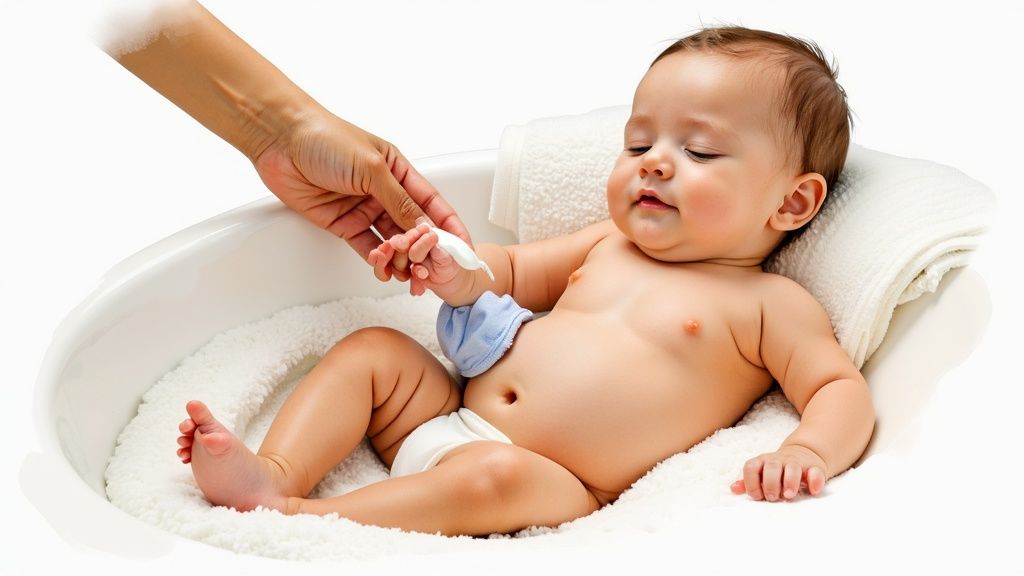
When an eczema flare hits, your mission is clear: calm the inflammation, stop the itch, and get moisture back into that delicate skin barrier. It’s easy to feel overwhelmed, but focusing on a couple of key actions makes all the difference.
This isn’t just a regular bath time. Think of it as a strategic hydration treatment. The goal is to let the water soak into the skin and then immediately trap it there before it evaporates, which can ironically leave the skin even drier than before. It’s a simple routine, but studies show it's incredibly effective.
Mastering The Soak and Seal Technique
The whole idea is to be consistent and gentle. A daily or every-other-day bath in lukewarm water is perfect. You'll want to keep it short—no more than 10 minutes—to avoid stripping away the skin's natural oils.
Use a gentle, fragrance-free cleanser, and only on the parts that really need it. Once bathtime is over, gently pat their skin with a soft towel, but leave it a little damp. This is the key part! Within three minutes, you need to apply a thick, greasy moisturizer (like petroleum jelly) all over. This "soak and seal" method has been shown in studies to cut flare-ups by up to 50%.
Think of your baby’s skin like a little sponge. A dry sponge is hard and brittle. A damp one is soft and flexible. The ointment is like a waterproof shield that keeps that softness locked in. While many parents deal with run-of-the-mill dry skin, eczema demands this next-level commitment to moisture.
When a flare-up happens, you need a quick plan of action. The table below breaks down the 'Soak and Seal' method into simple, repeatable steps you can take right away to calm your baby's skin.
Immediate Soothing Actions for an Eczema Flare-Up
| Action | Why It Works | Parent Tip |
|---|---|---|
| Lukewarm Soak (5-10 mins) | Hydrates the outer layer of skin without stripping natural oils like hot water can. | Test the water with your wrist; it should feel neutral, not warm or cool. Skip the bubble bath, which can be irritating. |
| Pat Gently, Leave Damp | Aggressive rubbing with a towel can irritate sensitive skin. Leaving skin damp preps it for moisturizer. | Use the softest towel you own. Think ‘blotting’ not ‘wiping.’ |
| Apply Ointment (within 3 mins) | This is the “seal” part. The ointment creates a barrier that locks the water from the bath into the skin. | Don’t be stingy! Apply a thick, greasy layer. You want their skin to look shiny. Plain old petroleum jelly works wonders. |
This isn't just a routine; it's a powerful tool in your toolkit. Mastering this one technique can dramatically change how you manage your baby's eczema.
Using Cool Compresses for Instant Itch Relief
Sometimes, the itch is just too much, and your baby needs relief right now. This is where a cool compress becomes your best friend. It’s a wonderfully simple way to calm an angry, inflamed patch of skin on the spot.
A cool, damp cloth can work wonders to soothe the 'fire' of an eczema flare-up. It constricts blood vessels and helps numb the nerve endings responsible for that maddening itch, providing immediate comfort without medication.
Making one is easy. Just soak a clean, soft washcloth in cool water, wring it out so it isn’t dripping, and gently press it onto the itchy area for 5 to 10 minutes.
For an extra soothing boost, follow up with a layer of their moisturizer to lock in the coolness. This is perfect for targeting those tricky spots like their cheeks, the back of their neck, or the creases of their elbows and knees. It can stop a scratch-itch cycle in its tracks, giving your little one some much-needed peace.
Building a Daily Skincare Routine That Actually Works
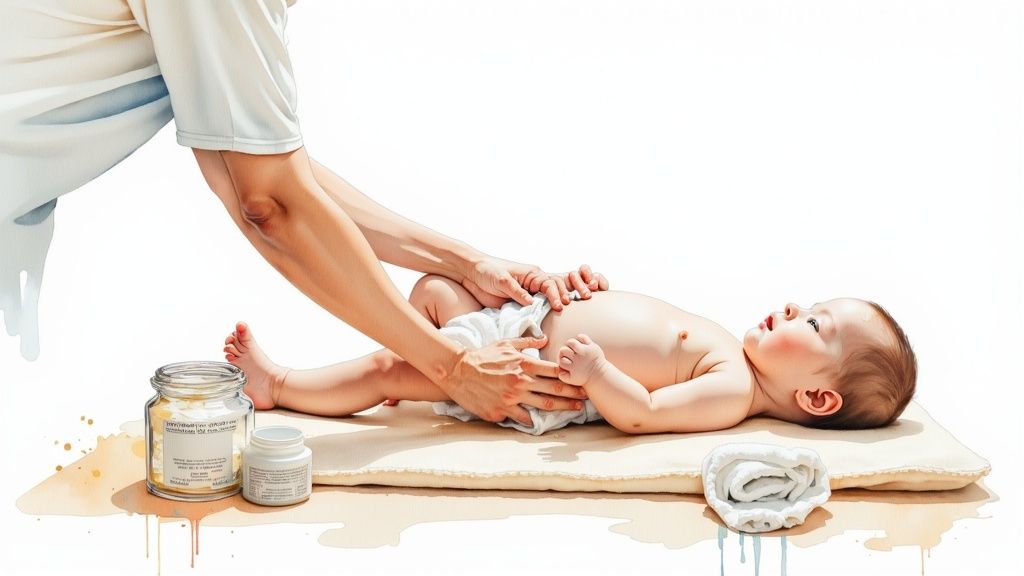
Dealing with baby eczema isn't just about damage control during a flare-up. It's about building a solid, everyday defense. Your single best weapon is a consistent skincare routine that keeps your little one’s delicate skin barrier happy, hydrated, and strong.
Consistency is everything. I know it sounds like another thing to add to the list, but try to think of it as being just as essential as feeding or diaper changes. Once you get into the rhythm, this simple routine becomes second nature and can make a huge difference in how often—and how badly—those flare-ups happen.
Moisturizing Is Your Top Priority
If the "Soak and Seal" bath is your first line of attack against dryness, then daily moisturizing is the constant reinforcement that holds the line. Skin prone to eczema loses moisture incredibly fast, so your job is to be the hydration gatekeeper, constantly locking it in.
So, how often is enough? Probably more than you think. You should aim for at least twice a day, but don't hesitate to slather it on more often, especially on those extra-dry, patchy spots. A great trick many parents swear by is to moisturize at every single diaper change.
I tell every new parent struggling with eczema this: keep a big tub of ointment right on the changing table. Every time you grab a new diaper, you grab the ointment. It turns a routine chore into a powerful skincare moment, ensuring that skin barrier never gets a chance to dry out.
This little habit hack takes the "did I remember to moisturize?" mental load off your plate. It just becomes part of the natural flow of your day.
Ointments Over Lotions, Every Time
Walking down the baby aisle is overwhelming. Let's make one decision really simple for you: when it comes to baby eczema, ointments are almost always the right answer.
Lotions are mostly water and can evaporate right off the skin, sometimes making things even drier. Creams are a step up, but ointments are the real heavy-hitters. They have the highest oil content, which creates the strongest, most protective barrier.
- Ointments: They’re greasy (think petroleum jelly) and form a thick shield that is fantastic at trapping moisture inside the skin.
- Creams: Less goopy than ointments but still effective. These can be a decent option for daytime use if you find ointments too messy.
- Lotions: These are thin and feel light. While they absorb quickly, they just don't have the staying power needed for true eczema-prone skin.
When you apply it, don't be shy. A thin little layer isn't going to do the job. You want a generous, thick coat that makes your baby’s skin look shiny. A good tip is to warm it up in your hands for a few seconds first, then apply it in smooth, downward strokes to avoid irritating hair follicles.
Dressing for Skin Success
What your baby wears can make or break a good skin day. The wrong fabric can trap heat, cause friction, and spark a flare-up before you know it. The goal here is simple: soft, light, and breathable.
Cotton is king. It's natural, soft, and lets the skin breathe, which helps keep things cool and dry. Always check labels for 100% cotton or other super-gentle fabrics like bamboo. If you're looking for more ideas, our guide to chemical-free baby products is a great resource for finding skin-friendly options.
On the flip side, steer clear of scratchy wool and synthetic fabrics like polyester, which don't breathe well and can trap sweat right against the skin. It’s also a smart habit to snip all the tags out of new clothes and give them a wash before their first wear to get rid of any leftover chemicals or irritants.
Simple changes can have a huge impact. For example, during bath time, the cleanser you use matters just as much as the moisturizer you use after. Learning about the top benefits of goat milk soap for babies might open your eyes to some wonderfully gentle, natural alternatives.
Finally, one of the most practical things you can do is keep their fingernails short. The itch from eczema is intense, and a baby's instinct is to scratch. By keeping their nails filed down and smooth, you can seriously limit the damage they do, helping to prevent open sores and infections. It’s a small task, but it’s a critical piece of the puzzle.
Playing Detective to Find Eczema Triggers
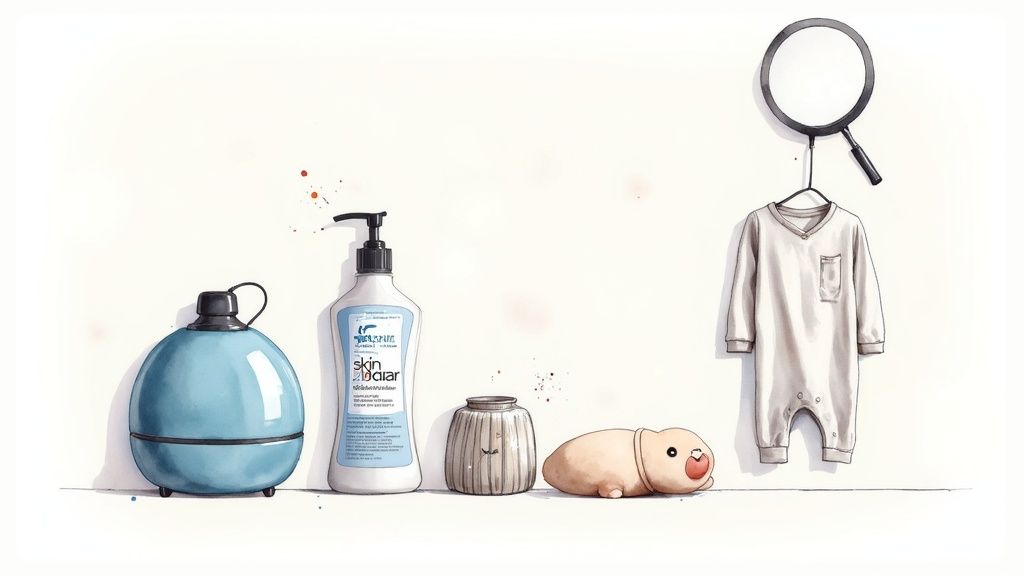
So, you’ve nailed down a good skincare routine, but those angry red patches still pop up like they have a mind of their own. It’s frustrating, I know. This is where we have to put on our detective hats. Eczema flare-ups rarely happen for no reason; they're almost always a reaction to something in your baby's world. Our job is to figure out what’s setting off the alarm.
Think of your baby’s skin like a supersensitive smoke detector. It can go off from things that wouldn't make other babies' skin blink. By patiently identifying and minimizing these eczema triggers, we can make a huge difference.
Investigating Common Household Culprits
Before you jump to worrying about complicated allergies, let's start with the simple stuff—the everyday things your baby comes into contact with.
I can’t tell you how many parents I’ve seen have a lightbulb moment when they realize their laundry detergent is the main offender. The fragrances and dyes in most standard detergents can be really harsh on delicate skin. One of the easiest and most effective changes you can make is switching to a ‘free and clear’ detergent.
Make sure you wash everything that touches your little one's skin in it: their clothes, bedding, swaddles, and even your own clothes they snuggle up against. Fabric softeners and dryer sheets are also notorious irritants, so it’s best to just skip them altogether.
Finding environmental triggers is all about elimination. Start with the usual suspects, like laundry products and dry air. You'd be surprised how often simple tweaks in these areas bring the most relief.
Another huge trigger, especially in the winter, is dry air. As soon as the heat kicks on, it just zaps the moisture right out of the air and, in turn, right out of your baby's skin.
A cool-mist humidifier running in the nursery can be a game-changer. It keeps the humidity at a more comfortable level (aim for around 40-50%), which helps prevent their skin from drying out, particularly overnight. It’s such an easy, passive way to support their skin barrier around the clock.
Uncovering Fabric and Clothing Irritants
The clothes your baby lives in are in constant contact with their skin, so the fabric really, really matters. Certain materials can trap heat and sweat, which is the perfect recipe for an eczema flare-up.
You'll want to stick with fabrics that are soft, natural, and breathable. Think of materials that are kind to the skin:
- 100% Cotton: This is the gold standard for a reason. It’s soft, lets air flow freely, and wicks moisture away.
- Bamboo Viscose: I love bamboo for sleepwear. It’s incredibly soft and silky and does a great job of regulating temperature.
- Silk: While it might not be the most practical choice for daily baby messes, silk is exceptionally smooth and non-irritating.
On the flip side, try to avoid scratchy materials like wool and synthetics like polyester and nylon, which don't breathe well at all. For a deeper look into gentle materials, our guide on the best fabric for sensitive skin is a great resource.
Tackling Potential Food Triggers Carefully
This is the big one, the question I hear from parents all the time. Could it be something they're eating? Or something I'm eating, if you're breastfeeding? The answer is... maybe. But we have to approach this one carefully and with a professional in our corner.
For a small number of babies with moderate to severe eczema, food allergies can definitely be a trigger. The most common offenders are cow's milk, eggs, soy, and peanuts. Here's the most important part, though: do not start eliminating foods on your own. This can easily lead to nutritional gaps and a lot of unnecessary stress for you.
Instead, become an observer. Start a simple food and symptom journal. Jot down what your baby eats (or what you eat) and then note any changes in their skin over the next 24-48 hours. If you start seeing a clear pattern—like a flare-up every time they have yogurt—that's when you take your notes to your pediatrician. They can help figure out the next steps, which might mean a referral to a pediatric allergist for proper testing. This way, you’re working with real data, not just guesswork.
As you become a skin detective, don't forget the bigger picture of your baby's room. Things like dust, pet dander, and general airflow all play a part. For new parents, creating a safe and cozy nursery environment is a fantastic way to proactively minimize potential irritants from the very beginning.
Navigating the Aisle of Baby Skincare Products
Standing in the baby skincare aisle can feel overwhelming. The shelves are packed with bottles, all making big promises in tiny print, with ingredient lists a mile long. All you want is something that will soothe your baby’s itchy skin, not make it angrier.
Let's cut through that noise. The secret isn't finding some magic potion—it's about knowing what to look for and, more importantly, what to run from.
Decoding Product Labels
Your new superpower is becoming a label detective. Forget the promises on the front of the bottle; the real story is always in the ingredient list on the back.
You're on the hunt for a few key ingredients that help rebuild that fragile skin barrier. Look for these heroes:
- Ceramides: Think of these as the "glue" that holds skin cells together. Eczema-prone skin is notoriously low on them, so adding them back in is a huge help.
- Petroleum Jelly: It’s not fancy, but it’s a powerhouse. This stuff creates an incredible seal on the skin to lock moisture in and keep irritants out.
- Glycerin & Hyaluronic Acid: These are moisture magnets. They work by pulling water into the skin, giving it a much-needed drink.
Just as crucial is knowing what to avoid. A lot of common ingredients, even some that sound natural and harmless, can be a one-way ticket to a flare-up.
Steer clear of these troublemakers:
- Fragrances: This is public enemy number one. The word "fragrance" or "parfum" on a label can hide a cocktail of hundreds of chemicals. Always, always choose fragrance-free, not "unscented" (which can use masking fragrances).
- Essential Oils: They might smell nice, but many essential oils (like lavender or tea tree) are known sensitizers and have no place in an eczema care routine.
- Dyes: Your baby’s moisturizer doesn’t need to be a pretty color. Dyes add zero benefits and just introduce another potential irritant.
- Alcohol (Ethanol/SD Alcohol): Certain types of alcohol are extremely drying and can really sting when applied to cracked, sensitive skin.
One great shortcut? Look for the National Eczema Association Seal of Acceptance™. It’s a little purple "E" logo that tells you a panel of dermatologists has given the product a thumbs-up for being suitable for sensitive skin. It’s a lifesaver when you’re staring at a wall of options.
When it comes to choosing the right products, it helps to see what works and what doesn't, side-by-side.
Here’s a quick cheat sheet to help you scan ingredient lists like a pro:
Eczema-Friendly vs. Potentially Irritating Ingredients
| Look For These Ingredients (Good) | Avoid These Ingredients (Bad) |
|---|---|
| Ceramides | Fragrance / Parfum |
| Petrolatum (Petroleum Jelly) | Essential Oils (Lavender, Tea Tree, Citrus) |
| Glycerin | Dyes (CI numbers) |
| Hyaluronic Acid | Propylene Glycol |
| Shea Butter | Lanolin (can be an allergen for some) |
| Niacinamide | Ethanol / SD Alcohol |
| Colloidal Oatmeal | Sulfates (SLS, SLES) |
Having this list handy on your phone can make those shopping trips a lot less stressful. You'll quickly learn to spot the good stuff and leave the risky products on the shelf.
Ointments vs Creams vs Lotions
The type of moisturizer you choose is just as important as the ingredients inside. It all comes down to the oil-to-water ratio.
- Ointments: These are the gold standard for eczema. They have the most oil, which means they are thick, greasy, and phenomenal at sealing in moisture. Think Vaseline or Aquaphor. They create a powerful protective barrier that lasts for hours.
- Creams: Creams have a bit less oil and a bit more water than ointments. They are less greasy and absorb more easily, which makes them a solid choice for daytime use when you don't want everything to feel slick.
- Lotions: Honestly, for true eczema care, it’s best to just skip lotions. They have the most water, which feels nice at first but evaporates quickly. This evaporation process can actually pull moisture out of the skin, leaving it even drier than before.
When you're dealing with eczema, remember this simple rule: the greasier, the better. An ointment will almost always outperform a cream or lotion when it comes to healing and protecting that delicate skin.
When Over-the-Counter Isn't Enough
Sometimes, you can do everything right and still face a stubborn flare-up that just won’t back down. When the redness and itching are relentless, it’s time to talk to your doctor.
For mild-to-moderate cases, there are effective non-steroidal options. For example, crisaborole ointment is an FDA-approved treatment that can be used on babies as young as 3 months old. In clinical trials, it helped clear or nearly clear the skin in 47.3% of infants after just four weeks. You can explore the research on topical treatments for infant eczema to learn more.
Of course, skincare is only one piece of the puzzle. What your baby wears is just as important. The fabrics touching their skin 24/7 can either soothe or irritate. To dig deeper into this, check out our guide on why bamboo pajamas are a smart choice for babies with sensitive skin.
Combining a smart, gentle skincare routine with soft, breathable fabrics gives your little one the best defense against eczema and the best chance for calm, comfortable skin.
Knowing When It Is Time to See a Doctor
You've been doing everything right. You've established a solid skincare routine, you’re playing detective with potential triggers, and you’ve mastered the "Soak and Seal" technique after every bath. For many little ones, this is enough to keep their skin happy and calm.
But sometimes, despite your best efforts, eczema can be stubborn. It's not about admitting defeat—it's about knowing when to call for backup.
Reaching out to your pediatrician or a dermatologist is a smart, proactive move. It gives you access to a trained eye and more advanced tools to get your baby’s skin back on track.
Recognizing The Red Flags
Trust your gut. As a parent, you have the best intuition. If you feel like you're fighting a losing battle against the rash and itch, it’s probably time to make that call.
Some signs are more urgent than others and mean you should get an appointment sooner rather than later. Keep an eye out for these signals:
- Signs of Infection: Look for yellowish crusts, constant oozing, or little pus-filled bumps. Infected skin can also look extra raw and weepy.
- No Improvement: You’ve been consistent with lukewarm baths and moisturizing for a week or two, but the eczema is either staying the same or getting worse.
- Severe Discomfort: The itching is so bad that it’s wrecking sleep (for both of you!). Or maybe your baby just seems irritable and uncomfortable all day long.
- Sudden, Severe Rash with Fever: If a bad rash pops up out of nowhere and your baby has a fever, seek medical advice right away.
This decision tree gives you a quick visual for picking a moisturizer based on how your baby's skin feels at the moment.
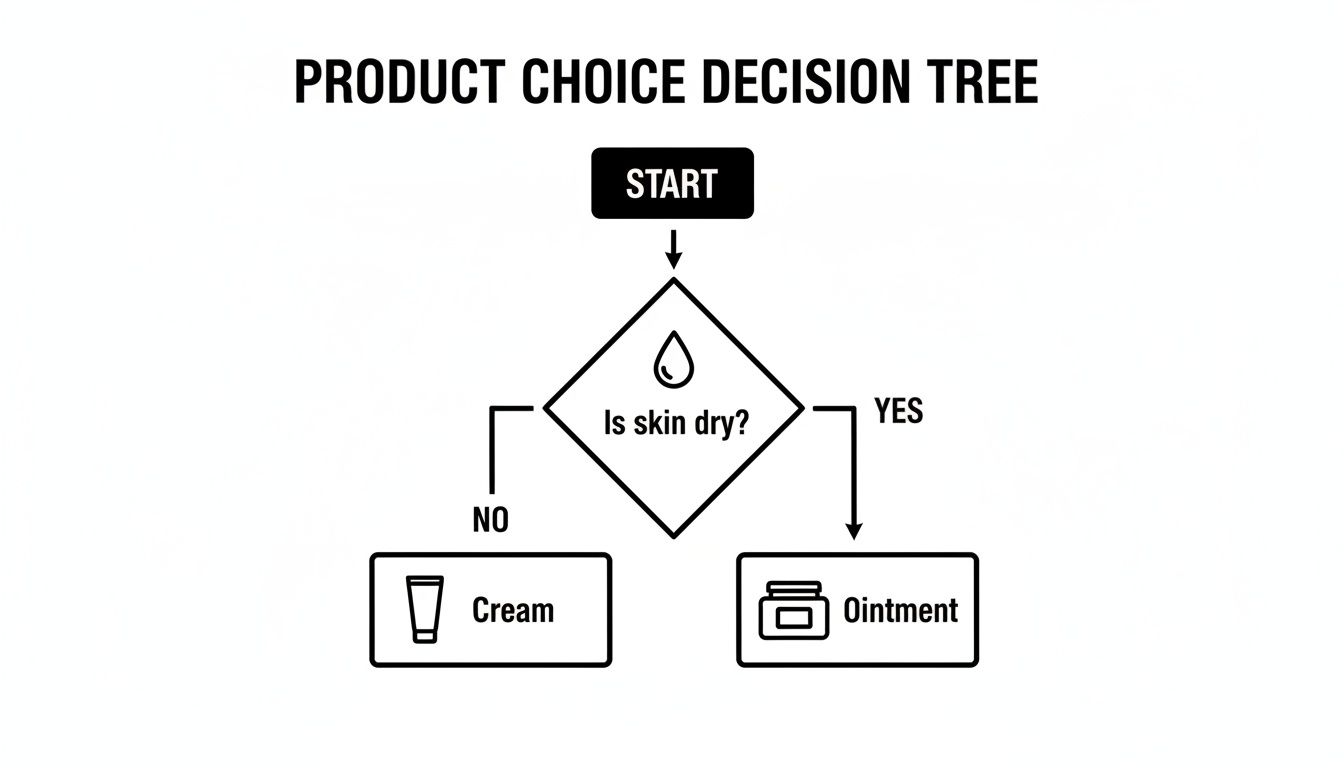
It's a simple reminder that thicker ointments are usually your best bet when you're dealing with the super dry skin that comes with an eczema flare-up.
What to Expect at the Doctor’s Office
Think of the doctor's visit as a team effort. Your doctor will probably ask a ton of questions about your daily routine, what your baby eats, and any triggers you’ve noticed. It can be a huge help to come prepared with a little log of symptoms or even just some photos on your phone.
For the toughest cases of baby eczema, which affect about one-third of the 9.6 million children in the US with the condition, your doctor has more tools than just basic moisturizers. They might prescribe topical calcineurin inhibitors (like tacrolimus), which are great steroid-free options that can clear 60-70% of mild-to-moderate eczema. If a bacterial trigger is suspected, they may even suggest diluted bleach baths, a surprisingly effective method shown to cut related Staph infections by 66%. You can discover more insights about eczema facts on nationaleczema.org.
A prescription isn’t a sign of failure—it’s a powerful tool. Gentle, low-strength topical steroids, when used exactly as directed, are one of the fastest ways to break a severe itch-scratch cycle, calm inflammation, and give your baby’s skin a chance to heal.
Your doctor will always start with the mildest effective treatment for the shortest time needed. They might also discuss non-steroidal prescription creams or suggest seeing a pediatric allergist or dermatologist if they think underlying allergies are a big part of the puzzle. The goal is simple: get your baby comfortable and their skin back on the path to healing.
Common Questions Parents Ask About Baby Eczema
When you're dealing with your baby's eczema, your mind can race with questions, especially in the middle of the night. Trust me, you're not the first parent to wonder these things. Let's walk through some of the most common concerns I hear from parents, and get you some clear, practical answers.
Will My Baby Actually Outgrow Their Eczema?
This is the big one, isn't it? The question every parent is holding their breath to ask. And the good news is, for most kids, the answer is a resounding yes. Many, many babies with eczema see their skin get so much better by the time they're ready for kindergarten. In fact, while 60% of eczema cases pop up in that first year, their skin is constantly maturing and getting stronger.
That said, it can be more helpful to think of it less as "outgrowing" a condition and more as a lifelong tendency for sensitive skin. The gentle, consistent care you're providing right now is doing more than just soothing the current flare. You're actually teaching their skin barrier how to be more resilient for the long haul.
Could My Baby’s Diet Be Causing the Flares?
It's completely normal to look at what your baby is eating (or what you're eating, if you're breastfeeding) and wonder if that's the culprit. And sometimes, it is. For some babies, especially those with really stubborn or severe eczema, food can definitely be a trigger. The usual suspects are common allergens like cow's milk, eggs, soy, and peanuts.
But here’s the most important piece of advice: please don't start removing foods from their diet on your own. Guessing can lead to a stressed-out parent and can even cause nutritional issues for your little one.
The best approach is to become a detective.
- Start a simple journal: Jot down what your baby eats and then note any skin changes you see over the next 24 to 48 hours.
- Look for patterns: Do you notice that their cheeks get red and patchy every time they have yogurt?
- Talk to your doctor: Take your notes to your pediatrician. They can help you figure out if there's a real connection and may refer you to an allergist for proper testing. That's how you get real answers.
A helpful concept here is the "gut-skin axis." Newer research is showing a powerful link between gut health and skin inflammation. An imbalance in their tiny gut microbiome can sometimes be a piece of the puzzle, causing their immune system to overreact in the form of eczema.
This detective work ensures you're making choices based on solid evidence, not just a hunch.
Are Steroid Creams Safe for My Baby?
This is such a valid concern. The word "steroid" alone can sound intimidating. But when they're used correctly, under a doctor’s supervision, low-strength topical steroid creams are incredibly safe and effective. Honestly, they're often the quickest way to calm down an angry, painful flare-up and give your baby some relief.
The whole key is using them the right way. Your doctor will always prescribe the mildest version that will get the job done. Here’s how it works:
- Just a thin layer. You only need a tiny amount, just enough to glisten. More is not better.
- Only on the red spots. Think of it as a spot treatment for the inflamed patches, not an all-over body lotion.
- Use it for a short time. You'll typically only use it for a few days to get a flare under control, just as your doctor recommends.
The scary stories you might have heard are almost always tied to people misusing very strong creams for way too long without any medical guidance. Your doctor’s goal is the same as yours: get your baby comfortable, quickly and safely. A short course of a mild steroid is a trusted way to do that.
What Can I Do About the Constant Scratching?
Oh, watching your little one scratch is just heartbreaking. That relentless itch-scratch cycle is brutal—it damages their delicate skin and can completely wreck everyone's sleep. Your main goal is always to treat the underlying inflammation with your daily moisturizing routine and any prescribed creams.
But for those in-the-moment itchy fits, you’ve got options. The absolute priority is to keep their tiny, sharp nails from breaking the skin.
- Keep their nails short and filed. Smooth any sharp edges.
- Use scratch mittens or sleep sacks. Those sleep sacks with the fold-over cuffs are a game-changer for nighttime, preventing subconscious scratching while they're asleep.
- Try a cool compress. A cool, damp washcloth held gently on an itchy area can provide some quick, numbing relief.
- Distract, distract, distract! During the day, distraction is your best friend. A new toy, a silly song, or even just moving to a different room can make them forget all about the itch for a little while.
Stopping the scratch is a huge part of healing because it finally gives the skin a chance to repair itself.
At Little Venture Co., we know that gentle care includes what you put on your baby's skin. Our ultra-soft bamboo sleepwear is designed specifically for the most sensitive skin, keeping your little one cozy and comfortable. You can explore our full collection of Oeko-Tex® certified apparel at https://littleventureco.com.