

Weather Appropriate Clothing for Babies Made Simple
You're standing at the door with a baby on your hip, a toddler asking for the wrong shoes, and a weather app that says one thing while the wind outside says another. That's usually when parents start looking for a simple answer and get handed a chart that treats every outing the same. It rarely works that way in real life.
Weather appropriate clothing for little ones is less about hitting a perfect temperature number and more about matching clothes to conditions, movement, and setting. A stroller walk, a buckled car ride, nursery drop-off, outdoor church service, and nap time can all happen in the same day, and each one calls for slightly different choices. Once you dress for the actual situation instead of the forecast alone, mornings get much easier.
What Weather Appropriate Clothing Really Means for Little Ones
Most parents start with adult logic. If you feel chilly, add a jacket. If you feel warm, take one off. Babies and toddlers don't follow that script neatly, especially when they're not moving much, can't tell you clearly what feels off, or are shifting between sun, shade, wind, car heat, and indoor air conditioning.
That's why weather appropriate clothing has to be read through a child's reality, not yours.
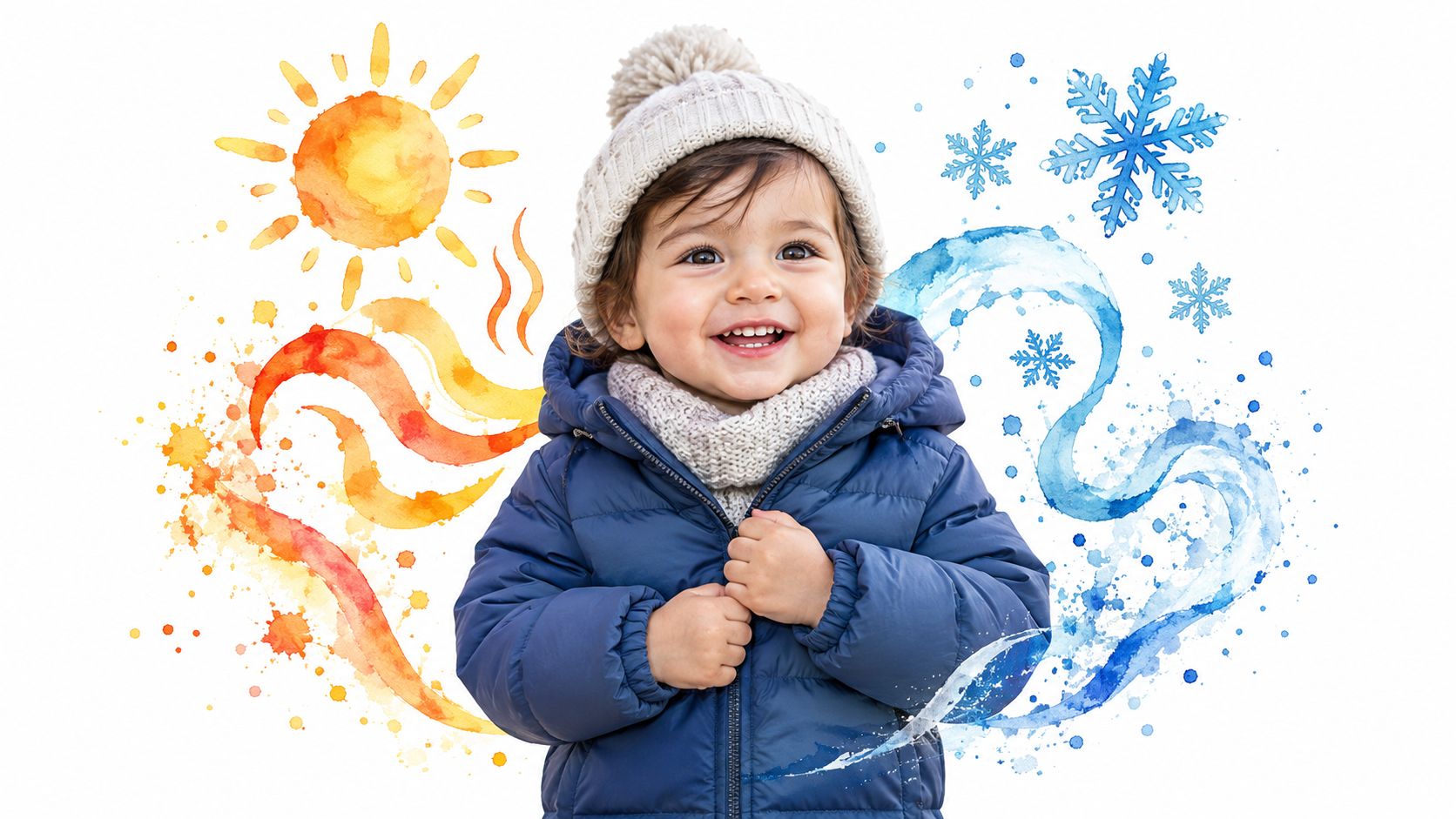
Warmth changes when kids move
Cold-weather clothing doesn't perform the same way in motion as it does standing still. In a study of 30 clothing systems, static insulation ranged from 1.10 to 3.67 clo, while dynamic insulation during walking dropped to 0.53 to 3.21 clo. The same study found that walking reduced insulation by 12% to 51%, and layer number and thickness on the arms and calves strongly predicted performance in both static and dynamic conditions, according to ASTM cold-weather clothing research.
That matters for children because they rarely stay in one mode for long. A baby in a carrier is mostly still. A toddler on the playground is not. The same outfit can feel just right in one moment and wrong twenty minutes later.
Practical rule: Dress for what your child will actually be doing, not just for the number on the app.
Temperature alone misses half the story
A cool dry day and a cool windy day do not feel the same. A warm shady morning and a warm sticky afternoon don't behave the same either. Humidity affects how well sweat evaporates, which changes comfort and overheating risk. Wind can strip away warmth fast enough to make a “pretty cold” outfit feel surprisingly flimsy.
Parents often ask for one clean chart, but the better mental model is simpler than a chart. Start with the air temperature, then adjust for wind, humidity, and how long your child will be out.
Children aren't just small adults
Adult winter references don't always fit children well. In schoolwear testing, children's measured winter insulation averaged about 0.81 clo, compared with the 0.9 clo winter reference often used for adults, and summer averaged about 0.29 clo compared with an adult reference of 0.5 clo, according to child cold-weather apparel research. Researchers also found that the base layer had a major effect on total ensemble insulation and predicted comfort temperature.
That lines up with what parents see every day. A scratchy shirt, a damp undershirt, or a too-tight leg cuff can make a child miserable long before the outer layer gets blamed.
A calm way to check comfort
Use a quick three-part check before you leave and once you arrive.
- Neck and upper back: Warm is good. Sweaty means too much.
- Hands and cheeks: Cool can be normal outdoors. Ice-cold paired with fussiness means reassess.
- Mood and movement: If a toddler suddenly stops wanting to walk, or a baby gets flushed and irritable, clothing may be part of the problem.
Fabric choice matters. Soft, breathable basics make it easier to fine-tune without a fight. Families who prefer gentler next-to-skin layers often look for bamboo viscose or other smooth fabrics that don't add bulk or irritation under sweaters and outerwear.
How to Dress by Temperature Without Over or Under Dressing
Parents usually don't need a complicated formula. They need a repeatable way to decide at the door. The easiest starting point is to dress your child in a comfortable base outfit for the indoor temperature they're leaving from, then add or remove a layer based on the conditions outside and the kind of outing you're doing.
Start with the outing, not just the forecast
A stroller ride needs more insulation than active sidewalk walking. A quick transfer from house to car needs less than a long park visit. If you're heading out for winter errands, a light layer system often works better than one heavy piece, especially if you'll be moving between heated spaces. If you want a more winter-specific breakdown, Little Venture Co. has a practical guide on how to dress baby for winter.
Use this as your quick reference.
| Condition | What to Add or Remove | Why It Matters |
|---|---|---|
| Warm and dry | Keep clothing light, skip extra layers, choose breathable fabrics | Babies can overheat quickly when the air is warm and still |
| Warm and humid | Choose lighter, moisture-managing fabrics and reduce unnecessary layers | Sweat doesn't evaporate as well in sticky air |
| Mild with shade or AC transitions | Add one easy-to-remove layer like a light cardigan or thin zip layer | Indoor and outdoor temperatures may feel very different |
| Cool with light activity | Add a base layer plus a light outer layer | Movement creates warmth, so bulky dressing often backfires |
| Cold with wind | Prioritize wind-blocking outerwear and cover exposed areas | Wind can cut clothing performance sharply |
| Longer outdoor time | Bring one extra removable layer, socks, and a blanket for stops | Exposure time changes what feels comfortable |
Wind changes the answer fast
This is one of the biggest reasons parents feel like charts fail them. Independent cold-weather studies and standards have measured winter clothing in the clo unit for decades. In field and lab research, winter ensembles were commonly measured around 1.2 clo in mild cold and 1.5 clo in dry cold. A separate Arctic open-pit mining study reported effective insulation of 1.9 to 2.3 clo and noted that a standard set a minimum limit of 2 clo for cold-protective clothing. The same review also noted one study where clothing assemblies lost about 85% of their thermal insulation as wind speed rose from 0 to 16 km/h, according to cold protective clothing research and standards.
You don't need to think in clo at the front door. You just need to remember that a still day and a windy day are different categories.
If the outfit seems right in the driveway but your child will be sitting still in moving air, add wind protection before you add bulk.
Humidity deserves its own adjustment
A lot of baby clothing advice treats warm weather as if dry heat and sticky heat are the same. They aren't. One recent warm-weather guide specifically distinguishes high humidity at 70%+ from lower humidity and recommends moisture-wicking fabrics in the most humid conditions, while many mainstream guides still center mostly on temperature thresholds, as discussed in this guide to dressing toddlers for warm weather.
That's especially relevant for stroller rides, church events on the lawn, and post-nap outings where little ones aren't running around enough to vent heat well. In humid weather, lighter and smoother fabrics usually beat thicker “just in case” outfits.
Read your child, then adjust one thing
When a child seems uncomfortable, don't remake the whole outfit at once. Change one variable.
- Too warm: remove the outer layer first.
- Still flushed: switch the base layer to something lighter next time.
- Too cool in wind: keep the same layers but improve the outer shell.
- Fine while moving, upset while still: pack a small blanket or extra cardigan for pauses.
That one-change approach keeps you from bouncing between overdone and underdone all day.
Layering That Works and Fabrics That Help
The families who get weather appropriate clothing right most often aren't using more clothes. They're using better layer jobs. That means each piece has a role, the fit allows movement, and nothing bunches, twists, or traps heat in the wrong way.
Build the outfit in three jobs
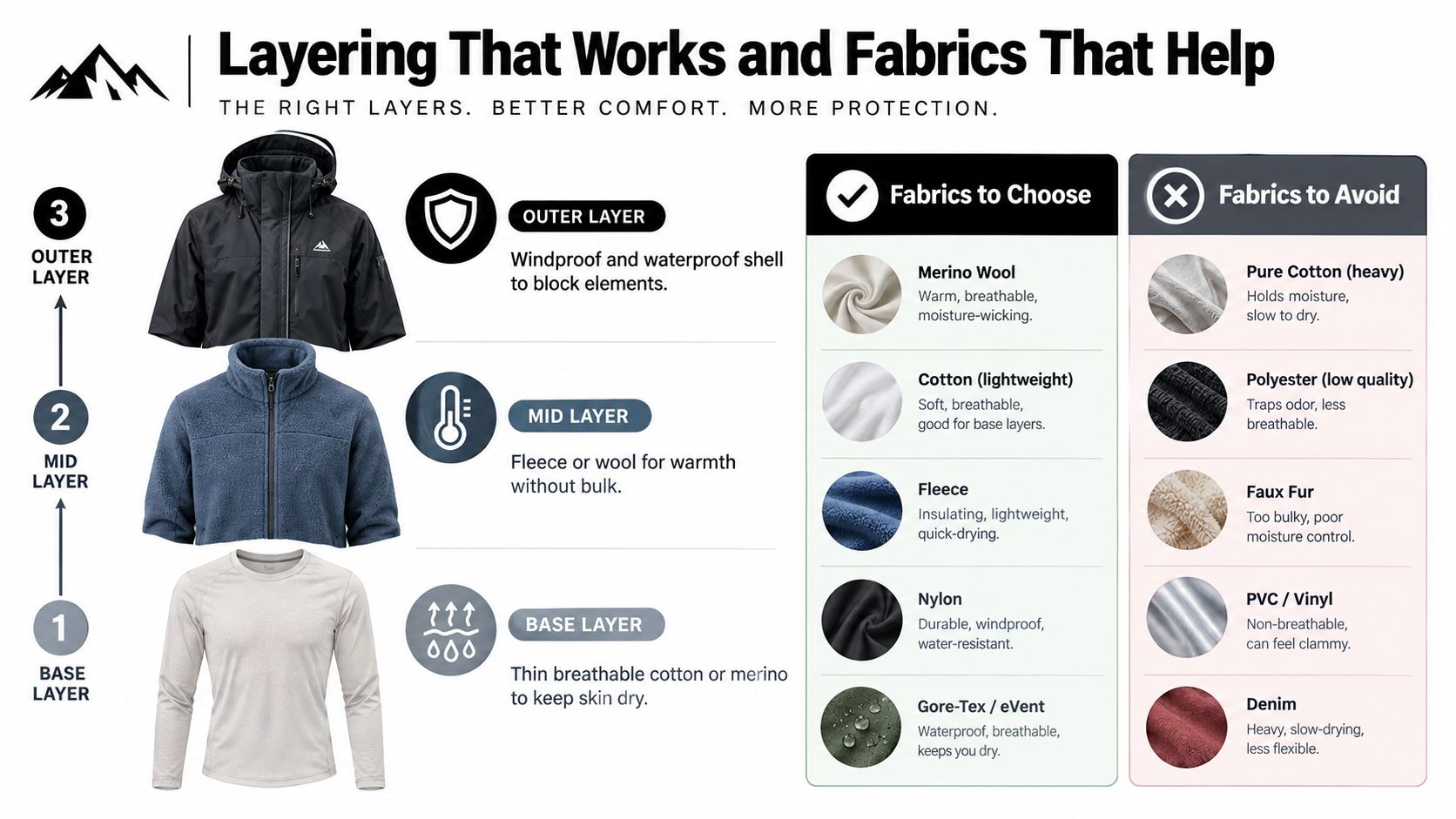
Think in three parts.
- Base layer: sits next to the skin and manages moisture
- Mid layer: adds warmth
- Outer layer: blocks wind, damp air, or wet conditions
For toddlers, thin layers usually work better than one bulky coat because they trap air, allow easier movement, and can come off as activity increases. Research on child apparel found that base layer choice had a major effect on total jacket ensemble insulation and predicted comfort temperature, according to the child clothing insulation study. That's why a good underlayer often matters more than parents expect.
Fabric choices that actually help
Parents hear “cotton is breathable” so often that it becomes the default answer for everything. Cotton can be perfectly fine in mild, dry conditions. It's less helpful when a child gets sweaty, sits in damp air, or moves between indoor and outdoor spaces all day.
A more practical way to choose:
- For sensitive skin and everyday layering: soft, smooth fabrics that don't chafe under sweaters or jackets
- For humid warmth: lighter materials that handle moisture better than heavy cotton knits
- For cold active play: a base that stays comfortable under friction, then a warm middle layer, then a shell if needed
- For drizzly or windy outings: focus on the outer layer's job, not just inner thickness
Little Venture Co. uses bamboo viscose in its baby and toddler sleepwear and daywear, and the brand states its materials are Oeko-Tex® Standard 100 certified. For families comparing options, their overview of bamboo fabric benefits explains why some parents prefer that kind of softness for close-to-skin layers.
Softness isn't only about comfort. It affects whether a child tolerates the layer long enough for it to do its job.
Fit matters almost as much as fabric
Good intentions go sideways. Parents buy the warm item, but it's too tight in the cuffs, too short in the rise, or too stiff through the shoulders. Then the child fights it, rides up, or sweats in strange spots.
Check these details before you call an outfit “weather ready”:
- Sleeves and legs: They should stay in place without digging in.
- Neckline: Snug is fine. Tight is not.
- Diaper area: Babies need room to bend and sit without pressure.
- Zippers and snaps: They should make changes easier, not slower.
- Outerwear length: Long enough to cover, short enough to move.
Faith-friendly styling can still be practical
A meaningful wardrobe doesn't have to feel fussy. If you like faith-inspired prints or modest, polished sets for church and family gatherings, keep the visual layer separate from the weather layer. Start with the comfort pieces first, then add the sweater, romper, bloomers, cardigan, or print you want people to see.
That approach works especially well for photos after service, holiday gatherings, and baby gifts. The outfit can look special without forcing a child to sit through overheating, rough seams, or bulky layers that don't fit the moment.
Dressing Safely for Car Seats Strollers and Sleep
One of the biggest mistakes I see is using one outfit plan for every setting. The weather may be the same, but car seats, strollers, and sleep all have different rules. Parents don't need more anxiety about this. They need separation between these categories so they can make a quick safe choice.
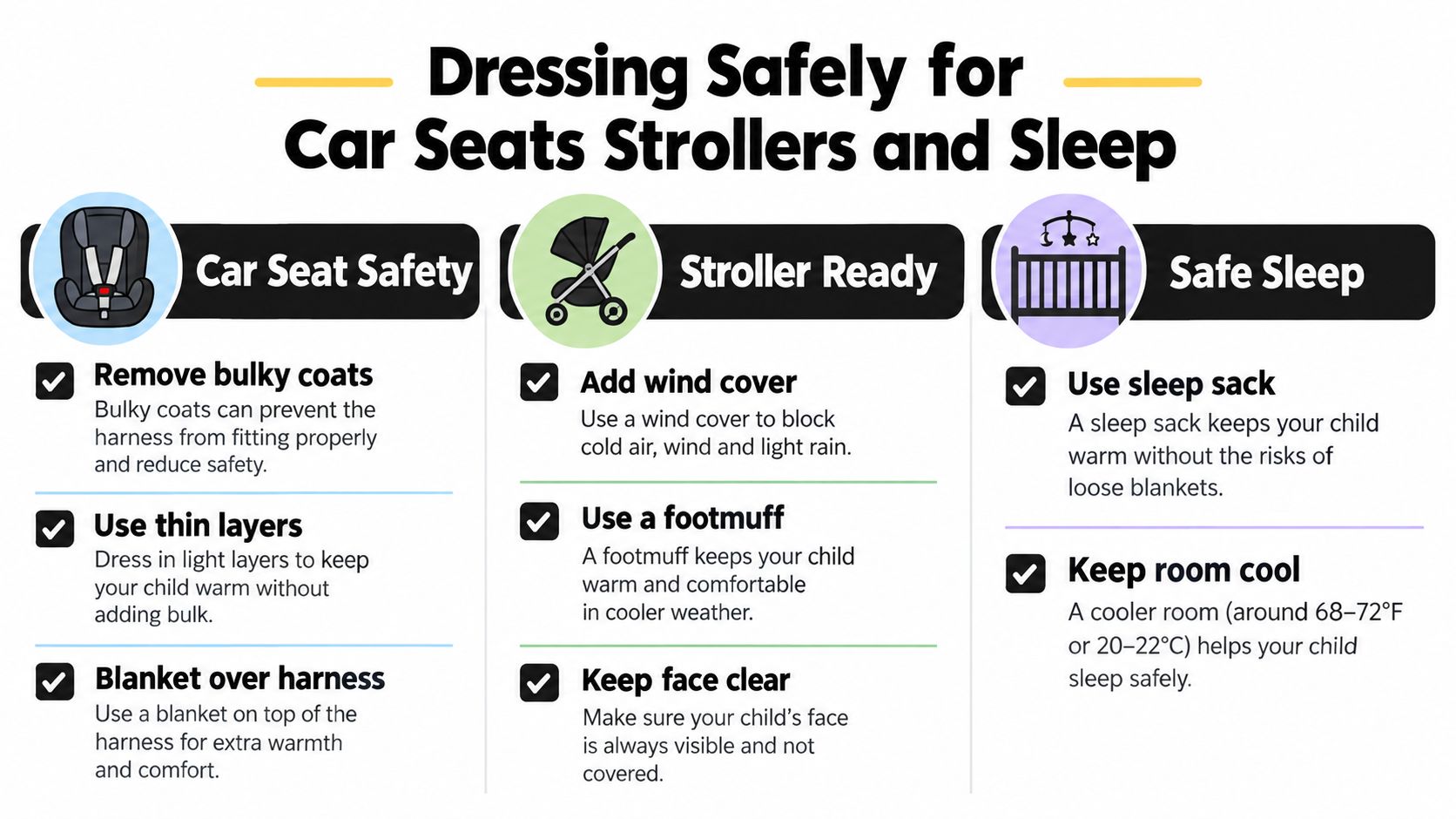
Car seats need flat layers
Bulky coats and puffy buntings can interfere with harness fit. A recent pediatric clinic guide warns against bulky coats in car seats and recommends thinner layers plus a blanket after buckling. The same guide also notes that rooms around 16–20°C can be handled with a TOG-rated sleeping bag, emphasizing warmth without loose blankets in the cot. You can read that guidance in this baby sleep and weather article.
For car rides, think “warm child, flat chest area.”
Do
- Use thin layers: Bodysuit, footed sleeper, light sweater, or fleece layer that doesn't puff under the straps
- Buckle first: Then place a blanket over the harness if needed
- Check snugness: Make sure the harness sits close to the body
Don't
- Use bulky outerwear under straps: It changes how the harness sits
- Overheat the car: Warm air plus overdressing adds up quickly
Strollers need weather shielding
A stroller baby isn't generating much body heat. A walking toddler is. That difference matters.
For stroller time, wind cover, shade, and removable layers matter more than making the whole outfit thick. Keep the face clear, watch for trapped heat under covers, and remove a layer once you move indoors.
A short stroller setup often works best like this:
| Setting | Better Choice | Skip |
|---|---|---|
| Cold breeze | Thin warm layers plus stroller cover | Heavy indoor outfit with no wind protection |
| Sunny mild day | Breathable clothes and shade | Thick blankets left tucked in too long |
| Mixed errands | Layers that unzip fast | One hard-to-remove all-in-one piece |
Sleep needs its own wardrobe logic
Sleepwear should not be a copy of daytime outdoor wear. Babies don't need coats or outdoor bulk in bed. They need sleep clothing matched to the room, with safe sleep practices in mind.
An infant winter-wear manikin study found that observed and required insulation aligned at about -5 °C, but clothing insulation did not correlate cleanly with ambient air temperature, and mean skin temperature still cooled slowly at about 0.012 °C/min, according to this infant outdoor winter wear study. The practical takeaway is simple. Temperature alone isn't enough. Exposure duration and context matter.
That's exactly why a nap in a crib, a stroller doze on a walk, and a car seat snooze after errands shouldn't be treated as interchangeable.
For sleep-specific layering ideas, Little Venture Co. has a helpful guide on how to dress baby for sleep.
The safest clothing plan is usually the one that changes with the setting, not the one that stays on all day.
Seasonal Checklists and Packing for Every Outing
A good packing system cuts stress more than any weather app does. You don't need a giant backup wardrobe in the diaper bag. You need a small kit that covers common changes in temperature, wind, humidity, spills, and stillness.
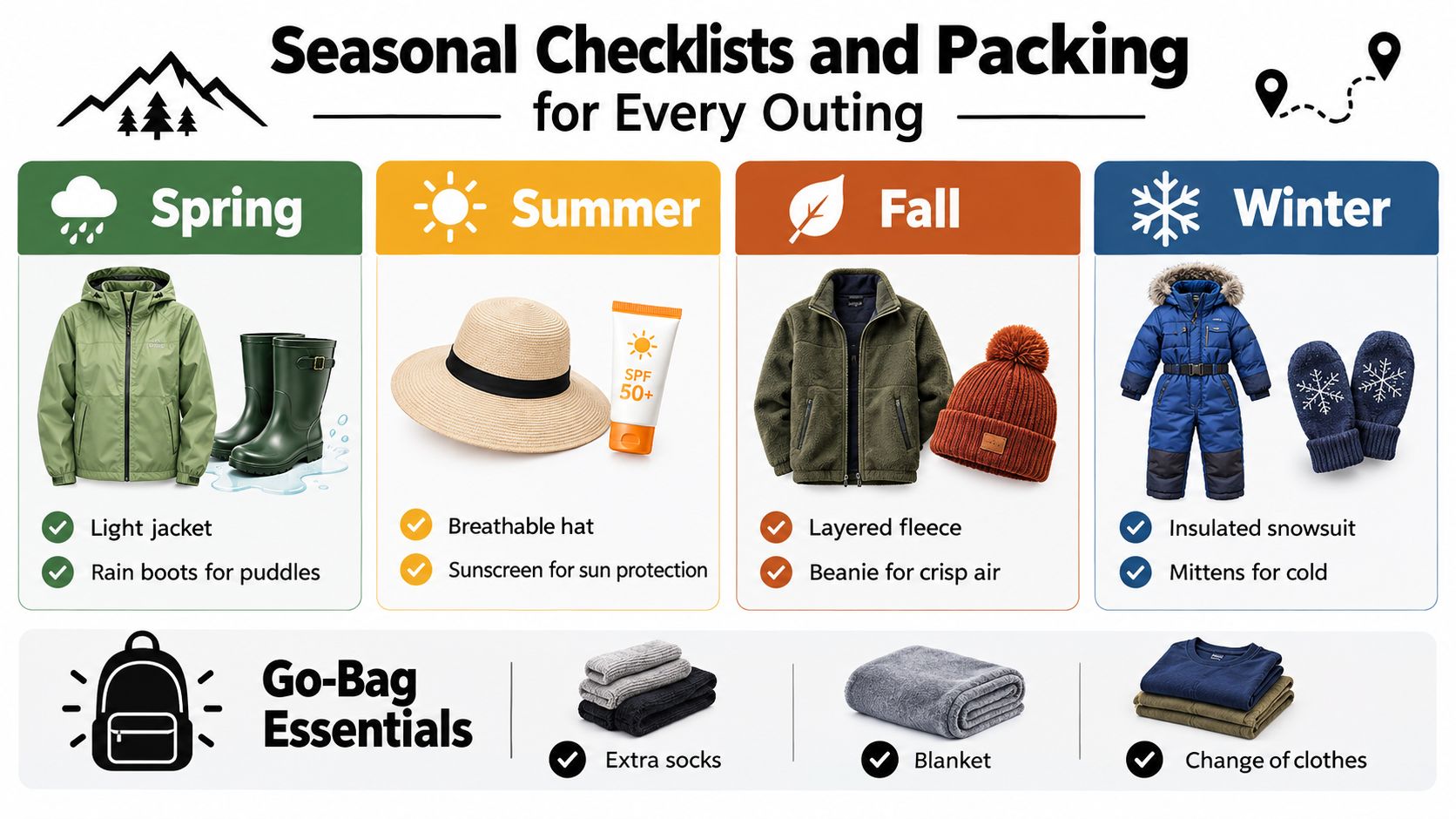
Seasonal clothing checklists
Spring
- Bring flexible layers: A light jacket or cardigan handles cool mornings and warmer afternoons.
- Pack dry backups: Extra socks matter more than an extra outfit on damp playground days.
- Watch the stroller tray and seat: Spring weather can feel cool, but trapped sun warms fabric quickly.
Summer
- Keep outfits lighter in sticky weather: Humidity changes comfort, especially for babies sitting still.
- Choose sun-aware pieces: Hats, lightweight long sleeves when needed, and fabrics that don't stay soggy.
- Skip overstuffing: One extra base layer is usually more useful than a heavier backup set.
Fall
- Dress for changing hours: Mornings and evenings can feel different from midday.
- Use easy on-off pieces: Thin pullovers, leggings, soft socks, and a vest or light coat.
- Plan for church and family outings: A neat layered look photographs well and still lets a child move.
Winter
- Think system, not snowman: Base, warmth, then wind protection if needed.
- Protect small exposed areas: Hat, mittens, and warm socks often solve more than adding torso bulk.
- Separate travel from play: Car seat clothes should not match stroller walk clothes automatically.
A go-bag that works for real life
For errands, park time, church nursery, family dinners, and travel days, I'd rather see a compact smart bag than a giant overpacked one. Keep a standing set ready by the door. If you want a broader travel framework you can reuse, this download packing checklist PDF is a handy companion for organizing family outings.
A strong baby or toddler go-bag usually includes:
- One extra base layer: Bodysuit, tee, or sleeper depending on the season
- Fresh socks: Dry feet fix a lot of fussiness
- Light blanket: Useful for stroller pauses or chilly indoor spaces
- Weather accessory: Hat, mittens, or sun hat depending on conditions
- Simple change of clothes: Focus on comfort, not full outfit styling
If you're traveling with an infant, Little Venture Co. also shares a useful infant travel packing list that pairs well with a seasonal approach.
Style notes for church and gatherings
Faith-friendly dressing doesn't need to mean overdressed. For church events, baptisms, baby dedications, holiday services, or family lunches, choose one meaningful visual piece and keep the rest practical. A scripture-inspired print, a modest bubble romper, or a soft two-piece set can carry the look without piling on extra layers that your child won't tolerate.
That balance matters. Children look more settled, and often happier, when the outfit serves the day instead of just the photo.
Simple Habits for Confident Weather Ready Dressing
Parents who seem relaxed about weather appropriate clothing usually aren't guessing better than everyone else. They're using a few steady habits and repeating them. That's what makes the whole process feel lighter.
Keep the routine short
Use the same check every time you head out.
- What's the setting? Outdoor play, car ride, stroller time, or sleep.
- What's the weather doing besides temperature? Wind, humidity, strong sun, damp air.
- How long will my child be in it? Quick transfer or extended outing.
That short pause solves most overdressing problems before they start.
Adjust with your hands, not just your eyes
A child can look cozy and still be uncomfortable. The better checks are simple.
- Feel the neck or upper back: Warm, not sweaty
- Look for flushed skin and fussiness: Often a sign to remove a layer
- Use the two-finger harness habit in the car seat: Snug harness, no bulky coat underneath
- Watch the transition points: The first few minutes outdoors and the first few minutes indoors tell you a lot
Clothing should help a child stay settled. If the outfit causes constant fixing, pulling, sweating, or complaints, it isn't working.
Build a wardrobe that makes good decisions easier
Parents save the most energy. Keep enough comfortable basics on hand that layering doesn't depend on one perfect outfit being clean. Choose pieces that mix easily, wash well, and don't become useless if the weather shifts midday.
For many families, that means:
- smooth base layers for sensitive skin
- simple mid-layers that don't fight the stroller or high chair
- one reliable wind-blocking outer layer
- sleepwear chosen for room conditions, not outdoor weather
Care matters too
If you use bamboo viscose or other soft specialty fabrics, wash them in a way that keeps them feeling good enough to layer next to the skin. Once a base layer gets rough, twisted, or stretched out, children resist it faster. A weather-ready wardrobe works better when the pieces still feel familiar and comfortable after repeated washes.
There's also something grounding about dressing children thoughtfully. Not perfectly, just thoughtfully. Paying attention to comfort, safety, and the actual conditions is a small form of care, and for many families a quiet act of stewardship too.
When you separate outdoor play from transit and sleep, account for wind and humidity, and rely on layers instead of panic, weather appropriate clothing stops feeling complicated. It becomes a habit.
Little Venture Co. offers faith-inspired baby and toddler clothing, including bamboo sleepwear and daywear made with Oeko-Tex® Standard 100 certified materials that fit the kind of layering and comfort choices this article talks about. If you're building a simpler, softer wardrobe for real weather, naps, and everyday outings, visit Little Venture Co..