

How to Dress Baby for Winter Without the Guesswork
Dressing your baby for winter really boils down to one simple rule of thumb: add one more layer than you’d wear to feel comfortable. That's it. This golden rule, plus a few easy tricks like smart layering and quick temperature checks, takes all the guesswork out of keeping your little one perfectly warm and safe.
Your Quick Guide to Winter Baby Dressing
Trying to figure out what your baby should wear in the winter can feel like you're solving a high-stakes puzzle every single day. Am I putting on too many layers? Not enough? It's a question that runs through every parent's mind, especially when you're just starting out. But honestly, it's not as complicated as it seems.
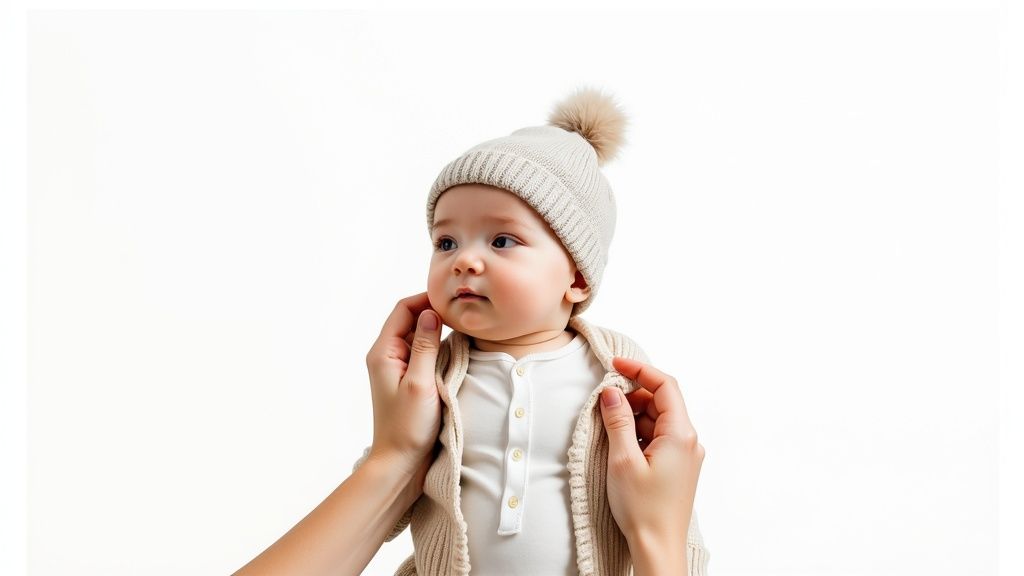
If there's one thing you take away from this guide, let it be the one-layer-more rule. If you're heading out in a long-sleeved shirt and a light jacket, your baby probably needs a long-sleeved onesie, a sweater, and a jacket. Think of it as your go-to starting point for any winter weather.
The Two Skills Every Parent Needs
Once you have the one-layer rule down, mastering these two simple skills will make you feel like a pro:
- Become a Layering Expert: Layers are your best friend. They act like a personal thermostat for your baby. Start with a soft base layer, add a cozy middle layer for insulation, and top it off with an outer layer for protection. This system makes it easy to adjust on the fly, like when you go from the frosty outdoors into a toasty warm store.
- Do the "Neck Check": A baby’s hands and feet can feel chilly even when they’re perfectly comfortable. For a truly accurate reading, slip a finger onto the back of their neck or their tummy. If their skin feels warm and dry, you’ve nailed it. If it's clammy or sweaty, they're too hot—time to peel off a layer.
Parenting Tip: Since babies can’t tell us they’re overheating, the neck check is your secret weapon. Overheating is a risk factor for SIDS, so checking their neck every so often is a super important and easy habit to get into.
Knowing how to layer for warmth is crucial, and so are practical skills like knowing how to safely wrap a baby for those chilly newborn nights. The right swaddle, combined with the right layers underneath, creates a perfectly snug and safe sleep space.
Now that you have the basics down, you're ready to dive a little deeper. We'll get into the best fabrics to use, how to handle car seat safety in the cold, and what to do in different winter scenarios.
Mastering the Art of Layering
Dressing a baby for winter can feel a little like prepping for a polar expedition every time you need to leave the house. But it doesn't have to be that complicated. The real secret isn't just piling on clothes—it's about smart, adaptable layering.
Think of it as creating a personal little microclimate for your baby. With the right layers, you can easily add or remove a piece as you move from your warm house to the chilly outdoors and back into a toasty store. This flexibility is your best friend for keeping your little one perfectly comfortable, never too hot and never too cold.
The Three-Part Layering Formula
The easiest way to get this right every time is to use a simple three-part system. Each layer has a specific job, and when they work together, they're the ultimate defense against the cold without causing your baby to overheat.
-
The Base Layer (The Second Skin): This layer sits right against your baby’s skin. Its most important job is to wick moisture away, because a damp baby gets cold fast. Forget cotton, which holds onto moisture. Instead, reach for materials like soft merino wool or bamboo viscose. A snug-fitting, long-sleeved onesie is the perfect place to start.
-
The Middle Layer (The Insulator): This is the cozy layer that traps body heat and provides real warmth. This is where you bring in materials like fleece, thicker wool, or even a puffy down vest. A fleece sleeper or a soft, chunky sweater fits the bill perfectly.
-
The Outer Layer (The Protector): Think of this as your baby's shield against the elements. It needs to be wind-proof and, if you're out in snow or sleet, waterproof. For a serious outdoor adventure, this will be a snowsuit or a bunting. For quick trips on a milder day, a thick jacket might be all you need.
Layering isn't just about adding clothes; it's about creating an adaptable system. Each piece works together to manage moisture, trap heat, and block the elements, giving you complete control over your baby's comfort.
Once you get the hang of this system, you'll stop just grabbing "warm clothes" and start building functional, comfortable outfits for any winter scenario.
Layering in Action: Real-World Scenarios
So, what does this look like in practice? A whole lot depends on what your day holds.
-
Scenario 1: Quick Car Trip to the Store You’re moving between a warm car, the cold outdoors for just a minute, and a heated store. A full snowsuit here is not just overkill—it's unsafe in a car seat.
- Base: A bamboo viscose long-sleeved onesie.
- Middle: A cozy fleece footie pajama.
- Outer: Buckle your baby into the car seat wearing just the base and middle layers. Then, tuck a thick blanket over the harness or use a "shower cap" style car seat cover that doesn't go between your baby and the straps.
-
Scenario 2: A Walk in the Park on a Cold Day Here, your baby is going to be out in the elements for a while, so you need full protection.
- Base: A merino wool or bamboo long-sleeved bodysuit.
- Middle: A fleece jumpsuit or a warm sweater-and-pants set.
- Outer: A full, insulated snowsuit or bunting bag, topped off with a warm hat, mittens, and insulated booties.
A good rule of thumb is to dress your baby in one more layer than you're comfortably wearing. On a 0°C day, that could mean a base onesie, a fleece jumpsuit, and a waterproof bunting. Keeping them from getting too hot is just as important as keeping them warm. Shockingly, overheating contributes to 22% of sleep-related infant deaths in winter, which is why 95% of pediatricians recommend sleep sacks over loose blankets. For feet, insulated booties can reduce the risk of frostbite by 50% in snowy areas. You can learn more about the focus on safety in baby apparel from this industry market analysis.
Dressing your baby for sleep is a whole different ball game that relies on room temperature and TOG ratings. For a deep dive into that, check out our complete guide on how to dress baby for sleep. Nailing their nighttime outfit is key to a safe and restful winter night for the whole family.
Choosing the Best Winter Fabrics for Your Baby
When you're figuring out how to dress your baby for winter, the number of layers is only half the battle. The material actually touching your baby's delicate skin is a huge piece of the puzzle. Some fabrics are absolute rockstars at keeping little ones cozy, while others can secretly trap sweat and leave them feeling colder than before.
Think about it this way: a damp shirt against the skin is a recipe for a chill, no matter how many puffy coats you pile on top. That’s why breathable, moisture-wicking fabrics are your best friends for winter. You want to create a little bubble of dry, comfortable warmth right next to their body.
The A-List of Winter Fabrics
Not all materials are up to the task when the temperature really drops. You want fabrics that offer that perfect sweet spot of warmth and breathability.
-
Merino Wool: If you’re picturing an itchy, scratchy sweater, think again! Modern merino wool is incredibly fine and soft, perfect for even the most sensitive baby skin. It’s a natural thermostat—it keeps your baby warm but lets excess heat escape to prevent overheating. Best of all, it pulls moisture away from the skin like a champ.
-
Bamboo Viscose: Famous for its buttery-soft feel, bamboo is another fantastic choice. It's super breathable and has great thermal-regulating properties, which just means it helps keep your baby warm when it's cold and cool when you pop back indoors. Its gentle texture makes it a go-to for base layers like bodysuits and PJs.
-
Fleece: This synthetic material is the undisputed king of cozy insulation. Fleece is lightweight, dries in a flash, and is amazing at trapping body heat. It’s the perfect material for those middle layers—think zip-up hoodies, warm pants, and sleep sacks.
This simple layering model shows you how these different fabrics can work together to create a perfect little system.
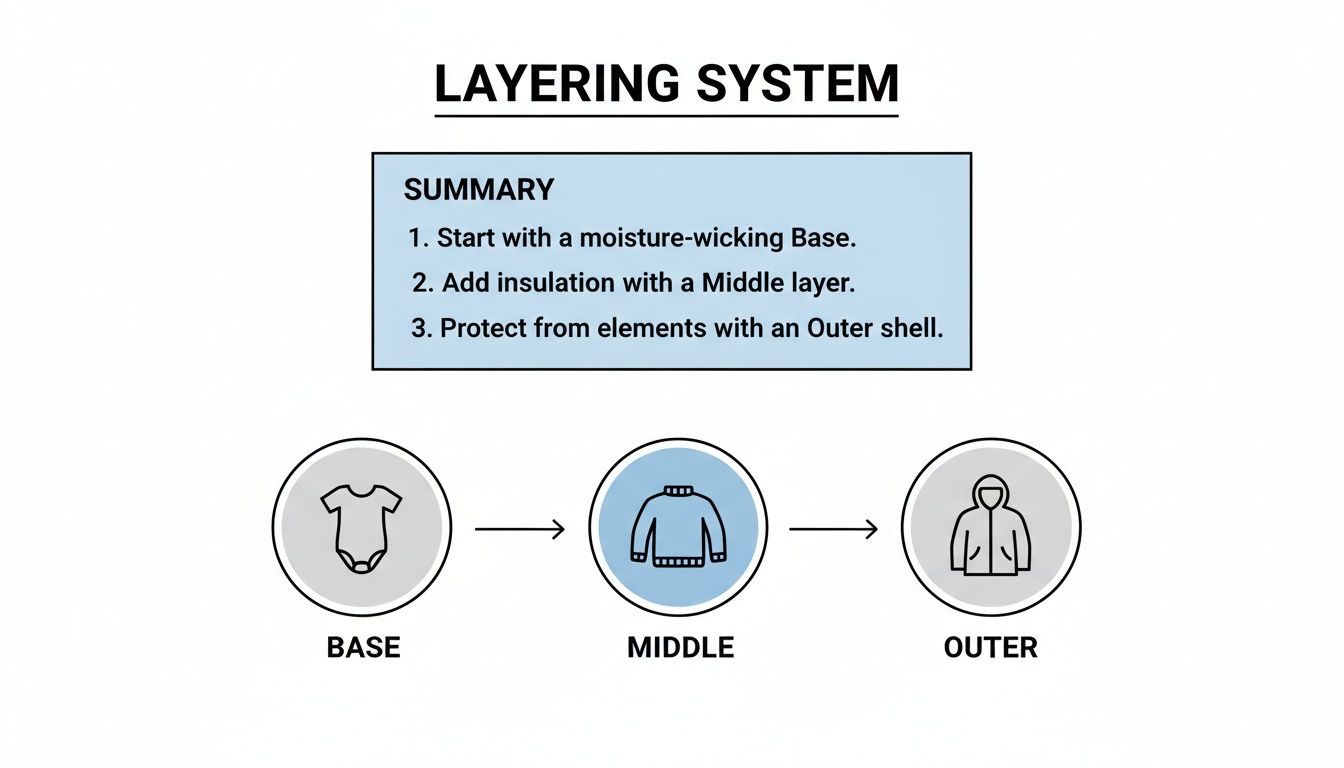
As you can see, it all starts with a moisture-wicking base, adds an insulating middle layer for warmth, and tops it off with a protective outer layer. Easy!
Winter Fabric Face-Off for Baby Clothes
Choosing the right material can feel overwhelming, but this little chart breaks down the pros and cons of the most common options. It's a quick cheat sheet to help you build the best winter wardrobe for your little one.
| Fabric Type | Why It Works for Winter | When to Be Cautious | Best for This Scenario |
|---|---|---|---|
| Bamboo Viscose | Silky-soft, breathable, and great at regulating temperature. Gentle on sensitive skin. | Can be less insulating than wool on its own, so best used as part of a layering system. | The perfect base layer—think bodysuits, long-sleeved onesies, and pajamas. |
| Merino Wool | The ultimate natural insulator. It's soft, wicks moisture away, and resists odors. | High-quality merino can be pricier, and needs gentle washing to maintain its shape. | A fantastic base or middle layer, especially for outdoor adventures or long car rides. |
| Fleece | Lightweight yet incredibly warm. Dries very quickly and is super durable. | It's not as breathable as natural fibers, so it can cause overheating if the base layer isn't wicking. | The ideal middle layer—jackets, pants, or a one-piece bunting suit. |
| Cotton | Soft, affordable, and easy to wash. Breathable in dry conditions. | Absorbs moisture and holds it, which can make a baby cold and clammy once they sweat. | Indoor playtime in a heated home or as an outer layer on a cool, completely dry day. |
Ultimately, the best fabric is the one that keeps your baby dry and comfortable. Mixing and matching these materials based on the day's activities is the key to a happy winter baby.
What About Good Old Cotton?
So, where does cotton fit into all this? While it's wonderfully soft and breathable, cotton has one major downfall in winter: it soaks up moisture like a sponge. Once it gets damp from a little sweat, it loses all its insulating power and can actually make your baby colder.
That doesn't mean you have to banish it completely. Cotton is fine when:
- You're just hanging out at home in a temperature-controlled room. A simple cotton onesie is perfect for indoor play.
- It's used as a middle or outer layer on a crisp, dry day when there’s zero chance of getting sweaty or wet.
My Pro Tip: As a rule of thumb, just avoid putting cotton directly against your baby's skin if you think they might sweat, even a tiny bit. For that all-important base layer, stick with merino wool or bamboo to keep them dry and happy.
If you're trying to decide between natural fibers, we break it down even further in our guide to organic cotton vs. bamboo.
By getting into the habit of checking labels, you can build a winter wardrobe where every single piece is working hard to keep your baby safe, warm, and comfy all season long.
Putting It All Into Practice: Dressing for Real Winter Scenarios
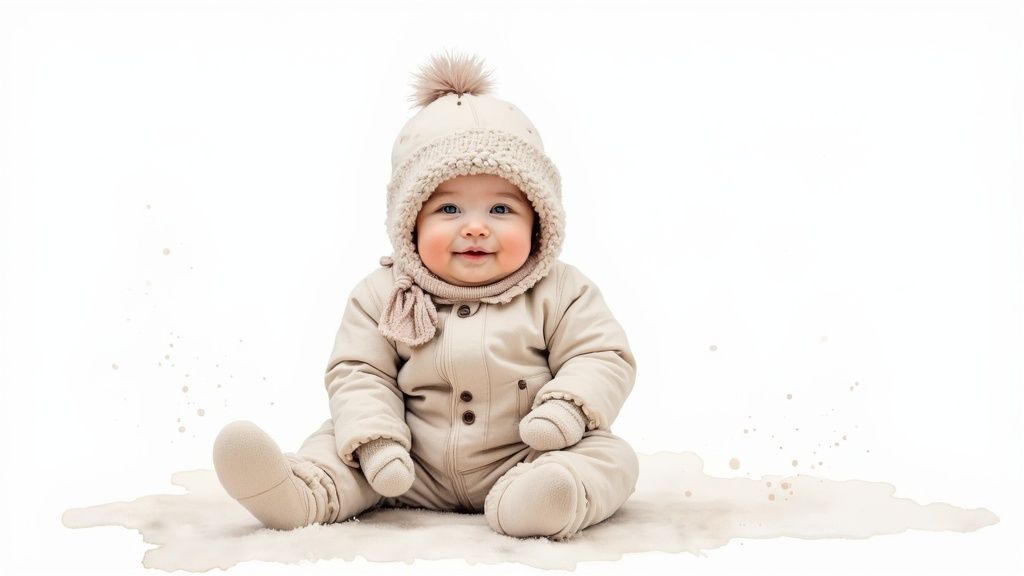
Knowing the "rules" of layering is one thing, but actually getting a squirmy baby dressed on a chaotic winter morning is a whole different ballgame. Let's be real—dressing your little one for a cozy nap is nothing like bundling them up for a snowy adventure in the park.
Each situation calls for a slightly different approach. So, let’s get practical and break down the four most common scenarios you'll run into. This is your no-fuss guide to handling everything from car seat safety to safe winter sleep.
Keeping Baby Cozy and Safe During Sleep
Winter nights can feel a little nerve-wracking. You want your baby to be warm, but you also know that loose blankets are a major SIDS risk. This is where wearable blankets and TOG ratings become your absolute best friends.
TOG stands for Thermal Overall Grade, which is just a fancy way of saying how warm a sleep sack is. The higher the number, the warmer it is. It completely takes the guesswork out of dressing your baby for bed.
Here’s a quick cheat sheet:
- 1.0 TOG: This is your go-to for a room that’s a comfortable 69-73°F (20-22°C). Just pop it over a long-sleeved bamboo or cotton onesie, and you're set.
- 2.5 TOG: When the nursery is cooler, around 61-68°F (16-20°C), this TOG rating is perfect. Layer it over long-sleeved footed pajamas for that extra bit of toastiness.
Your goal is a sleep environment that's warm enough for them to sleep well but not so warm that they get sweaty. The best way to check is by feeling the back of their neck—it should feel warm and dry. If it’s clammy, they’re too hot.
My go-to rule for winter sleep: A good sleep sack is non-negotiable. It gives you all the warmth of a blanket without any of the risks.
Dressing for Indoor Playtime
When you’re just hanging out at home, it's all about comfort and mobility. You don't need all the heavy-duty gear, but you do want them to stay warm, especially if you have drafty windows or chilly floors.
A soft, breathable base layer is usually all it takes. Think a long-sleeved bamboo viscose onesie with some cozy pants. For little crawlers exploring hardwood or tile, add a pair of soft-soled slippers or thick socks to keep those tiny feet warm. If your house runs on the cooler side, a light fleece vest is a fantastic add-on—it keeps their core warm but leaves their arms free for serious playtime.
Navigating the Car Seat Challenge
Okay, this is the big one. Puffy winter coats and snowsuits are an absolute no-go in a car seat. This isn't just a suggestion; it's a critical safety rule. That fluffy padding creates a huge, unsafe gap between the harness and your baby. In an accident, the coat would compress, leaving the straps dangerously loose.
So, how do you keep them warm without compromising safety?
- Dress in Thin, Warm Layers: Start with their regular indoor clothes and add a snug-fitting fleece jumpsuit or a thin fleece jacket. These fabrics are warm without being bulky.
- Get a Snug Buckle: After you place them in the seat, tighten the harness until it's snug against their chest. You should only be able to slide one finger between the straps and their collarbone.
- Add Warmth on Top: After they’re buckled in safely, you can drape a thick blanket over them or use one of those "shower cap" style car seat covers that stretches over the top of the seat without getting in the way of the straps.
This simple method keeps your baby both warm and, most importantly, safe. If you're heading out on a longer drive, we have a few more tips in our guide on what to bring when traveling with an infant.
Gearing Up for Outdoor Adventures
When it's time to actually get out and enjoy the winter wonderland, you need to be prepared. Babies lose body heat way faster than we do, so every little bit of them needs to be protected from the cold. For the tiniest ones, items like baby swaddle wrap blanket options can provide an extra layer of security and warmth against the elements.
A solid layering system is non-negotiable here. The classic three-layer rule is your best bet: a moisture-wicking base layer, an insulating mid-layer (like fleece), and a waterproof, windproof outer shell. This isn't just a hunch; market data shows that baby outerwear is projected to make up 69.3% of all baby apparel sales by 2025. It makes sense, given that babies can lose heat up to four times faster than adults. Remember to check their neck for sweat to make sure they aren't overheating, which is a contributing factor in roughly 15% of winter SIDS cases.
And whatever you do, don't forget the accessories! They're your first line of defense.
- A Warm Hat: Make sure it covers their ears completely.
- Mittens: These are better than gloves because keeping their fingers together generates more warmth.
- Warm Socks & Booties: A thin pair of socks under some insulated, waterproof booties will keep their little toes perfectly toasty and dry.
Must-Have Winter Accessories and Gear
Okay, you’ve got the layering down. Now for the finishing touches! Think of accessories as the final, crucial pieces of the puzzle for keeping your baby totally snug. A perfectly layered outfit isn't complete without the right gear to protect those tiny hands, feet, and ears from the cold.
These aren't just for cute photos—they're your front line of defense. They cover the spots where babies lose heat the fastest, making sure every little inch is protected.
Protecting Head, Hands, and Feet
Keeping your baby’s extremities warm is an absolute must. Their little circulatory systems are still a work in progress, which means their hands and feet get chilly way faster than ours do.
Here’s what you absolutely need:
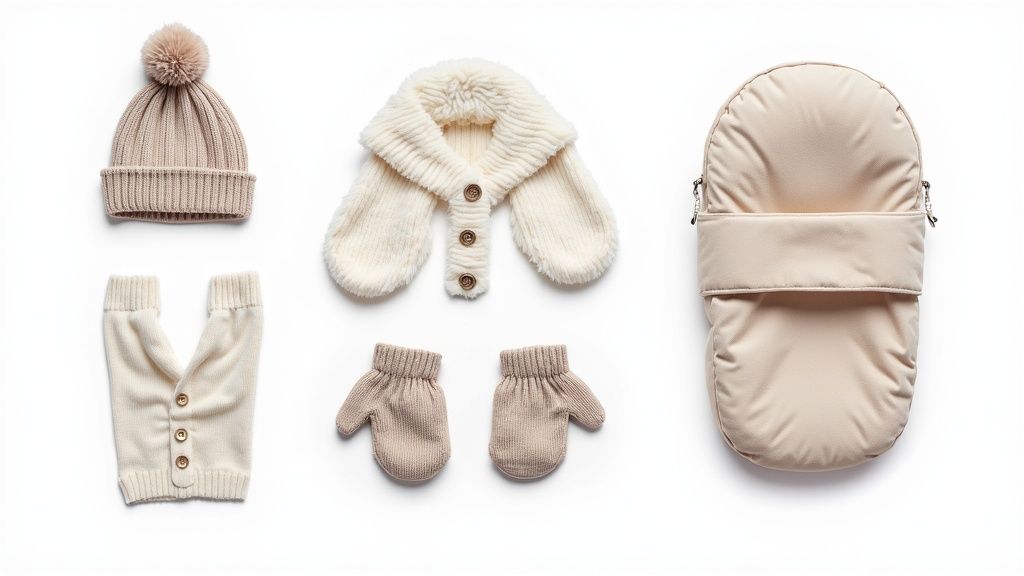
- A Warm Hat That Covers the Ears: Babies lose a ton of heat through their heads. Find a soft, snug hat made from fleece or wool that pulls down securely over their ears. This is non-negotiable for blocking out that biting wind.
- Mittens, Not Gloves: For tiny fingers, mittens are the undisputed champion. Why? Because keeping fingers together generates and traps way more warmth than separating them in gloves. Pro tip: look for a pair connected by a string you can thread through their coat sleeves. You’ll thank me later.
- Cozy Socks and Booties: The best combo is a pair of warm, breathable socks (merino wool is amazing for this) topped with insulated, soft-soled booties. This little one-two punch keeps their toes perfectly toasty.
Parenting Hack: When you're shopping for mittens and booties, find ones with elastic or Velcro at the cuff. It makes them so much easier to wrestle onto a wriggly baby and, even better, helps them actually stay on.
Smart Gear for On-the-Go Warmth
Besides the clothes they wear, a few key items can make winter adventures so much less stressful. This gear is all about adding warmth without compromising safety, especially in the car seat.
A stroller bunting (or footmuff) is a game-changer. It's basically a snuggly little sleeping bag that fits right into your stroller, creating a warm cocoon for your baby on walks. On milder days, you can even skip the bulky snowsuit. Plus, no more kicking blankets onto the wet pavement!
For the car, a “shower cap” style car seat cover is a non-negotiable. These are designed to stretch over the top of the infant car seat, trapping heat inside without adding any dangerous puffiness between your baby and the harness straps. It’s hands-down the safest way to keep them warm in the car. Armed with these essentials, you'll be ready to face whatever winter throws at you.
Your Winter Baby Dressing Questions Answered
Even when you feel like you've got the whole layering thing down, questions always come up. Dressing a baby for winter isn't a one-size-fits-all deal, and sometimes you just need a quick, straight answer to a specific situation.
We’ve pulled together the most common questions we hear from parents trying to keep their little ones safe and snug during the colder months. Think of this as your go-to FAQ for getting through winter like a pro.
How Can I Tell if My Baby Is Too Hot or Too Cold?
The best, most reliable way to check your baby’s temperature is to feel the back of their neck or their tummy. These spots give you an accurate read on their core body temperature, which is a much better indicator than their hands or feet.
Don't panic if their little fingers and toes feel cool! That’s completely normal since their circulatory system is still figuring things out. Focus on their core instead.
- If their neck feels sweaty or clammy, they’re too warm. Time to peel off a layer.
- If their neck feels cool to the touch, they could probably use an extra layer to get comfortable.
- A perfectly comfortable baby's skin will feel warm and dry.
Also, keep an eye on their behavior. A baby who is too hot might get fussy and have flushed cheeks, while a baby who is too cold might be unusually quiet and lethargic.
Why Can't My Baby Wear a Puffy Coat in a Car Seat?
This is probably one of the most critical safety rules for winter. A puffy coat creates a big, dangerous gap between your baby and the car seat harness.
In a crash, all that fluffy padding would compress instantly. This makes the harness dangerously loose, allowing for way too much movement and dramatically increasing the risk of serious injury. The straps just can't do their job.
The only safe way to do it is to dress your baby in thin, snug layers (like fleece), buckle the harness tightly against their chest, and then place a blanket or a car-seat-safe cover over them. The harness is tight enough when you can only slip one finger underneath it at their collarbone. This is one rule you never want to bend.
What Is a TOG Rating and How Do I Use It for Sleep?
TOG stands for Thermal Overall Grade, and it’s basically a simple way to measure how warm a sleep sack or wearable blanket is. It takes all the guesswork out of dressing your baby for sleep and eliminates the need for loose blankets, which are a known SIDS risk.
A higher TOG rating simply means more warmth. Using the TOG system helps you perfectly match their sleepwear to the temperature of their nursery.
Here's a quick guide:
- For a nursery between 69-73°F (20-22°C), a 1.0 TOG sleep sack over a long-sleeved onesie is usually a great fit.
- For a cooler room, around 61-68°F (16-20°C), you’ll want to reach for a warmer 2.5 TOG sleep sack.
It’s a straightforward system that helps ensure your baby stays at a safe, comfortable temperature all night. For a deeper dive, you can learn more about what a TOG rating is and how to use it in our complete guide.
Is Wool Too Itchy for a Baby's Sensitive Skin?
When you hear "wool," you might have flashbacks to those scratchy sweaters from your own childhood. But modern merino wool is a whole different animal. Its fibers are incredibly fine and soft, making it gentle enough for even the most delicate baby skin.
Merino wool is a true winter superstar. It’s wonderfully breathable, wicks moisture away from the skin to keep your baby dry, and is a fantastic temperature regulator. That means it keeps them warm without ever making them feel sweaty or overheated.
When shopping, just look for items specifically labeled "merino wool." So many parents find it’s the perfect high-performance fabric for base layers and sweaters that keep their little one comfortable through a whole range of temperatures—from a chilly car ride to a warm indoor playdate. It’s an investment in comfort that really pays off.
At Little Venture Co., we believe in wrapping your little ones in comfort that reflects a sense of inspiration. Our ultra-soft bamboo sleepwear and daywear are designed to be gentle on sensitive skin while keeping your baby perfectly cozy all winter long. Explore our collection of safe, beautiful, and faith-inspired apparel today. https://littleventureco.com