

A Parent's Guide to Nurturing The Fruit of Spirit
When you hear the term “fruit of the Spirit,” it’s easy to think of it as a checklist of rules or a list of things you have to do to be a good Christian. But that’s not it at all.
Think of it more as the beautiful character traits that naturally start to grow inside us when we stay connected to God. The idea comes from Galatians 5:22-23, which lists nine qualities: love, joy, peace, patience, kindness, goodness, faithfulness, gentleness, and self-control. They aren't things we achieve on our own; they’re the evidence of God's Spirit working in our hearts.
What Is The Fruit Of The Spirit For Modern Families
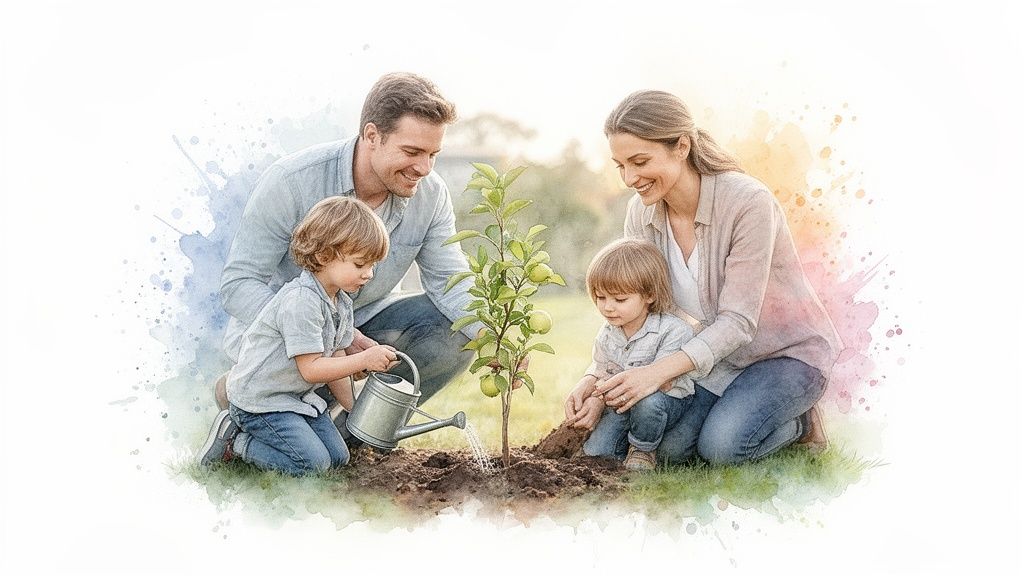
Let’s use an analogy every parent can relate to: planting a garden. You can’t just stand there and force a tiny seed to sprout or demand that an apple appears on a branch overnight. It doesn't work that way. Instead, you create the right environment for growth—rich soil, the right amount of water, and plenty of sunshine.
It's the same with nurturing the fruit of the Spirit in our families. It’s not about demanding perfection or getting frustrated when someone messes up. It's about intentionally creating a home filled with grace, prayer, and love, where these beautiful traits can naturally start to blossom in everyone.
This timeless biblical concept is so much more than a list to memorize. It’s a practical guide for a more joyful, connected family life. It’s a shift in focus from "doing" all the right things to simply "becoming" more like Jesus, together.
A Garden of Virtues in Your Home
When you see these nine virtues through the lens of parenting, they suddenly feel a lot less intimidating and way more accessible. They stop being a daunting checklist and transform into daily opportunities to teach and connect with your kids. You’re the gardener, patiently tending to the precious little seeds planted in your children’s hearts.
This whole journey really boils down to a few core ideas:
- Progress Over Perfection: Some days, the garden will have weeds. And that’s okay! The real goal is gentle, consistent nurturing, not a flawless, prize-winning harvest every single time.
- Modeling Is Key: Let’s be real—our kids learn way more from watching us than from listening to us. When you model patience in a traffic jam or show kindness to a tired cashier, you’re watering those little seeds in their hearts.
- It’s a Team Effort: Growing these character traits is a family project. It’s something you do together, strengthening your bonds in the process.
These biblical virtues align beautifully with modern concepts like social emotional learning for kids, which can offer fantastic insights for today’s parents. And this isn't a niche idea; these values are foundational to a faith shared by nearly 2.4 billion people worldwide. Much of Christianity's historic growth has been fueled by ordinary people simply living out these powerful traits. If you’re just starting out, our guide on teaching children about God is a great place to begin.
The word "fruit" itself is a clue. Fruit is what naturally grows and overflows from a healthy plant. It’s not about trying harder to be good, but about abiding deeper in our relationship with God.
By framing it this way, this ancient spiritual concept becomes a joyful, natural part of your family’s rhythm. You’re not just teaching virtues; you’re creating a legacy of faith and character that will last a lifetime.
Planting The First Seeds: Love, Joy, and Peace
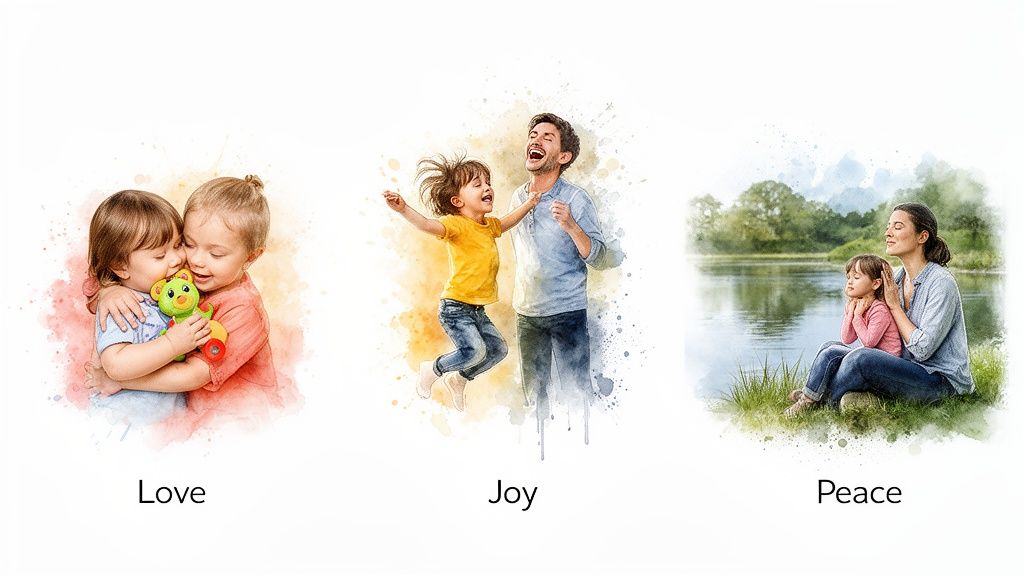
Starting with the first three fruits—love, joy, and peace—is like laying the foundation for your family’s spiritual garden. Think of them as the big, beautiful anchor plants that everything else grows around. For our little ones, these concepts can feel huge and abstract. Our job is to bring them down to their level, into moments they can see, touch, and feel every single day.
Let's dig in and explore how to plant these first seeds in the everyday soil of your home, making them real and relatable for your toddlers and young children.
Teaching The Meaning of Love
Love is the very first fruit mentioned, and it's the most important. Thankfully, it's also the one our kids already understand on a deep level because they feel it from us every single day. At its core, love is about showing you care and putting others first.
For a toddler, love isn't some fuzzy feeling; it's an action. It's giving a big, warm hug when a friend falls down. It's sharing their most-prized snack without being asked. It’s the gentle way you kiss their forehead goodnight and the care you show when you clean up a scraped knee. These moments are their very first lessons in what love looks and feels like.
Here are a few ways to point out love in action:
- Sharing Toys: When you see your child share a beloved toy, you can say, "That was so loving to let your sister have a turn. You made her heart happy!"
- Helping Hands: Encourage them to help a sibling who's getting frustrated with a block tower. This small act teaches that love often means helping others when they're stuck.
- Comforting Others: If a playmate is sad, prompt your child to offer a hug or a kind word. This connects the feeling of empathy to the action of loving.
By narrating what's happening, you're giving your child the words to understand this beautiful virtue. You're showing them that love is so much more than a word; it's a choice we make to care for the people around us.
Discovering True Joy
Here’s something that can be tricky to explain: joy is different from happiness. Happiness often depends on things going our way—getting a new toy or having ice cream for dessert. Joy, on the other hand, is a deeper, more resilient feeling. It’s a bubbly sense of delight that comes from knowing you are deeply loved, no matter what.
Think of joy as a little sparkler inside our hearts that stays lit even on a grumpy, rainy day. It's the feeling that bubbles up when you sing a silly song together in the car, or when they finally master a new skill, like zipping up their own jacket. It's a gift that isn't tied to perfect circumstances.
You can help cultivate this kind of joy by:
- Celebrating Small Wins: Make a huge deal out of small accomplishments. This reinforces their sense of worth and security.
- Finding Joy in Routine: Turn everyday moments into fun rituals, like a special song you sing while brushing teeth or a silly dance you do before dinner.
- Focusing on Gratitude: Even on tough days, point out things to be thankful for. "It was a grumpy morning, but wasn't it joyful to see that big, fluffy dog on our walk?"
Joy is the quiet confidence that even when things are hard, we are held and loved by God. It’s an inner contentment that doesn't get washed away by a bad day or a toddler tantrum.
Teaching joy means showing our kids that their value and security don't come from getting what they want, but from being who they are: wonderfully made and unconditionally loved. This builds a foundation of emotional resilience that will serve them their entire lives.
Creating a Space for Peace
For a toddler, peace is often what comes after the storm. It’s that feeling of calm and safety after a big tantrum has passed and they're cuddled up in your arms. It's the quiet stillness of storytime before bed or the gentle rhythm of rocking in a chair together.
A wonderful analogy for peace is a calm lake. Even if there are big splashes and waves on the surface (hello, toddler tantrum!), deep down, the water is still and quiet. Our goal is to help our children find that still, quiet place inside themselves.
Here’s how you can model peace:
- Take Deep Breaths Together: When emotions are running high, get on their level and say, "Let's take a deep breath like we're smelling a flower... and then blow it out like we're blowing out a candle." Doing it with them makes it a shared, calming activity.
- Create a "Peace Corner": Designate a cozy spot in your home with soft pillows and quiet toys where your child can go when they feel overwhelmed. It's not a time-out, but a "calm-down" spot.
- Use a Calm Voice: When your child is upset, responding with a gentle, steady voice can de-escalate the entire situation and models peacefulness for them.
By demonstrating how to return to a state of calm, you give your child a powerful tool. You teach them that even when they feel out of control, peace is always something they can come back to, with your help and with God’s. These first three fruits—love, joy, and peace—are truly the bedrock of a faith-filled home.
Nurturing Growth with Patience, Kindness, and Goodness
As your little one’s heart starts to bloom with love, joy, and peace, it's time to nurture the next set of fruits: patience, kindness, and goodness. These are the "doing" fruits—the ones that really show up in day-to-day life with siblings, friends, and even the family dog.
You'll find that these traits build beautifully on the foundation you’ve already laid. It’s a lot easier to be patient when you’re feeling peaceful inside, and kindness just seems to flow out of a heart that’s already full of love. So, let’s break down these big ideas into bite-sized pieces perfect for little hands and hearts to hold.
The Gentle Art of Patience
For a toddler, patience is a tough one. Their world runs on now, and waiting for pretty much anything can feel like a disaster. The trick is to frame patience not as a punishment, but as a quiet, strong way of waiting for something good.
I like to use the cookie analogy. You can't just gobble them up the second they come out of the oven—ouch! Patience is that little bit of waiting time that makes the final treat taste so much better. It's taking turns on the slide without a meltdown or waiting for mommy to finish her phone call before asking for another snack.
Here are a few ways to help patience grow:
- Use Visual Timers: A simple sand timer or a colorful countdown on your phone makes "waiting" a real, seeable thing. It gives it a clear beginning and an end, which is a game-changer for little ones.
- Practice "Waiting Words": Give them a simple phrase they can use, like, "I'm waiting for my turn." This gives them language and a sense of control instead of just boiling over with frustration.
- Celebrate the Small Wins: When you catch them waiting without a fuss, praise them specifically. "Wow, you were so patient while I tied your brother's shoes. Thank you, that was a huge help!"
Every time you model patience yourself—stuck in traffic or in a long grocery line—you’re planting a seed. You’re showing them that waiting calmly is a superpower, a beautiful part of the fruit of spirit that makes life a little easier for everyone.
Cultivating Everyday Kindness
Kindness is simply love in action. It’s the hands-on, practical way we show we care. For young kids, kindness isn't found in grand gestures, but in the tiny, tangible moments that make up their day.
It’s petting the dog gently instead of pulling its tail. It's using soft words with a sibling who’s having a hard time. It’s offering a toy to a friend who is crying or helping put blocks away even if they didn't make the whole mess.
Kindness isn't about doing big, heroic things. It’s a collection of small, gentle choices that make other people feel seen and loved. It's the "how" behind everything we do.
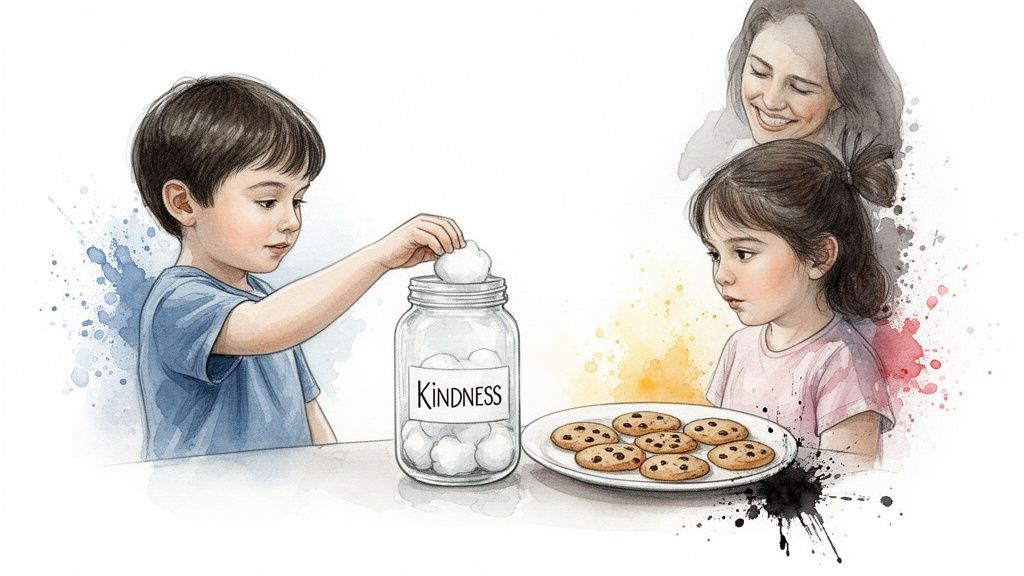
A fantastic way to make kindness visible is to start a "Kindness Jar." Every time you spot someone in the family doing something kind, they get to add a fluffy cotton ball or a bright pom-pom to the jar. When it's full, you celebrate together! Maybe a family movie night or a special trip to the park. This simple ritual helps kids actually see the beautiful impact of their kind choices adding up over time.
Choosing to Be Good
Now, goodness, the last one in this group, can feel a bit vague. What does it really mean for a toddler to be "good"? At its core, goodness is about choosing to do the right thing, even when you think no one is watching.
It’s that little voice inside that wants to be helpful and honest. Goodness is cleaning up your toys without being asked or telling the truth when you accidentally spill your juice. It’s choosing to follow the family rules because you understand they help keep everyone safe and happy.
Here's how to encourage goodness:
- Focus on the "Why": Instead of just saying, "Be good," explain the reasoning. "We put our toys away so nobody trips and gets hurt. That's a good and helpful choice."
- Tell Stories About Goodness: Read books or make up stories where the hero makes a good choice, especially when it’s hard. This gives them a positive example to look up to.
- Acknowledge Good Intentions: Let’s be real—sometimes their "help" is messy! If they try to "help" with the dishes and create a puddle, praise the good heart behind the action first. "Thank you so much for wanting to help me. Your heart is so good and kind!"
Together, patience, kindness, and goodness are a powerful trio that shapes how your child moves through the world. They learn to wait with grace, act with a compassionate heart, and choose what’s right. These aren't just rules to follow; they are the beautiful results of a heart being nurtured in faith and love.
Harvesting Faithfulness, Gentleness, and Self-Control
We’ve finally arrived at the last three fruits in our spiritual garden: faithfulness, gentleness, and self-control. If the other fruits are the bright flowers and sweet berries, think of these as the deep, sturdy roots that keep the whole plant strong and grounded. They might sound like big, grown-up ideas, but even our littlest ones can start to understand them through simple, everyday moments.
These three are really the culmination of all the others, aren't they? Faithfulness grows from a heart that understands steadfast love. Gentleness is what peace looks like on the outside. And self-control is what gives patience its power. Let's dig into how we can make these final fruits a real, tangible part of your family’s life.
The Strength of Faithfulness
When we talk about faithfulness, it’s not just some lofty theological concept. For a child, faithfulness is actually one of the most comforting feelings in the world. It simply means you can be trusted. It’s the deep-down knowing that when Mom says she’ll be right back, she will be right back.
For kids, faithfulness looks like being a good friend who actually keeps their promises. It’s remembering to feed the hamster every day, not just on the days you feel like it. It’s becoming a person others can truly count on.
You can nurture faithfulness by:
- Keeping Your Promises: This is the big one. When you follow through on your word, you’re modeling what faithfulness looks like and building an unshakeable foundation of trust.
- Assigning Small Responsibilities: Give your child a simple, consistent job, like putting their shoes away when they come inside. This teaches them the quiet joy of being reliable.
- Highlighting Loyalty: Point out faithfulness when you see it in stories or in real life. "Grandma is always there for us when we need her. She is such a faithful friend."
This virtue is the glue that holds relationships together. It's a cornerstone for a life built on trust and integrity.
The Power of a Gentle Touch
Gentleness is one of the most beautiful—and misunderstood—fruits of the Spirit. It's not weakness; it’s strength that’s under control. Just think about the way you instinctively handle a tiny newborn baby, with a soft touch and a quiet voice. That’s gentleness in action.
For a toddler, gentleness is all about using "soft hands" with a new puppy or a younger sibling. It's learning to turn the pages of a book carefully so they don't rip. It's trying to use a calm voice when they feel frustrated instead of immediately screaming.
Gentleness is the quiet power that calms a storm. It’s choosing to be tender and careful with our words and actions, especially with those who are smaller or more vulnerable than we are.
It’s all about recognizing the value in others and treating them with care. By showing gentleness in your own life, you teach your child that being soft and kind is a true superpower.
The Milestone of Self-Control
And now for the big one: self-control. This is a monumental developmental milestone and a true sign of maturity. For our little ones, this is probably the hardest fruit to grow. Their brains are literally wired for instant gratification, so learning to wait or stop an impulse is a massive challenge.
Self-control is choosing to wait your turn instead of snatching a toy from a friend. It’s stopping yourself from grabbing a whole handful of crackers when you were only supposed to take one. It’s the powerful ability to pause between a feeling and an action—to use your words when you're angry instead of hitting or biting.
Teaching this requires a mountain of patience from us. It’s about being a coach, not a referee. You can help by first validating their huge feelings ("I know you really want that toy right now") while also holding a firm, kind boundary ("But it’s not your turn. We don't grab from friends.").
Cultivating these virtues is a challenge for all of us. With a global Christian population of 2.4 billion, the need for this kind of intentional heart-work is massive. Research has shown a surprising gap in our churches; while 20-80% of leaders feel they are modeling these fruits, their congregations often see it differently, with agreement as low as 18-70%. This just goes to show that growing the fruit of the Spirit isn't passive—it takes active effort in our communities and, most importantly, in our own homes. As some teachings beautifully put it, the Spirit produces the fruit, but we have to actively cultivate it, like ripening peaches that are meant to be shared. You can explore more on this global mission at JamesODavis.com.
The Fruit of The Spirit At a Glance for Parents
Life with little ones moves fast! Sometimes you just need a quick reminder of what you're aiming for. Here's a handy little cheat sheet to help you connect these big ideas to your daily life.
| The Fruit | What It Means for a Toddler | A Real-Life Example |
|---|---|---|
| Love | Caring about others and showing it. | Giving a big hug to a sad friend. |
| Joy | A bubbly feeling of being loved. | Singing a happy song on a rainy day. |
| Peace | Feeling calm and safe inside. | Taking deep breaths after a tantrum. |
| Patience | Waiting without getting upset. | Waiting for your turn on the playground slide. |
| Kindness | Using gentle hands and words. | Petting the family dog softly. |
| Goodness | Choosing to do the right thing. | Helping to clean up toys without being asked. |
| Faithfulness | Being a friend others can count on. | Keeping a promise you made to a sibling. |
| Gentleness | Using a soft touch and a calm voice. | Handling a new baby brother or sister carefully. |
| Self-Control | Stopping yourself from doing something. | Asking for a turn instead of grabbing a toy. |
This table is perfect for those moments when you need a simple, actionable way to guide your child's heart toward these beautiful virtues.
Simple Prayers for Little Hearts
Connecting these concepts to prayer helps ground them in faith. Here are a few simple, one-sentence prayers you can whisper together:
- Love: "Jesus, help me show my love today."
- Joy: "God, fill my heart with your happy joy."
- Peace: "Lord, help my heart stay calm and peaceful."
- Patience: "Jesus, help me be patient while I wait."
- Kindness: "God, help me use kind hands and words."
- Goodness: "Lord, help me choose to do the right thing."
- Faithfulness: "Jesus, help me be a good and true friend."
- Gentleness: "God, help my hands and voice be gentle."
- Self-Control: "Lord, help me stop and think before I act."
Wrapping Your Little One in Faith and Comfort

As parents, we're intentional about what we bring into our homes. We pick out storybooks that teach kindness and sing lullabies that bring a smile. That same thoughtful care can extend to the everyday things our kids touch, turning something as simple as a sleepsuit into a quiet nod to our faith.
Think about it: dressing your baby in cozy, well-made clothes is more than just a daily chore. It can be a real, tangible reminder of the values you’re hoping to grow in their heart. Every soft fabric and gentle stitch can echo the comfort and peace you’re building within your family.
This is where our spiritual goals and the real world can meet in a really beautiful way. Choosing faith-inspired clothing is a simple, daily way to live out your family’s values. It’s a way to literally wrap your little one in a reminder of the fruit of spirit—the gentleness, goodness, and love you pray over them.
More Than Just Fabric
When you're trying to nurture a spirit of gentleness in your home, it just feels right to choose clothes that are gentle on their skin. The buttery-soft feel of bamboo viscose isn't just about luxury; it’s a physical reflection of the tenderness you’re teaching. As you zip up that soft romper, you can think of it as wrapping them in the very peace you want for their little soul.
This link between our faith and our daily choices also touches on the quality of the things we buy. When we consciously choose what is safe and right for our children, we're living out another one of those important fruits.
Goodness isn't just about big moral decisions. It's about choosing what is right, wholesome, and pure in all corners of our lives. When you pick products that are safe and made with care, you’re practicing goodness in a very real, tangible way.
Choosing fabrics that are OEKO-TEX® Standard 100 certified is a perfect example of this in action. It means you’re intentionally picking materials that are free from harmful stuff—a small act of goodness that protects your child.
An Environment of Intention
Creating a home that’s filled with faith isn't really about grand, showy gestures. It’s woven into the small, consistent choices we make every single day. The clothes our baby wears, the books we read together, and the prayers we whisper over them at night are all threads in a beautiful tapestry of faith.
- Gentleness in Practice: The soft, breathable bamboo fabric offers a constant, gentle touch, almost like a mirror to the "gentle hands" and "soft words" you're encouraging.
- Peace in Routine: Quiet moments, like getting dressed for bed, can feel so much more meaningful when the items you're using bring physical comfort. This helps reinforce that feeling of calm and security. You can find more ideas for creating a peaceful nighttime rhythm in our guide to bedtime prayers for babies.
- Love in Every Detail: Picking out an outfit becomes a small act of care, a physical way to show the immense love you feel for your little one.
At the end of the day, these small decisions are powerful. They are quiet affirmations of the values you treasure, creating a nurturing space where your child’s spirit can truly blossom.
Practical Ways to Live Out The Fruit of The Spirit
Bringing the fruit of the Spirit to life in your family isn’t about ticking boxes on a spiritual checklist. It's really a beautiful, lifelong journey of grace, taken one small, intentional step at a time. The true aim isn't perfection, but a heart that leans into God.
Let's be real, parenting is full of daily challenges. But every time you give a gentle answer instead of a sharp one, or take a deep breath to find patience, you're planting a seed. Each small act of kindness is like watering your child’s heart, showing them a real-life picture of God's love. You're shaping their character with every hug, every story read, and every prayer whispered together.
Embrace this whole process with joy. Remember, the goal isn't to raise a "perfect" child, but to nurture a little one whose heart stays soft and open to reflecting God's goodness in their own unique way.
By focusing on these virtues, you’re creating a home environment where faith can truly blossom. Every loving, consistent step you take helps grow a beautiful spiritual garden right in your own family. This adventure is one of the most rewarding parts of parenting, and if you need more ideas for weaving faith into your everyday life, our guide to a daily devotional is full of wonderful inspiration.
Common Questions About Teaching The Fruit of The Spirit
It's totally normal to wonder how to bring these big, beautiful ideas down to a level our little ones can understand. You're not alone! Let's walk through some of the questions I hear most often from parents just like you.
The goal here isn't perfection—it's connection. Your heart and your intention are what truly matter.
At What Age Can I Start Teaching This?
The beautiful thing is, you can start from day one. An infant won't get the words, of course, but they absolutely feel your love, your gentleness, and the peace in your voice. They're soaking it all in.
Around 18-24 months, you can begin sprinkling in simple phrases. Think "gentle hands" when they're petting the dog or "we're being patient" while you warm up their snack. It’s less about a formal lesson and more about weaving these virtues right into the fabric of your day.
By ages 3-4, their little minds are ready to start connecting the dots. This is the perfect time to link the fruits to their favorite stories and get creative with hands-on activities.
How Do I Handle Struggles with Self-Control?
First, take a deep breath and remember: this is completely normal for toddlers and preschoolers! Their brains are literally under construction, building the pathways for impulse control. It’s a marathon, not a sprint, and you get to be their loving coach.
Here’s a simple game plan that works wonders:
- See Their Feeling: "I know you want that toy right now. It looks so fun!"
- Hold the Line (Gently): "But it's sister's turn to play with it. We don't grab."
- Show a Better Way: "How about we build a tall tower with these blocks while you wait?"
Visual timers and celebrating the small wins ("Wow, you waited so patiently!") make a world of difference. For more ideas on creating a positive home, check out our guide on how to raise godly children.
How Can I Explain The Holy Spirit To a Child?
Keep it simple and sweet. Think of the Holy Spirit as God's special helper who lives in our hearts to help us be kind and loving. Relatable analogies are your best friend here.
You could say something like, "You know how the sun helps flowers grow? Well, the Holy Spirit is like sunshine for our hearts, helping good things like love and joy grow inside us."
As they grow, you can build on that simple foundation, sharing Bible stories that show the Holy Spirit at work.
What Are Some Fun Activity Ideas?
Yes! Making it a game is the secret to making it stick.
- Love: Make a paper chain "hug" for a grandparent. On each link, draw or write something you love about them.
- Kindness: Go on a "kindness safari" while reading stories or walking through your neighborhood, pointing out every kind thing you spot.
- Patience: Plant a tiny seed in a pot. Every day you can check on it and talk about how you have to wait patiently for it to sprout and grow.
- Joy: Spontaneous dance party! Crank up some happy tunes and just be silly together.
Many parents also find that resources like books about social emotional learning are great for reinforcing these same virtues. The best activities are the ones that feel like play and fit right into your family's rhythm.
At Little Venture Co., we believe your baby's clothes can be a gentle reminder of the values you hold dear. Explore our collections of faith-inspired, buttery-soft bamboo sleepwear and daywear—designed to be as soft on their skin as they are on your heart. Shop the collection today