

Parenting Rooted in Christ: Raise Faith-Filled Kids
Your toddler is sliding peas off the high chair tray, the baby is grabbing at your shirt, and you're trying to pray before the oatmeal gets cold. In moments like that, faith can feel far away from the mess, but that's exactly where rooted in Christ begins to matter. The smallest routines, a blessing before breakfast, a whispered prayer during diaper changes, a short song at bedtime, can start teaching little hearts what it means to belong to Jesus.
Introduction to Rooting Young Children in Faith
A parent once told me her morning worship looked like five seconds of eye contact and one sentence while her toddler banged a spoon on the table. That was enough to start. Children don't need polished speeches to notice that God matters, they need repeated, loving patterns that feel normal in family life.
That's why early faith formation matters. Little ones learn by rhythm, imitation, and repetition, so the ordinary moments of dressing, eating, and soothing become the places where spiritual language takes root. For a gentle starting point, this guide pairs toddler-friendly habits with a deeper biblical picture, and you can also explore simple ideas for teaching children about God if you want more age-appropriate conversation starters.
Practical rule: if your child hears God's name only in church, faith will feel like a place. If they hear it during breakfast, tears, and bedtime, faith starts to feel like home.
Understanding the Biblical Foundations and Theology
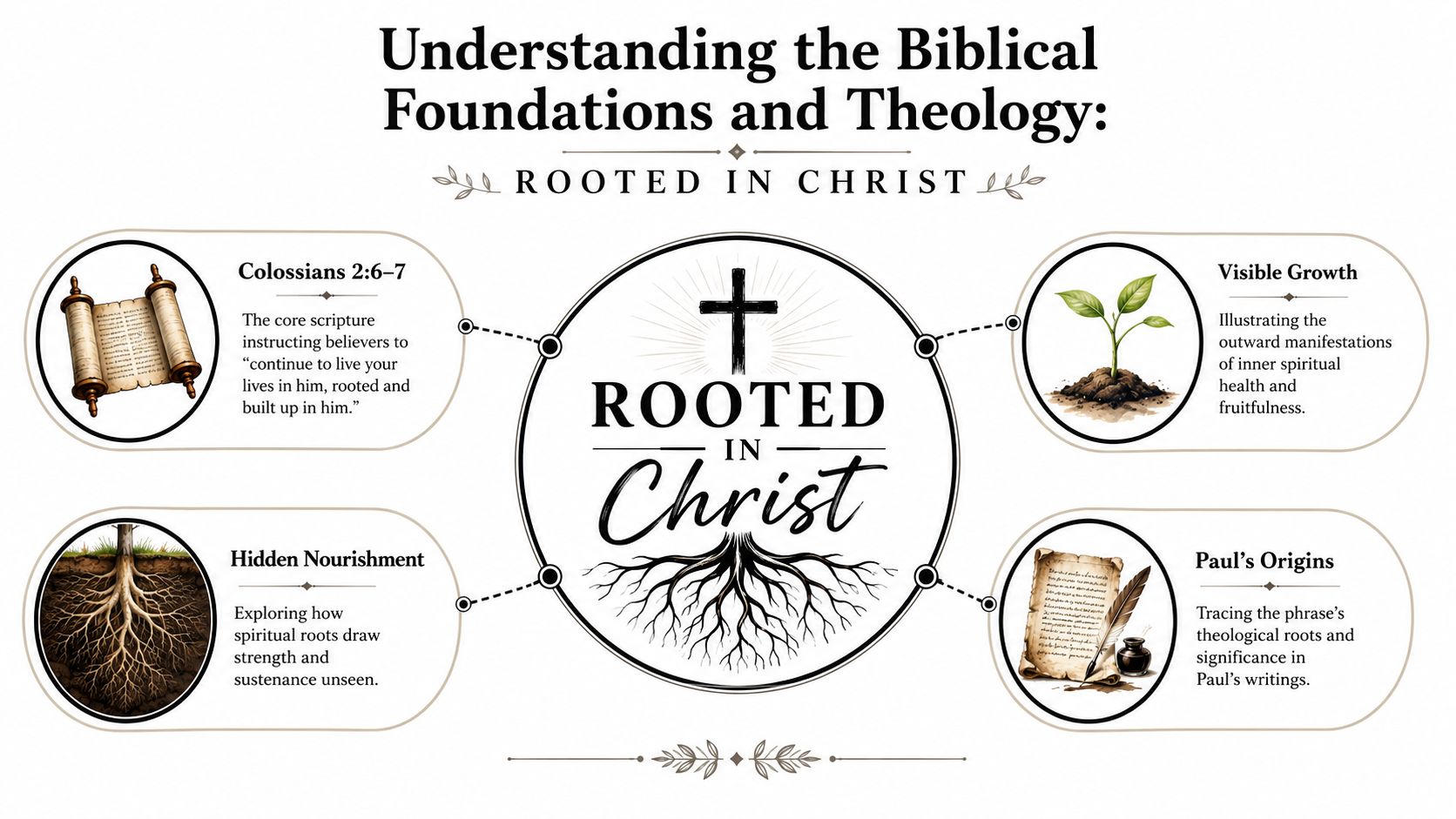
The phrase rooted in Christ grows straight out of Paul's words in Colossians. In Colossians 2:7, he writes, “rooted and built up in him, and established in the faith,” and that wording appears in a New Testament letter traditionally dated to the early 60s CE, making it a very early Christian image of spiritual life. Paul is not giving a cute slogan. He is teaching a church how faith stays steady.
Hidden nourishment and visible growth
Colossians 2:6–7 joins two images that belong together, agriculture and construction. The word translated rooted suggests a completed action with continuing results, while built up points to ongoing development, so the verse treats Christian maturity as both a stable foundation and a progressive growth process. In plain language, roots go down before fruit shows up.
That matters for parents because toddlers are already forming habits of trust, attachment, and language. You may not see spiritual depth the way you see a new skill or a new word, but hidden nourishment still matters. Like a plant drawing life from soil, a child's faith is shaped by what keeps getting repeated in the unseen places of the day.
Paul's image also helps us avoid two mistakes. One mistake says children are too young for meaningful faith, and the other says a single emotional moment is enough. Colossians gives a better picture, steady rootedness with continued growth. For a helpful companion on Jesus' own vine-and-branch language, see this lesson from John 15:5, which reinforces the same idea of staying connected to Christ.
Spiritual stability usually starts as a pattern before it ever feels like a breakthrough.
Why the old wording still matters
The phrase has lasted because it carries weight. It began with a real first-century church in Colossae, then continued through centuries of Christian teaching as a shorthand for spiritual formation, resilience, and identity. If you want a simple way to say it to a child, try this, “Jesus helps us grow strong on the inside, even when we are small on the outside.”
That's also where family discipleship and identity meet. The Bible doesn't separate belief from belonging, and it doesn't separate growth from grace. If you'd like another family-friendly starting place for talking about identity, the idea connects naturally with made in the image of God, because rootedness begins with knowing who made us and who keeps us.
Spiritual Practices to Establish Roots in Babies and Toddlers
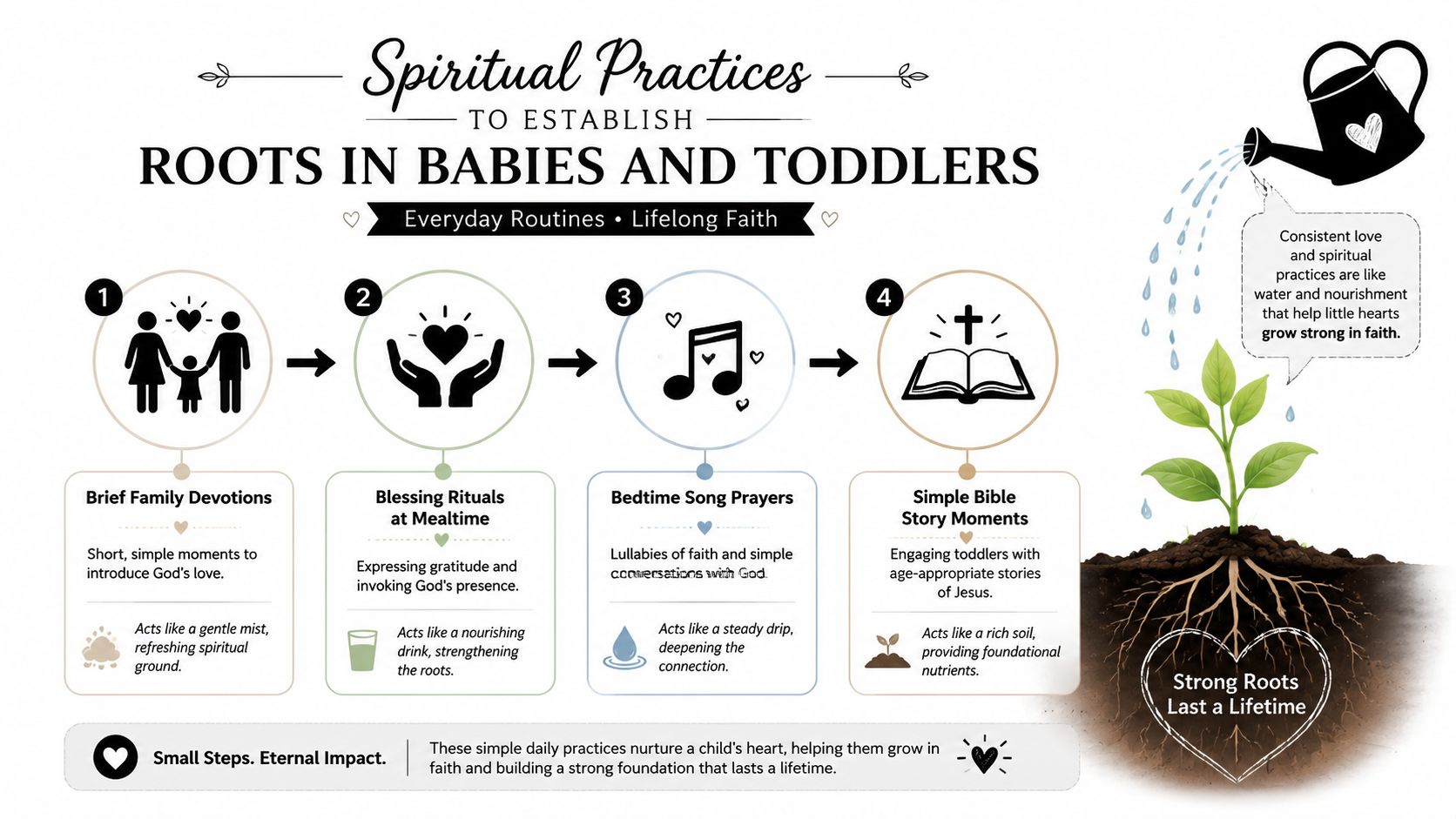
A toddler does not need a long devotional plan to begin growing in faith. They need short, repeatable moments that feel warm and safe, the kind that fit into real family life without strain. These practices work like watering a tiny plant, little and often, so the roots can settle in over time.
Four daily habits that fit real family life
Brief family devotions can be as simple as one verse, one sentence, and one prayer. For a newborn, that may mean you read aloud while rocking. For a two-year-old, it may mean a picture Bible page and a single question like, “Who loves you?” followed by, “Jesus does.” For more ideas, our guide to daily devotional rhythms for families can help you keep that moment short and steady.
Blessing rituals at mealtime give faith a place in the ordinary. You can hold a child's hands, say, “God, thank You for this food,” and end with a gentle blessing over their day. If your toddler squirms, keep it short and steady. Repetition matters more than performance.
Bedtime song prayers work well because children already expect rhythm at night. A soft lullaby with simple words about God's care can become a comfort cue, like brushing teeth or dimming the lights. The goal is not a polished performance, it is a familiar signal that God is near when the day ends.
Simple Bible story moments are best when they stay concrete. Use a board book, a felt figure, or a stuffed animal while you tell one clear truth, Jesus is kind, Jesus helps, Jesus listens. That keeps the story inside the child's attention span instead of stretching beyond it.
The same logic applies to resistance. Some days your child will clap, some days they'll throw the book. Keep going anyway. Consistency teaches that God belongs in ordinary life, not only in the easy moments.
Toddler-sized goal: not perfect attention, just repeated exposure to God's name, God's care, and God's goodness.
Creating Scripture Activities and Prayer Prompts
Young children understand faith best when they can touch, repeat, and move. A prayer prompt that takes ten seconds often lands better than a long explanation. The goal is to make Scripture feel close enough for a child's hands and voice.
Two simple activities you can use today
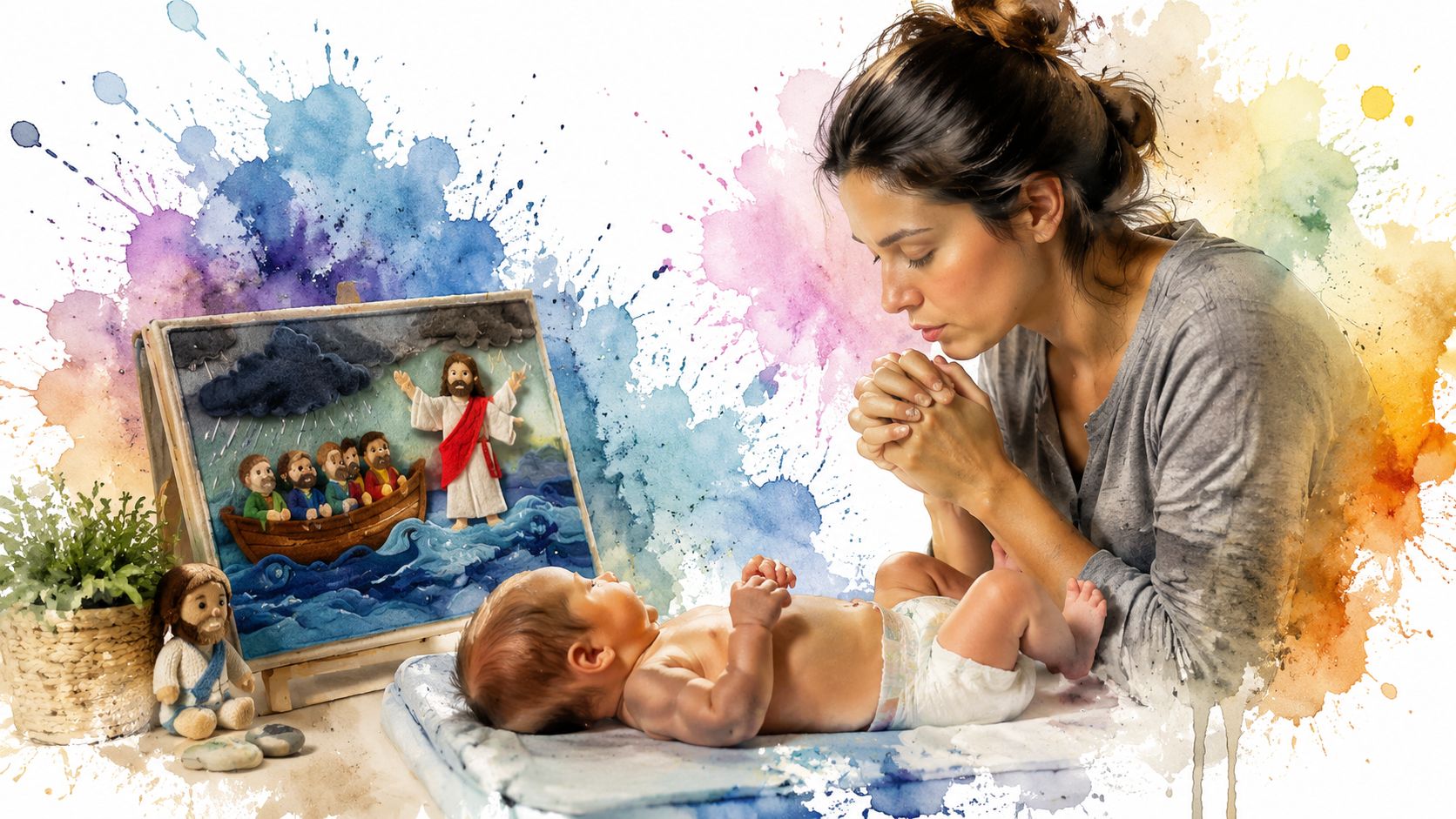
Try a five-word prayer during diaper changes. Keep it small enough that your child can eventually echo it. For example, “Jesus, thank You for me,” or “God, help me be kind.” When the moment repeats, the prayer starts to feel familiar instead of formal.
For a tactile story moment, create a tiny storyboard with felt pieces for Jesus calming the storm. Let your child place the boat, the waves, and the Jesus figure while you say, “Jesus is with us.” If your toddler won't sit still, narrate while they move the pieces. Movement is part of the learning.
For parents who want stronger discussion ideas before prayer time, powerful questions about prayer can spark your own thinking, even if your child only hears the simplest version. Keep your language short. Ask one question, answer it yourself if needed, and end with a tiny prayer.
Here are two toddler-friendly sermon-style lines you can use at home. First, “Jesus loves little children.” Pair it with finger hearts, then let your child point to themselves and to you. Second, “God hears us when we pray.” Pair it with cupped hands, then whisper the same sentence before bed.
Those small connections matter because they turn truth into habit. A child who hears Scripture while playing with shapes, animals, or fingers is learning that God's words belong in daily life, not only in church rooms.
Using Intentional Language and Symbolism at Home
The words you use at home shape how faith feels. If every blessing sounds rushed, or every God-talk moment feels separate from the rest of the day, children may learn that faith is an extra activity instead of a way of living. Simple symbols help correct that.
Small phrases that carry big meaning
Call the nursery God's garden or say the bedroom is a place where “God keeps us safe.” That language doesn't replace truth, it gives truth a child-sized picture. You can also bless a blanket with a phrase like, “May Jesus' peace stay with you tonight,” so the blanket becomes more than fabric, it becomes part of a care routine.
A cross-shaped nightlight, a seed picture on the wall, or a tiny watering-can toy can all carry the same message, growth takes time, and God tends what He plants. Use words like water, seed, shelter, and root in everyday conversation. A child begins to understand faith through repeated images long before they can define theology.
Try saying, “Jesus helps your heart grow strong,” when you tuck them in, or “God is our safe shelter,” when storms roll in outside.
The point is not to clutter the house with religious décor. The point is to let ordinary objects remind the whole family that life with God is woven through routine. When language and symbols work together, home starts to preach gently all day long.
Reflecting Rootedness Through Faith-Inspired Brand Storytelling
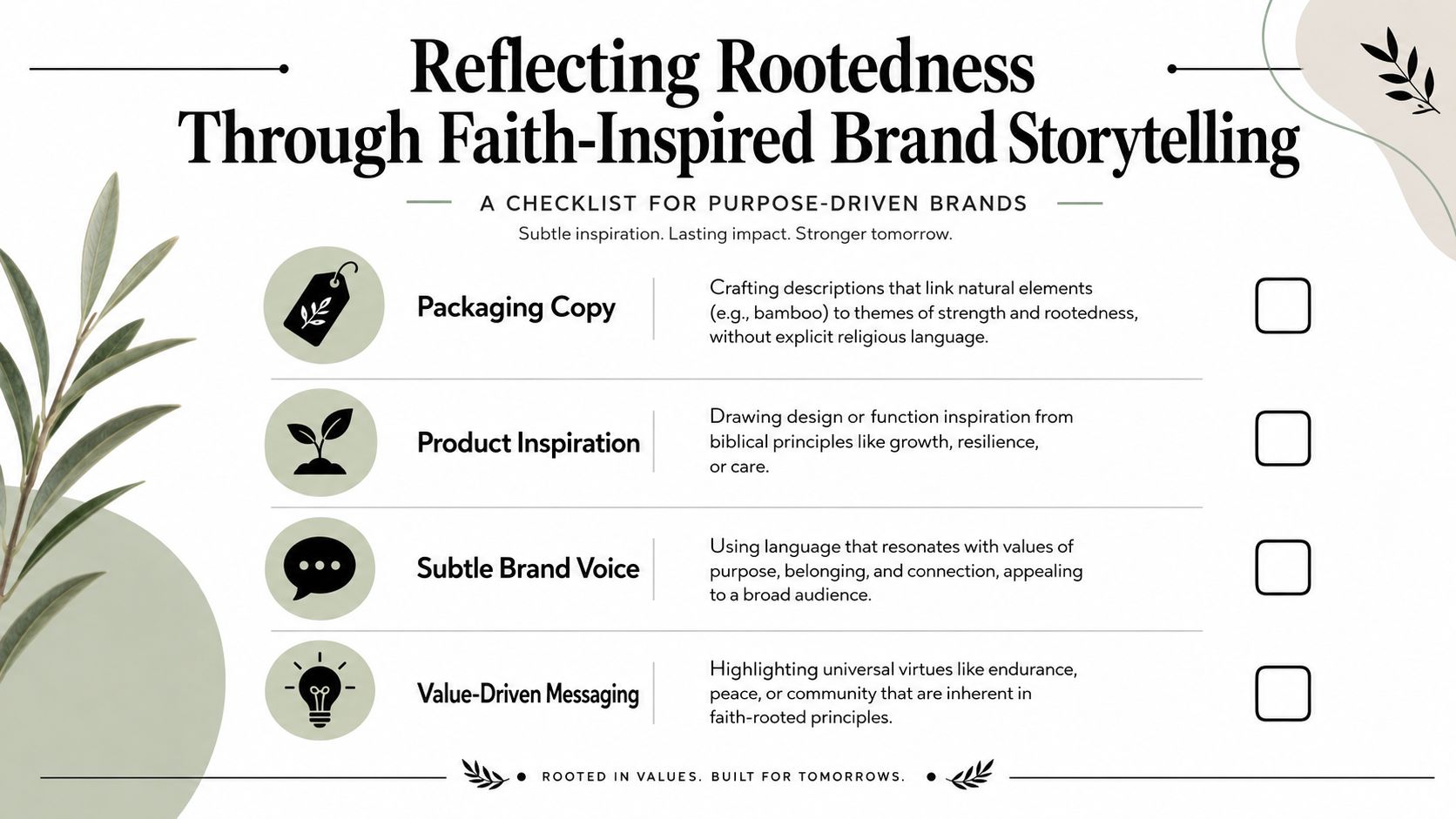
Faith-inspired brands can serve families best when they sound like companions, not sales pitches. A product story that reflects rooted in Christ values should feel honest, warm, and grounded in care. That means showing how design choices point to comfort, gentleness, and steadiness without turning every detail into a sermon.
How thoughtful storytelling builds trust
Packaging copy can connect natural softness to the idea of gentle care. A hangtag might include a short blessing, something simple like, “May your little one rest in peace.” Social posts can pair a product photo with a bedtime prayer idea or a one-line reminder to bless a child before sleep. Those choices invite families into a rhythm, they don't pressure them.
This kind of storytelling works because it respects the parent's real life. Parents are already looking for items that feel safe, meaningful, and well made, so a brand voice shaped by purpose can meet them there. When a message points to endurance, peace, or belonging, it connects with values that naturally resonate in Christian homes.
The larger story also matters. Rooted in Christ has traveled from Paul's first-century letter into a discipleship metaphor shared across Christian communities around the world, with more than 2 billion believers today, so it carries deep continuity as well as present-day relevance (bcworldview.org on rooted in Christ). Brands that borrow that language should handle it with care, because the phrase is not decoration, it's theological memory.
Used well, faith-inspired storytelling doesn't chase attention. It reinforces what parents are already trying to do, raise children in a home where truth feels close, gentle, and normal.
Conclusion and Next Steps for Families
Children grow through repetition, and faith does too. A blessing at the table, a whispered prayer at bedtime, a cross on the wall, or one short Bible story can all become part of a child's spiritual memory. The goal isn't to do everything. It's to start somewhere and keep showing up.
Choose one practice for this week and make it small enough to repeat. You might pray the same sentence before meals, sing one bedtime song prayer, or place one symbol in your child's room and name it aloud. Then notice what changes, not in perfection, but in familiarity, calm, and connection.
If you want a simple next step, keep a children's Bible near the couch, ask your church nursery leader what words they use for prayer, and repeat the same phrases at home. Faith roots deepen over time, and your steady little habits are already doing that work.
A CTA for Little Venture Co. is to keep building faith-filled family rhythms with comfort and care, exploring thoughtful pieces that support bedtime, playtime, and every small moment in between.