

Reducing Textile Waste: A Family Wardrobe Guide
You're standing in front of a closet that looks full, yet your child wears the same five things every week. The rest are “for later,” outgrown almost as soon as you bought them, or saved because they were a gift and you feel guilty passing them on too soon. That's where reducing textile waste gets real for parents, it's not an abstract sustainability project, it's a daily wardrobe decision with a pile of tiny shirts and half-worn sleepers attached to it.
The hard truth is that family wardrobes sit inside a much bigger waste system. In the European Union, the European Parliament says around 12 kg of clothing per person is dumped each year, and the European Environment Agency estimated that the EU generated about 6.95 million tonnes of textile waste in 2020, which is roughly 16 kg per person. Of that, only 4.4 kg per person was collected separately for reuse and recycling, while 11.6 kg per person still went into mixed household waste, and 82% of EU textile waste was post-consumer waste, meaning it came from clothes and household textiles after people were done with them (European Parliament and EEA data).
For families, that matters because the cycle starts long before a garment gets tossed. Kids outgrow clothes fast, parents buy backups, relatives gift duplicates, and “just in case” pieces stack up in drawers. The system rewards buying more than we need and then hopes recycling will clean up the mess later. It usually doesn't.
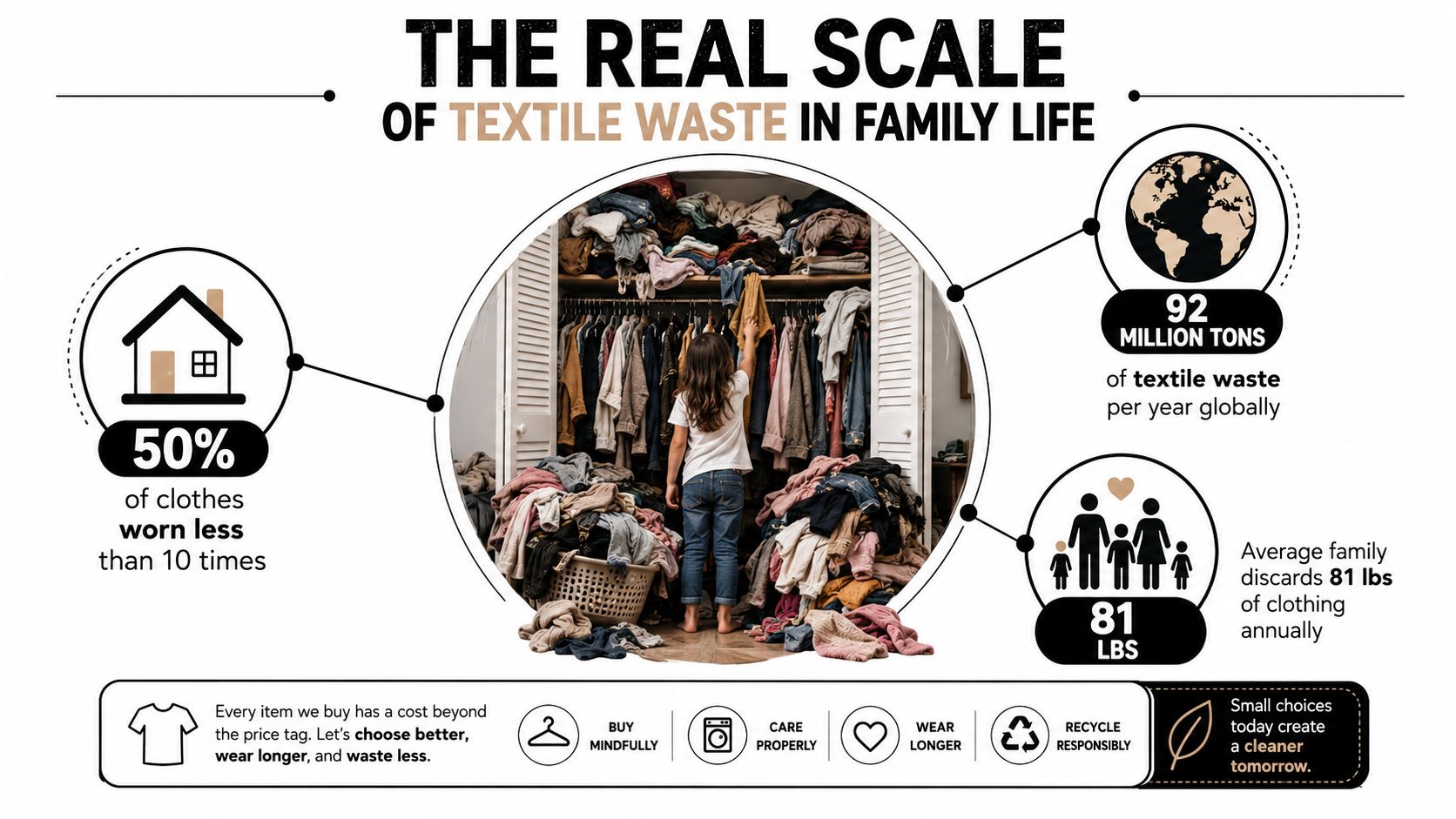
What that means in a real family closet
The most useful mindset shift is simple. Stop treating kids' clothes as disposable seasonal items and start treating them as assets that need to be used, maintained, and redirected well. That means fewer impulse buys, more repeat wear, and a real plan for every stage of a garment's life.
Practical rule: If a piece can't realistically be worn, repaired, handed down, or resold, it's probably not worth buying in the first place.
The environmental burden isn't just about the final bin. It's also about the extra fabric, extra washing, extra shipping, and extra storage that pile up around clothes no one really needed. A tighter wardrobe reduces all of that. It also makes weekday mornings easier, which is a benefit parents feel immediately.
Smarter Purchasing Decisions for Kids' Clothing
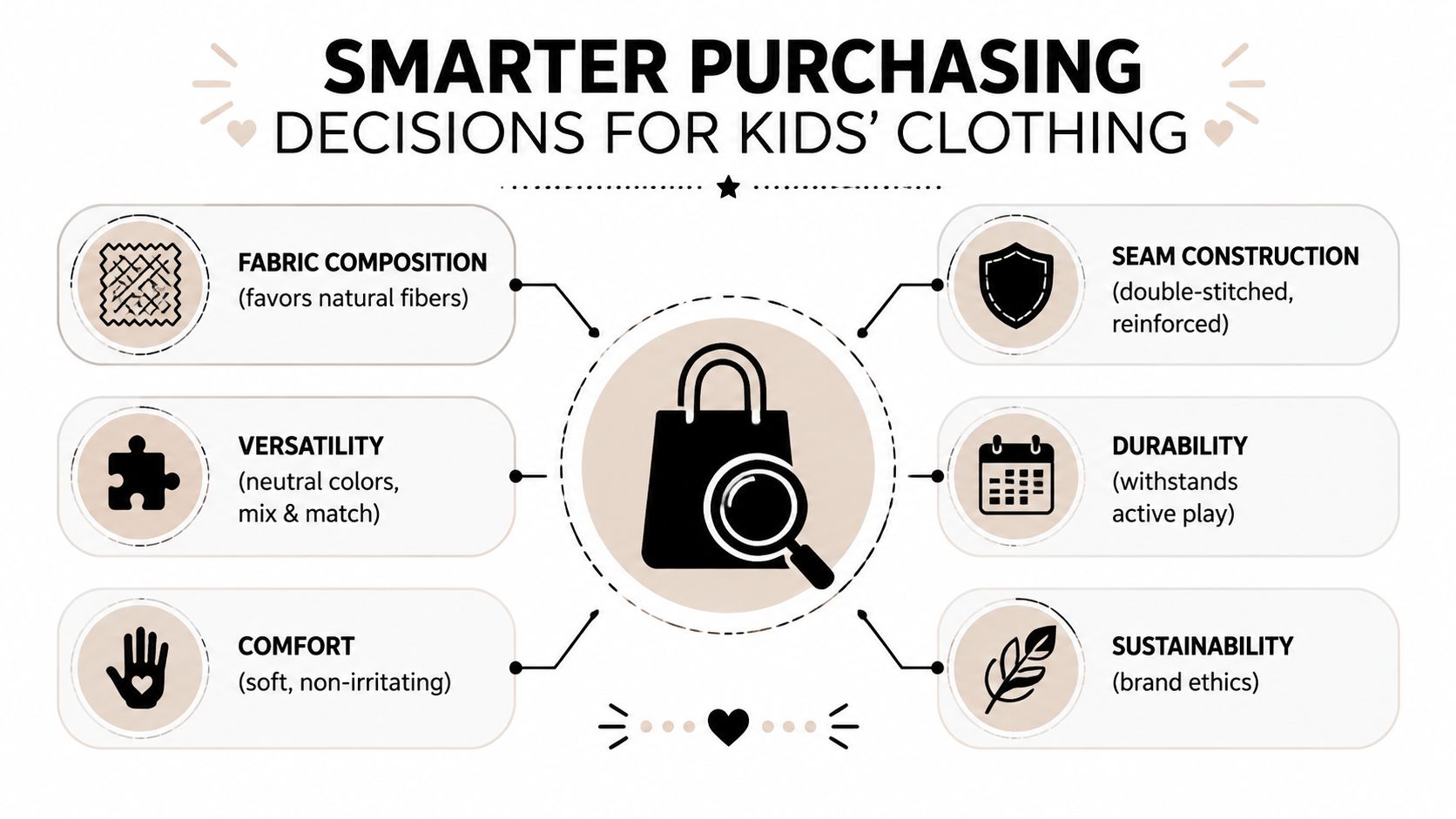
The best way to reduce textile waste is to buy fewer clothes that can survive real childhood. That means looking past cute prints and asking whether a piece can handle crawling, lunch spills, playground dirt, and repeated washing. If it can't, it's taking up space in your home and adding to the waste stream later.
The buy less, buy better filter
Use three questions before every purchase. First, will this piece get worn at least a lot in rotation, not just for one occasion? Second, can it be passed to a sibling, cousin, or resale rack? Third, is the fabric and construction strong enough to survive that journey?
The construction details matter more than people think. Look for reinforced seams, sturdy stitching, and closures that don't look fragile. If you're choosing between a bargain piece that feels thin in your hands and a basic with stronger construction, the stronger one usually wins because it stays in use longer.
Here's the part parents often miss. A smaller wardrobe with versatile pieces is easier to maintain, easier to pack, and easier to hand down. Neutral colors, mix-and-match sets, and basics that work across seasons do more for reducing textile waste than a closet full of novelty items worn twice.
Quick test: Hold the garment at the seams and stretch it gently. If the stitching looks strained in the store, it won't magically improve after ten washes.
Bamboo and sensitive skin choices
If your child has sensitive skin, bamboo viscose can be a smart choice, but only when you understand what you're buying. Many parents like it because it feels soft and comfortable, and it can be a helpful option for sleepwear and daywear when the fit is right and the fabric is well made. For a deeper look at the brand side of this category, see this guide to organic baby clothes.
Certification matters too. If a label says OEKO-TEX® Standard 100, that means the materials have been tested for harmful substances, which gives you a clearer baseline for baby and toddler clothing. That doesn't solve overbuying, but it does help you choose safer pieces that are more likely to stay in rotation.
If you want a shopping filter that's blunt and useful, try the conscious-consumption checklist at TryThisFit conscious shopping tips. It's the kind of resource that helps you slow down before the cart fills up.
Extending Garment Life Through Care and Repair
Most kids' clothes don't fail because they were worn too much. They fail because they were washed badly, dried too hot, or abandoned after a fixable problem like a loose button or a small tear. Good care is one of the fastest ways to reduce textile waste, because every extra month of use is one less item entering the donation or trash pile.
Wash for longevity, not convenience
Use cooler water when the care label allows it, especially for delicate sleepwear and knits. Hot water can be rough on elastic, prints, and soft fibers, and it usually isn't necessary for lightly soiled children's clothes. Choose a gentle detergent, skip heavy overloading in the washer, and turn garments inside out when they're prone to surface wear.
Bamboo sleepwear deserves special handling. If you wash it harshly, the softness that made you buy it in the first place starts disappearing fast. For exact washing guidance, follow this bamboo clothing care guide.
Drying matters just as much. High heat is hard on elastic and can shorten the life of baby and toddler pieces quickly. Air drying or low heat protects softness, keeps fabric shape intact, and reduces the chance that the garment comes out feeling tired before its time.
Fix the small stuff before it becomes waste
A parent doesn't need to be a skilled tailor to keep clothes going. A basic sewing kit, fabric glue for temporary fixes, and a few minutes of attention can save a favorite shirt or sleeper. Start with the obvious problems first, a loose hem, a missing button, a split seam, or a zipper that needs a little cleaning and patience.
Stains also aren't automatic dealbreakers. Treat them early, before they set. If a shirt has play stains but is otherwise strong, keep it in the rotation for messy days, sleep, or outdoor wear. That kind of practical downgrade still counts as waste reduction because the garment keeps serving a purpose.
Pilling, stretched waistbands, and worn cuffs are signs to redirect, not instantly discard. Move a piece to play clothes, use it for layering, or save it for hand-me-down duty. The goal isn't perfection, it's maximum use.
A repaired garment teaches children something useful, clothes are tools, not trophies.
When It's Time to Let Go, Donation, Resale, and Recycling Options
Not every item deserves a second repair. Some clothes are too stained, too stretched, or too worn out to keep in a child's closet. The point isn't to hold everything forever, it's to choose the right exit for each piece so it keeps doing the most good possible.
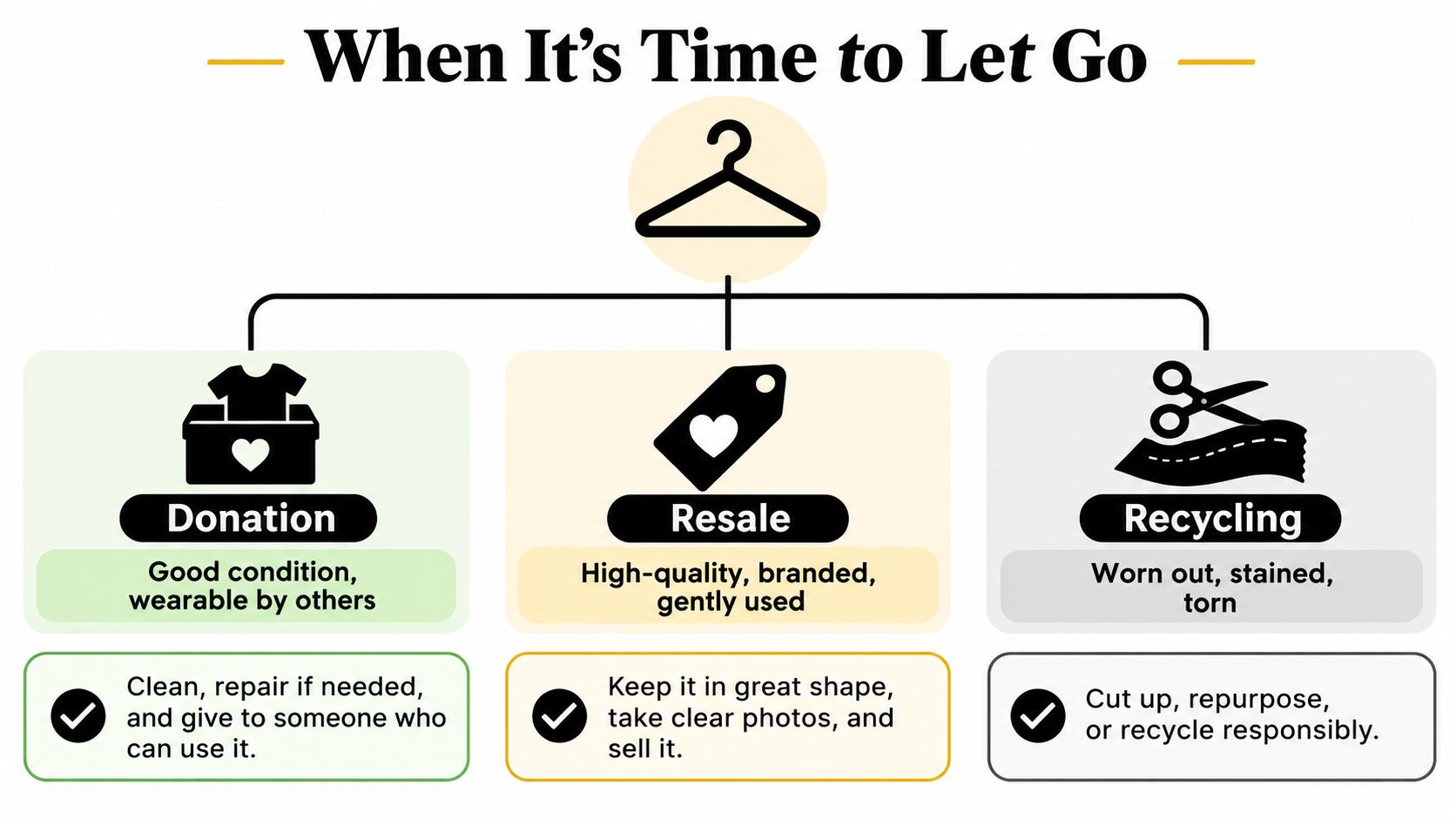
Donation is for wearable items only
Donation works best when the clothing is clean, functional, and still pleasant to wear. That means no obvious damage, no heavy pilling, and no mystery odors. If you wouldn't hand it to a friend without apologizing, it probably shouldn't go to a donation bin.
Thrift stores and charities vary a lot in what they can process, so don't dump unusable items and call it generosity. Give them the easiest items to resell or redistribute. That's how donation helps.
Resale is for the best pieces
Resale and consignment make the most sense for higher-quality items, branded pieces, and garments that still look polished. These are the items most likely to attract another family quickly. A clean, gently used jacket or sleep set can often move faster there than in a general donation channel.
Clothing swaps are underrated, especially in church groups and parent circles. They keep garments local, save money, and give families a low-pressure way to pass on clothes that are still useful. They also make waste reduction feel communal instead of lonely.
Recycling is the last stop
Textile recycling should be the backup plan for worn-out, torn, or stained items that can't reasonably be reused. The important thing is to be honest about what recycling can and can't do. A lot of collected textile waste never becomes new clothing again, which is why sorting and condition matter so much.
Before you drop anything off, check whether the program accepts textiles and whether it wants them bagged, separated, or sorted by type. Better sorting from your end improves the chance that the item lands in the right stream. For a deeper look at material basics, this bamboo viscose overview is useful context too.
Best rule for families: donate the good stuff, resell the best stuff, recycle the worn-out stuff, and trash only what no program will take.
Faith-Inspired Gifting and Community Impact
Family gifting can either reduce clutter or create it. A pile of well-meaning clothes from holidays and baby showers feels generous in the moment, but it can also overwhelm a parent who already has enough onesies, sleepers, and dress-up outfits. Faith gives you a better filter here, because stewardship is about intention, not accumulation.
Ask for gifts that actually fit your life
Be direct with relatives before the shower, holiday, or birthday. Ask for a clothing budget contribution, a gift receipt, or one meaningful piece instead of a stack of random outfits. Experience-based gifts, practical essentials, and a few carefully chosen items usually serve families better than quantity.
This is also where values and clothing can line up beautifully. A thoughtfully chosen outfit can become part of a child's story, especially when it's made for comfort, simplicity, and regular use. If you're looking for ideas that align with that spirit, these baby gifts that give back offer a good starting point.
Church communities can do this well. Nursery clothing exchanges, hand-me-down bins, and seasonal swap tables turn excess into shared provision. That keeps good clothing in circulation and gives parents a place to give and receive without embarrassment.
Teach stewardship early
Kids understand more than adults often assume. A short, age-appropriate conversation about caring for clothes, folding them, and passing them along teaches that gifts are responsibilities as well as joys. That lesson sticks longer than another stuffed drawer.
Faith-inspired gifting also works best when it's tied to mission, not just branding. Giving with purpose, choosing durable items, and supporting organizations that meet real needs can turn a purchase into something bigger than another possession. The habit matters more than the packaging.
Understanding What Happens After Collection
A lot of advice stops at “donate your clothes” and leaves out the messy part. Once textiles leave your house, they enter a system that includes collection, sorting, resale, downcycling, export, and sometimes landfill. If you don't understand that pipeline, it's easy to assume every donation becomes a second life, and that's just not true.
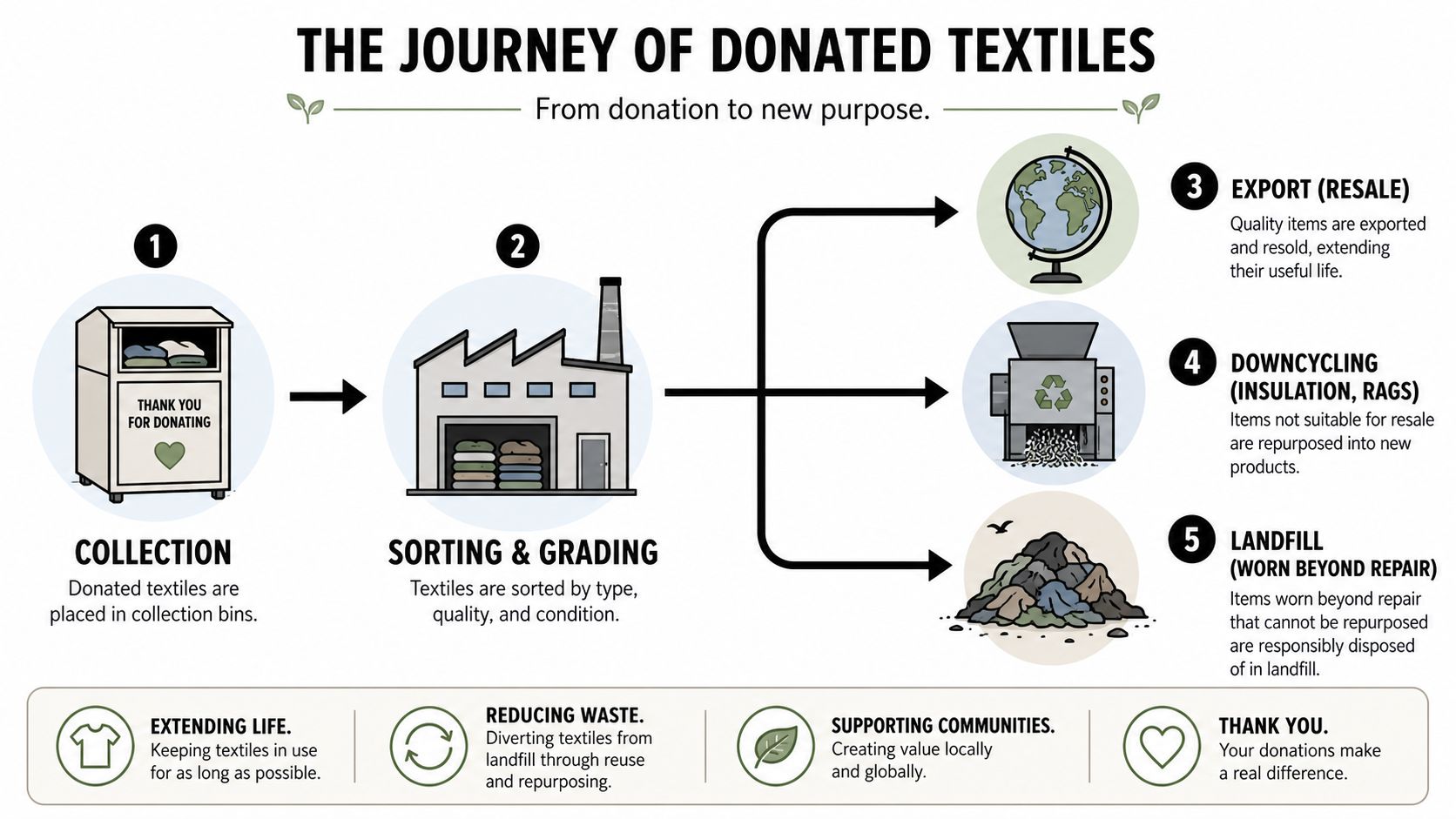
Sorting is the bottleneck
The biggest issue is feedstock quality. Once clothing is mixed, dirty, or badly damaged, the system has to spend time and money separating what can be reused from what has to be broken down or discarded. That's why good home sorting matters so much.
The textile recovery literature points to the technical promise of chemical recycling, but only after serious pretreatment and sorting. Polyester depolymerization can reach high recovery under suitable conditions, and cotton or cellulose can also be recovered, but contamination and fiber blends make the process far less reliable in real life (review of textile recycling methods). That means the item in your hand matters before it ever reaches a facility.
Collection is not the same as recycling
UNEP's global roadmap makes the bigger point clearly. Circularity needs redesigned collection, sorting, reuse, repair, and reprocessing systems, not just more donation bins. BCG also notes that the sector still lacks enough consistent, local, affordable feedstock and modern sorting capacity, which is why collected clothing so often misses the promise people assume it has (UNEP circularity roadmap).
That's the uncomfortable but useful conclusion. Donation helps, but it isn't magic. The most reliable waste reduction still happens earlier, through longer wear, better care, and fewer unnecessary purchases.
Little Venture Co. makes clothing that fits this approach, with soft bamboo sleepwear and daywear designed for babies and toddlers, plus a focus on thoughtful gifting and family-centered values. If you want to build a smaller wardrobe with pieces that feel gentle, meaningful, and easier to keep in use, visit Little Venture Co. and choose with the full garment lifecycle in mind.