

Prayer Request Cards: A Friendly Guide for Families
Sunday morning starts with a stack of bulletins, a half-full coffee cup, and one quiet guest who takes the prayer request card, folds it once, and slips it into the wooden box on the way out. A grandparent writes down a grandchild's name. A tired parent pauses at the nursery table and adds one sentence they haven't said out loud yet. That tiny card does more than collect notes. It gives people a low-pressure way to hand a real burden to a real church.
Prayer request cards work because prayer is already a normal habit in many homes and churches. Pew reported in 2025 that 44% of U.S. adults pray every day, 23% pray weekly or a few times a month, and nearly one-third seldom or never pray. Pew also noted that 58% said they prayed at least once a day in 2007, which shows that daily prayer is still common even as habits change over time. For Christian families, that means a card doesn't have to create a new behavior from scratch, it just helps people give words to something they already do and need. For parents, grandparents, and ministry leaders, that little rectangle can become a bridge between private worry and shared care. One helpful companion for family discipleship is this guide on teaching children about God, because prayer cards often work best when kids see faith practiced in ordinary routines.
Why a Small Card Still Matters
The best prayer cards are usually unremarkable at first glance. They sit in the seat pocket, rest on the welcome table, or get handed out with a pen, and nobody needs a speech to understand them. A guest can write one sentence without asking for help, which matters when the request is personal or the person is new enough to feel watched. The card lowers the social cost of asking for prayer.
A card turns a vague concern into something a person can actually carry
I've watched this happen at church events over and over. Someone writes “my mom's surgery,” “our marriage,” or “job stress,” and suddenly the request feels less like a swirl of worry and more like a real item that a volunteer, small-group leader, or spouse can remember. That's not magic, it's just the difference between carrying a thought in your head and placing it in someone else's hands.
The habit fits how people already pray. Earlier survey data compiled in a prayer statistics report found that 82% of U.S. adults and 89% of teenagers prayed in a normal week, and 52% of people who pray did so several times a day (Berean Bible Class prayer statistics report). That same source said 61% pray for help with specific needs, which is exactly where a request card helps most. It gives the person a place to name the need, not just feel it.
Practical rule: if the request is concrete enough to pray for, it's concrete enough to write down.
A small card also helps families. A child can draw a picture for a sick aunt. A grandparent can jot down a friend's name. A couple can keep a card on the kitchen counter and pray over it at dinner. That repeated, simple act makes prayer feel less like a performance and more like a rhythm.
Picking the Right Card Format and Wording
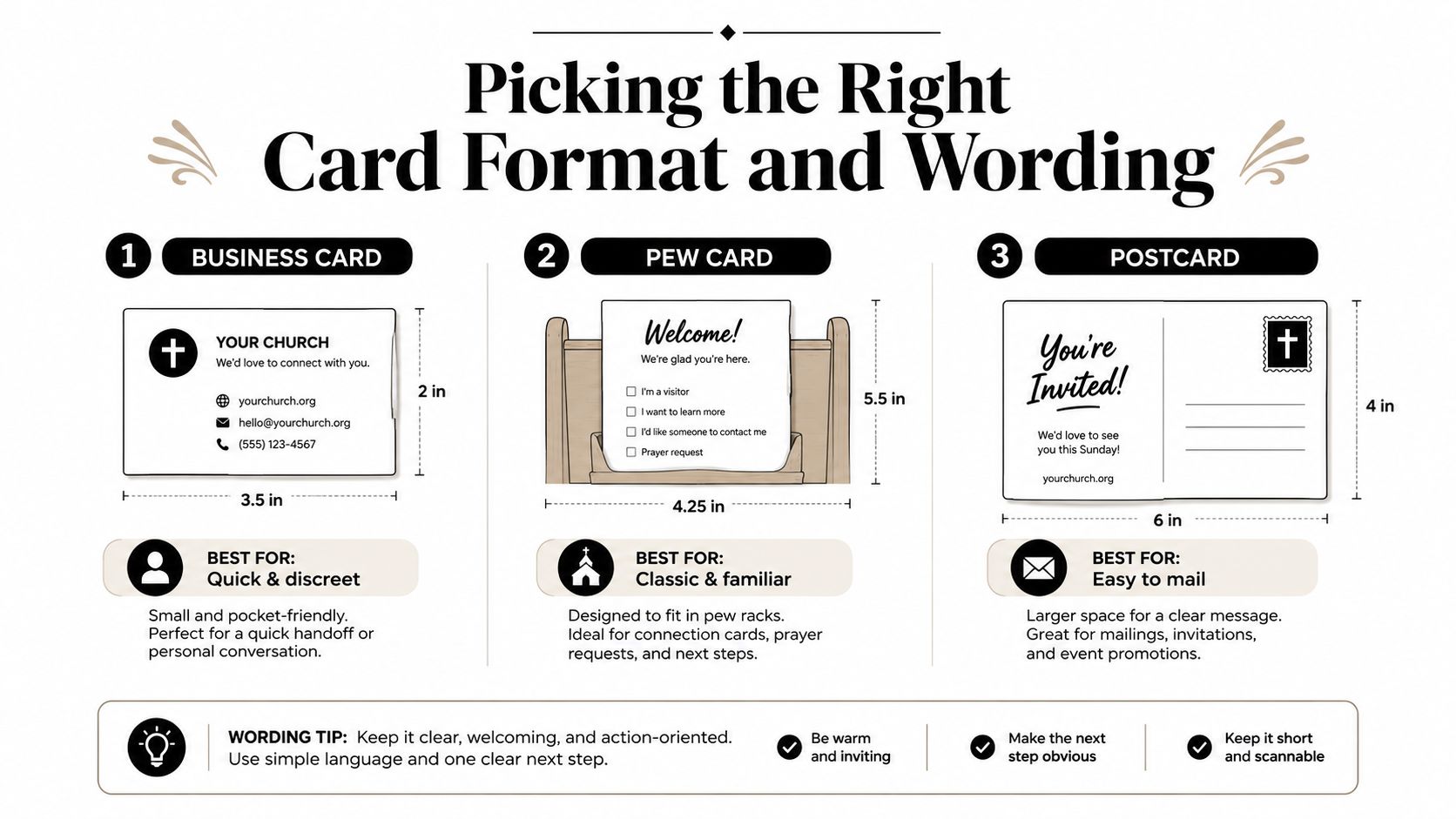
The format shapes whether people fill the card out. Smaller cards feel discreet. Larger cards feel more like a note you can breathe into. In church settings, the most common sizes are business-card-like cards such as 2 x 3.5 in, pew-card formats like 2 7/8 x 5 in, and postcard-sized cards like 3 x 5 in. Vendors also point to quality card stock or 110# matte card stock, which matters because flimsy paper tends to bend, smudge, and look forgettable fast.
Fields that make the card easy to complete
Start with the basics, then stop. I've seen too many cards become cluttered because a well-meaning team added every field they could think of. Most church cards do best with a simple structure.
- Name or initials: Let people decide how much they want to share.
- Prayer request: Keep the prompt broad enough for shy writers.
- Contact info: Make this optional unless the church has a clear reason to ask.
- Follow-up checkbox: Useful for families who want a call, visit, or email.
For homes, nursery rooms, or family prayer baskets, a slightly softer prompt works better. “What do you want us to pray about today?” gives children and nervous adults an easier first sentence than a form that feels formal. If a church wants more specificity, it can add smaller prompts like “praise,” “need,” or “someone I'm praying for.”
Wording that helps people start
A few phrases consistently make writing easier:
- For grief or loss: “Please pray for my family as we grieve.”
- For illness: “Please pray for healing, comfort, and wisdom for the doctors.”
- For family stress: “Please pray for peace in our home and patient hearts.”
- For general needs: “Please pray for guidance and provision.”
Keep the tone gentle and open-ended. Vague prompts often help more than tightly scripted ones because people can begin with a few honest words instead of editing themselves before they start.
A helpful design reference for family ministry wording is prayer for new parents, especially if the card will be used at baby showers, nursery tables, or parent dedications. The best layout gives people enough structure to begin, but not so much structure that they quit halfway through.
Keep the card short enough to fill out in one breath.
Paper, Digital, and Hybrid Card Options
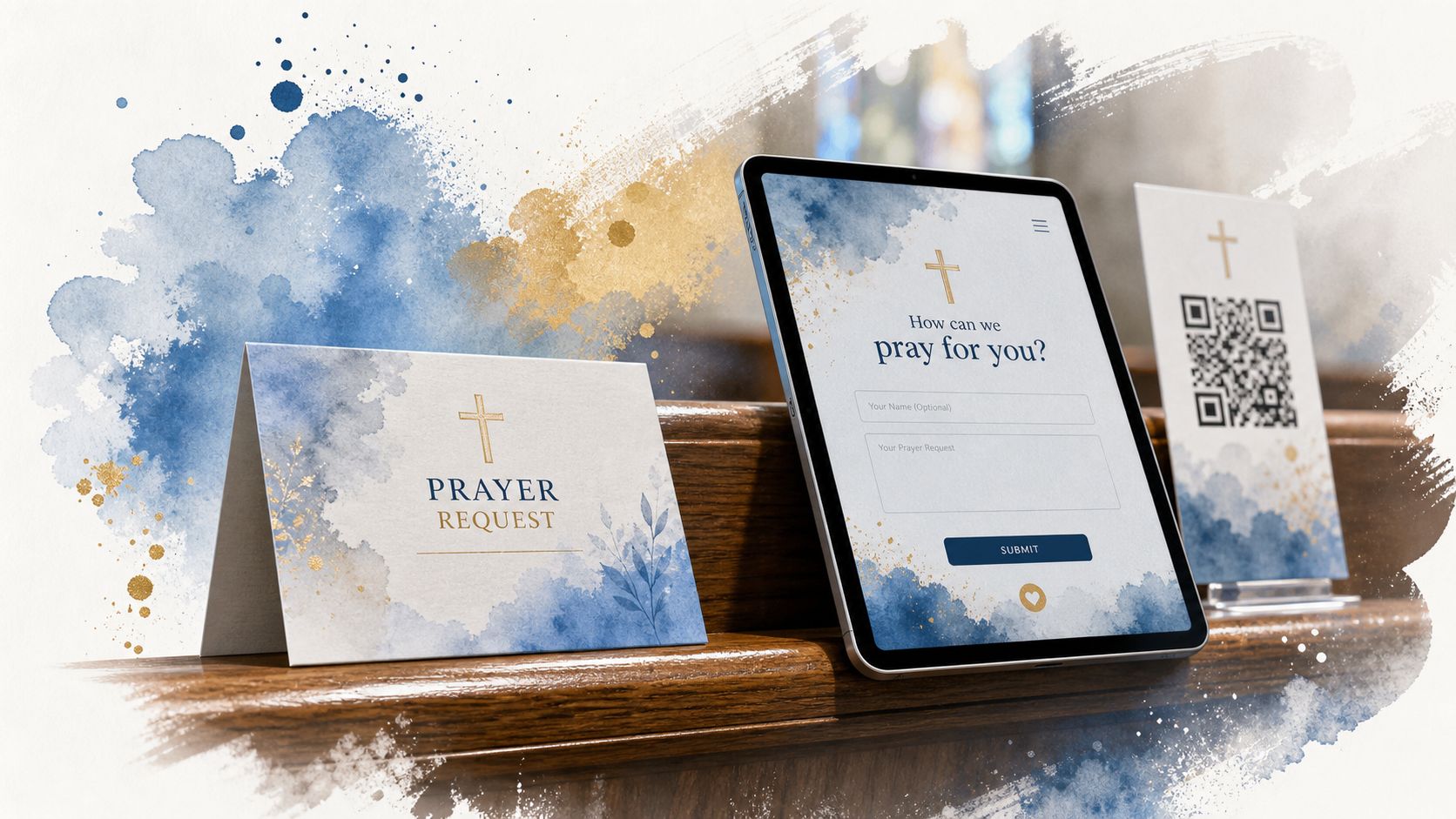
Paper-only cards still win in plenty of rooms because they're familiar and require no tech at all. That matters for grandparents, hospital visits, and older congregations where a QR code can feel like one more thing to figure out. A paper card also works well when people are emotional, distracted, or standing in a lobby with kids tugging at their sleeves.
Digital cards add reach, especially for livestream viewers, young families, and people who're comfortable scanning a code instead of writing by hand. They can also make follow-up easier for ministry teams that want a private form submission instead of loose slips of paper. If you're comparing the two from a team workflow angle, the digital card benefits for teams piece from Firacard is a useful lens, especially where coordination and tracking matter.
Paper and digital each fail in predictable ways. Paper gets left in the pew. Digital gets ignored by someone who doesn't want to pull out a phone. That's why hybrid use often makes the most sense in a multi-generational church.
Why hybrid usually fits the real room
A hybrid setup gives people two honest paths. One path is physical, visible, and easy for older adults and guests. The other is private, searchable, and convenient for online communities. If you've got an in-person service plus a livestream, that split often matches how people already participate.
The YouTube embed many churches use for training or member orientation can also help volunteers see how the form should feel in real life.
The downside is that hybrid systems need restraint. If the QR form asks for too much information, people stop midway. If the paper version asks for a phone number while the digital version asks for five fields, your process starts to feel inconsistent. Keep both versions simple, and make sure the paper front tells people exactly where their request goes.
Printing and Production Basics That Save a Reprint
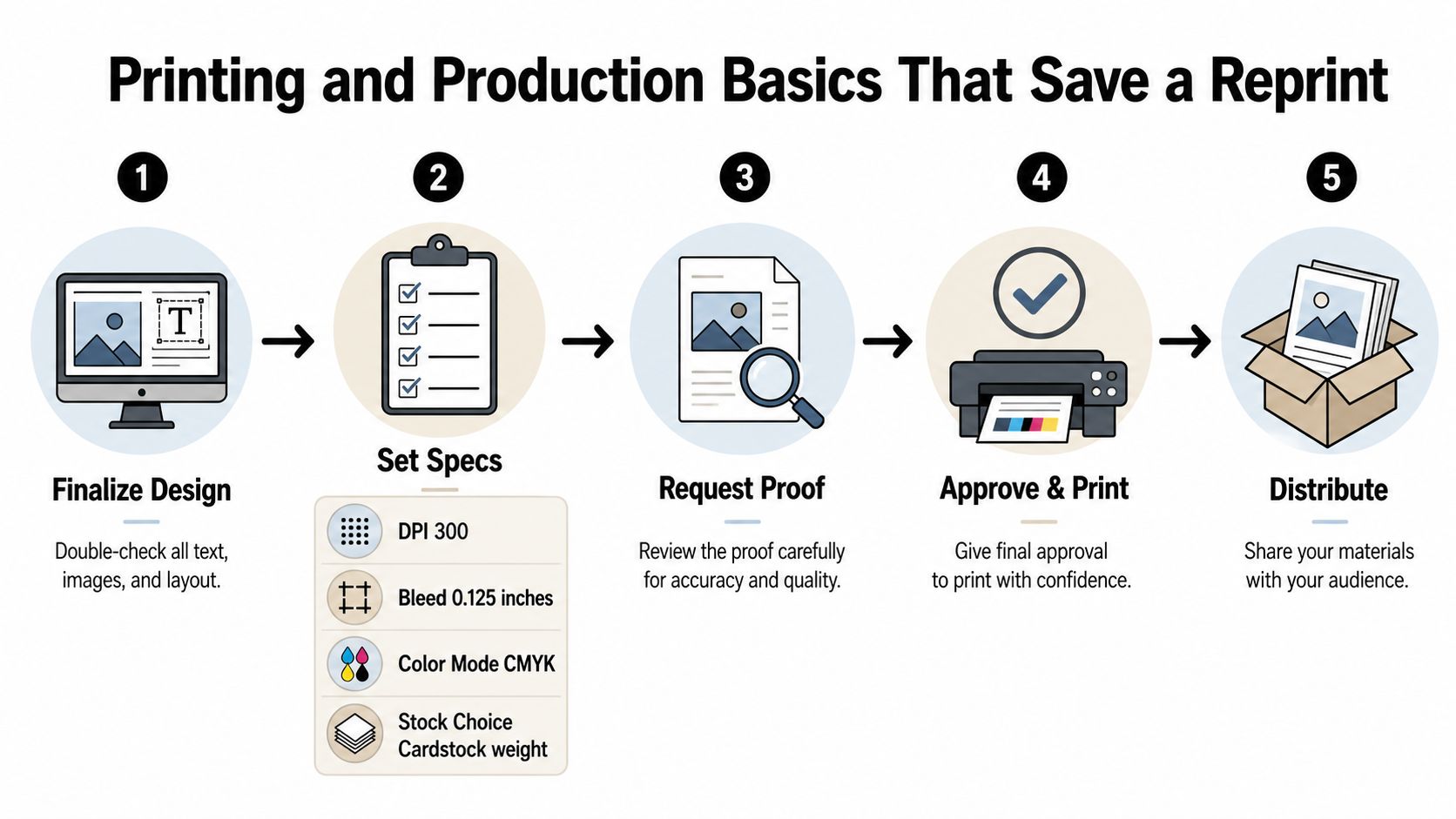
A card can be beautifully written and still look cheap if the file is set up wrong. For print production, the safest workflow is simple. Build the card at the final size, export at 300 DPI, keep color in CMYK, and include 0.15 in bleed so trimming doesn't clip the edge. Those specs are the difference between a card that comes back crisp and a card that arrives with chopped borders or muddy color.
The prep checklist that prevents wasted boxes
Before you send the file to a printer, check these items:
- Finalize the size first: Don't design in a guessed dimension.
- Set image quality to 300 DPI: This keeps small text and simple graphics readable.
- Use CMYK color mode: It reduces surprises between screen and paper.
- Build in bleed: Let art and background color extend past the cut line.
- Choose a sturdy stock: Card stock or matte stock holds up better at the welcome table.
The most common failures are predictable. Clipped edges usually mean the bleed wasn't set correctly. Washed-out color usually comes from RGB artwork being converted late in the process. Tiny text can disappear if the card is too crowded or the printer shrinks the layout to fit.
How to avoid the usual volunteer mistakes
If a parent or ministry assistant is preparing the file, one proof is worth the wait. Hold it in your hand before printing the full batch. Read the smallest line out loud. Slide it into an envelope, a Bible, or a pocket to see whether it bends too easily.
Storage matters too. Finished cards should stay flat, dry, and boxed until distribution. If they're hauled loose in a tote, they'll look wrinkled before the first guest arrives.
A helpful print rule from plain production specs is this. Choose the form factor first, then prepare the press-ready file around that size. That keeps the card readable and keeps the ministry team from paying twice for the same mistake.
Handling Requests With Care and Common Sense
Prayer request cards often collect the most personal thing someone writes all week. That's why they need a simple handling policy, not just a nice design. Health details, family conflict, financial strain, and crisis language don't belong in a pile where anyone can read them on the way to coffee hour. If a request is specific enough to require discretion, it's specific enough to keep off the public card.
What belongs on the card and what doesn't
Use the card for broad, shareable wording. Keep the private details for a pastor, small-group leader, or designated care team member who has permission to know more. A person can ask for prayer for “my family” without explaining the entire situation to the church lobby.
One especially important line to remember is this.
Ask before you share anything specific.
That principle is even more important with digital forms. QR-code submissions can feel easy, but ease doesn't cancel consent. If the church collects names, emails, or sensitive notes, the form should say why the information is being gathered and who will see it. Data minimization helps here, which just means only ask for what you need.
A useful ministry resource on the emotional side of this work is prayer when feeling overwhelmed, because people often write from a place of stress and need a response that's steady, not intrusive.
A simple retention plan that works
Decide three things in advance.
- Who reads the cards: Usually one or two trusted leaders.
- How long they're kept: Long enough to follow up, then not forever.
- How they're destroyed: Shredding or secure disposal is better than a trash bin.
This is the part most public templates skip. The form itself is easy. The stewardship after collection is the core ministry work. Churches already know how to handle sensitive pastoral conversations. The card process should match that same level of care.
Putting the Cards to Work in Real Family and Church Settings
A prayer card earns its place when it fits into ordinary routines. A parent can keep one near the dinner table and invite each child to name one person to pray for before dessert. A nursery ministry can place a card in a check-in folder so parents can write one request while their hands are already full. A grandparent-led gathering can pass a single card around the room and let each person add a line, which turns prayer into something shared instead of performed.
I've also seen cards used well at baby dedications and showers. A small stack on the gift table gives guests a place to write prayers for the child, the parents, and the home they are building. That works naturally with meaningful gifting, especially when families are already thinking about comfort and care. For church teams putting together welcome baskets or new-parent gifts, a soft, faith-filled baby item can sit alongside the card and make the moment feel thoughtful instead of generic. If your team wants a practical safeguard for anyone handling children or family ministry, volunteer background checks for nonprofits are worth reviewing before adding more people into the process.
Prayer cards also hold up well in multi-generational church settings. Older members often prefer paper because it is easy to carry, easy to reread, and easy to leave on a fridge or bedside table. Younger families may prefer a digital option because it is easier to submit from a phone, especially when they are juggling kids, coats, and conversation after service. A hybrid setup handles both, and that usually gives a church the widest reach without forcing one group to adapt to the other.
Prayer Request Card Formats at a Glance
| Format | Best For | Watch Out For |
|---|---|---|
| Business card size | Quick notes, discreet handouts, pockets and Bibles | Too little room for longer requests |
| Pew card size | Welcome tables, weekly services, family ministry | Can feel bulky if overdesigned |
| Postcard size | Mail-outs, baby dedications, gift packets | Easier to clutter with too many fields |
A simple launch plan can happen quickly if the church keeps it practical.
- Week one: Pick one format and one clear prompt.
- Week two: Print a proof and test it with two families and one volunteer.
- Week three: Decide who receives, reads, and stores the cards.
- Week four: Put the cards at the welcome table, nursery desk, or family event space.
For a church or household that wants this to become a real rhythm, not a one-time idea, start small and use the card where people already gather. A short devotional practice can help families keep the habit going, especially when the words feel simple but sincere. Learn more about building a devotional rhythm. When a home or ministry treats prayer cards as both a spiritual habit and a sensitive information handoff, the practice stays warm without getting careless.