

Pediatrician Recommended: A Parent's Guide to Safe Apparel
You're standing in a baby aisle, or scrolling late at night with one eye open, and every package seems to promise the same thing. Gentle. Natural. Doctor approved. Pediatrician recommended. At first, that phrase feels comforting. Then the doubt kicks in. Who recommended it, exactly? And based on what?
That skepticism is healthy.
Parents are asked to make safety decisions fast, often while tired, often with too much conflicting advice. Clothing sounds simple until you start looking closer. Sleepwear has fit rules. Fabric labels get fuzzy fast. Certifications all sound alike. And marketing language is designed to calm you down before you've verified anything.
The good news is that you don't need to become a textile scientist or a medical researcher to shop wisely. You just need a clear way to sort real safety signals from vague claims.
Navigating the World of Baby Product Claims
A lot of us have had the same moment. You pick up two baby sleepers that look nearly identical. One says “ultra-soft.” The other says “pediatrician recommended.” A third says “natural bamboo.” A fourth has a tiny badge on the tag that may or may not mean anything. You're trying to buy pajamas, not decode a legal contract.
That confusion gets worse because baby gear sits in a category where emotion and safety overlap. If a label hints that doctors approve of it, most parents naturally lean in. We want reassurance. We also want to know we're not missing something important.
Practical rule: Treat “pediatrician recommended” as the start of your research, not the end of it.
This same pattern shows up outside clothing too. Parents sorting through toddler wellness products run into the same flood of claims, which is why resources like Feed Mom & Me's vitamin guide can be helpful. The labels may sound confident, but your job is still to verify what's behind them.
Why the phrase feels more official than it often is
The phrase sounds medical, but it isn't a regulated explanation by itself. It doesn't automatically tell you whether a major pediatric group supports the product, whether one doctor liked it, or whether the brand is leaning on a broad impression instead of hard proof.
That's where certifications and transparent product details become more useful than a slogan. If you've ever wondered what one of the most common textile safety labels covers, this plain-language explainer on OEKO-TEX Standard 100 helps translate the jargon into something practical.
When you start shopping that way, your question changes from “Should I trust this claim?” to “What evidence can this brand show me?” That's a much stronger position for any parent.
What Does Pediatrician Recommended Really Mean
The phrase pediatrician recommended can point to very different things. Some are meaningful. Some are mostly marketing. If you don't separate those categories, it's easy to give every label the same weight when they don't deserve it.
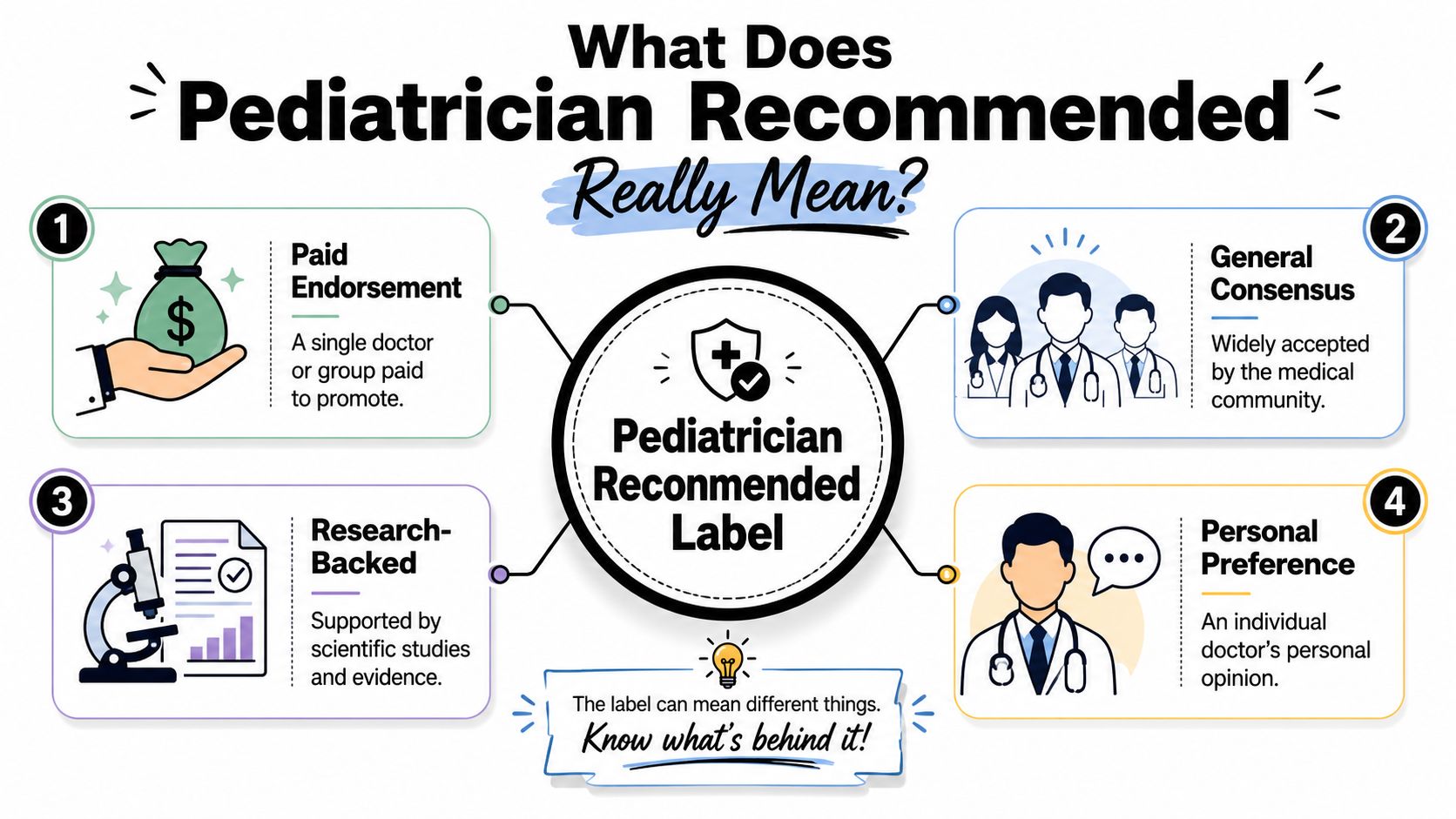
Four common meanings behind the label
Consider movie reviews. One person loving a film is different from a broad critical consensus. Product labels work the same way.
| Meaning | What it may actually indicate | How much weight to give it |
|---|---|---|
| Personal preference | A doctor likes the product based on experience | Useful, but limited |
| Paid endorsement | A doctor or group may be compensated to promote it | Read with caution |
| General clinical fit | The product aligns with widely accepted pediatric priorities | More meaningful |
| Evidence-backed design | The features connect to recognized safety or skin-health standards | Strongest signal |
A single pediatrician's opinion can still be helpful. Doctors see real families and real problems. But one opinion isn't the same as broad medical agreement.
A paid endorsement also isn't automatically false. It just shouldn't carry more authority than the evidence behind it. If a brand uses doctor language but can't explain materials, testing, or safety features, that's a weak claim wearing a white coat.
Why brands lean so hard on this wording
Parents are actively looking for safety cues, and brands know that. The baby apparel market was estimated at USD 44.5 billion in 2024 and is projected to reach USD 71.4 billion by 2034, with the organic baby clothing segment valued at USD 2.15 billion in 2025, reflecting demand for verified safety features and hypoallergenic materials, according to GM Insights' baby apparel market analysis.
That doesn't mean every safety claim is empty. It does mean there's money behind the language, so it's smart to stay alert.
A better way to read the phrase
Instead of asking whether the phrase is true or false, ask which layer it belongs to:
- Is it an opinion? Then treat it as one data point.
- Is it tied to a recognized standard? That matters more.
- Is there transparent testing? Better still.
- Does the product page explain exactly why a pediatrician would recommend it? If not, the phrase may be doing too much work.
If you want another lens for evaluating materials and ingredient claims, this guide to chemical-free baby products can help you spot when a brand is being specific versus vague.
A trustworthy claim gets clearer when you ask follow-up questions. A weak claim gets blurrier.
That's the test. Good brands don't just say “pediatrician recommended.” They give you a trail you can follow.
Look for Proof Not Just Promises
The safest buying decisions usually come from evidence you can verify, not adjectives on the front of a package. “Gentle” sounds nice. “Non-toxic” sounds reassuring. But neither tells you who tested the item, what was tested, or whether the claim covers the whole garment.
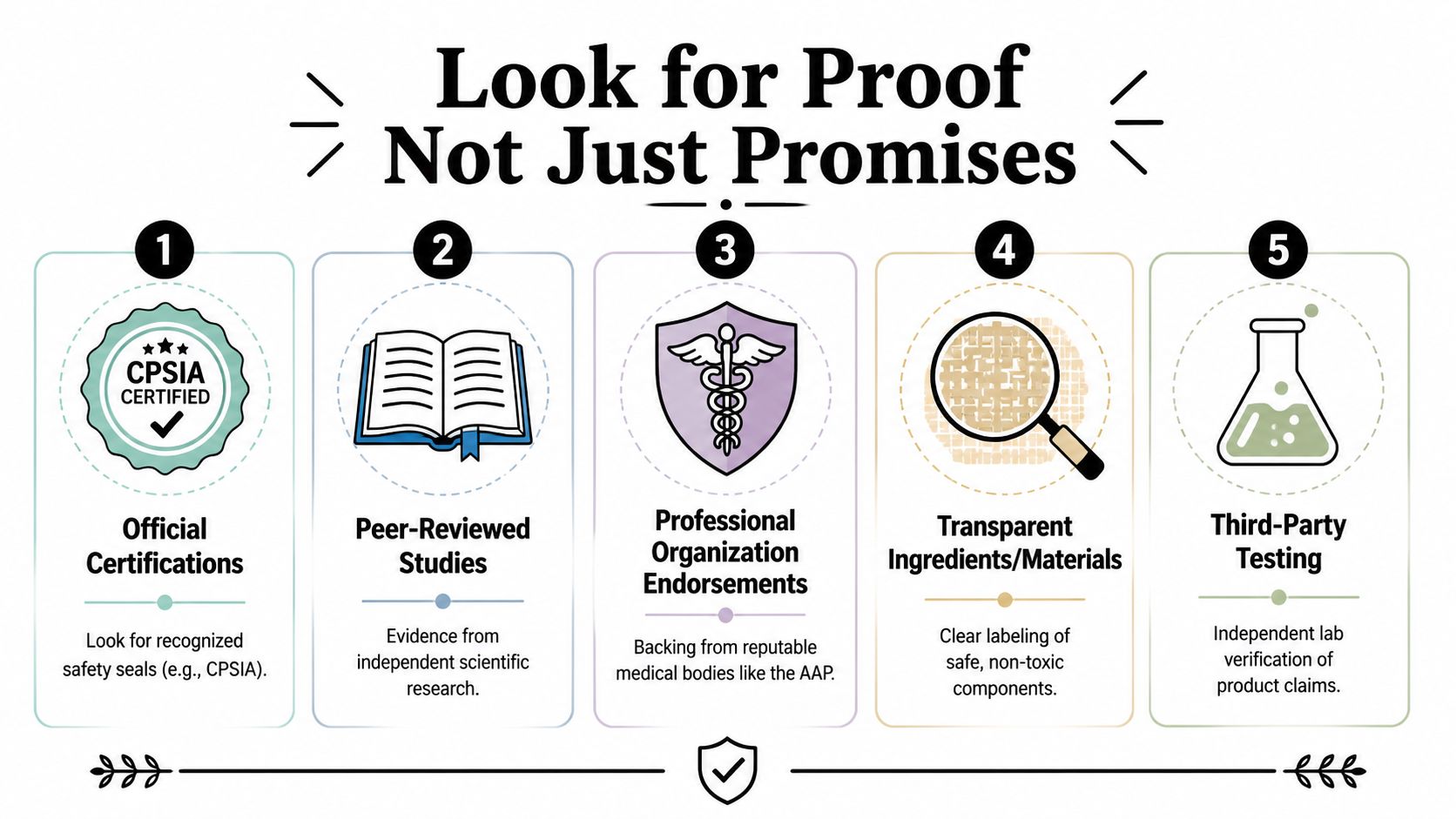
What real proof looks like
When you're evaluating baby clothes, focus on signals that are harder to fake:
- Third-party certification means someone outside the brand tested for specific standards.
- Clear fiber content tells you what's touching your baby's skin.
- Care and safety details show whether the company expects informed questions.
- Specific product construction matters. Covered zippers, secure seams, and age-appropriate design are more useful than mood-board language.
One of the clearest examples is OEKO-TEX Standard 100. In practical terms, it means the textile and its components have been tested for harmful substances. That's the kind of label that gives you something concrete to check.
Why this matters for hot sleepers and sensitive skin
Fabric performance can affect comfort and skin irritation. Pediatricians endorse OEKO-TEX Standard 100 certified bamboo viscose because it is tested to eliminate toxic solvent traces, and its breathability and moisture-wicking properties allow it to dry 3x faster than cotton and can reduce heat rash incidence by over 50% in warm climates, according to PatPat's summary of breathable fabrics for summer babies.
That kind of claim is much stronger than “soft and breathable” because it ties the material to testing and a specific safety use case.
A quick filter you can use in the store
If you're holding a baby outfit and trying to decide whether the brand deserves your trust, run through this short check:
- Can I identify the material clearly?
- Is there a recognizable certification, not just a house-made badge?
- Does the listing explain safety features in plain language?
- Would I feel comfortable showing this page to my pediatrician?
If the answer to most of those is no, keep browsing.
Key takeaway: Claims ask for trust. Certifications earn it.
That mindset changes shopping from guesswork into verification. And once you get used to it, you'll spot fluffy wording much faster.
How to Choose Safe and Comfortable Baby Apparel
Buying baby clothes gets easier when you split the decision into two jobs. First, choose for safety. Then choose for comfort. When safety comes first, a lot of trendy but impractical options fall away on their own.
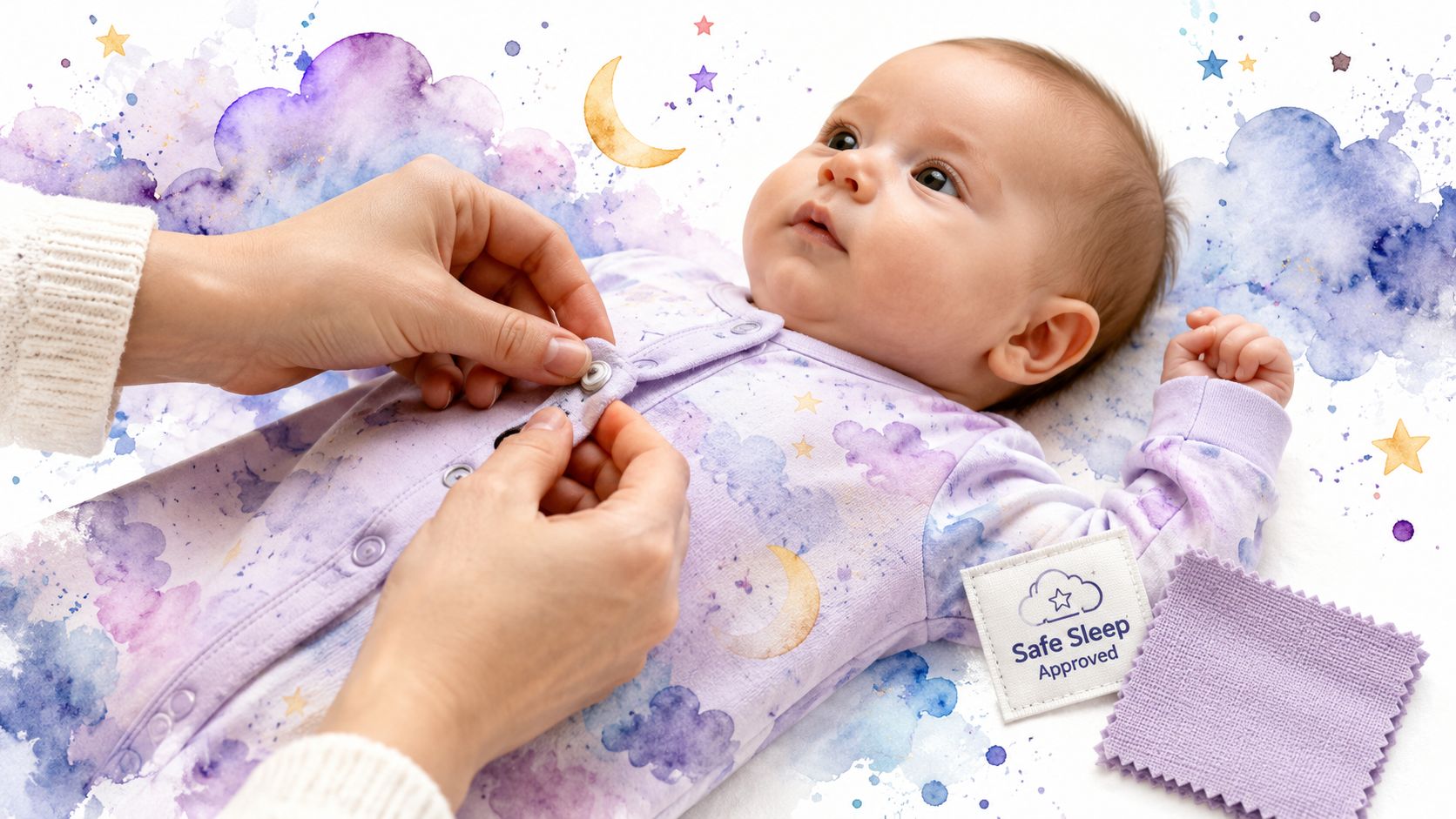
Start with sleepwear, not style
Sleepwear matters most because babies spend so much time in it, and nighttime is where overheating, loose layers, and poor fit become bigger problems. The American Academy of Pediatrics advises dressing infants in one more layer than an adult would wear comfortably. For rooms at 75 to 80°F, a simple lightweight sleeper is enough. Loose blankets are not safe due to suffocation risk, and placing a swaddled infant on their stomach increases the risk of death by 13 times, according to Pregnancy Birth and Baby's summary of AAP dressing guidance.
That guidance clears up one of the most common parent questions. More layers do not automatically mean better sleep. Sometimes they mean a baby is too warm.
What to look for in the garment itself
A good baby sleeper should make your life easier while reducing risk.
- Snug sleep design: Sleepwear shouldn't hang loosely around the face or bunch excessively.
- No loose blankets built into your setup: If warmth is needed, wearable blankets are the safer route when age-appropriate.
- Zipper guards and smooth seams: These help protect delicate skin from rubbing.
- Simple closures: Snaps and zippers are easier to inspect than decorative ties or extras.
- Breathable fabric: Especially helpful if your baby tends to run warm or gets sweaty at night.
Parents shopping for children with reactive skin often focus heavily on fabric, and for good reason. This guide on the best fabric for sensitive skin is useful if you're trying to compare common baby clothing materials in plain language.
Match the clothing to the room, not the season label
The tag may say “winter sleeper,” but your thermostat is what matters. A cool-weather sleeper in a warm nursery can still be too much. Likewise, a lightweight piece can work fine if your home stays warm and stable overnight.
A simple way to understand it:
| Situation | Better choice |
|---|---|
| Warm room | Lightweight sleeper or single light layer |
| Cooler room | Layered clothing plus an age-appropriate wearable blanket |
| Baby sweats easily | Breathable, moisture-managing fabric |
| Sensitive skin | Soft fabric with verified safety testing |
A quick visual can also help if you're trying to picture how safe sleep clothing should work in real life:
Keep indoor accessories minimal
Parents often get tripped up by hats, mittens, wraps, and layered add-ons. Indoors, more accessories aren't always safer. For sleep, simple usually wins. The fewer loose or extra pieces near a baby's face and neck, the easier it is to maintain a safer sleep setup.
Babies don't need a lot of “sleep extras.” They need the right fit, the right temperature, and a clear sleep space.
When you shop this way, you stop chasing nursery aesthetics and start building a safer routine. That's usually what pediatricians mean when they recommend a clothing approach, even if the package language doesn't say it clearly.
Your Verification Checklist and Questions for Your Doctor
You don't need to memorize every safety standard before you buy a sleeper or onesie. A short checklist is enough. Save it in your phone, use it in-store, or pull it up before you add something to your cart.
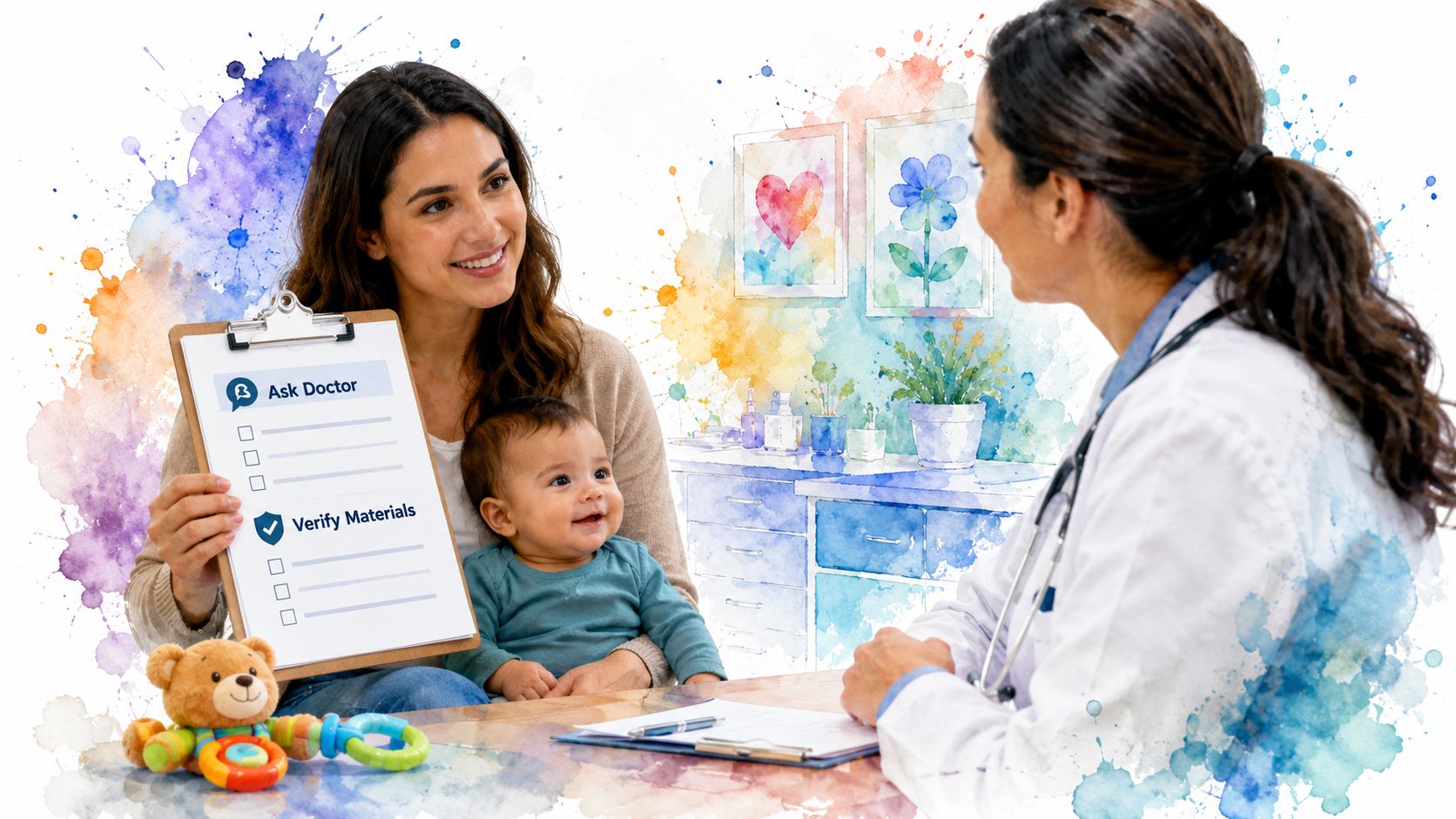
A parent-friendly verification checklist
Run through these before you buy:
- Check the label details. Can you find exact fabric content and care instructions without digging?
- Look for third-party certification. A real certification beats a vague “doctor approved” badge.
- Inspect the construction. Skip clothing with loose trims, rough seams, or decorations that could detach.
- Think about the use case. Daywear and sleepwear don't need the same features.
- Match fabric to your child. If your baby gets rashes, runs hot, or has eczema, comfort details matter more.
For parents of babies with eczema, pediatric experts recommend bamboo viscose because its rounded fibers reduce skin friction, and the fabric can keep skin 2 to 3°C cooler than cotton, which helps limit heat-triggered flare-ups, a primary irritant for over 65% of babies with eczema, according to Sofia Mila's discussion of bamboo and organic cotton for kids.
If you're evaluating sleep clothing specifically, understanding what TOG rating means can make temperature choices less confusing.
Smart questions to bring to your pediatrician
Bring product photos or screenshots if that helps. Most doctors can give better guidance when they can see what you're considering.
Ask questions like:
- Does this fabric make sense for my baby's skin?
- Would you suggest lighter or warmer sleepwear for our home temperature?
- Is a wearable blanket appropriate for my child's age and development?
- What signs tell me my baby is overheating at night?
- If my baby has eczema or frequent rash, what clothing features matter most?
- Are there specific materials or design features you'd avoid?
What to listen for in the answer
You're not looking for a brand name as much as a framework. A helpful pediatrician will usually talk about room temperature, breathability, fit, skin sensitivity, and sleep setup more than trendy fabric claims.
Bring the actual product page if you can. It's much easier for a doctor to comment on a visible fabric label and construction details than on a remembered slogan.
That turns your pediatric visit into something practical. Instead of asking, “Is this brand good?” you're asking, “Do these features make sense for my baby?” That question gets you closer to a useful answer.
Red Flags to Watch For When Shopping for Baby Clothes
Some warning signs show up again and again, especially in online listings. Once you know them, they're hard to miss.
The biggest one is a big promise with no proof. If a brand says “pediatrician recommended,” “non-toxic,” or “ideal for sensitive skin” but gives no certification, no material clarity, and no detailed safety explanation, slow down. Strong claims should come with specifics.
Common signs to pause on
- Decorative extras on baby sleepwear: Beads, pom-poms, oversized bows, or anything loosely attached deserve scrutiny.
- Vague language: “Natural-inspired,” “pure comfort,” and “wellness fabric” don't tell you much.
- No mention of testing or certification: Especially when the product is marketed for newborns or sensitive skin.
- Complicated sleep outfits: Pieces that add bulk, bunching, or loose layers can create problems at night.
- Medical-sounding claims that overreach: Clothing can support comfort and skin friendliness, but it shouldn't sound like a treatment.
Watch for confusion between comfort and safety
A fabric can feel buttery soft and still tell you nothing about testing. A cute sleeper can photograph beautifully and still have impractical details for actual nighttime use. Parents often get nudged toward aesthetics first, but safe baby clothing usually looks simpler, not fancier.
If you're also baby-proofing the sleep space, UK families may find this essential guide for UK parents useful for thinking through crib-related safety details beyond clothing.
A good final rule is this: if the brand makes it hard to understand what the product is, what it's made of, and why it's safe, you don't owe it your trust.
You don't need perfect knowledge to shop well. You need a calm process, a few strong questions, and the confidence to walk away from weak claims.
If you want baby and toddler sleepwear that keeps safety and skin comfort in focus, explore Little Venture Co.. Their faith-inspired bamboo pieces are made with OEKO-TEX Standard 100 certified materials, designed for softness, simplicity, and everyday peace of mind.