

Moisture Wicking Baby Clothes: A Parent's Practical Guide
It's 2 a.m., the room is quiet, and you lift your baby after a feeding only to find a damp neck, a sweaty back, or pajamas that feel cool and clammy against the skin. Most parents have had that moment, and it usually sparks the same question, why does one outfit leave a baby comfortable while another seems to trap every drop of warmth and moisture?
The answer is less about fashion and more about fabric science. Moisture management is a real textile-design issue, especially for babies, because they can overheat or stay damp more easily than adults due to their body size and skin surface area. Once you know what the fabric is doing, those middle-of-the-night outfit changes get a lot easier to think through.
Why Babies Get Damp So Fast and What Parents Notice First
The first clue is usually small. A damp collar after a car seat ride. A little sweat at the back of the neck after a nap. A onesie that feels fine at the start of the evening, then turns slightly sticky by midnight.
Babies don't handle heat the same way grown-ups do. Their bodies have a high surface-area-to-mass ratio, which means they can lose and gain heat faster, and they also stay damp longer when sweat or spit-up sits against the skin. That's why the same cotton shirt that feels perfectly normal on an adult can leave a baby feeling clammy, especially during sleep, in layered outfits, or in a warm room.
Why dampness shows up so quickly
A baby's clothes are doing two jobs at once. They're trying to keep the body warm enough, but not too warm, and they're also trying to move moisture away before it lingers. If the fabric holds onto water, the damp spot stays in contact with skin and the baby can feel uncomfortable fast.
That's why parents often notice dampness first in places where fabric hugs the body, like the neck, back, chest, and diaper line. It shows up in stroller rides, naps, and overnight sleep because those are the moments when babies are bundled, still, or in contact with soft surfaces for longer stretches.
Practical rule: if a garment feels dry to your hand but leaves your baby sweaty underneath, it's not managing moisture well enough for that baby, in that setting.
Moisture-wicking baby clothes start to make sense. They're not just a trendy label. They're built around the problem of keeping skin drier for longer, which matters most when your little one is sleeping, layered, or in a hot, humid room.
How Moisture Wicking Actually Works in Baby Clothes
Think of a paper towel touching a spill. The water doesn't just sit there, it starts traveling into the towel and spreading out. Moisture-wicking fabric works in a similar way, but the textile version is called capillary transport.
The fabric moves liquid instead of parking it on the skin
In wicking clothing, liquid is pulled from the skin into tiny fiber channels, then spread across a larger surface area so it can evaporate faster. That's the key difference between a fabric that moves moisture and a fabric that just soaks it up and holds it. For babywear, that distinction matters because held moisture sits right where irritation starts.
Textile engineering notes that wicking depends a lot on fiber diameter, surface area, fabric compactness, and fiber geometry. Finer fibers and more surface area help create stronger capillary action, while denser fabrics can reduce moisture-management capacity. In plain language, the fabric has to be open enough to move moisture, but structured enough to keep working after movement and washing.
The moisture regain comparison helps explain the difference. The American Chemical Society's comparison shows cotton at 8.5%, cotton-polyester (50/50) at 4.45%, nylon at 4%, and polyester at 0.4% moisture regain, which means polyester holds far less water than cotton and usually dries faster after perspiration or spills. That's one reason polyester often shows up in quick-dry babywear and synthetic blends, especially when parents want sleepwear or layering pieces that don't feel soggy for long. The ACS also explains that moisture regain is calculated by comparing the mass of water in a saturated fabric to the mass of the dry fabric, which is the basic measurement behind “quick-dry” and “wicking” claims in babywear development. American Chemical Society moisture regain comparison
The best systems usually combine a dry-feeling skin side with a more absorbent layer beneath. That way, the surface touching the baby feels less clammy while the fabric still has somewhere to send the moisture.
A helpful way to remember it is this. Wicking moves, absorption stores. Parents often want both, but for a baby's skin, movement first is usually the better starting point.
For a plain-language primer on the fabric side, this explanation of what moisture-wicking fabric is is worth a quick look before you shop.
Why Bamboo Viscose Leads the Pack for Sensitive Skin
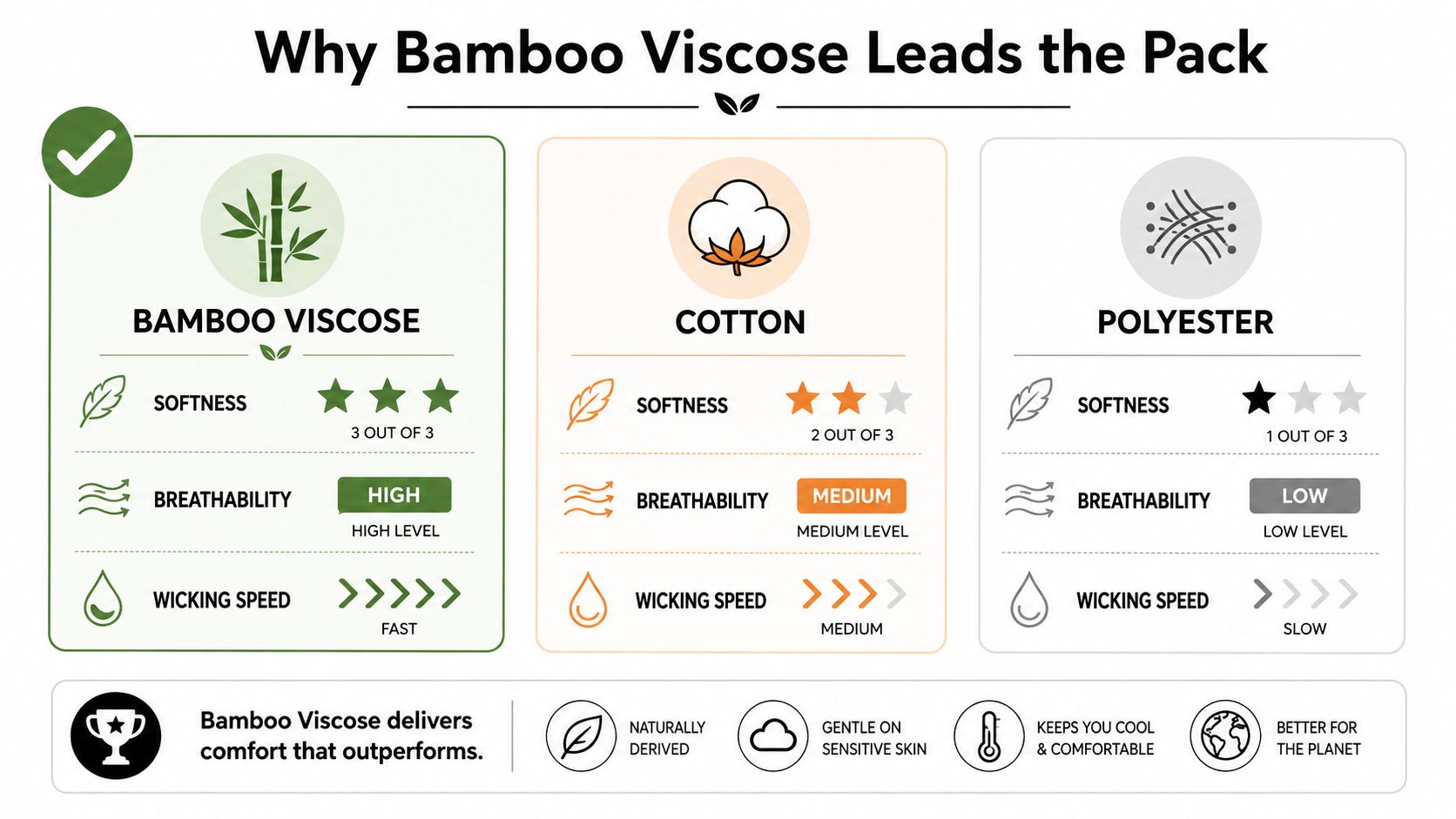
For babies with sensitive skin, bamboo viscose keeps coming up for a reason. Independent baby-clothing and textile guides consistently describe it as a strong moisture-wicking option, especially in warm and humid settings, and they give parents a few concrete ways to compare it with other common fabrics.
What parents feel in real life
One guide says bamboo fabric is about 20% more breathable than cotton and stays about 3 degrees cooler against the skin, while another says it pulls sweat away 70% faster than cotton and can be 3°F cooler in warm weather. A separate baby-clothing guide says bamboo viscose absorbs moisture up to three times better than cotton. Taken together, those claims line up with what parents often notice in practice, less cling, less stickiness, and less of that late-night damp-back feeling. Breathability and cooling comparison for bamboo fabrics
Bamboo viscose also tends to feel smoother against the skin than rougher fabrics, which is why it's often favored for newborns and eczema-prone babies. Cotton is still a solid everyday choice, but it tends to hold more moisture once it's wet. Polyester dries quickly, yet some babies don't love the synthetic feel. Nylon is also quick-drying, but it's not usually the first pick for a baby who gets irritated easily. Merino wool can regulate temperature well, but many parents reserve it for cooler-weather layering because it feels different on the skin and isn't the most intuitive choice for every newborn.
A simple way to choose without overthinking it
If your baby runs hot, sweats during sleep, or has skin that reddens easily, bamboo viscose is usually the first fabric worth checking. If you need a sturdier, lower-cost everyday layer, cotton still has a place. If you want fast drying in a performance blend, synthetic fabrics can help, but it's smart to look closely at fit and finish so the garment doesn't trap heat or rub.
If you like sewing or want to understand the material feel more, this guide to bamboo jersey from More Sewing is a useful reference for how the fabric behaves before it becomes babywear. For a deeper look at the fiber itself, see what bamboo viscose fabric is.
One practical note matters just as much as the fabric label. Parents should still look for soft construction, since a great fiber can still irritate if the garment is scratchy, poorly finished, or too snug.
Safety, Certifications, and What Labels Really Mean
A soft baby shirt can still leave red marks if the finish, seams, or closures irritate sensitive skin. That is why parents do better with a label check that looks beyond the marketing words.
The checks that matter most
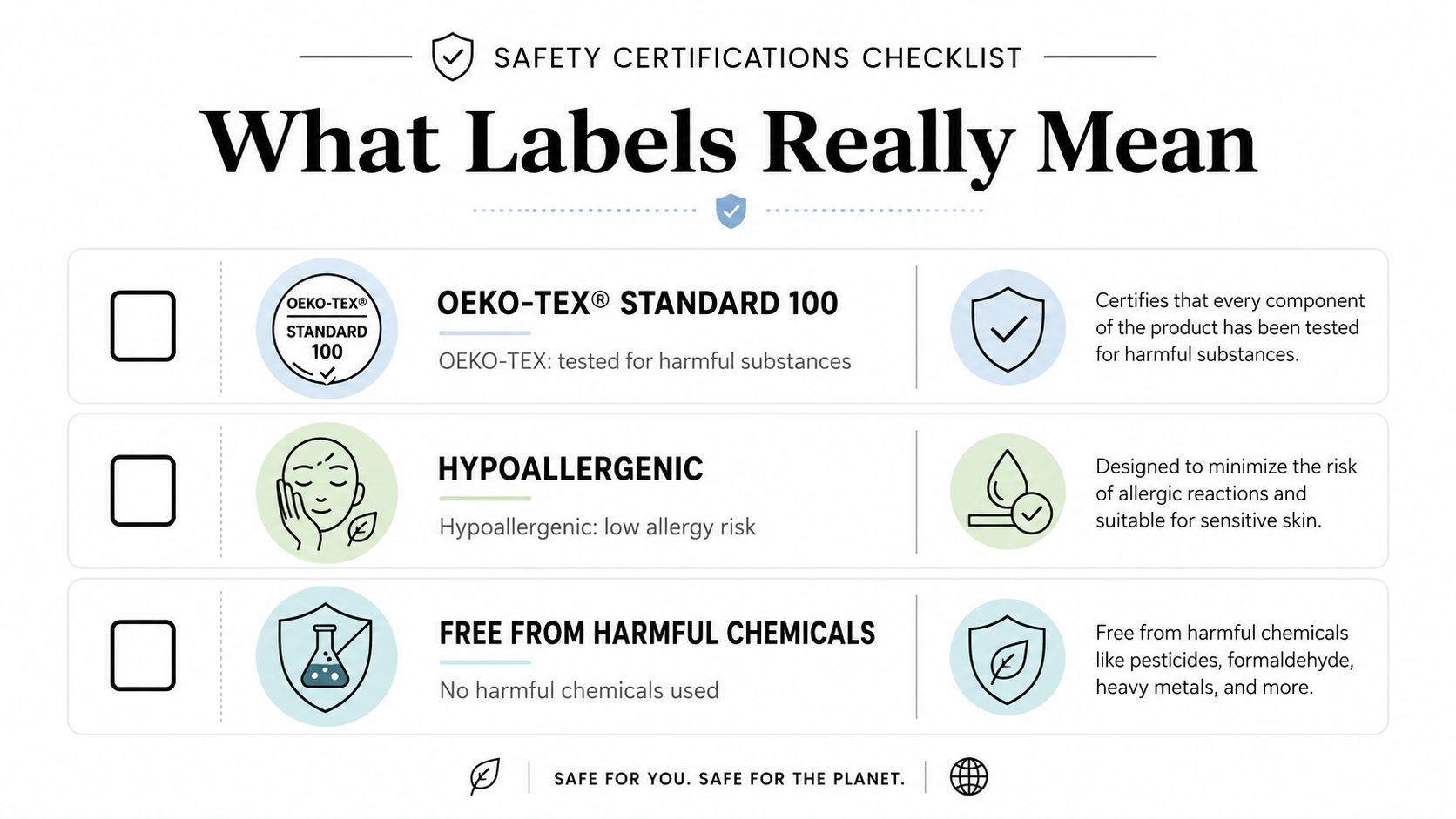
OEKO-TEX Standard 100 matters because it means the material has been tested for harmful substances. That does not promise every baby will tolerate it perfectly, but it gives you a third-party screen instead of a vague reassurance. A hypoallergenic label can help narrow the field, but it is not a guarantee; it points to a lower allergy risk rather than a promise that no baby will react.
Two construction details matter in daily wear. Tagless construction removes the scratchy spot at the back of the neck, and flat seams reduce rubbing under the arms, along the side seam, and across the shoulders. For babies with eczema-prone or irritation-prone skin, those small contact points can matter more than the logo on the front.
Practical rule: if the fabric sounds wonderful but the seams feel rough in your hand, skip it.
The finishing can change how a garment feels once it is on the body. Wrinkle-resistant and stain-resistant treatments can alter the hand feel, and some performance pieces use a tighter fit that holds heat more than parents expect. Flame-retardant rules also deserve a quick look, especially for sleepwear, because parents want safety without extra bulk or coatings that bother skin.
A product page works best as a checklist, not a mood board. Look for the certification, the seam construction, the closure style, and any finish language that suggests heavy treatment. If those details are missing, it is fair to ask the seller before you buy.
A faith-minded gift can carry the same care. A baby blanket or sleeper feels more meaningful when it pairs comfort with a clear safety label, because the person giving it can offer warmth, prayerful intention, and peace of mind together.
A quick verification list for the cart
- Certification: Look for OEKO-TEX Standard 100 or another clear third-party test.
- Skin comfort: Choose tagless pieces when possible.
- Seam finish: Prefer flat seams for babies with sensitive skin.
- Closures: Zippers and snaps should lie smooth, not press into the body.
- Finish language: Be cautious with wrinkle-resistant or stain-resistant claims if your baby reacts easily.
Smart Buying Tips for Fit, Layering, and Season
A good fabric can still fail if the fit is wrong. Too loose, and the garment bunches under a sleep sack. Too tight, and it traps heat or makes diaper changes harder than they need to be at 2 a.m.
Fit first, then fabric
For moisture-wicking baby clothes, the sweet spot is usually snug but not tight. You want enough contact for the fabric to move moisture off the skin, but not so much pressure that it sticks, rubs, or restricts movement. Zipper rompers are handy for overnight changes, and two-piece sets can make daycare dressing easier when you need quick swaps during the day.
Layering is where many parents get confused. A wicking base layer under a sleep sack can work well for nighttime, while a lightweight long-sleeve layer can be easier for cool mornings or air-conditioned rooms. In a warm climate, fewer layers often perform better than thicker ones, because moisture has somewhere to go instead of getting trapped between fabrics.
| Season | Room Temperature | Baby Age | Recommended Layer |
|---|---|---|---|
| Warm weather | Warm rooms and humid naps | Newborn to toddler | Lightweight bamboo romper |
| Mixed season | Cool mornings, warmer afternoons | Newborn to 6 months | Wicking base layer with easy snaps |
| Sleepwear | Layered sleep setup | Any infant stage | Zip romper under a sleep sack |
| Daycare | Varying indoor temperatures | 3 months and up | Two-piece set with soft waistband |
A few shopping habits that pay off
Buy for the season you're in now, but leave room for growth. Babies move through sizes quickly, and a pile of cute clothes that fit for only a few weeks can be frustrating if they don't match the weather. Multipacks can make sense when the style is simple and the fabric is one you already trust. Single pieces are better when you're testing a new fabric, fit, or brand.
If you're deciding between a handful of staples and a full drawer, start with the pieces closest to the skin. Those are the ones where moisture control, softness, and seam comfort show up every day.
Washing and Care That Keeps Wicking Working
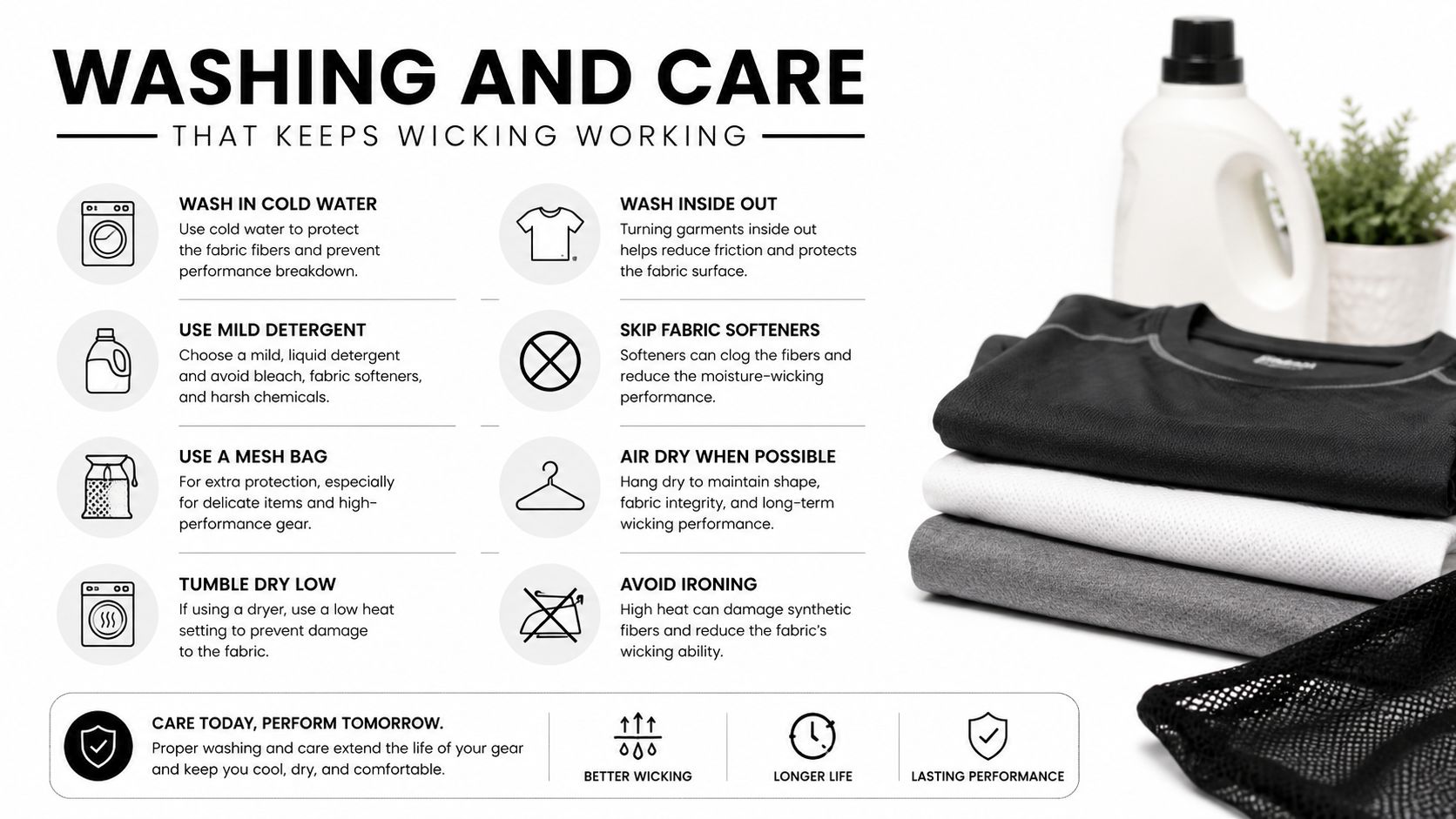
The way you wash a garment can help or hurt its moisture-wicking ability. Many parents blame the fabric when the actual issue is residue on the fibers, too much heat, or a drying method that beats the softness out of the cloth.
Keep the fibers open and clean
For bamboo viscose and similar wicking pieces, a cool or warm wash with a gentle detergent is usually the safest routine. Fabric softener can coat the fibers and reduce capillary action, which means moisture doesn't move through the cloth as well. High heat can also shorten the life of delicate baby garments, so low-heat drying or air drying is the gentler route.
If a piece starts to smell stale even after washing, residue is often the first suspect. That can happen when too much detergent is used, or when the garment is washed with heavy loads that don't let water rinse through fully. This wash guide on how to wash bamboo clothing is a handy reference if you want a second opinion on care basics.
Common laundry problems and quick fixes
| Symptom | Likely Cause | Quick Fix |
|---|---|---|
| Garment feels less soft | Detergent buildup | Rinse again, then use less detergent next wash |
| Wicking seems weaker | Fabric softener residue | Stop using softener, wash gently |
| Persistent odor | Incomplete rinse or overload | Wash alone or with a lighter load |
| Small surface fuzz | Friction during washing | Turn inside out and use a gentler cycle |
If a garment keeps pilling or stays damp longer than it used to, the fabric may have reached the point where its performance has faded. That doesn't always mean it's useless, but it may no longer be the right piece for sleepwear or hot-weather layering.
Choosing Meaningful Gifts for Baby Showers and Holidays
A moisture-wicking outfit can be a practical gift and a thoughtful one at the same time. New parents usually receive plenty of decorative items, but fewer gifts that solve the midnight problems, sweaty backs, fussy naps, and layers that feel good straight out of the wash.
A bamboo zip romper or two-piece set works well for a baby shower because it's useful right away, and it doesn't need a lot of explaining. Gift buyers can check the size label, the care instructions, and the seam finish before wrapping it up, which makes the present feel more intentional. For grandparents, church groups, and families shopping for nursery ministries, that same checklist helps keep the focus on comfort, safety, and repeat wear instead of novelty.
Little Venture Co. is one option in this space, offering bamboo sleepwear and daywear with OEKO-TEX Standard 100 certification and a faith-inspired mission, and that matters for gift-givers who want the present to carry both comfort and meaning. A thoughtful box can include a soft sleeper, a note card, and a simple explanation of how to wash it so the parents can use it right away.
Gift buyer's shortcut: choose one item the baby can wear often, not one item that only photographs well.
If your church group or family ministry is organizing gifts, stick with pieces that are easy to wash, gentle on skin, and simple for exhausted parents to use without extra steps. That keeps the gift practical long after the wrapping paper is gone.
Common Questions Parents Ask Before They Buy
Do moisture-wicking clothes help eczema-prone skin? They can, especially when the fabric is smooth, breathable, and paired with flat seams and tagless construction. Dry skin contact matters a lot when a baby's skin already feels irritated.
When should I size up? Size up when the current piece starts pulling at the shoulders, riding up at the diaper, or leaving red marks at the cuffs. If you're between sizes, the roomier option usually works better for layering.
Are multipacks worth it? Yes, if you already trust the fit and the fabric. If you're trying a new brand, start with one piece first.
How do I know wicking is fading? If the garment starts holding damp spots longer, feeling sticky after washing, or smelling stale too quickly, the fabric may be losing performance.
Little Venture Co. offers bamboo sleepwear and daywear made for babies who need softness, easy layering, and skin-friendly comfort. If you're choosing a gift or building a small wardrobe with safer, more thoughtful pieces, visit Little Venture Co. and look for styles that fit your baby's season, size, and care routine.