

Infant Easter Pajamas: A Safe and Comfortable Buyer's Guide
You're probably standing in a store aisle or scrolling on your phone, trying to decide whether those infant Easter pajamas are worth buying. The prints are cute, sure, but babies don't care about bunny ears or pastel eggs. Parents do care about what touches their baby's skin at 2 a.m., whether the pajamas fit safely, and whether the purchase will still feel useful after the holiday photo is over.
That's the right way to think about it. Infant sleepwear isn't a novelty category, it's a safety category first and a gift category second. If you want Easter pajamas that earn their keep, focus on snug fit, skin-friendly fabric, and wearability beyond one morning.
Rethinking the Holiday Pajama Purchase
Holiday sleepwear gets marketed as an impulse buy. That is the wrong lens for baby clothing. A better question is whether the pajamas keep an infant comfortable, fit safely, and still make sense after Easter morning is over.
Seasonal baby apparel is a real market, not a throwaway corner of retail. The seasonal holiday baby outfits market is estimated at $1.2 billion in 2024 and projected to reach $2.1 billion by 2033, with a 6.3% CAGR over the forecast period, according to Market Intelo. That market size suggests a pattern of consistent purchasing beyond single-use novelty items.
Comfort beats costume energy
The strongest-selling product forms in that market are bodysuits and rompers, which together made up nearly 45% of total revenue in 2024. Cotton held 54% of material share because parents keep choosing softness and skin-friendly construction, according to the same report. That is the right direction for infants. Easy-wear silhouettes, breathable fabrics, and gentle seams matter more than a flashy Easter print.
A thoughtful gift should also pass the everyday test. A curated selection like OnlineGifts.us baby gifts is a good reminder that the best baby present usually combines usefulness with a little seasonal charm.
Practical rule: If the pajamas look like a photo prop first and sleepwear second, skip them.
Treat Easter pajamas like any other baby sleep item, just with a seasonal print. A bunny pattern does not change the basics. The garment still needs to fit well, feel soft, and survive repeated washing. If you are choosing between two options and one feels more like a costume, pick the simpler one. For a seasonal browse that stays festive without drifting too novelty-heavy, see this Easter collection.
Safety First Snug Fits and Federal Standards
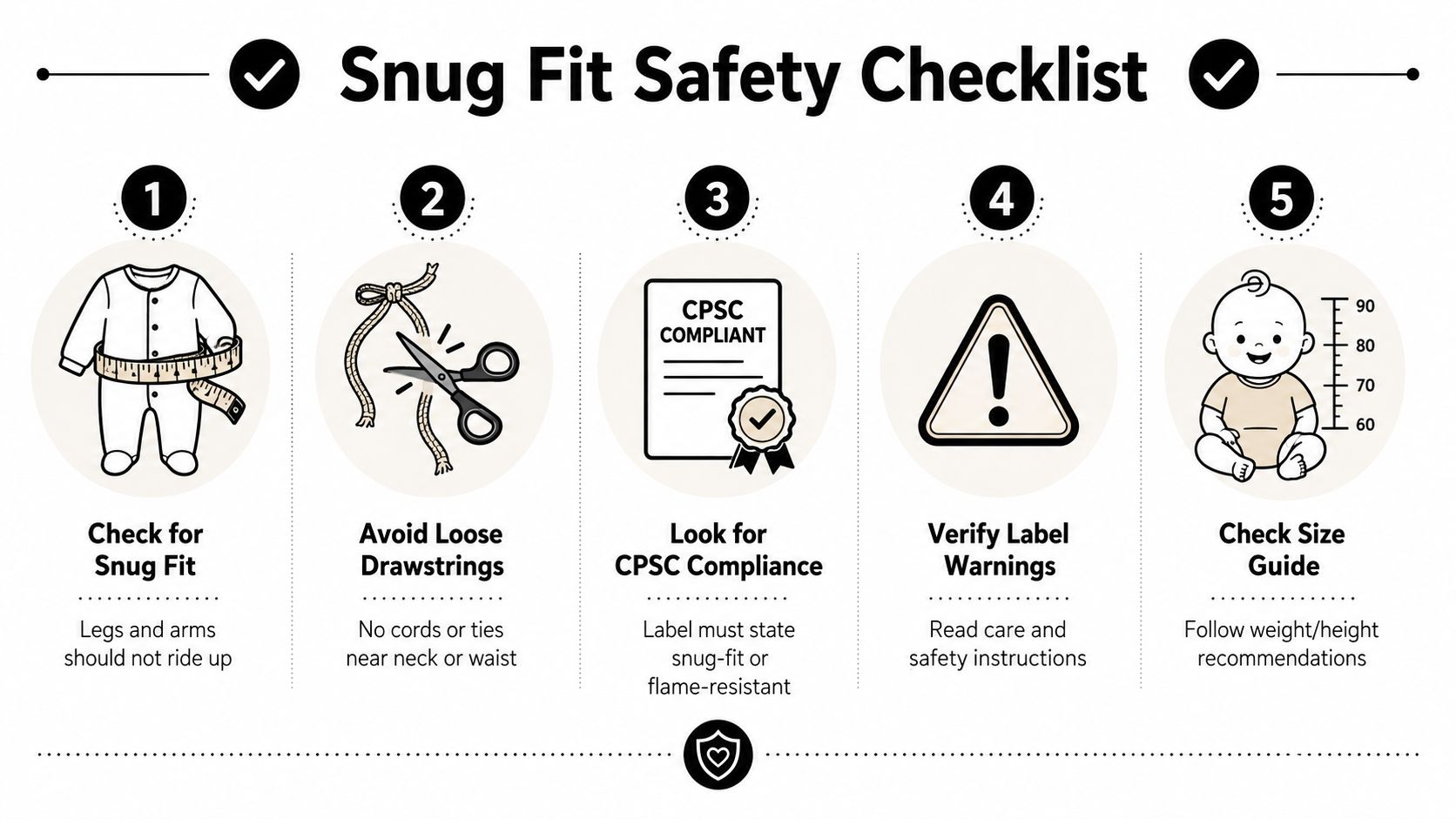
Sleepwear for babies is not casual clothing with a holiday print. In the U.S., federal guidance requires baby sleepwear to be either flame resistant or designed to fit snugly to reduce fire risk, and loose-fitting garments are more likely to catch fire, according to the guidance linked through Kohl's product information. That's why fit matters so much more than the age on the tag.
Measure the body, not the birthday
Age labels are crude. Height and weight charts are better, because babies grow unevenly and clothing size varies by brand. The sizing example in that same retailer listing maps 3 Months to 21.5" to 24" and 9 to 12.5 lb, and 12 Months to 28.5" to 30" and 21 to 25 lb. Those ranges show why a snug-fit pajama can't be chosen by “baby is about six months” logic. The body decides the size, not the calendar.
A safe fit should stay close to the body without pinching. Check the cuffs, torso length, and leg length. If the pajama bagginess creates room for extra fabric to bunch up, it's working against the whole reason snug-fit sleepwear exists.
Use this test: If you can pull the fabric far away from the body without resistance, it's too loose for infant sleepwear.
What to look for on the label
Read the garment label carefully. You want language that clearly identifies the sleepwear as snug-fit or flame resistant, not vague marketing language about comfort or softness. A cute print doesn't satisfy a safety requirement. A good fit does.
For parents comparing seasonal pieces, the safest habit is simple. Match the label to the baby's measurements, then confirm the garment sits close to the body when worn. For a deeper look at the safety logic behind snug-fit sleepwear, see Little Venture Co.’s flame-resistant sleepwear guide. That's the standard to keep in mind whether you're buying Easter bunnies or plain neutral pajamas.
Choosing the Right Fabric for Sensitive Skin
A festive print means nothing if the fabric irritates your baby's skin. Infant skin reacts faster than adult skin, and rough finishes, scratchy seams, heavy dyes, or stiff fabric can turn a cute Easter pajama into a nightly nuisance. For babies who already deal with drool, spit-up, and constant washing, the fabric choice carries more weight than the bunny pattern.
Cotton still earns its place
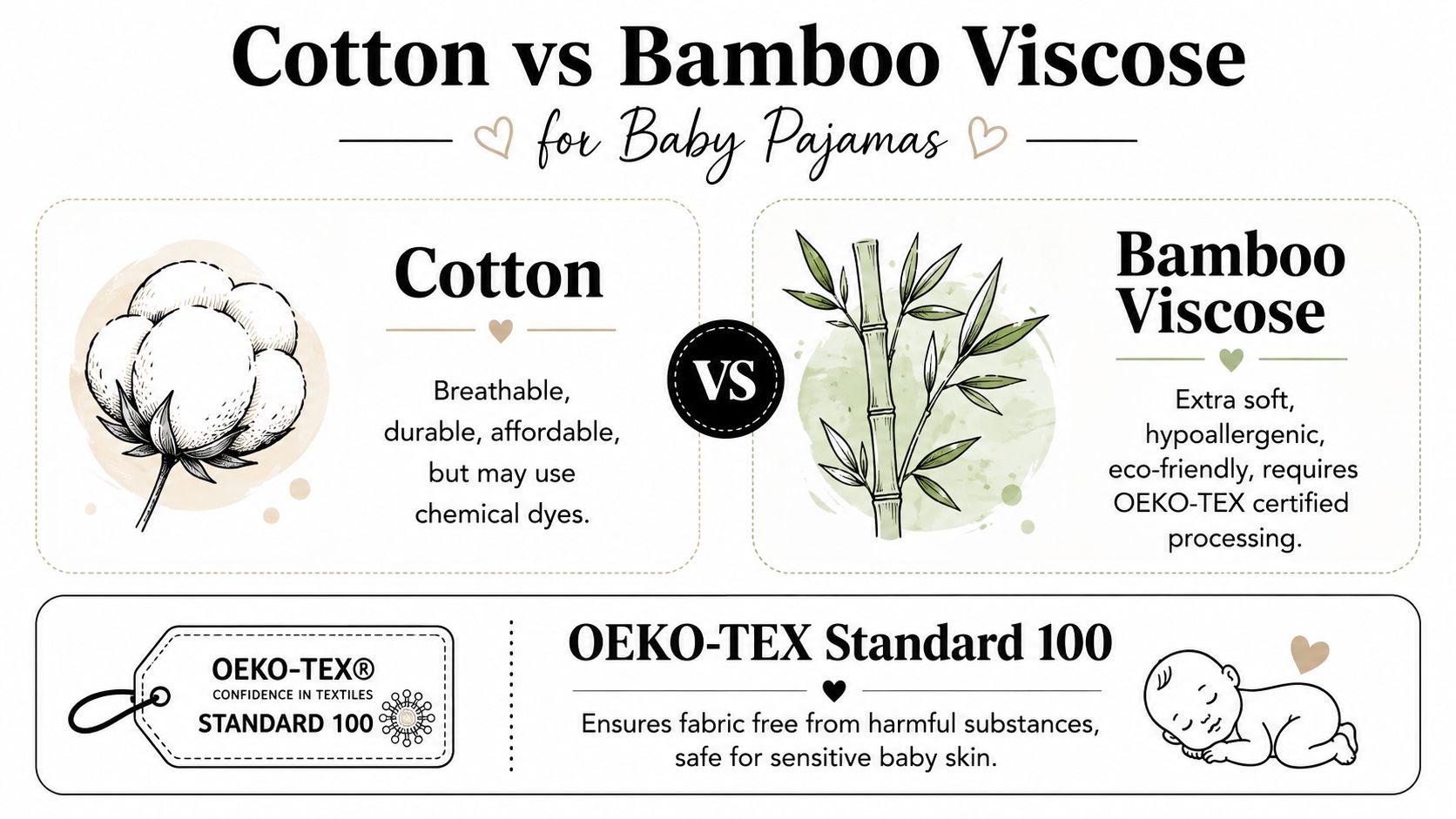
Cotton remains the safest starting point for many parents because it is soft, breathable, and familiar. In seasonal baby apparel, it has a strong reputation for comfort and skin-friendliness, which is why it keeps showing up in infant sleepwear. For Easter pajamas, cotton rib knit and cotton-rich blends usually make the most sense when you want breathability and a close fit.
Cotton still needs scrutiny. A cotton fabric can be poorly finished, dyed too heavily, or built in a way that shrinks and twists after washing. The right cotton pajama feels soft, keeps its shape, and stays close to the body without adding bulk.
Why certification beats marketing claims
OEKO-TEX STANDARD 100 matters because it shows the fabric has been tested for a controlled list of harmful substances, according to Farm and Fleet's product listing. That is a clearer signal for sensitive skin than vague tag-line promises about being natural or gentle.
Bamboo viscose also deserves attention, especially for babies with sensitive skin, because it is known for a very soft hand feel and works well in snug-fit sleepwear. Still, softness alone is not the standard. Processing quality and certification matter just as much as the fiber itself. For a closer look at that point, read this guide to bamboo pajamas for sensitive skin.
My rule of thumb: choose the plain certified fabric over the prettier print made from an unverified blend.
Machine-washable construction matters too. Repeated laundering changes texture, fit, and drape, so a pajama that comes apart, stretches out, or pills quickly is a poor buy even if it looks good on arrival. If you want Easter sleepwear that gets worn again after the holiday, start with fabric that can hold up to real use, not just a photo.
Zip Rompers vs Two-Piece Sets
The style decision is easier if you start with your baby's routine. Zip rompers are the practical choice for frequent nighttime changes. Two-piece sets win when you want more sizing flexibility or you're buying for a baby who's growing quickly and needs a little room to move.
Zip rompers for speed
A zip romper keeps everything together. That matters when you're changing a diaper at 3 a.m. and don't want to wrestle a top back over a sleepy baby's head. For younger infants, especially those who wake often or need multiple changes, the zip romper is the no-nonsense option.
It also reduces the number of separate pieces you have to track. Less fuss, fewer cold-air moments, fewer chances to misalign a waistband. If the goal is fast, easy, and secure, a romper is hard to beat.
Two-piece sets for flexibility
Two-piece sets make more sense once sizing gets trickier. You can often mix a top and bottom fit more comfortably across different body shapes, which helps when babies are long, chunky, or in between sizes. They can also feel less restrictive for babies who move a lot in sleep.
Best choice by routine: If your baby has frequent diaper changes, pick the romper. If you need more sizing flexibility, pick the two-piece.
The tradeoff is simple. Two-piece sets can ride up more easily, and they require a little more attention to keep the waistband and hem aligned. But if you're looking for a set that can be worn beyond one narrow age window, the separate pieces give you more room to work with.
For infants, I'd choose based on the baby's current stage, not on what looks cutest folded in a drawer. Cute doesn't help at midnight. Ease of use does.
Faith Inspired Designs and Meaningful Gifting
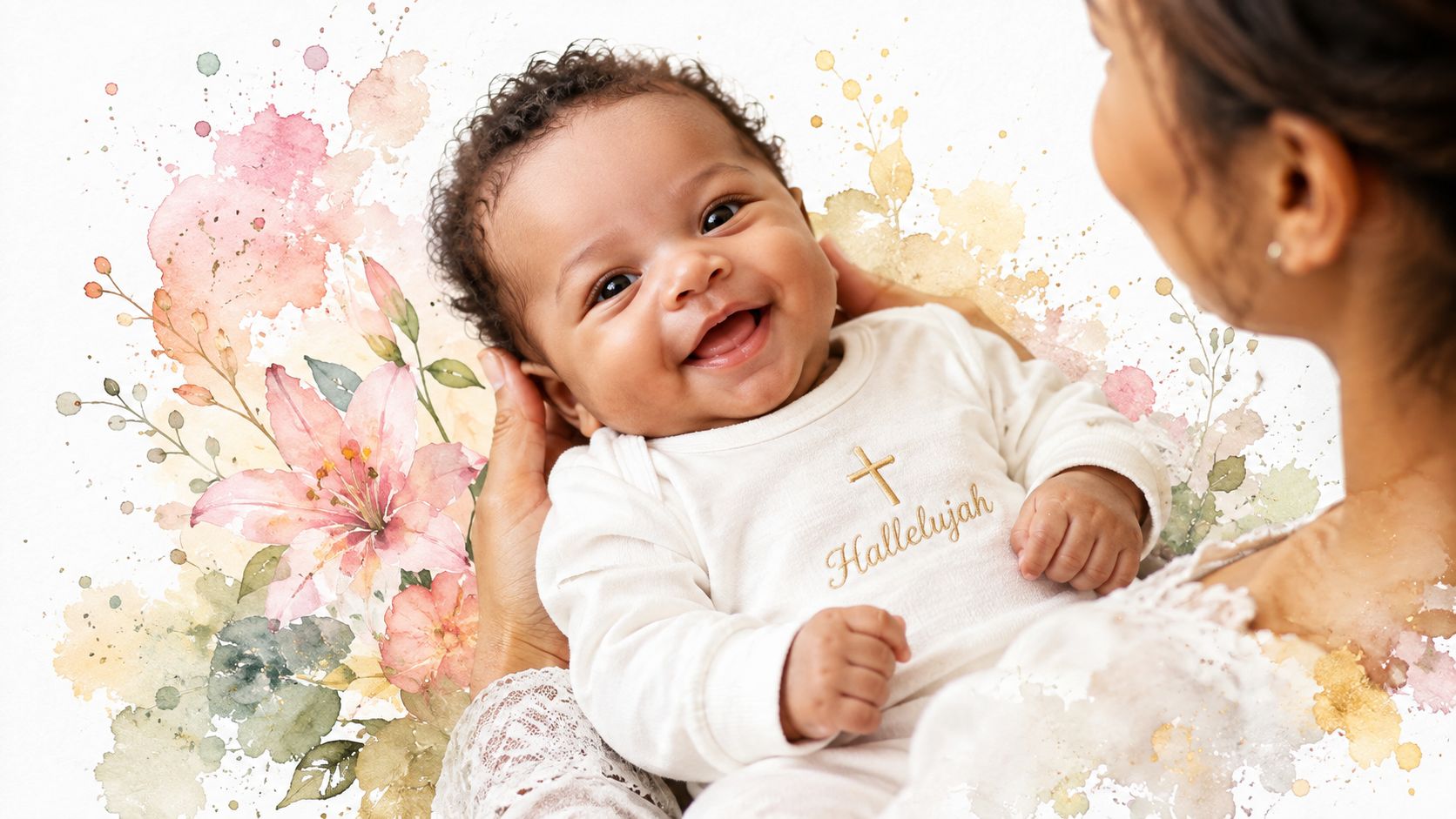
Easter means different things to different families, but for many, it's a spiritual holiday. That's why faith-inspired infant pajamas feel more meaningful than generic bunny prints. A cross, a blessing message, or a creation-themed design can turn sleepwear into a small reminder of what the holiday is about, without making the garment feel stiff or overly formal.
Meaning matters, but so does usability
A faith-based design still has to function as real sleepwear. That means the same standards apply, soft fabric, safe fit, and easy laundering. A beautiful message on the front doesn't compensate for a stiff neckline or a loose silhouette.
If you're buying for a baby shower, church family, or grandchild, the most thoughtful gift is one that reflects the family's values and respects the baby's daily comfort. That's the sweet spot. A meaningful print paired with practical construction feels personal, not performative.
Good gifting is more than decoration
Many gift buyers want something memorable, but memorable doesn't have to mean complicated. A simple, well-made pajama set with an uplifting design is often more useful than a novelty basket filler that gets tossed after the photo. For families who prefer gifts with a Christian focus, Little Venture Co.’s Christian baby gifts fit that direction without turning the holiday into a gimmick.
A gift should bless the family after the holiday is over, not just look good for five minutes.
That's where mission-driven purchases also matter. When a brand's values align with the buyer's, the gift carries more weight. The design says “happy Easter.” The construction says “I thought this through.” Both matter, especially for infant clothing, where comfort and care show up in the details.
Maximizing Cost Per Wear Beyond the Holiday
The smartest Easter pajama purchase isn't the most themed one. It's the one that still works once the egg hunt is over. A lot of parents overpay for novelty because they assume a seasonal print has to be one-and-done. It doesn't.
The broader baby apparel market reached $44.5 billion in 2024 and is expected to grow to $71.4 billion by 2034, with a 4.9% CAGR from 2025 to 2034, according to Global Market Insights. That scale matters because it shows parents are already buying into quality and longevity, not just one-time occasion dressing. The same report points to rising demand for quality and sustainable baby wear with repeat purchase cycles.
Buy prints that survive spring
If you want more wear, choose designs that lean spring-first and Easter-second. Bunny motifs, florals, soft checks, and pale solids stay useful well after the holiday weekend. A pajama with a general spring feel can keep working through the season instead of getting shoved into a memory box on Monday morning.
Sizing also changes the math. If you buy a little ahead of growth, you extend the wear window. Too small, and the pajama becomes obsolete fast. Too big, and the fit becomes a safety problem, which kills the value entirely.
What good value actually looks like
A high-value pajama is one your baby can wear for sleep now, then reuse for naps, travel, and everyday spring routines. That's the whole point. The cost-per-wear drops when the garment isn't locked to one weekend.
Here's the blunt truth. A louder print doesn't make a better buy. A better buy is comfortable enough for regular use, safe enough for sleep, and subtle enough that it doesn't scream “holiday prop” the second Easter ends. If you want a purchase that earns its spot in the drawer, prioritize versatile colors, breathable fabric, and a clean silhouette over the flashiest design.
Care Instructions for Long-Lasting Softness
Wash infant Easter pajamas inside out on a gentle cycle and use a mild detergent. That helps protect the print, reduce surface wear, and keep soft fabrics from turning rough too quickly. Skip harsh additives unless the garment label specifically allows them.
Air drying is the safest way to preserve fit, especially for snug-fit sleepwear. If you use a dryer, keep the heat low and check the garment before it's fully dry so you don't over-shrink it. Fold the pajamas clean and dry, then store them in a breathable drawer or bin so they're ready for the next baby, the next season, or a friend who needs them.