

Hypoallergenic Baby Clothes: A Faith-Inspired Parent's Guide
The rash usually appears at the worst possible time. You've just finished a late-night bath, dressed your baby in an adorable new sleeper, and noticed angry red patches along the cheeks, thighs, or waistband. Now you're wondering whether the soap, the detergent, the fabric, or the outfit's cheerful print is making your little one uncomfortable.
That uncertainty can feel overwhelming, especially when a label promises “natural,” “gentle,” or “hypoallergenic.” The reassuring part is that you don't need to become a textile chemist to make wiser choices. You need to look beyond the fiber name and ask what was added, how the finished garment was tested, and how it's washed at home.
For Christian parents, this care can also become a simple act of stewardship. Choosing clothing that protects a child's comfort, supports responsible manufacturing, and reflects thoughtful values doesn't require perfection. It requires patience, discernment, and a willingness to read past attractive marketing.
What Hypoallergenic Baby Clothes Really Mean
A parent holding a rashy baby at midnight may reach for the softest-looking outfit in the drawer. The garment feels smooth, the packaging says “organic,” and the color looks harmless. Yet the reaction may come from something the label barely mentions, such as a dye, finishing treatment, printed decoration, elastic, or detergent residue.
The word hypoallergenic means less likely to cause an allergic reaction. It doesn't mean a garment is completely free from chemicals, allergens, or irritation risk. In textile marketing, the term often appears without a single universal testing definition, so parents need to treat it as a starting point rather than proof.
Look at the finished garment
True hypoallergenic baby clothes should be designed around everything that touches a baby's skin. That includes:
- The base fiber: Cotton, bamboo viscose, modal, wool, linen, or a blend.
- Dyes and pigments: Colorants can irritate skin even when the underlying fiber is gentle.
- Finishes: Wrinkle resistance, stain resistance, shrink control, and softness treatments may leave residues.
- Construction materials: Thread, elastic, snaps, labels, screen prints, and adhesives matter too.
- Laundry residue: Fragrance, optical brighteners, and poorly rinsed detergent can remain after washing.
That's why “organic” and “hypoallergenic” aren't interchangeable. Organic usually describes how a fiber was grown or sourced. It doesn't automatically tell you how the fabric was dyed, printed, finished, or assembled. A garment can use organic cotton and still contain an irritating finish.
“Chemical-free” is even less useful. All textile production involves chemistry, including washing, dyeing, and fiber processing. The meaningful question isn't whether a garment contains no chemicals. It's whether the manufacturer limits hazardous substances and verifies the finished product.
Why third-party testing matters
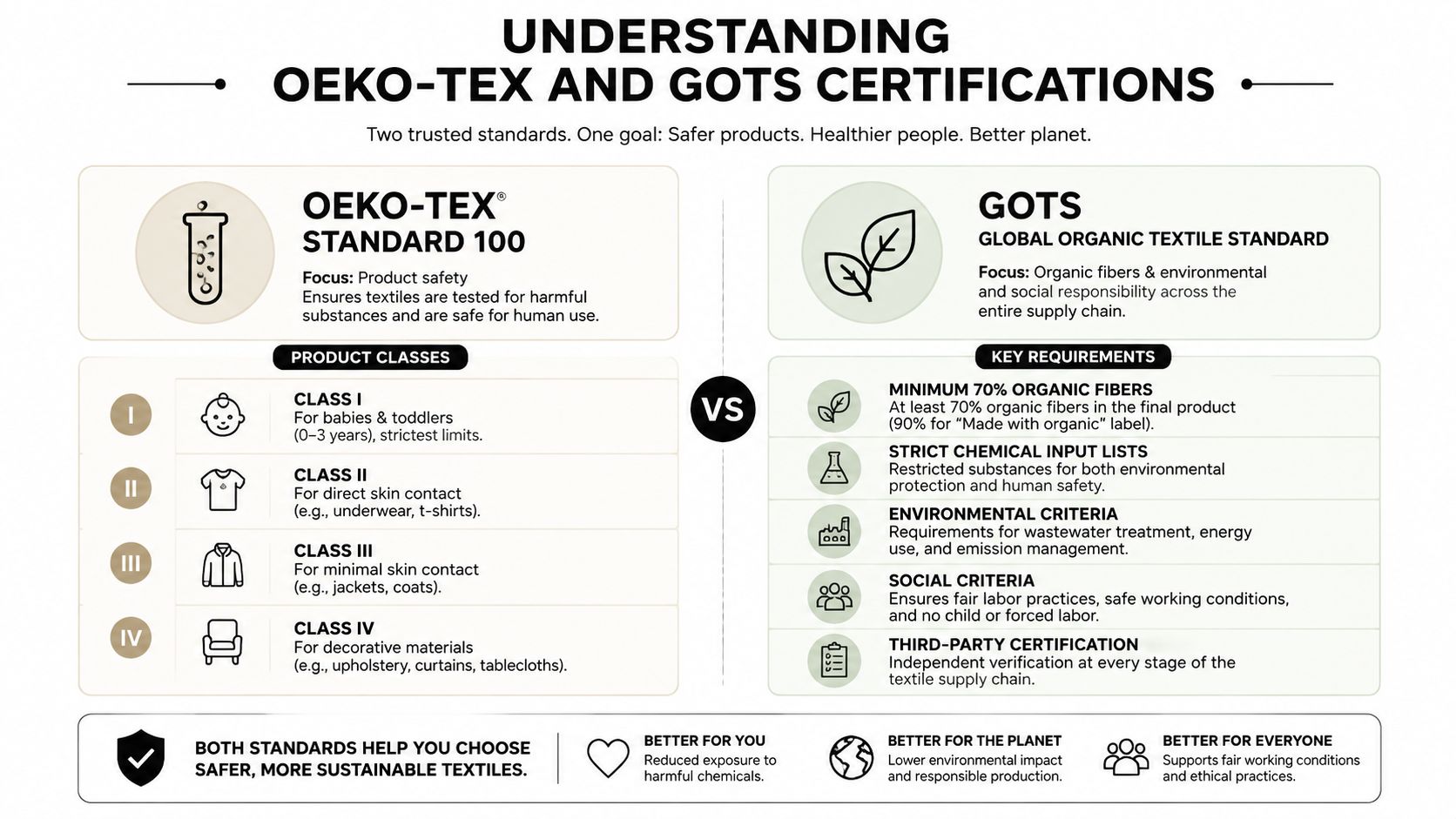
OEKO-TEX® STANDARD 100 created a widely recognized safety reference for textiles that sit directly against skin. Its Product Class I covers babies and small children up to three years old, and the standard applies its strictest criteria to this group because sensitive skin requires tighter human-ecology limits. The FAQ also states that finishes containing formaldehyde are excluded for this class. OEKO-TEX® STANDARD 100 FAQ
A practical definition: Hypoallergenic clothing minimizes avoidable irritants across the entire finished garment, not just in the fabric advertised on the front label.
For a baby who reacts easily, look for verifiable certification, simple construction, breathable materials, and a clear care routine. Those details offer more useful guidance than a vague promise printed on a hangtag.
The Hidden Chemicals Causing Skin Reactions
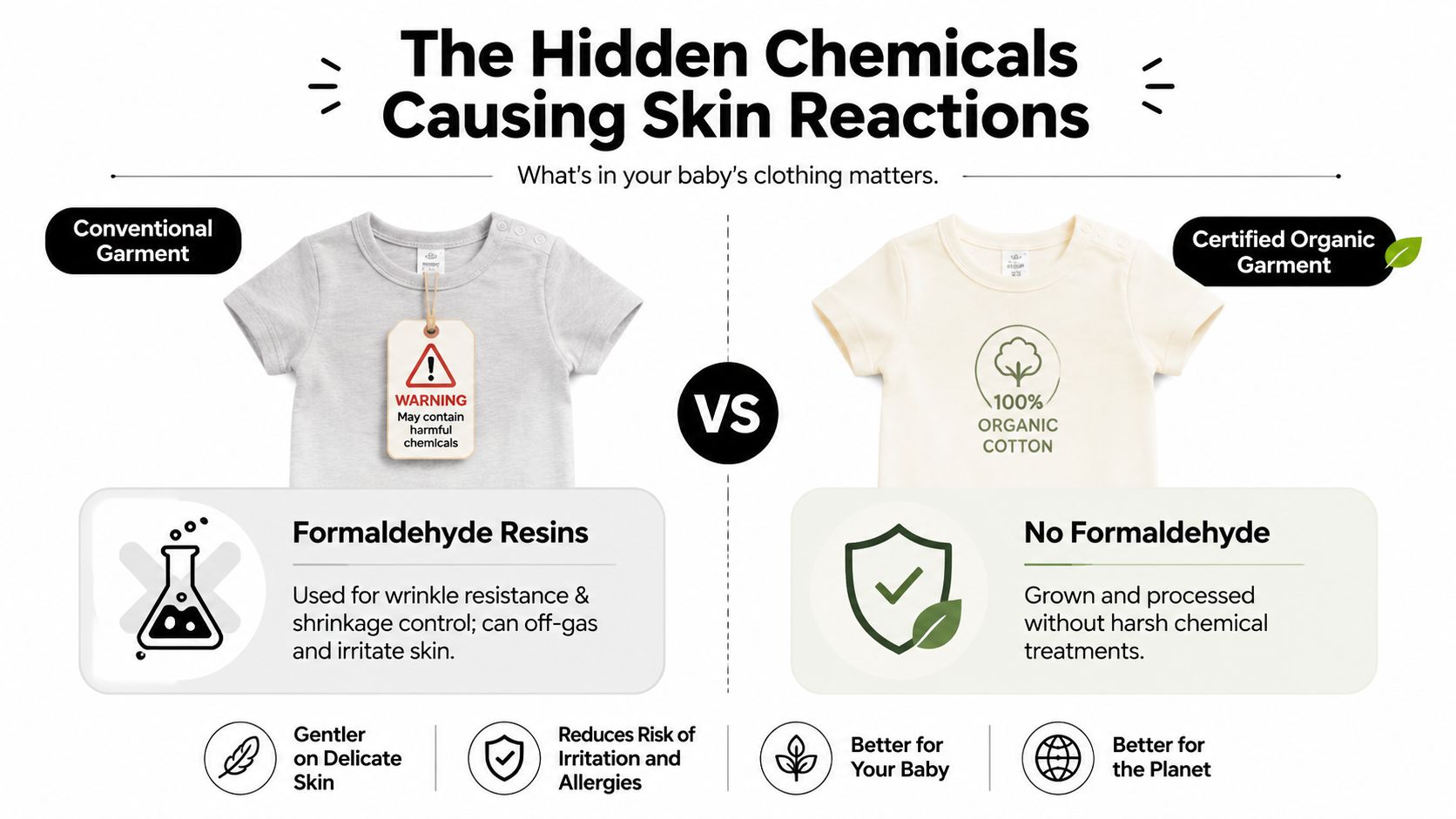
Fabric softness can distract from the more important question, which is what the garment was treated with. Dermatology and textile guidance identifies clothing-related irritants such as disperse dyes, formaldehyde resins, rubber accelerators, and other finishes. Heat and sweating can make discomfort worse, especially when clothing holds irritants close to the skin. Dermatology guidance on textile-related reactions
Formaldehyde-based resins may be used to reduce wrinkling or control shrinkage. A garment can feel crisp and look polished while still being a poor choice for a child who reacts to finishing residues. This is one reason baby-specific testing matters more than a generic “soft touch” claim.
Dyes deserve attention too. Some textile dyes can release irritating or hazardous compounds, and heavily printed designs add another layer of inks, binders, and surface treatments. Rubber accelerators in elastic components may bother children whose reactions appear around cuffs, waistbands, or leg openings rather than across the whole garment.
Why fiber labels don't tell the whole story
A 2026 PubMed-indexed study investigated 50 textile chemicals in children's clothing and documented their occurrence and washout behavior. The finding reinforces a practical point for parents: chemical exposure depends on dyeing, finishing, and laundering chemistry, not only on whether the label says cotton, bamboo, or another fiber. PubMed-indexed study on chemicals in children's clothing
This also explains why “organic cotton” isn't a complete answer. Organic fiber sourcing can reduce concerns at the cultivation stage, but post-harvest processing still determines what reaches the finished garment. Ask whether the whole item was tested, whether prints and trims were included, and whether the brand recommends washing before wear.
Fragrance creates a separate problem. A scented detergent, fabric softener, dryer sheet, or packaging treatment can leave residues on clothing and make it harder to identify the original trigger. Parents dealing with fragrance sensitivity may find this fragrance-sensitivity resource from Purified Air Duct Cleaning useful because it explains why scented products can affect sensitive households beyond clothing alone.
The risk can hide in trims and prints
Independent lab research makes the issue more concrete. One 2025 study reported that 80% of tested infant-clothing samples exceeded OEKO-TEX Class I limits for arsenic, cadmium, and chromium, with an overall hazard index of 1.13, driven largely by cadmium exposure. 2025 study on heavy metals in infant clothing
The lesson isn't that every printed or colorful garment is unsafe. It's that “natural” and “soft” don't prove safety. Finished-garment testing should include the fabric, dyes, ink, snaps, elastic, and decorative elements.
Comparing the Best Fabrics for Sensitive Skin
No single textile works perfectly for every baby. A child who tolerates cotton may dislike wool, while another may sleep comfortably in merino layers but react to a particular dye or detergent. The most useful approach is to compare fabrics by use case, then confirm how the garment was processed and tested.
Bamboo viscose is known for a smooth hand feel and can work well in sleepwear when the finished product has credible chemical-safety certification. Its softness appeals to parents managing friction, but the word “bamboo” doesn't describe the full manufacturing process. Ask whether the product is accurately labeled as bamboo viscose or rayon and whether the finished garment was tested.
Organic cotton remains a practical everyday option because it's breathable, widely available, and straightforward to launder. GOTS certification can provide broader supply-chain information, while OEKO-TEX certification focuses on tested harmful substances in the product.
Modal, made from beechwood-derived cellulose, offers a silky feel and useful stretch for layering. Merino wool can help with temperature regulation, but some babies find even fine wool uncomfortable. Linen suits warm climates because it's airy, although it may feel less smooth than cotton at first.
| Fabric | Softness | Breathability | Moisture Wicking | Durability | Eco Impact | Best Use Case |
|---|---|---|---|---|---|---|
| Bamboo viscose | Smooth and fluid | Good | Good | Depends on construction and care | Processing requires scrutiny | Sleepwear and soft daywear |
| Organic cotton | Soft, familiar, and easy to layer | Good | Moderate | Generally practical for repeated use | Organic sourcing can reduce agricultural inputs | Everyday bodysuits and basics |
| Modal | Silky and flexible | Good | Good | Often comfortable through regular washing | Cellulose processing should be disclosed | Layering pieces |
| Merino wool | Can feel soft in fine grades | Excellent | Good | Strong when cared for properly | Natural fiber, with sourcing considerations | Temperature-regulating layers |
| Linen | Airy, with a textured feel | Excellent | Moderate | Strong, though it can crease | Plant-based fiber with processing considerations | Warm-weather clothing |
The table offers a starting point, not a guarantee. A certified garment with flat seams and minimal decoration may suit sensitive skin better than an uncertified item made from a theoretically ideal fiber. For a more detailed look at choosing textiles for delicate skin, compare this guide to the best fabric for sensitive skin.
Choose by contact and climate: Start with the garment that touches the skin most closely, then consider heat, sweat, movement, and how often you'll wash it.
For sleepwear, smooth bamboo viscose or organic cotton may feel comfortable if the garment carries credible testing. For daily onesies, cotton offers easy care and reliable breathability. For layering, modal or fine merino may work, provided your child tolerates the texture and the item has no irritating finish.
Understanding OEKO-TEX and GOTS Certifications
Certification labels can help, but only when you know what each one means. OEKO-TEX® STANDARD 100 tests textile products for harmful substances, with requirements that become stricter according to the product's intended contact with skin. Product Class I covers babies and small children up to three years old and represents the strictest category described in the standard. OEKO-TEX® STANDARD 100 FAQ
GOTS answers a different question. The Global Organic Textile Standard focuses on organic fiber processing and supply-chain requirements, including chemical management and social criteria. It can therefore offer broader information about how a product was made, while OEKO-TEX tells you more directly about tested substances in the textile product.
Read the label with care
A garment can be OEKO-TEX certified without being organic. It can also be organic without carrying OEKO-TEX certification. Parents should check whether the certification applies to the entire finished garment or only to a fabric supplied separately.
Look for:
- A certification name: The exact wording matters.
- A license or certificate reference: Reputable brands should provide identifying details.
- The finished product scope: Ask whether thread, elastic, snaps, prints, and labels were included.
- A verifiable database entry: Use the certifier's official verification tools where available.
- Specific answers: A transparent brand should explain what the label covers without hiding behind broad claims.
GOTS and OEKO-TEX aren't competing labels. They measure different parts of the decision. One may help you evaluate organic supply-chain practices, while the other helps you assess harmful-substance testing.
Parents comparing certified bedding and children's products can also browse the Naturepedic collection at Comfort Pure as an example of how product descriptions may present material and certification information.
This video can offer another visual introduction to textile certification terminology:
For a closer explanation of the baby-focused product class and testing framework, see this plain-language guide to OEKO-TEX STANDARD 100.
Smart Buying and Care Practices
Buying a carefully tested garment is only the first step. Your laundry routine can add fragrance, softeners, and other residues that undermine the simplicity you were aiming for. A gentle care plan helps you preserve comfort while making reactions easier to trace.
Start before the first wear
Wash every new garment before your baby wears it. Use a fragrance-free, dye-free detergent, and skip fabric softener and dryer sheets. These products can leave coatings or scented residues on fabric, which may bother sensitive skin.
Choose construction details that reduce friction:
- Flat seams: They're less likely to rub during sleep or crawling.
- Tagless labels: Fewer rough surfaces sit against the neck.
- Soft waistbands: Elastic shouldn't pinch or dig into skin.
- Simple decoration: Embroidery or small, well-finished details may be preferable to thick plastic transfers.
- Light colors: Less intense dyeing can be a sensible choice when you're narrowing down possible triggers.
For a baby with eczema or pronounced sensitivity, an extra rinse can help remove detergent residue. Don't assume that more detergent means cleaner clothes. Follow the product directions and prioritize thorough rinsing.
Match the care to the fiber
Organic cotton generally handles warm washing well, while bamboo viscose usually benefits from cooler water and gentler handling. High heat can contribute to shrinkage, roughness, or fiber breakdown, so air-drying or low-heat tumble drying is often the safer default.
You can find more fiber-specific advice in this guide to caring for bamboo clothing. For detergent selection and baby-safe laundry considerations, this gentle baby detergent guide from Tumble Laundry offers another practical reference.
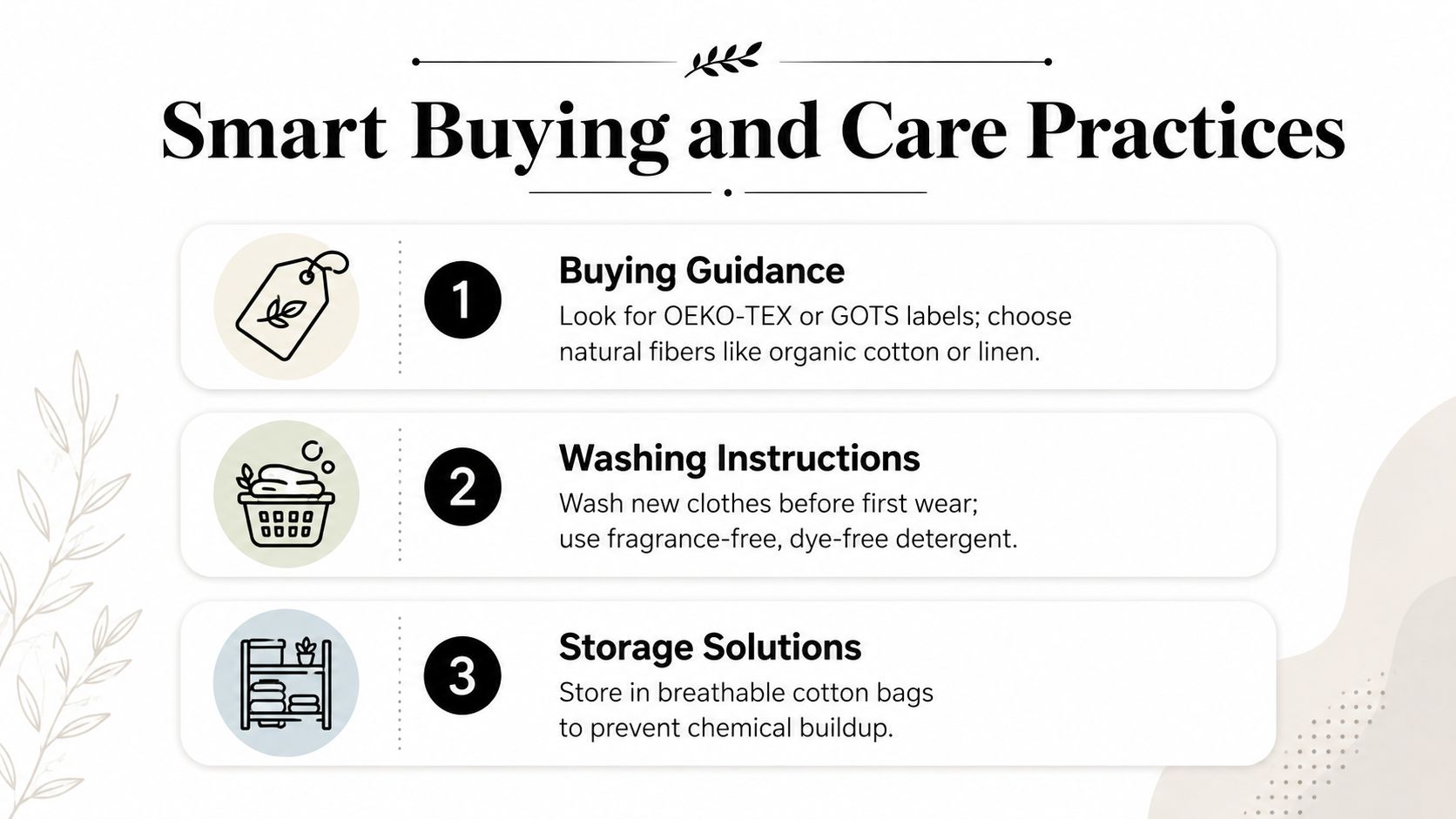
Store clean, fully dry clothes in a breathable space. Damp storage can encourage musty odors and unwanted growth, while overcrowded drawers collect dust and make it harder to notice garments that need replacing.
Retire pieces that have severe pilling, thinning, roughened seams, or degraded elastic. A small capsule wardrobe of comfortable, washable basics is often more useful than a crowded drawer of novelty outfits. Fewer garments also make it easier to identify which item may be connected to a reaction.
Red Flags and Marketing Myths to Avoid
Marketing language often sounds more precise than it is. “Natural,” “pure,” “clean,” and “chemical-free” can create confidence without telling you which substances were tested or how the finished garment was processed.
Organic fiber is valuable, but it doesn't automatically make a finished item hypoallergenic. A manufacturer can apply dyes, prints, resins, or other treatments after the fiber has been grown. Bamboo labeling also deserves care. Many bamboo garments are bamboo-derived rayon or viscose, so the brand should describe the material accurately rather than implying that the finished fabric remains a raw plant fiber.
“Dermatologist tested” needs context. Ask who conducted the testing, what was tested, whether the complete garment was involved, and whether the company can provide a certificate or method. A higher price isn't proof of safer construction either. Certification, transparency, and careful design matter more than the number on the price tag.
| Marketing Claim | The Reality | What to Look For Instead |
|---|---|---|
| “Chemical-free” | Textile production involves chemical processing | A clear restricted-substance policy and finished-product testing |
| “Organic” | May describe the fiber, not the complete garment | GOTS details, processing information, and garment certification |
| “Naturally hypoallergenic” | A fiber's origin doesn't guarantee skin tolerance | OEKO-TEX testing and simple, low-friction construction |
| “Dermatologist tested” | The method and product scope may be unclear | Named testing scope, certificate details, and transparent answers |
| “Stain resistant” | The finish may introduce additional chemical concerns | Uncoated fabric and practical washable construction |
| “Bamboo” | The product may be bamboo-derived viscose or rayon | Accurate fiber labeling and processing disclosure |
If a brand can't explain what was tested, who tested it, and whether trims were included, treat the claim as incomplete rather than reassuring.
Keep a short list of questions ready before buying. Ask about dyes, formaldehyde finishes, prints, elastic, testing scope, wash instructions, and certification verification. If the company responds with slogans instead of specifics, choose a garment with clearer documentation.
Your Faith-Inspired Hypoallergenic Checklist
Safe clothing can be part of caring faithfully for the child entrusted to you. That doesn't mean every purchase must be expensive, perfectly sustainable, or backed by every available label. It means you're practicing discernment, choosing comfort over pressure, and treating everyday decisions as meaningful acts of stewardship.
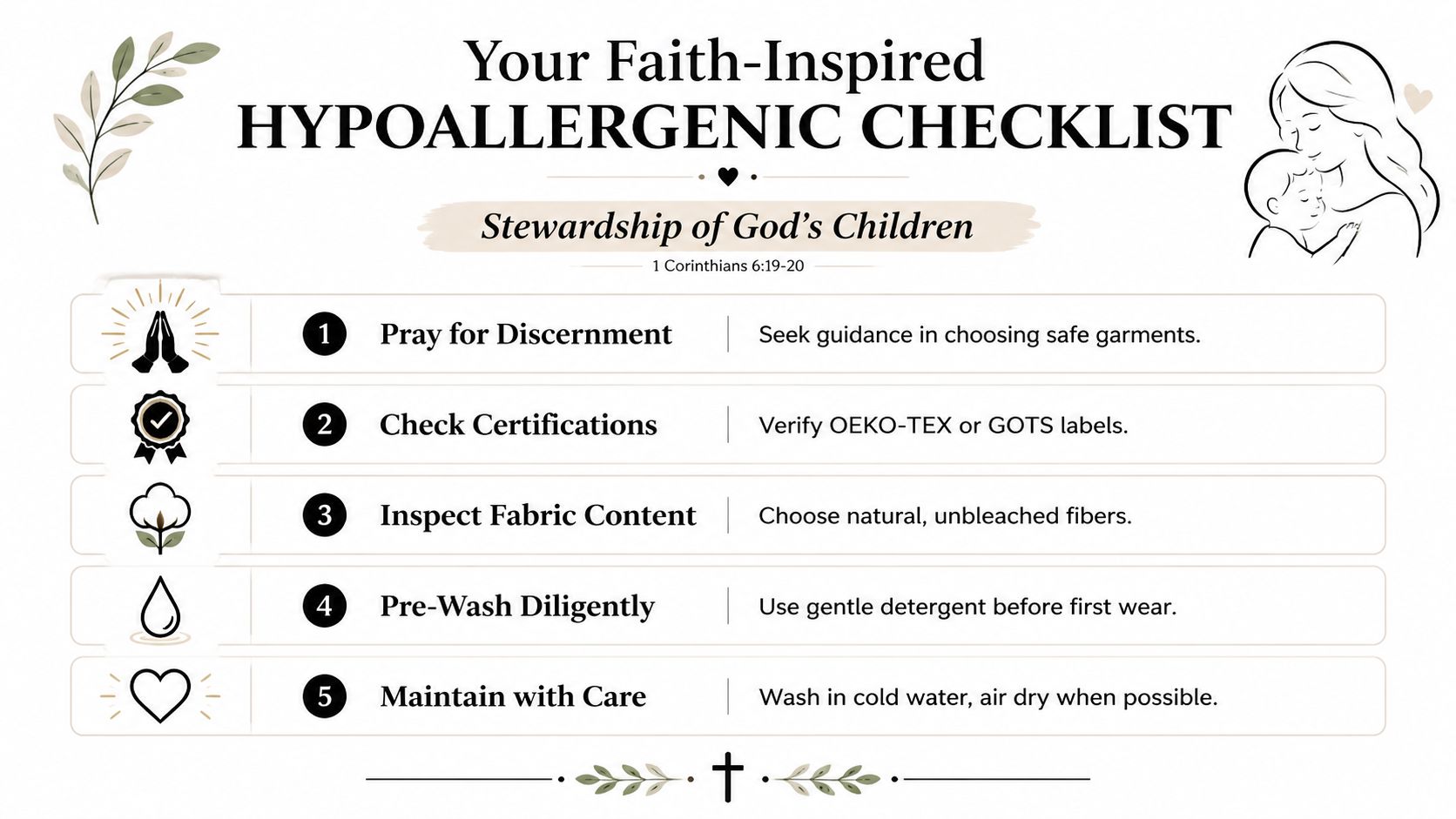
Use this checklist when shopping for hypoallergenic baby clothes:
- Begin with the skin contact. Choose a breathable base layer with smooth seams, gentle elastic, and minimal decoration. Organic cotton, bamboo viscose, modal, linen, or fine merino may each work, but your child's response matters more than a fabric's reputation.
- Verify the certification. Look for OEKO-TEX® STANDARD 100 Product Class I when the garment is intended for babies and toddlers. GOTS can add information about organic fiber sourcing, processing, and supply-chain practices.
- Inspect the details. Turn the garment inside out. Check the thread, label, snaps, waistband, print, and seam finish. A simple garment often gives you fewer possible irritants to investigate.
- Ask the brand direct questions. Can it identify the fiber accurately? Does testing cover the finished garment? Are trims and prints included? What does the care label recommend? Clear answers build more confidence than spiritual or sustainability language alone.
- Wash before use. Use a fragrance-free, dye-free detergent, avoid softeners, rinse thoroughly, and dry gently. If a garment still smells strongly chemical after washing or causes redness, remove it and keep it out of the rotation.
Choosing faith-inspired clothing thoughtfully
Faith-inspired design can add meaning through scripture themes, creation-inspired artwork, or messages of hope. Those details should sit alongside, not replace, safety information. Look for brands that explain their materials, manufacturing standards, charitable commitments, and certification status in plain language.
Budget matters too. Start with a small capsule of versatile bodysuits, sleepers, and layering pieces in colors that coordinate. Buy fewer items with clear documentation, wash them before use, and add garments gradually as you learn what your baby tolerates.
You can also use this newborn clothing checklist to keep practical needs in view while you shop.
Trust your parental observations. If a garment feels coated, smells strongly scented, rubs a sensitive area, or seems to trigger a reaction, take it off and simplify the next outfit. If a rash persists or concerns you, speak with your child's healthcare professional rather than trying to identify every possible textile trigger alone.
Little Venture Co. offers OEKO-TEX® STANDARD 100 certified bamboo sleepwear and daywear for babies and toddlers, including zip rompers, two-piece sets, and accessories designed for gentle everyday wear. Visit Little Venture Co. to explore faith-inspired pieces that connect meaningful design with thoughtful material and safety choices.