

How to Prevent Skin Irritation: A Parent’s Guide 2026
It's usually the middle of the night when you notice it. The diaper's finally changed, the lights are low, and there it is again, a red patch on a cheek, a ring around the neck, or a raw spot where tiny skin met fabric all day long. Most parents reach for a cream first, but prevention starts much earlier, with what's touching the skin, how long moisture sits there, and whether the barrier gets a real chance to stay intact.
Skin irritation in babies and toddlers is rarely just one thing. It's often friction, moisture, heat, chemical irritants, and allergens working together, which is why the same rash can look different on a chin, in a fold, or under a waistband. The good news is that prevention gets a lot easier once you stop treating every red patch as the same problem.
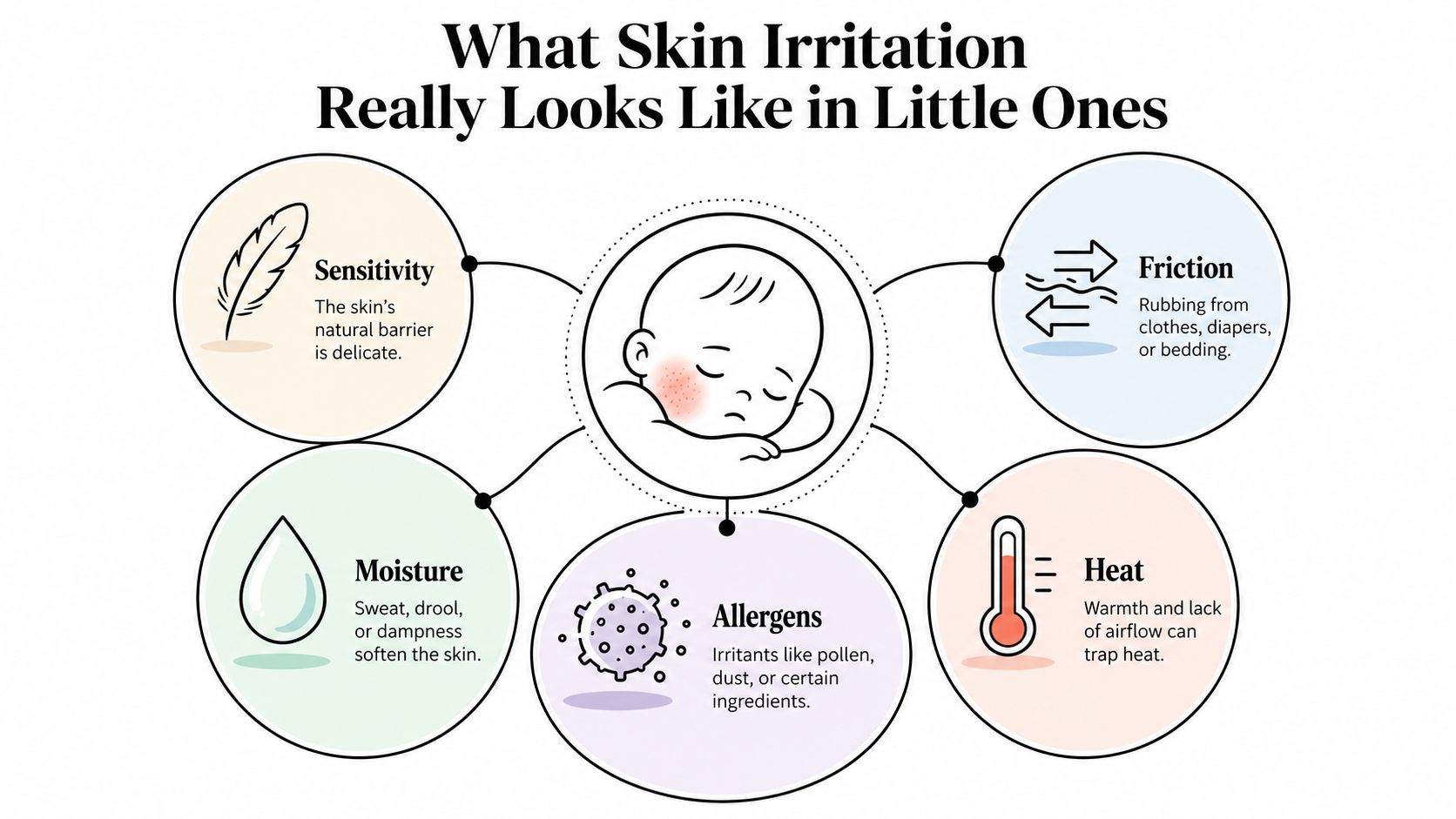
What Skin Irritation Really Looks Like in Little Ones
A red cheek at 3 a.m. can make any parent spiral. The trick is learning that the skin is usually giving you a clue, not a mystery. A drool rash tends to show up where saliva pools, a heat rash prefers warm, covered places, and irritation from fabric or detergent often matches the shape of clothing or lands where seams rub.
The reason this matters is simple. Contact dermatitis has long been recognized as a real public-health issue, not a tiny nuisance, and the CDC-reproduced review notes a 3.6% point prevalence for irritant-induced eczemas, including 2.6% irritant dermatitis, 0.6% irritant dermatitis plus allergic dermatitis, and 0.4% irritant dermatitis plus atopic dermatitis. That same review says contact dermatitis was the sixth most commonly encountered skin condition in one U.S. survey, with a 1.4% prevalence and an estimated 2.6 million people affected in the United States, which is a good reminder that this is common, not a parenting failure. CDC-reproduced review on contact dermatitis
Five forces that usually sit behind the rash
Friction shows up where skin rubs skin, or skin rubs a collar, sock edge, or diaper waistband. Moisture sticks around in neck folds, behind the ears, and in the diaper area, where wetness softens the barrier and makes rubbing worse. Heat adds sweat, and sweat adds more friction.
Chemical irritants are the soaps, detergents, and residue that linger on skin or fabric. Allergens are the harder-to-spot triggers, like pollen, pet dander, or an ingredient that only causes trouble after repeated contact. When you start sorting a rash by these forces, the fix gets clearer, and the panic gets quieter.
Practical rule: If the rash lines up with a clothing edge, a drool zone, or a place that stays damp, think exposure first, not “sensitive skin” in the abstract.
That's why fabric, laundry, and daily routine matter so much. The skin doesn't care whether a product is marketed as cute or natural, it cares whether the surface stays dry, smooth, and low-friction long enough to recover.
The Everyday Triggers Hiding in Plain Sight
Most parents don't need a lecture on “bad products.” They need help spotting the ordinary stuff that sneaks up on them. A bib that stays wet, a tag that scratches all day, or residue from a “gentle” wash can irritate skin just as reliably as something obviously harsh.
Here's the part that catches people off guard. A toddler's red neck ring after a day in a turtleneck isn't random, it's a friction-and-heat problem. A patch behind the ears after a new wash can point to residue left on the fabric, especially if the skin is already dry or the child is prone to sensitivity. The 2019 review in PMC says roughly 60–70% of women and 50–60% of men report some degree of sensitive skin, with pooled survey estimates near 66% overall and about 37% rating their skin as moderately or very sensitive, so the “easy to irritate” skin story is common, not unusual. Sensitive skin review in PMC
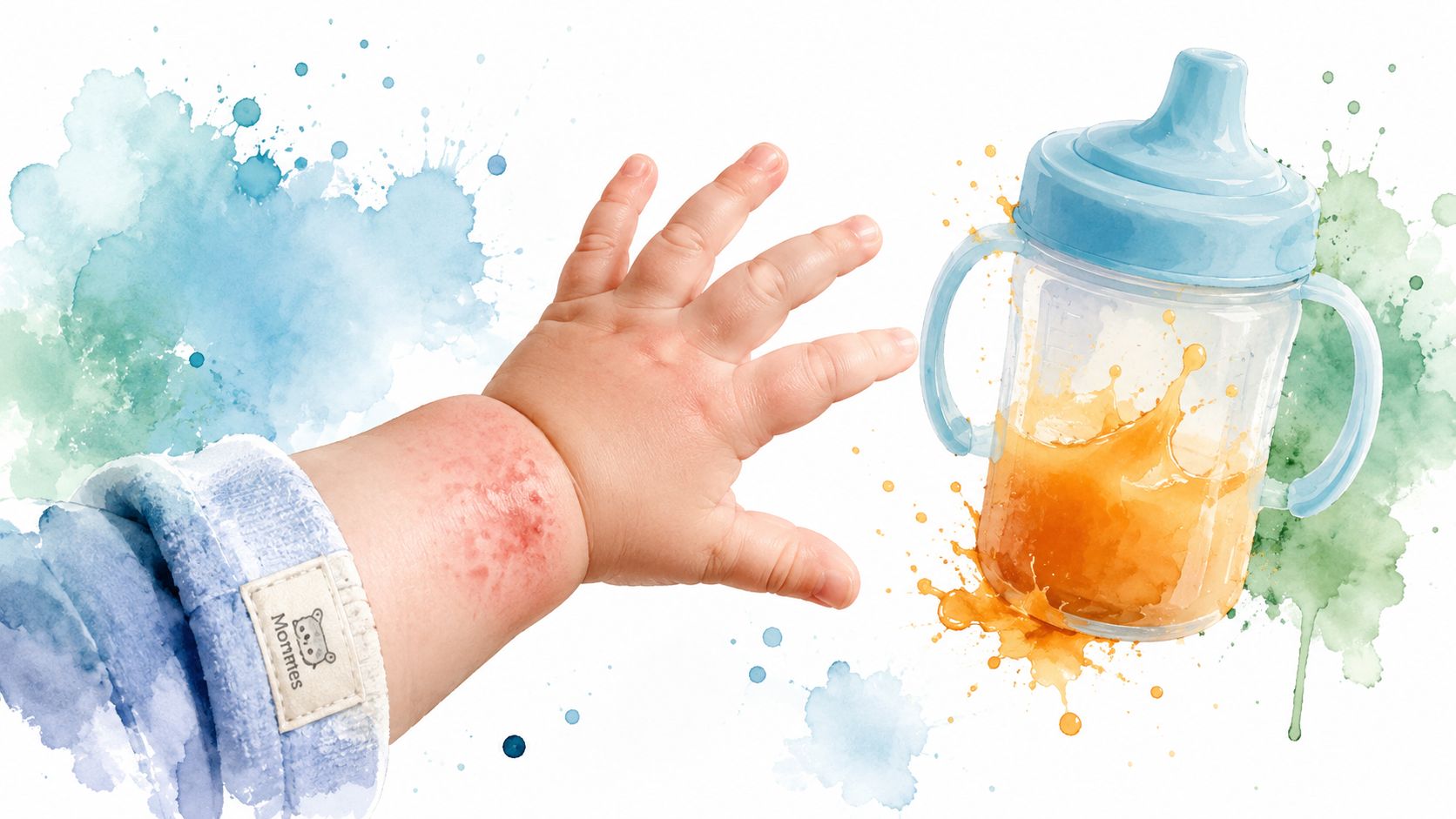
The six triggers parents run into most
- Saliva and food residue: Drool, milk, and food left on the chin or chest keep skin damp and sticky.
- Sweat trapped under clothing: Tags, collars, and snug layers turn sweat into a rash trigger fast.
- Detergent and fragrance residue: Fabric can look clean and still hold irritants that sit on skin all day.
- Harsh cleansers: Soaps that strip oils leave the barrier weaker and easier to upset.
- Rough seams and elastic: The rash often mirrors the line of pressure, which is a clue, not a coincidence.
- Environmental allergens: Pollen or pet dander can cling to skin and clothing, then keep irritating after play.
If the red area matches where drool pools, where a sock ends, or where a strap sits, the trigger is usually external and fixable. That's why guidance on the safest products matters too, and why a parent reading about chemical exposure may find a useful starting point in this chemical-free baby products guide.
Sensitive skin isn't the exception. It's common enough that prevention should feel like the default setting.
A Gentle Daily Routine That Fits Real Life
The easiest routine is the one you can do half-awake with a baby on one hip. In the morning, a quick lukewarm wipe with a soft cloth is usually enough for most kids, especially around the neck, behind the ears, and under the chin, where moisture likes to sit. The point is not to scrub skin clean in a dramatic way, it is to lift away sweat, milk, and overnight buildup before they stay there all day.
After bathing, timing matters. Dermatology guidance commonly recommends a fragrance-free moisturizer within 5 minutes after bathing so water stays in the skin instead of evaporating away, and the American Academy of Dermatology also recommends SPF 30+ broad-spectrum sunscreen while avoiding soaps labeled antibacterial or deodorant because they can dry or irritate skin. Mild cleanser, no hot water, and a fast moisturize are boring habits, but they protect the skin barrier over time. Sensitive skin review in PMC
What that rhythm looks like on a real day
In the bath, keep the water lukewarm and the soap light. WebMD advises avoiding scrubbing and choosing fragrance-free products, because too much rubbing and too much fragrance both raise the odds of irritation. If you want a plain-language overview of choosing a wash that will not fight with sensitive skin, this face cleanser for sensitive skin guide is a helpful reference.
Practical rule: If the skin feels tight after cleansing, the cleanser was probably too strong, the water too hot, or both.
At bedtime, check the places that get trapped by the day. Neck folds, behind the ears, the diaper area, and the backs of knees are the spots I would look at first, especially if your child wore one outfit for hours and then played hard. These are small body sites, but they have their own little microclimates. Warmth, moisture, and friction build up there the way steam collects on a bathroom mirror. Keep nails short so scratching does not turn a mild flare into a bigger one, and rotate drool bibs before they stay wet long enough to rub.
You do not need a perfect routine. You need one you can repeat. For many families, that means a gentle morning clean, a bath every two to three days unless there is a mess, moisturizer after bathing, and a quick evening check before pajamas go on. If you are choosing products for that routine, a guide to the best fabric for sensitive skin can help you match clothing and care so the skin is not fighting both friction and residue at once.
Choosing Fabrics and Clothing That Work With Sensitive Skin
A soft shirt isn't automatically a skin-friendly shirt. What matters is how the fabric behaves against the body, especially in places that stay warm and damp for long stretches. Loose knits usually rub less than stiff woven fabric, and smooth seams are kinder than raised ones when a child is moving, sleeping, or drooling through the day.
Bamboo viscose gets talked about a lot because it tends to feel smooth, breathable, and less clingy than rougher fabrics. Cotton is still a reliable baseline, especially for layering, while synthetics can be useful when the whole outfit is built to move moisture away from the skin. The key isn't one magic fiber, it's how the whole clothing system handles breathability, moisture, and friction.
The fit matters just as much as the fabric. Tight cuffs, scratchy tags, and hard elastic create pressure points, and those pressure points become trouble when sweat or drool enters the picture. Sleepwear deserves extra attention because it spends so many hours against the skin, so a smooth, low-friction pajama set can matter more than an outfit worn for an hour outside the house.
Fabric and label claims compared
| Option | What It Offers | What It Doesn't Do | Best For |
|---|---|---|---|
| Bamboo viscose | Often feels smooth and breathable, with a soft surface against skin | Doesn't stop irritation if the fit is tight or the laundry leaves residue | Sleepwear, layering, sensitive spots |
| Cotton | Familiar, breathable, and easy to layer | Can still trap moisture if it's heavy or clingy | Everyday basics and base layers |
| Synthetics | Can help move sweat away from skin in active settings | May feel less forgiving if seams, fit, or heat build up | Outer layers or activity wear |
| OEKO-TEX Standard 100 | Signals the material has been tested against harmful substances | Doesn't guarantee a garment will never irritate a child | Parents who want a tested material standard |
| “Hypoallergenic” | Suggests a lower-likelihood product, depending on the brand's use | Isn't a uniform test standard and doesn't replace checking seams, fit, or laundry | Shoppers comparing marketing claims |
| “Natural” | Sounds reassuring and often appeals to families looking for simpler materials | Doesn't automatically mean low-irritant, breathable, or better for sensitive skin | Products you still need to inspect closely |
For parents who like to compare fabric choices in more depth, the best fabric for sensitive skin guide is a useful companion. Read the tag, check the seams, and think about where the garment will sit during sleep, play, and sweating.
Laundry Habits and Seasonal Adjustments That Prevent Flare-Ups
Laundry is where a lot of good clothing goes sideways. A soft sleeper can still irritate skin if it's carrying fragrance, leftover detergent, or softener buildup, and that's why a simple, repeatable wash routine matters. Fragrance-free detergent, an extra rinse, and skipping fabric softener are the cleanest baseline.
If clothes still feel slick or smell heavily scented after washing, the problem is usually residue, not fabric. Towels and sleepers can also hold buildup over time, so a deeper wash every so often helps reset them. If you're comparing detergent options or just want to simplify the laundry shelf, the baby laundry detergent for sensitive skin guide is a practical place to start, and EcoQuest Purifiers also offers shop laundry sheets at EcoQuest for families looking at lower-residue laundry routines.
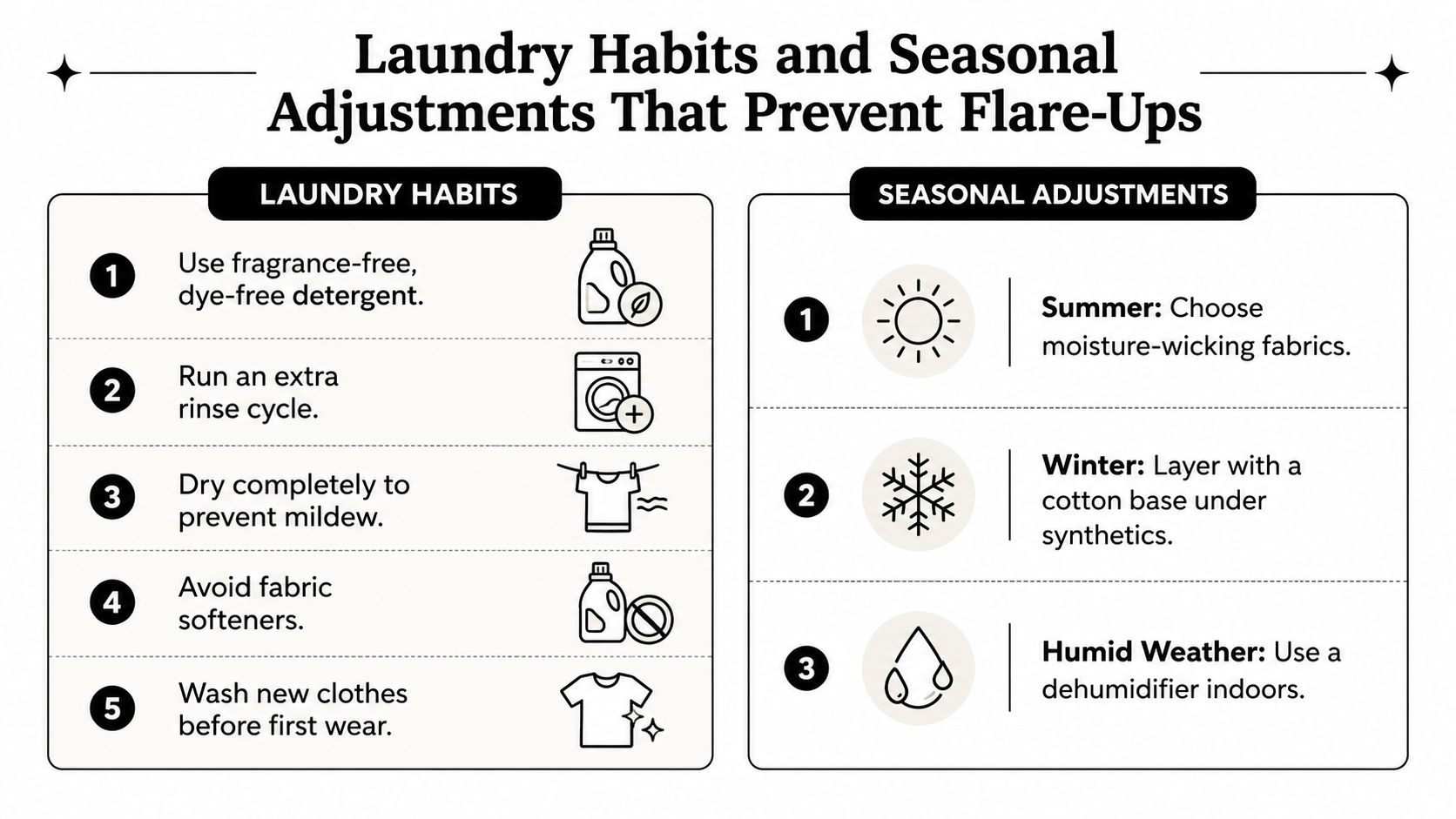
Same routine, different season
- Summer: Choose breathable layers and change out of damp clothes quickly after play, because sweat trapped under fabric can turn into a rash fast.
- Winter: Use a humidifier if indoor air is dry, and lean on richer emollients when skin starts looking dull or flaky.
- Spring: Wash pollen off skin and clothing after outdoor time, because allergens can linger longer than most parents expect.
- After swimming: Rinse off right away so chlorine or salt doesn't sit on the skin and dry it out further.
- On sunny days: Reapply sunscreen as directed on the package, then wash it off gently later instead of scrubbing it into the skin.
Practical rule: If the season changes and the rash pattern changes with it, adjust moisture management before you change every product in the house.
The big idea is simple. Summer asks for more sweat control, winter asks for more moisture support, and spring asks for more allergen cleanup. It's the same routine, just with different knobs turned.
Quick Troubleshooting When a Rash Pops Up Anyway
Even careful parents get surprise rashes. The first move is to read the shape and location, because the skin usually tells you what touched it. If it looks like a line, a ring, or a patch under something specific, the clue is probably in the fabric or the product.
One little ankle ring taught me more than any bottle ever did. The rash faded after we switched socks, which made the friction source obvious, and it kept us from blaming lotion that had nothing to do with the problem. On the other hand, a stubborn pink patch under the chin needed a barrier cream and more frequent bib changes, because the issue was moisture sitting there all day.
Patch testing can help when a new product is in the mix. Cleveland Clinic recommends testing a new product on a small area for several days before full use, which is a smart way to catch delayed irritation before it spreads across the whole body. If you're comparing rash care options and want a plain overview of dry, irritated baby skin, the baby dry skin guide can help you sort through the basics.
What to do in the first day
- Remove the likely trigger: Take off the scratchy layer, switch the bib, or stop using the new wash.
- Clean the area gently: Warm water and a mild cleanser are usually enough if the skin is dirty.
- Protect the barrier: Zinc oxide or a petroleum-based barrier can help shield moisture-prone areas.
- Watch for worsening: If the rash spreads, gets more painful, or starts to weep, that's a sign to stop guessing.
- Avoid steroid creams unless a clinician advises it: They can be useful in the right situation, but they shouldn't be a default parent fix.
The big mistake is waiting too long while the skin keeps getting re-exposed. If the trigger stays in place, the rash often does too, and that's when a simple problem turns into a drawn-out one.
When to Call the Pediatrician
Some rashes are home-care rashes. Some aren't. Call the pediatrician if the rash comes with fever, because that can point to something more than simple irritation. Reach out if the red areas are spreading quickly or if the skin starts forming blisters or weeping, since those signs can suggest infection or a stronger reaction.
Pain matters too. If your child seems uncomfortable, not just a little fussy during a diaper change, that's worth a call. The same goes for any rash that doesn't improve within a week of careful avoidance, or for a sudden full-body reaction, which can mean the trigger is more significant than it first looked.
Bring a photo timeline to the appointment if you can, along with the product, fabric, or detergent you suspect. That makes it easier for the clinician to see the pattern instead of just the end stage. And if you're a faith-filled parent trying to do this gently and well, remember that tending to a child's skin is part of caring for the body as a gift, with patience, wisdom, and a lot less panic than last time.
Little Venture Co. shares practical, faith-inspired children's wear that's designed with comfort and sensitive-skin concerns in mind, which makes it a thoughtful place to look when you're trying to reduce friction, heat, and laundry-related irritation. If you want soft, purposeful pieces that fit the kind of everyday care described here, visit Little Venture Co. and see what fits your family's routine.