

Choosing the Best Baby Laundry Detergent for Sensitive Skin
Welcome to the wild world of parenthood, where suddenly, doing laundry feels like a high-stakes decision! It's true. Picking the best baby laundry detergent for sensitive skin isn't just about falling for cute packaging—it's about protecting that brand-new, delicate skin barrier.
Your baby's skin is up to 30% thinner than ours. Think of it as a soft whisper against their skin, not a loud shout.
Why Your Baby's Skin Needs Special Care
A baby’s skin is a beautiful work in progress. It's brand new and incredibly soft, but it hasn't built up the tough defenses that adult skin has. I like to think of their skin barrier as a piece of fine, delicate silk, while ours is more like a sturdy pair of jeans.
Most regular detergents are packed with a cocktail of chemicals, fragrances, and dyes designed to tackle serious, adult-sized messes. But for that delicate silk? Those same ingredients can be incredibly harsh.
And we're not just talking about a minor rash. The wrong detergent can strip away the natural oils that keep skin healthy, leading to dryness, irritation, and even making conditions like eczema worse. Studies have actually shown a clear link between the residue left by laundry products and common skin irritations in babies. This is exactly why being thoughtful about your choice really matters in these early days.
Understanding Your Baby's Unique Skin Barrier
A newborn’s skin is also more permeable, which just means it absorbs things from the environment much more easily. This heightened sensitivity makes them extra vulnerable to any irritants left behind on their clothes, blankets, and bibs.
- Thinner Epidermis: The outermost layer of a baby's skin is way thinner, so it offers less protection from the outside world.
- Higher pH Level: Babies are born with a higher skin pH. This makes it less acidic and more open to irritation and pesky microbial growth.
- Developing Immune System: Their little immune systems are still figuring things out, so they can react more strongly to chemicals that wouldn't even faze an adult.
Choosing a laundry detergent made for sensitive baby skin is one of the first and most powerful things you can do to create a comfy, gentle world for your little one. It helps build a foundation for healthy skin by simply removing potential triggers from their daily routine. You can learn more about this in our guide on the causes and solutions for baby dry skin.
A specialized baby detergent acts like a gentle gatekeeper, making sure only skin-safe ingredients touch your baby’s world. It’s such a simple switch, but it offers powerful protection against discomfort.
When you make it a priority to find formulas that are hypoallergenic, fragrance-free, and plant-based, you're doing more than just cleaning onesies. You're actively nurturing your baby's skin health from the very first wash, and that’s a kind of peace of mind you can’t put a price on.
Decoding Detergent Labels: What to Avoid
Walking down the laundry aisle can feel a bit overwhelming, can't it? All those brightly colored bottles promising the cleanest, freshest clothes ever. But when you’re washing for a tiny newborn, you have to put on your ingredient-detective hat. Many of those standard detergents are packed with powerful chemicals that, while great for grass stains, are way too harsh for a baby’s brand-new skin.
Think of it like this: using a regular detergent on baby clothes is like using a rough scrub brush on a delicate flower petal. It's just too much. Figuring out what to avoid is the very first step in making sure every little onesie and blanket is a source of comfort, not irritation. We're not just trying to prevent a rash here; we're protecting their developing skin barrier from things it just doesn't need.
And parents are catching on. The global market for baby-specific laundry detergents is booming, all because moms and dads are worried about the chemicals in regular detergents causing rashes and itchiness. It’s a worldwide trend that shows just how much we want to protect our little ones. In fact, some studies suggest that simply choosing the right detergent can prevent up to 30-40% of common skin irritations that come from laundry residues. You can read more about the growing demand for safer baby products in our other guides.
The Big Three to Leave on the Shelf
When you flip over a detergent bottle and scan the ingredients, there are a few common culprits you should always put back on the shelf. They're popular in mainstream products for their cleaning power or flashy effects, but they're just too aggressive for baby laundry.
- Sulfates (SLS/SLES): Sodium Lauryl Sulfate and Sodium Laureth Sulfate are the chemicals that create that big, satisfying foamy lather. The problem is, they're known skin irritants that can strip away natural oils, leaving skin dry and unhappy.
- Phthalates: These are often hiding in plain sight under the generic word "fragrance." Phthalates are chemicals used to make scents stick around longer, but they’ve been linked to a number of health concerns and are a huge trigger for skin sensitivities.
- Optical Brighteners: This one is a bit sneaky. These chemicals don't actually get clothes cleaner. Instead, they coat the fabric with particles that reflect blue light, creating the illusion of whiter whites. That residue stays on the clothes and can easily irritate a baby’s skin.
As the diagram below shows, a baby's skin just needs the basics: gentle, hypoallergenic, and fragrance-free care.
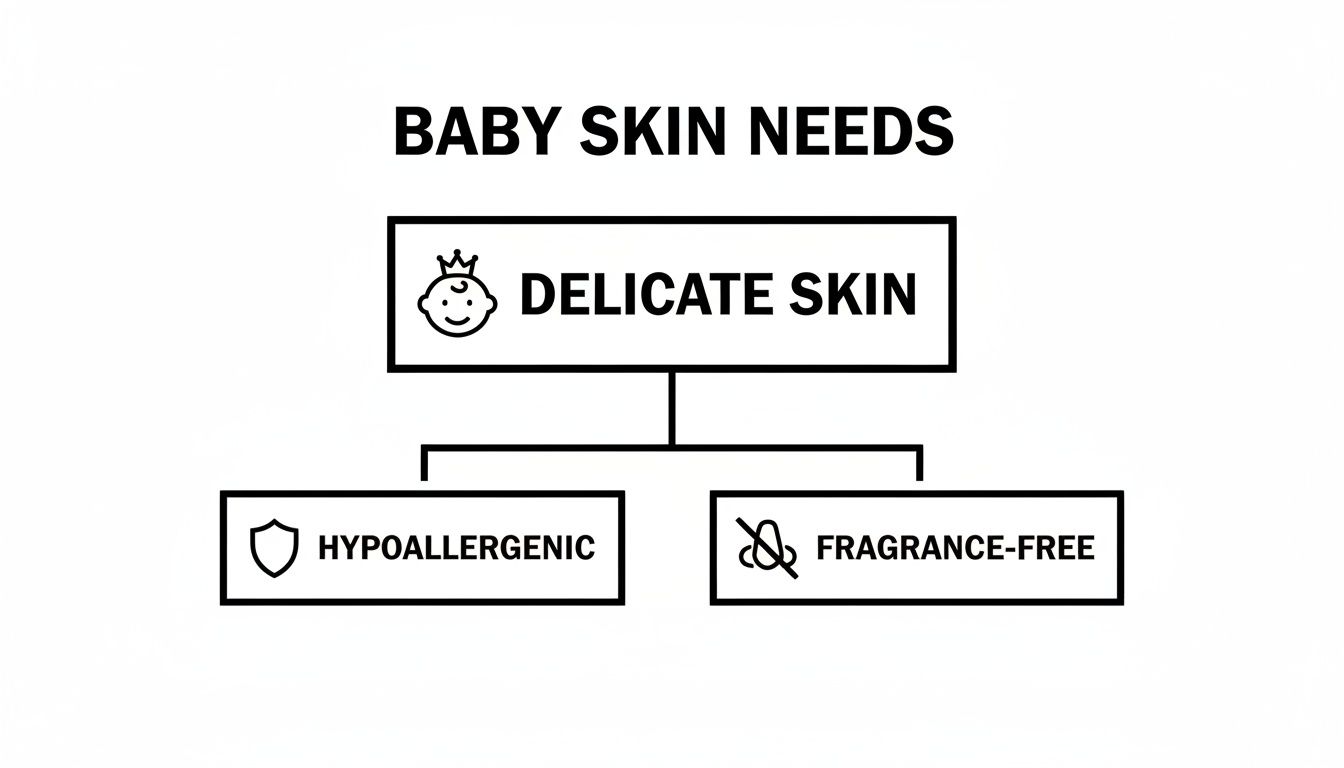
This visual really drives home the point that for such delicate skin, the best foundation is a product that is both hypoallergenic and free from any added fragrances.
Hidden Irritants to Watch Out For
Beyond those main offenders, a few other additives can cause trouble for sensitive skin. Knowing what they are will help you make an even safer choice for your family.
Here's a quick reference table to help you spot some of the most common harsh ingredients found in standard laundry detergents.
Common Laundry Ingredients to Avoid for Sensitive Baby Skin
| Ingredient to Avoid | Why It's a Problem for Babies | Look For This Instead |
|---|---|---|
| Synthetic Dyes | Added only for color (that bright blue or green liquid), they offer no cleaning benefit and are a common cause of allergic reactions. | A clear, colorless, or naturally derived color-free liquid. |
| Harsh Preservatives | Chemicals like methylisothiazolinone are used to extend shelf life but are also recognized allergens that can cause contact dermatitis. | Plant-based preservatives or enzyme-based formulas. |
| Chlorine Bleach | Extremely harsh and can cause severe skin irritation, respiratory issues, and damage to delicate fabrics like bamboo. | Oxygen-based brighteners (like sodium percarbonate) or hydrogen peroxide. |
| Formaldehyde-Releasing Agents | Often used as preservatives, these can cause skin irritation and are known allergens. | Detergents that are explicitly "formaldehyde-free." |
Once you know to look for these sneaky ingredients, it gets much easier to find a truly gentle detergent. Reading labels goes from being a confusing chore to an empowering act of care for your baby.
Choosing what to leave out is just as important as choosing what to put in. By learning to spot these common irritants, you can be confident that your baby’s clothes are not just clean, but truly gentle and safe for their skin.
The Good Stuff: Safe Ingredients to Look For
Alright, now that we’ve covered all the harsh stuff to leave on the shelf, let’s get to the good part. When you’re hunting for the perfect baby laundry detergent for sensitive skin, what you do want in the bottle is just as important as what you don’t.
These are the hero ingredients—the ones that tackle spit-up and diaper disasters while still being soft enough for a newborn’s skin. Think of them as the friendly helpers in your laundry room. They get the job done without any drama, leaving fabrics clean, soft, and irritation-free.
Plant-Powered Cleaning Surfactants
Every detergent needs something to lift dirt and oil out of fabric. That "something" is a surfactant. While conventional detergents often rely on harsh, petroleum-based chemicals, the best sensitive-skin formulas turn to a gentler source: plants.
Plant-derived surfactants are the cornerstone of a truly safe baby detergent. They come from renewable resources and are much kinder to both your baby's skin and the planet. They work by breaking down the surface tension of water, letting it soak into the fabric to wash away grime without stripping the skin's natural moisture barrier.
Keep an eye out for cleaners derived from things like:
- Coconut: Ingredients like coco-glucoside create a gentle, satisfying foam.
- Corn and Sugar: Decyl glucoside is another superstar mild cleaner, perfect for sensitive formulas.
- Soap Nuts: These little berries grow on trees and naturally contain saponin, a super-gentle cleaning agent.
These natural powerhouses prove you don’t need aggressive chemicals to get a deep clean.
The Magic of Natural Enzymes
So, what about those legendary baby stains? I’m talking about milk, spit-up, and the dreaded diaper blowouts. For those, you need a secret weapon: natural enzymes.
Enzymes are like tiny, stain-fighting specialists. They target specific messes and break them down on a molecular level so they can be easily rinsed away.
Instead of blasting a stain with harsh chemicals, enzymes are more like a key unlocking a specific type of mess. They're precise, effective, and incredibly gentle.
This targeted approach is what makes them so brilliant. A detergent with the right enzyme blend can handle almost anything you throw at it.
- Protease: This one is a protein-stain master, making it perfect for milk, formula, and spit-up.
- Amylase: Amylase goes after starches, so it's great for baby food messes like pureed carrots or oatmeal.
- Lipase: Have an oily or greasy stain? Lipase is the enzyme that breaks down fats.
Using an enzyme-powered formula gives you serious cleaning muscle that’s still gentle enough for the most delicate skin. To see how these ingredients stack up in real-world products, checking out a roundup of the best laundry detergents for sensitive skin can give you a great starting point.
Seals of Approval and Reassuring Labels
Finally, a few labels and certifications can give you that extra peace of mind. These aren't just marketing buzzwords; they're stamps of approval that signal a brand's commitment to safety and transparency.
EPA Safer Choice: When you see this label, it means the U.S. Environmental Protection Agency has reviewed every single ingredient and confirmed it’s safer for people and the planet. It’s one of the strongest indicators of a thoughtfully made product.
Dermatologist-Tested: This simply means the detergent was tested on human skin under a dermatologist's supervision to check for irritation. It isn't a 100% guarantee against reactions, but it’s a big step in the right direction.
By looking for these positive ingredients and trustworthy labels, you can confidently choose a detergent that cleans like a champ while keeping your baby’s world soft and safe.
Building a Gentle Laundry Routine for Your Baby
Picking the right baby laundry detergent for sensitive skin is a fantastic start, but it's the routine that really protects your little one's skin day in and day out. Think of it this way: the detergent is your star ingredient, but your laundry habits are the recipe that makes the final dish perfect.
A few simple, consistent habits can turn laundry from just another chore into an act of love—especially for brand-new babies and those prone to eczema.
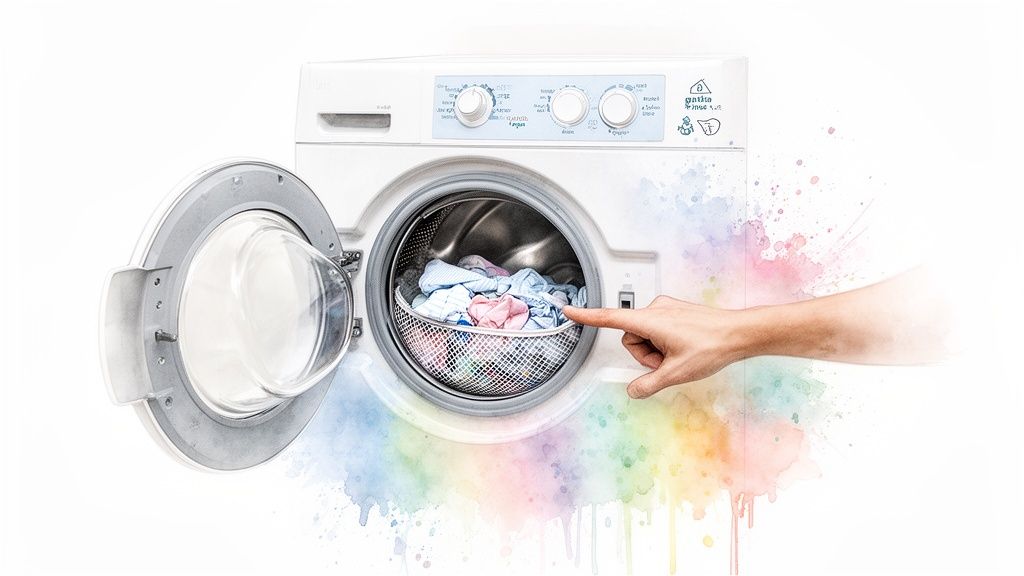
It all starts before that first adorable outfit is even worn. Always, always pre-wash new clothes. Garments straight from the store are often treated with stiffening agents to keep them looking crisp on the hanger. They also pick up dust and who-knows-what during shipping. A quick wash cycle guarantees that the first thing touching your baby’s skin is nothing but clean, soft fabric.
Key Steps for a Skin-Safe Wash Cycle
You don't need any fancy equipment to build a skin-safe routine. It just takes a few small tweaks to how you already do laundry, but these little changes make a huge difference in keeping your baby comfortable and rash-free.
-
Wash Baby’s Items Separately: It’s a smart move to give your baby's clothes their own load, at least for the first few months. This keeps residues from the harsher detergents you might use on your own heavily soiled clothes from transferring over. It’s all about creating a controlled, gentle laundry environment.
-
Choose the Right Water Temperature: Hot water is great for sanitizing, but it can be rough on delicate fabrics like bamboo. It can even set protein stains like milk, making them permanent. For most loads, warm water is your best friend. It’s effective enough to get the detergent working without being too aggressive. Always check the care label on the garment if you're not sure!
-
Run an Extra Rinse Cycle: This is a game-changer. An extra rinse cycle ensures every last bit of detergent is washed away. That leftover soap residue is one of the biggest culprits behind skin irritation, so this simple step is your best defense against it.
Putting these steps into practice maximizes the power of your gentle detergent and minimizes any risk of irritation. And for those inevitable blowouts and spit-up messes, we've got a whole guide on how to remove stains from baby clothes using skin-safe tricks.
Special Considerations for Eczema-Prone Skin
If your little one has eczema, their skin is on high alert for triggers. Your goal is to eliminate every potential irritant, making their clothes a true safe haven.
One of the biggest mistakes I see parents make is using fabric softener. These products leave a waxy, chemical film on clothes that can seriously aggravate sensitive skin and trap allergens right against it.
Ditch the fabric softeners and dryer sheets. A fantastic natural alternative is a set of wool dryer balls. They soften clothes simply by tumbling around them, help cut down on static, and can even speed up drying time—all without leaving a trace of chemical residue.
It's also crucial to be consistent with your chosen gentle detergent. Did you know that the cleansing agents in regular detergents can be 20-25% more irritating than those in formulas made for babies? This is exactly why so many parents are switching to plant-based and organic options.
This nurturing approach is a perfect match for Little Venture Co.'s Oeko-Tex® certified bamboo clothing, which is guaranteed to be free from harmful substances right from the start. When you pair clean clothes with a clean wash, you're creating the gentlest possible environment for your baby's skin.
Caring for Special Fabrics Like Bamboo
You know those buttery-soft bamboo PJs you just bought? The ones that feel like a cloud against your baby’s skin? You chose them for a reason—they’re incredibly gentle and breathable. But keeping them that way means giving them a little extra love in the laundry room.
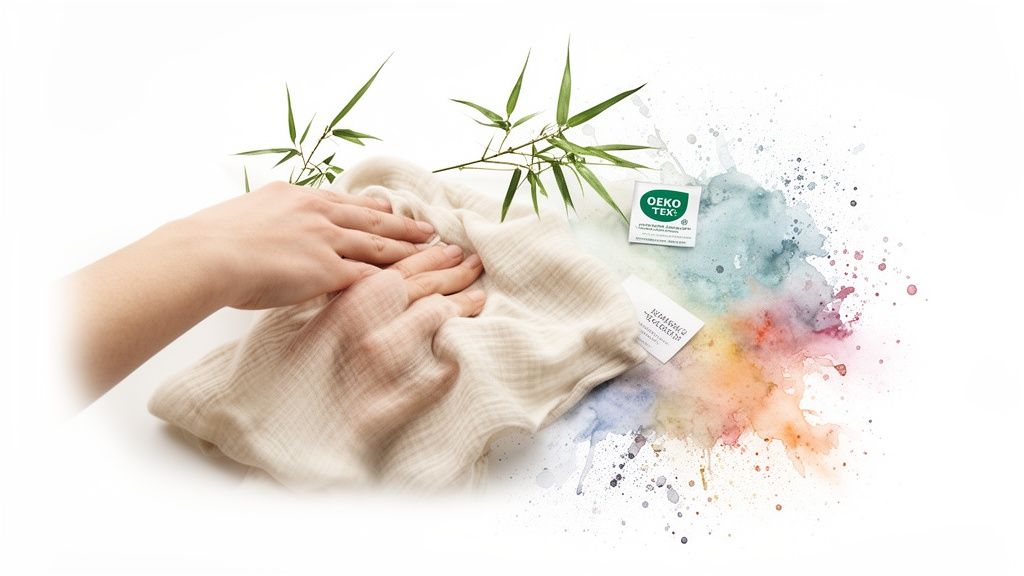
It’s all about a gentle approach. Think of it this way: you wouldn't use a power washer on a delicate rose bush, right? The same logic applies here. Using the right baby laundry detergent for sensitive skin is the first step, as it cleans without the harshness that can wreck those beautiful fibers.
Protecting Your Premium Garments
Fabrics like bamboo viscose get their signature silky feel from their long, smooth fibers. But high heat, harsh detergents, and aggressive wash cycles can rough them up, causing them to pill, shrink, or lose that incredible softness. A few small tweaks to your laundry routine can protect your investment and keep those clothes feeling brand new.
Here’s how to give these special garments the care they deserve:
- Go Cold: Always wash on a cold cycle. Hot water is the enemy of delicate fibers and can cause them to shrink and weaken.
- Keep It Gentle: Use the delicate or hand-wash setting on your machine. The slower spin is much kinder to the fabric.
- Bag It Up: For an extra layer of protection, pop bamboo items into a mesh laundry bag. This stops them from snagging on zippers or buttons from other clothes in the wash.
- Air Dry If You Can: While you can tumble dry on the absolute lowest heat setting, air drying is your best bet for preserving the fabric's softness and shape for the long haul.
Want to become a pro? Check out our complete guide on how to wash bamboo clothing for even more tips and tricks.
What Does the OEKO-TEX Label Really Mean?
You’ve probably seen the OEKO-TEX® STANDARD 100 label on high-quality baby gear, and it’s a big deal. This isn't just some marketing fluff; it's a solid promise of safety. It means every single part of that item—from the thread to the snaps—has been tested for a long list of harmful substances and is proven to be completely safe for human health.
Think of the OEKO-TEX® label as a passport for your baby’s clothes. It's proof that the fabric has passed strict global safety checks and is clear of any nasty chemical "hitchhikers" before it ever touches your baby's skin.
This independent certification is a game-changer, especially for anything that spends a lot of time in direct contact with a baby's skin. When you see that OEKO-TEX® label, you can finally relax, knowing the garment is free from nasty chemicals.
This push for safety is making waves in the baby care world. The sensitive skin baby detergent market alone is expected to jump from $1.4 billion in 2020 to $3.5 billion by 2031. Why? Because more and more parents are becoming aware of what's in the products they use. Pairing OEKO-TEX® certified bamboo clothing with a specially formulated detergent is the ultimate win-win for comfort and peace of mind.
Got Questions About Baby Laundry Detergent? We've Got Answers.
Stepping into the world of baby products can feel overwhelming, like you're suddenly expected to know a whole new language. Laundry detergent is no exception! We get it. You've got questions, and you need clear, simple answers. We've pulled together the most common things parents ask to help you feel totally confident about washing your little one's clothes.
Think of this as your go-to guide for baby laundry—no fluff, just the good stuff you need to know to protect that delicate skin and keep those tiny outfits clean and cozy.
Do I Really Need a Special Detergent for Baby Clothes?
In a word, yes. It’s one of those things that really makes a difference. A baby’s skin is so much thinner and more porous than ours, which means it’s extra sensitive to the harsh chemicals, perfumes, and dyes packed into most regular detergents. Those ingredients are often the culprits behind irritation, mysterious rashes, and eczema flare-ups.
Your safest bet is to choose a formula made specifically for sensitive skin—look for words like hypoallergenic, fragrance-free, and plant-based. These detergents are designed to tackle spit-up and diaper blowouts without leaving behind a chemical residue that can make your baby uncomfortable.
How Long Should I Keep Using Baby Detergent?
Most pediatricians and dermatologists recommend sticking with a gentle, baby-safe detergent for at least the first year. During this time, their skin barrier is still developing and is at its most vulnerable.
Honestly, though, many families just fall in love with the gentle formula and keep using it well past the first birthday. If anyone in your house has allergies or sensitive skin, using one high-quality baby laundry detergent for everyone simplifies laundry day. You can just toss everything in one load without a second thought.
Sticking with a gentle detergent is one of the easiest ways to keep your baby's skin happy. It removes a major variable, which makes it much easier to figure out what’s causing a problem if other skin issues pop up.
Are "Natural" Detergents Always Safe for Babies?
This is such a great question, and the answer is a little tricky: not always. While "plant-based" or "natural" are fantastic starting points, those labels don't automatically mean a formula is gentle enough for a newborn. Some natural ingredients, like certain essential oils, can be surprisingly irritating to brand-new skin.
The best way to be sure is to look for specific safety callouts on the label.
- Fragrance-Free: This is a big one. Both synthetic and natural fragrances are common allergens.
- Hypoallergenic: This means the product was created to minimize the chances of an allergic reaction.
- Dermatologist-Tested: This gives you an extra layer of confidence that an expert has reviewed the formula for skin safety.
When in doubt, always give the full ingredient list a quick scan for any hidden irritants.
Can I Use Fabric Softener or Dryer Sheets on Baby Clothes?
It’s best to skip the fabric softener and dryer sheets altogether for baby's laundry. These products work by leaving a coating of chemicals on the fabric to make it feel soft, but that residue can easily irritate sensitive skin. Plus, it can reduce the flame resistance of your baby's pajamas.
Looking for that soft, static-free feel? There are some great natural alternatives. You can add a half-cup of white vinegar to the rinse cycle—it acts as a natural softener. Or, even better, toss a few wool dryer balls in the dryer. They're amazing for softening clothes, cutting down on drying time, and are completely chemical-free.
At Little Venture Co., we believe every choice for your baby should come from a place of comfort, safety, and love. Our faith-inspired, Oeko-Tex® certified bamboo apparel is designed to be the softest, safest layer against your little one’s skin. Pair it with a gentle washing routine, and you can wrap them in pure, gentle care from head to toe. Explore our collection today.