

How to Prevent Overheating in Babies and Toddlers
At 10 p.m., you're standing in the hallway with two sleepers in your hands, wondering whether your baby needs the warmer one or whether that extra layer will leave them sweaty by midnight. The nursery feels comfortable to you, but your baby can't unzip a sleeper, push away a blanket, or tell you that their neck is damp.
Learning how to prevent overheating doesn't require guessing through every warm night. It works better as a repeatable system: breathable fabric against the skin, a controlled room, sensible layers, and quick checks that help you adjust before your baby becomes uncomfortable. Bamboo viscose can serve as the breathable foundation, but it only works properly when the rest of the setup supports it.
Why Overheating Happens Faster Than Most Parents Expect
Babies have less control over their body temperature than adults. Their small bodies can gain heat quickly, and immature sweating responses make it harder to cool down efficiently. They also depend on adults to remove blankets and extra clothing, which means a well-intentioned bedtime outfit can become too warm while they sleep.
A parent may feel perfectly fine in a T-shirt while holding a baby dressed in a bodysuit, sleeper, socks, and a blanket. The comparison isn't equal. A baby's hands and feet can feel cool even when their chest and neck are warm, so checking the right place matters more than relying on your own first impression.
Practical rule: Use the baby's upper back or the back of the neck as your guide. Warm and dry usually means the setup is working. Hot, damp, or sweaty means it's time to remove a layer and cool the room.
Overheating can contribute to restless sleep, heat rash, and dehydration. For infants under twelve months, overheating is also associated with an increased SIDS risk, which is why safe-sleep guidance emphasizes avoiding excess insulation and keeping the sleep space clear. The Nursery Advice on Lullaby Trust rules is a useful parent-friendly resource for reviewing the wider safe-sleep routine alongside temperature control.
The most reliable approach is layered rather than dependent on one product. Start with bamboo viscose as a soft, breathable base, then manage the room, add only the clothing the temperature calls for, and monitor your baby's neck and chest. That routine is calmer than repeatedly replacing a heavy outfit with another heavy outfit.
Setting the Right Room Temperature for Sleep
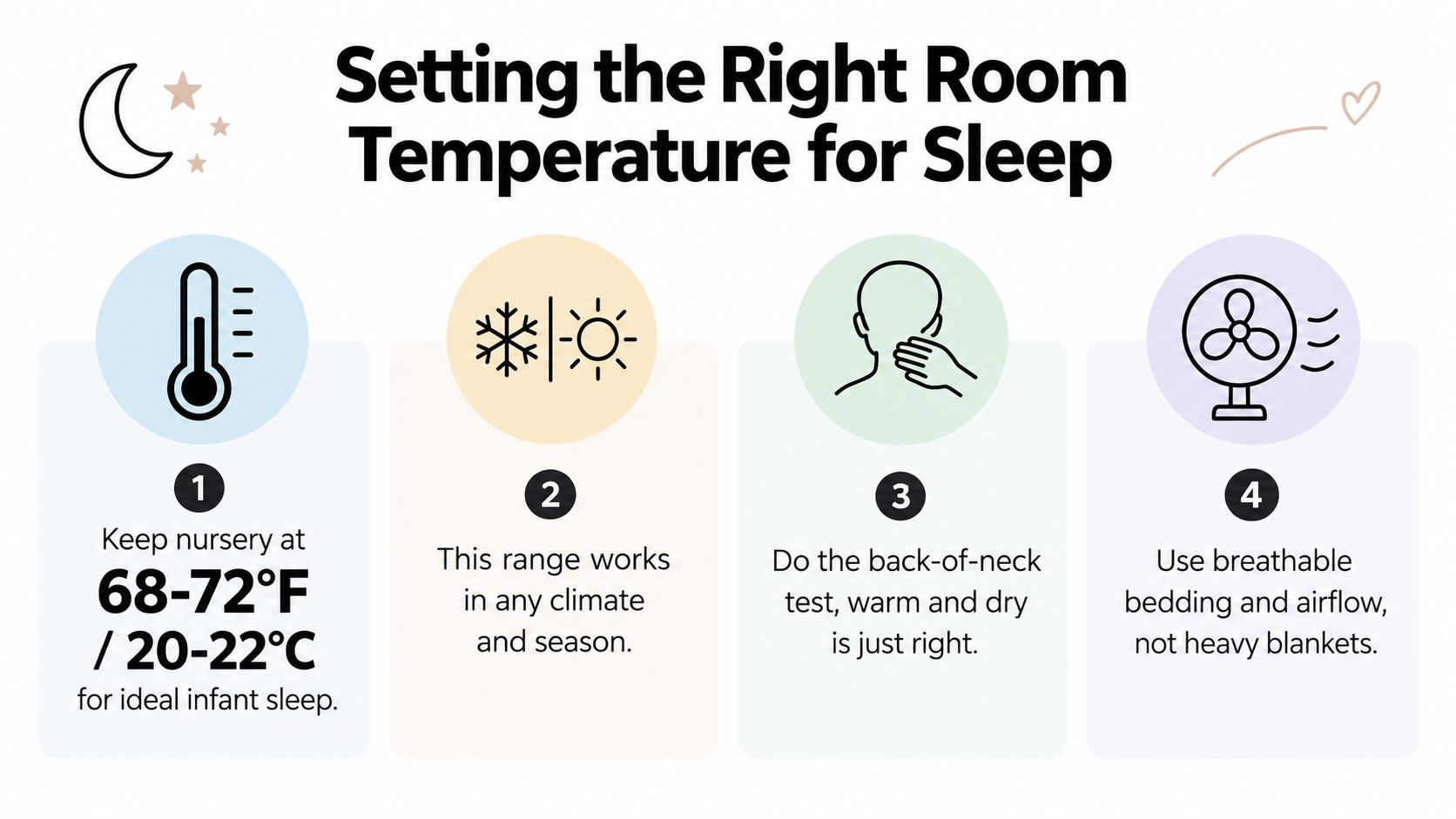
A practical sleep target is 68°F to 72°F, or 20°C to 22°C. This range appears in pediatric and public-health sleep guidance as a comfortable environment for a lightly clothed baby, while other guidance uses a nearby cool-room target. The useful principle is consistency, not chasing a perfect decimal reading.
Build the room around the crib
Place a basic thermometer at crib height rather than beside the ceiling or at adult eye level. A nursery can feel cooler near the floor and warmer near the ceiling, so the reading should reflect the air around your baby's sleep space.
During sunny afternoons, close blinds or curtains before the room heats up. Use air conditioning when it's available, and keep the cot away from radiators, space heaters, heating vents, and direct sunlight. A ceiling fan on low can circulate air, but don't aim a fan directly at the baby. Some extreme-heat guidance warns that direct airflow can contribute to dehydration.
If the room is humid or stagnant, a slightly open door or safe hallway airflow may help. Don't use a cracked window if it creates a fall, security, or pollution risk. For a larger home comfort project, thermostat installation can help create more dependable temperature control than repeatedly adjusting the system by hand.
Use your body as a secondary check
A lightly clothed adult should feel comfortable in the room. The best temperature for baby sleep gives parents a helpful reference, but your baby's skin is still the final check. Feel the back of the neck and upper chest. Warm and dry is generally reassuring; hot, sticky, or sweaty means the room or clothing needs adjustment.
Winter can be just as tricky as summer. A heater running near the crib and several thick layers can trap heat even when the rest of the home feels cold. If you feel slightly cool while wearing light clothing, your baby is likely more comfortable than they would be in a heavily bundled outfit.
Why Fabric Choice Changes Everything
Fabric is the first layer of the system because it sits directly against your baby's skin. The useful comparison isn't “natural versus synthetic.” Look at breathability, moisture handling, and thermal regulation together.
Bamboo viscose is often chosen for its smooth hand feel and breathable construction. Its fiber structure has small spaces that can help moisture vapor move away from the skin. Cotton remains a practical, familiar option, but it can hold moisture after a baby sweats. Synthetic blends may feel lightweight at first, yet polyester-heavy fabric can leave sweat close to the skin and create a clammy feeling.
| Property | Bamboo Viscose | Cotton | Synthetic Blends |
|---|---|---|---|
| Breathability | Airy and comfortable when used as a light base layer | Breathable, though thicker weaves can feel warmer | Depends on construction, but some blends trap heat |
| Moisture handling | Helps move moisture vapor away from skin | Absorbs moisture but may stay damp | Can hold sweat against the skin |
| Thermal regulation | Feels light across changing room conditions | Comfortable but can become heavy when damp | May feel clammy when heat and moisture build |
| Skin feel | Smooth, useful for sensitive skin | Soft, but texture varies by garment | Varies widely and may irritate some skin |
| Care | Needs gentle washing to protect the fabric structure | Usually forgiving in the wash | Often durable, though heat retention varies |
Bamboo viscose also has a smooth surface with fewer rough fiber ends, which can reduce friction when skin is flushed or prone to irritation. That doesn't make every bamboo garment suitable for every child, and it doesn't replace checking the neck and chest. It gives you a more comfortable starting point.
You can explore the benefits of bamboo fabric, then apply the same practical test to any garment you buy. Hold it up to light, check whether it feels airy, and avoid pairing a breathable sleeper with a heavy outer layer that cancels the benefit.
Wash bamboo viscose gently and follow the garment's care instructions. Avoid treating softness as permission to add more clothing. A breathable base layer works best when the room and bedding remain light too.
Layering Sleepwear and Bedding by Season
Seasonal dressing becomes easier when you stop choosing a single “warm” outfit and build from one breathable base layer. Add one light piece only when the room or your baby's neck check shows that it's needed.
| Season | Base Layer | Add-On | Bedding |
|---|---|---|---|
| Spring and fall | Short-sleeve bodysuit | Lightweight long-sleeve sleeper | No loose blanket |
| Summer | Short-sleeve bodysuit or single lightweight sleeper | Usually none | No loose blanket |
| Winter | Long-sleeve bodysuit | TOG-rated sleep sack | Wearable blanket, not loose bedding |
In spring and fall, a short-sleeve bodysuit under a lightweight sleeper gives you two manageable layers. In summer, one light layer may be enough. For a very young baby, follow safe-swaddling guidance carefully, and stop swaddling when your baby shows signs of rolling. The guide to dressing a baby for sleep can help you think through the outfit without turning every bedtime into a calculation.
Winter calls for restraint, not a thick pile of clothing. Keep the room near the recommended range and use a properly fitted, lightweight sleep sack rather than loose blankets. A TOG rating can help compare sleepwear warmth, but the label isn't a substitute for checking your child's skin.
Skip hats indoors because head coverings can trap heat. Avoid weighted sleep products, and keep bedding out of the crib unless it's part of an age-appropriate, safety-approved setup. For babies who sleep in a cot, loose bedding should not cover the face or rise above the chest.
The advantage of layering is adjustability. You can remove a bodysuit or switch to a lighter sleep sack when the room warms, while a single heavy outfit gives heat fewer ways to escape.
Spotting the Early Signs of Overheating
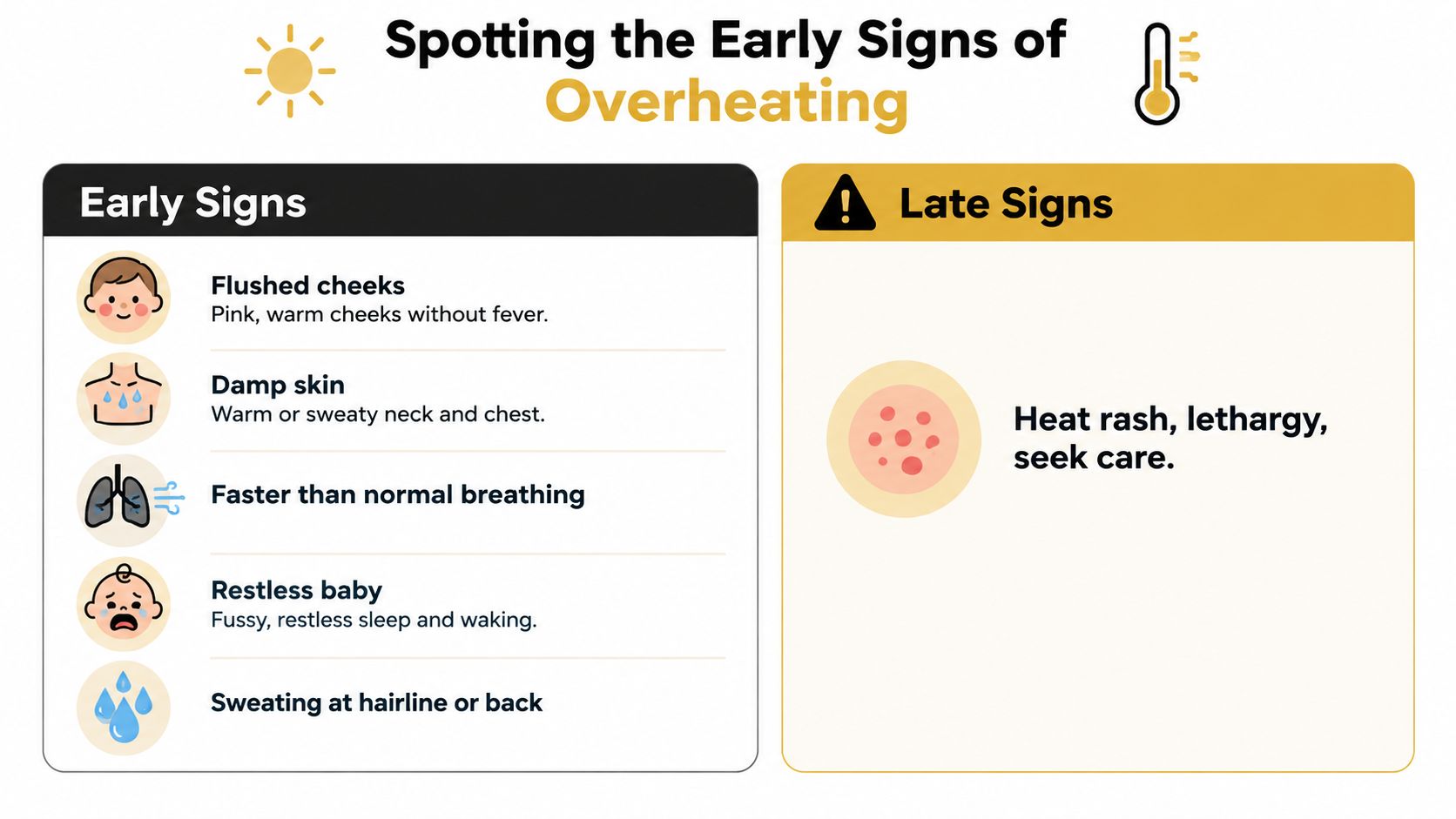
A baby may be overheating before a thermometer shows a problem. Look for flushed skin, a damp neck, sweat along the hairline, faster breathing, unusual fussiness, or restless sleep. Feel the back of the neck and upper chest, not the hands and feet, which may stay cool while the body is warm. Bamboo viscose can support this check by forming a breathable base layer, while the room setup, sleepwear, and bedding still need to work together.
Early signs call for a simple correction
Remove one layer or lower the room temperature, then give your baby time to settle. Recheck the neck after the clothing and room have had time to change the baby's comfort. For a fuller walkthrough, see our guide on how to tell if a baby is too hot.
If your baby is old enough for water under their usual feeding guidance, offer a small amount. Younger infants should continue breast milk or formula instead of receiving water in place of normal feeds. Fewer wet diapers or 8 hours without peeing requires prompt medical advice, as noted in extreme-heat guidance for children.
Know when the situation is more serious
A hot, dry back, marked lethargy, vomiting, refusal to feed, or a fever over 100.4°F warrants a call to your pediatrician. Seek urgent medical help if your child is difficult to wake, has trouble breathing, appears seriously unwell, or does not improve after cooling measures.
One warm check does not mean you have failed. Observe the skin, make one measured adjustment, and reassess instead of repeatedly waking your baby to change outfits without checking what they need.
Travel, Car, and Outdoor Adjustments
A cool nursery routine won't protect a baby in a hot car or covered stroller. Cars heat rapidly, so never leave an infant unattended in a vehicle, even briefly. One public-safety example shows why: on a 90°F day, a parked car can reach 109°F in 10 minutes according to Healthline's baby overheating guidance.
Before buckling your baby in, cool the vehicle, use window shades where appropriate, and remove bulky coats. Thick outerwear can compress under a harness and interfere with a secure fit, so use a thin layer in the seat and add warmth over the harness afterward if needed. A single breathable bamboo layer is often easier to manage than several thick pieces.
Strollers need the same attention. Choose breathable mesh where possible, keep the canopy positioned for shade, and don't drape a heavy blanket over the entire stroller because it can reduce ventilation. A light muslin cover may provide shade only when it doesn't block airflow and the stroller manufacturer's guidance allows it. Skip enclosed rain covers in warm conditions unless they're specifically designed and safe for the situation.
For outdoor time, avoid direct sun during the strongest part of the day. Independent guidance recommends avoiding direct sunlight from about 11 a.m. to 5 p.m. for babies, so plan walks in cooler periods, use shade, and dress your child in loose layers. A wide-brimmed hat can help outdoors, but remove it indoors. Apply sunscreen only as appropriate for your child's age and your healthcare provider's advice.
Camping and travel setups need airflow without blowing directly on the baby. Nordmoose's tent cooling tips offers general ideas for managing warm enclosed spaces, but infant sleep still requires a clear, safe sleep surface and close supervision.
On flights, bamboo layers can handle cabin temperature changes more comfortably than a single thick outfit. Pack a spare layer for spills, keep feeds normal, and check the neck instead of relying on cold hands as proof that your baby needs another layer.
A Simple Daily Checklist for Cool and Confident Sleep
Use this as a quick routine rather than a set of rules you must perform perfectly.
- Set the room: Confirm that the nursery sits around 68°F to 72°F, or 20°C to 22°C, before bedtime.
- Choose the base: Start with one breathable layer, such as a bamboo viscose bodysuit or sleeper.
- Adjust lightly: Add or remove one lightweight layer based on the room and the lightly clothed adult comparison.
- Check the neck: Feel behind your baby's neck after settling them. Warm and dry is reassuring; damp or hot means cool the setup.
- Clear the sleep space: Remove hats, weighted items, and loose blankets from the cot. Use an appropriate wearable blanket when extra warmth is needed.
- Prepare travel: Cool the car before buckling in, and never leave your baby alone inside it.
- Support toddlers: Offer normal feeds and extra water to toddlers during warm days, following their usual care guidance.
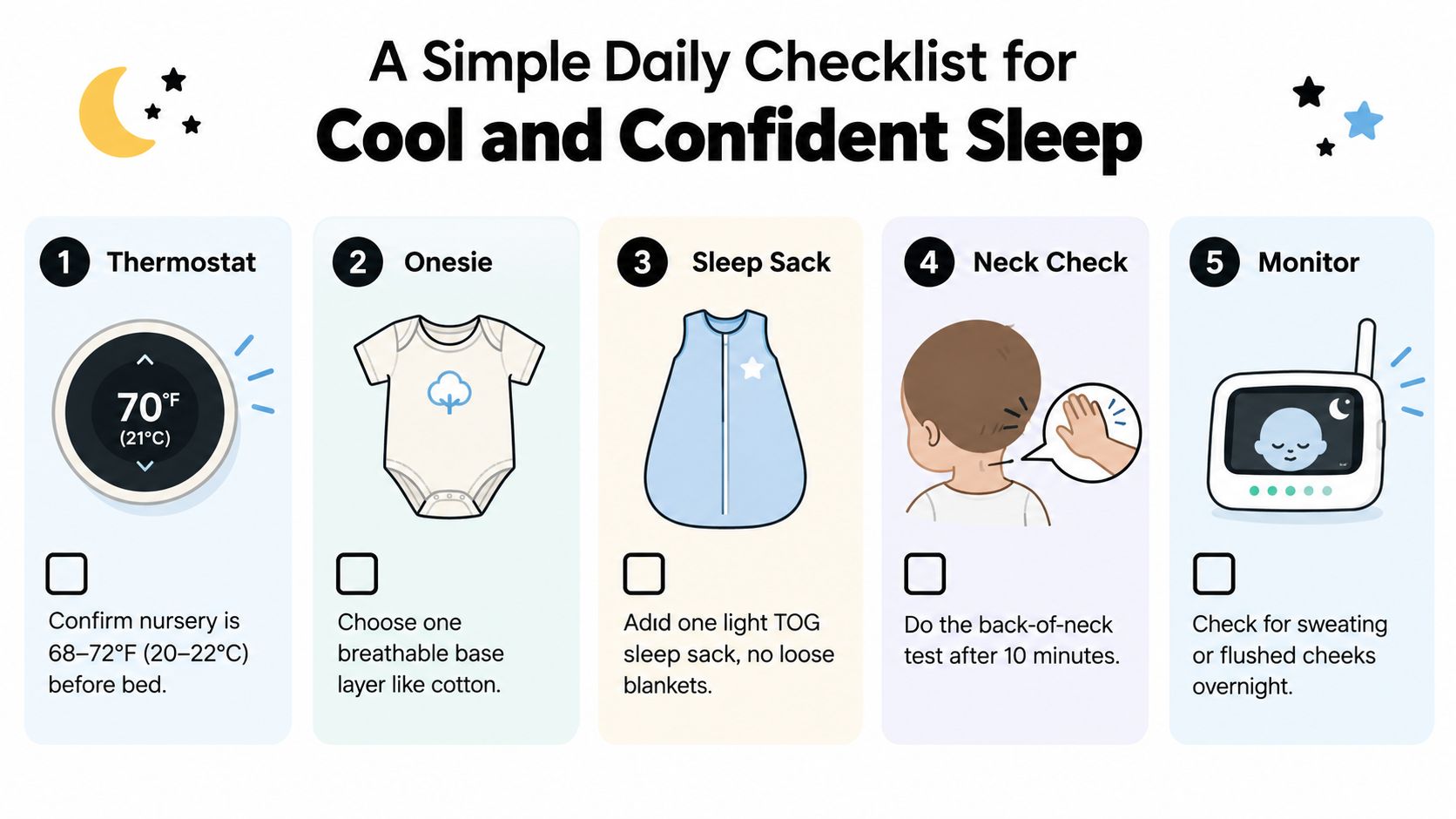
Pin this list near the changing table or keep it with the sleep sacks. Repeating small checks, breathable clothing, and sensible room adjustments is how you prevent overheating without turning every warm evening into a source of anxiety.
Little Venture Co. offers bamboo viscose sleepwear and daywear for babies and toddlers, including zip rompers and two-piece sets designed for soft, comfortable everyday layering. Visit Little Venture Co. to choose breathable pieces for your family's warm-weather routine and meaningful gifts for the little ones you love.