

A Parent's Guide to the Fruit of the Spirit Fruits
The fruit of the spirit fruits are the nine beautiful qualities that bubble up in our lives when we let the Holy Spirit guide us. They're found in Galatians 5:22–23, and they aren't a list of rules to master. Instead, think of them as the sweet results—like love, joy, and peace—that grow naturally when our faith is thriving.
What Are the Fruit of the Spirit Fruits, Anyway?
Let's be honest, parenting toddlers can feel like a beautiful storm. One moment you're basking in pure sunshine and cuddles, the next you're navigating a full-blown tantrum that tests every last ounce of your patience. The "fruit of the spirit fruits" from the Bible can feel like a gentle, steadying hand through all of it—not just another set of impossible parenting rules.
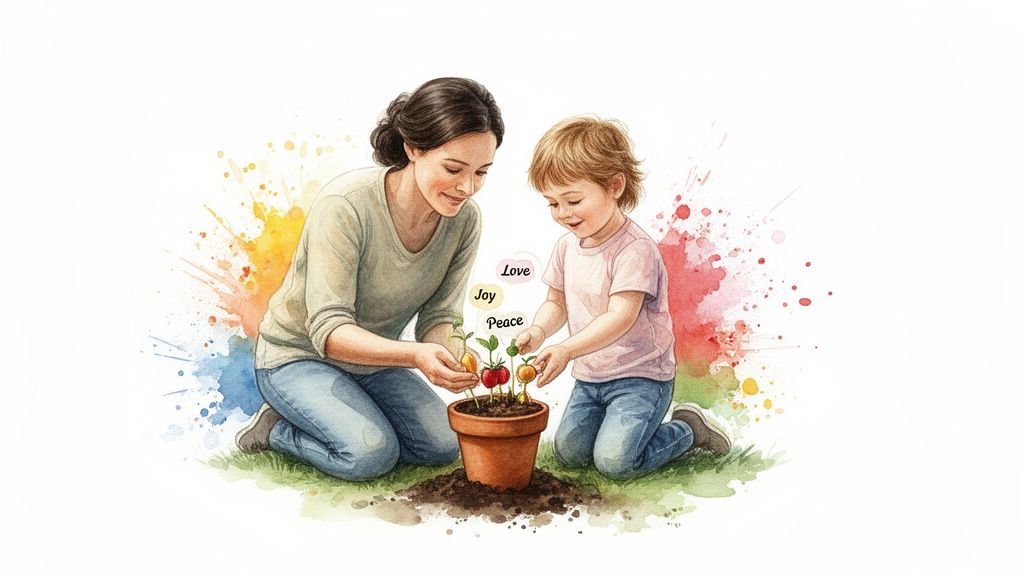
Imagine you're planting a little garden right in the heart of your family. These nine qualities are the flowers and fruits that begin to pop up as you tend to your faith. They aren't things we can perfect overnight, but they grow little by little as we do.
A Garden of Virtues
This whole beautiful idea comes from a passage in the Bible, Galatians 5:22-23. It lists nine specific qualities that are evidence of the Holy Spirit's work in someone's life. They aren't skills you have to master, but the natural outcome of a deepening relationship with God.
The nine fruits are:
- Love
- Joy
- Peace
- Patience
- Kindness
- Goodness
- Faithfulness
- Gentleness
- Self-Control
At their core, these are all about building character. It's fascinating when you consider why soft skills are the hardest to teach—and the most valuable for a child's future success. This isn't just about behavior modification; it's about nurturing the heart, which is a key part of learning how to raise godly children.
This journey is about progress, not perfection. It's about finding grace in the beautiful chaos of raising little ones and seeing everyday moments as opportunities for these spiritual fruits to blossom in both you and your children.
A Global Desire for Goodness
This isn't just a niche Christian concept; it taps into a much bigger, widespread hunger for goodness and meaning. A huge 2023 Ipsos survey found that, on average, 40% of people believe in God as described in holy scriptures. Another 20% believe in some kind of higher power or guiding spirit.
That shows a deep, collective desire for spiritual connection, which is exactly why teaching these timeless virtues is so important for families everywhere.
To help make these big ideas a little more digestible, here’s a quick-glance table. It's a great starting point for talking about these concepts with your kids.
Quick Guide to the Nine Fruits of the Spirit
| Fruit | What It Means for You | Kid-Friendly Definition |
|---|---|---|
| Love | Unconditional, selfless care for others. | Liking someone even when they are grumpy. |
| Joy | A deep happiness that doesn't depend on what's happening. | A happy feeling deep inside that God gives you. |
| Peace | A calm heart, even when things are crazy. | Feeling quiet and calm on the inside. |
| Patience | Waiting without getting upset or angry. | Waiting for your turn without whining. |
| Kindness | Being friendly, generous, and considerate. | Using gentle hands and nice words. |
| Goodness | Doing the right thing because you love God. | Choosing to do what's right. |
| Faithfulness | Being loyal and trustworthy, like a good friend. | Sticking with someone and keeping your promises. |
| Gentleness | Being calm and careful, not rough or mean. | Being soft and careful with people and things. |
| Self-Control | Choosing to do what's right instead of what you feel like doing. | Stopping yourself from doing something you know is wrong. |
Think of this table as your cheat sheet! These simple definitions can kickstart some really meaningful conversations, even with the littlest members of your family.
Nurturing Love, Joy, and Peace in Your Home
The first three fruits of the Spirit—love, joy, and peace—are the ones that really set the tone for your whole home. They aren't just lofty ideas; they're real, tangible feelings you can grow right in the middle of the beautiful chaos that is life with toddlers. Let’s break down what these look like in a real, busy family.
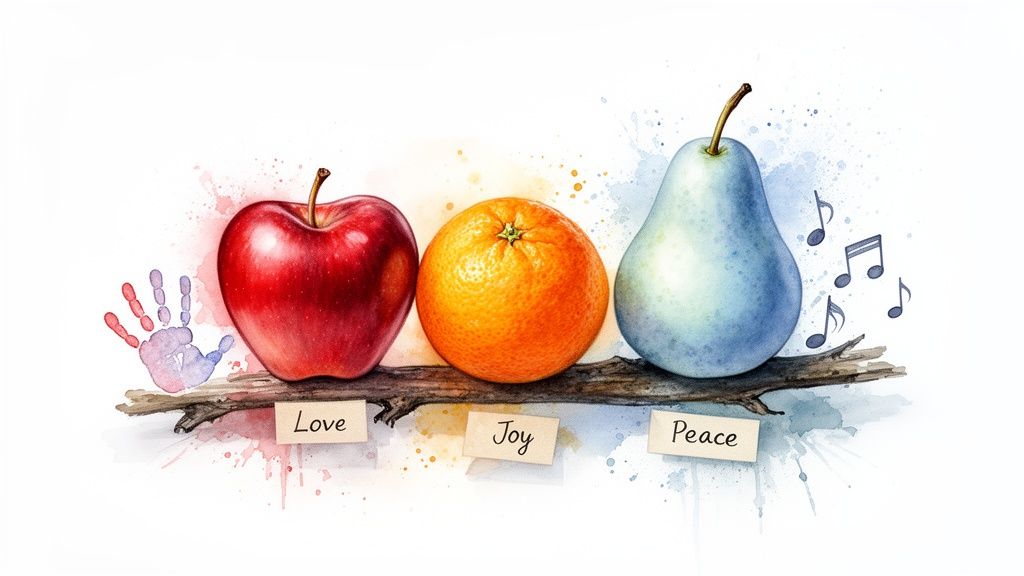
Growing a Heart of Love
When the Bible talks about love as a fruit of the Spirit, it’s not just talking about warm, fuzzy feelings. It means "agape" love—a deep, unconditional commitment that says, "I'm here for you, no matter what." For a toddler, feeling this kind of love is everything. It's the foundation of their security.
You show this love with a big, warm hug after a scraped knee and when you patiently read the same book for the fifth time. It’s a love that stays kind, even when you’re exhausted and they’re throwing a fit.
Parent Devotional Thought: "God's love for us doesn't depend on how we're behaving. How can I show my child that my love for them is just as steady today, whether it's a 'good' day or a 'bad' day?"
- Love Handprint Keepsake: This craft is such a sweet visual reminder of your family’s love. Just trace each family member's hand on paper, overlapping them from biggest to smallest. You can label each hand and write "Our Family's Love" at the top. It’s a tangible little symbol of your connected hearts.
Finding Joy Beyond Happiness
It's easy to mix up joy and happiness, but they're not the same thing. Happiness usually depends on what's happening around us—getting a new toy or it being a sunny day. Joy, on the other hand, is a deeper delight that comes from our connection with God. It’s a contentment that can stick around even when things aren't going perfectly.
You see this fruit of the Spirit in the pure wonder on your toddler’s face as they watch a ladybug crawl on a leaf. It’s the shared giggle over a silly face you make or the quiet satisfaction of a bedtime snuggle. This is the kind of joy that builds memories that last.
- Joyful Noise Dance Party: Turn on some fun, uplifting music and just let loose! Be silly, laugh, and dance around the living room. It’s a great way to teach your little one that joy can be expressed freely and that celebrating together is what family is all about.
Cultivating a Peaceful Home
Let's be real—peace in a home with toddlers is not the absence of noise or chaos! Instead, it’s an inner calm that you, as the parent, can bring into a stormy moment. It's that sense of tranquility that comes from trusting God, not from having perfectly behaved kids or a spotless house.
This fruit shows up when you take a deep breath before reacting to a spilled drink or a full-blown tantrum. It’s the soft voice you use to soothe your crying child in the middle of the night. You get to be the calm in their storm, showing them a kind of peace that doesn't always make sense to the outside world.
- "Peaceful Place" Corner: Set up a cozy little spot in your home with soft pillows, a fluffy blanket, and a few calming board books. When emotions are running high, you can head to this spot together, take a few deep breaths, and find a moment of quiet connection.
By intentionally planting these little seeds of love, finding moments of deep joy, and modeling a steady peace, you're nurturing the first three fruits of the Spirit in your family's heart. These simple practices create a safe, warm home where your little one can truly flourish.
Growing Patience, Kindness, and Goodness Together
Once you've started laying the groundwork of love, joy, and peace, the next set of virtues—patience, kindness, and goodness—really come into play. These are the ones that shape how we treat the world and each other. And let’s be honest, they’re tested daily in the beautiful, messy reality of raising little ones.
These are the fruit of the spirit fruits our kids see up close and personal, every single minute.
This is where our faith becomes real and tangible, not just for us, but for the tiny eyes watching our every move. They see how we handle spilled milk, a crayon-covered wall, or a full-blown tantrum, and they’re learning from our example.
The Gentle Power of Patience
Patience is so much more than just waiting your turn. In the toddler world, it’s a genuine superpower. It's the deep, calming breath you take when your little one insists on putting on their shoes all by themselves for the tenth time, even when you're already running late.
It’s all about choosing a gentle response over a frustrated sigh. When we model patience, we're doing more than just toughing it out. We’re teaching our children they are worth waiting for. This simple act builds their self-worth and shows them what grace looks like under pressure.
Parent Devotional Thought: "Today, can I see interruptions not as frustrations, but as opportunities to practice patience? Can I show my child that my love is bigger than my schedule?"
Making Kindness Visible
You could say kindness is just love in action. It's a simple idea, but for a toddler, seeing it is way more powerful than just hearing about it. Kindness looks like using gentle hands with the family pet, sharing a favorite toy without being prompted, or offering a piece of their snack to a sibling.
Every little act of kindness is like planting a seed. It shows our kids that thinking of others is a joyful and important way to live. When we’re kind to them and to others, we’re handing them a blueprint for building healthy, loving relationships—which is a huge part of teaching children about God and His character.
A doctoral study I came across really drove this home. It found that youth ministers who consistently showed patience and kindness built far deeper, more meaningful connections with teens. Those traits directly boosted their ministry's impact. It’s the same principle in our homes: a parent’s calm, kind response during a meltdown builds a lifelong foundation of faith and trust. You can find more about those ministry findings online.
Choosing Goodness Every Day
"Goodness" might sound like a big, old-fashioned word, but it really boils down to something simple: choosing to do the right thing. For a toddler, that could be as basic as helping a sibling who fell down instead of laughing, or putting a toy away when asked.
It’s the heart behind the action that really counts. Goodness flows from a desire to honor God and be a blessing to others. We model goodness when we speak truthfully, help a neighbor, or act with integrity in our own lives. Our kids are like sponges, soaking up the moral atmosphere of our home.
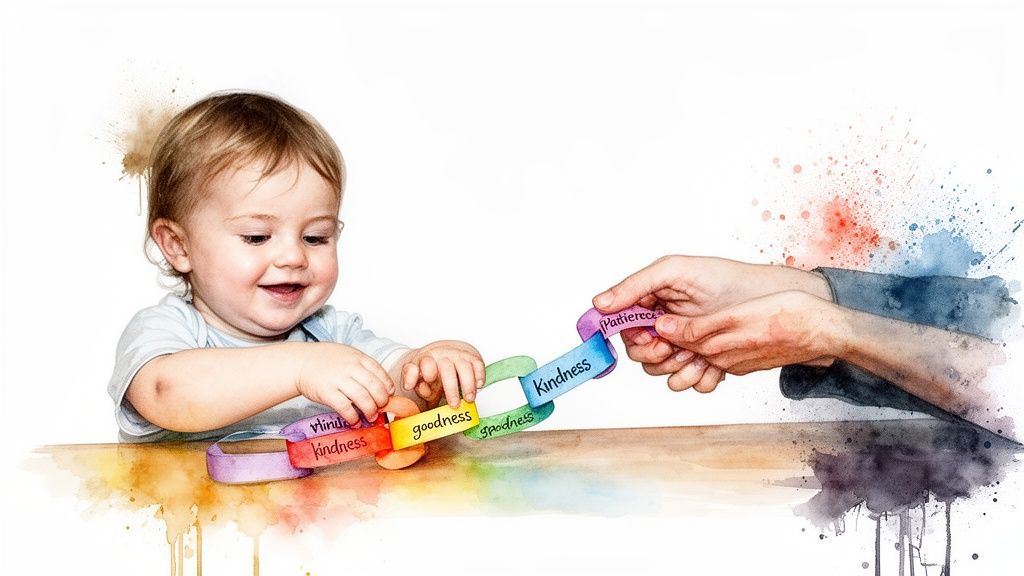
- Create a "Kindness Chain": This is a fantastic, visual way to celebrate these virtues! Just keep strips of colored paper and a stapler handy. Every time you see someone being patient, kind, or good, write it on a strip of paper and add it to your chain.
- Watch it grow: The chain becomes a tangible, growing reminder of all the good things happening in your family. It turns abstract ideas into a visible celebration of character and makes it fun to spot these fruit of the spirit fruits in each other.
Building Faithfulness, Gentleness, and Self-Control
We've arrived at the final three Fruits of the Spirit: faithfulness, gentleness, and self-control. I think of these as the ones that build deep, lasting character. They’re less about what we do on the outside and more about who we’re becoming on the inside. For our little ones, seeing these qualities in us is one of the most powerful ways they learn.
This group of virtues moves from outward actions to the quiet, internal strength needed to live with integrity, especially when no one is watching.
The Strength of Faithfulness
In a world that can feel unpredictable, faithfulness is like a steady anchor. For a toddler, this looks like being a promise-keeper. When you say, "I'll be right back," you come right back. It's that feeling of being a constant, reliable presence they can always, always count on.
This isn’t just about big promises, either. It’s built in the tiny, everyday moments. Faithfulness is just showing up, being consistent, and proving that your love is dependable. That consistency builds a profound sense of security and trust in your child, which is the foundation for their relationship with you and, one day, with God.
Parent Devotional Thought: Am I a steady rock for my child? Today, how can my actions—big and small—show them that my love is faithful and my word is true?
The Power of Gentleness
Gentleness often gets a bad rap, mistaken for weakness. But it’s actually strength under perfect control. Think about how you handle the most precious things—a tiny newborn, a fragile flower, or even the family pet. You naturally use a soft touch and a calm voice. That’s gentleness.
As parents, this fruit shines brightest in moments of stress. It’s choosing a soft answer over a sharp one. It’s using gentle hands to guide a child instead of grabbing them. It’s offering comfort when you feel more like showing frustration. By modeling gentleness, we teach our kids that true strength and kindness go hand-in-hand.
- Practice "Gentle Hands": Make this a common phrase in your home. When your toddler is playing with a pet or a younger sibling, you can gently guide their hands and say, "Let's use gentle hands." You can even practice on stuffed animals, showing them how to pat softly and hug carefully.
The Challenge of Self-Control
Okay, let's be honest: self-control is a huge concept for toddlers... and for us parents, too! It’s one of the most vital fruit of the spirit fruits to cultivate. For our kids, we can explain it as being the "boss of your feelings and actions." It doesn’t mean we pretend we don't have big feelings; it means we learn what to do with them.
You model this every single time you take a deep breath instead of yelling. You show it when you walk away for a moment to calm down. For a toddler, learning self-control is a very long journey, but it starts with them seeing you manage your own impulses and emotions with grace.
Fun Ways to Practice Self-Control
Play is, hands down, the best way for toddlers to learn big concepts. Games that involve stopping and starting are perfect for building those early self-regulation muscles.
- Red Light, Green Light: It’s a classic for a reason! This simple game teaches kids to control their body's impulse to go when they’re supposed to stop.
- Freeze Dance: Crank up some music and have a wild dance party. When the music stops, everyone freezes in place. It's a fun, silly way to practice stopping an action mid-flow.
- Simon Says: This game is all about listening carefully and resisting the urge to act unless you hear those magic words.
By playing these simple games, you're not just having fun; you're making a crucial life skill a joyful part of your routine. You’re planting seeds of faithfulness, gentleness, and self-control that will grow into a strong, beautiful character for years to come.
Making These Virtues Part of Your Everyday Life
So, how do we take these beautiful concepts from the Bible and bring them to life in our own homes? It's all about finding simple, practical ways to weave these ideas into the fabric of your family. Let’s look at some creative ways to make the fruit of the spirit fruits a visible and celebrated part of your daily routine, turning abstract ideas into real, joyful moments.
The idea isn't to create a rigid list of rules but to cultivate a home where faith feels as natural as breathing. It’s about finding God in the middle of playtime, mealtime chats, and even in the art on your child's wall. This is how we create a space where their little spirit (and ours!) can truly grow.
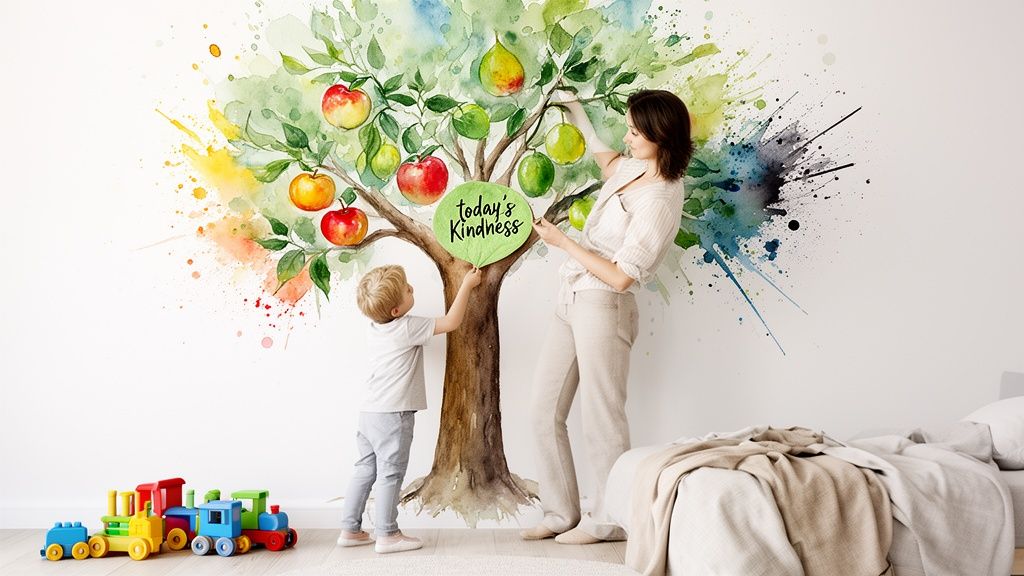
Create a Visual Fruit Tree
For little ones, seeing is believing. One of the best ways to make these virtues tangible is to create a visual "Fruit Tree" on a wall or even a big piece of poster board. It’s a fantastic family project.
Just draw a big, bare tree to start. Then, cut out a bunch of colorful "fruits" from construction paper. Whenever you spot someone showing one of the fruit of the spirit fruits—like sharing a favorite toy (kindness) or waiting patiently for a snack (patience)—you can write it on a piece of fruit and tape it to the tree.
This simple activity is surprisingly powerful.
- It’s awesome positive reinforcement. You're celebrating the good stuff in a way they can see and touch.
- It builds a family vocabulary. Suddenly, big words like "gentleness" are connected to their own actions.
- It’s a beautiful reminder. As the tree fills up, it becomes a gorgeous picture of your family’s growth.
A home filled with visible reminders of faith helps children internalize these values not just as concepts to learn, but as a lifestyle to live. It shifts the focus from "don't do this" to "look at the good we are growing!"
Infuse Faith into Daily Rhythms
You don’t have to reinvent the wheel or add a bunch of complicated activities to your already-packed schedule. The real magic happens when you sprinkle these themes into the routines you already have.
Bedtime Stories and Songs
Take a closer look at your bedtime story stash. So many classic children's books touch on kindness, faithfulness, and self-control, even if they aren't explicitly religious. As you’re reading, you can gently point things out, like, "Wow, look how kind that little bear was to his friend!"
Mealtime Conversations
Dinnertime is the perfect opportunity to connect. Try going around the table and sharing one time you saw a "fruit" in action that day. This simple habit gets everyone looking for the good in each other. If you're searching for more ways to fit faith into your family's groove, you might find some great ideas for a family devotional that works for you.
Wearable Reminders and Gifts
Clothing and gifts can be so much more than just stuff. They can be sweet, gentle nudges that point back to the values you cherish. Dressing your little one in a cute shirt with a subtle message of faith can be a great conversation starter and a personal reminder of what your family is all about.
Think about gifts that encourage these virtues, too. Things like cooperative board games teach patience and teamwork, and a fresh set of art supplies is perfect for creating pictures to give away as an act of kindness. When you surround your kids with things that reflect these principles, you're building an environment where faith is a natural and beautiful part of everyday life.
Your Family's Fruit of the Spirit Action Plan
Feeling inspired but maybe a little unsure where to actually start? I get it. We’ve just talked about all 9 beautiful fruits of the spirit, and now it's time to figure out how to bring them into our homes without it feeling like a chore.
Let’s create a simple, stress-free roadmap that moves us from just reading about these concepts to actually living them.
The most important thing to remember is that this isn't a checklist for perfection. It’s a gentle journey of growth, leaning into God's grace, and celebrating all the small wins along the way. The goal is simply to be intentional, not flawless.
A Nine-Week Family Challenge
To make this feel doable and fun, let's break it down into a simple nine-week challenge. Each week, your family can focus on just one fruit. We're aiming for light and playful, introducing these big ideas through simple, toddler-friendly activities that feel more like a game than a lesson.
This approach helps plant the seeds of these virtues in your little one’s heart in a way they can actually understand and enjoy. You’re building a foundation of faith one happy memory at a time.
This isn't about adding another "to-do" to your list. It's about transforming moments you already have into opportunities for spiritual growth—for your child and for you.
Here's a handy table with a simple activity for each week. Feel completely free to adapt them to fit your family’s unique rhythm and your child's personality!
A Simple 9-Week Family Activity Plan
| Week | Fruit of the Spirit Focus | Simple Toddler-Friendly Activity |
|---|---|---|
| 1 | Love | Have a "Love Bomb" session. During a big family hug, take turns saying one thing you love about each other. |
| 2 | Joy | Hold a five-minute "Joyful Noise" dance party to an upbeat, happy song. The sillier, the better! |
| 3 | Peace | Create a "Cozy Corner" with soft pillows. When things get loud, go there together and practice taking one big, quiet breath. |
| 4 | Patience | Plant a seed in a small pot. Water it together and talk about how we have to wait patiently for it to grow. |
| 5 | Kindness | Go on a "Kindness Mission" by drawing a picture for a neighbor or family member and delivering it together. |
| 6 | Goodness | Clean up toys together, explaining that helping our family is a good and loving thing to do. |
| 7 | Faithfulness | Play a game of hide-and-seek. When you find your child, say, "I will always find you because I am faithful!" |
| 8 | Gentleness | Practice "Gentle Hands" by petting a stuffed animal or the family pet softly. Talk about how to be gentle and kind. |
| 9 | Self-Control | Play "Freeze Dance." When the music stops, everyone has to freeze, practicing control over their bodies. |
Your Journey of Growth
As you move through these weeks, remember to give yourself and your child so much grace. Some days will feel fruitful and others will feel... well, like you’re back at square one. That’s okay!
Every intentional act, every gentle correction, and every shared laugh is a step in the right direction. If you're looking for more ways to bring these concepts to life, a beautifully illustrated tool like The Fruit of the Spirit Board Book can be a wonderful daily reminder for your little one.
You aren't just teaching virtues; you are nurturing a heart. Every time you model patience, whisper a word of kindness, or share a moment of joy, you are part of raising a generation of loving, joyful, and good people. And that is a truly beautiful, world-changing venture.
Common Questions About Teaching These Fruits
Diving into the fruit of the spirit fruits with your little one is an incredible journey, but let's be real—it's totally normal to have a few questions pop up. Let's walk through some common thoughts that parents have and find some gentle, practical encouragement for your family.
This isn’t about having all the answers. It’s about growing together, with a whole lot of grace.
What If I Struggle with These Fruits Myself?
This is such a real and important question. It gets right to the heart of what this is all about: grace! The goal isn't to be a perfect parent who has mastered the Fruit of the Spirit; it's about being a growing one. Honestly, the most powerful way to teach is by being transparent and showing your kids what it looks like to lean on God.
For example, when you lose your patience (it happens!), you have a chance to model self-control and gentleness by apologizing. Saying something like, "Mommy got frustrated and used a loud voice. I'm sorry. I’m going to take a deep breath and try again," shows them that growth is a process and that it's okay to make mistakes. Your own journey becomes their living lesson.
This is a beautiful opportunity to show your child that faith isn't about being perfect, but about returning to God's grace again and again. Your vulnerability is a powerful teaching tool.
Is My Toddler Too Young to Understand?
Nope, you can start right now! It’s not about giving big theological lectures, but about weaving these concepts into small, everyday moments. A toddler understands love through your endless hugs, joy through your shared laughter, and peace through your calm presence when they're having a meltdown. You're already teaching them through your actions.
You can also start using simple, concrete language. When you share a favorite snack, you can say, "This is being kind!" When you pet the family dog softly, you can whisper, "We are being gentle." They'll learn the meaning of these fruit of the spirit fruits through real-life experience long before they can ever define the words.
Are There Good Bible Stories for Each Fruit?
Absolutely! Stories are one of the best ways to make these big ideas stick in little minds. Tying a virtue to a character helps your child build a mental picture of what that fruit actually looks like in action.
Here are a few simple pairings to get you started:
- Love: The story of the Good Samaritan is the perfect picture of loving your neighbor.
- Patience: Think about Noah building the ark. That’s some serious patience and trust in God's plan.
- Faithfulness: The story of Abraham’s unshakeable trust in God’s promises is a powerful example.
- Kindness: The story of David showing kindness to Mephibosheth is a really beautiful one.
For kids who are visual learners, exploring engaging character stories can really bring these virtues to life and provide fun, concrete examples of the Fruit of the Spirit in action.
How Do I Avoid This Feeling Like a Bunch of Rules?
The key is to always come back to the "fruit" analogy. Fruit grows naturally on a healthy tree that gets plenty of water and sunshine—you can't force it to appear by shouting at the branches. It’s the same with our hearts. These beautiful qualities grow in us when we stay connected to God.
Try to frame this as a "growing" adventure, not a "rule-following" chore. Celebrate the small wins! When you see these fruits pop up in your child, point it out. Saying, "I saw you being so patient just then! That was your heart showing patience," helps them see these qualities as a wonderful part of who they are becoming, not just another list of things they have to do.
At Little Venture Co., we believe in wrapping your little ones in comfort and inspiration. Our faith-inspired, buttery-soft bamboo apparel is designed to be a gentle reminder of the values you cherish, making every cuddle and adventure a little more meaningful. https://littleventureco.com