

Christian Family Gifts That Truly Mean Something
You've got the invite in hand, the registry is half full of plush animals, and you're staring at the same question every other thoughtful relative asks at a baby shower or Christmas gathering. What do you buy that feels like a real gift, not a polite gesture that gets tucked into a closet by Tuesday?
The honest answer is simple. Christian family gifts work when they fit the family's actual life, not just the idea of faith. That means something that carries meaning, gets used, and doesn't feel like another piece of clutter pretending to be sentimental.
What Makes a Christian Family Gift Actually Meaningful
The best gift I've ever brought to a Christian baby shower wasn't the prettiest one on the table. It was the one the parents used, because it respected both their faith and their daily routine. That's the standard I use now, and it saves a lot of money and regret.
Faith expression that doesn't feel forced
A meaningful gift doesn't need to shout Scripture from every seam. Sometimes a quiet faith cue works better, like a Bible with a name stamped on the cover, or a soft outfit that carries a gentle message without becoming a conversation piece the baby outgrows in a month. If you want a resource that leans into that kind of personalization, personalized Scripture gifts from Mr. Pen is a useful example of how faith-based gifting can feel specific without being loud.
Function matters more than decoration
If the family has a newborn, the gift has to survive spit-up, spit-outs, naps, and repeat washing. If they've got a toddler, it needs to handle rough hands and constant reuse. That's why I lean toward gifts that do something, sleepwear, a book they'll read aloud, a blanket that gets pulled from the crib, or a keepsake that doesn't need dusting every week.
Practical rule: if you can't name when the family will use the gift, you probably shouldn't buy it.
Quality is part of the meaning
Christian gift giving has never been just about symbolism. It's also about care, stewardship, and choosing something worthy of the person receiving it. A nice idea with flimsy construction feels forgettable fast, while a well-made item keeps serving the household long after the wrapping paper is gone. For a deeper look at how a faith-centered brand thinks about that balance, see the internal guide on spiritual gift giving.
The working definition I use is this, a meaningful Christian family gift expresses faith, helps with real life, and holds up over time. If it misses one of those three, keep shopping.
The Heart of Christian Family Giving
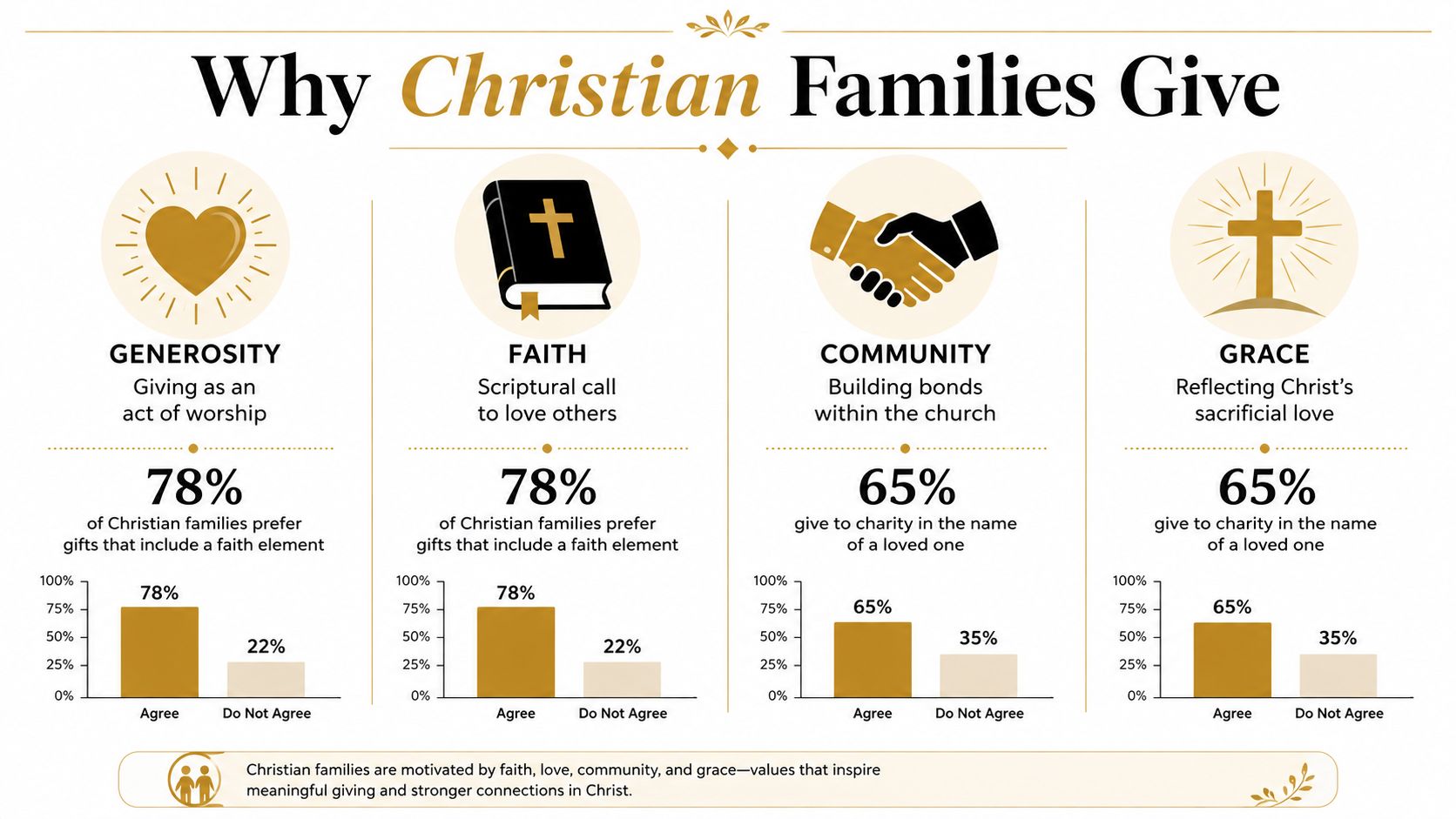
Christian families don't just give because a calendar says it's time. They give because generosity sits inside the rhythm of faith, household life, and church life. That's why a gift for a baby shower can feel connected to the same values that shape Christmas giving, baptism gifts, and the quiet habit of supporting people in need.
The scale of that culture matters. In the United States, religion remains the largest charitable category, with Americans giving roughly $145 billion a year to religious organizations, about a quarter of all charitable giving. In the UK, Christians give an average of £124 per month, or 5.3% of income, and the most committed Christians give £314 per month, or 11.2% of income. Those aren't random numbers, they show that faith-based giving is already woven into a steady pattern of intentional generosity, not a seasonal fad. The source that lays out those figures is Stewardship's report on how much Christians give.
Give in a way the family can receive
That's the true test. A Christian family gift should feel gracious, not awkward. It should fit the household's stage of life and their actual space, because a family with a newborn has very different needs than a family with school-age kids or a church nursery director.
Match the gift to the meaning of the moment
A baptism, dedication, Christmas morning, or first birthday all carry different emotional weight. Don't flatten them into the same generic item with a verse on it. Give something that makes sense for the occasion, then let the faith element support the moment instead of overpowering it.
A helpful question to keep in your head is simple. Can this family receive it gracefully and use it well? If the answer is yes, you're probably on the right track. The internal devotional guide at Little Venture Co.’s devotional page fits that same mindset, faith expressed through something families can live with.
Choosing the Right Gift for Every Family Member
Babies, toddlers, parents, grandparents, church groups. They all need different things, and buying the wrong kind of “meaningful” gift is how you end up with a decorative item nobody asked for. The smartest shoppers choose by role first, then by sentiment.
Babies and toddlers need comfort, not clutter
For little ones, I'd buy soft sleepwear, a blanket, or a simple outfit that's easy to wash and gentle on skin. Skip oversized toys that make more noise than joy, and skip anything with fiddly parts that parents have to keep moving out of the way. A baby shower gift should make the home easier, not busier.
Parents want relief
Parents rarely need another object for a shelf. They need something that helps them get through the day. Coordinated pajamas, a practical wrap, or a useful keepsake that marks a dedication or baptism can land well because it acknowledges the child without adding another thing to manage.
Grandparents usually want something they can keep
They're often the easiest audience and the hardest to impress at the same time. A framed blessing, a special Bible, or a quality item they can hand down tends to work better than novelty decor. They usually want something they can talk about, use during visits, or save for later.
Church groups need simplicity
If you're buying as a class, women's ministry, or nursery team, stay neutral and batch-friendly. Choose items that are easy to coordinate, easy to wrap, and easy for multiple families to appreciate without anyone feeling singled out. Think matching baby essentials, small faith-focused gifts, or practical items that work for several ages.
A thoughtful Christian gift starts with the person, not the product.
The product only earns its place after you've asked who it's for and how they'll live with it.
Safety and Materials Every Parent Should Check
If the gift is for a baby or toddler, I read the label before I admire the design. Cute is fine, but cute does not make a fabric safe, and it does not make a rough seam comfortable for a child or reassuring for a parent.
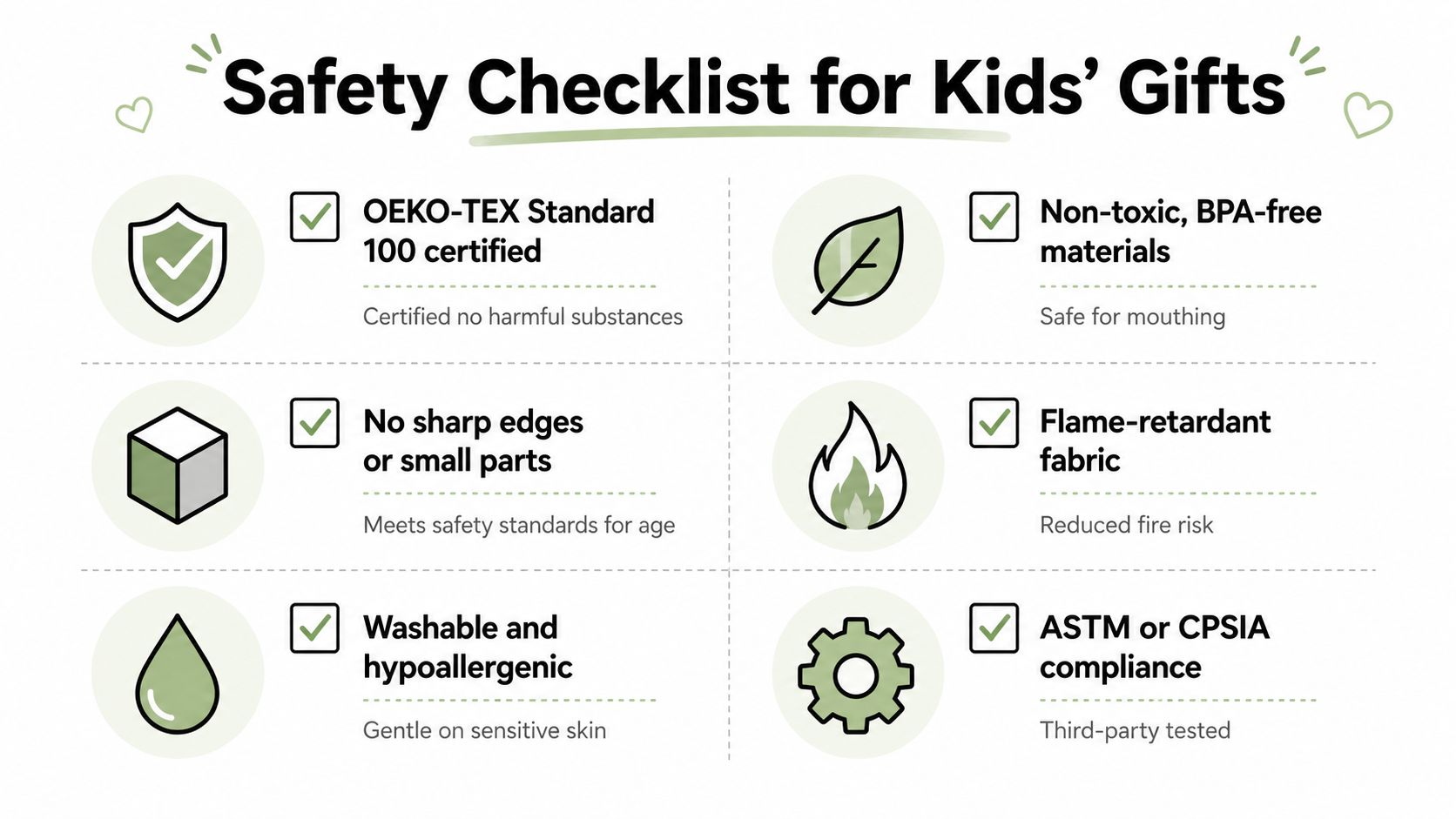
Read the product page like a nutrition label
OEKO-TEX Standard 100 is the clearest safety shorthand to look for because it checks every part of a textile product, including thread, buttons, and trims, against more than 1,000 regulated and unregulated chemicals that may be harmful to human health. For babies and toddlers, that matters because the highest-contact layers are the ones most likely to drive exposure through skin contact, mouthing, and perspiration. The plain-language explanation and product context are covered in the OEKO-TEX Standard 100 guide.
Focus on the parts parents actually feel
Bamboo viscose gets attention for a reason. It is often chosen for softness and comfort in children's wear. Softness alone still misses the point. I want to know whether the garment has smooth seams, sensible closures, and clear wash care, because those details decide whether the item stays in rotation or gets abandoned after one rough night.
Watch for marketing fluff
A cute faith message does not make a garment safer. A pretty mockup of a baby in a peaceful nursery does not help either. Ask what the item is made from, what parts touch the skin, and how it is finished. If the listing is vague, that is a warning sign, not a gap to fill with optimism.
A simple checklist works every time, certification, fabric source, closures, wash care, and manufacturer details. For an example of how a faith-inspired children's wear brand can combine those priorities, the internal guide on what OEKO-TEX Standard 100 means is worth reading before you buy.
Matching Gifts to Faith Milestones and Seasons
Occasion matters. A baby shower, a baptism, and Christmas all ask for different kinds of thought, and the best gifts respect that difference instead of pretending one item works everywhere.
| Occasion | Best Recipient Fit | Gift Format That Works |
|---|---|---|
| Baby shower | Parents preparing for newborn life | Sleepwear, swaddle-type essentials, nursery-friendly items |
| Christening or dedication | Baby and parents together | Keepsake plus one useful clothing item |
| Baptism | Child and family | Soft outfit, Bible, or heirloom-style gift |
| Christmas | Whole family | Coordinated wear, story-based gift, or shared tradition item |
| Easter | Young children | Small faith-inspired item paired with a simple treat |
A baby shower should lean practical. That's the moment for things the parents can use immediately, especially if they're preparing for long nights and a lot of laundry. A christening or dedication gives you room for a keepsake, but I'd still pair it with something functional so the gift doesn't become display-only.
Christmas is where families often relax a little and enjoy something more symbolic. That's a good time for heirloom-style pieces, coordinated family gifts, or items that support a holiday ritual. Easter works better with small faith-centered surprises than with anything oversized or expensive.
The mistake people make is buying for the event and forgetting the child. The right gift has to fit both the occasion and the age of the recipient. That's why a baby shower gift should feel useful, a baptism gift should feel lasting, and a Christmas gift should feel warm enough to belong in the family's story.
Budget Tiers That Still Feel Generous
A lot of people freeze up when money comes into the picture. Don't. A Christian family gift doesn't have to be expensive to feel sincere, it just has to be chosen with care.
Thoughtful under $25
I'd buy one small, useful thing and make it feel intentional. A soft accessory, a simple keepsake, or a practical baby item can feel generous if it's well made and tied to the occasion. Skip cheap decor and anything that looks like it was bought in a panic at checkout.
Meaningful $25 to $75
This is the sweet spot for most family gifts. You can get a coordinated outfit, a nicer blanket, a personalized piece, or a book that the parents will read. This tier gives you enough room to avoid disposable-looking items without overreaching.
Heirloom $75 and up
Use this tier when you want the gift to last. A quality Bible, premium children's wear, or a keepsake blanket belongs here. These are the gifts people save, hand down, and remember.
My rule: spend less on the packaging and more on the thing that stays.
Even in the smallest budget tier, you can make the gift feel personal with a handwritten note, a prayer, or a specific reason you chose it. That little extra effort matters more than a bigger price tag.
Gifts That Give Back and Carry a Mission
A good Christian family gift can do more than sit pretty on a shelf. It can carry a real mission, and that matters for families who care about stewardship, service, and whether their purchases reflect their values.
Mission-linked gifts usually fall into two buckets. One is a donation made in someone's name. The other is a product from a brand that gives part of each sale to a cause, which works better for everyday gifting because the parent still gets something useful right away.
Little Venture Co. is a clear example of that model. The brand contributes a portion of every sale to Heartbeat International, which aids pregnant women in need globally, and its children's wear uses Oeko-Tex Standard 100 certified bamboo viscose. That pairing matters because the gift still functions as baby clothing, while the purchase also supports a cause the buyer can stand behind. The brand's own page at Little Venture Co. explains that mission connection plainly.
What to look for before you buy
Start with the cause, and make sure it is named directly. You should be able to see how the brand gives, who benefits, and what part of the purchase supports the mission. If you want a wider look at companies built around that approach, mission-driven companies is a useful place to start.
Then check the product itself. A gift should still hold up as a baby shower or Christmas present even if the cause is stripped away from the pitch. If the item is practical, well made, and fits the family's day-to-day needs, the mission element becomes a bonus instead of a distraction. For more language on cheerful, mission-minded generosity, the HolyJot guide to generous giving is a helpful companion.
The best gifts in this category do not try to make the buyer feel guilty. They let you choose something a family will use, while also backing a company that gives in a way you can explain without stretching the truth. That is a much better fit than a token item with a vague promise of goodness.
Practical Tips for Wrapping, Group Orders, and Registry Etiquette

Wrapping matters, but don't turn it into performance art. Simple paper, twine, and a handwritten card usually feel more thoughtful than oversized bows and layers of ribbon that end up in the trash. If the gift is for a baptism or dedication, a short note or prayer gives it more weight than fancy packaging ever will.
Group gifts work best when one person takes charge early. Church classes and extended families should decide the budget, the item, and who's ordering so no one duplicates effort or buys a stray add-on that ruins the plan. If the gift is personalized, order early and stop treating “later” as a strategy.
Registry etiquette is easier than people make it. If the family has listed practical essentials, use that as your base and then add one faith-informed choice if it fits. If the registry leans generic, you can still choose something more values-aligned, but keep it useful. Nobody wants to unwrap a beautiful object that fights with the rest of their home.
For screenshot-level simplicity, keep this in mind.
- Choose one useful item: Pick something the family will use in the nursery, crib, stroller, or daily routine.
- Add one personal touch: Include a verse, a note, or a prayer if it fits the family.
- Respect the timing: Personalization and made-to-order pieces take planning, so don't wait until the week of the shower.
- Skip clutter: If it's decorative only, it needs to be exceptional or it probably isn't worth buying.
Christian family gifts are supposed to bless people, not impress them.
If you want a gift that feels faith-filled without becoming fussy, Little Venture Co. is worth a look for soft bamboo sleepwear and daywear made for babies and toddlers. Their pieces fit the exact use case this guide is about, practical, gentle, and tied to a cause that matters. Visit Little Venture Co. and choose something that the family can wear, wash, and keep using.