

Bamboo Clothing Eco Friendly: A Parent's Guide
The baby is finally asleep, but you're still awake, wondering whether the warm pajamas, scratchy seam, or mysterious “bamboo” label has anything to do with the fussing. You want clothing that feels gentle against delicate skin, holds up through repeated washing, and reflects your responsibility to care for creation and the people involved in making it.
That's why bamboo clothing eco friendly searches can feel so promising. Bamboo sounds like the ideal answer: a fast-growing grass, a soft fabric, and a natural alternative to harsher-feeling materials. But the word bamboo on a product page describes the starting plant, not necessarily the way manufacturers turned that plant into fabric.
For parents, the most useful question isn't just, “Is bamboo sustainable?” It's, “What kind of bamboo fiber is this, how was it processed, and what has been verified?”
Why Bamboo Baby Clothes Feel Like a Holy Grail
At two in the morning, softness matters. A baby's sleeper needs to move easily, feel smooth under a chin, and avoid adding bulk when you're already balancing a tired child, a blanket, and your own patience. Bamboo garments have earned a loyal following because many parents notice that the fabric feels light, silky, and comfortable against skin.
That appeal makes sense. Bamboo clothing is often chosen for sleepwear, rompers, and base layers because the fabric can feel breathable and flexible. Parents who are managing sensitive skin may also prefer a smooth textile that doesn't feel rough or stiff. These are practical comfort reasons, not just lifestyle branding.
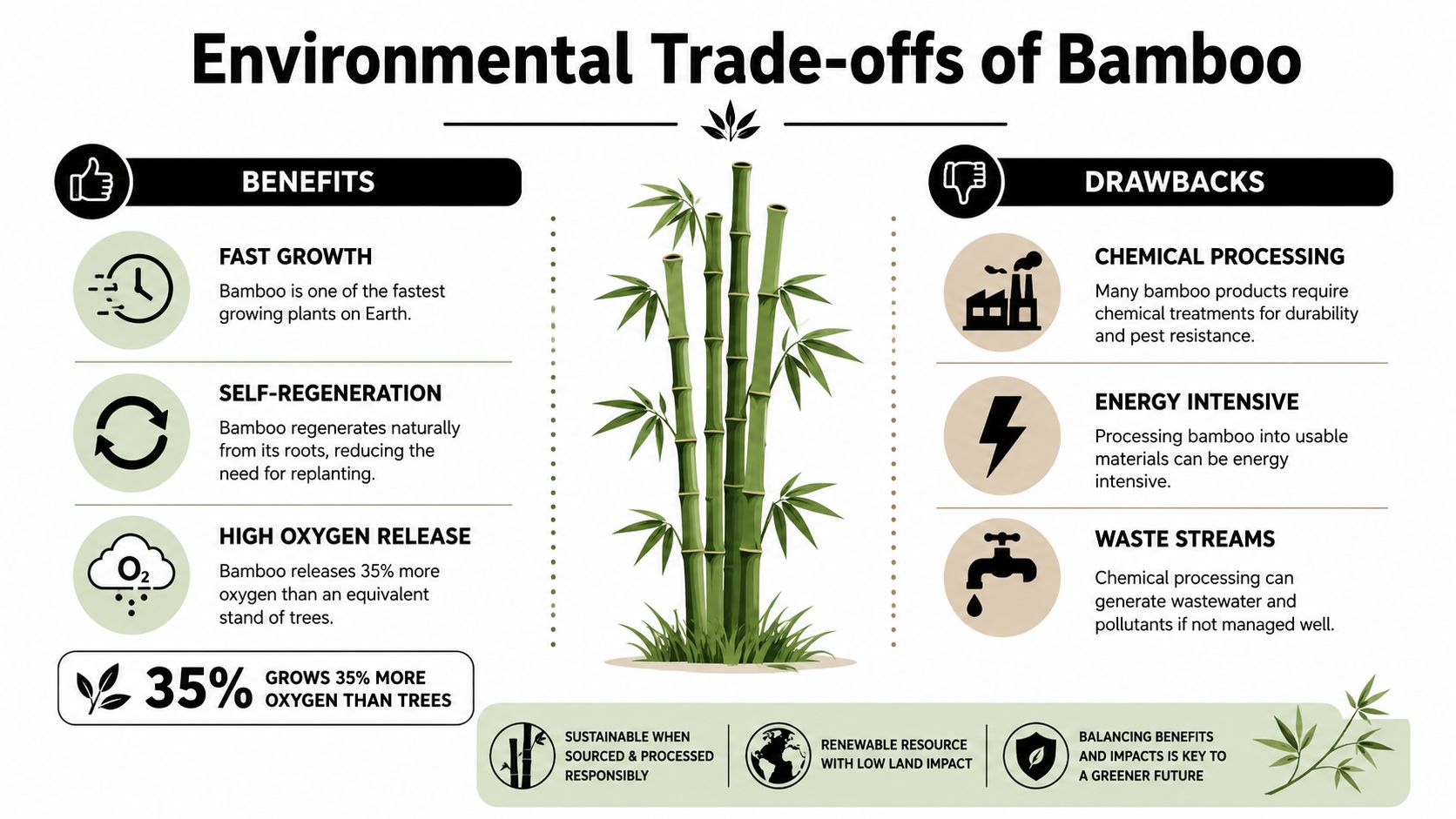
There's an ethical reason for the enthusiasm, too. Bamboo cultivation has a strong sustainability case at the crop stage. Independent reporting describes bamboo as a fast-growing grass that can regenerate from its own roots without replanting, and it generally doesn't need synthetic fertilizers or pesticides during cultivation. Bamboo can also sequester more carbon than many trees, while Euronews' coverage of bamboo cultivation reports that bamboo releases 35% more oxygen than trees of the same size.
Why parents still need to pause
The emotional appeal is easy to understand. You're trying to choose comfort, safety, and stewardship in one purchase. Yet those values can pull in different directions if a brand highlights the plant and stays vague about the manufacturing process.
A soft bamboo romper may be made from bamboo viscose, which is a regenerated cellulose fiber created through chemical processing. Another garment may use bamboo lyocell, made through a different system designed to recover solvents. Mechanically processed bamboo is another category altogether, and it usually has a different texture and production profile.
The helpful mindset: bamboo can be a responsible crop without every bamboo garment being a responsible textile.
That distinction doesn't make bamboo clothing a bad choice. It gives you a better question to ask before buying, especially for babies and toddlers who wear clothing close to their skin for long periods. Comfort is a valid priority. So are chemical safety, honest labeling, durability, and the treatment of workers and wastewater.
What Bamboo Clothing Actually Means at the Fiber Level
Think of bamboo fabric like applesauce. The ingredient list starts with an apple, but the final product depends on what happens in the kitchen. Was the apple peeled and pressed, or was it dissolved, filtered, mixed, and transformed into something with a completely different texture?
Bamboo fiber works in a similar way. The plant is the raw material, while the processing route determines what you're wearing.
Bamboo viscose or rayon
Bamboo viscose, also called bamboo rayon, is the type most shoppers encounter in soft baby pajamas and everyday clothing. Manufacturers extract cellulose from bamboo pulp and regenerate it into fibers. The process commonly involves chemicals such as carbon disulfide and sodium hydroxide, which is why the U.S. Federal Trade Commission has warned that products marketed as bamboo fabric may be rayon or viscose made with chemicals that affect the environmental claim.
This doesn't mean the finished garment automatically contains those processing chemicals in a harmful amount. It does mean the plant's natural qualities don't tell you enough about factory practices, chemical handling, or wastewater treatment. The FTC's concern is also about labeling. Calling a rayon garment simply “bamboo” can make shoppers assume they're buying mechanically processed plant fiber when they aren't.
For a plain-language explanation of this category, see what bamboo viscose fabric means.
Bamboo lyocell
Bamboo lyocell also begins with bamboo cellulose, but the manufacturing system is designed around solvent recovery. Closed-loop systems can recover more than 99% of solvent, according to independent coverage of bamboo processing and lower-impact textile routes at this bamboo fiber processing overview.
“Closed-loop” means the solvent is captured and reused rather than continually discharged as waste. That doesn't turn the garment into a perfect environmental choice, but it gives you a meaningful process detail to look for. A brand that names lyocell and explains its solvent recovery is communicating more than a brand that only says “made from bamboo.”
Mechanically processed bamboo
Mechanically processed bamboo is closer to the kitchen analogy's pressed apple. Manufacturers work the plant material into fiber through physical and mechanical steps instead of dissolving the cellulose into a viscose solution. This route can preserve more of the original plant character, but the resulting fabric is generally less silky and may feel coarser than bamboo viscose.
The label may use terms such as bamboo linen or mechanically processed bamboo, but wording varies. Ask the brand to clarify the exact fiber name and process rather than relying on the word “natural.”
A good product page should answer three questions:
- Fiber type: Is it viscose, rayon, lyocell, or mechanically processed bamboo?
- Processing method: Does the company describe solvent recovery, wastewater treatment, or chemical controls?
- Certification scope: Does a certification address the finished garment, the organic supply chain, or the company's broader practices?
The Honest Environmental Trade-offs Parents Should Weigh
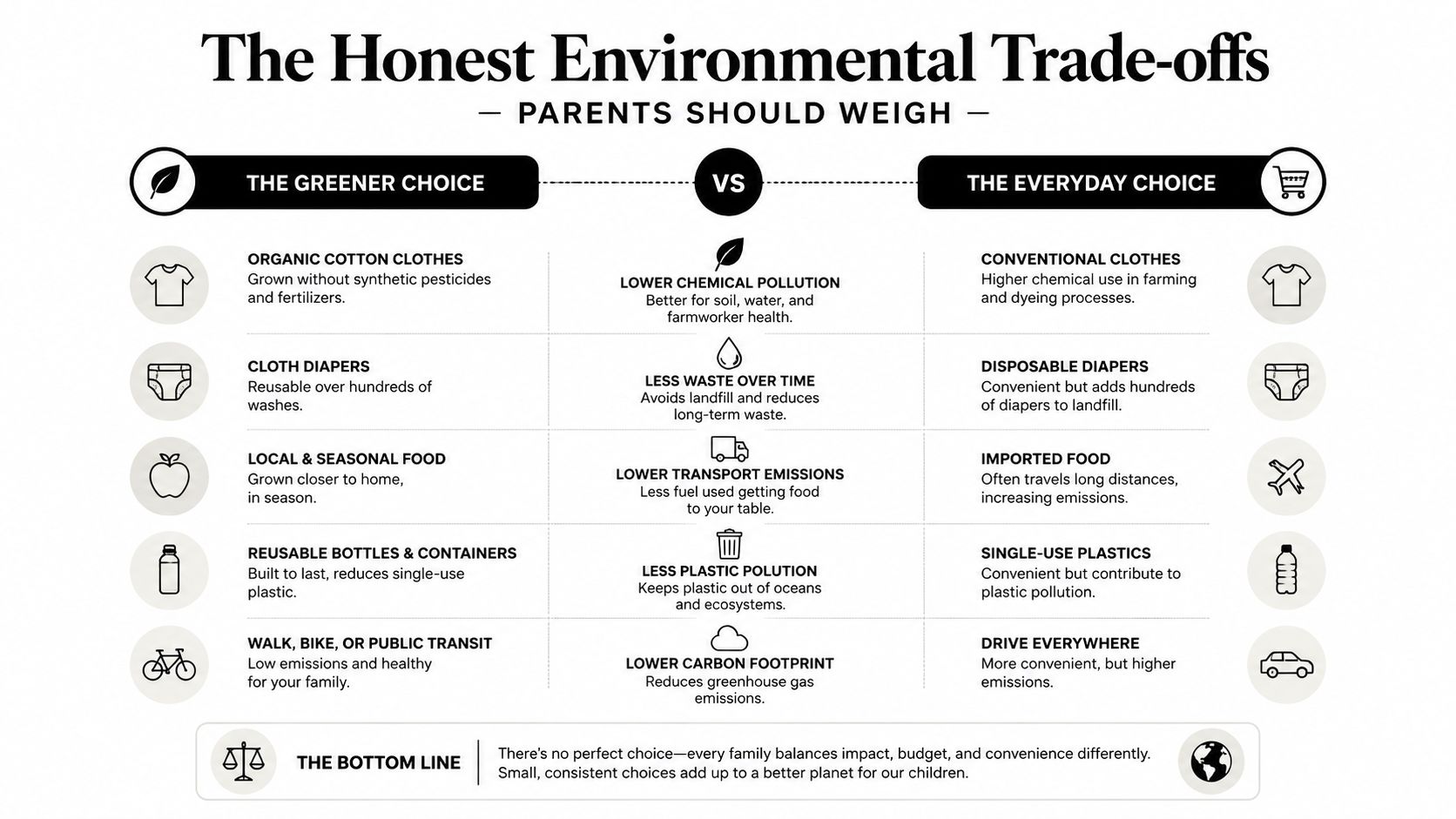
Bamboo's environmental story changes as soon as the stalk leaves the field. At cultivation, the crop can regenerate from its roots without replanting and generally doesn't need synthetic fertilizers or pesticides. At the factory, manufacturers may use energy, solvents, water, dyes, and finishing treatments.
That's why the phrase bamboo clothing eco friendly needs a process qualifier. A plant can be low-input while the fiber conversion remains chemically intensive.
A recent industry comparison reported bamboo viscose water use at about 3,000 to 5,000 liters per kilogram of fabric, compared with 10,000 to 20,000 liters for conventional cotton and 7,000 to 10,000 liters for organic cotton. The same comparison estimated bamboo viscose carbon emissions at 1.5 to 3.0 kilograms of CO2e per kilogram of fabric, versus 2.5 to 5.0 kilograms for conventional cotton and roughly 1.8 to 3.5 kilograms for organic cotton. These figures come from a bamboo textile comparison, and they describe particular comparisons, not a universal score for every garment.
The hidden cost is the conversion stage
The biggest overlooked issue is chemical management. The FTC warns that bamboo-to-rayon processing typically uses toxic chemicals, so the crop's advantages can be weakened when a factory lacks strong controls for recovery, worker protection, and wastewater.
That doesn't make cotton automatically better. It means you need to compare complete systems rather than comparing the word “bamboo” with the word “cotton.” A garment made from organic cotton has its own agricultural and manufacturing considerations. A bamboo lyocell garment has a different process from bamboo viscose. A blend adds another layer because synthetic components can affect recycling and end-of-life options.
For broader family purchasing decisions, an eco-friendly baby products guide can help you consider clothing alongside other items your child uses every day.
End-of-life isn't as simple as “biodegradable”
A bamboo garment may be plant-derived, but the finished item can include dyes, prints, finishes, elastic, or synthetic blends. Biodegradability depends on the complete garment, not just the original crop. A viscose fiber may also shed during washing, and disposal through ordinary textile systems doesn't guarantee that it will compost in your backyard.
Research discussed by the American Chemical Society on plant-based fabrics found environmental toxicity concerns in laboratory exposure studies involving plant-based viscose fibers, including reduced earthworm reproduction at environmentally relevant concentrations. “Plant-based” describes origin. It doesn't guarantee harmlessness at every stage.
For parents, the most responsible choice is usually a garment that is safe, durable, well constructed, and worn for a long time. Read more about the practical differences in organic cotton versus bamboo clothing.
Reading Certifications Without Losing Your Mind
Certification labels can look like alphabet soup on a baby clothing page. The trick is to ask what each label verifies, then stop asking it to prove something outside its scope.
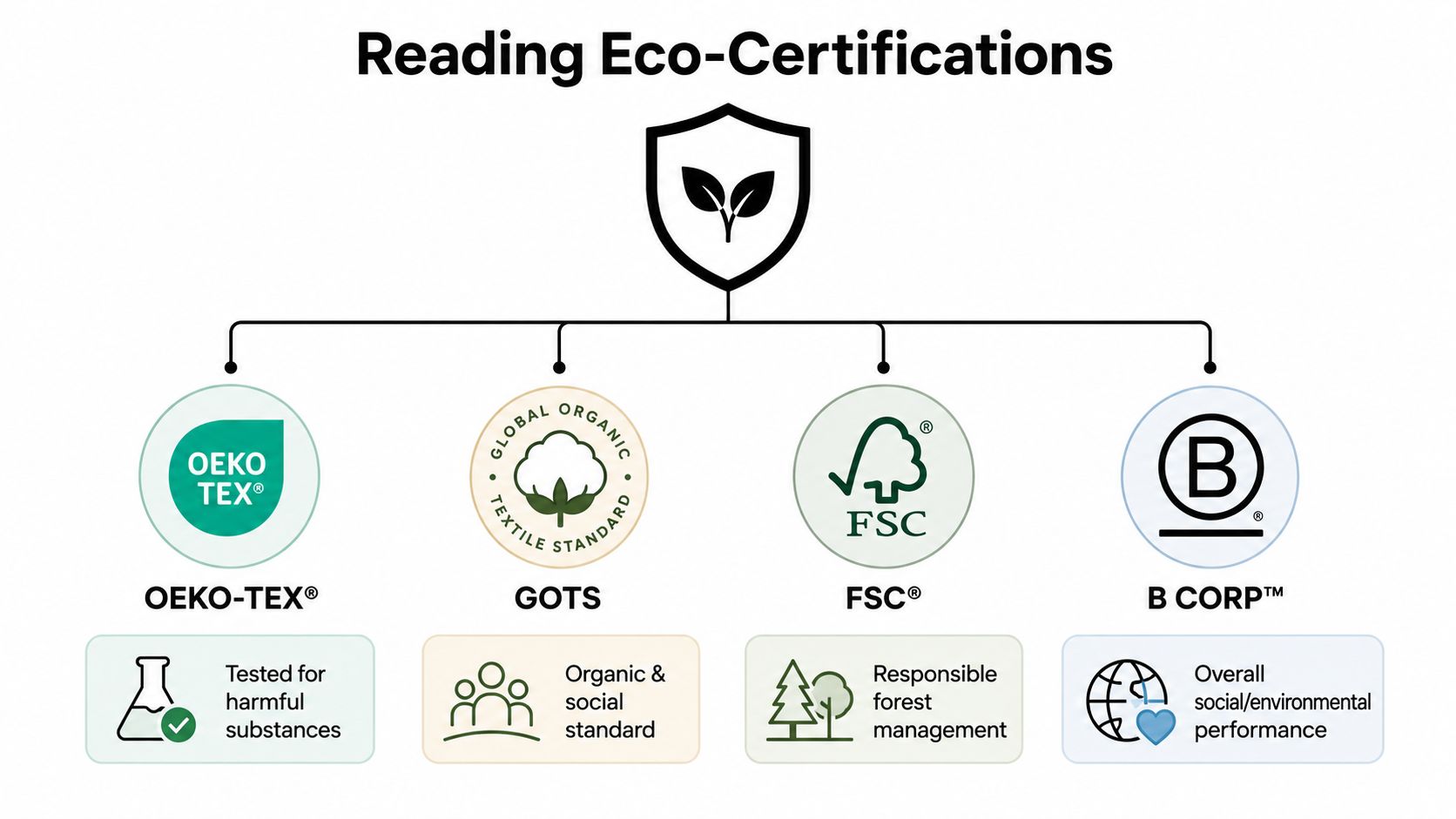
OEKO-TEX Standard 100 is the most immediately relevant label for skin-contact safety. It tests the finished product for harmful substances. That's useful for a pajama or bodysuit, especially when the garment rests against a baby's skin for hours. It doesn't certify that the bamboo was organically grown, and it doesn't prove that the manufacturing process had a low environmental impact.
You can find a plain-language breakdown in this guide to OEKO-TEX Standard 100.
Match the label to your priority
| Label | What it can help verify | What it doesn't prove |
|---|---|---|
| OEKO-TEX Standard 100 | The finished product has been screened for harmful substances | Organic status or low-impact production |
| GOTS | Organic textile requirements and social and environmental standards across the chain | That every bamboo garment meets the standard |
| FSC | Responsible forest management or sourcing claims where applicable | Finished-garment chemical safety |
| B Corp | A company's broader social and environmental performance | That a particular fabric is organic or chemical-free |
The most important distinction is between product safety and lifecycle sustainability. A bamboo viscose sleeper can pass a finished-product safety screen while the factory still needs to explain solvent use, recovery systems, and wastewater treatment.
What to ask beyond the logo
If a brand lists OEKO-TEX, look for the certificate or certification details rather than treating the logo as a complete environmental report. Then check whether the company names the fiber as viscose or lyocell and explains how its facility manages processing chemicals.
If your first concern is sensitive skin, start with finished-product safety. If your priority is the garment's full environmental profile, look for process transparency as well. You're not looking for a flawless label. You're looking for a brand that can distinguish what it knows from what it's merely implying.
A useful rule: one certification can answer one question well. It rarely answers every question you have.
Practical Care and Safety for Babies and Toddlers
A responsibly chosen garment still needs responsible care. Gentle washing protects the fabric's usable life, and longer use matters because replacing worn clothing creates more demand for materials, labor, energy, packaging, and transport.
Start with the care label. In general, bamboo garments benefit from cool or cold water, a gentle cycle, and low heat or air drying. Avoid bleach and harsh treatments unless the manufacturer specifically says they're suitable. High heat can stress soft regenerated fibers, weaken stretch, and change the garment's shape.
For a baby with sensitive skin, keep the routine boring. Use a mild detergent, skip strongly scented fabric softeners, and wash new clothing before the first wear. If redness, itching, or a rash appears, stop using the garment and speak with your child's healthcare professional. “Hypoallergenic” is a marketing claim unless the brand explains what it means and supports it with relevant testing.
A realistic bedtime-to-laundry routine
- Before dressing: Check snaps, zippers, cords, loose threads, and rough seams. Remove a garment if a fastener is loose or a thread could wrap around a finger or toe.
- After messy meals: Treat stains promptly with cool water and a mild product compatible with the care label. Aggressive scrubbing can damage soft fibers.
- On wash day: Turn garments inside out, use a gentle cycle, and don't overload the machine. This reduces friction and tangling.
- While drying: Air dry when practical, or select low heat. Reshape knit pieces while damp rather than stretching them on a hanger.
- Before passing along: Inspect the fabric for thinning, broken closures, persistent odors, or damage that could affect safety. Donate or hand down only pieces that remain clean, functional, and wearable.
Bamboo viscose can shed fibers during laundering, so washing gently and avoiding unnecessary wash cycles is sensible. For a closer look at comfort and sensitive-skin considerations, see this guide to bamboo pajamas for babies with sensitive skin.
The most sustainable sleeper is often the one your child wears repeatedly, washes well, and passes to another family before it reaches the end of its useful life.
What to Look For as an Eco-Conscious Christian Parent
Stewardship gets practical at the clothing rack. Caring for creation includes asking how a fiber is grown, how workers handle the process, what enters wastewater, and whether a garment is made well enough to serve more than one child.
That doesn't require suspicion toward every small brand or perfection in every purchase. It means using a repeatable set of questions so a cheerful label doesn't make the decision for you.
A four-question brand check
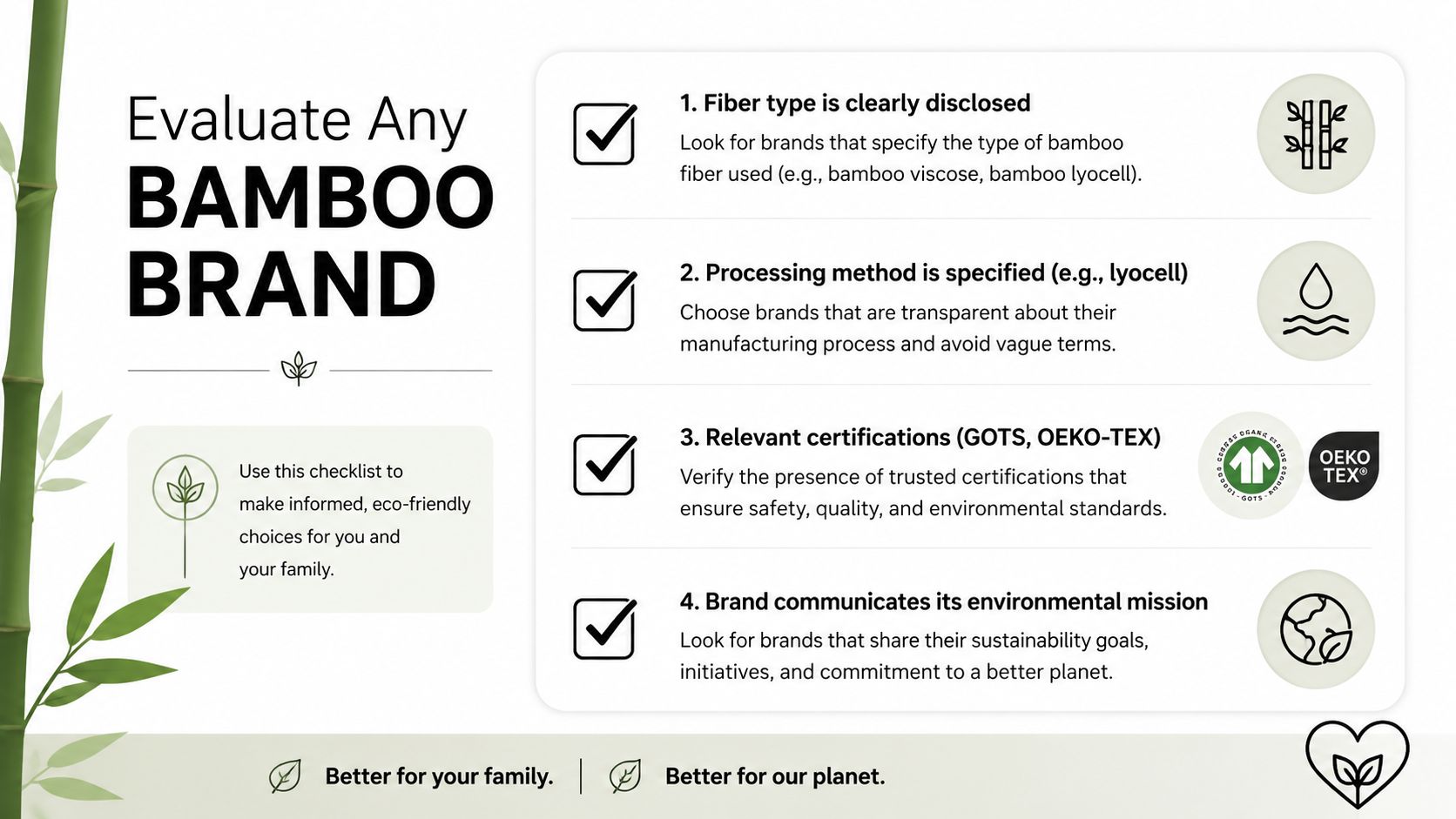
1. What fiber is in the garment?
Look for bamboo viscose, bamboo rayon, bamboo lyocell, or mechanically processed bamboo. If the page only says “bamboo fabric,” send a polite message asking for the technical fiber name.
2. What does the brand disclose about processing?
A thoughtful answer may mention closed-loop solvent recovery, wastewater treatment, or the facility responsible for fiber conversion. Silence doesn't prove wrongdoing, but it gives you less information to weigh.
3. Which certification matches your concern?
For skin-contact safety, look for OEKO-TEX Standard 100 and verify that it applies to the finished product. For broader organic and supply-chain standards, investigate whether GOTS applies to the specific item. Don't treat FSC or B Corp as substitutes for finished-product chemical testing.
4. Will the garment survive real family life?
Check stitching, closures, seams, stretch recovery, and care instructions. A garment that becomes unusable after a short period may be less responsible than a slightly less fashionable piece that can be washed, handed down, and worn again.
Questions you can ask without making it awkward
Try, “Can you tell me whether this is bamboo viscose or bamboo lyocell?” You might also ask, “Does the certification cover the finished garment?” and “What information can you share about chemical recovery and wastewater treatment?”
These questions work for a baby shower gift, a church nursery order, or a family clothing purchase. They also keep faith and consumer responsibility connected. The people making a garment and the places receiving its waste are part of the story, even when they aren't visible on the product page.
How Little Venture Co Approaches These Standards
Little Venture Co. offers bamboo viscose sleepwear and daywear for babies and children, including zip rompers and two-piece sets. The company describes its materials as OEKO-TEX Standard 100 certified, which fits the skin-contact safety priority discussed earlier. That certification addresses harmful substances in the finished product. It doesn't, by itself, verify organic status or prove that bamboo viscose was produced through a low-impact process.
That distinction is important because it lets you evaluate the brand. If your immediate concern is what rests against a baby's skin during sleep, finished-product testing is relevant. If you also want a complete environmental picture, you can still ask about fiber processing, solvent recovery, wastewater treatment, blending, and garment construction.
A mission that includes people
Little Venture Co. also connects its business mission with support for pregnant women through a partnership with Heartbeat International, contributing a portion of every sale to help pregnant women in need globally. That social purpose doesn't replace material or factory transparency, but it adds another dimension to the stewardship conversation.
For Christian parents, this is a useful model. A purchase can be assessed through several lenses at once: Is the garment comfortable? Is the finished product tested? Is the fiber clearly named? Can the clothing withstand repeated use? Does the company communicate how it treats people and the wider world?
Little Venture Co. gives shoppers one concrete example to examine against those questions. You can use the same yardstick with any bamboo brand, whether you're shopping for your own toddler, buying a meaningful baby shower gift, or helping furnish a church nursery.
The clearest conclusion is also the most honest one. Bamboo clothing can be a comfortable and responsible choice, but the answer depends on the fiber type, manufacturing process, safety testing, durability, and care. A parent doesn't need to solve the entire textile industry before buying pajamas. You need enough information to choose thoughtfully and avoid letting one attractive word do all the work.
If you're looking for faith-inspired bamboo viscose sleepwear and daywear with OEKO-TEX Standard 100 certified materials, explore Little Venture Co. to find soft options for babies and toddlers. Choose a garment that fits your family's comfort needs, then use the questions in this guide to keep your purchasing decisions aligned with safety, stewardship, and care for others.