

Affordable Quality Clothes for Your Little One
You're probably here because you've bought the “cute and cheap” outfit before. It looked perfect on the hanger, sweet in the nursery drawer, and surprisingly affordable. Then one wash later, the color looked tired, the fabric felt rough, and the snap closure already seemed flimsy.
That kind of disappointment adds up fast when you're dressing a baby who goes through multiple outfit changes a day. The good news is that finding affordable quality clothes doesn't mean buying the most expensive option on the rack. It means learning how to spot the pieces that stay soft, hold their shape, and give you peace of mind every time you pull them out of the dryer.
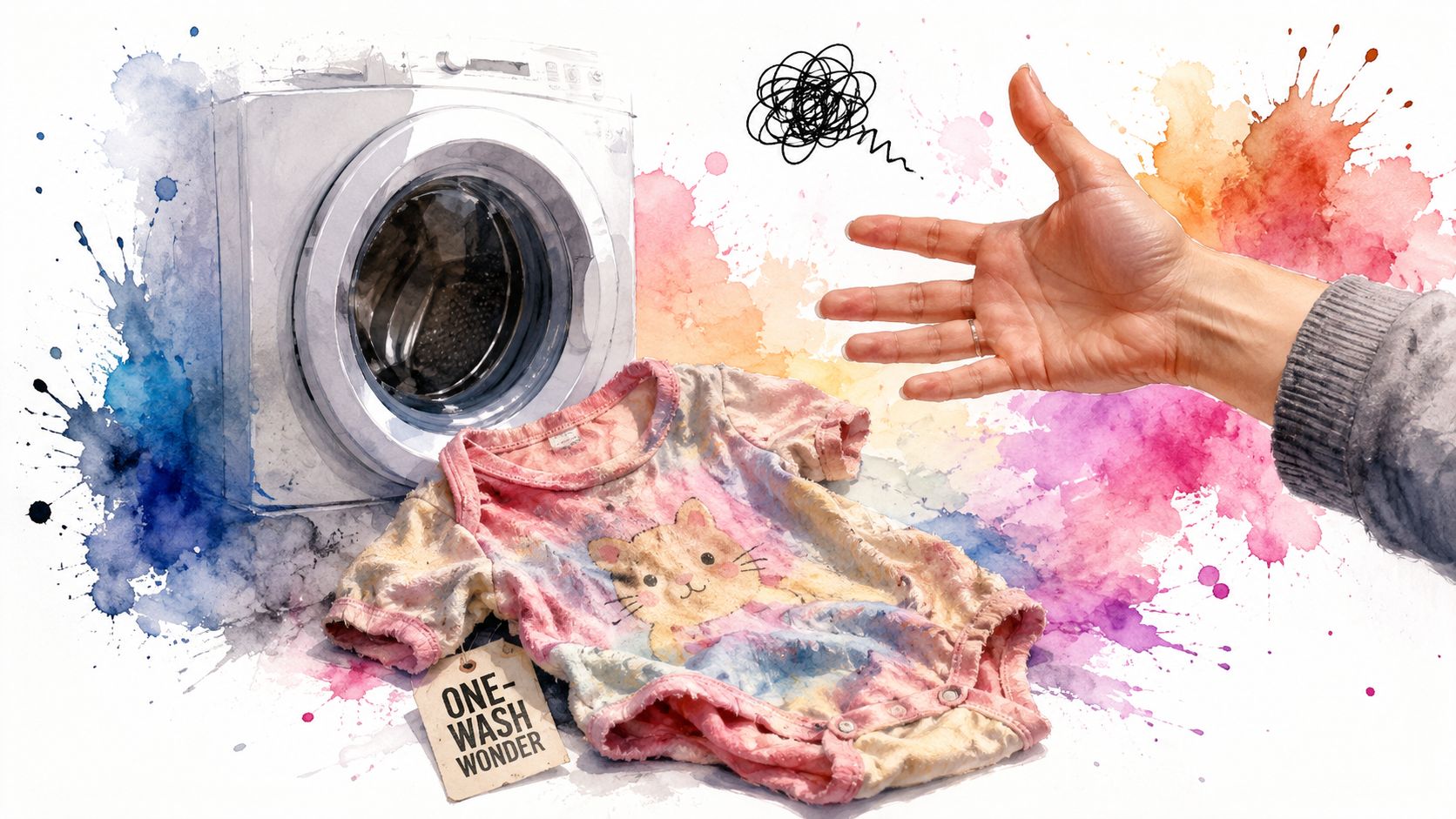
The End of the One-Wash Wonder
A lot of parents learn this lesson the same way. You grab a little bundle of baby basics because the price looks great. The prints are adorable, the fabric seems fine in the store, and you feel like you made a smart call. Then laundry day happens.
One onesie twists at the seams. Another shrinks just enough to fit awkwardly. A sleeper that looked buttery soft now feels scratchy, and the knees on the little pants already look tired. That “deal” doesn't feel like a deal anymore when you're replacing it almost immediately.
Cheap and affordable are not the same thing
Cheap is about the sticker price. Affordable is about what the item costs you over time.
That's where cost per wear becomes so helpful. If a baby sleeper costs less but loses shape after a few washes, you didn't save money. You just delayed spending more. A slightly better-made piece often ends up being the calmer, wiser buy because you keep reaching for it again and again.
Practical rule: If you already suspect an item won't survive regular washing, it isn't affordable. It's temporary.
The bigger clothing industry tells the same story. Earth.Org's fast fashion waste overview notes that clothing production doubled from 100 to 200 billion units annually over the last two decades, while the average number of times an item is worn decreased by 35% to 36%. The same source says the industry discards 92 million tons of clothing-related waste annually, and 65% of garments are thrown out within a year of purchase.
A smarter way to shop
As parents, we don't need more throwaway clothes. We need the handful of pieces that make busy mornings easier.
That might mean buying fewer items, checking fiber content before tossing something into the cart, and watching for discounts on pieces that are worth owning. If you like stretching your budget with promo searches, resources like get Iconic codes from Cashback Australia can help you look for savings without defaulting to the lowest-quality option.
The goal isn't to spend more for the sake of spending more. It's to stop paying twice for the same baby outfit.
What Quality Really Means for Baby Clothes
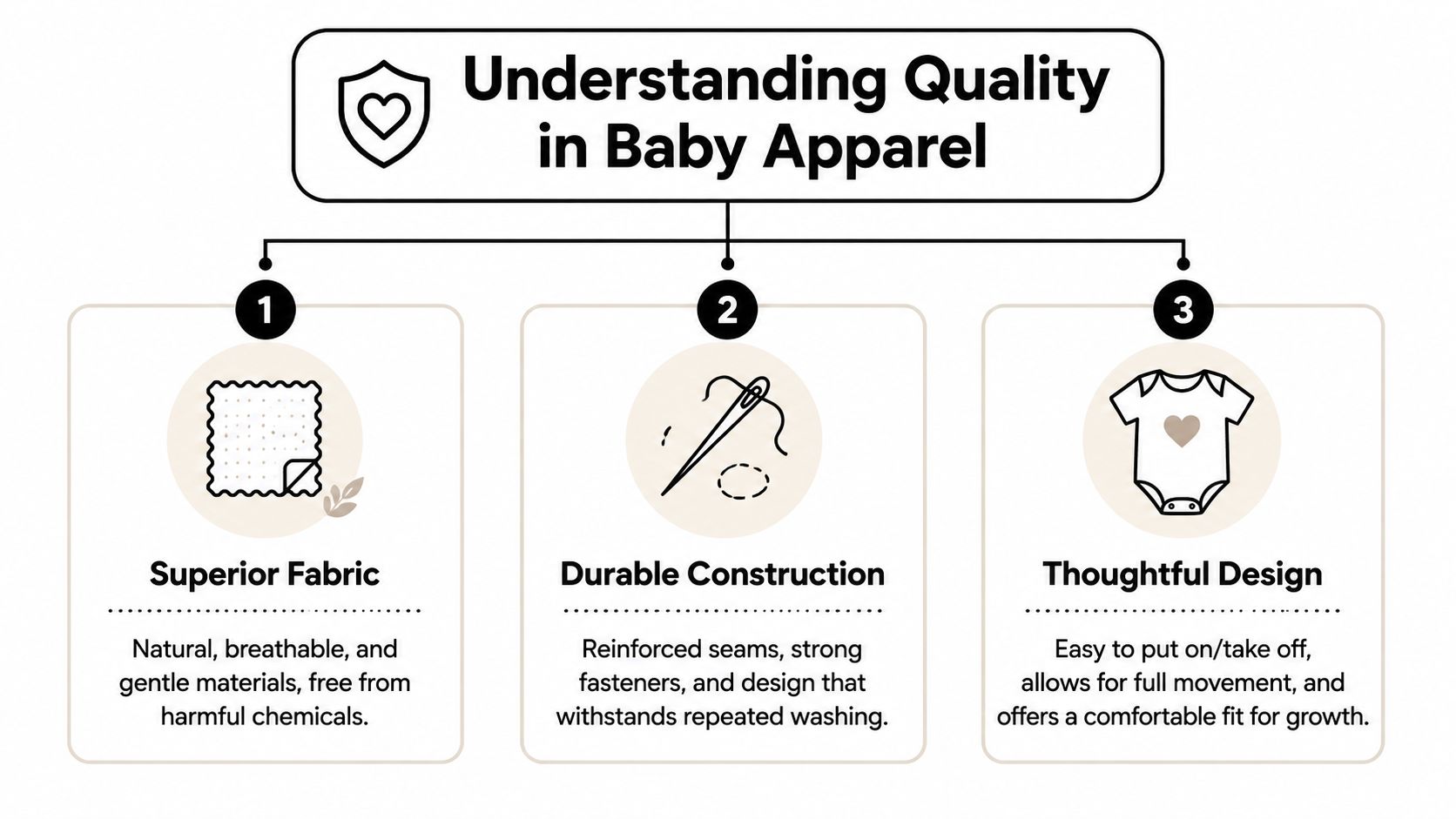
When people say “quality,” it can sound vague, almost like a marketing word. For baby clothes, it's much simpler than that. Consider building a small house: you need solid materials, careful construction, and a proper safety check.
Start with the fabric
The fabric touches your baby's skin all day and all night. If the material feels stiff, traps heat, or pills quickly, you'll notice it almost immediately.
That's one reason so many shoppers lean toward natural-feeling fibers. The Cotton Incorporated Consumer Lifestyle Monitor found that 77% of consumers believe better quality garments are made from natural fibers. The same survey says 44% of shoppers would pay more for better quality apparel, and 52% feel their recent clothing purchases do not last as long as they used to.
Those numbers line up with what many parents already feel in real life. Softness matters, but so does staying power after repeated wear and washing.
Construction is where clothes prove themselves
Two baby outfits can look nearly identical online. One lasts. One doesn't.
The difference often shows up in the details:
- Seams: Smooth, sturdy seams help clothes keep their shape.
- Fasteners: Snaps and zippers should feel secure, not flimsy.
- Trim and edges: Necklines, cuffs, and footies need to bounce back after washing.
- Fit design: A good cut gives babies room to move without sagging awkwardly.
A well-made sleeper doesn't need to be fancy. It just needs to hold up to real family life.
Safety is part of quality, not a bonus
For babies, quality includes what isn't in the fabric too. Parents of little ones with sensitive skin often learn this quickly. A garment can be adorable and still not feel right once it's on your child.
That's why it helps to read beyond the product photo and look into materials, testing, and skin-friendly standards. If you want a deeper look at what strong baby apparel should include, this guide to best quality baby clothes gives a useful overview.
Good baby clothing should feel calm to use. You shouldn't brace yourself for loose threads, rough fabric, or mystery materials.
The three-part test
When you're standing in a store or scrolling late at night with a tired baby on your chest, ask three quick questions:
- Does the fabric feel breathable and gentle?
- Do the seams, snaps, and finish look like they'll survive regular washing?
- Is there clear information about safety and skin sensitivity?
If the answer is yes across all three, you're not shopping for “just clothes” anymore. You're choosing less irritation, fewer replacements, and more confidence.
Decoding Labels and Choosing the Best Materials
Clothing labels can feel like a different language. Bamboo viscose, organic cotton, polyester, certification claims, care symbols. It's easy to stare at a tag and still not know if the piece is a smart buy.
The easiest way to sort through it is to focus on two things. First, what the fabric is made of. Second, whether the label gives you a reason to trust the product beyond marketing words.
What OEKO-TEX means in plain language
For baby clothes, OEKO-TEX Standard 100 is one of the clearest labels to look for when you want confidence about harmful substances. It gives parents a practical checkpoint, especially for sleepwear and everyday basics that stay close to the skin for long stretches.
If you want the plain-English version of what this certification covers, this explanation of what OEKO-TEX Standard 100 means is a helpful place to start.
That label matters because “soft” and “safe” are not the same thing. A fabric can feel silky in your hand and still leave you with unanswered questions if the product page stays vague.
How common materials compare
Here's a simple side-by-side view for baby basics.
| Material | Softness | Breathability | Hypoallergenic | Durability |
|---|---|---|---|---|
| Bamboo viscose | Very soft, smooth hand-feel | Strong breathability and moisture handling | Often chosen by parents of sensitive-skin babies | Good when paired with strong seam construction |
| Organic cotton | Soft, familiar feel that many parents trust | Breathable and comfortable for everyday wear | Often a solid choice for sensitive skin | Good, especially in well-made basics |
| Polyester | Can feel smooth at first, but varies widely | Usually less breathable than natural-feeling options | May be less comfortable for very sensitive skin | Can resist wear, but comfort and feel vary |
Why bamboo gets so much attention
Bamboo viscose often shows up in baby clothing because it combines softness with practical performance. The Techpacker manufacturing guide notes that for bamboo viscose, a technical specification of 18–20 support (GSM) with a moisture absorption rate 40% higher than cotton can create a luxury hand-feel at a lower material cost. The same source also points out that reinforced seams matter more than simple overlocked edges when a brand wants to protect quality without a major price jump.
That matters for parents because fabric alone doesn't do all the work. A buttery-soft sleeper with weak stitching still won't last.
Helpful filter: Don't read a label looking for the “perfect” fiber. Read it looking for the best mix of softness, breathability, construction, and clear safety information.
What to do when labels still feel confusing
If you use cloth diapers or you're considering them, you've probably already noticed that fabric performance matters just as much as brand names. Breathability, absorbency, and washability all affect daily life. That's why practical resources like Bornbir's guide on cloth diapers can be useful alongside clothing research. They help you think in terms of function, not just appearance.
When you're comparing baby clothes, ignore the buzzwords first. Check the fiber content. Look for safety certification. Then zoom in on the little details that suggest the piece was made for real wear, not just a cute product photo.
The Smart Parent's Shopping Strategy
Once you know what quality looks like, shopping gets less emotional and more practical. You stop asking, “Is this the cheapest one?” and start asking, “Will I still be glad I bought this after the tenth wash?”
That shift saves money. It also saves decision fatigue.
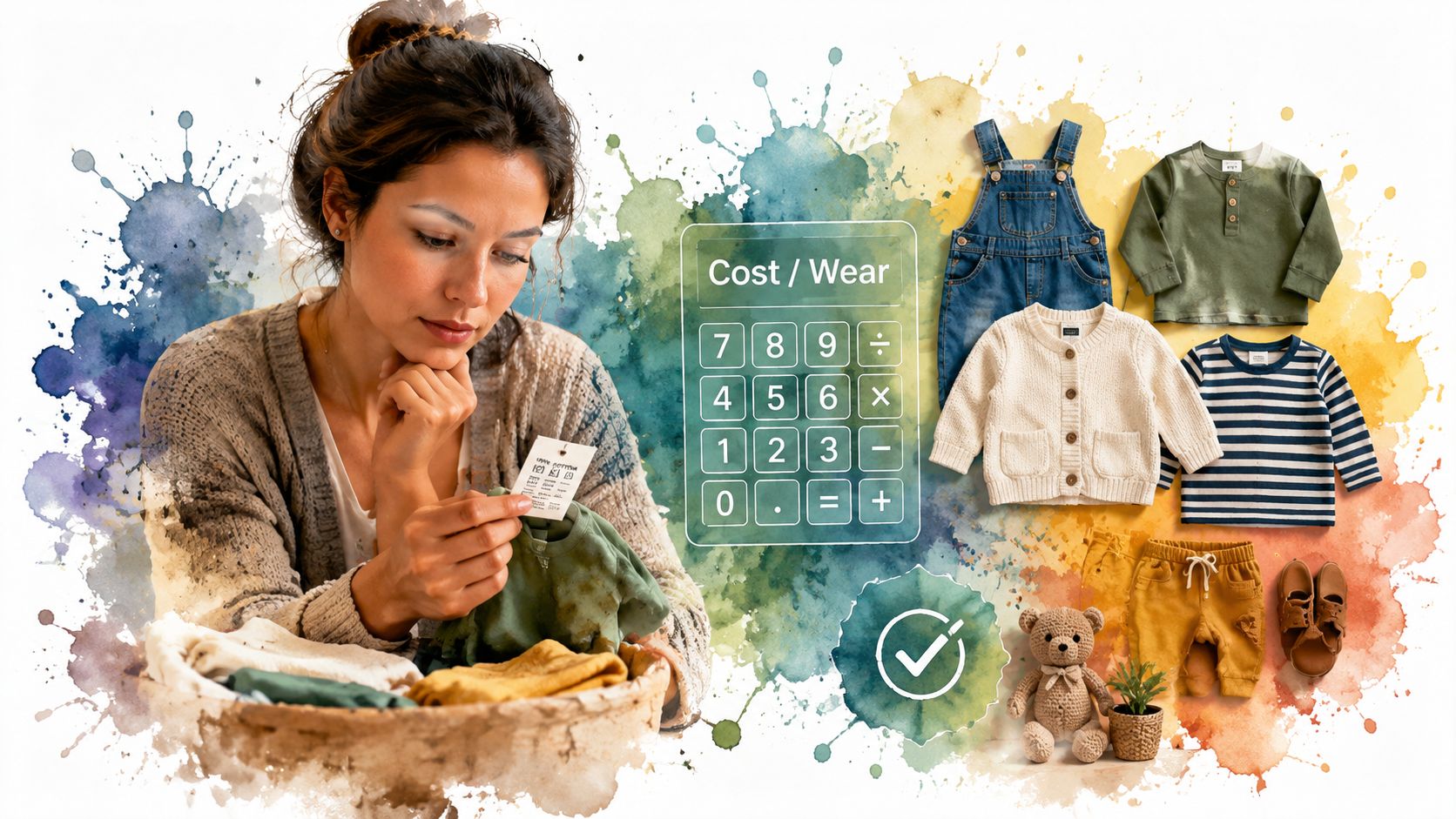
Use cost per wear, not shelf price
Cost per wear sounds technical, but it's just common sense. A sleeper you use constantly and trust in the wash is worth more than three bargain sleepers you avoid because they twist, fade, or fit strangely.
Try this quick thinking pattern when you shop:
- Reach test: Ask yourself if this will become one of the pieces you grab first from the drawer.
- Laundry test: Picture washing it over and over. Will the fabric and closures likely hold up?
- Hand-me-down test: Would you feel good passing it to a sibling, cousin, or friend?
If the answer is no on all three, skip it.
Build a small wardrobe that works hard
Babies don't need huge wardrobes. They need a reliable rotation.
A smart closet usually includes a core group of pieces that mix easily, wash well, and cover your real routine. For many families, that means sleepers, zip rompers, bodysuits, and soft daywear that can layer without fuss.
Here are a few ways to shop with less waste and more value:
- Buy versatile colors and prints: Neutrals and simple patterns make repeat wear feel easy.
- Choose everyday heroes first: Spend your budget on sleepwear and daily basics before special-occasion outfits.
- Shop off-season when it makes sense: If you know the next size your child will need, planning ahead can help.
- Read care instructions before buying: Some fabrics need gentler handling, and it's better to know that upfront.
Look for signs of serious quality control
Most parents won't inspect factory processes, but you can still look for clues that a brand takes consistency seriously. The Argus Apparel production guide explains that top manufacturers use Acceptable Quality Level standards, including AQL 2.5 for children's wear, to maintain quality across large production runs.
You won't always see “AQL 2.5” on a product page, but you can still notice the downstream results. Consistent sizing. Clean stitching. Reliable color. Fewer reports of broken snaps or warped seams.
If you're trying to compare skin-friendly options that put fabric and quality at the center, this roundup of best organic baby clothes can help narrow your search.
The most affordable drawer is often the one with fewer, better pieces that all earn their place.
Making It Last With Simple Care
Even the best baby clothes need a little help to stay soft and presentable. The nice part is that garment care doesn't have to become another complicated parenting job. A few steady habits go a long way.
Wash for the fabric, not your frustration
When a blowout or spit-up happens, it's tempting to throw everything into a hot, aggressive wash and hope for the best. That approach can be hard on softer fabrics.
Instead, think gentle and consistent. Cold or cool water is often kinder to delicate materials. Mild detergent usually does the job. A lower-heat drying approach can help preserve softness and fit better than blasting everything on high.
Here's a simple routine that works well for many baby clothes:
- Sort by softness needs: Keep delicate sleepwear separate from rougher items like bibs with hook-and-loop closures.
- Treat stains early: A quick rinse or pre-treatment is easier than trying to rescue a set-in stain later.
- Skip the harsh extras: Strong additives can be rough on sensitive-skin clothing.
- Avoid over-drying: Pulling items out promptly can reduce wear, stiffness, and shrink-related surprises.
Handle stains without panic
Most baby stains look dramatic before they're permanent. Milk, spit-up, drool, and food smears usually respond better to quick action than to harsh scrubbing.
Blot first. Rinse gently. Then wash according to the care label. If you want practical stain help for common baby messes, this guide on how to remove stains from baby clothes is worth bookmarking.
Store with the next child in mind
One helpful mindset shift is to care for baby clothes as if they'll be used again. Even if you're not sure about future siblings, that approach keeps your current wardrobe in better shape.
- Fold clean items fully dry: Trapped moisture can create musty smells or fabric issues.
- Store by size: It keeps hand-me-down planning simple.
- Set aside your best pieces early: If something washes beautifully and still looks great, protect it.
A well-cared-for baby outfit feels different in your hands. It stays soft, keeps its shape, and doesn't look tired before your child outgrows it.
More Than Clothes A Meaningful Purchase
For many families, the question isn't only whether baby clothes are soft, safe, and reasonably priced. It's also whether the purchase reflects what matters most at home.
That part gets overlooked in most shopping advice. A lot of guides stop at price, trend, or convenience. They don't say much about safety certification for sensitive skin, and they rarely talk about whether a brand's mission means anything beyond a slogan.
When values are part of the decision
Christian parents often carry an extra set of questions into everyday purchases. Is this good for my child? Is this responsible? Does this support something I'd be glad to stand behind?
That instinct isn't niche. A 2025 Nielsen Faith-Based Consumer Survey found that 74% of Christian parents prioritize brands that support causes like prenatal aid over a 20% lower price. That points to something worth naming clearly. For many families, affordability includes meaning.
Mission-driven affordability makes sense
A meaningful purchase doesn't have to mean ignoring your budget. It means defining value more fully.
A baby item can offer value in several ways at once:
- It serves your child well: Comfortable, practical, and suitable for sensitive skin.
- It holds up in real life: Worth washing, rewearing, and passing along.
- It aligns with your convictions: The purchase supports something beyond itself.
That combination can bring a lot of peace. You're not just filling a drawer. You're choosing items that reflect care in more than one direction.
What to look for
If this matters to you, keep your standards simple and honest.
Look for brands that clearly explain their safety certifications. Look for straightforward material information. Then look for a mission that is concrete enough to understand, not just decorative wording.
The best affordable quality clothes do more than save money. They let parents feel settled about what touches their baby's skin and where their dollars are going.
That kind of confidence is hard to put a price on.
If you want baby and toddler clothing that brings together softness, OEKO-TEX certified materials, faith-inspired design, and a mission that supports pregnant women in need, take a look at Little Venture Co.. It's a thoughtful place to shop when you want your purchase to feel good for your little one, your budget, and your values.