

Finding the Softest Kids Pajamas in 2026
There's nothing quite like that quiet moment when you tuck your little one into bed. As parents, we want to wrap them in as much comfort as possible, and finding the softest kids pajamas can feel like giving them a gentle, reassuring hug that lasts all night. This is your guide to finding them.
Your Guide to Finding Unbelievably Soft Pajamas
The quest for the perfect PJs goes way beyond cute patterns and trendy colors. It's really about finding sleepwear that helps your child get a genuinely peaceful, cozy night's sleep. Think of this as your roadmap to understanding what truly makes pajamas soft, safe, and durable enough to become that worn-in, well-loved favorite.
If you're tired of the guesswork, you're in the right place. We'll walk through everything that actually matters, from how to decode a fabric label to the science behind that buttery-soft feel. By the end, you'll know exactly how to pick sleepwear that not only looks adorable but truly delivers on its promise of comfort.
Why Pajama Fabric Choices Matter
The material touching your child's skin all night has a pretty big job to do. When you hear parents talking about the softest kids’ pajamas, you’ll notice two materials come up again and again: bamboo and cotton. There's a good reason for that. They masterfully combine comfort, breathability, and skin-friendly properties that you can literally feel at bedtime.
Bamboo viscose is often described as silky and incredibly smooth, while high-quality cotton is praised for its classic softness and all-season reliability. But this is about more than just a nice feel. For more details on these materials, you can discover more insights about pajama fabrics and their benefits on ericawilson.com.
The right pajamas do so much more than just look cute. They need to help regulate body temperature, reduce irritation on sensitive skin, and stay comfy through countless cycles in the laundry. That’s why your fabric choice is one of the most important decisions for your child's sleep quality.
We're going to dive into why fabrics like bamboo can be a total game-changer, especially for little ones with eczema or sensitive skin. We’ll also get into the nitty-gritty, like:
- Fabric Weave and Weight: How these details are the secret sauce to coziness.
- Safety Certifications: What labels like OEKO-TEX actually mean for your child's health.
- Care and Longevity: Simple tips to keep those PJs feeling brand-new, wash after wash.
Let's get started on finding sleepwear that wraps your child in comfort and gives you total peace of mind.
What Actually Makes Pajamas Feel Soft
You know the feeling. You pull one pair of your child's pajamas from the drawer, and it's a buttery-soft dream. The next one just feels… fine. So, what’s the real difference between a pair of PJs that feels like a cloud and one that's just okay?
Finding the softest kids pajamas isn't about some secret formula. It's actually a pretty simple recipe, once you know the ingredients. Think of it like baking: the fiber is your flour, the knit is how you mix the dough, and the fabric weight tells you how thick to make the cookies.
Once you learn to look past the cute dinosaur prints, you can start spotting real quality. You'll be able to glance at a product description and know instantly whether those pajamas will live up to their cozy promises.
The Foundation of Softness: Fabric and Fiber
It all starts with the fiber. This is, without a doubt, the single biggest factor in how soft a fabric feels against the skin. While you can make pajamas out of almost anything, a few materials are true standouts.
- Bamboo Viscose: This stuff is famous for its silky, cool-to-the-touch feel that just glides over the skin. Many parents compare it to high-end silk, but it's way more practical for kids. If you've seen this popping up everywhere, you can learn more in our guide on what is bamboo viscose.
- Pima or Long-Staple Cotton: Not all cotton is the same. Varieties like Pima are made with longer, finer fibers. This creates a fabric that's not only incredibly soft but also more durable and less likely to get all pilly after a few washes.
- Modal: Sourced from beech trees, Modal is another superstar known for being exceptionally soft and lightweight. It drapes beautifully and holds up well against shrinking and fading, which is a huge plus.
- Minky: If you've ever snuggled a baby blanket and thought, "I wish this came in my size," you've probably felt Minky. It's a plush, synthetic fabric that's off-the-charts soft, and there's a lot to consider when choosing minky for baby items.
The best fabrics don't just feel soft—they're also breathable, so your little one stays comfortable all night without getting sweaty. That perfect combo is what makes for a truly dreamy sleep.
Weave, Knit, and Fabric Weight
Okay, so you have your soft fibers. What happens next matters just as much. How those fibers are turned into fabric plays a huge part in the final feel.
Most pajamas are made with a knit construction, where threads are looped together. This is what gives PJs their signature stretch and comfort. A tight, well-made knit will feel much smoother and hold its shape better, even after being worn by an active toddler.
Then you have GSM, which stands for Grams per Square Meter. Don't let the technical term scare you—it's just a simple way to measure how dense or heavy a fabric is.
Think of GSM like the thread count for your bedsheets. A higher GSM number means a denser, plusher, and warmer fabric, which is perfect for those cozy winter nights. A lower GSM points to a lighter, airier fabric that's ideal for hot summer evenings.
This is exactly why a fuzzy fleece set and a light cotton set can both be incredibly soft, yet feel completely different. One is built for plush warmth, while the other is all about lightweight breathability.
The good news is that parents no longer have to pick between softness and durability. Today’s premium brands are engineering fabrics that give you both, often by blending high-quality natural fibers like bamboo with just a touch of spandex to give it that perfect stretch and fit.
Why Bamboo Is a Dream for Sensitive Skin
If you have a child with eczema, allergies, or just easily irritated skin, you know the search for the softest kids pajamas is more like a mission. The wrong material can quickly turn bedtime into a scratch-fest, leaving everyone exhausted. This is where bamboo fabric has become a game-changer for so many families, bringing a collective sigh of relief.
So, what’s the big deal with bamboo? Think of it this way: compare a smooth, silky ribbon to a piece of scratchy twine. Bamboo fibers are naturally round and smooth, so they glide across delicate skin instead of rubbing against it. This simple physical difference drastically cuts down on friction, which is a huge trigger for irritation and flare-ups.
This isn't just about how it feels in your hand; it's a real, functional benefit that parents see night after night. Dermatologists often recommend materials with bamboo’s incredibly smooth texture because it helps soothe dry, reactive skin. We dive deeper into this in our article about why bamboo pajamas are a smart choice for babies with sensitive skin.
More Than Just a Soft Touch
But the magic of bamboo doesn’t stop at its silky feel. This fabric is a true workhorse when it comes to managing temperature and moisture—two things that are critical for keeping sensitive skin calm and happy.
- Amazing Temperature Control: Bamboo fabric is brilliant at helping your child stay comfortable, no matter the temperature in the room. It offers warmth without trapping excess body heat, which is a primary culprit behind nighttime sweating and irritation.
- Incredible Moisture-Wicking: Bamboo is fantastic at pulling moisture away from the skin so it can evaporate. This keeps your little one’s skin drier and reduces the chances of heat rash or other dampness-related skin problems.
This simple infographic shows how these elements come together to create the perfect pair of soft pajamas.
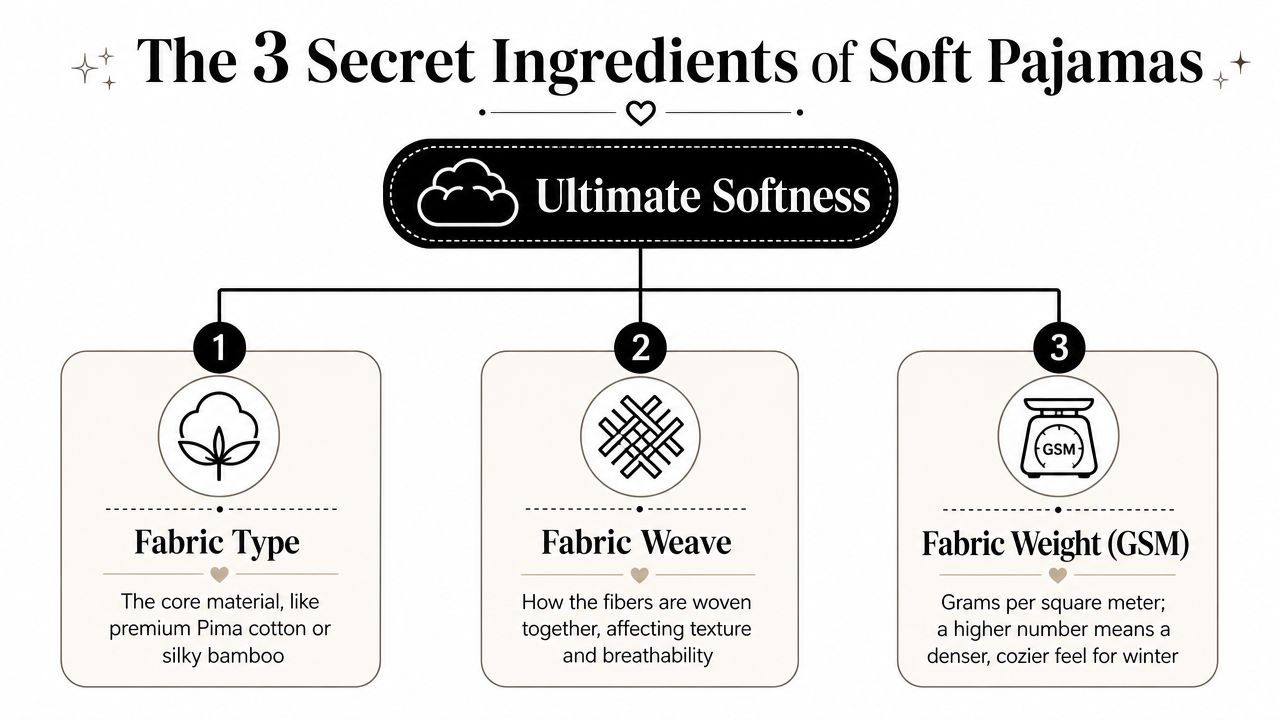
As you can see, true softness is a team effort between the right material, a quality weave, and the perfect fabric weight for the season.
The Science of a Better Night's Sleep
This combination of softness and performance isn’t just good marketing; it actually leads to better sleep. Studies have shown that modern fabrics like bamboo and TENCEL™ Modal can wick sweat away up to 50% faster than traditional cotton, which is why they’ve become so popular. Of course, caring for delicate skin goes beyond just pajamas, extending to products like luxury baby and maternal skincare.
The recent 60% surge in demand for bamboo pajamas shows just how fast parents are realizing that ultra-soft sleepwear is a key part of their child's comfort. It’s a move away from just buying clothes and toward investing in better, more restful sleep.
When you find something that helps your child sleep peacefully and wake up with calm, happy skin, it honestly feels like you’ve won the lottery. It's no wonder so many parents are making the switch.
Decoding the Safety Labels on Pajama Tags
Beyond finding the softest kids' pajamas, true peace of mind comes when you know they are completely safe. But let’s be honest—when you flip over a tag, you’re often met with a jumble of logos and acronyms. Let's break down what those labels really mean so you can shop with total confidence.
These certifications aren't just for show. They represent a serious commitment to your child's well-being, ensuring the PJs you bring home are as safe as they are cozy.
To make things even clearer, here’s a quick guide to the most common terms you’ll see on pajama tags.
Decoding Pajama Safety Labels
| Certification/Term | What It Means for Your Child | Why It Matters for Softness & Safety |
|---|---|---|
| OEKO-TEX® STANDARD 100 | The pajamas are certified free from over 100 harmful chemicals and substances. | Guarantees the material is pure and non-irritating, which is perfect for sensitive skin. You get softness without hidden toxins. |
| "Snug-Fitting" | A U.S. safety requirement for PJs (sizes 9M-14) not treated with flame retardants. | Ensures safety from fire hazards without needing chemical treatments, preserving the natural feel of fabrics like cotton and bamboo. |
| Flame-Resistant (FR) | The fabric has been treated or is inherently able to resist catching fire. | A safety feature, but these pajamas often involve chemical treatments that can feel less natural and may irritate sensitive skin. |
Understanding these labels helps you navigate the options and choose what truly aligns with your family’s values for both safety and comfort.
What OEKO-TEX Standard 100 Really Means
One of the best labels to spot on high-quality kids' clothing is OEKO-TEX® STANDARD 100. Think of it as a gold star for textile safety.
If a pair of pajamas has this certification, it means that every single part—the fabric, the thread, the buttons, and even the zipper—has been independently tested and proven to be free from a long list of harmful substances. We're talking about chemicals that could irritate your little one's skin or pose long-term health risks. You can get all the details by reading this deep dive into what OEKO-TEX Standard 100 certification means.
Think of OEKO-TEX® as a comprehensive safety check for your child's sleepwear. It guarantees that the softness you feel isn't compromised by hidden chemicals, which is especially vital for babies and toddlers with sensitive, absorbent skin.
This certification is your ultimate assurance that the PJs you’ve picked out are as clean and pure as possible.
Why Snug-Fitting Pajamas Are Safer
Have you ever wondered why so many kids' pajamas are labeled "snug-fitting"? It’s not just a style choice; it’s a crucial safety requirement set by the U.S. Consumer Product Safety Commission (CPSC).
The logic is simple: loose-fitting PJs are a greater fire hazard. They can more easily brush against a flame, and the extra air between the fabric and the skin can fuel a fire. To get around this, sleepwear for kids from 9 months to size 14 must either be flame-resistant or fit snugly.
Here’s why this is a huge win for parents who prefer natural fabrics:
- Chemical-Free Safety: By choosing snug-fitting PJs made from materials like cotton or bamboo, you get to skip the chemical flame retardants.
- Reduced Hazard: The close fit naturally minimizes the risk of the fabric catching fire and would slow any potential spread.
When you choose a snug-fitting design, you get the incredible, natural softness of fabrics like bamboo viscose without having to worry about added chemicals. It’s the safest, coziest choice for a peaceful night's sleep.
How to Keep Pajamas Soft After Every Wash
It’s the worst, isn’t it? You find the absolute perfect, buttery-soft pajamas for your little one, and then a few washes later, they feel… crunchy. That dreamy softness is gone. But don't worry, keeping those jammies feeling brand new isn't about some secret, complicated laundry ritual.
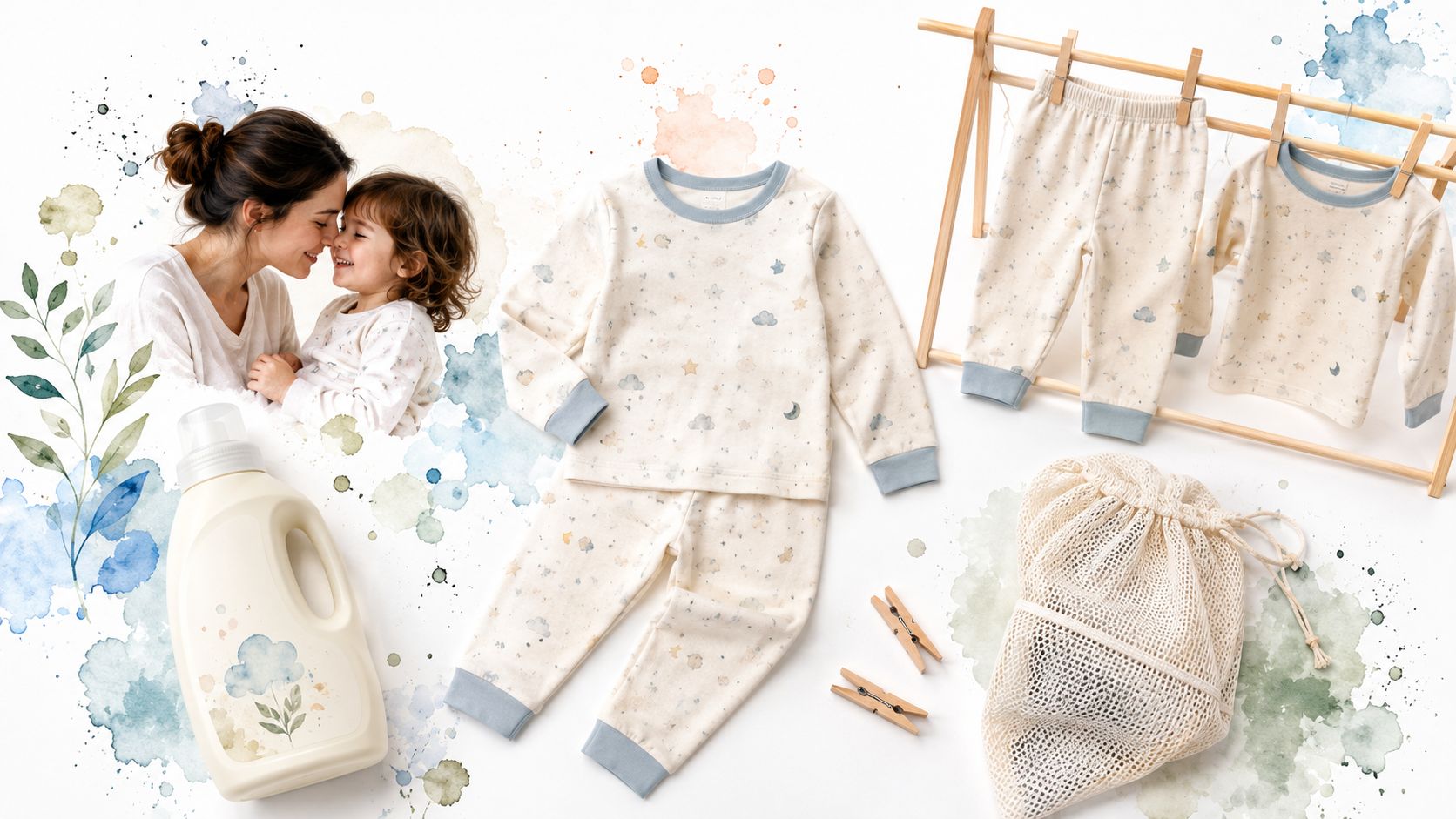
Honestly, it just means forgetting some of the old-school laundry habits we grew up with. The things that work for towels and jeans are often way too harsh for the delicate fibers in the softest kids pajamas. A few simple tweaks will keep them cozy enough for countless bedtime snuggles.
Your Pajama-Saving Laundry Recipe
Think of washing these special PJs like you’re watering a delicate plant. Too much heat or harsh conditions will cause damage. The same goes for the fine fibers in bamboo or premium cotton—they need a gentle touch to stay soft.
Here’s the simple routine we swear by:
- Wash on Cold: Always, always use a cold, gentle cycle. Hot water is the enemy of softness; it causes those delicate fibers to tense up and feel stiff over time.
- Use a Mild Detergent: Ditch the heavy-duty detergents. Go for something gentle and pH-neutral, without all the extra chemicals and optical brighteners that can strip the fabric of its natural softness.
- Zip It Up: Before tossing them in the wash, zip up all zippers and fasten any snaps. This simple step is a game-changer for preventing snags and tears that can ruin the fabric.
If you want an even deeper dive, our guide on how to wash bamboo clothing has even more tips for these amazing fabrics.
The Great Fabric Softener Debate
Okay, this one feels counterintuitive, but hear me out: step away from the fabric softener. It seems like the obvious choice for keeping things soft, but it actually does more harm than good for fabrics like bamboo.
Fabric softeners work by leaving behind a waxy coating on the fibers. That coating might feel soft at first, but it quickly builds up, clogging the fabric. This makes it less breathable, less absorbent, and—you guessed it—ultimately less soft.
So, what's the alternative? A splash of white vinegar! Just add about a quarter-cup to the rinse cycle. It works wonders by dissolving any leftover detergent residue, leaving the fibers naturally soft without any film.
Finally, how you dry them is just as important. High heat is the fastest way to ruin soft fibers. Your best bet is to air-dry them, either by laying them flat or hanging them up. If you're short on time, tumble dry on the absolute lowest heat setting possible. Your little one’s favorite PJs will thank you for it
Choosing the Right Pajamas for Gifts and Growth Spurts
Finding the softest kids pajamas is only half the battle; you also have to nail the right style and size for the moment. Whether you're a grandparent shopping for a precious new baby or a parent just trying to keep up with another growth spurt, the right PJs can make a world of difference.
If you're buying a gift for a new arrival, my best advice is to always think one or two sizes ahead. New parents get swamped with newborn-sized outfits, and babies grow out of them in the blink of an eye. Gifting a larger size means your present will get plenty of love and use down the road.
Not sure what the parents-to-be actually need? A gift list is your best friend. For those getting ready for a new baby, you can set up your baby shower registry to help guide friends and family toward the things you’ll truly use.
One-Piece Zippers vs. Two-Piece Sets
As you build your own child’s wardrobe, you’ll eventually face the great pajama debate: one-piece or two-piece? Honestly, there’s a time and place for both, and it really comes down to your little one's age.
For babies and young toddlers, one-piece zippered sleepers are an absolute game-changer. They are the MVPs of the infant world for a few simple reasons:
- Fast Diaper Changes: A single zipper makes those middle-of-the-night changes so much quicker and less disruptive.
- Warm and Snug: They keep little tummies and backs covered, no matter how much your baby twists and turns.
- Effortless Dressing: It's a complete outfit in one go. You can't beat that for simplicity.
But once your child gets a bit older and potty training enters the picture, two-piece sets really start to shine. They give kids the independence to pull their pants down and use the toilet by themselves. Plus, you get the added bonus of mixing and matching tops and bottoms.
Pro Tip: Keep an eye out for PJs with stretchy, foldable cuffs on the wrists and ankles. This is my favorite trick for getting more life out of pajamas. You can buy a size up, roll the cuffs for a perfect fit now, and then unroll them as your child grows.
Common Questions About Soft Kids Pajamas
If you’re diving into the world of soft kids’ pajamas, you’ve probably got a few questions swirling around. It can feel like you’re learning a whole new language, right? Viscose, OEKO-TEX, GSM… what does it all mean? Let's walk through some of the most common questions I hear from fellow parents to help you feel confident in your choices.
Why Are Bamboo Pajamas More Expensive?
This is usually the first question on everyone's mind! When you see a pair of bamboo jammies with a higher price tag than the cotton ones you grew up with, it's natural to wonder if they're really worth it. The simple answer is that the cost reflects a completely different level of quality and care.
Turning a tough bamboo stalk into that buttery, silky fabric is a much more involved and careful process. Beyond that, the brands that truly care about our little ones go the extra mile. This includes things like:
- OEKO-TEX® Certification: This is a big one. It means every single component, right down to the thread and zipper, has been tested and found to be free of harmful chemicals. That peace of mind is priceless, especially for a baby’s delicate skin.
- Thoughtful Design: You're also paying for better stitching that doesn't pop, high-quality zippers that don't snag, and designs that are made to last.
So yes, they cost more, but you’re paying for incredible softness, breathability, and the assurance that you’re putting something truly safe and gentle on your child.
Are Softer Fabrics Less Durable?
It’s a fair assumption! We’ve all bought something that felt amazingly soft, only to have it pill or fall apart after a few washes. That experience usually comes from cheaply made, flimsy materials.
Thankfully, that’s not the case with premium fabrics. Materials like bamboo viscose and Pima cotton get their incredible softness from long, smooth fibers. These long fibers are not only luxurious to the touch but are also much stronger and less prone to breaking or pilling.
As long as you care for them properly—I’m a big fan of washing on cold and tumbling dry on low heat—these high-quality soft pajamas are surprisingly tough. They're designed to survive countless sleepy snuggles and laundry cycles, all while staying just as soft as the day you bought them.
How Do I Choose the Right Pajama Weight for the Season?
This is all about keeping your little one comfy, whether it's a hot summer night or a chilly winter morning. The great thing is, you don’t need a massive pajama wardrobe for every season.
For warm weather, look for something lightweight and breathable. Bamboo viscose is a superstar here, as is a lighter-weight cotton. They both do a fantastic job of wicking moisture away from the skin, helping to prevent those sweaty, restless nights.
For cooler weather, a slightly thicker knit can add a bit of cozy warmth. My absolute favorite strategy, though, is layering. A two-piece bamboo set is perfect on its own for most of the year, but on those really cold nights, you can easily add a sleep sack or a blanket. It's the most versatile way to make sure they're always just right.