

What Is Rayon Derived from Bamboo: A Parent's Guide
You've probably seen labels on baby clothes proudly announcing they're made from "bamboo." It immediately brings to mind something soft, natural, and eco-friendly, right? But here's the thing—the reality is a bit more nuanced. What you’re actually buying is rayon derived from bamboo, a fabric that starts as a plant but undergoes a significant transformation to become the silky-soft material we all love.
Understanding this little detail is the key to unlocking what makes this fabric so special for your baby and for the planet.
What Is Rayon Derived from Bamboo
When you see a tag that says "100% bamboo," it almost always means the fabric is a type of rayon, specifically viscose. The best way to think about it is like making a smoothie. You start with a tough, natural ingredient (bamboo stalks), but you process it so thoroughly that it becomes something completely new and different—in this case, a silky, pliable rayon fiber.
The final fabric feels nothing like the woody plant it came from, but it holds onto some of its best properties and gains a few new ones along the way.
And it seems parents everywhere are catching on. The market for bamboo fiber is exploding and is expected to hit a whopping $15.6 billion by 2034. This isn't just a trend; it's a huge shift in what we look for in our fabrics—softer, more comfortable materials that feel good in more ways than one.
To get a quick overview of what makes this fabric a standout choice, here's a simple breakdown.
Quick Facts About Rayon Derived from Bamboo
| Attribute | What You Need to Know |
|---|---|
| Material Type | Semi-synthetic; it starts with a natural source (bamboo pulp) but is chemically processed to create rayon fibers. |
| Common Name | Often labeled as "bamboo viscose" or simply "bamboo." |
| Key Feel | Incredibly soft, smooth, and silky to the touch. Often compared to high-end cotton or silk. |
| Breathability | Highly breathable, allowing for great airflow to help regulate body temperature. |
| Moisture Control | Excellent moisture-wicking properties, pulling sweat away from the skin to keep you dry. |
| Hypoallergenic | The smooth fibers are naturally gentle and non-irritating, making it ideal for sensitive skin. |
This table just scratches the surface, but it helps show why this "technical-sounding" fabric is actually a very practical and comfortable choice for our little ones.
Why This Fabric Matters for Parents
If you're a parent, especially one with a baby who has sensitive skin, you know that the fabric touching them all day (and night!) is a really big deal. The process used to create rayon results in a fiber that’s incredibly smooth and round, which means less friction and a much lower chance of irritation.
This single quality is a game-changer and a huge reason why it has become the gold standard for baby pajamas, swaddles, and blankets.
Here’s a quick rundown of why so many parents are completely hooked:
- Unmatched Softness: Seriously, it's buttery soft. The smooth, round fibers glide across a baby's delicate skin without rubbing or chafing.
- Amazing Breathability: The fabric's structure allows air to circulate freely, which is crucial for helping your little one stay at a comfortable temperature—no more sweaty backs after a nap!
- Moisture-Wicking Power: It pulls moisture away from the skin and lets it evaporate quickly, keeping your baby dry and helping to prevent heat rash.
These features work together to create the perfect little cocoon for sleep and play. So, while the term "rayon derived from bamboo" might sound a bit scientific, the result is pure, simple comfort for your baby. To see how these qualities make a real difference, check out our deep dive into the many benefits of bamboo fabric.
How a Bamboo Stalk Becomes a Baby Blanket
It’s pretty wild to think about how a tough, woody bamboo stalk turns into a fabric soft enough for your baby’s skin. It’s not magic, but a well-established manufacturing method called the viscose process. Think of it like making paper from wood—you’re starting with a rigid natural material and using a clever process to create something totally new and wonderfully soft.
The whole journey begins by harvesting mature bamboo, which is then crushed into a raw, fibrous pulp. This isn’t the silky material we’re aiming for just yet; it's the first mechanical step to break down the plant’s sturdy structure.
From Pulp to Silky Fibers
Once the bamboo is turned into pulp, it’s time for the chemical transformation. The pulp is dissolved in a solution, typically using sodium hydroxide and carbon disulfide, which breaks down the plant's cellulose into a thick, syrupy liquid. This golden, honey-like goo is the key to creating rayon derived from bamboo. This step is what completely rearranges the bamboo's molecular structure, paving the way for a brand-new fiber.
Next, this viscous liquid gets pushed through a device that looks a lot like a showerhead, forcing it through tiny holes and directly into another chemical bath. The moment the liquid hits this bath, it hardens into fine, continuous strands we call filaments.
The Key Takeaway: The viscose process doesn't just pull fibers out of the bamboo. It completely dissolves the plant's cellulose and then rebuilds it into a new, man-made fiber. That’s why it’s officially classified as a semi-synthetic.
These brand-new filaments are then washed, stretched, and spun into yarn. Finally, that yarn is woven or knit into the buttery-soft fabric that makes the perfect, gentle material for your little one’s pajamas and swaddles.
This simple infographic helps visualize the journey from a green plant to a finished textile.
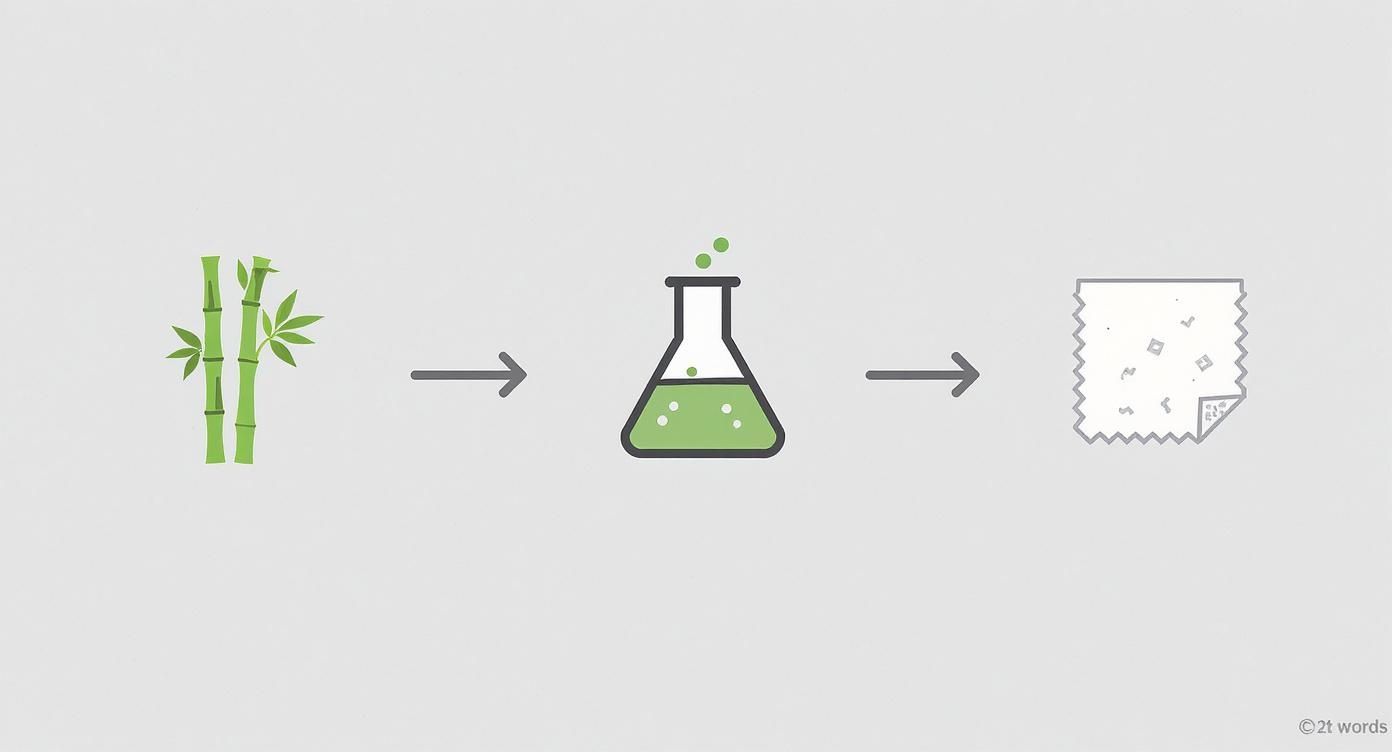
As you can see, there’s a serious chemical transformation happening to get to that final fabric.
Understanding the Chemical Side
It's important to be upfront about the chemicals involved here. While the raw material is incredibly sustainable, turning it into fabric relies on chemicals like carbon disulfide. If these aren't managed in a modern, responsible way, they can be harmful to workers and the environment. This is exactly why a manufacturer's commitment to safety and closed-loop production techniques is so critical.
The softness and comfort of the final product are amazing, but knowing the full story helps you make smarter choices. If you want to dive deeper into the different types of rayon, you can learn more about what bamboo viscose is and why it's such a popular choice. At the end of the day, this incredible process is how nature's strength is reimagined into a fabric with amazing softness for our little ones.
Why Not All Bamboo Fabrics Are Created Equal
When you see a baby onesie with a "bamboo" label, it's natural to think all bamboo fabrics are pretty much the same. But that simple tag is hiding a bigger story. How that tough bamboo stalk gets turned into a buttery-soft fabric makes a huge difference—both for the environment and for the final feel of the clothes on your little one.
Think of it like making orange juice. You can have freshly squeezed, from-concentrate, or just an orange-flavored drink. They all started with an orange, but the process changes everything. In the same way, rayon derived from bamboo is just one of several paths to get from a plant to a pajama set.
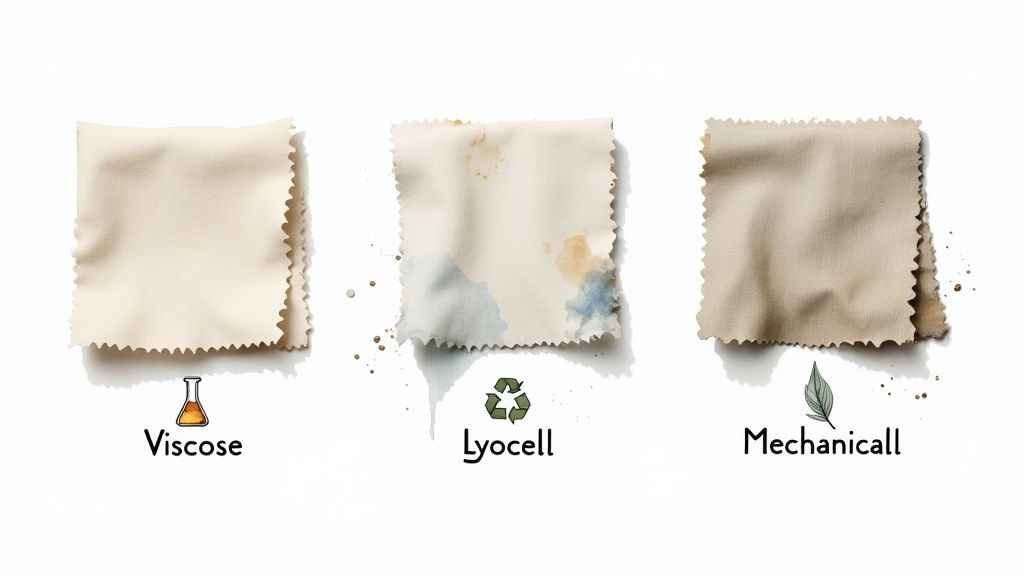
So, what are you actually buying? Let's break down the main types you'll come across.
To help you see the differences at a glance, here’s a quick rundown of how these bamboo-based fabrics stack up against each other.
Bamboo Viscose vs Lyocell vs Modal vs Linen
| Fabric Type | Production Process | Environmental Impact | Feel & Cost |
|---|---|---|---|
| Bamboo Viscose | A chemical-heavy process using sodium hydroxide and carbon disulfide to dissolve bamboo pulp. | High, unless strict regulations are in place to manage chemical waste. | Silky-soft and drapey. The most common and affordable option. |
| Bamboo Lyocell | A "closed-loop" system using a non-toxic solvent (amine oxide) where >99% of chemicals are reused. | Low. Considered one of the most sustainable methods due to minimal waste. | Very similar to viscose in softness and breathability, but typically more expensive. |
| Bamboo Modal | Similar to viscose but with a modified process that makes the fibers stronger and more stable. | Moderate. Often considered a step up from viscose but not as clean as lyocell. | Exceptionally fine, durable, and resistant to shrinking. A premium, pricier choice. |
| Mechanical Bamboo Linen | Mechanically crushes bamboo and uses natural enzymes to create fibers, similar to flax linen. | Very low. Avoids harsh chemicals altogether, relying on a physical process. | Feels more like traditional linen (textured, crisp) than silky rayon. Rare and expensive. |
As you can see, the journey from plant to fabric is what really defines the final product. Let's look a little closer at what each of these means for you and your baby.
Viscose: The Common Standard
The most common type you'll find is bamboo viscose. This is that silky, dreamy material we’ve been talking about, and it’s made using what’s known as the viscose process. It absolutely delivers on that incredible softness, but its production uses some pretty strong chemicals. When managed responsibly, it’s fine, but without proper oversight, it can be tough on the environment. It’s the go-to choice for a reason: it's soft, drapes beautifully, and is generally affordable.
The push for sustainable fabrics is making this a massive industry. The global bamboo fabric market is expected to hit a staggering $91.40 billion by 2030. This huge jump shows just how many of us are looking for renewable materials like bamboo, which makes knowing these differences more important than ever.
Lyocell: A Greener Alternative
Next up is bamboo lyocell, and from an environmental perspective, this one is a real game-changer. Lyocell is made using a non-toxic solvent inside a "closed-loop" system.
So, what’s a closed-loop system? Picture a production cycle that’s almost completely self-contained. Over 99% of the water and solvents used to break down the bamboo are captured and reused over and over again. This slashes waste and stops chemicals from getting out into the environment.
This smart process makes lyocell a much more sustainable choice than standard viscose, though you'll often see that reflected in a slightly higher price tag. The fabric itself is just as soft and breathable, giving you that premium comfort with a much smaller eco-footprint.
Modal and Mechanical Linen
There are two other players you might see in the bamboo fabric world: Modal and mechanical bamboo linen.
- Bamboo Modal: Think of Modal as viscose's souped-up cousin. It's known for being extra fine, incredibly durable, and great at resisting shrinking or pilling. You’ll often find it in higher-end clothing.
- Mechanical Bamboo Linen: This is the most "natural" and rarest of the bunch. The bamboo is literally crushed and broken down with natural enzymes—a lot like how traditional linen is made from flax. This method skips the harsh chemicals but is super labor-intensive and expensive. The result is a fabric that feels less like silky rayon and more like classic, crisp linen.
Knowing these differences helps you read labels like a pro. While rayon from bamboo is an amazingly soft and practical choice, understanding options like lyocell lets you pick a product that perfectly aligns with your family's values. For a deeper dive into how bamboo compares to another baby-favorite, check out our guide on organic cotton vs. bamboo fabrics.
So, Is Bamboo Rayon Really Eco-Friendly?
This is where the story gets a little tricky. When we hear "bamboo," we immediately picture a lush, green, sustainable super-plant—and honestly, that's a fair picture! As a raw material, bamboo is an absolute environmental powerhouse. It shoots up like a weed (a very useful one), sometimes growing several feet in a single day, all without needing pesticides or fertilizers.
But the eco-friendly story isn't just about the plant. It's about the entire journey from a woody stalk to a buttery-soft swaddle. The fabric we all love, rayon derived from bamboo, is almost always made using something called the viscose process. And this is where the bright green picture starts to get a bit gray.
To turn tough bamboo pulp into silky fibers, the viscose method uses a chemical-heavy process. If a factory isn't using modern, responsible practices, those chemicals can become serious pollutants. The risk of harmful waste runoff and the sheer amount of energy needed for production are very real environmental concerns. It creates a bit of a paradox for parents trying to make a truly sustainable choice.
The Two Sides of the Coin
The environmental footprint of bamboo rayon really comes down to the manufacturer. It's a classic case of "how it's made matters just as much as what it's made from."
Here's a simple way to break it down:
- The Good: The source material is incredible. Bamboo is a rapidly renewable resource that gobbles up carbon dioxide. Choosing it over less sustainable crops is a clear win for the planet.
- The Challenge: The standard viscose process can be a messy business. Without proper controls and modern technology, chemical waste can damage local ecosystems, and the energy consumption can be huge.
This means a brand's commitment to clean production is the single most important factor. It's what separates the genuinely eco-friendly products from the ones that are just greenwashing.
The Bottom Line: You can take a wonderfully sustainable plant and transform it through a potentially polluting process. The final product's green credentials hinge entirely on the manufacturer's ethics and technology. A company that invests in closed-loop systems to recapture chemicals, treat its wastewater, and manage its energy use makes a world of difference.
This is exactly why looking for transparency and certifications is so important. A brand that proudly shows you how it's making its products is probably making something you can feel good about buying.
It shifts the question from, "Is bamboo rayon eco-friendly?" to, "Is this specific brand's bamboo rayon made responsibly?" That's a small change in wording, but it's a powerful one that helps you support the companies that are actually doing it right.
How to Shop for Safe and Sustainable Bamboo Clothing
Let's be honest, navigating the world of baby products can feel overwhelming. It's especially tricky when you're trying to figure out which "eco-friendly" claims are legit and which are just clever marketing, a practice often called "greenwashing."
When it comes to rayon derived from bamboo, how do you know you're getting something that's truly safe for your baby and made with the planet in mind? The secret is to look past the marketing fluff and find trusted third-party certifications on the label.
Think of these certifications as your personal cheat sheet. They cut right through the noise and give you clear, verifiable proof of a product's quality. They're your best friend for shopping with complete confidence.
Look for the OEKO-TEX STANDARD 100 Label
For parents, this is the big one. If you only look for one thing, make it this.
The OEKO-TEX® STANDARD 100 label is a guarantee that every single part of a garment—the fabric, the thread, even the zippers and buttons—has been rigorously tested for a long list of harmful substances. This means no leftover processing chemicals, heavy metals, or iffy dyes will be touching your baby’s sensitive skin.
It’s a global gold standard for textile safety that brings some much-needed peace of mind. To get the full scoop on what this important standard covers, check out our guide: What Is OEKO-TEX® STANDARD 100?.
This focus on chemical safety extends far beyond clothing. It’s the same reason parents carefully choose non-toxic materials for baby's sleep environment, from the crib itself to the mattress inside it.
Verify Sustainable Sourcing and Production
While your baby’s safety is a top priority, you probably also want to support brands that are making responsible choices for the environment. This is where a couple of other key things come into play.
-
Forest Stewardship Council (FSC) Certification: This seal is your proof that the bamboo was harvested from a responsibly managed forest. It’s a big deal. It means the local ecosystem is protected, and the rights of workers and indigenous communities are respected.
-
Closed-Loop Production: This isn't a formal certification you'll see on a tag, but it’s a term that truly sustainable brands will often mention. It means the chemicals used to turn bamboo pulp into fabric are captured and reused over and over, preventing them from being dumped into the environment.
Your Shopping Checklist: When you're looking at a piece of bamboo clothing, do a quick scan of the tag or online description for these three things: OEKO-TEX® for safety, FSC for responsible sourcing, and any mention of a "closed-loop" process for eco-friendly manufacturing.
The demand for materials like bamboo is skyrocketing. In fact, the global bamboo market is on track to more than double, hitting an estimated $22.5 billion by 2035, largely thanks to its use in textiles. With this kind of explosive growth, it’s more important than ever to support brands that are transparent and responsible.
By keeping an eye out for these key certifications, you can feel confident that you’re choosing the softest, safest, and most sustainable options for your little one.
Your Top Questions About Bamboo Rayon, Answered
When you’re a parent, every choice feels big, especially when it comes to what touches your baby's skin. You hear about rayon derived from bamboo and naturally, you've got questions. Is it safe? Does it really do what people say it does? How do I not ruin it in the wash?
Let's cut through the noise and get straight to the answers you're looking for.
Is Rayon From Bamboo Safe For Babies With Sensitive Skin?
Yes, absolutely. In fact, this is where bamboo rayon really shines for little ones. The process that turns bamboo pulp into fabric creates fibers that are incredibly smooth and round at a microscopic level. There are no jagged edges to catch on delicate skin.
This means the fabric doesn't chafe or irritate; it just glides. For babies prone to eczema or rashes, this can be a game-changer. Just be sure to look for the OEKO-TEX® STANDARD 100 certification. It’s your guarantee that the finished PJs are free from any harmful leftover chemicals and are perfectly safe for your baby.
Does Bamboo Fabric Keep Its Antibacterial Properties?
This is a huge marketing point for many brands, but it's a bit misleading. While the living bamboo plant itself has some natural antimicrobial mojo, that doesn't really survive the intense chemical processing it takes to become rayon.
So where does the benefit come from? It's all about moisture. Bamboo rayon is fantastic at wicking moisture away from the skin and drying super fast. This keeps your baby's skin from getting damp and clammy, creating an environment where bacteria just don't want to hang out. It’s a performance feature, not a leftover plant power.
Think of it this way: the fabric helps keep skin fresh by staying dry, not by actively fighting off germs.
How Should I Wash Bamboo Rayon Baby Clothes?
You’ll want to treat these super-soft garments with a little extra love to keep them feeling like new. But don't worry, it's not complicated.
A few simple steps will keep those jammies buttery-soft for the long haul:
- Go cold: Always wash on a gentle cycle with cold water. Hot water can be harsh on the delicate fibers.
- Mild detergent only: Choose a gentle, baby-friendly detergent. It's better for the fabric and your little one's skin.
- Break up with your dryer (mostly): High heat is the enemy. If you absolutely have to use a dryer, choose the lowest, gentlest setting possible.
- Hang dry for the win: The absolute best method is to simply hang the items to air dry. This preserves the fabric’s incredible softness and prevents any shrinking or pilling.
Following this simple routine means your favorite bamboo rayon pieces will be ready for countless more sleepy cuddles and morning adventures.
At Little Venture Co., we create faith-inspired children's wear that wraps your little ones in comfort and inspiration. Our OEKO-TEX® certified bamboo sleepwear is designed to be gentle on sensitive skin, so you can feel confident in every piece. Discover our collection of soft, safe, and meaningful apparel for your family at https://littleventureco.com.