

Matching Easter Pajamas: A Practical Family Guide
You've got Easter baskets half-filled, a church service on the calendar, and a family photo in mind. Then you open a pajama listing and discover that the baby size is sold out, the toddler set runs short, and the adult “matching” option is a different shade of pink. That's how a cute purchase turns into a coordination project.
Matching Easter pajamas work best when you plan from the smallest wearer outward. Choose the cast, occasion, palette, fit, and fabric before browsing. The goal isn't to make every person look identical. It's to create a comfortable family look that survives an early wake-up, a church gathering, an egg hunt, and at least a few washes.
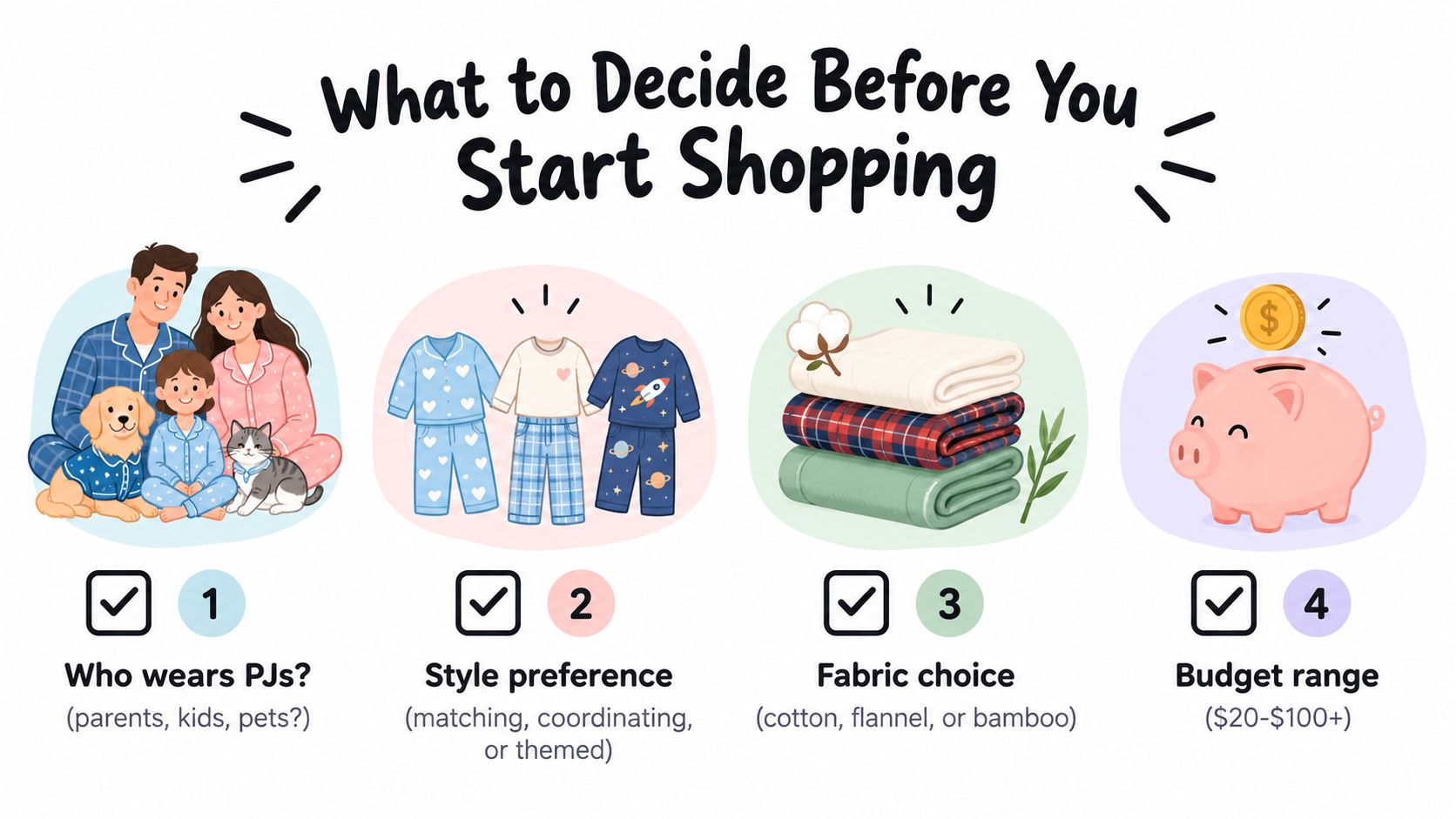
What to Decide Before You Start Shopping
Start with the people who'll wear the pajamas. Is this for parents, siblings, babies, grandparents, pets, or only the children? A family set can look unfinished when one person's size isn't available, so decide whether you need a complete household lineup or a coordinated subset.
Next, define the occasion window. Easter Sunday only calls for a more decorative print. Pajamas worn through Holy Week, spring break, or ordinary weekends should use a palette and pattern you won't resent after the holiday. This decision also affects fabric weight, sleeve length, and how much you should prioritize repeat wear.
Then choose the visual approach:
- Identical sets: Everyone wears the same print and color. This is the easiest option when one brand carries every needed size.
- Color-coordinated sets: Each person wears a different style from the same palette. This handles inconsistent sizing better and usually looks more natural in family photos.
- Pattern-matched sets: The prints differ, but they share an anchor motif such as bunnies, florals, lambs, or crosses.
Finally, set the budget before you fall for a print. Infant sleepwear may require snug-fitting construction or flame-resistant compliance, and those details can affect price. Don't spend the adult budget first and then compromise on the baby's safety or fit.
Make a short shopping brief
Write down the following before opening retailer tabs:
- Wearers: List each person, child, and pet who needs a set.
- Measurements: Record height, chest, waist, weight, and any baby-specific fit notes.
- Palette: Pick one anchor color, such as cream, sage, lavender, or soft blue.
- Motif: Choose one main idea, not a pile of unrelated Easter symbols.
- Use window: Decide whether the pajamas need to work beyond Easter morning.
- Faith preferences: Note whether you want a subtle cross, lamb, dove, Scripture detail, or no explicit symbol.
That little brief prevents the most common mistake, which is shopping by image instead of by family logistics.
Choosing a Theme the Whole Family Will Wear
The best Easter theme has to do two jobs. It needs to read clearly in a photo, and it needs to look reasonable on a baby, a school-age child, and an adult standing together. A print that's charming on a toddler can look juvenile on a parent, while a delicate adult floral may disappear on a small romper.
Classic bunny prints are the easiest crowd-pleaser. They photograph well when the rabbits are large enough to remain visible, but tiny repeating bunnies can become visual noise on infant garments. Pastel color-blocking is more flexible, especially when the family needs several retailers or styles. It creates a unified look without forcing everyone into the same cut.
Spring florals offer the strongest reusability. Florals in cream, sage, lavender, or pale blue can move naturally into spring lounging after Easter. Dense floral prints can compete with patterned bedding, floral wallpaper, or a busy church background, so keep the scale restrained.
Christian symbols, including crosses, lambs, doves, and resurrection-inspired garden motifs, create a more intentional look. They're especially fitting for families wearing pajamas before church or including sleepwear in a faith-centered Easter basket. Use one clear symbol rather than combining every possible reference in one outfit.
| Theme | Photo Readability | Mixed-Age Compatibility | Reusability |
|---|---|---|---|
| Bunny prints | Strong when the motif is simple and visible | Easy for babies through adults | Moderate |
| Pastel color-blocking | Clean and dependable | Excellent across different styles | Strong |
| Spring florals | Soft and polished | Good, if the print isn't too delicate | Excellent |
| Crosses or lambs | Clear and meaningful | Strong when used as a small detail | Moderate to strong |
| Busy novelty prints | Can overwhelm the frame | Uneven across ages | Limited |
Use the three-anchor rule
Pick one anchor color, one anchor motif, and let each person wear one or both. For example, parents might wear cream and sage solids, a toddler might wear a sage bunny print, and the baby might wear a cream romper with a small lamb motif. Everyone belongs to the same visual story without looking copied and pasted.
Avoid mixing bright cartoon bunnies with prominent Scripture text. That combination often feels accidental rather than thoughtful, especially in photos intended for grandparents or church friends. If you want an explicit faith element, let one person wear the clearest symbol and keep the rest of the family in the shared palette.
Sizing Babies and Toddlers the Right Way
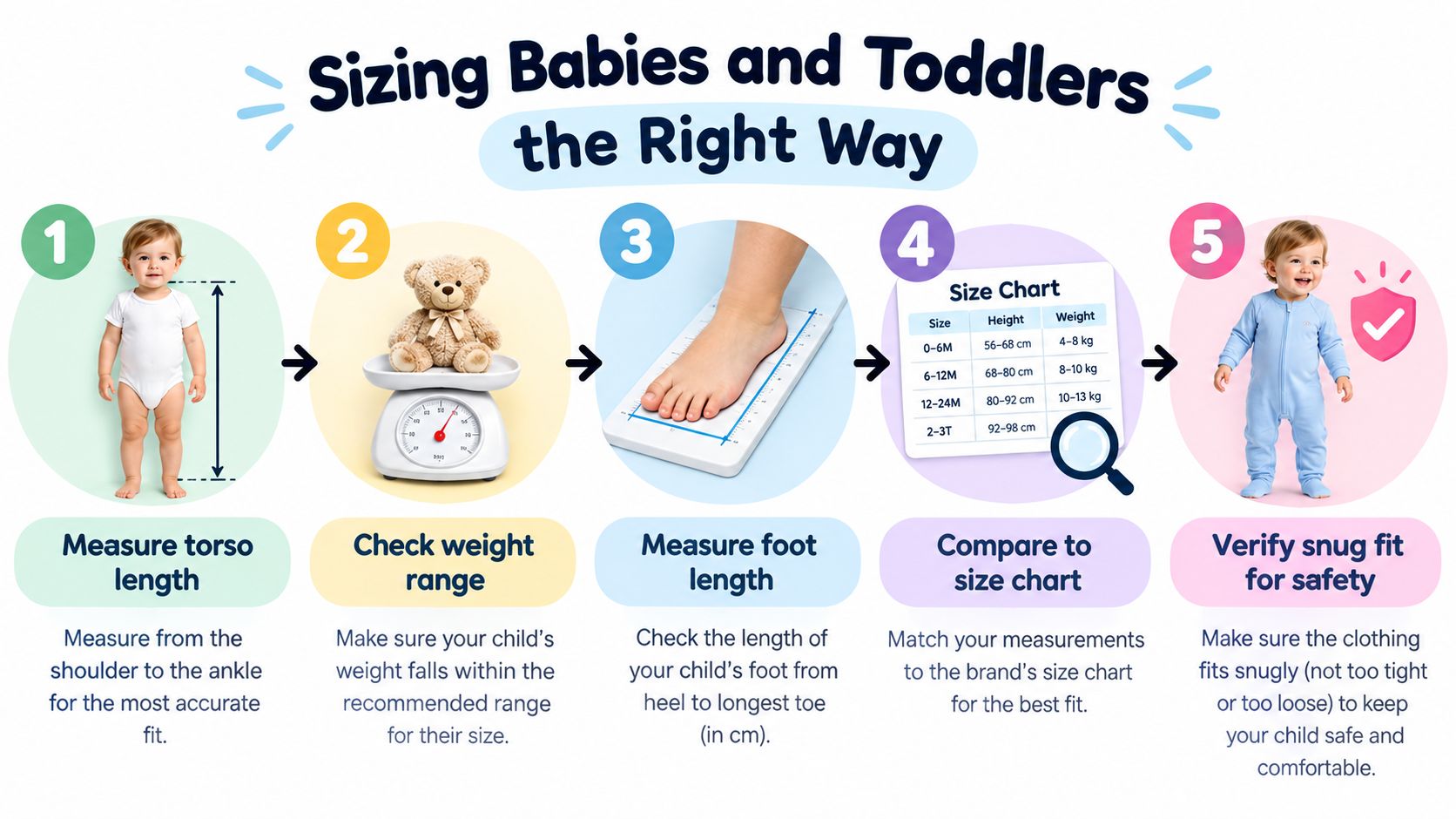
Age labels are a starting point, not a fit decision. For babies and toddlers, compare measured height, chest, waist, and weight with the brand's chart before ordering. A retail chart may place 0–3M at 21–24 inches and 8–12 pounds, while 2T may correspond to 32–34 inches and 28–32 pounds, and 4T to 38–40 inches and 35–39 pounds. Those ranges come from holiday family pajama sizing guidance, and the important point is that the brand chart matters more than the birthday label.
Measure the child standing upright, with the tape level. Check chest, waist, height, and weight, then compare every measurement to the specific chart for the set you're considering. If the garment has feet, check foot length too. A long torso can make a romper uncomfortable even when the child's weight falls neatly inside the size range.
Fit the smallest child first
Infant sleepwear should be snug-fitting unless it's specifically flame-resistant. Loose fabric can create fire and entanglement risks, so don't size up just to get more months of wear. Ribbons, loose trim, and dangling decorations also have no place on a napping infant's pajamas.
Safety comes before the family photo. If the baby's set doesn't fit safely, change the baby's style or color instead of forcing a larger size to preserve the match.
For toddlers, inspect practical details. Leave enough rise room for a diaper or training pants, check that footed cuffs don't pull at the toes, and choose snaps or zippers according to the child's habits. A zipper may make overnight changes easier, while two-piece sets often give active toddlers more freedom.
Use this baby clothing size chart as a reference point, but still verify the measurements for the exact brand. Size up only when the chart supports it and the garment remains safe. Size down when the larger option creates loose fabric, dragging cuffs, or a neckline that shifts during sleep.
Picking the Best Fabric for Spring Mornings
Easter mornings can feel chilly outdoors and stuffy indoors. A child may move from a cool bedroom to a warm car, then sit through a crowded church service before running outside for eggs. Fabric choice matters more than the pastel print.
Bamboo blends are a strong choice for babies and toddlers who need a soft, breathable layer. They tend to feel smooth against delicate skin and work well when the family wants lightweight pajamas for changing indoor temperatures. Their tradeoffs are cost and care. Bamboo can stretch when wet, so wash it gently and avoid judging the final fit straight from the laundry.
Cotton is the dependable middle ground. Organic cotton, ribbed knits, and soft jersey styles offer good airflow and a familiar hand feel. Cotton can shrink slightly in the first wash, so follow the care label and leave room for that possibility without buying an unsafe oversized infant garment.
Polyester and microfiber synthetics usually hold color and print detail well, which helps novelty designs stay vivid in photos. They can feel warmer and less breathable, though, and some sensitive children may dislike the texture.
| Fabric | Breathability | Softness on Sensitive Skin | Warmth for Cool Mornings | Wash Durability | Print Vibrancy |
|---|---|---|---|---|---|
| Bamboo blend | High | Very soft | Light to moderate | Good with careful washing | Soft, less graphic |
| Cotton | Good | Soft, especially in smooth knits | Moderate | Strong | Good |
| Polyester or microfiber | Lower | Variable | Moderate to high | Strong | Often vivid |
Match fabric to the wearer
My recommendation is simple: choose premium cotton or bamboo for the baby and toddler, then consider a synthetic blend for older children who'll wear the set occasionally. Don't make every family member use identical fabric if that compromises comfort. Matching color and motif can do the visual work.
The safety label still matters more than the fiber label. Infant pajamas must meet the relevant sleepwear requirements, and tight-fitting garments for young babies need to comply with applicable standards regardless of whether they're cotton, bamboo, or synthetic.
For a closer look at the tradeoffs, compare organic cotton and bamboo sleepwear before you buy. Also check seams, waistbands, and cuffs by hand. A soft fabric with scratchy stitching is still a poor choice for a baby who'll spend the morning being carried, photographed, and changed.
Adding Faith-Inspired Details Without Overdoing It
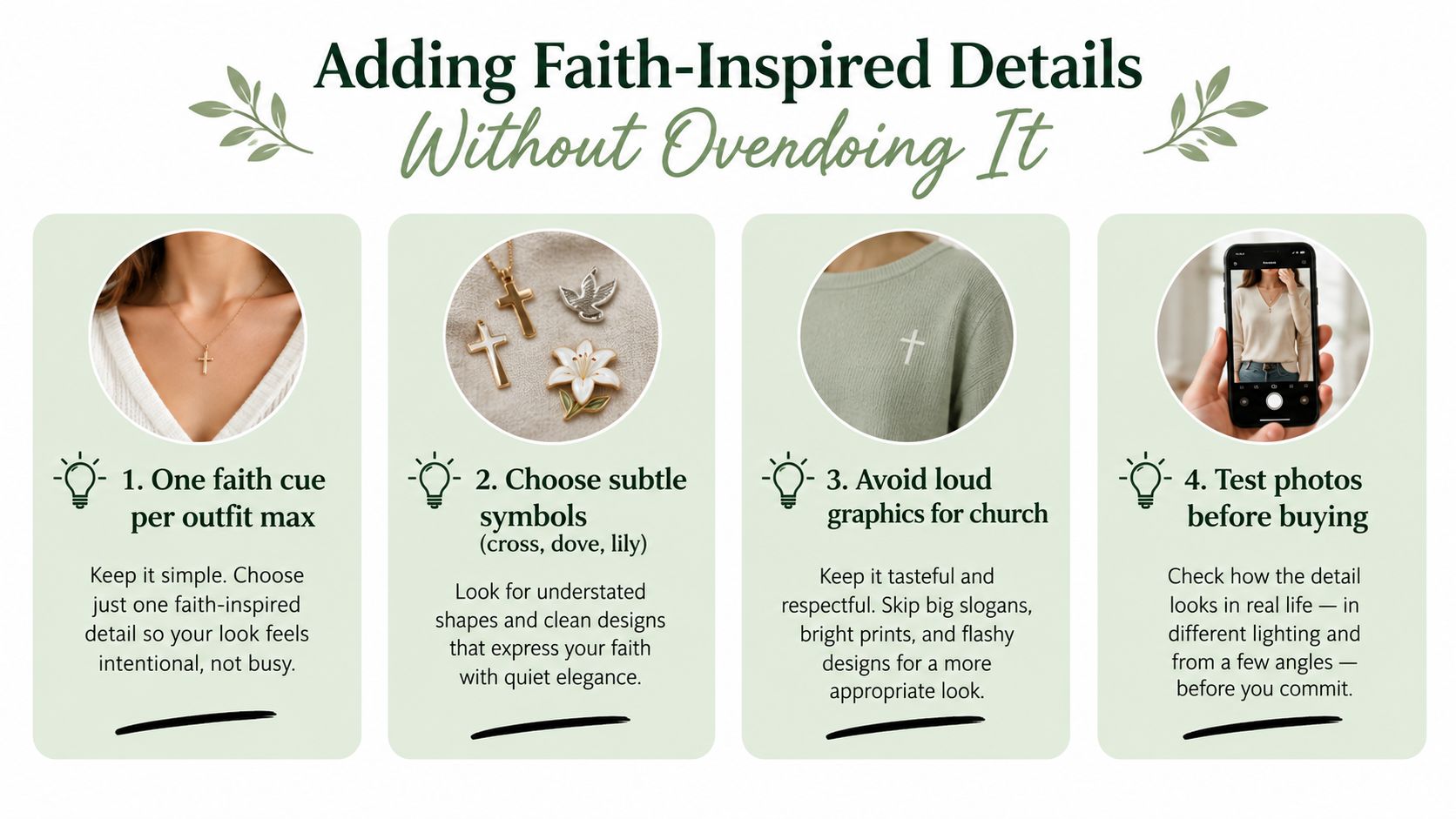
Faith-inspired Easter pajamas should feel meaningful, not like a costume. One deliberate faith cue per outfit is enough. A small embroidered cross on a chest pocket, a lamb on a baby footie, or a dove worked into a quiet print can say more than a shirt covered in competing symbols.
The most wearable details are the ones family members notice up close. Put a short verse inside a cuff rather than across the chest. Use a watercolor resurrection garden on one adult set, then let the children wear coordinating cream, sage, or lavender. Soft purples, creams, and soft greens can connect the look to the season without turning every garment into formal churchwear.
Let one outfit carry the clearest message
Build the set around a shared palette, then designate one person to wear the explicit faith element. Mom might wear a subtle cross, Dad might wear a solid coordinating set, and the children might wear lambs or small botanical details. The photos remain unified, and the symbolism doesn't compete with the children's expressions.
For families preparing for Communion or another church milestone, thoughtful clothing details can sit naturally alongside meaningful communion photos. Keep the pajama styling relaxed, then use the same palette in a later dressed-up family portrait.
Avoid pairing loud cartoon bunnies with a large Scripture print. It's not that either choice is wrong, but together they often send two unrelated visual messages. A restrained palette and one symbol look more considered for church mornings, Easter baskets, and gifts from grandparents.
Little Venture Co. offers bamboo baby and toddler sleepwear, including two-piece styles and faith-inspired designs, so its baby bundle sets can be one option when you're building the smallest wearer's part of a coordinated family look. Check the exact garment details and sizing before pairing it with other brands.
Easter Morning Photo Ideas That Actually Work
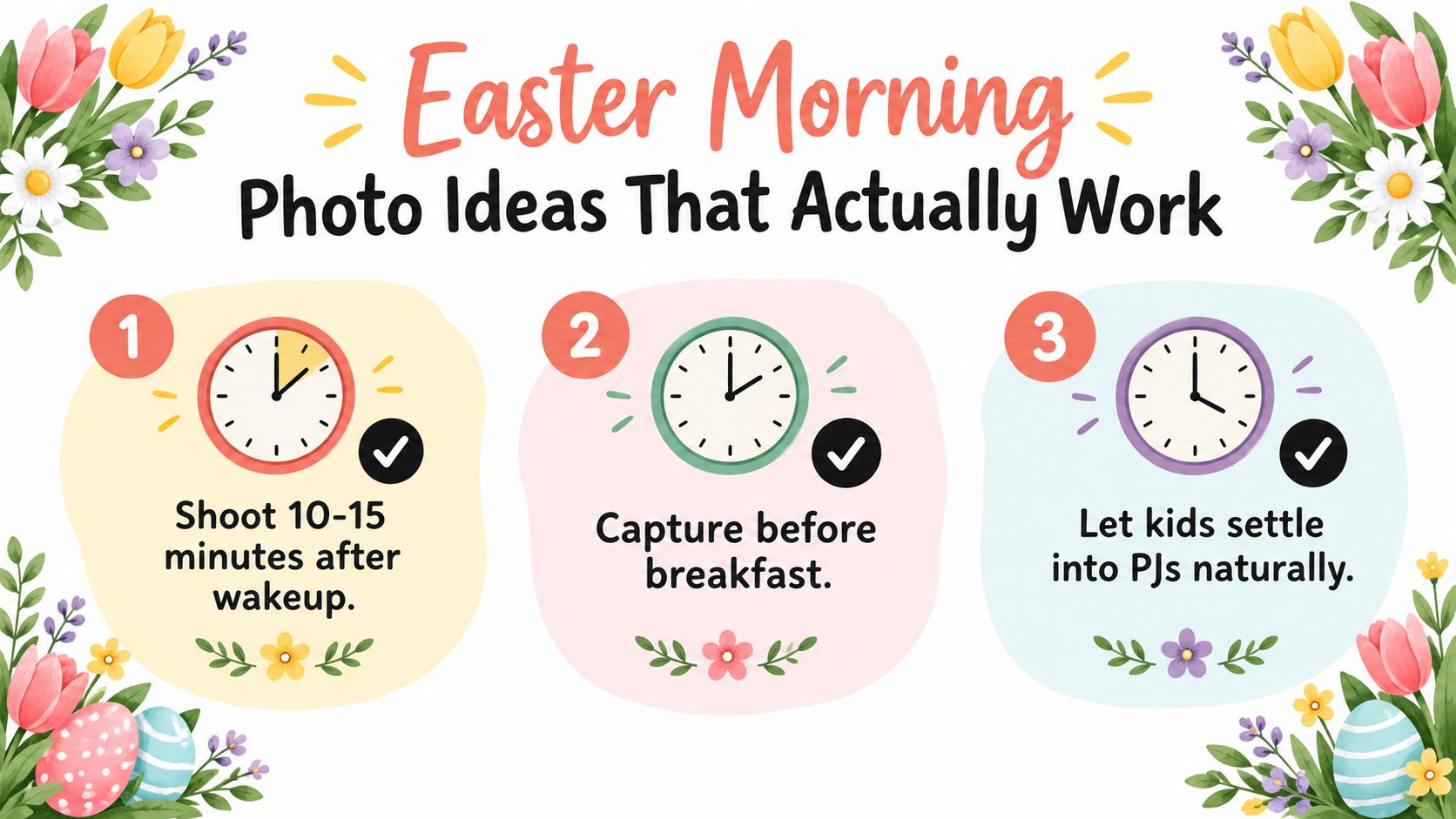
Don't wait until everyone is hungry and dressed for church. Take the pajama photos 10 to 15 minutes after wake-up, before breakfast, spills, and the inevitable toddler clothing change. Children look most natural when they're still settling into the morning rather than being posed for a long session.
You don't need a studio. Use a neutral wall near a window, a linen-draped dining chair, an unmade bed with a cream duvet, a backyard fence line in morning shade, or a woven basket placed safely on the floor. Turn the child toward soft window light and keep the background quieter than the pajamas.
Change one prop, not the whole setup
Keep the camera position fixed and swap a single prop every half minute:
- Plush bunny: Use it for a classic Easter frame.
- Palm frond: Add a Palm Sunday crossover detail.
- Small cross: Keep it held by an older child, away from babies who might mouth it.
- Hardcover Bible: Place it beside an adult or older child rather than handing it to a baby.
- Dyed eggs in a wooden bowl: Put the bowl within reach only for supervised photos.
- Fresh spring flowers: Use a small vase outside the baby's reach.
A pet should get one frame, not the whole session. Keep the dog on a leash or have an adult hold the cat, take the photo, and let the animal leave before the children lose patience.
Here's a short visual reminder for keeping the timing simple:
Before you start, clean the phone lens, switch on gridlines, and use burst mode for toddlers. For newborn-specific framing and light, keep newborn photo outfit guidance nearby, then let the Easter details stay secondary to the baby's comfort.
After the photos, move into a low-pressure activity rather than demanding more poses. Keep a few easy Easter projects for young kids ready so the pajamas become part of the morning instead of a costume worn for five minutes.
Making the Purchase Feel Worth It
A good set shouldn't disappear into a drawer after Easter. Choose colors that work through spring, prints that don't depend entirely on eggs or candy, and silhouettes your family already likes wearing. A cream-and-sage floral, a soft lamb motif, or a simple cross detail can feel seasonal without becoming unusable the next week.
Inspect the construction before removing tags. Look for reinforced seams, colorfast-looking prints, elastic cuffs that recover after stretching, and smooth zippers on infant sizes. Run your fingers along the inside seams and check whether the zipper pull or snap placement could rub a baby's neck or chin.
My buying rule: If the set looks adorable but the baby's zipper, neckline, or fit feels questionable, it isn't the right set.
Build value around repeat use
A pajama set can anchor an Easter basket beside a board book, a wooden cross ornament, or a faith-inspired storybook. That combination feels more personal than filling the basket with disposable treats, and each item serves a different purpose.
Take a test photo before Easter morning. Lay out everyone's sets under the lighting you'll use, then photograph them together. Pastels that look identical on a product page may separate sharply under warm indoor bulbs, and a pale print can disappear against a cream duvet.
Don't automatically buy one size up for a toddler. Children grow quickly, but an oversized set can drag at the cuffs, twist during sleep, and look sloppy in photos. Use the measurement chart, keep tags attached, and have every family member try the pajamas on before washing them.
Matching family sleepwear has become part of a broader seasonal tradition rather than a one-off novelty. Reporting on the wider holiday pajama category put total sales at nearly $5 billion in the prior year and described projected growth toward nearly $8 billion by 2033, while coordinated sets were identified as a core growth format in retail coverage of family pajamas. That context supports buying thoughtfully, but it doesn't justify buying a set your family won't wear.
Target your order for roughly three weeks before Easter so you have time to exchange mismatched sizes. Finish with three priorities: the baby must fit safely, every child must be comfortable, and the family palette must look good in real home lighting.
Little Venture Co. offers bamboo sleepwear and daywear for babies and toddlers, including zip rompers and two-piece pajamas with faith-inspired details. Visit Little Venture Co. to find a soft, meaningful starting point for the smallest member of your Easter pajama lineup.