

Long Sleeve Sleep Shirt: A Buyer's Guide
At 2 a.m., the nursery feels colder than it did at bedtime. Your toddler has kicked away the blanket, their arms are cool, and you're trying to decide whether another layer will help or leave them sweaty by morning. A long sleeve sleep shirt can solve that familiar problem, but only when you choose the fabric, fit, and safety features with care.
For Christian families, sleepwear can also carry meaning. A thoughtfully chosen garment can welcome a new baby, encourage a tired parent, support a church ministry, and reflect gratitude for the little life God has entrusted to your care. Comfort matters, but so do responsible materials, practical construction, and a purpose beyond the purchase.
Why the Long Sleeve Sleep Shirt Is a Nursery Staple
A long sleeve sleep shirt sits between lightweight warm-weather pajamas and bulky cold-weather layers. For babies and toddlers, it usually means a soft, easy-moving top with sleeves that cover the arms without the extra seams and waistbands found in some two-piece sets. Depending on the design, it may be worn alone, under a sleep sack, or as part of a broader bedtime layering routine.
That flexibility is why many parents reach for it during changing seasons. A short-sleeved romper can leave little arms exposed in a cool room, while thick fleece can feel excessive once the nursery warms up. A breathable long sleeve sleep shirt gives you another option, especially for children who move constantly and refuse to keep blankets over their bodies.
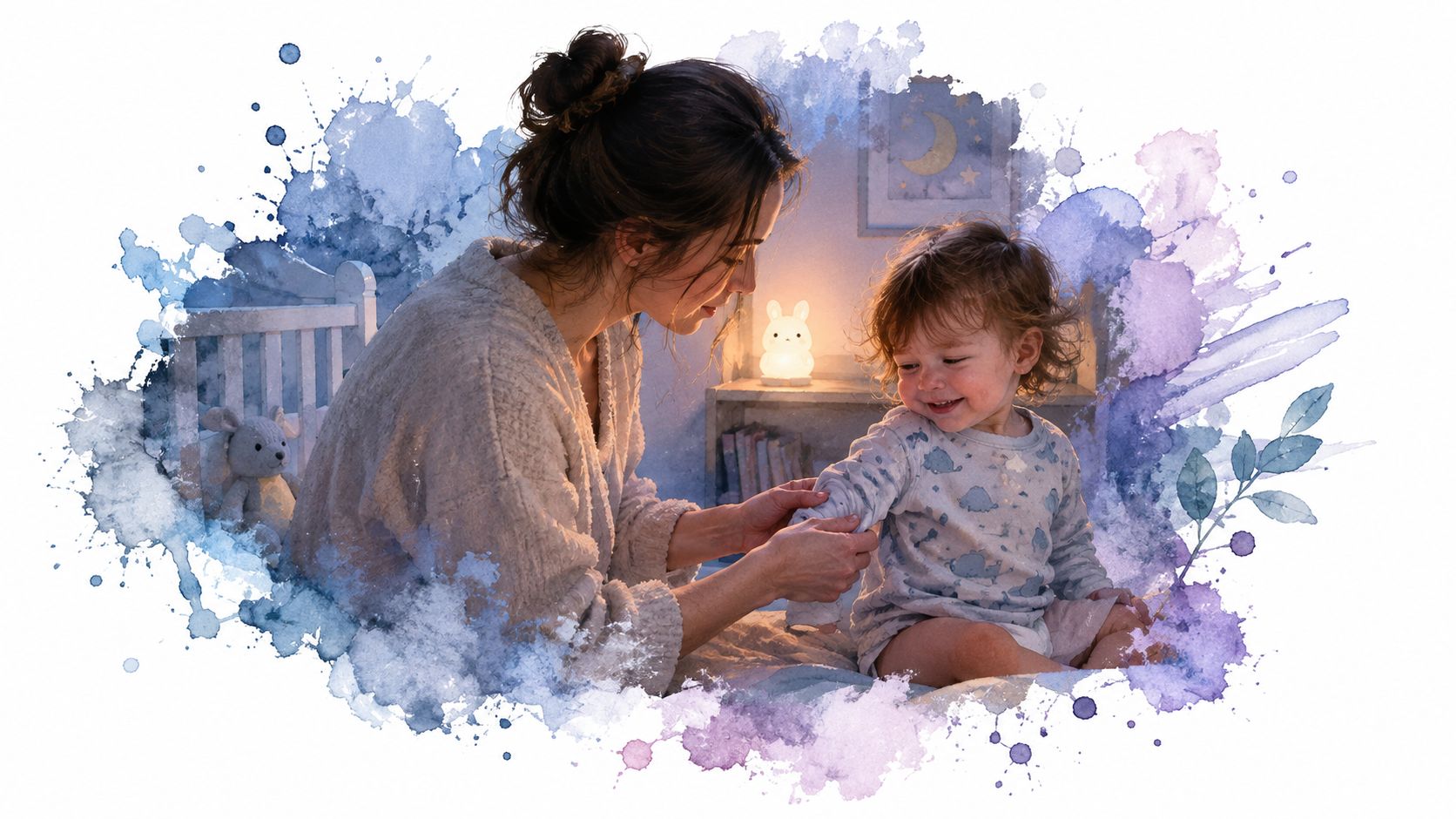
Why parents prefer the simple shape
Traditional two-piece pajamas can ride up, twist around a toddler's waist, or create extra clothing to manage during a nighttime diaper change. Footed sleepers offer coverage, but some children dislike enclosed feet, and older toddlers may need a more flexible garment for walking and play before bed.
A long sleeve sleep shirt keeps the upper body covered while leaving parents more freedom to choose what happens below. You can pair it with suitable sleep bottoms, a wearable blanket, or nothing additional when the room and child's comfort call for a lighter approach.
Practical rule: Choose the garment for the child's actual sleep environment, not for the calendar alone.
For newborns, safe swaddling decisions come before adding a long sleeve layer. Parents can review these swaddle safety tips for babies before moving from a wrapped newborn routine toward wearable sleepwear. Once a child is rolling and moving freely, the fit and construction of the sleep shirt deserve close attention.
The broader sleepwear market gives this category a strong commercial backdrop. One 2026 estimate places the global sleepwear market at about USD 14.32 billion in 2024, with a projection of USD 39.29 billion by 2035, while another estimate values sleepwear and loungewear at USD 34.1 billion in 2025 and projects USD 49.9 billion by 2031. The estimates differ because they define the category differently, but both show that sleepwear is an established global apparel market, not a tiny niche. Market Research Future summarizes these market estimates and category drivers.
The Science of Bamboo Viscose and Thermal Comfort
Sleeve length doesn't determine thermal comfort by itself. The fabric must balance insulation, breathability, and moisture transport, because a child can feel cold from exposed arms and still become uncomfortable if trapped moisture makes the shirt cling to the skin.
A peer-reviewed sleepwear study explains that textiles influence sleep comfort through thermal insulation and hygral properties. In plain language, the material affects how heat and moisture move between the skin and the surrounding air. A long sleeve sleep shirt can help retain warmth in a cool nursery, but a poorly ventilated fabric may hold dampness against the body and interfere with comfort. The study on sleepwear and thermal comfort explains this relationship in detail.
What bamboo viscose contributes
Bamboo viscose is popular in baby clothing because it has a smooth, soft hand feel and can be made into lightweight, flexible knits. Those qualities matter for a child who sleeps with their arms bent, rolls from side to side, or has sensitive skin that reacts to rough seams and stiff fabric.
The useful question isn't whether bamboo viscose is automatically perfect. It's whether the specific garment has a suitable fabric weight, a comfortable stretch, flat or well-finished seams, and enough breathability for the room. Marketing language such as “cooling” or “thermoregulating” shouldn't replace checking the product's construction and care instructions.
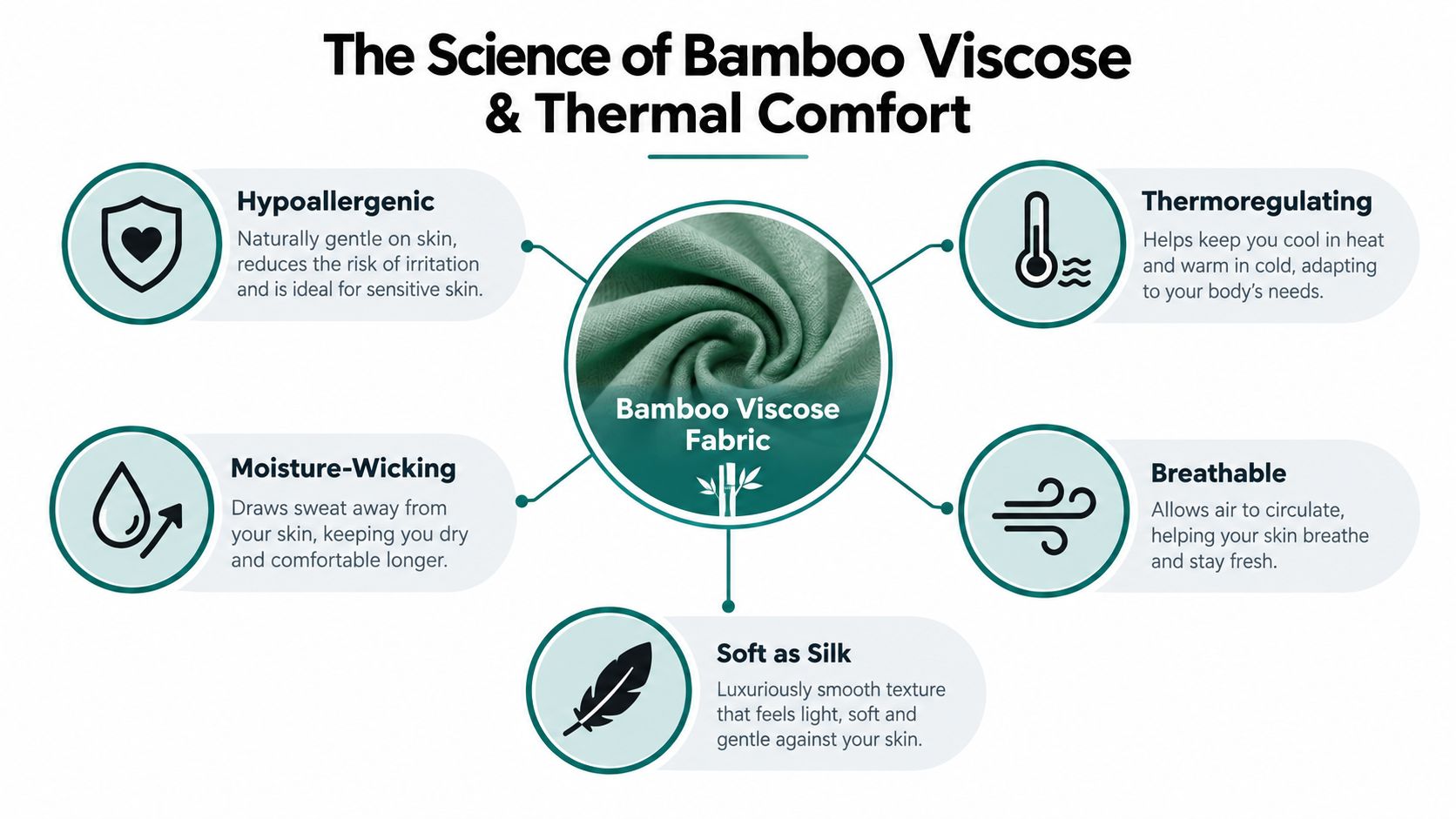
Learn how the fiber is processed and how it differs from other textiles in this guide to bamboo viscose. That background helps you separate the material itself from claims made about a finished garment.
Why moisture matters overnight
A child who feels warm isn't necessarily overheating, and a child with cool hands isn't necessarily too cold. Check the torso and neck, observe whether the skin feels damp, and consider the room's conditions before adding layers. Long sleeves provide coverage, but fabric weight and moisture release determine whether that coverage feels helpful.
The evidence also argues against treating sleeve length as a guaranteed sleep aid. A 2025 systematic review found no sleep-outcome differences between cotton and other blended sleepwear in the infants, children, and young men included in the review. An earlier controlled study found that wool could improve sleep onset and thermal comfort in cooler conditions. Together, those findings point toward a practical conclusion: temperature and fabric behavior matter more than the label “long sleeve.” The systematic review is available in the Journal of Sleep Research.
For parents, that means choosing a breathable, appropriately weighted shirt and adjusting layers based on the child and room. Bamboo viscose may be a comfortable option, but it shouldn't be treated as a promise that every child will sleep better in every climate.
Navigating Safety Standards and Skin Sensitivities
A beautiful print and soft texture don't make children's sleepwear safe. Start with the garment's intended use, fit, construction, and testing information. For babies and toddlers, the shirt will sit against the arms, neck, and torso for hours, so vague claims deserve less attention than clear documentation.
Understand the children's sleepwear rules
Children's sleepwear sold in the United States must comply with federal flammability requirements when it falls within the covered sizing range. The rules apply to sleepwear sized above 9 months up to size 14, and covered products must either pass flammability testing or qualify as tight-fitting sleepwear. The U.S. Consumer Product Safety Commission explains children's sleepwear requirements and exemptions.
The reason for the tight-fitting pathway is straightforward. Loose fabric creates more opportunity for contact with a small open flame, while close-fitting clothing reduces the amount of fabric available to ignite. This doesn't mean parents should force a child into restrictive clothing. It means the garment should fit as designed, without excessive looseness, trailing fabric, or improvised sizing.
Look for a product description that identifies the garment as children's sleepwear and explains its compliance route. Don't assume that a general lounge top follows the same rules as purpose-made sleepwear.
Treat OEKO-TEX as a verification question
OEKO-TEX Standard 100 relates to testing textiles for harmful substances. It doesn't mean a garment is organic, automatically hypoallergenic, or guaranteed to prevent eczema. It does give shoppers a more concrete safety benchmark than an unsupported “clean” or “natural” label.
For a sensitive child, check whether the certification applies to the finished product and whether the brand provides clear information about testing. Then inspect the physical garment. A certified fabric can still have scratchy thread ends, a rough label, or a seam that lands directly on an irritated patch of skin.
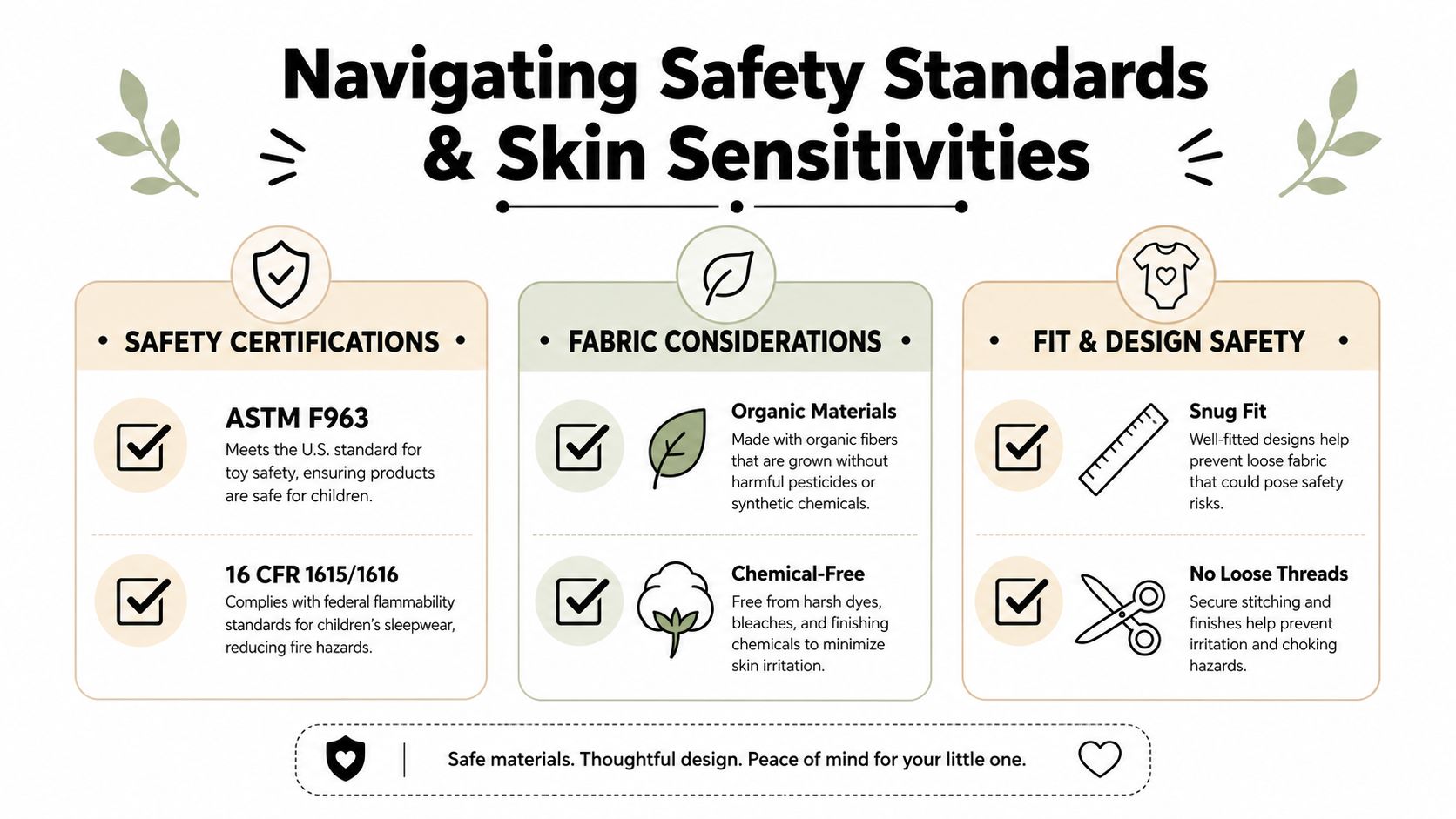
Parents comparing certifications can use this explanation of OEKO-TEX Standard 100 to understand what the label does and doesn't establish.
A skin-friendly shopping checklist
- Read the fiber content: Choose a fabric that feels smooth and breathable rather than relying on the word “hypoallergenic.”
- Inspect seams and labels: Look for soft finishing, secure stitching, and no loose threads that can scratch or catch.
- Avoid unsupported promises: “Chemical-free” is too broad to be useful unless the seller identifies a recognized testing standard.
- Watch the child's skin: Redness, dampness, or repeated scratching is a reason to remove the garment and reconsider the fabric, fit, detergent, or finish.
- Ask for clinical guidance: Persistent eczema or suspected allergy belongs with a pediatrician or dermatologist, not a clothing label.
Sizing, Layering, and Care Instructions
A safe long sleeve sleep shirt should fit close enough to meet its intended sleepwear design without binding at the neck, wrists, chest, or underarms. Don't buy several sizes too large just to extend wear. Extra fabric can bunch, twist, and create the loose fit that sleepwear standards are designed to address.
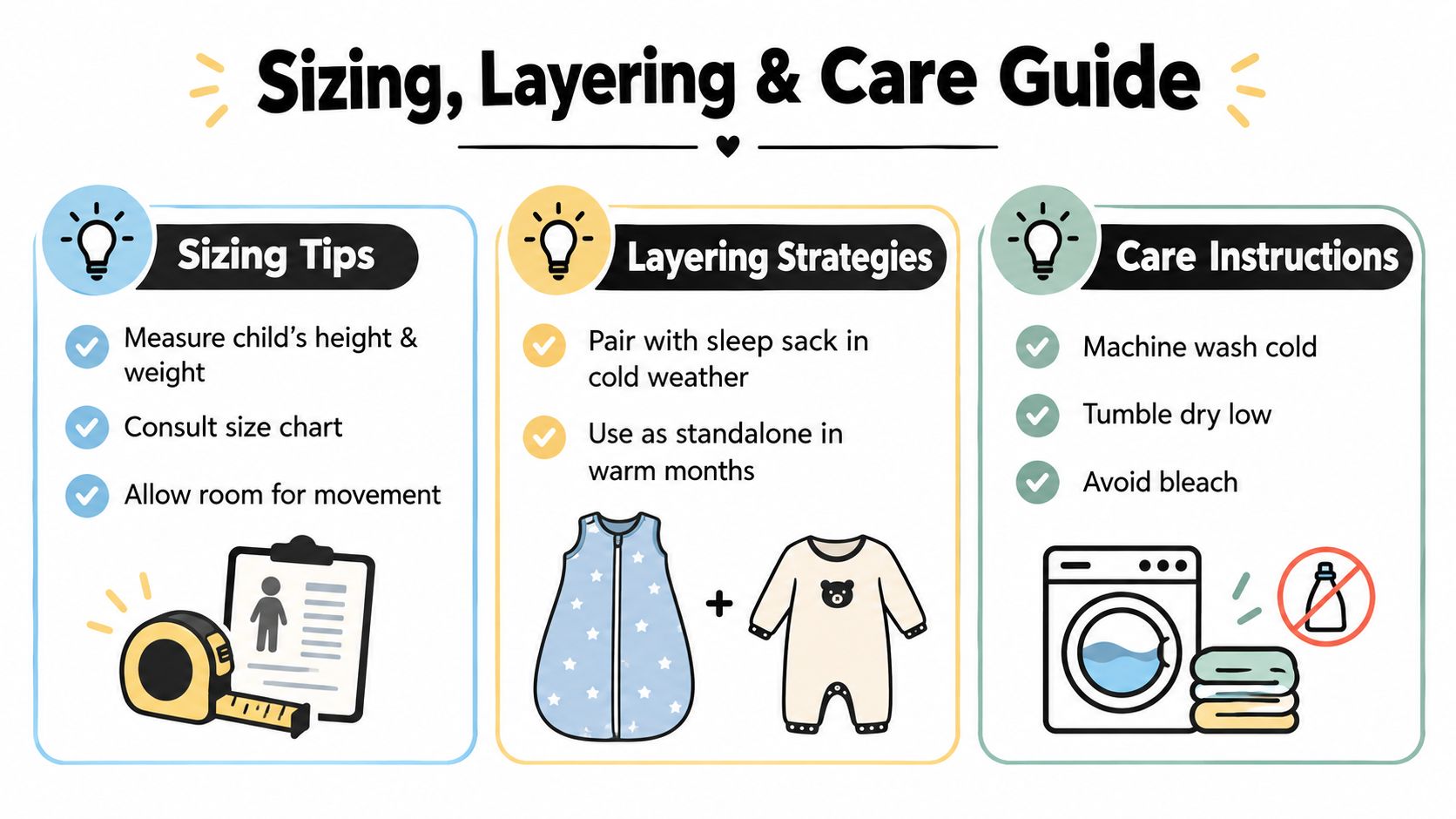
Use the brand's size chart rather than choosing by age alone. Compare the child's height and body measurements with the chart, then check sleeve length and torso length after the garment arrives. Your child should be able to reach, roll, sit, and stand comfortably without the cuffs slipping over the hands.
Layer according to conditions
A lightweight long sleeve sleep shirt may work as a standalone top in a warm season or room. In cooler conditions, it can serve as the base layer beneath a properly fitted sleep sack or wearable blanket. Avoid piling on layers because the child's hands feel cool. Check the chest or back, and remove a layer if the torso feels hot or damp.
Use this practical guide on how to dress a baby for sleep when you're deciding whether the shirt should stand alone or sit under another sleep layer.
Keep bamboo viscose soft
Bamboo viscose needs gentle handling if you want to preserve its drape and smooth feel. Follow the garment label first, but a sensible routine usually includes cold or cool washing, a mild detergent, and low-heat drying when tumble drying is permitted.
Skip chlorine bleach and avoid high heat unless the care label specifically allows it. High temperatures can stress delicate fibers, affect fit, and shorten the useful life of the garment. Wash sleepwear with similar soft items, fasten closures before laundering, and remove the shirt promptly so it doesn't sit damp in the machine.
If you're saving clothing for a younger sibling or hand-me-down, fold it only after it's fully dry. Store it away from direct sunlight and strong fragrances, especially if the next child has sensitive skin.
Meaningful Gifting for Showers and Ministry Outreach
A long sleeve sleep shirt makes a practical gift because babies and toddlers use sleepwear constantly. It also gives relatives and church friends a chance to choose something more personal than another noisy toy that may be outgrown quickly.
For a baby shower, pair the shirt with a soft book about creation, a simple prayer card for the parents, and a handwritten note naming the child's dignity and worth. For a baptism or dedication, choose a gentle design that can become part of the child's early story without turning the garment into a disposable slogan.
Build gifts around service
A meaningful bundle doesn't need to be large. It needs to answer a real family need and communicate thoughtful care.
- For new parents: Include a long sleeve sleep shirt, a practical sleep sack selected for the child's stage, and a note offering prayer for peaceful nights.
- For grandparents: Add a keepsake card with a short blessing written in your own words, rather than relying only on printed packaging.
- For a holiday gift: Choose durable sleepwear with a creation-inspired design, then include a bedtime book that invites wonder and gratitude.
- For a church nursery: Purchase coordinated sleepwear or daywear only after confirming the ministry's sizes, laundering capacity, and distribution needs.
- For a family support effort: Favor useful clothing in accessible designs over novelty items that require special care.
Church groups should also think about dignity. Families receiving assistance deserve clothing that feels thoughtfully chosen, not like a leftover donation. Soft fabric, secure construction, and attractive designs communicate respect before a single word is spoken.
Faith-inspired clothing can carry a quiet message. A little one doesn't need to understand the design for the gift to matter. The parent may see a reminder of hope during a difficult season, while the giver gets to offer something useful, beautiful, and connected to a life of service.
For more ideas that combine generosity with practical baby gifts, visit this guide to baby gifts that give back. The central question is simple: will this present support the family after the wrapping paper is gone?
Choosing Little Venture Co for Comfort and Purpose
The right long sleeve sleep shirt brings several decisions together. You want a fabric that feels gentle, a construction that supports movement, a fit appropriate for children's sleepwear, and testing information you can understand. You also want the garment to serve an actual purpose in your home, whether that means a breathable standalone layer or a soft base beneath a wearable blanket.
Little Venture Co. offers bamboo sleepwear and daywear for babies and toddlers, including zip rompers, two-piece sets, and related accessories. The brand states that its materials are tested and OEKO-TEX Standard 100 certified, which gives parents a specific safety reference when evaluating clothing for sensitive skin. Certification doesn't eliminate the need to check fit, seams, laundering instructions, or your child's individual response, but it is more useful than an unverified “natural” claim.
Match the purchase to your family
For your own nursery, begin with the child's current sleep routine. If they dislike restrictive footed clothing, a top-based sleepwear option may give them more freedom. If the room changes between seasons, a breathable long sleeve layer can provide more flexibility than buying only heavy winter pajamas.
For a gift, choose the size with the recipient's needs in mind and include a gift receipt when possible. A thoughtful present should be easy for the parent to exchange if the fit doesn't work. For a church or ministry purchase, confirm the preferred sizes and ask whether the organization needs individual gifts, coordinated items, or clothing for a specific family-support program.
The brand also contributes a portion of every sale to Heartbeat International, which supports pregnant women in need globally. That mission gives a purchase an additional purpose, especially for Christian families who want ordinary household spending to reflect care for both children and parents.
A meaningful purchase should care for the child wearing it and the people whose lives the purchase can support.
Sleepwear won't solve every bedtime challenge, and bamboo viscose isn't a substitute for sound sleep-safety guidance or medical care. Still, a well-made long sleeve sleep shirt can become one of those small household choices that makes nighttime care simpler. Choose based on fabric behavior, fit, certification, and the child in front of you, not on a catchy label.
Little Venture Co offers faith-inspired bamboo sleepwear and daywear for babies and toddlers, with OEKO-TEX Standard 100 certified materials and a mission that supports Heartbeat International. Visit Little Venture Co to choose a comfortable, purposeful sleepwear gift or a gentle long sleeve layer for your little one.