

Gender Neutral Toddler Clothes: Top Styles for 2026
You're standing over a drawer full of toddler clothes, holding up one shirt with a monster truck and another with ruffles so stiff they look uncomfortable before your child even puts them on. You want something soft, simple, and sweet. Something that fits your little one's busy body and your family's values. That's where a lot of parents find themselves.
For many Christian families, choosing gender neutral toddler clothes isn't about making a statement. It's about making room. Room for movement, room for personality, room for hand-me-downs, and room for the quiet beauty of childhood without forcing every outfit into a “boy” or “girl” box.
Dressing Your Little One with Purpose and Joy
I think a lot of us start here. We aren't trying to reinvent childhood. We're just trying to buy clothes that make sense for real life.
Toddlers climb furniture, spill snacks, kneel in the dirt, ask to be carried, then wriggle to get down again. They need clothes that can keep up. Yet so many store racks still sort little ones into narrow categories that don't always feel practical or even lovely.
A simple sage romper. A soft striped set. A pajama with stars or woodland animals. Those choices often feel easier, calmer, and more usable than clothes built around slogans or stereotypes.
According to Mintel's research on parents who support gender-neutral kids' clothing, exactly one in five (20%) U.S. parents with children under age 12 who bought kids' clothing in the last year support the trend toward gender neutral clothing for kids. That tells me this is still an emerging choice, but it's no longer unusual.
What many parents really mean by neutral
Sometimes people hear “gender neutral” and assume it means plain, dull, or detached. That hasn't been my experience at all.
For many families, it means:
- Comfort first so toddlers can move, rest, and play easily
- Flexible colors and prints that work across seasons and siblings
- Less pressure to dress a child according to someone else's idea of masculinity or femininity
- More intentional buying so each item earns its place in the drawer
A gentle reminder: Clothes don't create your child's identity. They simply serve your child while identity is still unfolding.
That matters in a Christian home too. We can choose clothing with gratitude and wisdom. We can avoid waste. We can care for the bodies God has given our children. We can choose beauty without attaching unnecessary labels to every little shirt and sleeper.
If you've been trying to simplify both daytime outfits and pajamas, this look at sleep and play essentials for little ones can help you think through what gets worn most.
A joyful wardrobe doesn't need to be big. It just needs to be thoughtful. When clothes are soft, practical, and easy to love, getting dressed becomes one less battle and one more small act of care.
Exploring the World of Gender Neutral Apparel
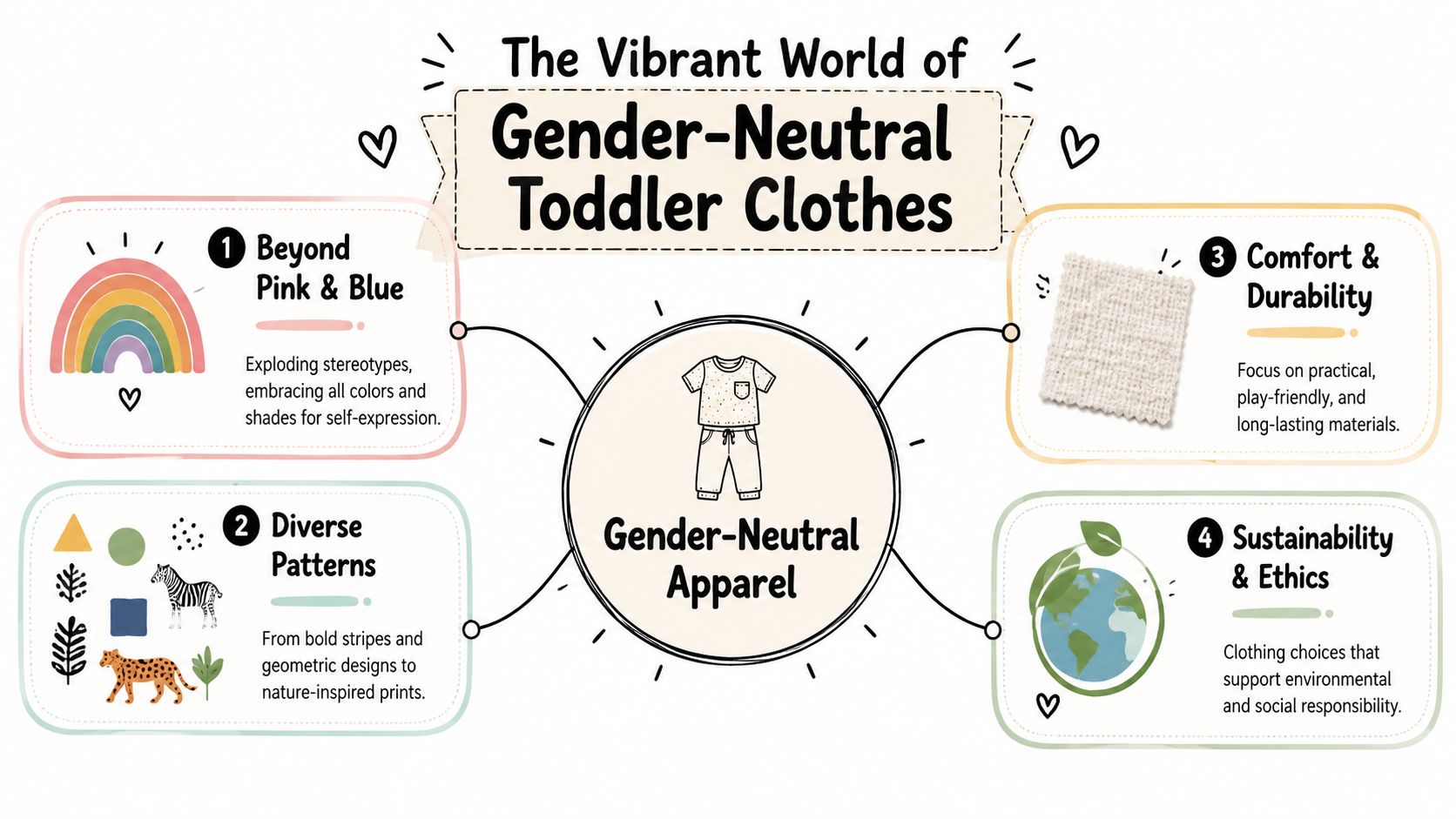
Gender neutral toddler clothes are often misunderstood. They are not just beige basics. They're also not a refusal of color, personality, or fun.
They're better understood as clothes designed around the child instead of around a stereotype.
Worldcrunch's overview of gender-neutral clothing design notes that gender-neutral toddler clothing prioritizes soft, low-weight fabrics and simple, non-restrictive cuts that maximize free movement. It also points to versatile fits and color palettes without gender-coded motifs, helping children express individuality without unnecessary social constraints.
It's more than beige and gray
Think about the colors you see outside. Olive leaves. Sand. Clay. Dusty blue sky before a storm. Soft peach at sunset. Deep evergreen. Warm cream. Toddlers don't need to live in pink-only or blue-only wardrobes when creation itself offers a much wider palette.
A gender neutral closet can include:
- Earth tones like sage, rust, oat, and moss
- Soft pastels that feel fresh without looking overly themed
- Classic deeper shades like charcoal, navy, and forest green
- Playful prints such as stars, animals, checks, botanicals, stripes, and dots
That's why I like to think of neutral clothing as an artist's palette, not a blank wall.
What these clothes are trying to do
A frilly dress that rides up when a toddler climbs the couch may look cute on a hanger, but it doesn't serve the child very well. A soft romper or a roomy two-piece set often does a better job because it leaves space for movement.
Here's a simple comparison:
| Style choice | What it often does |
|---|---|
| Stiff, highly decorative outfit | Can limit movement and require constant adjusting |
| Soft romper or relaxed set | Supports crawling, running, climbing, and lounging |
| Shirt with gendered slogan | Tells a story about gender expectations |
| Nature or geometric print | Leaves more room for imagination and personality |
Some of the best toddler clothes are the ones your child forgets they're wearing.
That's usually the goal. No pinching waistband. No scratchy trim. No outfit that needs adult supervision every five minutes.
If you want more ideas on what neutral clothing can look like in everyday life, this guide to neutral baby clothes for simple wardrobes gives practical examples that carry well into the toddler years.
Why Material and Safety Certifications Matter
When parents talk about toddler clothes, style gets a lot of attention. Fabric and safety details deserve just as much.
A toddler's skin is delicate. Their bodies run warm, then cool off quickly. They nap, play hard, drool, sweat, spill, and sometimes react to seams or finishes that adults barely notice. That's why material choice matters so much.
Why bamboo gets my attention
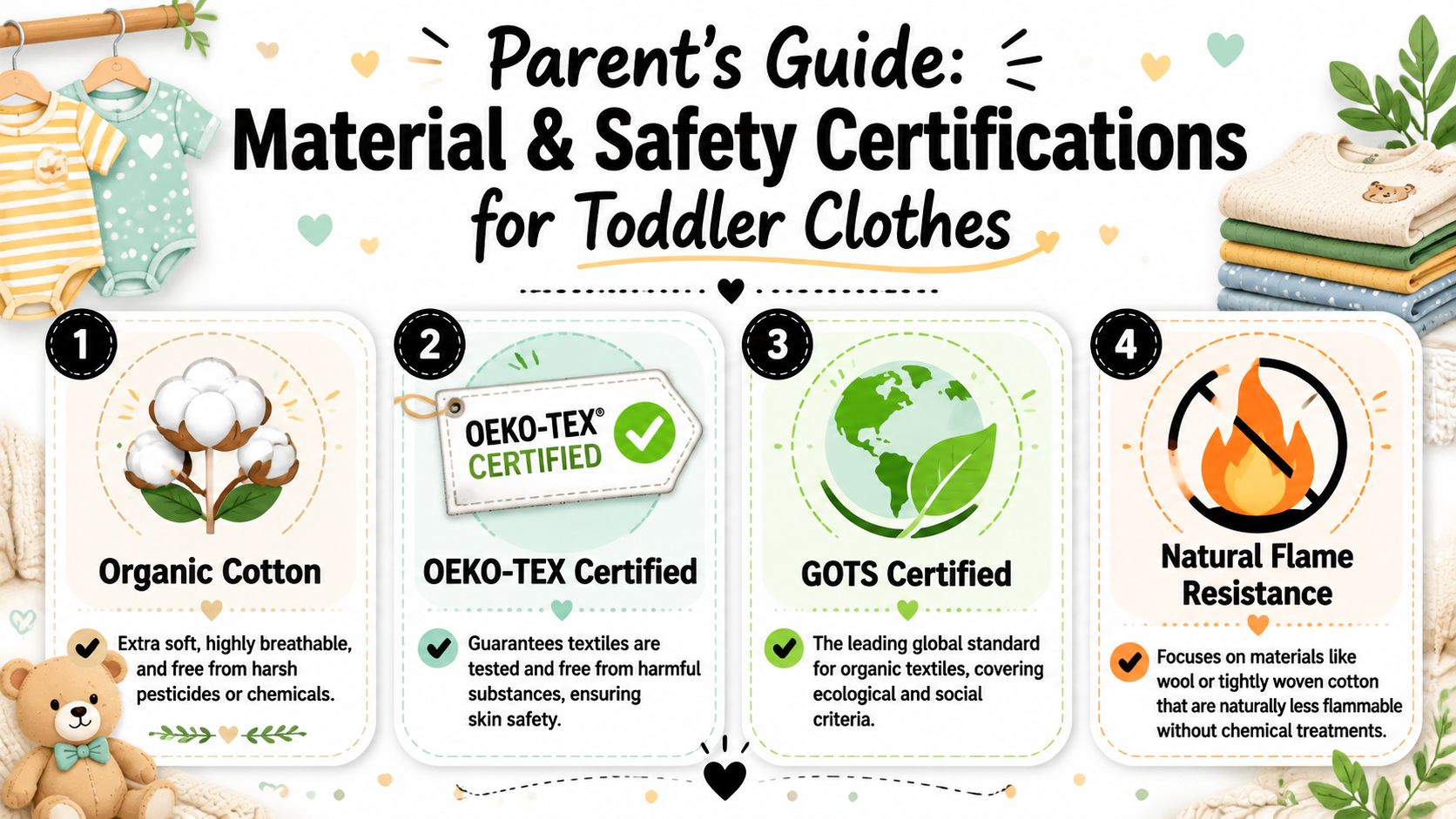
One overlooked area in mainstream roundups is bamboo viscose. According to Autostraddle's discussion of gaps in gender-neutral kids' clothing guides, 68% of toddlers are affected by skin sensitivities, and bamboo is described as 3x more breathable and hypoallergenic than cotton when OEKO-TEX certified.
That doesn't mean cotton is bad. Plenty of cotton pieces are wonderful. But if your toddler has easily irritated skin, runs hot during sleep, or seems bothered by rougher textures, bamboo is worth a serious look.
Parents often notice a few practical benefits:
- A smoother feel against sensitive skin
- Better breathability for warm sleepers and active toddlers
- A drapier fit that moves easily with the body
What OEKO-TEX means in plain language
OEKO-TEX can sound technical, but the parent-level meaning is simple. It signals that the textile has been tested for harmful substances.
That's comforting because toddlers put sleeves in their mouths, rub collars against their cheeks, and wear pajamas for long stretches at night. Fabric safety isn't an extra feature. It's part of loving care.
If you want a clearer breakdown of labels and what they mean on a clothing tag, this explanation of OEKO-TEX Standard 100 for parents is a helpful starting point.
Practical rule: If a brand talks a lot about softness but says nothing about testing, ask more questions.
Safety goes beyond the fabric
Material is only part of the story. Construction matters too.
The U.S. Consumer Product Safety Commission requires children's apparel to follow strict standards. According to the CPSC textile safety guidance for children's garments, clothing for young children must meet rules around lead content of less than 90 ppm, ASTM F-1816 compliance for drawstrings, and third-party lab testing with a Children's Product Certificate (CPC).
Here's what that means for a parent scanning product details:
- Fasteners matter. Snaps, zippers, and trims should meet lead limits.
- Drawstrings are serious. Safe design avoids features that create choking or entanglement hazards.
- Paperwork matters too. A CPC means the item has gone through required testing steps.
This is one place where stewardship becomes very practical. Caring for a child's body includes noticing what touches their skin and how a garment is built. Softness is lovely. Safety is essential.
Building a Versatile and Lasting Wardrobe
A toddler wardrobe doesn't need dozens of pieces. It needs the right few.
That's why I'm a fan of the capsule approach for little kids. Not because it's trendy, but because mornings go better when everything works together and you aren't digging through a pile of one-off outfits.
Start with a small group that mixes well
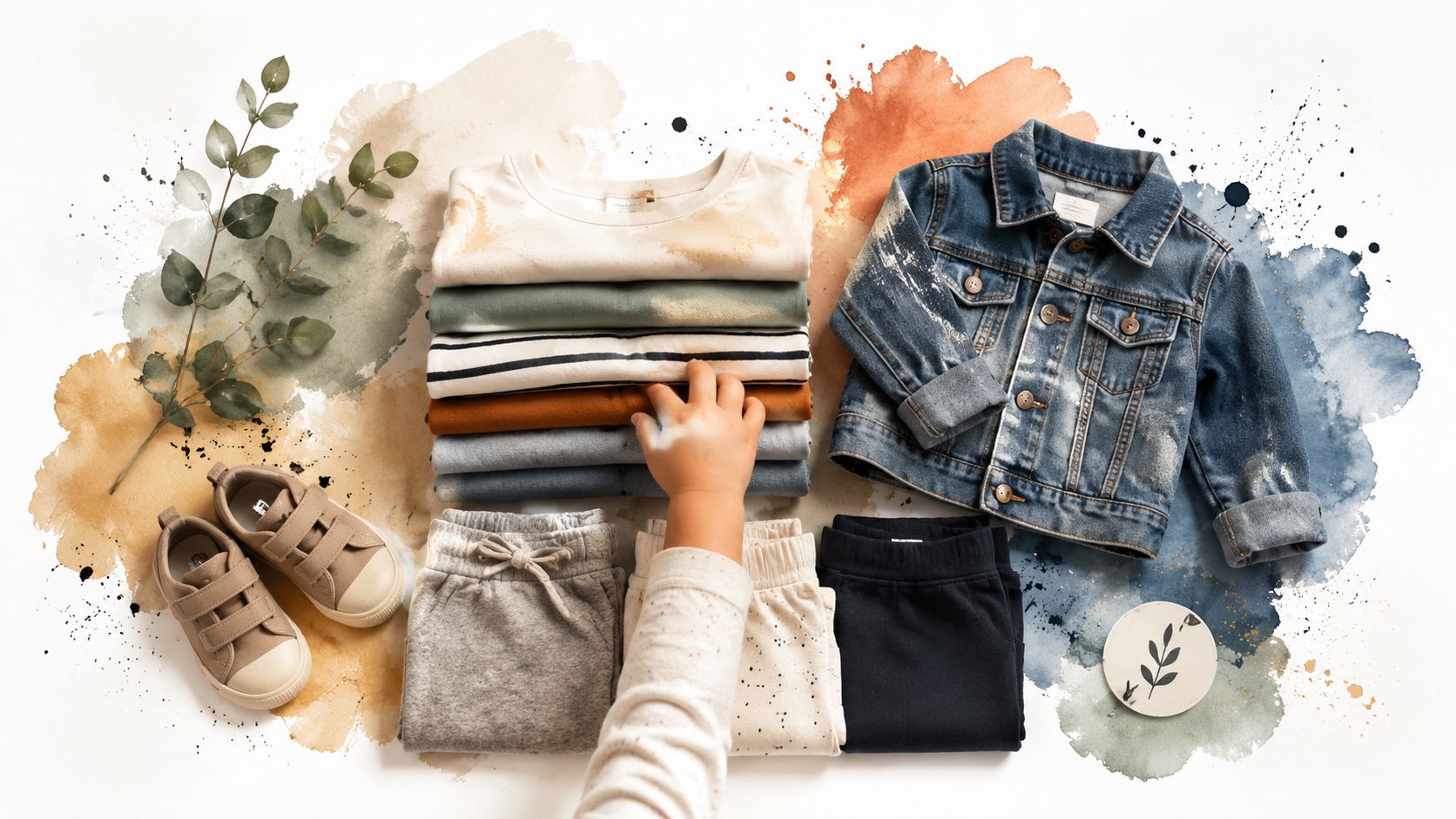
A useful gender neutral toddler clothes wardrobe often includes a few categories rather than a strict formula.
- One or two everyday sets in solid colors that can be reworn and layered
- A zip romper that works for play, errands, or quiet days at home
- Leggings or soft pants that pair with nearly every top
- One warmer layer such as a cardigan, sweatshirt, or denim jacket
- Pajamas that can handle frequent washing without getting rough
The beauty of neutral tones and simple prints is that they can rotate easily. A striped top works with solid joggers. A sage set pairs with a cream layer. A printed romper can even be worn partly unzipped with a tee under it when weather allows.
Dress for real movement
I'd rather see a toddler in one comfortable outfit all day than in three “cute” outfits that need adjusting.
When you're choosing pieces, look for:
| Feature | Why it helps |
|---|---|
| Stretch in the fabric | Supports climbing, squatting, and sitting cross-legged |
| Easy closures | Makes diaper changes and potty learning less frustrating |
| Roomy but not oversized fit | Gives comfort without turning hems into tripping hazards |
| Colors that coordinate | Cuts down on laundry stress and outfit decisions |
Good quality also helps clothes stay useful longer. Pieces that fit well now and still look good after repeated wear are easier to pass down to siblings, cousins, or friends. That's practical stewardship in everyday form.
For families trying to sort through what quality looks like, this guide to best quality baby clothes and what to check offers helpful signs to look for.
Care habits that help clothes last
Bamboo and other soft fabrics often stay nicest when they're handled gently. Wash with mild detergent, skip harsh extras when you can, and follow the tag. It sounds basic, but simple care is often what keeps a favorite piece from turning rough or misshapen.
A visual walkthrough can help if you're trying to build outfits from fewer pieces:
A lasting wardrobe doesn't begin with more. It begins with fewer pieces that you actually reach for.
That's usually the sweet spot for toddler clothing. Less clutter. More wear. Fewer battles.
Finding Toddler Clothes That Reflect Your Faith
Christian parents often run into a specific frustration. They can find neutral clothes. Or they can find faith-forward items. But finding both in the same place is much harder.
A lot of neutral toddler clothing leans heavily into secular minimalism. There's nothing wrong with simple design. But many families want something warmer than that. They want clothing that feels peaceful, beautiful, and rooted in a sense of wonder.
The gap many parents feel
According to this discussion of the missing faith-inspired angle in gender-neutral kids' clothing, there is an overwhelming lack of faith-inspired gender-neutral toddler clothing, and 72% of millennial Christian parents prioritize purchases from brands that reflect their beliefs.
That rings true to me because many parents aren't asking for loud slogans on every outfit. They're asking for something more thoughtful. A print with stars, animals, leaves, or skies. A design that nods toward creation. A piece that opens the door to conversation.
Faith can show up quietly
Some of the loveliest faith-shaped details are subtle.
A pajama covered in stars can become a bedtime moment of “Look what God made.” A woodland print can prompt delight in animals and habitats. Soft earth tones can remind us that beauty doesn't have to shout to be seen.
Here are a few examples of what parents often look for:
- Creation themes like moon, stars, mountains, animals, and gardens
- Gentle beauty instead of trendy slogans
- Inclusive design that works for any child without losing meaning
Clothing can support a family culture of wonder, even when it says nothing out loud.
That matters because toddlers learn through repetition, atmosphere, and little rituals. What they wear isn't the center of faith formation, of course. But it can support the tone of the home. Calm. Gratitude. Curiosity. Delight in what God has made.
What to look for if this matters to you
When you shop, ask a few simple questions:
- Does this design point toward beauty, goodness, or wonder?
- Would I be happy to pass this down to another child?
- Does it fit my child's body comfortably, not just photograph well?
- Does it feel aligned with how our family wants to live?
Those questions usually narrow things down quickly. The result is a closet that feels less random and more connected to the life you're trying to build at home.
Meaningful Gifts and Church Nursery Ideas
A mom is packing a meal for a family with a new baby, and she wants to include something that will be used. A church nursery volunteer is folding spare outfits and hoping each piece will fit into a calm, welcoming space. In both cases, gender neutral toddler clothes make good sense. They are useful, easy to pass along, and gentle in tone.
That is part of their gift. A soft sleeper, a simple two-piece set, or a nature-inspired print can feel thoughtful without boxing a family into someone else's style. For Christian parents, that can be especially sweet. A pattern with stars, leaves, or little animals reflects the goodness of creation and turns an ordinary gift into something with a little more meaning.
These pieces work well for baby showers, baptisms, holidays, and meals-for-new-parents baskets. If you want to pair clothing with other practical ideas, Firacard's guide for new parents shares gift options that support families in everyday life, not only on the big day.
Why churches may want neutral basics too
A church nursery runs a bit like a well-stocked guest room. Children arrive with different needs, different routines, and sometimes a surprise diaper leak right in the middle of the morning. Having a few neutral backup outfits on hand helps caregivers respond quickly and kindly, without making parents feel awkward or unprepared.
As noted earlier, children's clothing should meet the same safety expectations discussed in the material and certification section. For churches, that means checking the basics before stocking spare apparel. Soft fabric, simple closures, and child-safe construction matter more than cute extras. If a ministry chooses premium options such as OEKO-TEX certified bamboo viscose, that can also be a wise expression of stewardship. It is gentle on sensitive skin and often holds up well through repeated washing.
Helpful nursery choices often include:
- Backup outfits in simple colors that coordinate easily
- Sleepers or rompers with closures volunteers can manage quickly
- Pieces without cords, rough trims, or decorative extras
- Soft, washable fabrics that stay comfortable after frequent laundering
Small preparations can serve families in a big way.
They lower stress for volunteers, help parents feel cared for, and keep the nursery ready for real life with little children. Done well, even a basket of spare clothes can reflect the heart of Christian hospitality. It says, in a quiet and practical way, “You and your child are welcome here.”
If you're looking for soft, faith-inspired pieces that bring together comfort, creation-themed design, and certified fabric safety, take a look at Little Venture Co.. Their bamboo sleepwear and daywear are made for babies and toddlers, with a focus on gentle materials, meaningful design, and everyday usefulness for families who want clothing that feels both beautiful and purposeful.