

Gender Neutral Clothing: A Complete Parent Guide
You're standing in the baby aisle with one child outgrowing sleepers, a cousin's hand-me-down bin in the car, and a church shower invitation on your phone. The pink rack and blue rack are full, but neither one really helps you answer the practical question: what will work for your little one, fit well, wash well, and get passed down again?
That's where gender neutral clothing makes life easier. For babies and toddlers, it usually means clothing designed without gendered colors, patterns, or cuts, with the focus on comfort, function, and versatility. It acts as a blank canvas, giving your child room to be a child, and it gives parents more room to choose pieces based on fit, fabric, and use.
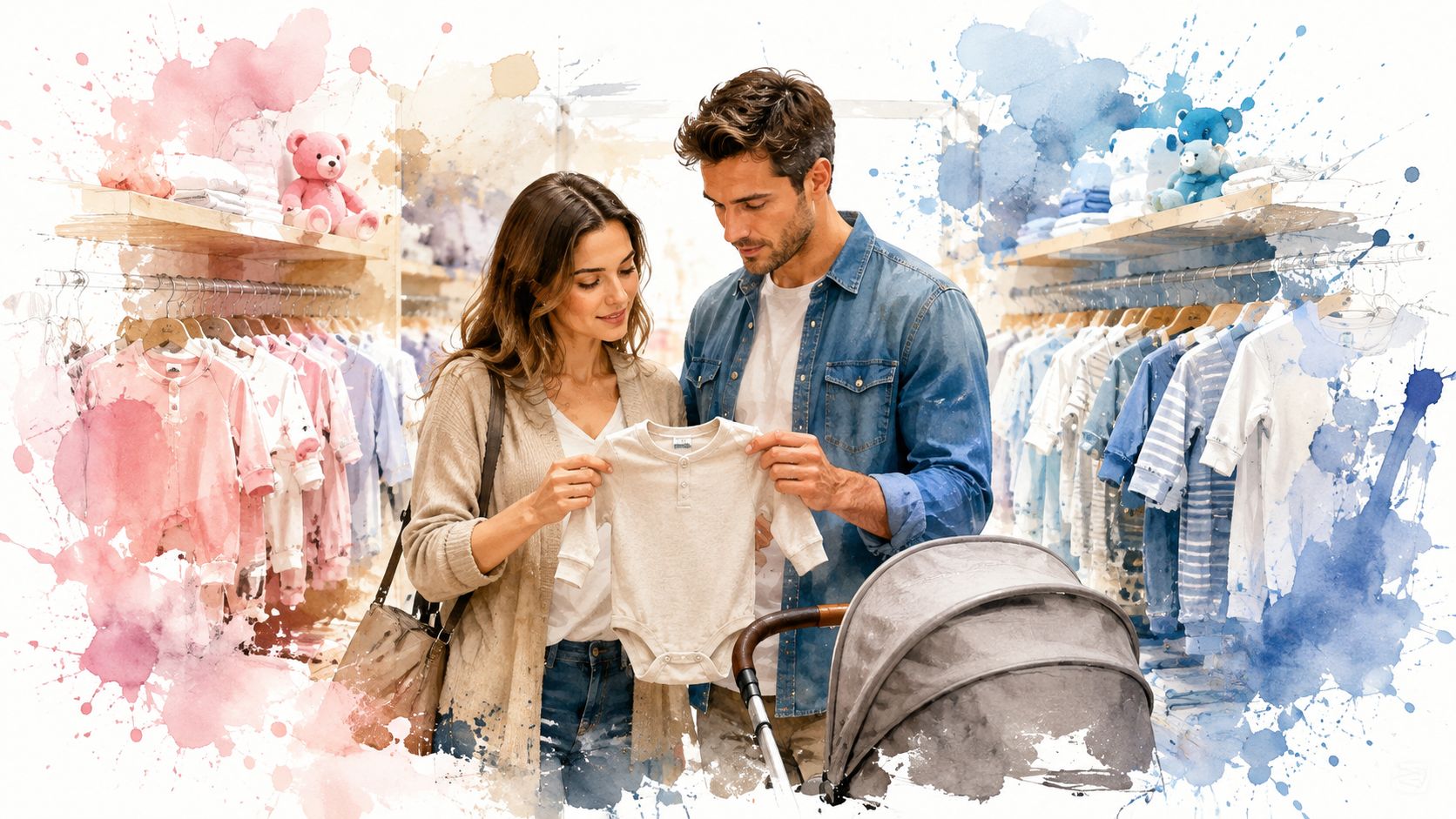
A lot of parents worry that neutral means plain or dull. It doesn't have to. It can mean earthy colors, soft patterns, gentle textures, and clothes that feel easy to share, save, and gift, which is why so many families also look for neutral baby basics like the ones in Little Venture Co.’s neutral baby clothes guide.
What Gender Neutral Clothing Really Means for Little Ones
A toddler asleep in a striped zip romper doesn't care whether the outfit came from the “boy” side of the store or the “girl” side. What matters is whether the zipper opens easily at 2 a.m., whether the fabric feels soft on sensitive skin, and whether the fit leaves room for diaper bulk without bunching everywhere.
That's the practical heart of gender neutral clothing. It's clothing made without strong gender cues in the design, so the same piece can work for any child, whether it's a newborn sleeper, a daycare outfit, or a church nursery spare set.
Simple, usable, and easy to pass along
Many parents hear “gender neutral” and think it sounds like a label for a social debate. For babies and toddlers, it's usually much simpler than that. It's a shopping choice that says, “I want clothes that are comfortable, versatile, and easy to reuse.”
That makes it especially helpful for families who plan ahead. If one child outgrows a set of onesies and the next child is a different sex, the clothes still work. If a grandparent wants to buy ahead for a baby shower, they don't have to guess the whole wardrobe.
Practical rule: if a piece can move from sibling to sibling without anyone having to explain it, it's probably a strong neutral staple.
The same logic helps in churches and family ministries. Nursery organizers often want basics that can be sorted by size, stored easily, and pulled out for any baby who needs a fresh change. Neutral clothing keeps that system clean and simple.
Why Families Are Choosing Gender Neutral Options
Parents usually don't wake up and decide to rethink baby clothes for abstract reasons. They do it because the day-to-day realities of raising kids are messy, expensive, and repetitive. Neutral pieces solve several of those problems at once.
Hand-me-downs that actually get used
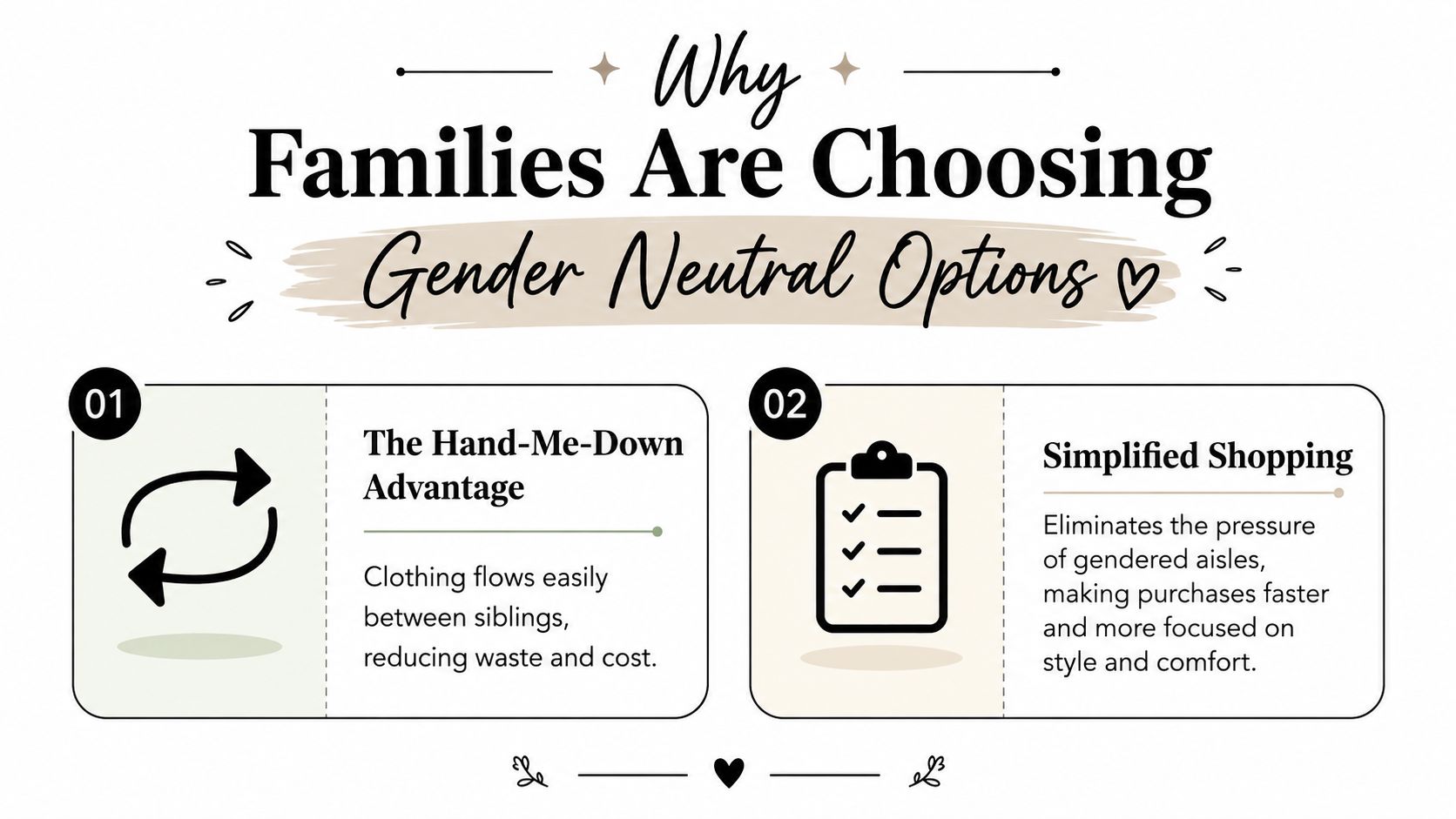
When clothing isn't strongly gendered, it moves more easily through a family. A striped sleeper, a sage two-piece set, or a cream zip romper doesn't feel “wrong” for a younger sibling just because the first child wore it first. That keeps good clothing in circulation longer and cuts down on the pile of things that get skipped over because they look too specific.
This matters in larger families, but it also matters in small ones. Even one or two seasons of extra wear can make a difference when you're sorting bins for the next baby or packing clothes for a cousin, neighbor, or church friend.
Easier shopping and fewer decision points
Busy parents don't need one more reason to spend twenty extra minutes in a store. Neutral wardrobes reduce the “Which aisle?” problem and make it easier to buy by purpose instead of by label. You can focus on sleepwear, play clothes, or a church outfit without getting pulled into gendered styling choices that don't affect how the garment performs.
Gift-givers benefit too. Aunts, grandparents, and church groups can choose useful pieces without worrying about whether the baby will be a boy or a girl. That's especially helpful for nursery gift tables, shower registries, and welcome baskets, where the goal is usefulness first.
The broader market picture supports this shift. A widely cited 2022 survey from Klarna and Dynata found that 36% of U.S. consumers had purchased fashion outside their gender identity, compared with 33% in Sweden and 31% in the United Kingdom. Among Gen Z online shoppers globally, about 50% had already bought fashion outside their gender identity, and roughly 70% said they were interested in buying gender-fluid fashion in the future, according to the same dataset published by Statista.
Materials and Safety That Matter Most
A cute print does not help much if the fabric feels scratchy, holds heat, or bothers sensitive skin. For babies and toddlers, material choice matters more than the label on the hanger, because clothing stays against developing skin for hours at a time.
Parents often find themselves asking one simple question before anything else, “What is this made of?” In this category, bamboo viscose often stands out because it is known for being soft, breathable, and gentle enough for everyday wear. For families dealing with eczema, sensitivity, or frequent laundry cycles, that softness can make a real difference in how often a child pushes back at dressing time.
What safer basics usually have in common
A good neutral wardrobe should be built around fabrics and finishes that feel calm on skin, not just calm to the eye. Look for clothing that keeps its shape without rough seams, scratchy tags, or stiff construction. If you are comparing options, ask whether the garment has been tested for harmful substances and whether the brand explains what that testing covers.
Certification language helps with that check. OEKO-TEX Standard 100 means every component of the garment has been tested for harmful substances, which gives parents a clearer safety check than color or style alone. A plain sleeper that has been tested well is often a better buy than a visually busy one with unknown finishing chemicals.
For a parent comparing fabric and certification basics, Little Venture Co.’s OEKO-TEX Standard 100 guide is a useful starting point.
Clothing that feels gentle, washes predictably, and stays soft usually earns a permanent spot in the drawer.
That is why safety and comfort should lead the decision, especially for sleepwear and everyday basics. Neutral clothing works best when it earns trust on the body first, then wins on appearance second.
The category's growth also shows why these quality questions matter. One market report places gender-neutral clothing at USD 3.87 billion in 2024, rising to USD 4.32 billion in 2025 and reaching USD 7.19 billion by 2030, which implies a 10.6% CAGR over 2025 to 2030, according to Deep Market Insights. A broader forecast from the same source values the market at USD 24.70 billion in 2025 and projects USD 54.12 billion by 2034 at a 9.32% CAGR. The exact definitions vary, but the direction is clear, more parents will be comparing fabric quality, not just style language.
Styling and Sizing Tips That Work
Neutral clothing does not have to look plain. The easiest wardrobes usually start with earth tones, soft neutrals, and nature-inspired shades because those colors mix well, photograph well, and rarely fight with the rest of the drawer. A moss romper, oatmeal sweater, and muted stripe set can all sit together without creating a pile of one-off outfits.
Build around fit, not guesswork
Sizing is where many parents get tripped up. A piece can be correct on the tag and still feel wrong if it leaves no room for diaper bulk, crawling, or a growth spurt. A better approach is to look for garments with enough length in the torso, enough room through the seat, and openings that make changes easy.
Zip rompers are popular for babies because they keep nighttime changes quick. Two-piece sets often make more sense once toddlers are potty training, because bathroom breaks are less of a wrestling match.
For parents who want a clearer way to turn measurements into buying decisions, the ECORN size chart Shopify guide explains how sizing charts can be built and read. For a baby-specific comparison point, Little Venture Co.’s baby clothing size chart helps parents think in terms of measurements instead of vague age labels.
Add interest without adding gender
Plain does not have to mean boring. Texture, small prints, ribbing, waffle knits, and understated embroidery can give a wardrobe character without pushing it into gendered styling. A neutral outfit can still feel polished when the fabric has depth and the colors stay balanced.
Accessories help too. A soft bonnet, knit beanie, or simple bow-free head wrap can change the look without changing the function. The goal is a wardrobe that works hard, then lets the details add personality.
Useful shortcut: if it layers well under a cardigan, over a sleeper, or with a simple pair of joggers, it is probably a strong neutral piece.
Faith-Friendly Messaging and Meaningful Gifts
For many Christian families, gender neutral clothing fits naturally with values like stewardship, simplicity, and care for others. It gives parents a practical way to choose clothing that serves the child well without adding extra decisions at every purchase.
Subtle, creation-inspired designs also fit this space well. A tiny fern print, a cloud motif, or a verse-free nature theme can feel uplifting without becoming loud or preachy. Families who want faith to shape the spirit of the gift, while keeping the clothing itself flexible and easy to reuse, often appreciate that balance.
Good fits for churches and family ministries
Church nurseries and family ministries need clothing that can welcome different families without fuss. Neutral sleepers, backup onesies, and soft daywear are easier to sort by size and easier to hand to the next caregiver quickly. Nobody has to pause and wonder whether the spare outfit belongs in a “boy” drawer or a “girl” drawer.
Gift buyers can use the same approach. When you do not know the baby's sex, or you want the gift to keep working long after the baby shower, neutral clothing is a thoughtful choice. It sends a simple message, “I thought about what this family will use.”
For more ideas that fit these settings, Little Venture Co.’s unique baby gift ideas is a helpful companion read.
A neutral gift also suits families who care about less waste and more reuse. A soft sleeper in a calm color will not feel out of place if it is passed from one baby to the next, and that makes it easier for relatives, small groups, and church communities to keep giving with confidence. It works a bit like a well-made casserole dish at a church meal, useful, welcome, and easy to share without extra explanation.
In a faith setting, the most meaningful gift is often the one that serves quietly and lasts.
Care and Maintenance for Long-Lasting Wear
Good clothing only stays useful if parents can keep it in good condition. That means gentle washing, patient drying, and storage that makes hand-me-downs easy to find later.
Simple habits that protect softness
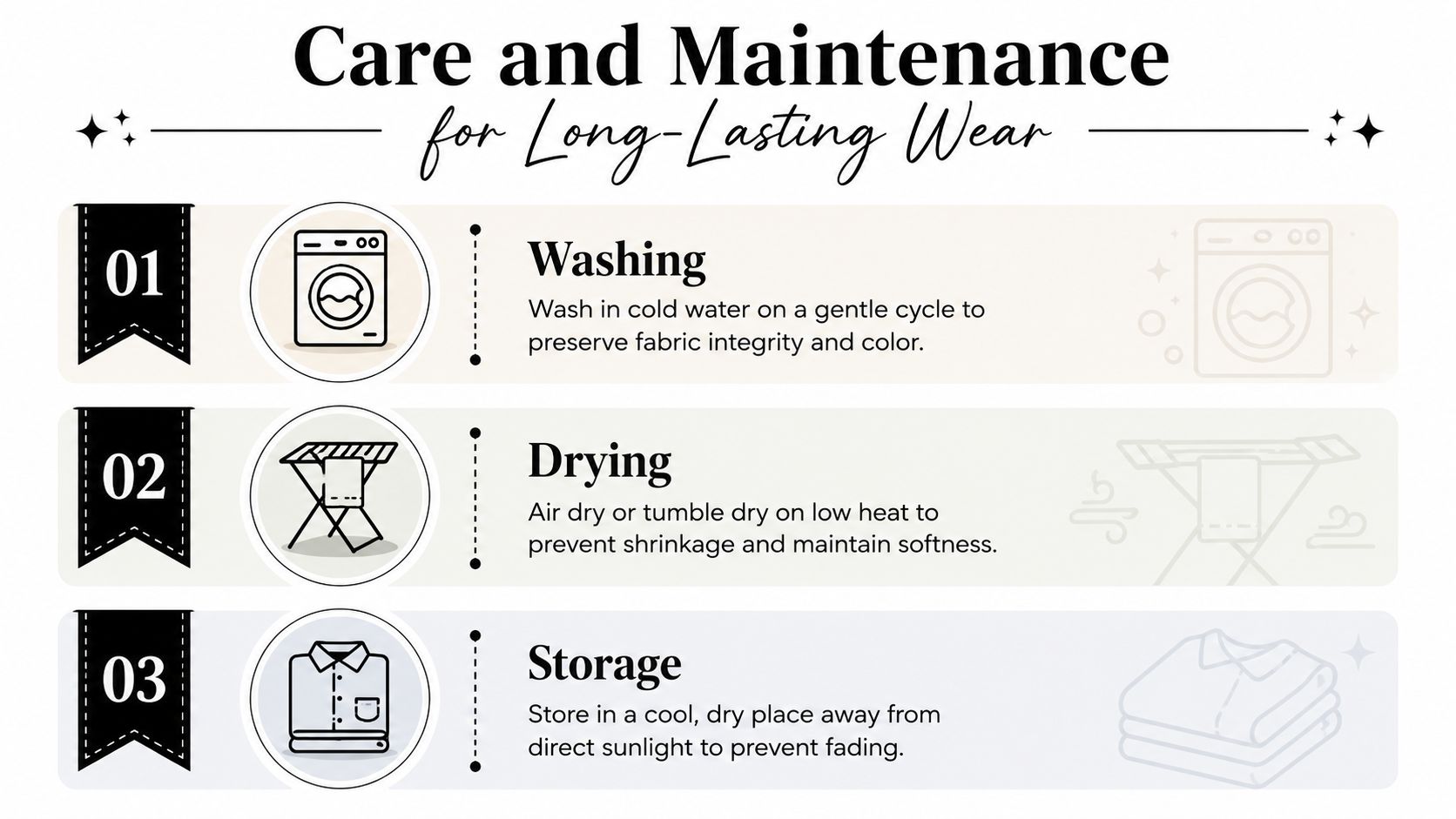
For delicate baby basics, cold water and a gentle cycle are usually the safest place to start. Harsh detergents and high heat can wear down softness faster, especially on fabrics parents hope to reuse. Air drying is the gentlest option, and low heat is the next best choice when you need the dryer.
Storage matters just as much as washing. Fold pieces by size, label bins clearly, and keep them in a cool, dry place so they're easy to grab for the next child. That way, a family doesn't have to dig through a “boy” bin and a “girl” bin later, because the clothes are already organized by use.
When stains happen, treat them quickly and avoid harsh chemicals on light-colored pieces. Many parents find that a simple routine of pre-treat, wash, inspect, and repeat keeps favorites in circulation longer.
If a piece starts losing shape, piling heavily, or feeling rough on the inside, it may be time to retire it from daily wear. But even then, it can still move into a rag bin, backup drawer, or hand-me-down box for another family member.
Making the Switch with Confidence
If you're ready to try gender neutral clothing, start small. Sleepwear, everyday bodysuits, and one or two mix-and-match sets are the easiest entry points because they solve the biggest daily problems first. Once those basics prove themselves, you can add church outfits, seasonal layers, and special-occasion pieces.
You don't need to defend the choice if relatives ask questions. You can say you're choosing clothes that are comfortable, easy to reuse, and better suited to your family's needs. That answer is calm, practical, and hard to argue with.
The benefit is simple. Neutral clothing gives parents more flexibility, keeps clothing in use longer, supports safer fabric choices, and lines up neatly with values of stewardship and care. For little ones, that usually means fewer hassles and more outfits that work.
If you want baby and toddler clothing that centers comfort, softness, and thoughtful design, visit Little Venture Co. to explore faith-inspired basics made for everyday wear, gift-giving, and easy hand-me-downs. Their bamboo sleepwear and daywear are built for families who want clothing that feels practical, gentle, and meaningful.