

Your Ultimate Clothes for Newborns Checklist
Wondering what clothes your newborn actually needs? Let’s get right to it. A solid starting point is 6-10 bodysuits, 4-6 sleepers, 3-4 hats, and plenty of mittens and socks. This practical foundation covers all your daily needs and prepares you for those inevitable spit-ups and diaper leaks without going overboard.
Building Your Baby’s First Wardrobe
Getting ready for a new baby is one of the most exciting times in life, but man, can it be overwhelming. You walk into a store, see those racks of impossibly tiny outfits, and it’s so easy to get swept up in the cuteness. Before you know it, you've got a closet full of clothes that are either impractical or outgrown in a flash.
The real goal here is to build a wardrobe that’s functional, comfortable, and safe. You want clothes that will make your life easier during those hazy, sleep-deprived first few months.
Think of it like stocking your kitchen for the first time. You wouldn't buy a bunch of exotic spices before you have flour, sugar, and eggs, right? It's the same with your newborn. You need to focus on the core items first—the essentials for sleeping, playing, and all those endless cuddles.
The key is to prioritize practicality. Your newborn's whole world revolves around three things: comfort, warmth, and staying clean. Outfits with a million tiny buttons, complicated snaps, or scratchy fabrics will just frustrate you and your baby, especially during those 3 a.m. diaper changes.
Sticking to the basics not only saves you money but also cuts down on laundry stress. When you have a well-chosen set of essentials, you’ll always have a clean, comfy outfit ready to go.
Starting with the Must-Haves
Before we get into the nitty-gritty list, it helps to understand the why behind the quantities. It’s no secret that newborns are messy! Between spit-up, drool, and the occasional diaper blowout, you can easily go through two to three outfit changes a day. That adds up to 14-21 outfits a week—which is why having a good stash of basics is a game-changer. It means you aren't chained to your washing machine.
With that in mind, here is a quick look at the absolute must-haves for your baby’s first wardrobe. For a more exhaustive list that covers everything from gear to nursery items, you might want to check out our complete newborn essentials shopping list.
Core Newborn Clothing Essentials At-a-Glance
This table breaks down the core pieces you'll rely on day in and day out. Think of this as your starting lineup for the first few weeks.
| Clothing Item | Recommended Quantity | Key Feature |
|---|---|---|
| Bodysuits (Onesies) | 8-10 | The true workhorse of a baby's wardrobe; perfect for layering. |
| Sleepers (Footed Pajamas) | 6-8 | Ideal for both sleep and daytime lounging; two-way zippers are a lifesaver. |
| Swaddles or Sleep Sacks | 3-4 | Helps your baby feel secure and sleep more soundly. |
| Pants or Leggings | 4-6 | Easy to pull on over a bodysuit for an extra layer of warmth. |
| Hats (Beanies) | 3-4 | Crucial for regulating body temperature, especially right after birth. |
| Socks or Booties | 6-8 pairs | Keeps those tiny feet warm, as they can get cold easily. |
| Mittens | 2-3 pairs | Prevents newborns from accidentally scratching their delicate faces. |
Having these items on hand will give you a fantastic, functional base to build on as you get to know your little one's needs.
Choosing the Safest Fabrics for Your Baby
A newborn's skin is brand new to the world—it’s incredibly delicate, porous, and far more sensitive than our own. When you're picking out their first clothes, it's about so much more than just finding something cute. It's a crucial layer of protection.
Think of those first tiny outfits as a second skin. You want whatever is resting against them to be pure, breathable, and unbelievably gentle. This is a big reason why so many parents are looking beyond traditional cotton and searching for materials that give them total peace of mind.
The Rise of Gentle and Certified Materials
There's been a huge shift in the baby clothing world toward safer, more thoughtfully sourced fabrics. It’s not just a fad; it’s driven by a real, growing awareness of how harsh chemicals and rough textiles can irritate a baby’s sensitive system.
Organic cotton now makes up over 60% of the baby clothing market, loved for being soft and great at absorbing sweat. At the same time, bamboo-based fabrics are gaining ground fast, growing at a rate of about 8.2% each year. This boom is happening as more regulations crack down on harmful dyes and chemicals, pushing brands to get safety certifications like OEKO-TEX® Standard 100, which screens for hundreds of yucky substances.
This simple breakdown shows the core pieces you'll want to build your newborn's wardrobe around.
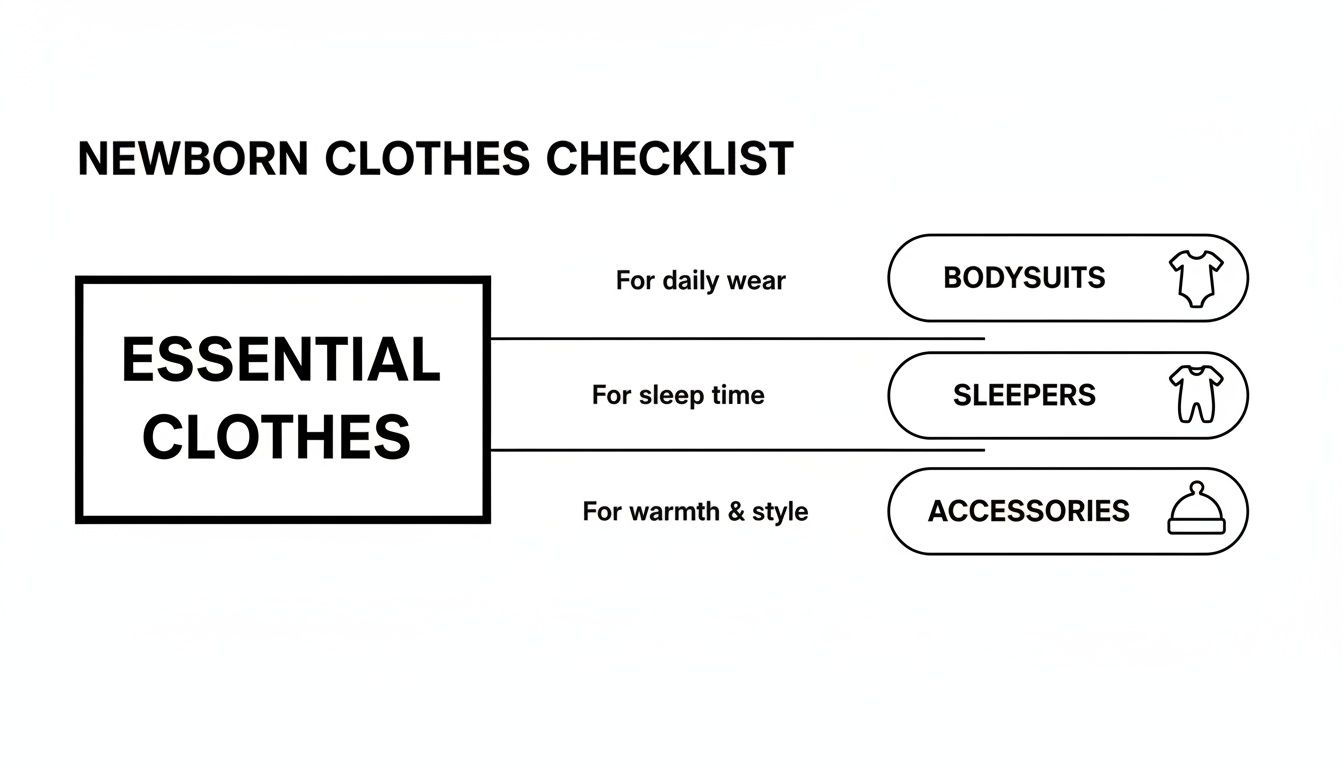
From everyday bodysuits to cozy sleepers and all the little extras, each category has a job to do.
Why Bamboo and OEKO-TEX® Certification Matter
So, when you’re staring at that clothes for newborns checklist, what makes certain fabrics a better choice? Let's talk about two of the absolute best options out there for your little one.
-
Bamboo Viscose: This stuff is famous for its buttery-soft feel that's incredibly gentle on the skin. But it's also a superstar at breathability and temperature regulation, which helps keep your baby comfortable without getting too hot. That’s a huge safety plus for newborns.
-
OEKO-TEX® Standard 100: This isn't actually a type of fabric—it's a certification. When you spot this label on a tag, it’s your guarantee that the clothing has been rigorously tested and is free from a long list of substances that could be harmful to human health. It means the fabric touching your baby’s skin is as safe as it gets.
Parenting Pro-Tip: Looking for that OEKO-TEX® label is one of the easiest shortcuts to reducing your baby's exposure to potentially irritating chemicals right from the start. It takes the guesswork out of the equation so you can focus on the cuddles.
Choosing materials like bamboo viscose gives your baby a cozy, gentle start to life. If you want to dive deeper, exploring the best fabric for sensitive skin can give you even more insight into why these choices make such a difference for your little one’s comfort and well-being.
Packing Your Newborn's Hospital Bag
Alright, let's talk about one of the most exciting pre-baby tasks: packing that hospital bag. It feels like a rite of passage, but it’s so easy to either bring way too much or forget something you really need. We're going to cut through the noise and create a simple, practical clothing list just for your newborn. Think of this as your game plan for a smoother, cozier first 48 hours together.
Sure, the hospital will have the basics covered—usually some standard blankets and maybe a little side-snap shirt. But you’ll want your own things to welcome your baby into the world. The key here is simplicity and function. Your main goals are keeping your little one warm and making those first (of many!) diaper changes as painless as possible.
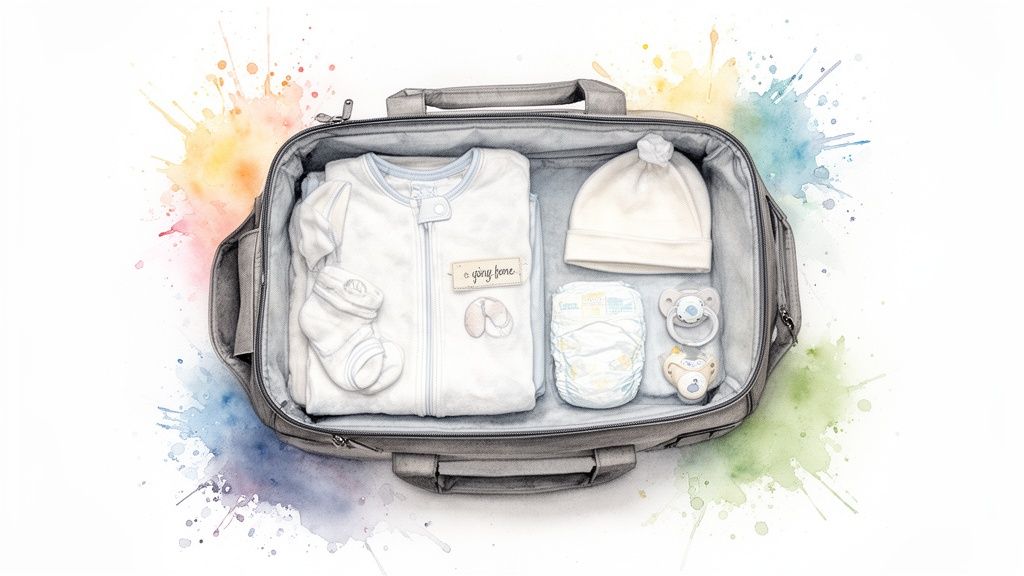
What to Pack for Baby
For a standard two-day hospital stay, you really don't need to haul in an entire dresser. Just focus on a few key items that are soft on their new, sensitive skin and easy for you (as a very tired new parent!) to handle.
- The Going-Home Outfit (1): This is the star of the show! Choose a sweet, soft, one-piece outfit that makes sense for the season. Comfort is everything, so make sure it's car-seat friendly and won't get tangled in the straps.
- Sleepers or Rompers (2-3): Take it from those of us who have been there: zippers are your best friend. Two-way zippers are even better. Trying to line up a dozen tiny snaps at 3 a.m. is a level of challenge you just don't need.
- Bodysuits (2-3): Whether short-sleeve or long-sleeve depends on the time of year, but these are perfect for layering under a swaddle.
- Hats (2): Hospitals can be surprisingly drafty. A soft little beanie is perfect for helping your newborn keep their body temperature just right.
- Socks or Booties (2 pairs): Even when bundled up, those tiny toes can get chilly.
- Mittens (1-2 pairs): Those little fingernails are surprisingly sharp! Mittens are a must-have to keep your baby from accidentally scratching their own sweet face.
Pro Tips for a Stress-Free Stay
One of the best pieces of advice from seasoned parents? Pack outfits in both Newborn and 0-3 Month sizes. You just never know if you'll have a dainty little one or a robust 9-pounder, and having options saves you from a wardrobe crisis. It's always better to have an outfit that's a little roomy than one that won't fit at all.
Here's a little trick to stay organized: pack complete outfits—bodysuit, sleeper, hat, and socks—together in individual zip-top bags. When it’s time for a change, you just grab a pre-made set without rummaging through your entire bag.
As you get everything together, you might want to cross-reference your list with this ultimate hospital bag checklist to make sure you haven't missed anything for yourself. And for an even deeper dive, our guide on what to pack in your hospital bag breaks down all the essentials for both you and your baby.
Dressing Your Baby for Any Season
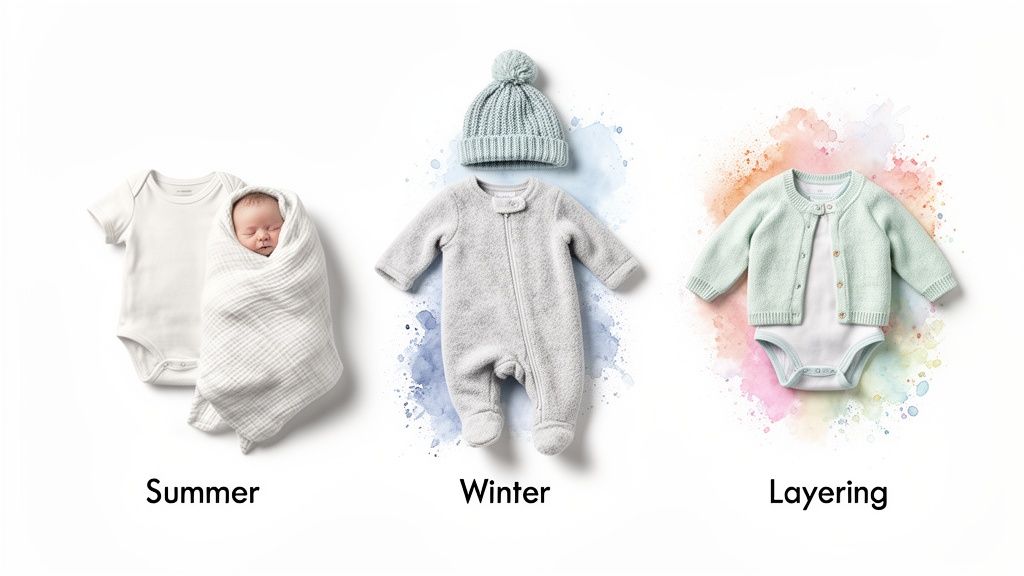
Whether your little one is a summer baby or a winter wonder, you’ll need to think about the season when building their first wardrobe. Newborns haven't quite mastered regulating their own body temperature yet, so they're counting on you to help them stay perfectly comfortable. Don't worry, it's not as complicated as it sounds—it all comes down to smart layering and breathable fabrics.
A fantastic rule of thumb is to dress your baby in one more light layer than you’re wearing. If you're comfortable in a t-shirt, your baby will probably feel just right in a bodysuit plus a light swaddle.
The best way to do a quick temperature check isn't by feeling their hands or feet, which can often be a bit cool. Instead, gently touch the back of their neck. If it feels sweaty, they’re too warm. If it’s cool to the touch, they could probably use another layer.
For Warm Weather Babies
When the sun is shining and the days are warm, your main goal is to prevent your baby from overheating. This is where lightweight, airy fabrics become your absolute best friend.
- Short-Sleeve Bodysuits: These are the workhorse of any summer wardrobe. Soft bamboo or organic cotton bodysuits keep your baby cool while protecting their brand-new skin.
- Lightweight Rompers: A simple one-piece outfit is perfect for a day out, offering good coverage without trapping heat.
- Muslin Swaddles: These blankets are lifesavers. They're so versatile—use them for swaddling, as a nursing cover, or to provide a little shade over the car seat.
For Cold Weather Babies
In chilly weather, layering is the secret to keeping your newborn snug and warm without being bulky. Start with a soft base layer right against their skin and add warmth from there.
- Long-Sleeve Bodysuits: This is your essential first layer. It helps trap body heat right where you want it.
- Footed Sleepers: Look for cozy fleece or thicker cotton "sleep and plays" to go over the top of a bodysuit. Trust me, two-way zippers are a game-changer for middle-of-the-night diaper changes.
- Cozy Accessories: A soft beanie is a must, especially for newborns, since they lose a lot of heat through their heads. And you can never have too many socks and scratch mittens!
Sleep sacks are a fantastic, safe alternative to loose blankets in the crib. To make sure your baby is always just the right temperature for sleep, it's really helpful to get familiar with understanding TOG ratings on baby sleep bags. The rating tells you exactly how warm the sleep sack is, taking the guesswork out of dressing them for bed.
Shopping Smart for Your Baby's Wardrobe
Putting together your baby’s first wardrobe is one of the sweetest parts of getting ready for their arrival, but let’s be real—the cost can sneak up on you. Shopping smart isn't just about snagging the cheapest deals. It's about mindfully building a collection you truly love, one that’s practical, safe, and maybe even reflects your family's values, all without blowing the budget.
A great place to start is with sizing. I know, those teeny-tiny "newborn" outfits are almost impossible to resist, but most babies are out of them in a flash—sometimes just a few weeks! A much savvier move is to focus the bulk of your clothes for newborns checklist on the 0-3 month size. This one simple shift means you'll get so much more mileage out of every single piece.
Prioritizing Quality and Durability
It can be really tempting to just grab those huge multi-packs of basic onesies, but investing in fewer, higher-quality pieces often makes more sense in the long run. Garments made from really durable yet soft materials, like bamboo viscose, tend to keep their shape and feel amazing wash after wash.
This means they won't just last for your baby; they can become beautiful hand-me-downs, ready for a future sibling or cousin. We talk a lot more about what makes for the best organic baby clothes that give you both comfort and longevity.
Choosing well-made clothing isn’t just a practical decision; it’s a conscious one. When you select timeless, durable pieces, you’re creating less waste and building a wardrobe with a story.
Making Conscious Choices
Every dollar you spend is a vote for the kind of world you want to live in, and that can absolutely extend to your baby's closet. Many parents today are looking for brands that aren't just safe for their little one but are also mission-driven.
The global market for baby clothes is massive—sales are expected to reach a staggering 11.9 billion pieces by 2029. This has opened the door for amazing, specialized brands, including faith-inspired ones that offer curated bamboo sleepwear packs, outfits with sweet Scripture themes, and OEKO-TEX® certified basics. They meet both your spiritual and practical needs. The growing demand for sustainable materials also proves that parents are actively looking for "organic" and "certified safe" options. You can find more fascinating info about these baby clothing statistics on bestcolorfulsocks.com.
At the end of the day, shopping smart is all about curating a collection that feels right for your family. By focusing on versatile sizes, durable fabrics, and brands that truly resonate with your heart, you can create a beautiful and functional wardrobe that will serve your new baby perfectly.
How to Wash and Care for Newborn Clothes
So you've checked everything off your clothes for newborns checklist—now what? Keeping all those tiny, adorable outfits soft and safe for your baby can feel like a big task, but I promise it's simpler than it looks.
Here’s the number one rule: always wash everything before your baby wears it. Clothes pick up all sorts of dust and potential irritants on their journey from the factory to your nursery, and a quick wash cycle is all it takes to get them ready for their big debut.
Think about how incredibly delicate a newborn’s skin is. It’s brand new to the world and super sensitive, which makes choosing the right detergent a big deal. You'll want to find one made specifically for babies. Look for key phrases on the label like “hypoallergenic,” “fragrance-free,” and “dye-free” to ensure you're getting a gentle formula that cleans well without leaving harsh chemical residues behind.
Pre-Treating Tough Stains
Let’s be real for a minute—spit-up and diaper blowouts are just part of the new parent initiation. They happen! The trick to tackling these stubborn stains is to act fast.
I always recommend keeping a baby-safe stain remover handy. Just spray it on the spot as soon as you can and let it work its magic for a few minutes before you toss the item into the hamper. For those really epic messes, a quick soak in cool water with a splash of detergent can make all the difference before the main wash.
Washing and Drying Best Practices
You want those beautiful baby clothes to last, right? Especially the buttery-soft ones made from delicate fabrics like bamboo. Following a few simple steps will keep them from pilling or stretching out.
- Fasten Everything: Before you wash, zip up all zippers and snap all the snaps. This little step prevents them from snagging on other tiny garments in the wash.
- Use Cold Water: Always, always wash baby clothes in cold water on a delicate cycle. This is especially true for bamboo fabrics, as it helps preserve their softness and vibrant color.
- Skip the Fabric Softener: It might seem counterintuitive, but commercial fabric softeners can actually coat the fibers, which reduces their natural softness and absorbency over time. Plus, they often contain chemicals and fragrances that can irritate a baby’s sensitive skin.
When it's time to dry, low heat is your best friend. Tumble dry everything on the lowest setting possible. Even better? Hang those special pieces to air dry. This is the surest way to prevent shrinkage and keep every little romper and sleeper feeling brand new.
Common Questions About Newborn Clothing
As you start pulling together your checklist, a million questions probably start swirling around. It’s completely normal! It can feel like there's some secret parenting manual everyone else got a copy of.
Don't worry, there isn't. To help you feel more confident, we’ve tackled some of the most common questions we hear from new parents. Think of it less like a test and more like getting a few key tips from a friend before you start. Let's clear up the confusion so you can get back to the fun part.
How Many Clothes Do I Really Need in Each Size?
This is the big one. Everyone worries they’ll either drown in tiny, unused clothes or be doing laundry every three hours. For the Newborn size, a good rule of thumb is to have enough for two or three changes a day.
- Sleepers/Rompers: Aim for 8-10 in the newborn size.
- Bodysuits: Having 8-10 of these is a great starting point, too.
Remember, babies grow ridiculously fast. That newborn size might only fit for a few weeks, so you don't want to go overboard. You can start with a similar number for the 0-3 month size—you’ll get way more mileage out of those.
Are Zippers or Snaps Better for Newborns?
Okay, this one comes down to personal preference, but if you ask a group of experienced parents, you'll hear a clear winner: zippers. Trying to match up a dozen tiny snaps in a dark room at 3 a.m. is a special kind of parenting challenge you just don't need.
Parenting Pro-Tip: Two-way zippers are the real game-changer. They let you unzip from the bottom for diaper changes without having to expose your baby's whole chest and belly to the cold air. Snaps are totally fine for daytime outfits, but for anything you’ll be using overnight, zippers are your best friend.
What Is the Best Going Home Outfit?
That first ride home is such a special moment, and you’ll want an outfit that’s equal parts sweet, safe, and comfortable. My advice? Keep it simple. A super-soft, one-piece footed romper made from bamboo or organic cotton is perfect.
Steer clear of anything with tons of layers, fussy ruffles, or bulky accessories that could get in the way of the car seat straps. Make sure it’s right for the weather, and don't forget to pack a little hat and a blanket for the trip. It’s a day you’ll always remember, so pick something that feels special to you.
At Little Venture Co., we design our bamboo rompers with these moments in mind—combining ultimate softness, two-way zippers, and OEKO-TEX® certified safety to give your little one the most comfortable start. Explore our collection of faith-inspired essentials at https://littleventureco.com.